
No-Knead Einkorn Sourdough Bread

This no-knead einkorn sourdough bread gives you a crackly crust and a tender, nutty crumb with almost no hands-on work.
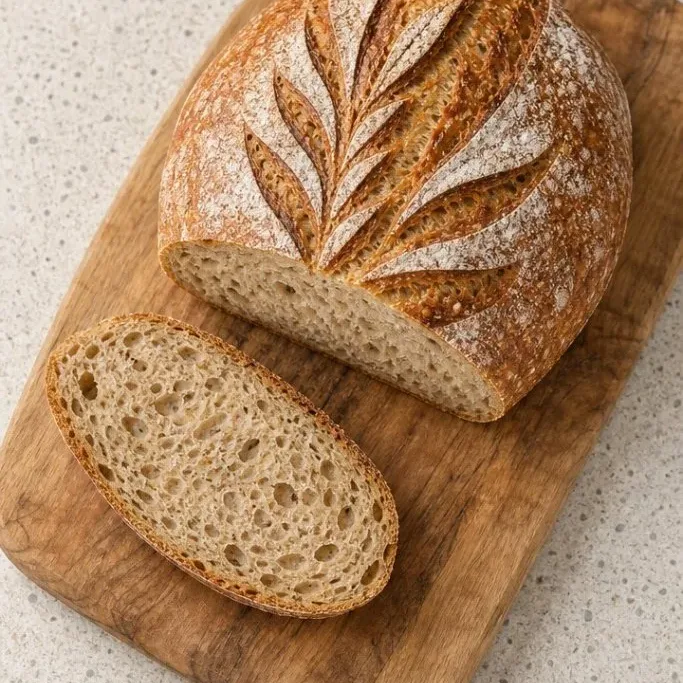
The long, slow fermentation does all the heavy lifting, so you end up with a deeply flavoured loaf that fits into a busy week.
What Makes This Einkorn Bread So Special
I keep coming back to this recipe because it respects the grain’s gentle nature. Einkorn’s weak gluten means aggressive kneading backfires; this dough prefers a few gentle folds and a patient rise.
The result is a loaf with a rustic, open texture and a hint of natural sweetness that tastes like the wheat fields it came from. It toasts beautifully and stays moist for days.
Ingredients
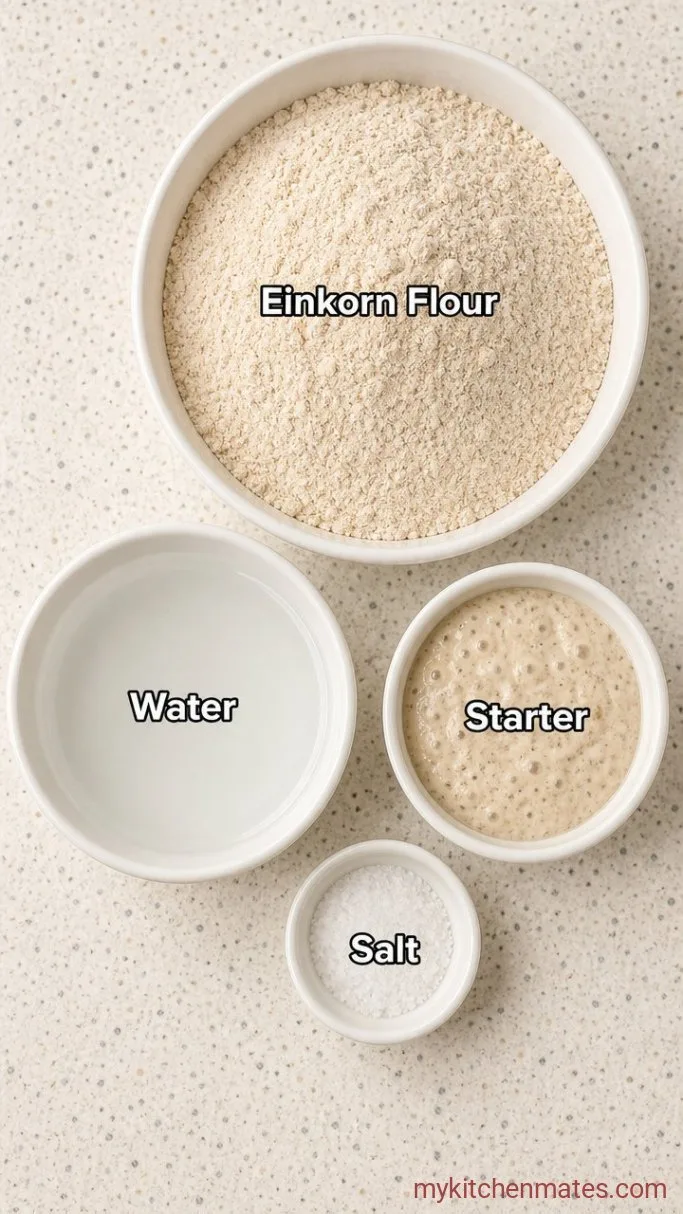
- 500g whole grain einkorn flour: swap with all-purpose einkorn for a lighter loaf.
- 375g filtered water, at room temperature
- 100g active, bubbly sourdough starter (100% hydration)
- 10g fine sea salt
Variations / Substitutions
- Use all-purpose einkorn flour: the loaf will be a little less hearty and the crumb slightly more open.
- Add a teaspoon of honey: if your starter is sluggish, a touch of honey speeds up the rise without making the bread sweet.
- Fold in toasted seeds: 50g of sunflower or sesame seeds folded in during the last set of folds adds crunch.
- Try a different sourdough: the same method works beautifully with a classic bread flour sourdough; just increase the water to 400g.
Tomato Macaroni Soup goes perfectly with this bread for a cozy meal.
How to Make No-Knead Einkorn Sourdough Bread
Step 1: Mix the Autolyse
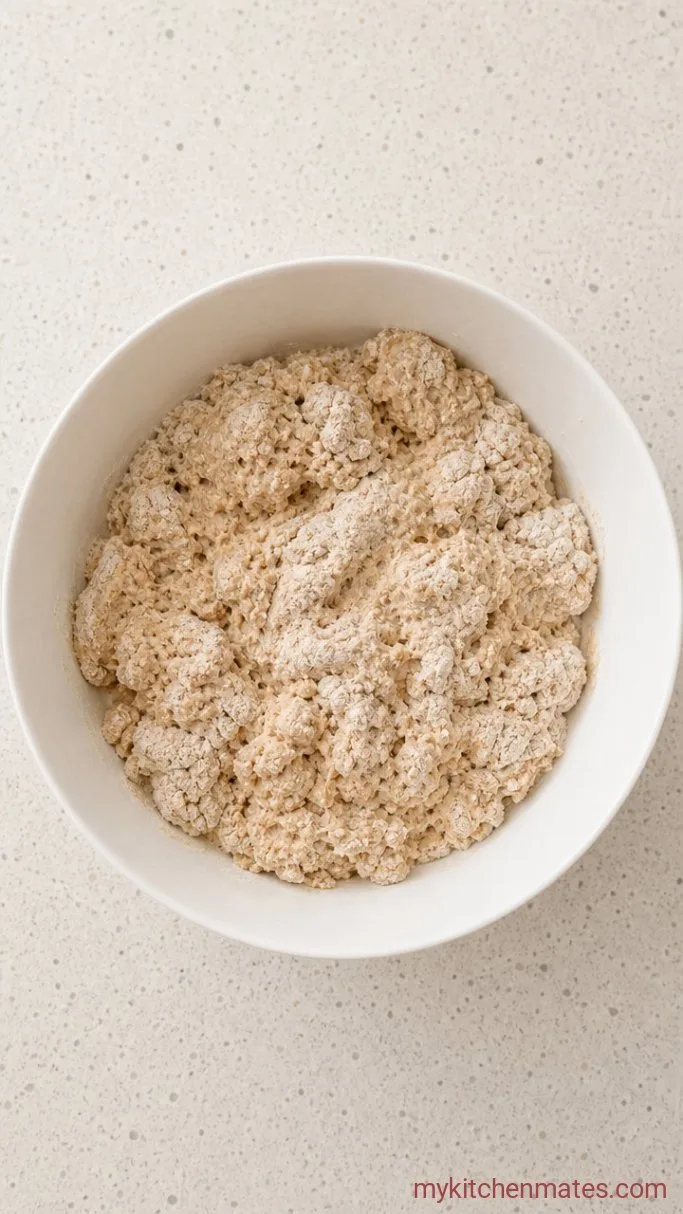
In a large bowl, combine the 500g einkorn flour and 375g water. Mix with a stiff spatula or your hand until no dry patches remain. Cover the bowl and let it rest for 30 minutes.
The dough will look shaggy and feel almost stiff at first, but it relaxes noticeably during this rest. You’ll see the surface become smoother all by itself.
Autolyse is especially helpful for einkorn because its weak gluten benefits from time, not kneading. Don’t skip this step; it sets you up for an open crumb later.
Step 2: Incorporate the Starter and Salt

Add the 100g starter and 10g salt to the rested dough. Using wet hands, pinch and fold the dough repeatedly until everything is evenly mixed. This takes about a minute.
The dough will feel sticky and soft. Resist the urge to add more flour; a wetter dough now translates into a lighter loaf, not a mess.
Step 3: Bulk Ferment with Gentle Folds

Cover the bowl and let it rise at room temperature. Over the first 2 hours, perform 3 to 4 sets of stretch and folds, one every 30 minutes. After the last fold, leave the dough undisturbed until it has nearly doubled and looks puffy and jiggly, roughly 4 to 6 hours total depending on your kitchen’s warmth.
A clear sign it’s ready: the surface will show bubbles, and when you tilt the bowl, the dough wants to slump away from the sides rather than hold a tight ball.
Because einkorn ferments more quickly than modern wheat, keep an eye on it. An overproofed dough at this stage will turn into a pancake later, so check earlier if your kitchen runs warm.
Step 4: Shape the Dough
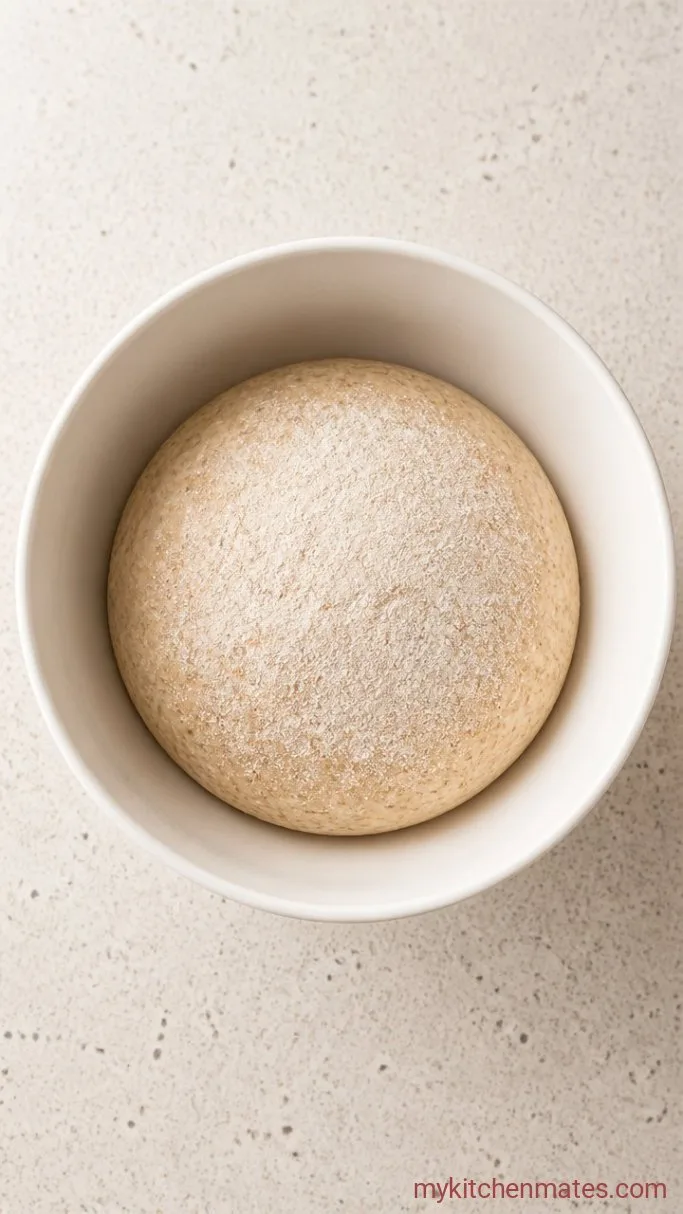
Turn the dough out onto a lightly floured work surface. Gently shape it into a round by folding the edges toward the center, then flip it seam-side down and cup your hands around it to tighten the surface. Place the shaped dough seam-side up in a floured banneton or a bowl lined with a floured tea towel.
The shaped dough should feel plump and springy; if it spreads immediately when you nudge it, give it a few more minutes of rest and one more gentle tightening.
Step 5: Score, Bake, and Slice
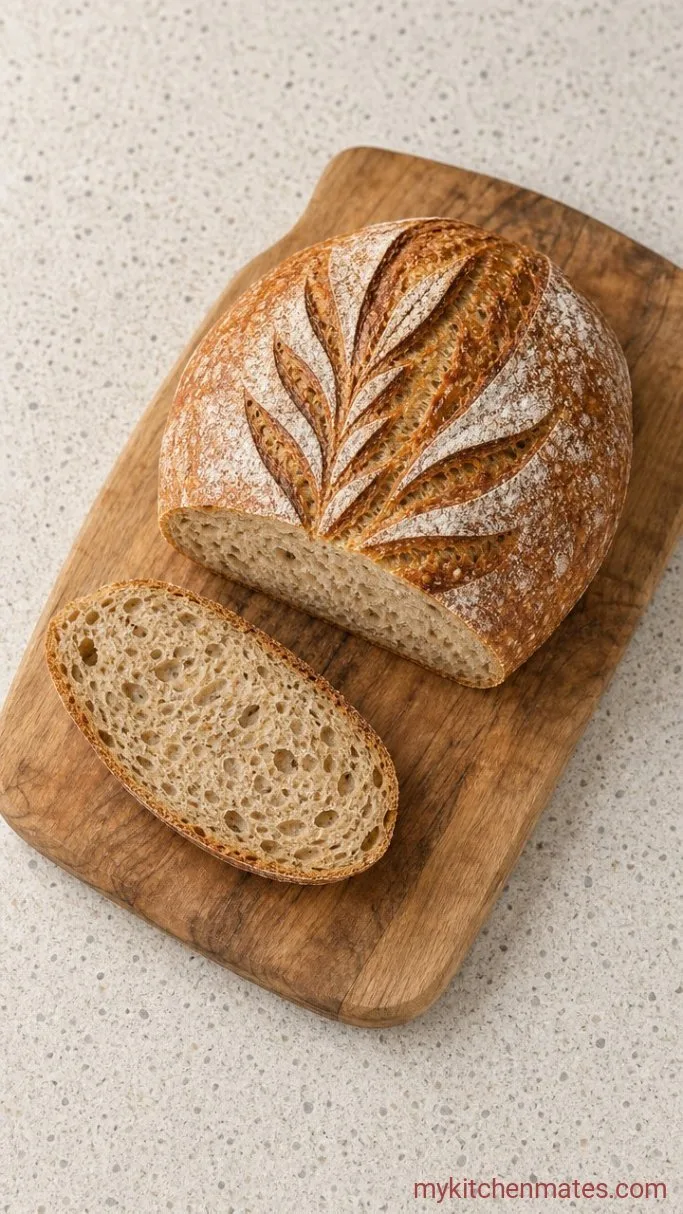
Preheat a Dutch oven at 450°F (230°C) for 30 minutes. Turn the loaf out onto a piece of parchment paper, score the top with a sharp blade, and carefully lower it into the hot pot. Cover and bake for 30 minutes, then uncover and bake 15 to 20 minutes more until the crust is deep golden and the loaf sounds hollow when tapped.
The kitchen will smell like toasted nuts, and the crust will be crackly. Remove the bread to a rack, but slice while it’s still warm if you can’t wait. The steam rising from that first cut is worth it.
A Few Notes Before You Start
- A kitchen scale is your best friend here. Einkorn absorbs water differently than regular flour, so cup measurements can lead to a dough that’s too dry or too wet.
- If your starter isn’t lively, feed it twice 12 hours apart before mixing to ensure a strong, predictable rise.
- For a crispier crust, place a small oven-safe tray of hot water on the bottom rack when you uncover the pot for the final bake.
- To develop a more sour, complex flavour, let the shaped dough proof in the fridge overnight and bake it straight from the cold; no need to bring it to room temperature first.
Bulk fermentation can swing widely with the seasons. Here’s a rough guide based on kitchen temperature:
| Kitchen Temperature | Approximate Bulk Time |
|---|---|
| 68°F (20°C) | 6 to 8 hours |
| 75°F (24°C) | 4 to 5 hours |
| 80°F (27°C) | 3 to 4 hours |
Storing Leftover Einkorn Bread
- Refrigerate: Keep cut-side down in a paper bag inside a sealed plastic bag for up to 4 days. The paper bag wicks moisture so the crust doesn’t turn leathery.
- Reheating: Whole slices or chunks revive beautifully in a toaster or a 350°F (180°C) oven for 5 minutes, crisp outside and steamy inside.
- Freeze: Wrap the whole loaf or thick slices in foil, then a zip-top bag. Frozen bread keeps well for 2 months; thaw at room temperature and reheat to serve.
What to Serve with No-Knead Einkorn Sourdough
A thick slice of this bread turns a simple bowl of tomato soup or lentil stew into a proper meal because the nutty crumb soaks up broth without falling apart. It’s also excellent with soft cheeses: a smear of goat cheese and a drizzle of honey brings out the grain’s natural sweetness. For breakfast, toast it and pile on butter and jam; the slightly tangy flavour balances any fruity preserve.
Frequently Asked Questions
Why is my einkorn dough so sticky?
Einkorn flour naturally makes a stickier dough than modern wheat; that’s normal. Avoid adding extra flour, since a wetter dough rises to a lighter crumb.
Can I bake this bread without a Dutch oven?
Yes. Place a baking stone or overturned sheet pan in the oven while preheating, slide the loaf onto it, and add a tray of boiling water on the floor rack to create steam. The crust won’t be quite as shattery but it still works.
My loaf came out dense. What went wrong?
The most likely cause is overproofing or a weak starter. Make sure your starter peaks before you use it, and watch the bulk rise closely—einkorn can overferment faster than you think.
Can I double the recipe?
You can, but the dough is heavy and finicky. It’s easier to mix two separate batches side by side and bake them one after the other. If you do double, increase the bulk fermentation time slightly because the larger mass warms more slowly.
No-Knead Einkorn Sourdough Bread Recipe
Ingredients
Method
- Mix the flour and water until no dry bits remain. Cover and let rest 30 minutes.
- Add the starter and salt, then use wet hands to pinch and fold until evenly combined.
- Cover and let rise. Perform 3–4 sets of stretch and folds over the first 2 hours, then let the dough rise undisturbed until nearly doubled and jiggly, 4–6 hours total.
- Turn the dough onto a floured surface, shape it into a tight round, and place seam-side up in a floured banneton.
- Preheat a Dutch oven at 450°F (230°C) for 30 minutes. Turn the loaf onto parchment, score the top, and bake covered for 30 minutes. Uncover and bake 15–20 minutes more until deep golden. Cool on a rack and slice.
Notes
