
Cinnamon Raisin Sourdough Bread From Your Starter

This cinnamon raisin sourdough bread leans on your starter for all the lift, which means no commercial yeast and a slow, tangy rise that balances the sweet swirl inside. The loaf bakes up with a crackling crust and a soft crumb threaded with warm cinnamon and juicy raisins.

It is the kind of bread that makes the kitchen smell like a bakery and turns a simple pat of butter into a reason to sit down for a few minutes. You can slice it thick for toast, pack it in a lunchbox, or pull off a warm end right from the cutting board.
What Makes This Loaf So Good
The sourdough’s natural acidity cuts through the brown sugar and cinnamon so the bread never tastes cloying. You get a clean, slightly nutty layer of sweetness that feels balanced rather than dessert-like.
The raisins soften and swell during the long proof, turning almost jammy inside the dough. Because the dough is handled gently and folded instead of kneaded, the crumb stays open and tender despite the dense-looking swirl.
I keep coming back to this version because it uses a straight-sided loaf pan and a hot oven with steam, which gives you a tall, even slice with a burnished top every time.
Ingredients
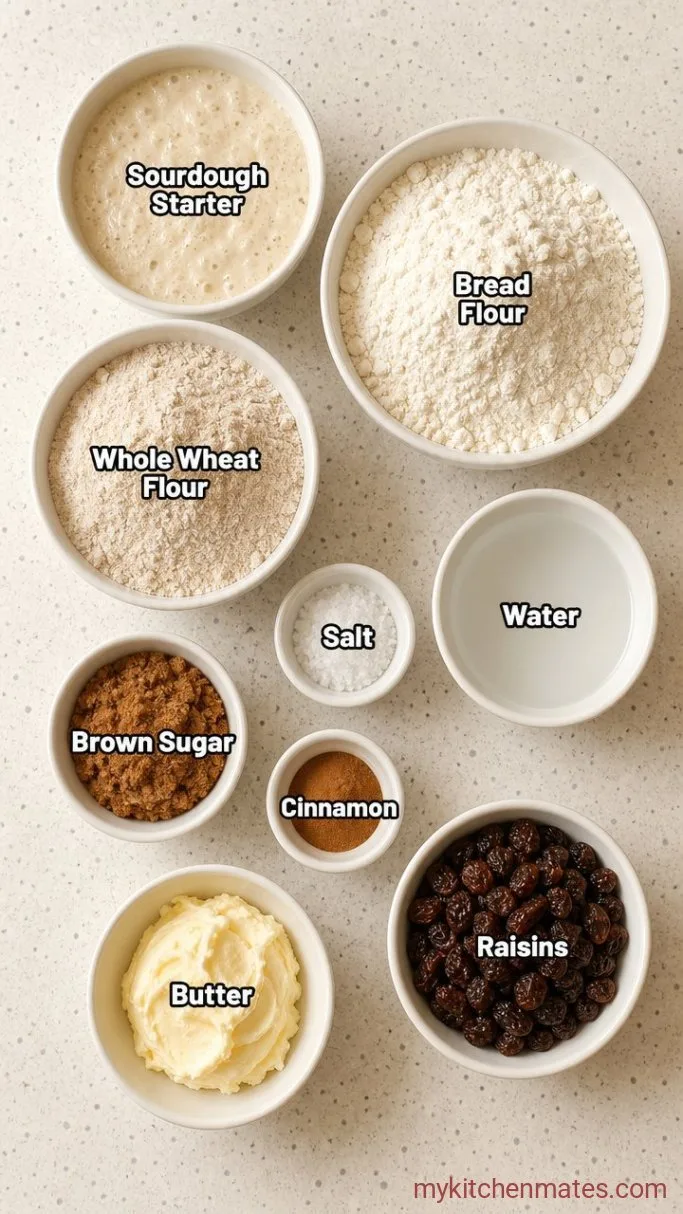
- 100 g active sourdough starter: fed and bubbly, at its peak
- 375 g bread flour: higher protein keeps the structure solid
- 50 g whole wheat flour: adds depth without making the loaf heavy
- 300 g warm water: around 80°F (27°C), just above room temp
- 8 g fine sea salt
- 50 g dark brown sugar: for the filling
- 1 tbsp ground cinnamon: use a fresh jar for the best punch
- 2 tbsp unsalted butter, very soft: helps the filling stick
- 100 g raisins: plump ones; if they are dry, soak in hot water 10 minutes and drain well
Variations / Substitutions
- Swap the raisins: dried currants, chopped dried apricots, or dried cranberries all work with the same weight.
- Add orange zest: stir a teaspoon of finely grated zest into the filling mix for a bright citrus note.
- Go all bread flour: replace the whole wheat flour with an equal weight of bread flour for a paler, slightly softer loaf.
- Use maple sugar or coconut sugar: either one replaces the brown sugar one-for-one and changes the flavor mildly.
Overnight Sourdough Discard Cinnamon Rolls are next on our list if this bread is your kind of bake.
How to Make Cinnamon Raisin Sourdough Bread
Step 1: Mix the Dough
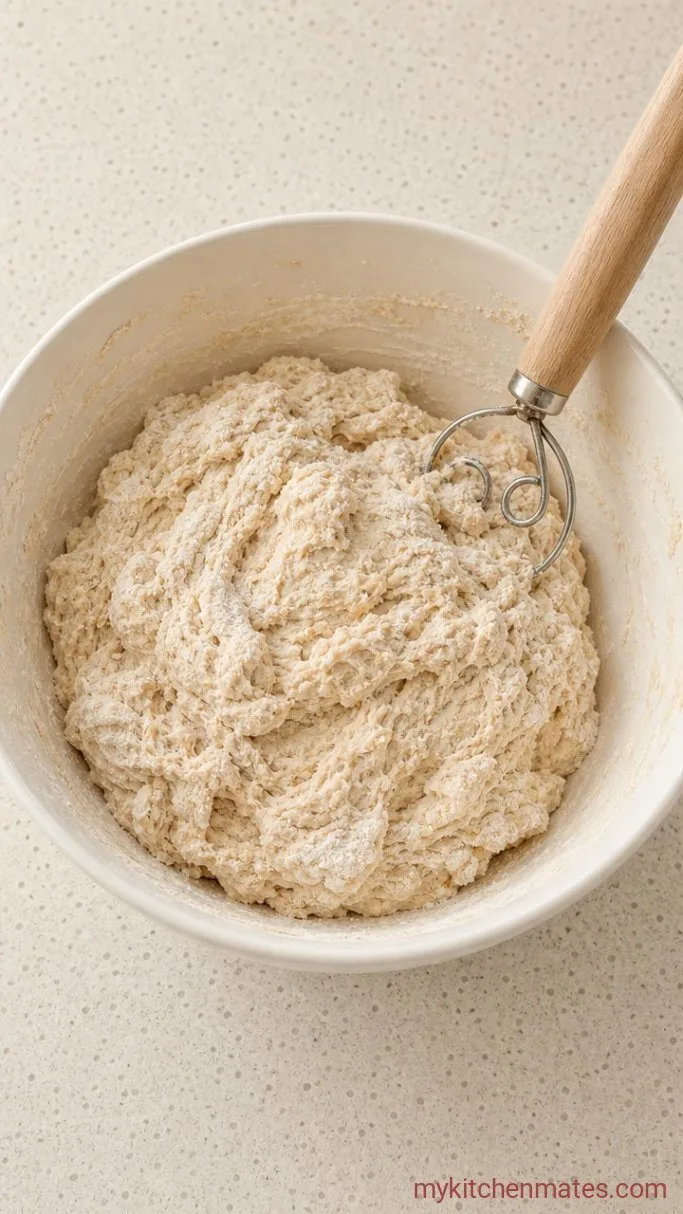
In a large bowl, combine the 375 g bread flour, 50 g whole wheat flour, and 300 g warm water. Stir with a spatula until no dry pockets remain, then cover and let it rest for 30 minutes. This autolyse lets the flour fully hydrate before the starter and salt go in, which shortens the time you will spend folding later.
Add the 100 g active starter and mix by hand until it is fully incorporated and the dough feels sticky and slightly elastic. Sprinkle the 8 g salt on top and pinch it through the dough, folding it over itself for about a minute until you cannot feel any grit.
Step 2: Strengthen with Folds
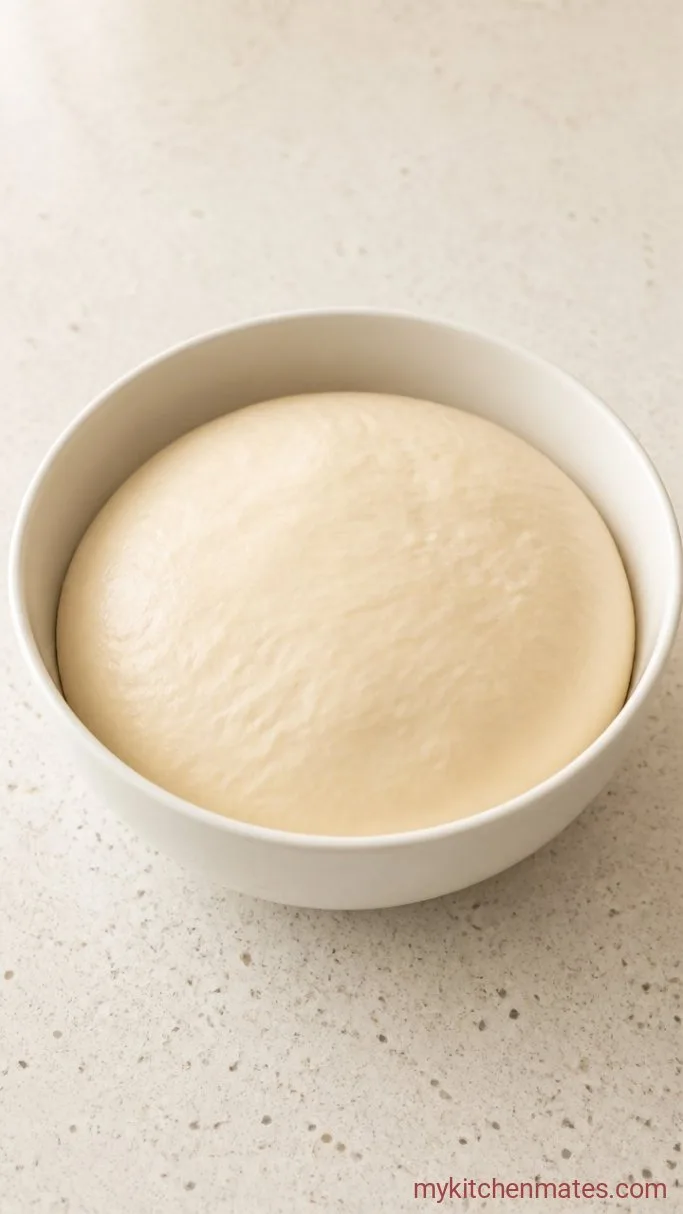
Cover the bowl and let the dough ferment at room temperature. Over the next 2 hours, you are going to do 3 to 4 sets of stretch and folds, spaced about 30 minutes apart. To do one set, grab a corner of the dough, lift it high, and fold it across the top; rotate the bowl a quarter turn and repeat until you have worked all four sides.
Each set will take less than a minute, and by the last one the dough should feel smooth and hold its shape when you lift it. You are building the gluten structure that will trap all the gas from fermentation and keep the swirl from tearing later.
Step 3: Roll and Fill
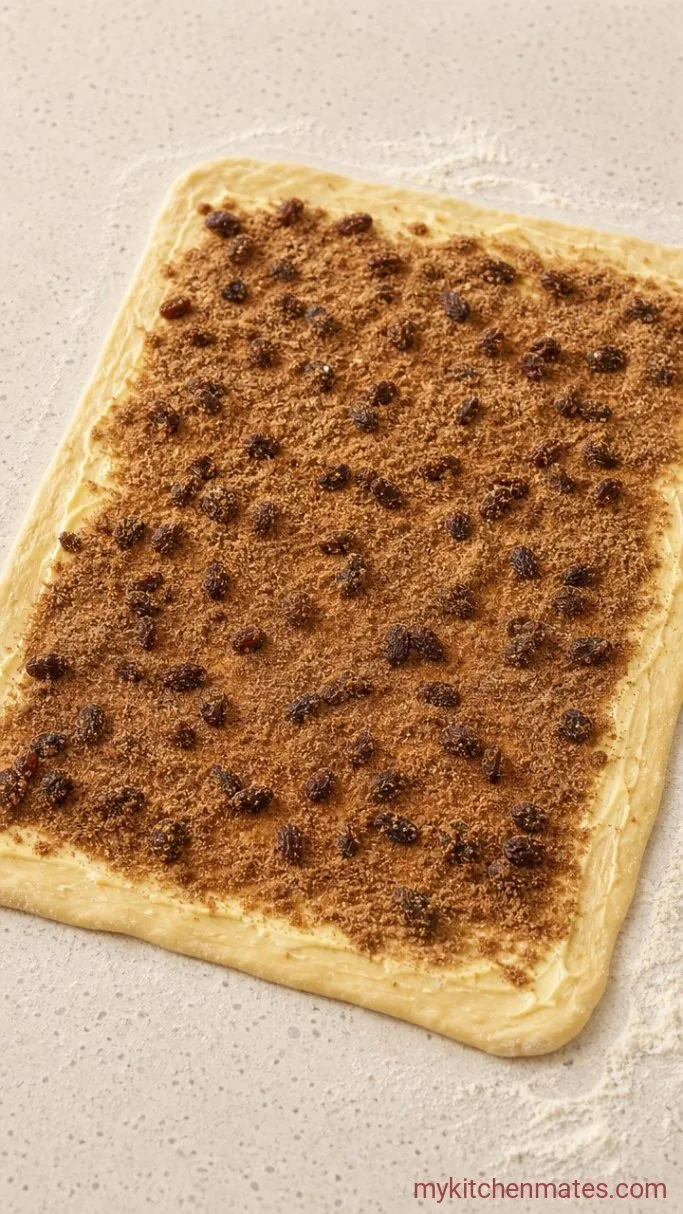
Lightly flour a work surface and tip the dough out. Gently pat and stretch it into a rectangle about 12 by 16 inches, keeping the thickness as even as you can. In a small bowl, stir together the 50 g brown sugar and 1 tbsp cinnamon. Spread the 2 tbsp soft butter thinly over the entire surface, leaving a 1-inch border along one long edge, then sprinkle the cinnamon sugar evenly on top of the butter. Scatter the 100 g raisins across the dough and press them in lightly so they do not roll away.
Step 4: Shape the Loaf
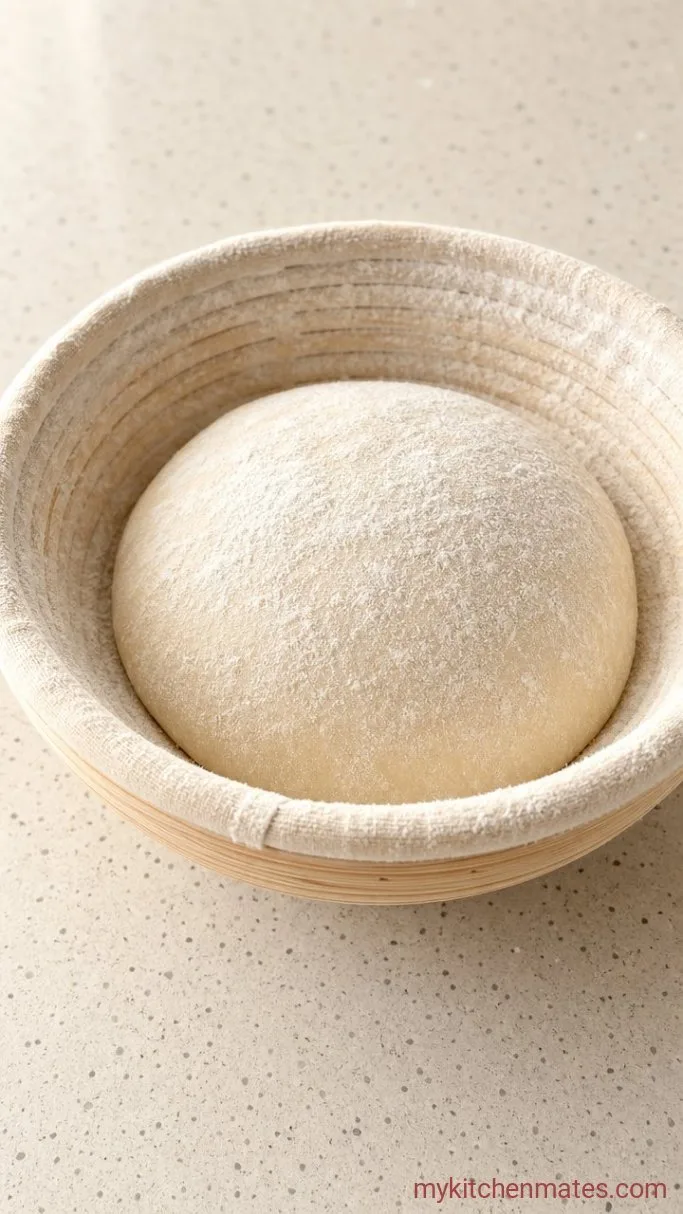
Starting from the long edge opposite the border, roll the dough up tightly like a jelly roll, pressing the seam into the bare border at the end and pinching it closed. Tuck the ends under and transfer the loaf seam-side down into a greased 9-by-5-inch loaf pan. Press it gently into the corners so it fills the pan evenly.
Step 5: Proof the Loaf
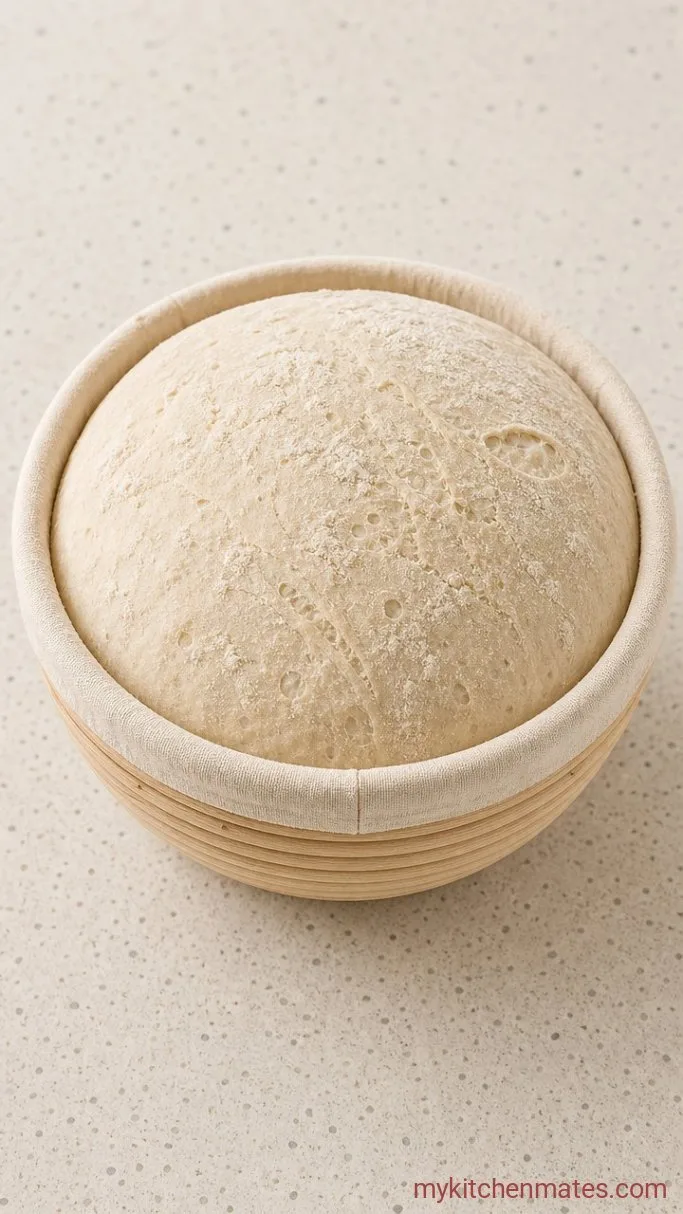
Cover the pan with a damp towel or plastic wrap and let it rise until the dough crests about 1 inch above the rim of the pan. Depending on your kitchen temperature and starter strength, this takes 2 to 4 hours at room temperature, or you can cold-proof it in the refrigerator overnight (8 to 12 hours) for a more complex tang and easier scoring. The dough is ready when it feels puffy and a light poke leaves an indentation that springs back slowly.
Step 6: Score and Bake the Loaf
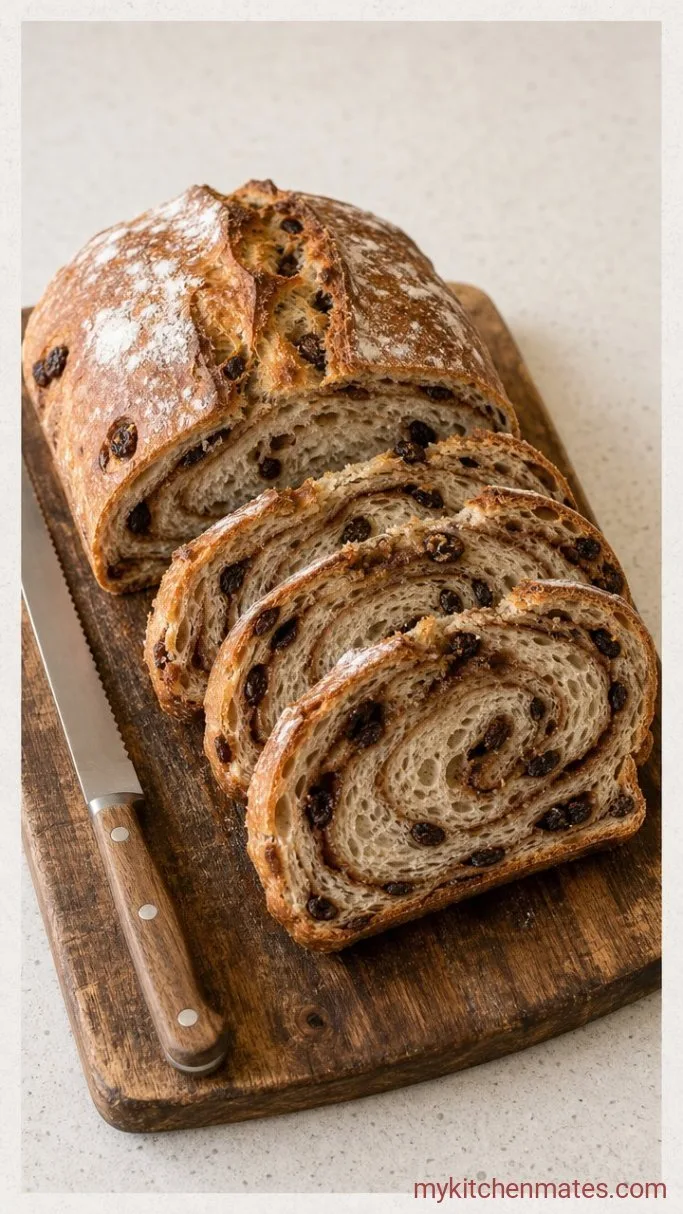
While the dough is proofing, set an oven rack in the lower third and preheat the oven to 450°F (230°C). If you have a cast-iron Dutch oven or combo cooker, put it in the oven to heat up. Once the loaf is risen, use a sharp lame or razor to make one long slash down the center, about half an inch deep. Carefully transfer the loaf pan into the preheated Dutch oven (or place on the middle rack and add a few ice cubes to a hot sheet tray below for steam). Cover and bake for 30 minutes, then uncover and bake another 20 to 25 minutes until the crust is deeply golden and the internal temperature reads 200°F (93°C). Tip the bread out of the pan, let it cool on a rack for at least an hour, then slice with a serrated knife while still just warm.
Tips for the Best Sourdough Loaf
- Check your starter vigor—it should double within 4 to 6 hours after feeding and hold a dome. A sluggish starter will give you a flat, dense loaf.
- Rolling cold dough is harder, so if you cold-proofed the dough overnight, let it sit at room temperature for 20 minutes before rolling and filling.
- Even thickness matters: when you spread the butter and sugar; thin spots can burst during shaping and let the filling escape.
- Score deeply enough: that you see the dough open immediately; a shallow slash will heal over and limit oven spring.
Bake times for different vessels; the loaf is done when it reaches 200°F (93°C) internal.
| Vessel | Covered time | Uncovered time |
|---|---|---|
| Cast-iron Dutch oven (with lid) | 30 minutes | 20–25 minutes |
| Combo cooker (base as lid) | 30 minutes | 20–25 minutes |
| Open bake with pan of water | 25 minutes (steam) | 25–30 minutes |
Storing Leftovers
- Refrigerate: the cooled loaf in a zip-top bag for up to 4 days; the texture tightens a bit but it toasts beautifully.
- Freeze: sliced bread with parchment between slices in a freezer bag for up to 2 months. Pull out a slice and toast from frozen.
- Reheat: a whole or half loaf in a 350°F (175°C) oven for 10 minutes to revive the crust.
Frequently Asked Questions
Can I make this bread without whole wheat flour?
Yes. Replace the whole wheat flour with an equal weight of bread flour. The loaf will be slightly softer and lighter in color, but the structure stays fine.
My dough was too sticky to handle during shaping. What went wrong?
A sticky dough usually means the flour absorbed less water than expected, or your kitchens humidity is high. Dust your hands and the work surface lightly with bread flour, but avoid kneading in extra dry flour or the crumb will turn tight.
Can I proof the shaped loaf in the refrigerator instead of at room temperature?
Yes, and it often improves flavor. Cover the pan and refrigerate overnight immediately after shaping. The next morning, let the pan sit at room temperature while the oven preheats, then score and bake directly.
Is there a way to substitute commercial yeast for the starter?
You can make a yeasted version by using 1 teaspoon active dry yeast mixed into the water, and skip the starter. Bulk fermentation and final proof will be much shorter, about 1 hour each.
Cinnamon Raisin Sourdough Bread Recipe
Ingredients
Method
- Mix flours and water, rest 30 minutes. Add starter and salt, mixing until incorporated.
- Bulk ferment 2 hours at room temperature, performing 3 to 4 sets of stretch and folds every 30 minutes.
- On a floured surface, pat dough into a 12×16-inch rectangle. Spread with butter, sprinkle with cinnamon sugar and raisins, leaving a 1-inch bare border on one long edge.
- Roll up tightly from the opposite long edge, pinch the seam closed, and place seam-side down in a greased 9×5-inch loaf pan.
- Cover and proof until the dough rises about 1 inch above the pan rim, 2 to 4 hours at room temperature or overnight in the fridge.
- Preheat oven to 450°F (230°C) with a Dutch oven inside. Score the loaf, transfer to the hot vessel, cover and bake 30 minutes, then uncover and bake 20 to 25 minutes until deeply golden. Cool on a rack before slicing.
Notes
