
11 Dutch Oven Bread Recipes With Crackly Blistered Crusts

Great Dutch oven bread recipes rely on one thing: a heavy pot trapping steam to blister the crust while the crumb stays airy. A wet dough does the work for you, and the closed pot gives you a deep brown shell without a baking stone. Salt and time build the flavor.
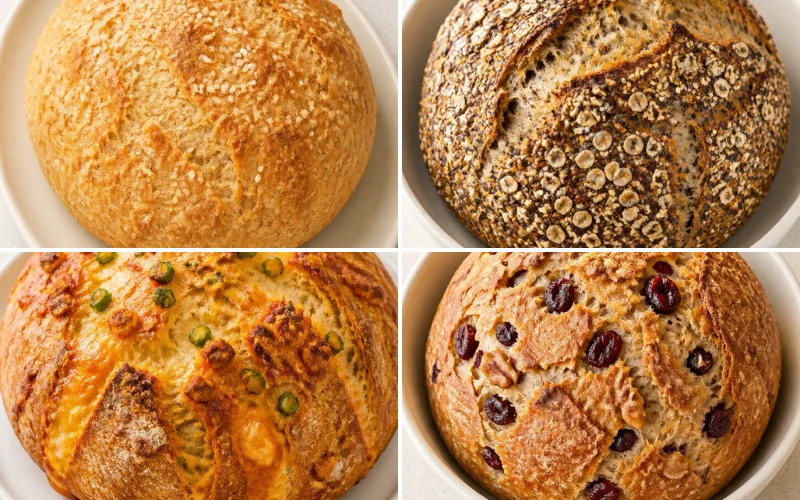
The versions below take that foundation in different directions. Start with Classic No-Knead, go Jalapeño Cheddar for heat, or try Sourdough for a tangy chew. Rosemary Olive Oil is lovely with soup.
Which Dutch Oven Bread Should You Make?
| Recipe | Flavor profile | Best for |
|---|---|---|
| Classic No-Knead Dutch Oven Bread | Crackly, airy, mild | First-time Dutch oven bread |
| Sourdough Dutch Oven Bread | Tangy, chewy, deep | Fermented flavor fans |
| Whole Wheat Honey Dutch Oven Bread | Nutty, slightly sweet, hearty | Everyday whole grain toast |
| Seeded Multigrain Dutch Oven Bread | Crunchy, earthy, wholesome | Texture lovers |
| Rosemary Olive Oil Dutch Oven Bread | Herbal, savory, golden | Soups and stews |
| Jalapeño Cheddar Dutch Oven Bread | Spicy, sharp, rich | Chili nights |
| Cinnamon Raisin Dutch Oven Bread | Sweet, spiced, soft | Breakfast and snacking |
| Gluten-Free Dutch Oven Bread | Light, nutty, tender | Gluten-free bakers |
| Rye Caraway Dutch Oven Bread | Earthy, aromatic, dense | Reuben-style sandwiches |
| Cranberry Walnut Dutch Oven Bread | Tart, toasty, fruity | Cheese boards |
| Dutch Oven Cheesy Pull-Apart Bread | Buttery, gooey, savory | A shareable side |
Classic No-Knead Dutch Oven Bread
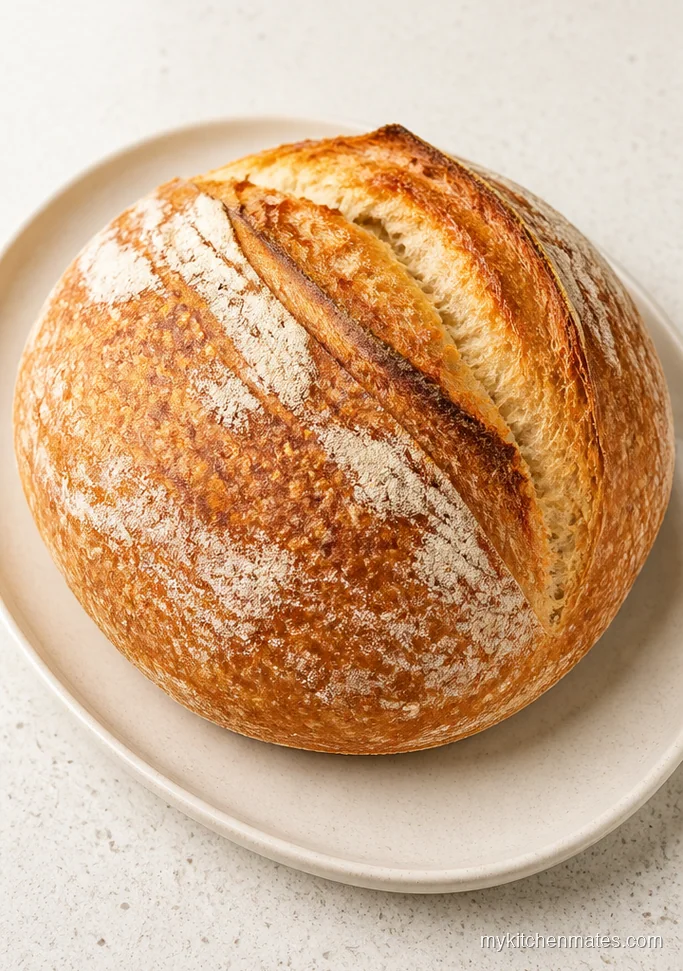
This is your starting point if you’ve never baked a loaf in a Dutch oven. The long, slow rise gives you an airy, open crumb without any kneading, and the hot pot blasts the crust into something crisp and crackly.
Ingredients (makes 1 large loaf)
- Bread flour: 450 g (3 1/2 cups)
- Warm water: 360 ml (1 1/2 cups)
- Fine sea salt: 1 1/2 tsp
- Active dry yeast: 1/2 tsp
- Extra bread flour, for dusting: 40 g (1/3 cup)
- Coarse cornmeal, for the pot: 1 tbsp
Instructions
Step 1: Measure 450 g (3 1/2 cups) bread flour into a large bowl, then stir in 1 1/2 tsp salt and 1/2 tsp yeast with a wooden spoon. Pour in 360 ml (1 1/2 cups) warm water and mix just until no dry streaks remain; you want a very rough, shaggy dough, not a smooth ball.
Step 2: Cover the bowl tightly with plastic wrap and leave it at room temperature for 12 to 18 hours. You’ll know it’s ready when the top looks puffy, wet, and scattered with tiny bubbles.
Step 3: Scrape the dough out onto a surface dusted with 40 g (1/3 cup) extra flour and use floured hands to fold the edges into the middle, turning as you go, four or five times. Let the dough rest for 15 minutes so it relaxes enough for you to shape it.
Step 4: With floured hands, shape the dough into a tight round by pulling it across the counter, then set it seam side down in a floured bowl lined with a clean tea towel. Dust the top lightly and let it rise until you see it turn puffy and nearly doubled, about 2 hours. During the last 30 minutes, put a 5 to 7 litre Dutch oven with its lid into the oven and heat to 230C (450F).
Step 5: Tip the risen dough onto a square of parchment, sprinkle 1 tbsp cornmeal onto the bottom, and lower it into the screaming-hot pot. Score the top once with a sharp knife, cover, and bake for 30 minutes. Remove the lid and bake another 15 to 20 minutes, until the crust is deep brown and the loaf sounds hollow when you tap its underside. Lift it out with the parchment, cool on a rack for 45 minutes, and serve thick slices with good butter.
Sourdough Dutch Oven Bread
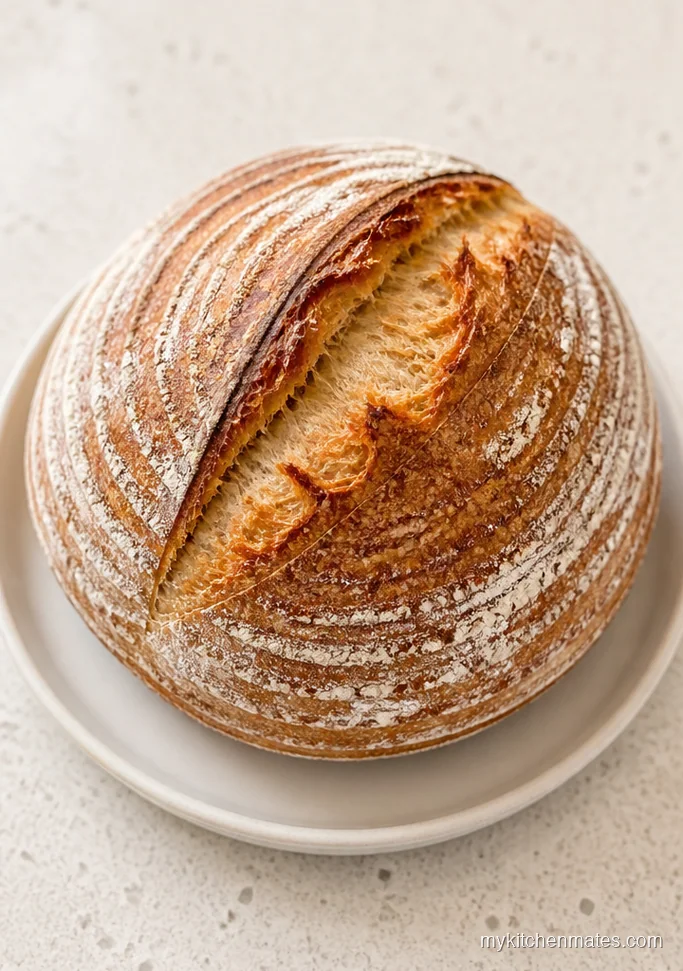
If you keep a bubbly starter on your counter, this loaf turns all that fermentation into a tangy, chewy crumb with a dark, blistered crust. It’s a slower bread, but the flavor is worth every hour.
Ingredients (makes 1 medium loaf)
- Bread flour: 400 g (3 1/4 cups)
- Whole wheat flour: 50 g (1/3 cup)
- Water, room temperature: 310 ml (1 1/3 cups)
- Active sourdough starter, fed and bubbly: 100 g (1/2 cup)
- Fine sea salt: 1 1/2 tsp
- Rice flour, for dusting: 2 tbsp
Instructions
Step 1: In a large bowl, stir 400 g bread flour, 50 g whole wheat flour, and 310 ml room temperature water until just combined. Let it sit for 30 minutes, and you’ll see it start to smooth out on its own.
Step 2: Add 100 g fed starter and 1 1/2 tsp salt, then use wet hands to squeeze and fold until fully mixed. Cover and rest for 30 minutes; you’re letting the flour absorb the water before the folds begin.
Step 3: Wet your hand, grab a section of dough from the edge, stretch it up, and fold it over the top. Repeat this four times around the bowl every 30 minutes for 3 hours; the dough will go from shaggy to glossy and bouncy under your fingers.
Step 4: Cover and let the dough rise at room temperature until it’s puffy and has grown by about half, 3 to 5 hours depending on the weather. Watch for a slight jiggle when you shake the bowl.
Step 5: Turn the dough onto a lightly floured counter and shape it into a round, pulling it across the surface to build tension. Rest it 20 minutes, then shape it once more and set it seam side up in a proofing basket you’ve dusted with 2 tbsp rice flour.
Step 6: Put the Dutch oven in the oven and heat to 250C (480F) for 45 minutes. Turn the loaf onto parchment, score it deeply, lower it into the hot pot, and bake covered for 25 minutes. Uncover and bake 20 minutes more, until the crust is nearly black in spots and your kitchen smells like a bakery. Cool on a rack and serve slices with butter and flaky salt.
Whole Wheat Honey Dutch Oven Bread
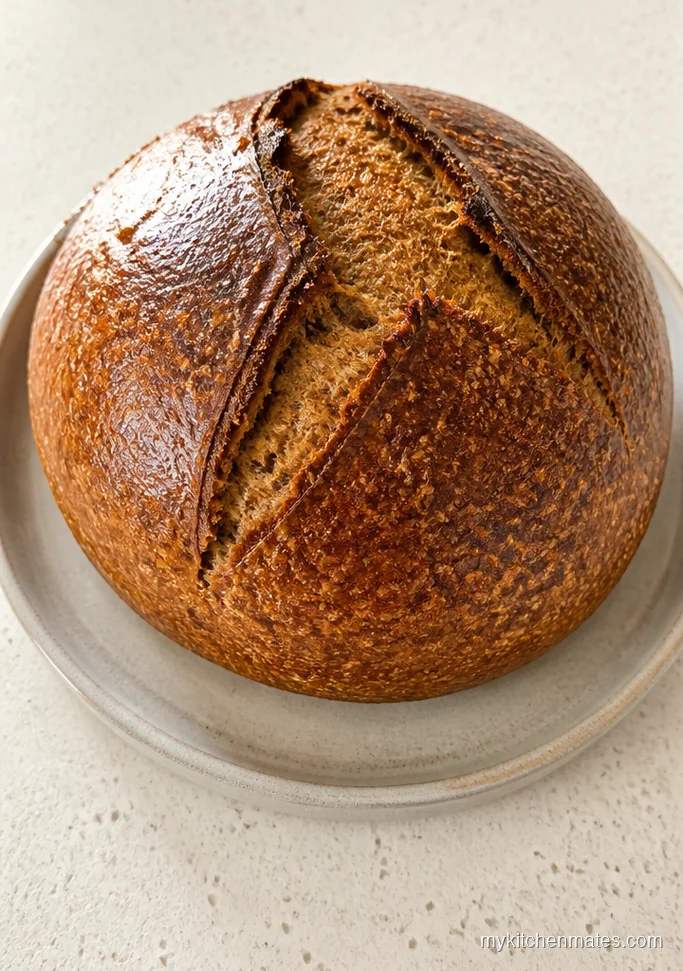
This is the loaf for everyday sandwiches and toast, made with a good amount of whole wheat and just enough honey to round out the nutty edge. It still bakes up with a shaggy, crackly crust, but the crumb is a little more substantial.
Ingredients (makes 1 sandwich loaf)
- Whole wheat flour: 300 g (2 1/2 cups)
- Bread flour: 150 g (1 1/4 cups)
- Warm whole milk: 240 ml (1 cup)
- Warm water: 120 ml (1/2 cup)
- Honey: 2 tbsp
- Active dry yeast: 1 1/2 tsp
- Fine sea salt: 1 1/2 tsp
- Extra whole wheat flour, for dusting: 2 tbsp
- Butter, melted, for brushing: 2 tbsp
Instructions
Step 1: Pour 240 ml warm milk and 120 ml warm water into a large bowl, then stir in 2 tbsp honey and 1 1/2 tsp yeast. Let it sit until foamy, about 5 minutes, and you’ll see tiny bubbles gathering at the edges.
Step 2: Add 300 g whole wheat flour, 150 g bread flour, and 1 1/2 tsp salt, then stir with a wooden spoon until a rough dough forms. Tip it onto a surface dusted with the 2 tbsp extra whole wheat flour and knead for 6 to 8 minutes, until it feels smooth and springs back when you poke it.
Step 3: Place the dough in a buttered bowl, cover, and let it rise at room temperature until doubled, about 1 1/2 to 2 hours. You’ll see it push against the plastic and feel soft when you press two fingers into the center.
Step 4: Punch the dough down, shape it into a tight round, and set it seam side down on a sheet of parchment. Cover loosely with a towel and let it rise for 45 minutes while you preheat the Dutch oven to 220C (425F).
Step 5: Dust the top with extra whole wheat flour, score a cross, and lower the parchment into the hot pot. Bake covered for 30 minutes, then uncover and bake 15 to 18 minutes more, until the crust is a deep mahogany and the loaf sounds hollow when you knock the bottom. Brush the hot crust with 2 tbsp melted butter, let it cool on a rack, and serve slices for toasted sandwiches or with soup.
Seeded Multigrain Dutch Oven Bread
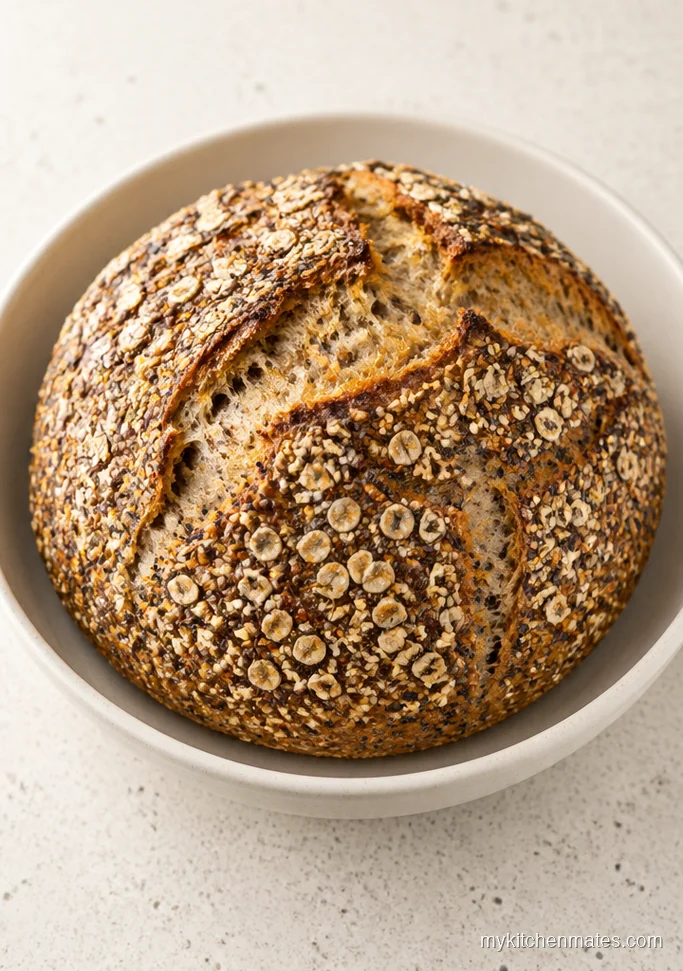
The seed crust is the whole point here, a crackly coat of sesame, flax, sunflower, and poppy seeds that toasts as the bread bakes. Inside you get a hearty but soft crumb with oats and whole wheat in the mix.
Ingredients (makes 1 hearty loaf)
- Bread flour: 300 g (2 1/2 cups)
- Whole wheat flour: 150 g (1 1/4 cups)
- Rolled oats: 50 g (1/2 cup)
- Warm water: 360 ml (1 1/2 cups)
- Active dry yeast: 1 1/2 tsp
- Honey or barley malt syrup: 1 tbsp
- Fine sea salt: 1 1/2 tsp
- Mixed seeds (sesame, flax, sunflower, poppy): 60 g (1/3 cup)
- Extra mixed seeds, for coating: 2 tbsp
Instructions
Step 1: In a large bowl, stir 300 g bread flour, 150 g whole wheat flour, 50 g oats, 1 1/2 tsp salt, and 1 1/2 tsp yeast together. Pour in 360 ml warm water and 1 tbsp honey, then mix until you have a sticky, shaggy dough.
Step 2: Add 60 g mixed seeds and use a wet hand to fold them in until evenly spread, then cover and let it rise for 1 1/2 to 2 hours, until doubled and you can see seeds pressed against the bowl.
Step 3: Scrape the dough onto a floured counter, press it into a rough rectangle, and fold the top and bottom toward the center like a letter. Roll it into a tight batard while you dampen the surface with water, then roll the loaf in the 2 tbsp extra seeds.
Step 4: Set the shaped loaf seam side down on parchment, cover with a towel, and let it rise until puffy, about 45 minutes. Put the Dutch oven with its lid in the oven and heat to 230C (450F), so it’s ready the moment your dough finishes rising.
Step 5: Lower the parchment into the hot pot, cover, and bake for 25 minutes. Remove the lid and bake another 20 to 25 minutes, until the seeds are toasted and the loaf is deep brown. Cool on a rack for at least an hour, then you can slice it thin and serve with cheddar or a swipe of mustard.
Rosemary Olive Oil Dutch Oven Bread
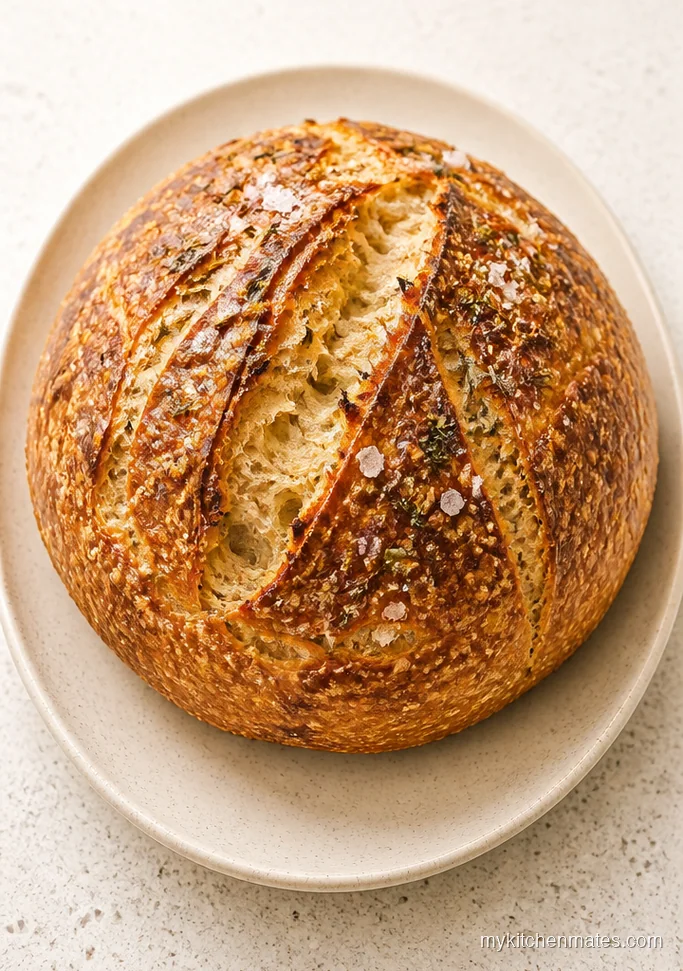
This is a savory, golden loaf that belongs next to soup, pasta, or a plate of tomatoes. Fresh rosemary and good olive oil do all the flavor work, and the crust turns glossy and fragrant in the hot pot.
Ingredients (makes 1 rustic loaf)
- Bread flour: 450 g (3 1/2 cups)
- Warm water: 330 ml (1 1/3 cups)
- Olive oil, plus extra for the bowl: 60 ml (1/4 cup)
- Active dry yeast: 1 tsp
- Fine sea salt: 1 1/2 tsp
- Fresh rosemary, finely chopped: 2 tbsp
- Flaky sea salt, for topping: 1/2 tsp
- Coarse cornmeal, for the pot: 1 tbsp
Instructions
Step 1: Warm 330 ml water until it feels just warm on your wrist, then stir in 1 tsp yeast and let it sit until cloudy, about 5 minutes. Pour in 60 ml olive oil, then add 450 g bread flour, 1 1/2 tsp salt, and 2 tbsp rosemary; stir until you have a soft, slightly oily dough.
Step 2: Turn the dough onto a lightly oiled counter, not floured, and knead for 8 minutes, until it feels supple and you can stretch a thin window without tearing. Form it into a ball, place it in the oiled bowl, cover, and let it double, about 1 1/2 hours.
Step 3: Press the air out, shape the dough into a round, and set it on parchment dusted with 1 tbsp cornmeal. Cover with a towel and let it rise for 45 minutes while you preheat the Dutch oven to 230C (450F).
Step 4: Score the top with three diagonal slashes while you brush it lightly with water, then sprinkle with 1/2 tsp flaky salt. Lower the loaf into the hot pot, cover, and bake 30 minutes, then uncover and bake 15 to 18 minutes more, until deep golden and the rosemary edges look crisp. Cool on a rack, then you can serve it torn into pieces with olive oil for dipping.
Jalapeño Cheddar Dutch Oven Bread
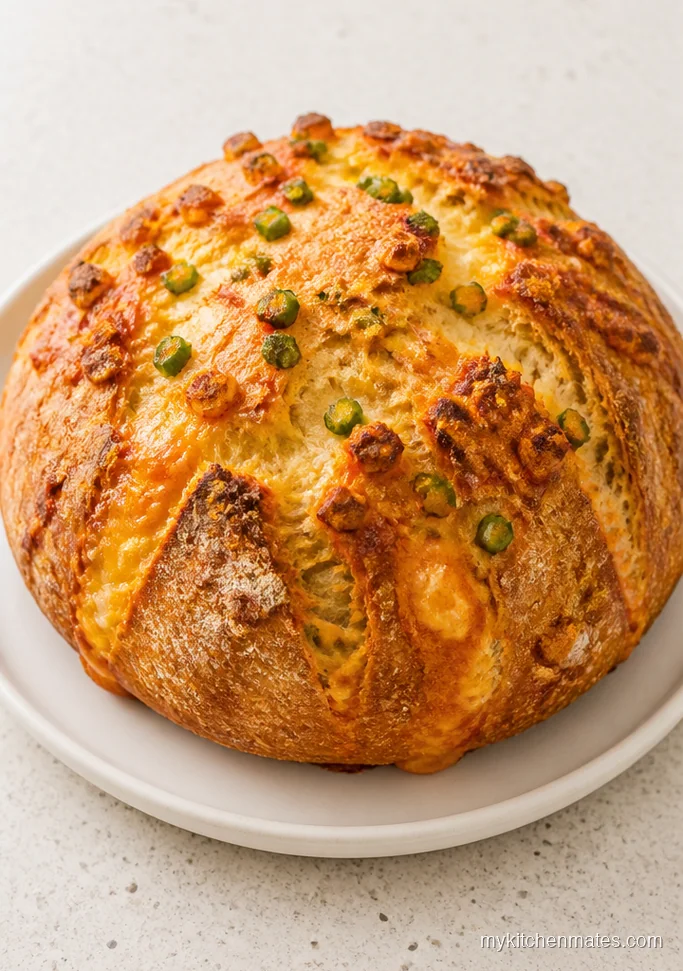
This one is for chili nights, tailgates, and anyone who likes a loaf with a kick. Sharp cheddar melts into little pockets, and the jalapeños bring heat that plays off the crisp crust.
Ingredients (makes 1 large boule)
- Bread flour: 450 g (3 1/2 cups)
- Warm water: 300 ml (1 1/4 cups)
- Sharp cheddar, cut into 1 cm cubes: 150 g (1 1/2 cups)
- Fresh jalapeños, seeded and finely diced: 2 medium (about 60 g)
- Active dry yeast: 1 1/2 tsp
- Fine sea salt: 1 1/2 tsp
- Olive oil, for the bowl: 1 tbsp
- Coarse cornmeal, for the pot: 1 tbsp
Instructions
Step 1: In a large bowl, stir 450 g bread flour, 1 1/2 tsp yeast, and 1 1/2 tsp salt together. Add 300 ml warm water, then fold in 150 g cheddar cubes and the diced jalapeños with a wooden spoon; you want them scattered evenly through the dough.
Step 2: Cover and let the dough rest for 30 minutes, then use a wet hand to pull one side up and fold it over the top. Do this four times around the bowl, turn it, and repeat every 20 minutes for an hour; the dough will turn smooth and bouncy, and you’ll see tiny cheese streaks.
Step 3: Cover the bowl and leave it at room temperature until doubled and puffy, about 1 1/2 hours. The jalapeños may release a little liquid, so you may notice the dough looks slightly sticky around the green flecks.
Step 4: Turn the dough onto a floured counter, shape it into a round, and set it seam side down on parchment. Cover and let it rise for 45 minutes while you heat the Dutch oven to 230C (450F).
Step 5: Sprinkle 1 tbsp cornmeal on the base before you lower the dough into the hot pot, then score the top and bake covered for 30 minutes. Uncover and bake 15 to 20 minutes more, until the cheese edges turn deep golden and the loaf sounds hollow when you tap it. Cool on a rack for at least 30 minutes, cut into thick slices while still slightly warm, and serve with a bowl of chili or a slick of honey butter.
Cinnamon Raisin Dutch Oven Bread
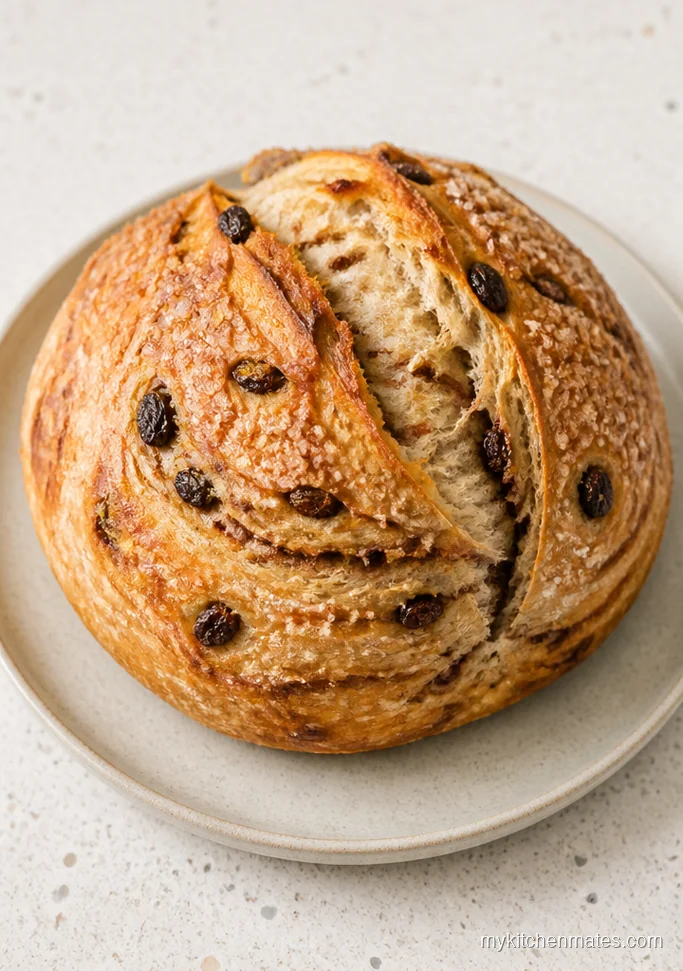
This is the sweet loaf of the bunch, a breakfast bread that tastes like a cross between a cinnamon roll and a country loaf. The raisins plump in the dough, and the cinnamon swirls stay soft inside the crackly shell.
Ingredients (makes 1 tall loaf)
- Bread flour: 450 g (3 1/2 cups)
- Warm whole milk: 240 ml (1 cup)
- Warm water: 120 ml (1/2 cup)
- Granulated sugar: 70 g (1/3 cup)
- Active dry yeast: 1 1/2 tsp
- Fine sea salt: 1 tsp
- Butter, softened: 45 g (3 tbsp)
- Raisins: 120 g (3/4 cup)
- Ground cinnamon: 2 tsp
- Raw sugar, for the top: 1 tbsp
Instructions
Step 1: Warm 240 ml milk and 120 ml water just until they feel warm on your wrist, then stir in 50 g of the sugar and 1 1/2 tsp yeast. Let it sit until foamy, about 5 minutes, and you’ll see a creamy cap rise on top.
Step 2: Stir in 450 g bread flour, 1 tsp salt, and 45 g softened butter, then mix until a rough dough forms. Knead on a floured counter for 8 to 10 minutes, folding in 120 g raisins once the dough starts to smooth out, until it’s supple and you can pull it without immediate tearing.
Step 3: Place the dough in a buttered bowl, cover, and let it rise until doubled, about 1 1/2 hours. Press a finger into it and the indentation should stay when it’s ready for you to shape.
Step 4: Roll the dough into a 20 x 30 cm rectangle, brush the surface lightly with water, and sprinkle the remaining 20 g sugar and 2 tsp cinnamon over it. Roll it up tightly from the short end, pinching the seam as you go, then set it seam side down on parchment and let it rise for 45 minutes.
Step 5: Place the Dutch oven in the oven and heat to 220C (425F) while you wait for the loaf to finish rising. Sprinkle 1 tbsp raw sugar over the top, lower the loaf into the hot pot, and bake covered for 30 minutes. Uncover and bake another 15 to 20 minutes, until the crust is deep brown and the kitchen smells like cinnamon toast. Cool on a rack, then you can slice thick and serve warm with butter.
Gluten-Free Dutch Oven Bread
A Dutch oven bread with no gluten can still have a serious crust and a soft, open crumb. This one leans on a gluten-free flour blend and psyllium husk, which gives the dough the stretch gluten usually provides.
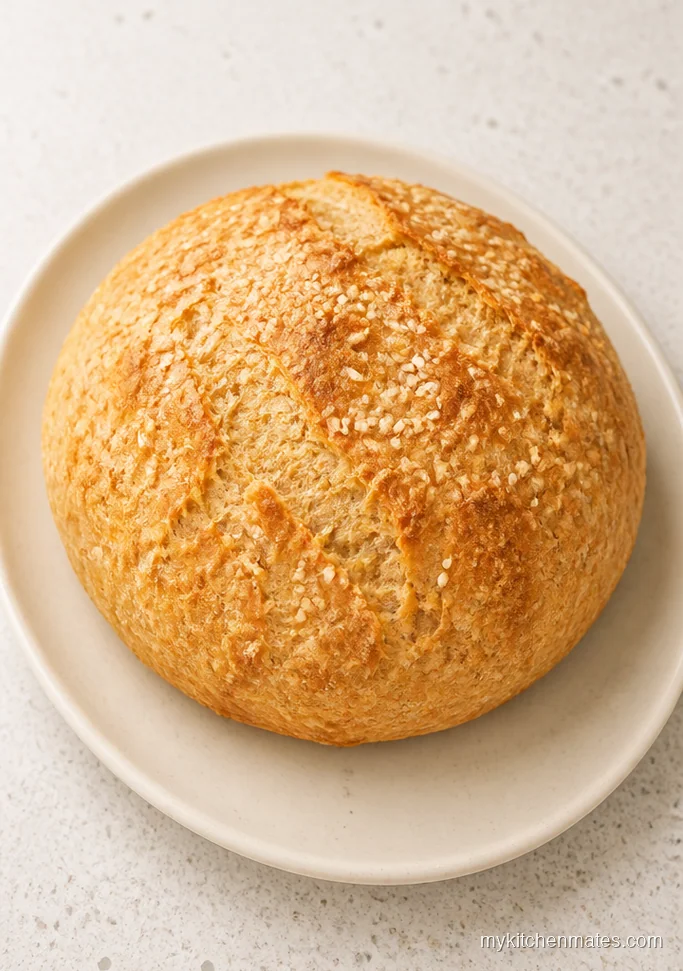
Ingredients (makes 1 small loaf)
- Gluten-free bread flour blend, with xanthan gum: 400 g (2 3/4 cups)
- Psyllium husk powder: 2 tbsp
- Warm water: 360 ml (1 1/2 cups)
- Active dry yeast: 1 1/2 tsp
- Honey: 1 tbsp
- Fine sea salt: 1 tsp
- Olive oil, plus extra for the bowl: 30 ml (2 tbsp)
- Sesame seeds, for topping: 1 tbsp
Instructions
Step 1: Whisk 400 g gluten-free flour blend, 2 tbsp psyllium husk, 1 1/2 tsp yeast, and 1 tsp salt in a large bowl. Pour in 360 ml warm water, 1 tbsp honey, and 30 ml olive oil, then beat with a wooden spoon for a full 2 minutes; you’re aiming for a thick, sticky batter rather than a kneadable dough.
Step 2: Cover the bowl and let the dough rise in a warm spot until it has puffed and nearly doubled, about 45 minutes to 1 hour. You’ll see bubbles around the sides and the surface will look glossy.
Step 3: Wet your hands and turn the dough a few times in the bowl to tighten it into a rough ball, then set it on parchment. Dust with 1 tbsp sesame seeds and let it rest uncovered while you preheat the Dutch oven to 230C (450F).
Step 4: Lower the parchment into the hot pot, cover, and bake for 45 minutes. Remove the lid and bake another 10 minutes, until the crust is dark brown and sounds firm when you tap it. Cool completely on a rack before you slice, then serve with soft butter or avocado.
Rye Caraway Dutch Oven Bread
This is a dark, aromatic loaf with the unmistakable flavor of caraway, the kind of bread that makes a corned beef sandwich feel complete. Rye keeps it dense and moist, and the Dutch oven gives it a thick, crackly crust.
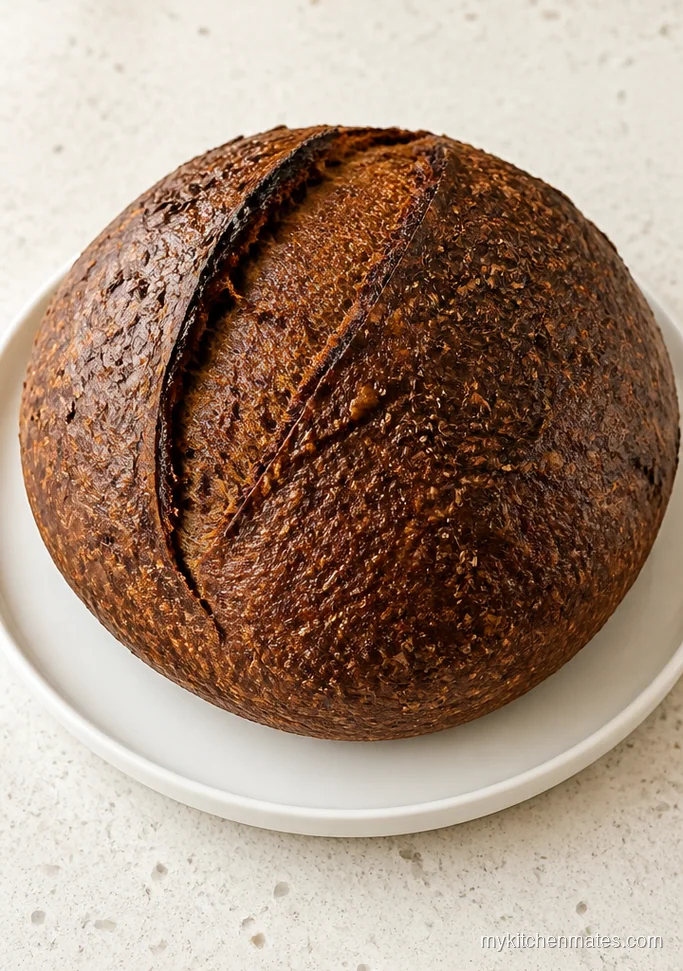
Ingredients (makes 1 dense rye loaf)
- Bread flour: 300 g (2 1/2 cups)
- Dark rye flour: 150 g (1 1/4 cups)
- Warm water: 360 ml (1 1/2 cups)
- Active dry yeast: 1 1/2 tsp
- Caraway seeds: 2 tbsp
- Fine sea salt: 1 1/2 tsp
- Molasses: 1 tbsp
- Vegetable oil, for the bowl: 1 tbsp
- Extra caraway seeds, for topping: 1 tsp
- Coarse cornmeal, for the pot: 1 tbsp
Instructions
Step 1: In a large bowl, stir 300 g bread flour, 150 g rye flour, 1 1/2 tsp yeast, 1 1/2 tsp salt, and 2 tbsp caraway seeds. Pour in 360 ml warm water and 1 tbsp molasses, then stir until the dough comes together; rye makes it stickier, so you may need to scrape the sides.
Step 2: Turn the dough onto a lightly floured counter and knead for 8 minutes, adding only as much flour as you need to stop full sticking. The dough will never feel bouncy like white bread, but you should sense it firming up. Cover and let it rise until doubled, about 1 1/2 hours.
Step 3: Punch the dough down, shape it into a smooth round, and set it seam side down on parchment. Brush the top with water while you sprinkle 1 tsp extra caraway seeds over it, then cover and let it rise for 45 minutes; put the Dutch oven with its lid into the oven and heat to 220C (425F) partway through.
Step 4: Score a cross in the top and lower the parchment into the scorching pot, using oven mitts so you keep your hands clear. Cover the pot and bake for 30 minutes.
Step 5: Uncover and bake 20 minutes more, until the crust is deep brown and firm. Cool on a rack for at least an hour before you slice, then serve with mustard and pickles, or pile on corned beef.
Cranberry Walnut Dutch Oven Bread
This loaf feels like a special occasion, but it starts with the same no-fuss method as the rest. Dried cranberries add a tart chew, walnuts get toasty in the oven, and a little honey keeps the crumb tender.
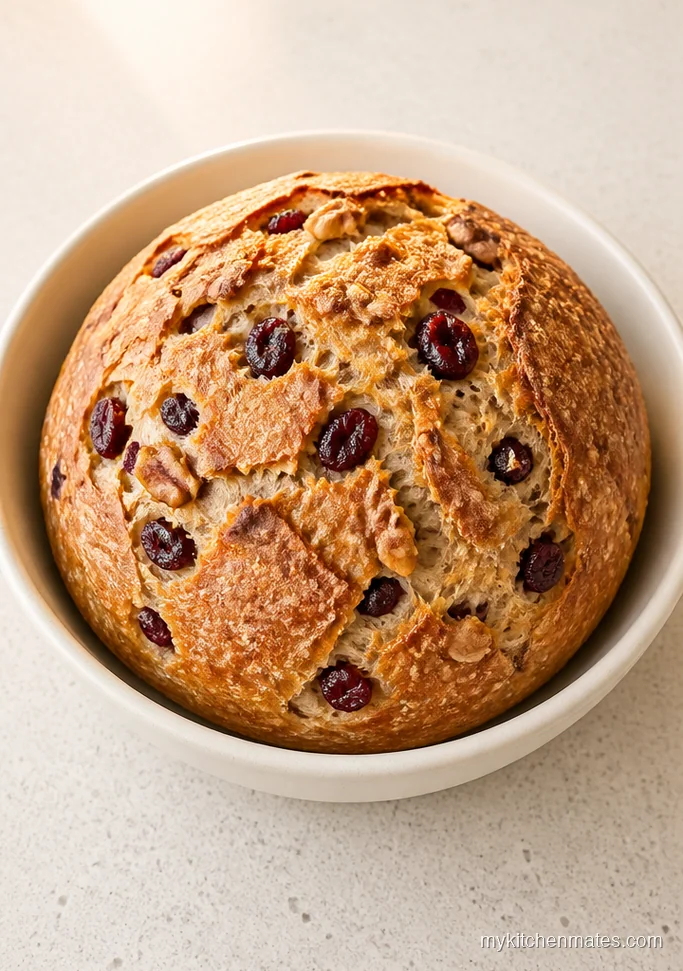
Ingredients (makes 1 large round loaf)
- Bread flour: 400 g (3 1/4 cups)
- Whole wheat flour: 50 g (1/3 cup)
- Warm water: 330 ml (1 1/3 cups)
- Active dry yeast: 1 1/2 tsp
- Honey: 1 tbsp
- Fine sea salt: 1 1/2 tsp
- Dried cranberries: 100 g (3/4 cup)
- Walnuts, roughly chopped: 80 g (2/3 cup)
- Coarse cornmeal, for the pot: 1 tbsp
Instructions
Step 1: Stir 400 g bread flour, 50 g whole wheat flour, 1 1/2 tsp yeast, and 1 1/2 tsp salt in a large bowl. Add 330 ml warm water and 1 tbsp honey, then mix with a spoon; the dough will be shaggy and a little sticky, and you’ll see flecks of whole wheat through it.
Step 2: Add 100 g cranberries and 80 g walnuts, then use a wet hand to fold them in so they’re evenly spaced. Cover and let the dough rise until doubled, 1 1/2 to 2 hours; you’ll notice the cranberries start to soften and plump.
Step 3: Tip the dough onto a floured counter and press it into a rough rectangle. Fold the top and bottom into the center, then roll it up into a boule, tucking the seam as you turn it in your hands.
Step 4: Set the shaped loaf seam side down on parchment, cover, and let it rise for 45 minutes while you heat the Dutch oven to 220C (425F). The loaf should look puffy but not doubled.
Step 5: Dust the base with 1 tbsp cornmeal, score the top, and lower the loaf into the hot pot. Bake covered for 30 minutes, then uncover and bake another 20 minutes, until deep golden and the walnuts smell toasty. Cool on a rack for at least 45 minutes, then you can serve thin slices with brie or sharp cheddar.
Dutch Oven Cheesy Pull-Apart Bread
This one bakes as a ring of soft, buttery rolls stuffed with cheddar and chives, all pulled together inside the hot Dutch oven. It’s the most fun loaf in the list, meant for passing around the table and pulling straight from the pot.
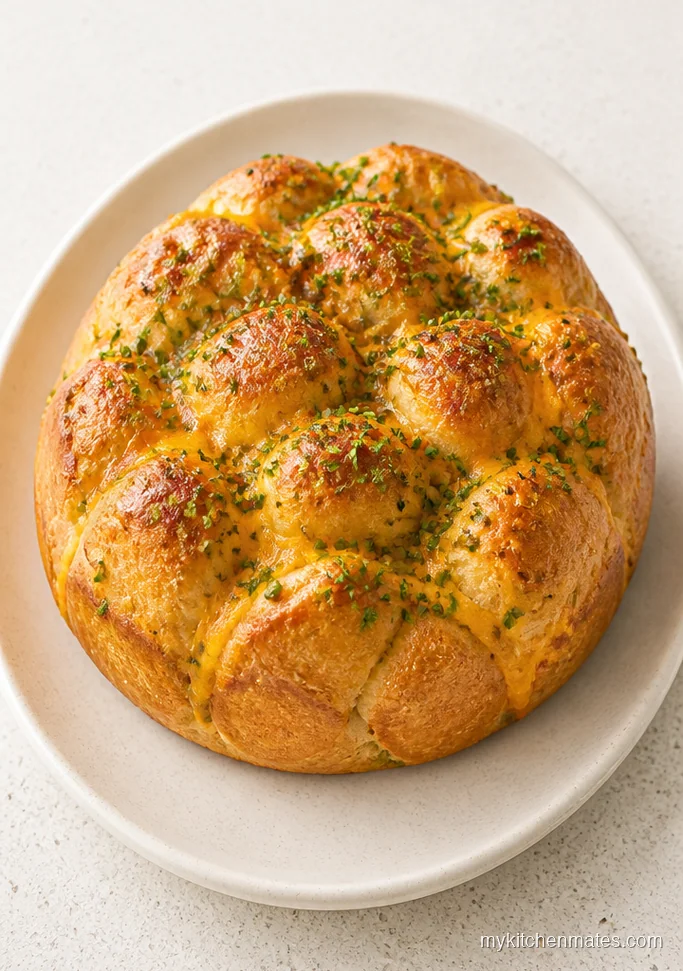
Ingredients (makes 12 pull-apart pieces)
- Bread flour: 500 g (4 cups)
- Warm whole milk: 240 ml (1 cup)
- Warm water: 60 ml (1/4 cup)
- Granulated sugar: 1 tbsp
- Active dry yeast: 2 1/4 tsp (1 packet)
- Fine sea salt: 1 1/2 tsp
- Butter, softened: 60 g (4 tbsp)
- Sharp cheddar, shredded: 150 g (1 1/2 cups)
- Fresh chives, finely sliced: 3 tbsp
- Vegetable oil, for the bowl: 1 tsp
Instructions
Step 1: Warm 240 ml milk and 60 ml water just until they feel warm on your wrist, then stir in 1 tbsp sugar and 2 1/4 tsp yeast. Let it sit for 5 minutes, and you’ll see a creamy foam rise on top. In a large bowl, combine 500 g bread flour and 1 1/2 tsp salt, then pour in the yeast mixture and 30 g (2 tbsp) of the softened butter, mixing until a shaggy dough forms.
Step 2: Turn the dough onto a floured counter and knead for 8 to 10 minutes, until smooth and elastic, then place it in a lightly oiled bowl. Cover and let it rise until doubled, about 1 1/2 hours, so you can press a finger into it and see the indent stay.
Step 3: Punch the dough down and divide it into 12 equal pieces, using your scale or eye to keep them close in size. Flatten each piece into a small round in your palm, add a portion of 150 g shredded cheddar and 3 tbsp chives, then pull the edges up and pinch to seal.
Step 4: Butter the inside of a 5 to 7 litre Dutch oven with the remaining 30 g (2 tbsp) butter, then set the filled dough balls seam side down in a single layer, leaving a little space between them for you to see them grow. Cover and let them rise for 45 minutes until puffy and touching.
Step 5: Heat the oven to 180C (350F) while the rolls finish rising, and you can brush the tops with any butter left in the bowl. The dough should look soft and full before it goes into the oven.
Step 6: Cover the pot and bake for 20 minutes, then remove the lid and bake another 15 to 20 minutes, until the tops are deep golden and the cheese bubbles at the seams. Let the bread cool in the pot for 10 minutes, then you can turn it out onto a board and serve warm, pulling pieces apart with your hands.
The one thing that matters most across every loaf here is watching the dough rather than the clock. If it looks puffy, jiggly, and full of air when you poke it, it will reward you with a better crumb and a taller rise, whatever version you choose.
Pick a loaf, preheat that pot, and let the smell of baking bread do the rest.
