
Overnight Croissant French Toast Casserole

Buttery croissants soak up a rich vanilla custard overnight, then bake into a golden, puffy breakfast casserole with barely any morning work. If you want a special brunch that feels fancy without the last-minute scramble, this is the one.

It has the crisp, caramelized edges of classic French toast and the soft, custardy center of a bread pudding all in the same dish, and you can top it with fresh berries and a drizzle of warm maple syrup right before you bring it to the table.
Why This Croissant French Toast Casserole Works
The croissants are the reason to make this. Their flaky layers drink in the custard better than regular bread, and what stays exposed on top turns shatteringly crispy in the oven.
Six eggs, whole milk, a little cream, and a good glug of vanilla give you a custard that tastes like a bakery pastry cream without any extra effort. The sugar and cinnamon caramelize just enough during baking to create a glossy, sticky top, so no syrup is required, though I never say no to a little more.
It also buys you a quiet morning. You assemble the whole thing the night before, stash it in the fridge, and the next morning you just slide it into a hot oven while you make coffee.
Ingredients
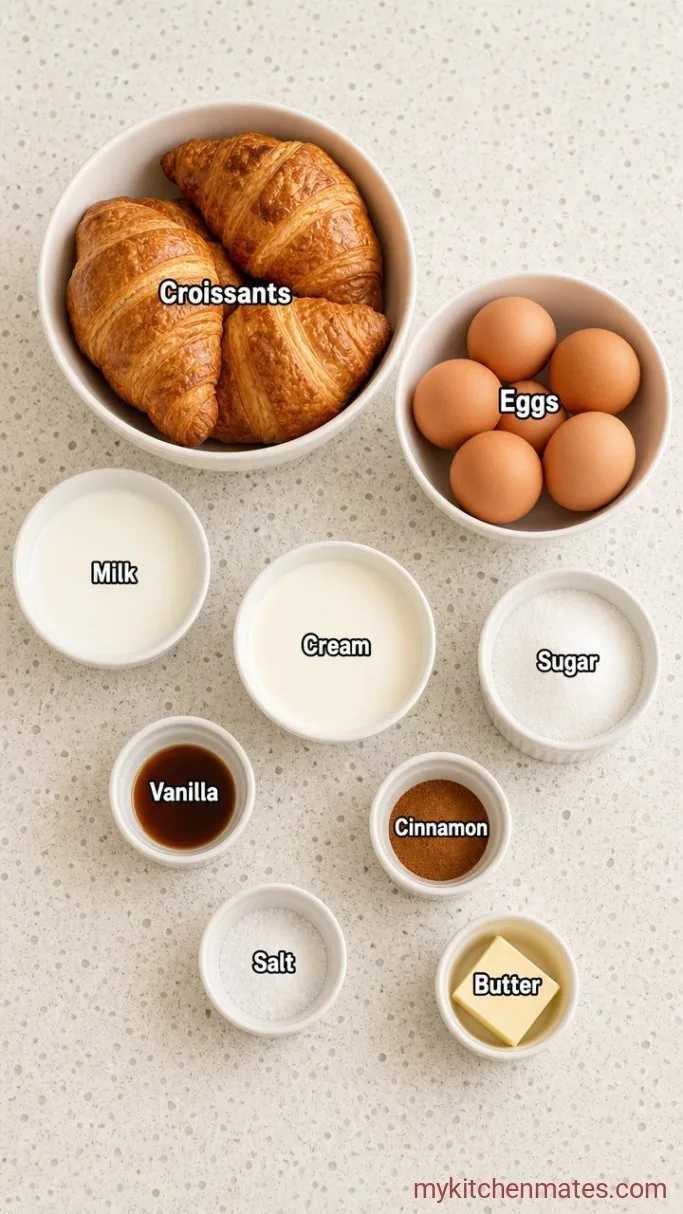
- 6 large day-old croissants (about 1 lb): slightly stale croissants hold their shape best, but fresh work too
- 6 large eggs: give the custard body and richness
- 2 cups whole milk: for a creamy base, 2% is fine in a pinch
- 1/2 cup heavy cream: adds extra tenderness and helps the top brown deeply
- 1/3 cup granulated sugar: sweetens the custard and helps form that caramelized crust
- 1 tbsp vanilla extract: use pure vanilla for the best flavor
- 1 tsp ground cinnamon: the warmth balances all the butter and sweetness
- 1/8 tsp fine sea salt: just enough to make everything taste rounder
- Butter or cooking spray: for greasing the dish
- Powdered sugar, maple syrup, and fresh berries: for serving
Variations / Substitutions
- Fruity version: tuck 1 cup of fresh or frozen blueberries or raspberries between the croissant pieces before pouring the custard
- Dairy-free: swap the milk and cream for an equal amount of full-fat oat milk, and brush the dish with melted coconut oil
- Less sweet: reduce the sugar to 3 tbsp and skip the powdered sugar topping; the croissants already carry a lot of buttery richness
- Warm spice: add 1/4 tsp freshly grated nutmeg or a pinch of cardamom along with the cinnamon
- Nutty crunch: scatter 1/3 cup of sliced almonds or chopped pecans over the top halfway through baking so they toast without burning
Broccoli Quiche is next on our list if this french toast casserole is your kind of breakfast.
How to Make Croissant French Toast Casserole
Step 1: Arrange the Croissants

Grease a 9×13-inch baking dish with butter or cooking spray. Tear the croissants into large, bite-sized pieces, about 2 to 3 inches each, and pile them into the dish in an even layer. They should fill the dish loosely and come almost to the top, because they will soften and sink as they soak.
The torn edges will catch the custard and turn out extra crispy after baking, so do not cut them with a knife, the rough surfaces are your friend here.
Step 2: Whisk the Custard

Crack the 6 eggs into a large bowl and whisk them until the whites and yolks are fully combined and a little frothy. Pour in the 2 cups whole milk, 1/2 cup heavy cream, 1/3 cup sugar, 1 tbsp vanilla, 1 tsp cinnamon, and the 1/8 tsp salt, then whisk again until the sugar dissolves and the mixture looks uniform with no streaks of egg white.
You will notice the custard smells deeply sweet and fragrant at this point, and that is exactly what will soak into every bite of croissant.
Step 3: Pour and Soak
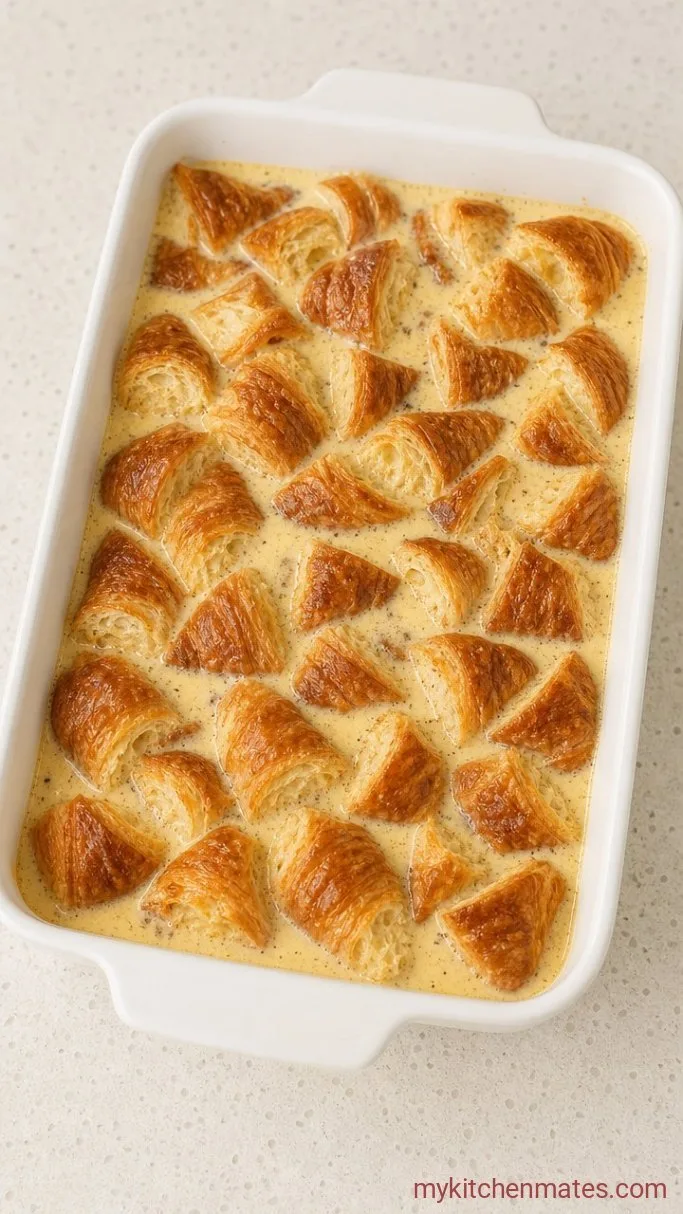
Slowly pour the custard over the croissants, making sure to cover all the pieces. Use the back of a spoon to gently press the croissants down into the liquid so they start absorbing it right away. Cover the dish tightly with plastic wrap or a lid and refrigerate for at least 30 minutes or up to overnight (8 to 12 hours, which is when the texture hits its sweet spot).
After a long soak, the top pieces will still look a little dry while the bottom will be heavy with custard. That contrast is what gives you the crisp top and spoonable middle later, so do not stir or rearrange once you have pressed them down.
Step 4: Bake the Casserole
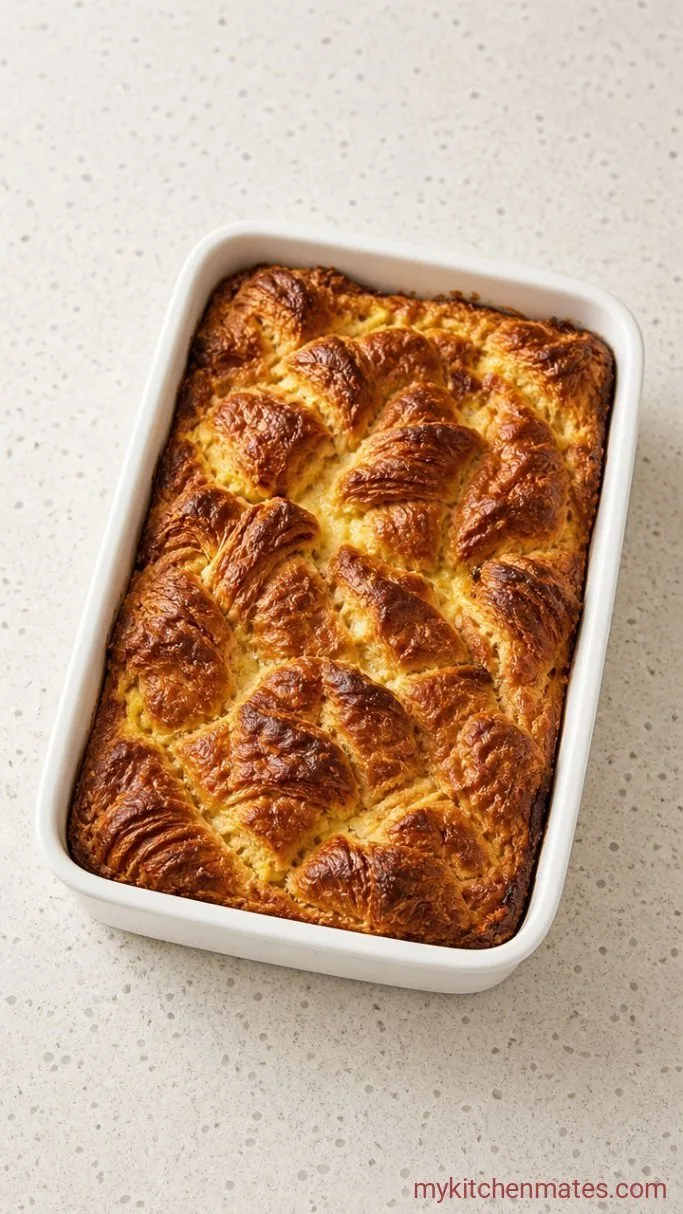
When you are ready to bake, pull the dish out of the fridge while the oven preheats to 350°F (175°C). Remove the plastic wrap and let the casserole sit on the counter for about 20 minutes so it loses the fridge chill, which helps it bake evenly. Bake uncovered for 40 to 45 minutes, until the top is deep golden brown and the center no longer jiggles when you shake the dish gently.
The kitchen will smell like browned butter and warm vanilla, and a knife inserted in the middle should come out mostly clean with no liquid custard pooling around it. If the top starts getting too dark before the center sets, tent it loosely with a piece of foil for the last 10 minutes.
Step 5: Serve with Maple Syrup and Berries
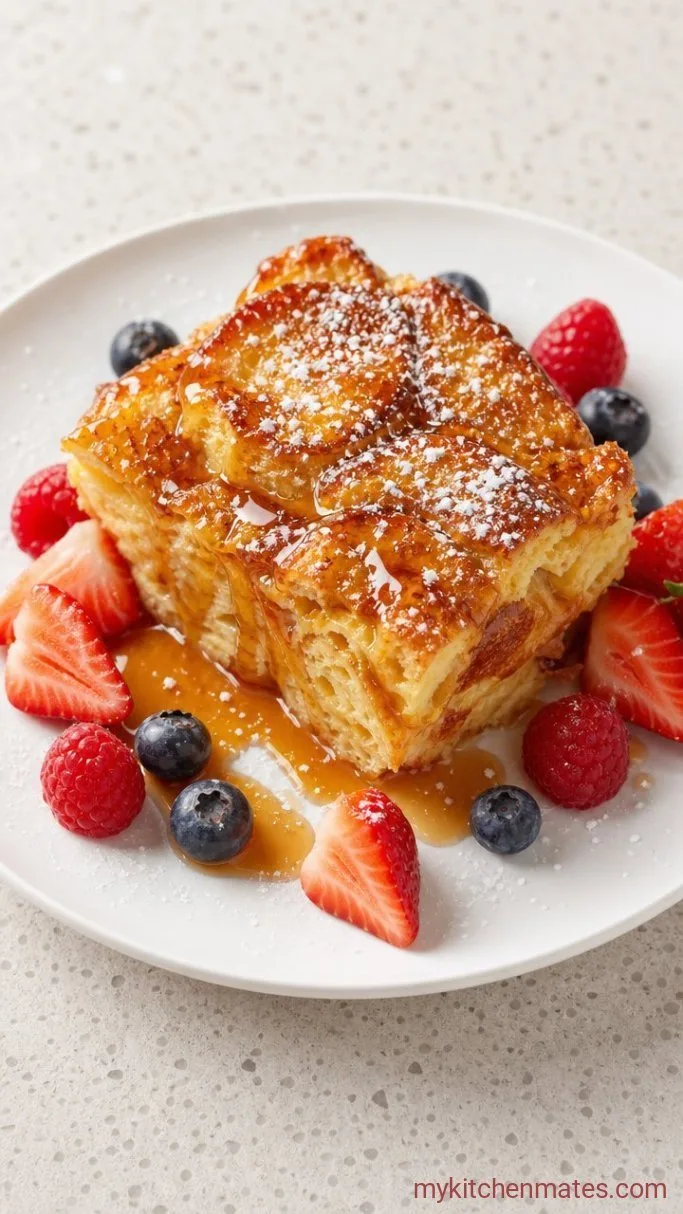
Let the casserole rest for about 5 minutes so the slices hold their shape. Dust the top generously with powdered sugar, then cut it into big squares and transfer them to plates. Drizzle with warm maple syrup and scatter a handful of fresh berries over each serving, and bring the rest of the syrup to the table because people always want more.
It is best served hot, while the edges are still crisp and the center is soft and almost pudding-like.
Tips for the Best Croissant French Toast Casserole
- Use day-old croissants if you can — they absorb custard more evenly without turning mushy. If yours are fresh, leave them out on the counter uncovered for a few hours or pop them in a 300°F oven for 5 minutes to dry out a bit before tearing.
- Do not skip the soaking time — even a quick 30-minute soak gives far better texture than baking immediately, though the overnight version is the most luxurious.
- If your croissants are unusually large or dense, cut the milk back to 1 3/4 cups so the custard does not overwhelm them.
- Watch the color during baking — every oven runs a little differently, and the sugar and croissant butter can go from golden to too dark fast. Check at the 35-minute mark and use foil if needed.
- Leftover syrup trick: warm the maple syrup with a cinnamon stick and a strip of orange peel for a few minutes before serving, it adds a subtle perfume that works beautifully with the buttery casserole.
Storing Leftovers
- Refrigerate: Keep any cooled leftovers in a sealed container in the fridge for up to 3 days. The texture will soften, but it reheats well.
- Reheating: Warm individual portions in a 300°F oven for 10 to 12 minutes, covered with foil to prevent drying, or microwave for 45 to 60 seconds for a faster option. The oven will bring back more of the top’s crispness.
- Enjoy cold: Some people love a cold slice right from the fridge the next day, and honestly the custard tastes almost like a dense bread pudding that way.
What to Serve with Croissant French Toast Casserole
A big bowl of fresh fruit salad with a squeeze of lime cuts through the richness and adds a bright note. Crispy bacon or breakfast sausage on the side balances the sweetness with something salty and savory. For drinks, a simple pitcher of orange juice or a pot of strong coffee are both perfect, because this dish is rich enough to stand up to bold, bitter flavors.
Frequently Asked Questions
Can I use stale croissants that are a few days old?
Yes, and they actually perform better than fresh ones because they soak up custard without turning to mush. Just avoid any that are moldy or have gone hard as a rock.
What if I do not have time to soak overnight?
Soak for at least 30 minutes at room temperature, pressing the croissants down a few times during that soak. The result will be good, though the custard will be slightly less evenly distributed than the overnight version.
Can I make this casserole dairy-free?
You can. Swap the whole milk and cream for a full-fat oat milk or a barista blend almond milk, and brush the baking dish with refined coconut oil instead of butter. The top will still brown nicely.
How do I know when the casserole is fully baked?
The center should look set and spring back slightly when pressed, and a thin knife inserted into the middle should come out clean with no liquid custard clinging to it. The top will be deeply golden all over.
Can I freeze the baked casserole?
Yes, cool it completely, then wrap individual portions tightly and freeze for up to 1 month. Reheat from frozen in a 300°F oven for about 20 minutes, covered with foil, until warmed through.
Croissant French Toast Casserole Recipe
Ingredients
Method
- Grease a 9×13-inch baking dish. Tear the croissants into rough 2 to 3-inch pieces and arrange them evenly in the dish.
- Whisk the eggs, milk, cream, sugar, vanilla, cinnamon, and salt together until smooth and the sugar dissolves.
- Pour the custard over the croissants and press down gently with a spoon to help them absorb the liquid. Cover and refrigerate at least 30 minutes, preferably overnight (8 to 12 hours).
- Preheat the oven to 350°F (175°C). Let the dish sit at room temperature for 20 minutes, then bake uncovered for 40 to 45 minutes until golden and the center is set with no jiggle.
- Rest the casserole for 5 minutes. Dust with powdered sugar, cut into squares, and serve with warm maple syrup and fresh berries.
Notes
