
Overnight Cranberry Walnut Sourdough Bread

This naturally leavened loaf folds tangy dried cranberries and toasted walnuts into a crusty, chewy sourdough. An overnight cold proof builds deep flavor while you sleep, so most of the work happens on its own.
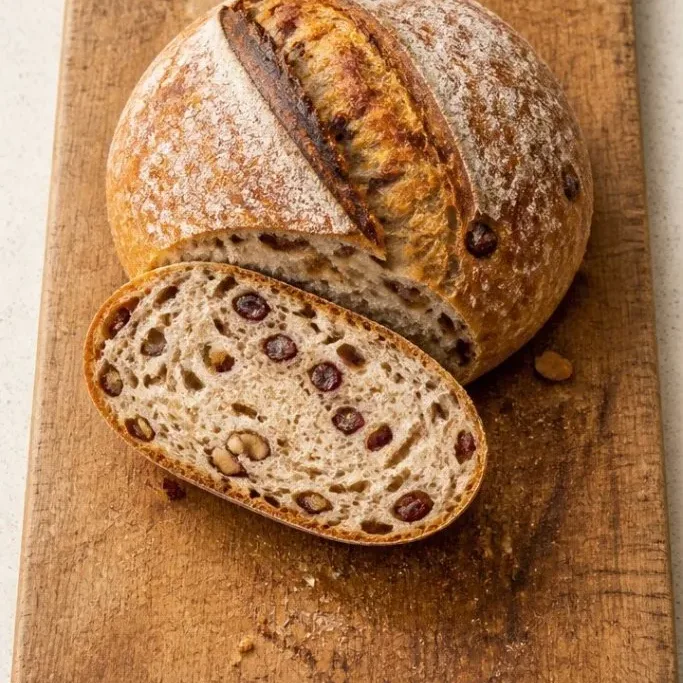
A mix the night before, a quick shape in the morning, and a hot Dutch oven do the heavy lifting. It turns out with a crackling crust and a soft, holey crumb that tastes like a bakery loaf, with barely 30 minutes of hands-on time.
What Makes This Sourdough a Keeper
The cranberries plump up into jammy little pockets, and the walnuts stay crunchy through the bake. Every slice has that tug of sourdough tang against the sweet-tart fruit and earthy nuts.
The cold fridge proof is the real trick. I let the shaped loaf sleep overnight, and by morning the dough is relaxed and ready to score and bake. It fits around a workday and still delivers a loaf with an open crumb and deep color.
Most of all, it bakes in a single Dutch oven, so you get a steamy, high-rising environment without fuss. The result is a bread that feels special enough for a holiday table but simple enough for any Tuesday.
Ingredients
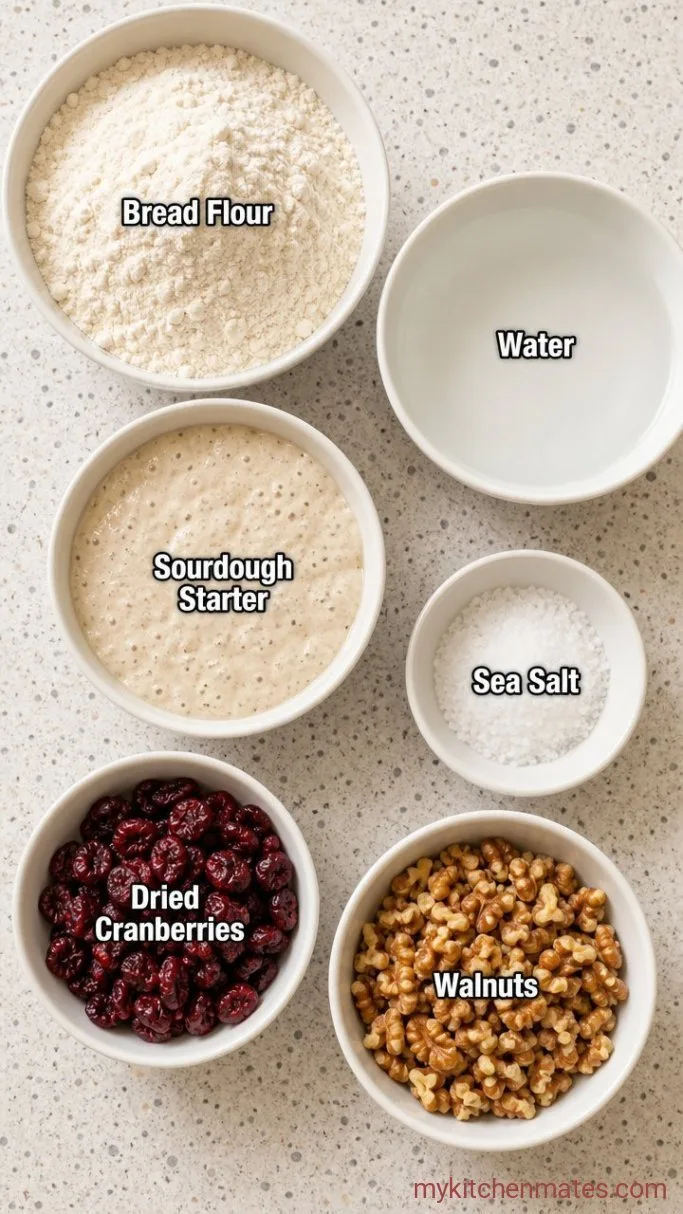
- 500g bread flour (about 4 cups): use a flour with at least 12% protein for good structure
- 350g filtered water, lukewarm (about 80°F/27°C): chlorine can slow fermentation, so filtered is best
- 100g active sourdough starter (100% hydration): feed it 4 to 6 hours ahead so it’s bubbly and doubled
- 10g fine sea salt: dissolves cleanly and won’t leave gritty spots
- 75g dried cranberries: plump them in warm water for 10 minutes and drain well if they feel dry or tough
- 60g walnut halves or pieces: toast in a dry skillet until fragrant, then chop roughly
Variations and Substitutions
- Swap the nuts: pecans work just as well, and hazelnuts give a deeper, woodsy note. Toast them the same way.
- Change the fruit: dried cherries or golden raisins bring their own sweetness. Chop large pieces so they distribute evenly.
- Add citrus: fold in the zest of 1 small orange along with the cranberries for a bright lift.
- Use some whole wheat: replace up to 100g of the bread flour with whole wheat flour for a nuttier crumb and deeper color. Expect a slightly tighter texture.
Spiced Moroccan Lentil Soup goes perfectly with this bread for a cozy meal.
How to Make Overnight Cranberry Walnut Sourdough Bread
Step 1: Mix the Dough
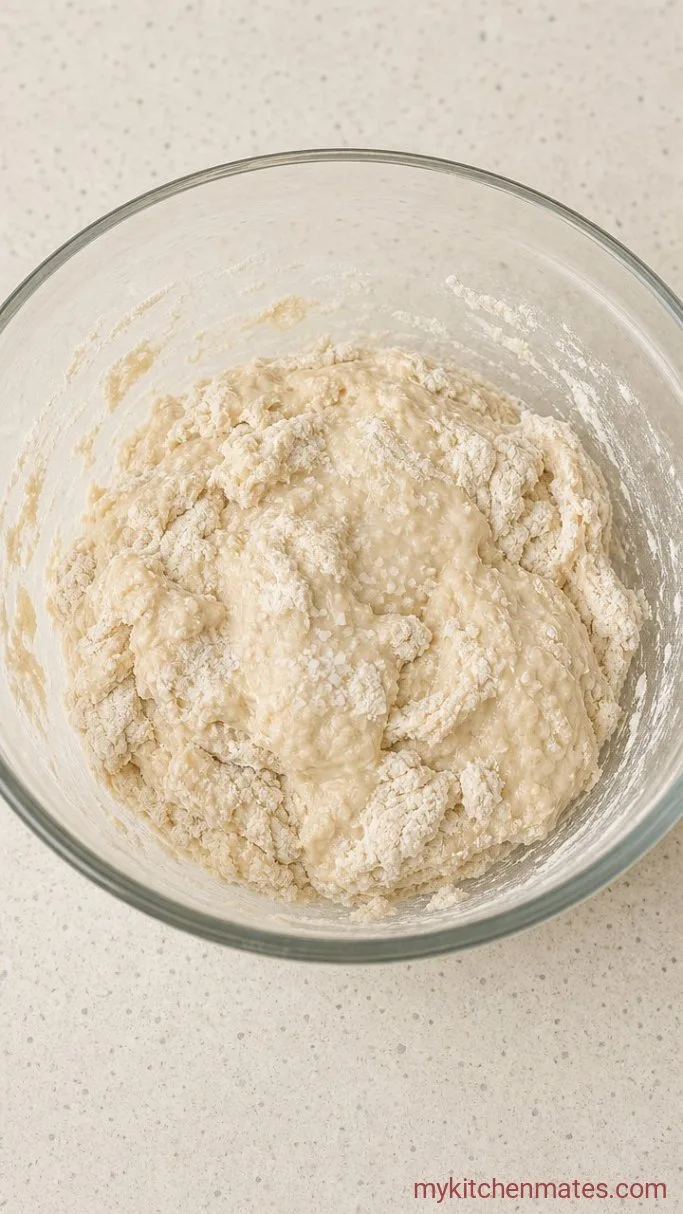
Whisk the 100g of active starter into the 350g of lukewarm water in a large bowl until it looks cloudy and milky. Add the 500g bread flour and the 10g salt, then stir with a dough whisk or your hand until no dry flour remains. You will have a shaggy, sticky mass, and that is exactly right.
Cover the bowl with a damp towel or a lid and let it rest for 30 minutes. This rest gives the flour time to absorb the water, which makes the dough easier to work with later.
Step 2: Fold in the Fruit and Nuts
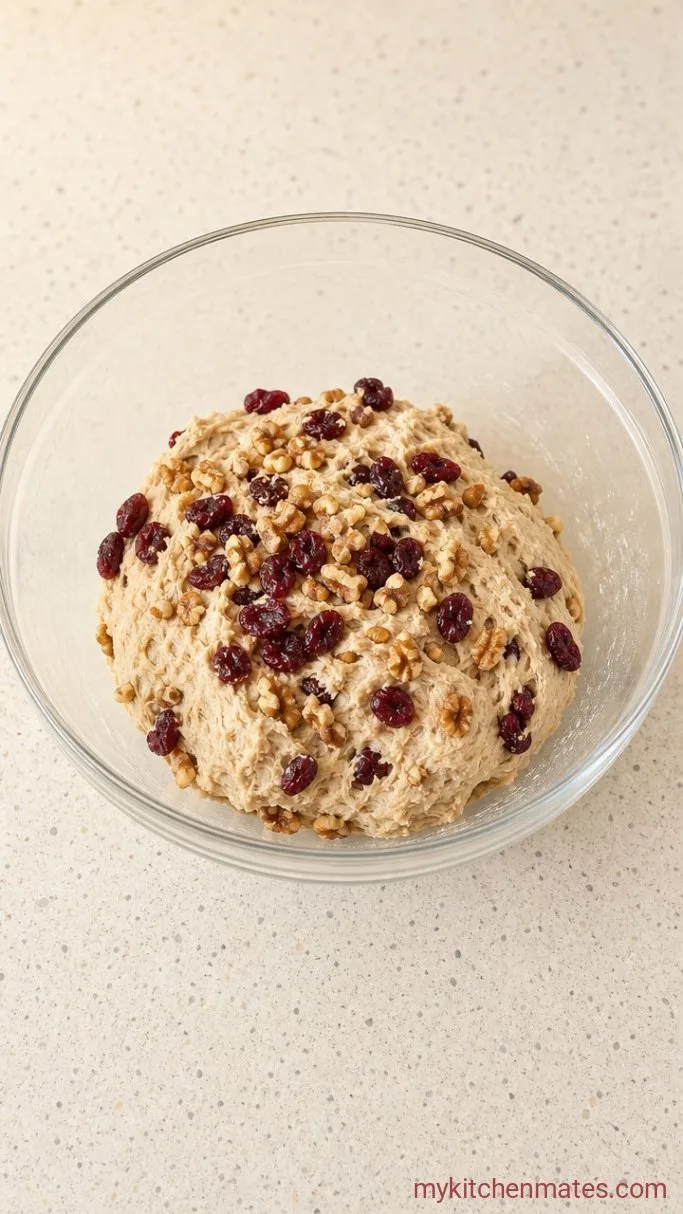
Scatter the drained 75g cranberries and the chopped 60g walnuts over the dough. With wet fingertips, reach under one side of the dough, stretch it upward, and fold it over the center. Rotate the bowl a quarter turn and repeat until you have done 4 folds, tucking the fruit and nuts into the dough as you go.
Let the dough rest, covered, for 15 minutes. The dough will feel slightly stronger after this first set of folds, and the inclusions will start to stay put instead of sliding out.
Step 3: Ferment the Dough
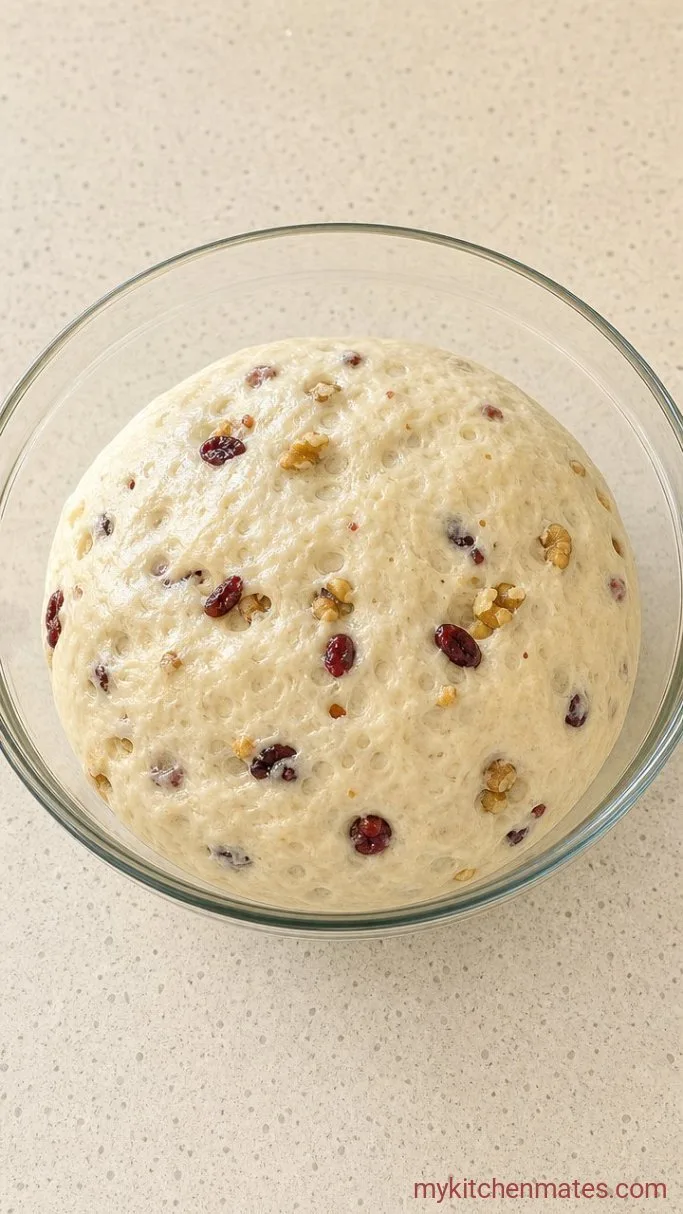
Perform 3 more sets of stretch and folds at 20-minute intervals, for a total of 4 sets including the one with the inclusions. Between sets, keep the bowl covered at a steady room temperature around 72°F to 75°F (22°C to 24°C). Wet your fingers each time to prevent sticking.
After the final set, cover and let the dough ferment undisturbed until it has risen by about 50 percent and shows small bubbles on the surface, usually 4 to 5 hours from the initial mix. The dough will feel airy and jiggle a little when you shake the bowl.
Step 4: Shape the Loaf
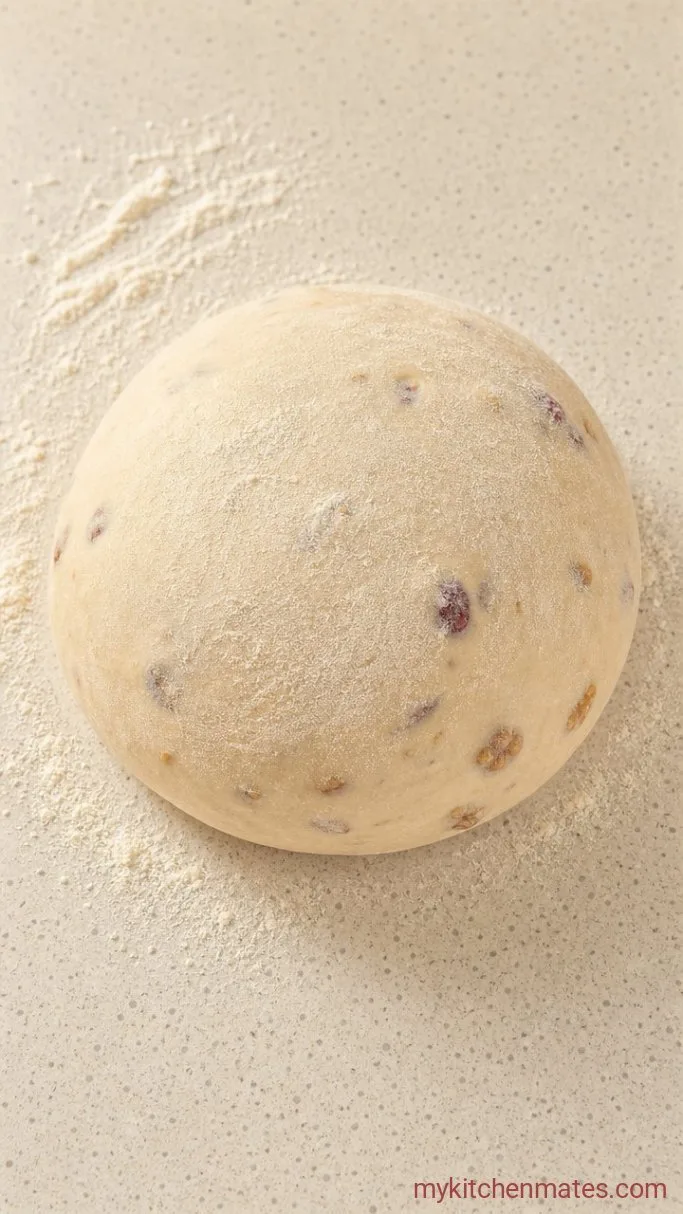
Scrape the dough onto a lightly floured surface and gently shape it into a round. Pull the edges toward the center in small tucks, then flip it seam side down and cup your hands to drag the dough in a circular motion, building surface tension. You want a smooth, tight ball.
Place the shaped loaf seam side up in a well-floured banneton or a bowl lined with a floured tea towel. Cover with a damp cloth or a shower cap and refrigerate for 12 to 16 hours. The dough will slowly expand and develop complexity without over-fermenting.
Step 5: Score and Bake the Bread
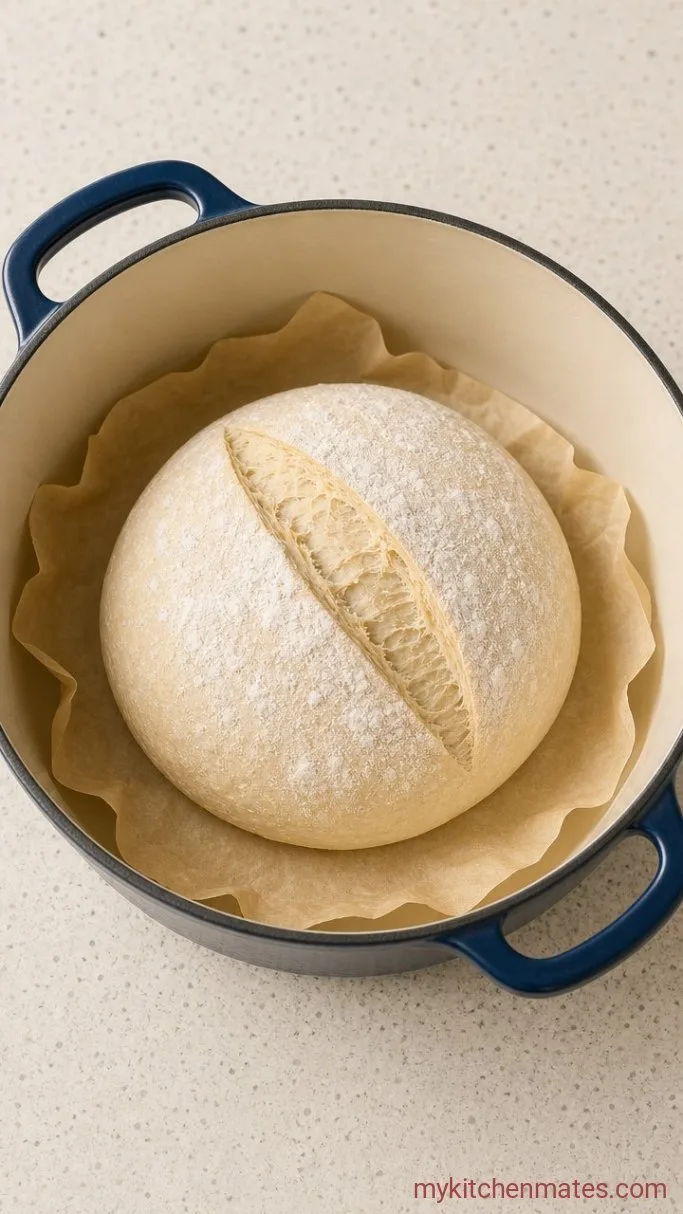
Set a Dutch oven with its lid in the oven and preheat to 450°F (230°C) for at least 30 minutes. Turn the chilled loaf onto a sheet of parchment paper, seam side down, and slash the top with a sharp blade about half an inch deep. One decisive slash works best.
Lift the parchment into the hot Dutch oven, cover, and bake for 30 minutes. Remove the lid and bake another 15 to 20 minutes, until the crust is deep amber and the internal temperature registers 205°F to 210°F (96°C to 99°C). The bread will sound hollow when tapped on the bottom.
Step 6: Cool and Slice
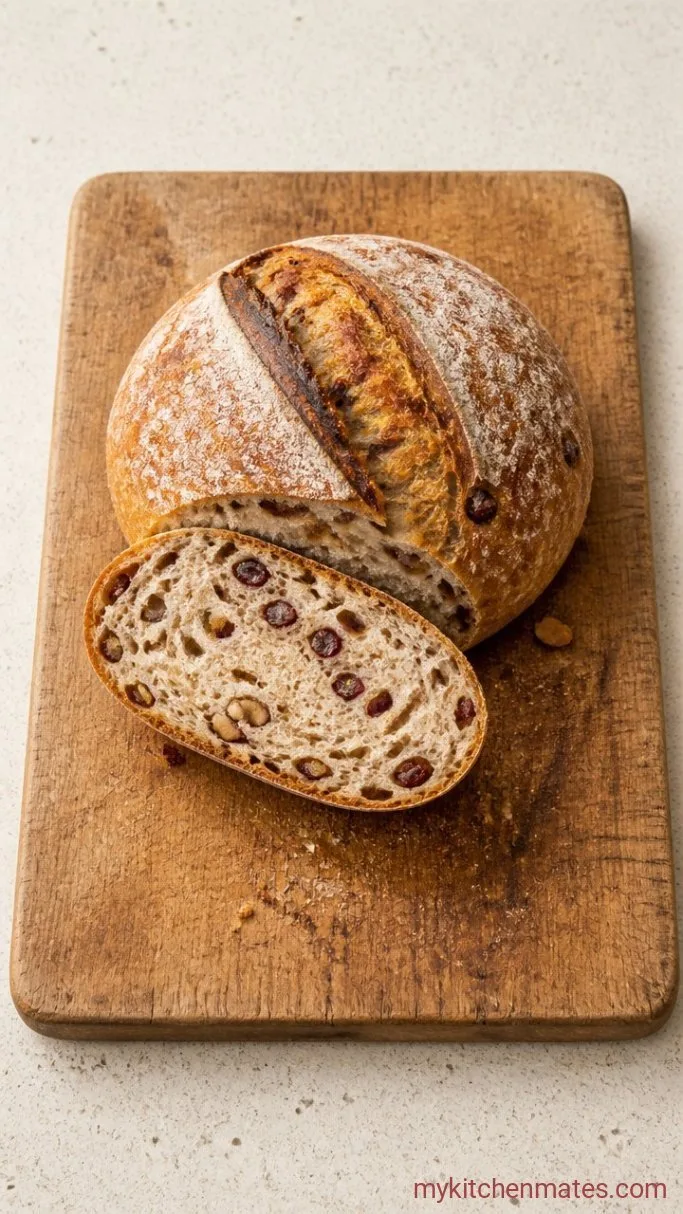
Transfer the loaf to a wire rack and let it cool for at least 1 hour before cutting. Cooling fully lets the crumb set so the slices stay tender instead of gummy.
Slice with a serrated bread knife while the loaf is still faintly warm if you simply cannot wait, and the inside will be soft with a glossy, open crumb studded with cranberry and walnut.
How to Nail the Timing and Texture
- Plan your starter feeding: so it passes the float test right when you need it. A starter that doubles in 4 to 6 hours and floats in water gives you the best oven spring.
- Watch the dough, not the clock: during bulk fermentation. Temperature shifts can shorten or extend the rise by an hour or more.
- Use a heavy Dutch oven: for a crackly crust. If you do not have one, preheat a baking stone and place a pan of boiling water on the lower rack to create steam.
- Do not skip the overnight chill. Cold dough scores cleanly and holds its shape in the oven, and the longer proof builds the tang you expect from sourdough.
Bake times by Dutch oven size and material:
| Dutch oven type | Covered time | Uncovered time |
|---|---|---|
| Enameled cast iron (5.5 qt) | 30 mins | 15 to 20 mins |
| Bare cast iron (5 qt) | 30 mins | 15 to 18 mins |
| Combo cooker (clay baker) | 25 mins | 18 to 22 mins |
Keeping Cranberry Walnut Sourdough Fresh
- Store: the cooled loaf cut side down on a wooden board or in a bread box for up to 3 days. Avoid sealing it in plastic, which softens the crust.
- To revive a day-old loaf, mist the crust with water and warm in a 350°F (175°C) oven for 8 to 10 minutes. It crisps right back up.
- Freeze: the whole loaf or thick slices wrapped in foil and a freezer bag for up to 2 months. Thaw at room temperature and refresh in the oven.
What Goes Well With Cranberry Walnut Sourdough
A mild, creamy cheese like Brie or chèvre balances the bread’s tang and the fruit’s sweetness. For a heartier setup, serve thick slices alongside a bowl of roasted butternut squash soup where the nuttiness in the bread echoes the soup’s caramelized notes. Toasted and spread with salted butter and a drizzle of honey, it turns into a breakfast that feels like an upgrade without any extra effort.
Frequently Asked Questions
Can I use a different dried fruit?
Yes. Dried cherries, chopped dried figs, or golden raisins all work. Keep the total weight the same and plump them if they feel dry.
Can I bake this without a Dutch oven?
Yes. Preheat a baking stone or an inverted sheet pan at 450°F, then slide the loaf onto it with parchment. Put a cast iron pan of boiling water on the bottom rack for steam and bake 20 minutes, then remove the water and bake another 20 to 25 minutes.
How do I know the dough is ready to shape?
The dough should have risen noticeably but not doubled, and it should feel pillowy and jiggle when you shake the bowl. If it springs back quickly when poked with a wet finger, it needs more time; if it deflates, you have gone too long.
Can I add the cranberries and walnuts at the beginning?
You can, but they tend to tear the gluten network if added too early. Folding them in after the first set of stretch and folds keeps them distributed without shredding the dough.
My loaf didn’t rise much in the oven. What happened?
The most common culprit is an over-fermented dough, especially if your kitchen is warm. Next time, shorten bulk fermentation slightly or check it earlier once the dough looks billowy.
Overnight Cranberry Walnut Sourdough Bread Recipe
Ingredients
Method
- Whisk the starter into the water, then add the flour and salt. Mix until no dry flour remains and let rest 30 minutes.
- Scatter the cranberries and walnuts over the dough, then perform 1 set of stretch and folds. Rest 15 minutes.
- Perform 3 more sets of stretch and folds at 20-minute intervals, then cover and ferment until puffy and jiggly, 4 to 5 hours.
- Shape the dough into a tight round on a floured surface, place seam side up in a floured banneton, and refrigerate 12 to 16 hours.
- Preheat a Dutch oven at 450°F (230°C). Turn the chilled loaf onto parchment, score, and bake covered 30 minutes, then uncovered 15 to 20 minutes.
- Cool on a wire rack at least 1 hour before slicing.
Notes
