
Lump-Free Classic White Sauce (Béchamel)

A good white sauce turns a handful of pantry ingredients into a silky, rich base for pasta, vegetables, and casseroles. It sounds fancy, but once you know the rhythm of the roux and the slow pour, you can pull it together in minutes.
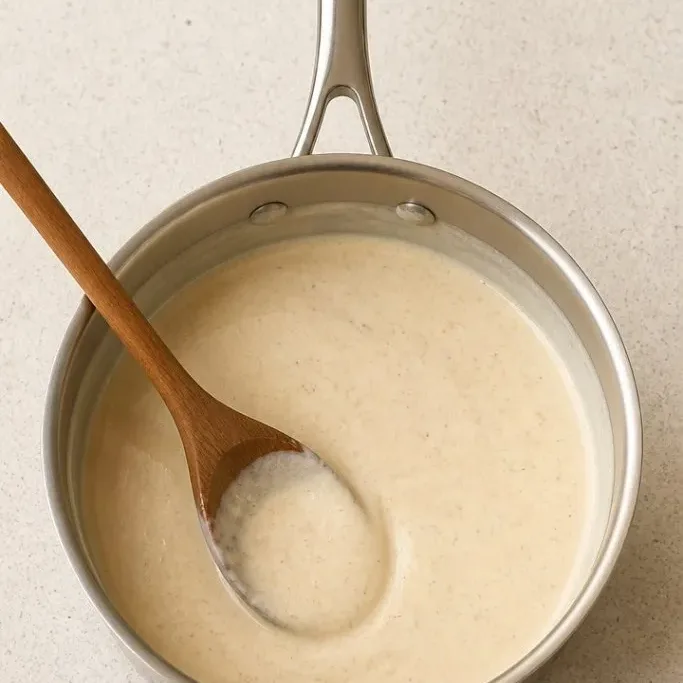
If you’ve been hesitant to try it because of lumps, keep reading. The technique is simpler than it seems, and the result is a warm, lightly nutty sauce that drifts over anything you spoon it onto.
Why This Béchamel Works Every Time
It starts with equal parts butter and flour cooked just long enough to take the raw edge off. That simple roux is what gives the sauce its body without any starchy aftertaste.
Then cold milk hits the hot pan and you whisk, and whisk, and keep whisking. The sauce thickens in front of you until it’s glossy and smooth. No special equipment, no mystery steps. Just a steady hand and a few minutes at the stove.
I come back to this version because it’s clean and neutral, which means it carries other flavours beautifully. Add a grating of nutmeg and some white pepper and it tastes like a proper French sauce, or stir in cheese at the end and you’ve got a sharp, gooey blanket for mac and cheese.
Ingredients
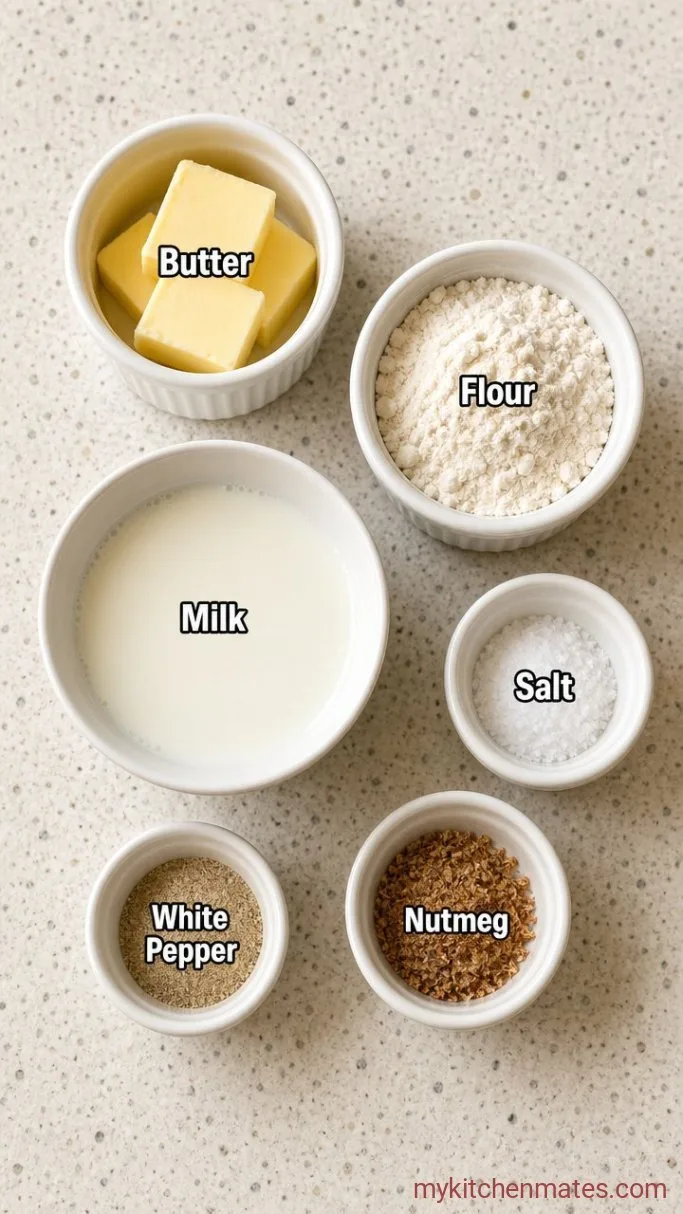
- 2 tbsp unsalted butter: salted works in a pinch, but you’ll want to reduce the added salt later.
- 2 tbsp all-purpose flour: gives a sturdy roux without any off taste.
- 1 cup whole milk, cold: the cold milk meeting the hot roux helps prevent lumps.
- ½ tsp fine sea salt: adjust to taste.
- ¼ tsp white pepper: black pepper is fine, white just keeps the sauce pale.
- ⅛ tsp freshly grated nutmeg: pre-ground works too, but a light hand is best.
Variations / Substitutions
- Gluten-free option: swap the flour for a gluten-free blend or fine white rice flour. The sauce might set a little thinner, so cook it a minute longer.
- Dairy-free option: use plant-based butter and an unsweetened, neutral milk like oat or almond. The texture will be slightly lighter but still smooth.
- Herb-infused milk: warm a bay leaf or a few thyme sprigs in the milk before adding it, then strain them out. It gives the sauce a gentle, herby backbone.
- Cheese sauce: right at the end, stir in a handful of shredded sharp cheddar or gruyère off the heat until melted. Taste before adding extra salt.
Creamy Ginataang Tilapia is one of our favorite ways to use this sauce.
How to Make Classic White Sauce
Step 1: Make the Roux
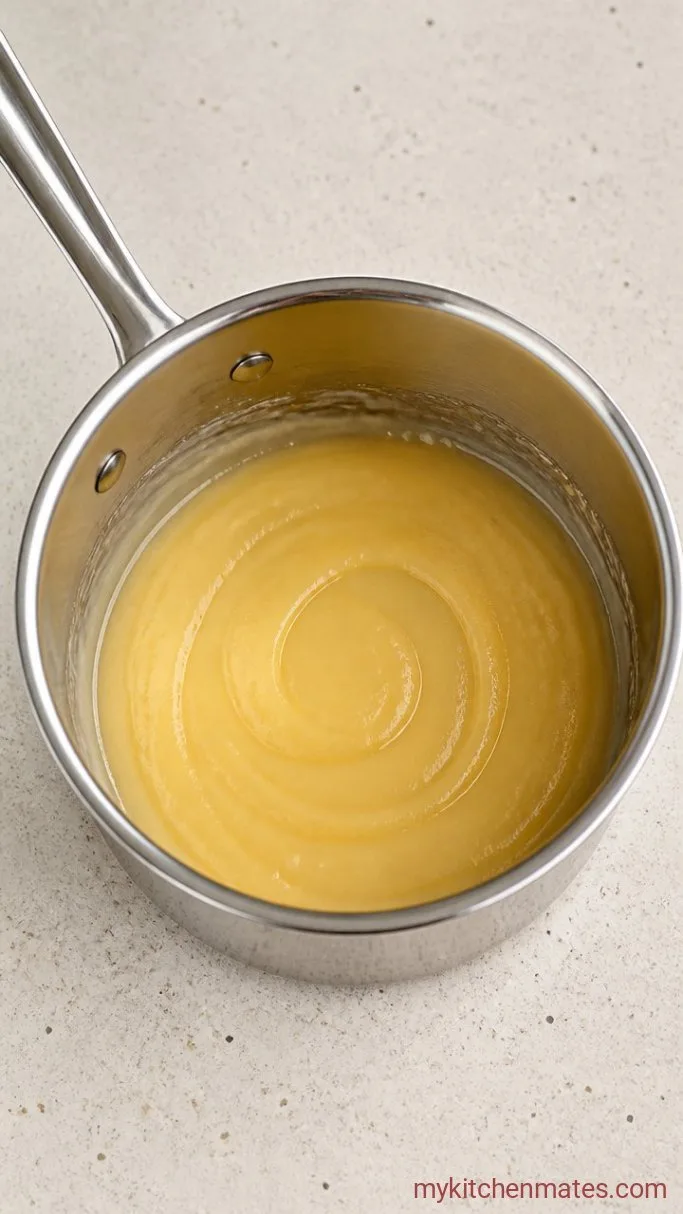
Set a small saucepan over medium heat and add the 2 tbsp butter. Let it melt completely, then scatter in the 2 tbsp flour and whisk right away. Keep whisking as the mixture bubbles and foams, cooking the flour for about 2 minutes.
The roux should look smooth and pale gold, and it will smell just a little nutty. Don’t let it brown, or the sauce will take on a darker colour and a toasty note that’s not what you want here.
Step 2: Whisk in the Milk
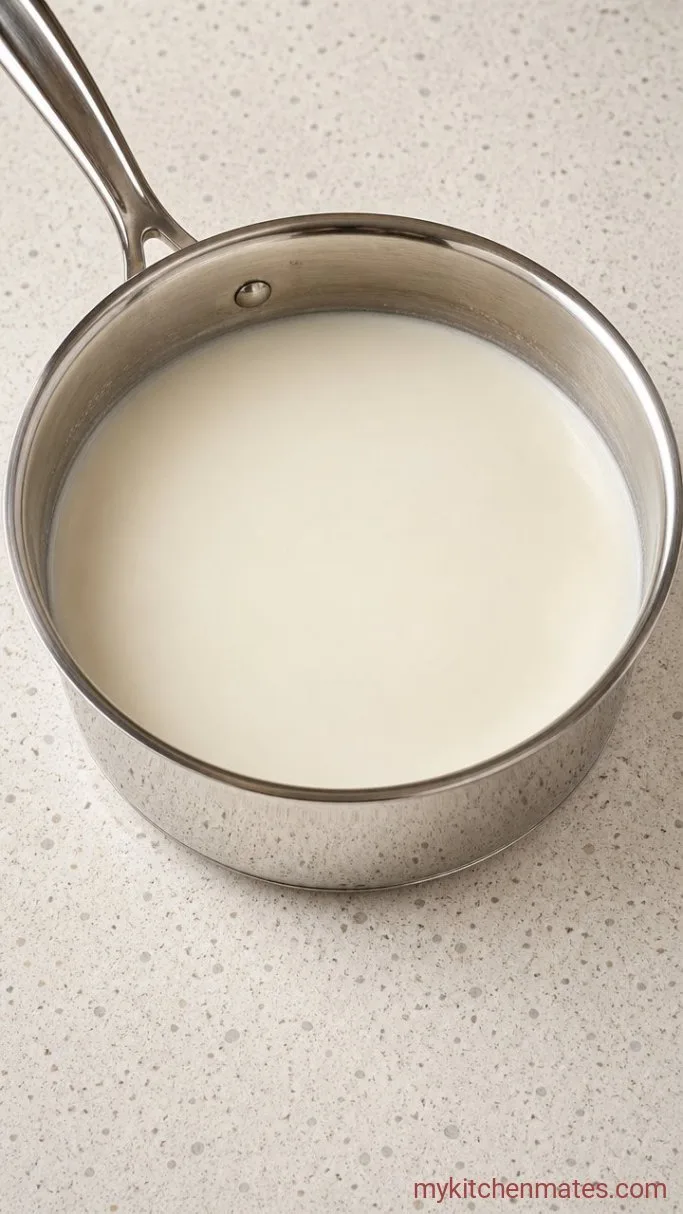
Pull the pan off the heat for a moment. Pour in about a third of the 1 cup cold milk and whisk hard. The roux will seize up into a paste at first, then relax back into a thick slurry. Once it’s smooth, add the rest of the milk in a slow, steady stream, whisking constantly.
Put the pan back over medium heat. Keep whisking as the mixture comes to a gentle boil. You’ll feel it thicken under your whisk and see it turn from a thin liquid into a coat-the-spoon sauce. That whole process takes about 4 to 5 minutes.
Step 3: Simmer and Season the Sauce

Lower the heat to a quiet simmer and cook the sauce for another 2 minutes, whisking occasionally. This last simmer softens any remaining starch and brings everything together. Taste a tiny spoonful and it should be smooth, with no floury bite.
Take the pan off the heat. Stir in the ½ tsp salt, ¼ tsp white pepper, and the ⅛ tsp nutmeg. Give it a final whisk, then spoon the sauce over pasta, steamed cauliflower, or into a gratin dish while it’s still warm and pourable.
Tips for the Smoothest Sauce
- Use cold milk straight from the fridge. The temperature shock with the hot roux makes it easier to whisk out any little lumps before they set.
- Don’t stop whisking once the milk goes in. A silicone whisk is gentle on nonstick pans; a flat whisk reaches the edges of a regular saucepan better.
- If a few lumps do sneak in, pour the finished sauce through a fine-mesh strainer right into your serving dish. No one will know.
- For a thicker sauce that holds its shape in a casserole, let it simmer an extra minute or two and it will reduce slightly.
- If the sauce ends up thicker than you’d like, whisk in a splash of warm milk off the heat and it will loosen right up.
Consistency depends on cook time and milk ratio:
| Desired thickness | Milk for 2 tbsp butter / 2 tbsp flour | Cook time after adding milk |
|---|---|---|
| Thin (pourable) | 1¼ cups | 3 to 4 minutes |
| Medium (coats a spoon) | 1 cup | 4 to 5 minutes |
| Thick (holds its shape) | ¾ cup | 5 to 6 minutes |
Storing Leftover Béchamel
- Refrigerate: cool the sauce quickly in a shallow container, cover tightly, and keep in the fridge for up to 3 days. It will set firm, which is normal.
- Reheating: transfer the cold sauce to a saucepan with a splash of milk. Warm it over low heat, whisking often, until it loosens back into a fluid sauce. Avoid high heat or it may separate.
What to Serve with Classic White Sauce
It’s the backbone of a creamy lasagna or baked mac and cheese where it layers beautifully between pasta and cheese. Spooned over steamed broccoli or roasted cauliflower, it turns vegetables into a proper side. You can also fold it into shredded chicken and peas for a quick pot pie filling. The mild richness makes it a good landing pad for stronger flavours like sharp mustard or a crack of black pepper.
Frequently Asked Questions
Can I use a different flour?
Yes, all-purpose is standard, but you can use a gluten-free all-purpose blend or fine white rice flour. The thickening power is close, though the sauce may be a touch thinner, so cook it a little longer if needed.
Why is my sauce lumpy?
Lumps usually form when the milk is added too quickly or the heat is too high. If it happens, don’t panic. Strain the sauce through a fine sieve and next time pour the milk in steps while whisking steadily.
Can I freeze béchamel?
It’s not ideal because the dairy can separate and turn grainy when thawed. If you do freeze it, reheat very gently and whisk in a little fresh milk to bring it back together. Fresh is always smoother.
How do I make it ahead of time?
You can make the sauce, cool it, and refrigerate it for up to a day. Reheat slowly with extra milk as described in the storage notes. The texture will be nearly the same as fresh.
Classic White Sauce Recipe
Ingredients
Method
- Melt the butter in a small saucepan over medium heat. Whisk in the flour and cook, whisking constantly, until the mixture is bubbly and pale golden, about 2 minutes.
- Remove from heat. Slowly pour in about a third of the cold milk, whisking until smooth. Add the remaining milk in a steady stream while whisking. Return to medium heat, whisking constantly, and bring to a gentle boil until the sauce thickens enough to coat the back of a spoon, about 4 to 5 minutes.
- Reduce the heat to low and simmer for 2 minutes, whisking occasionally. Remove from heat, stir in the salt, white pepper, and nutmeg. Spoon over your dish right away.
Notes
