
Rich, Slow-Simmered Classic Meat Sauce

This classic meat sauce is the one I reach for when I want a deep, savory pot of red sauce that tastes like it spent all day on the stove. It comes together with mostly hands-off time and rewards you with a rich, hearty sauce you’ll keep thinking about.
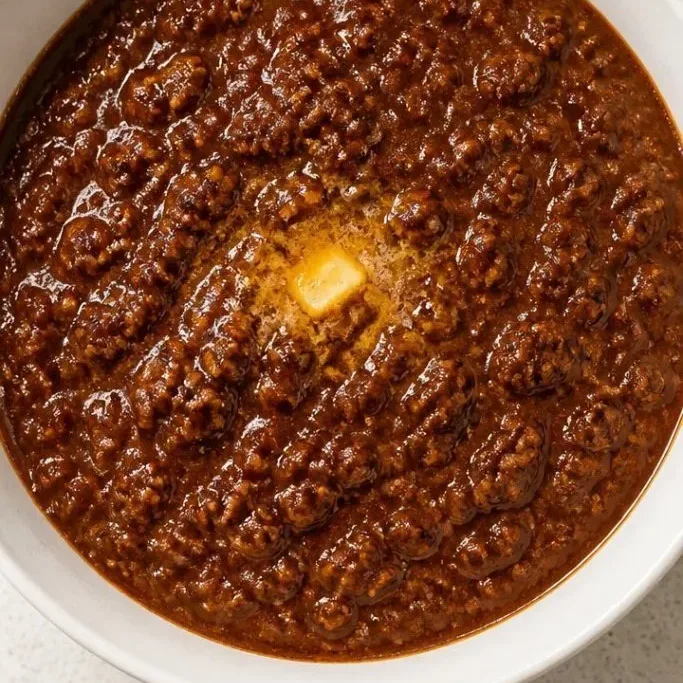
It’s just as good twirled into spaghetti as it is layered into lasagna, and it freezes like a dream for busy nights ahead.
What Makes This Meat Sauce So Good
This sauce builds flavor from the very first sear. Browning the beef deeply creates those savory browned bits that season the whole pot, so don’t rush that step.
A splash of red grape juice and a long, lazy simmer concentrate everything until the sauce is thick, glossy, and coats a spoon like velvet. It fills the kitchen with the best kind of smell.
It tastes even better the next day, so I almost always make a double batch.
Ingredients
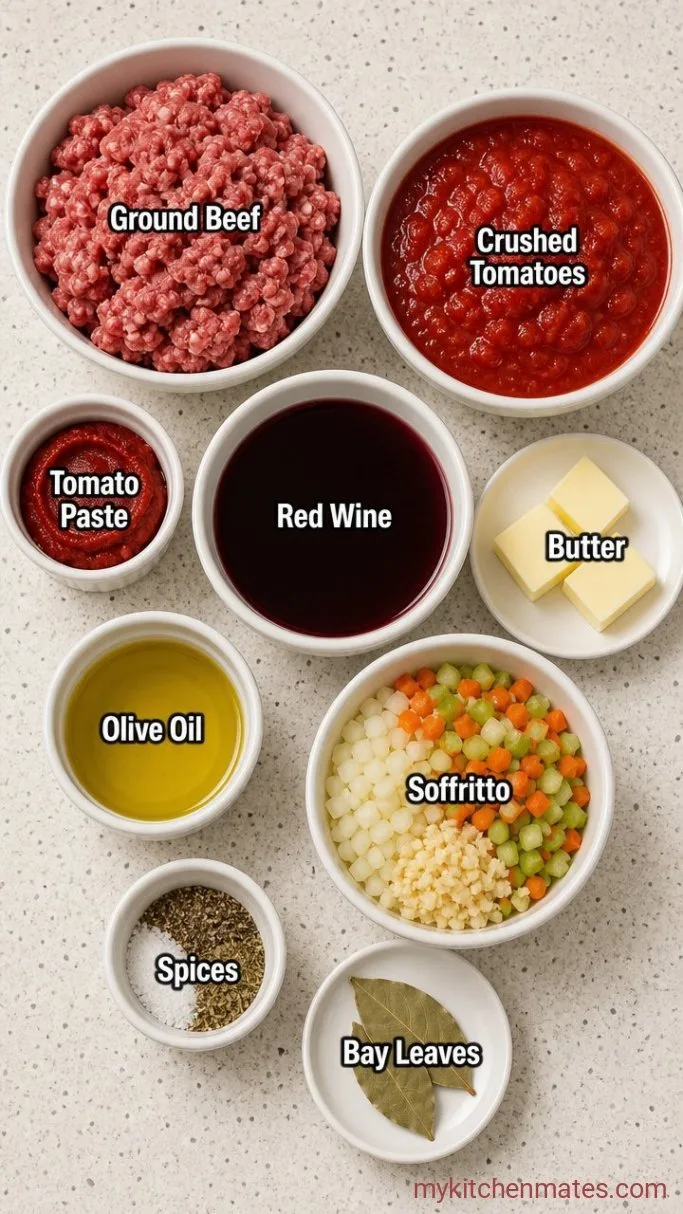
- 1 ½ pounds ground beef (80/20): a little fat keeps the meat tender and the sauce rich
- 2 tablespoons olive oil: for browning the meat
- 1 medium onion, finely chopped: about 1 cup
- 1 carrot, peeled and finely diced: adds subtle sweetness
- 1 celery stalk, finely diced: for a deep, savory backbone
- 3 cloves garlic, minced: fresh gives the brightest flavor
- 1 teaspoon kosher salt, plus more as needed
- ½ teaspoon freshly ground black pepper
- 3 tablespoons tomato paste: caramelizing it is the key to a deeply savory sauce
- ½ cup dry red grape juice: something you would drink, like a Merlot or Chianti (or substitute beef broth)
- 1 (28-ounce) can crushed tomatoes
- 1 bay leaf
- 1 teaspoon dried oregano
- Pinch of granulated sugar: optional, to balance acidity
- 2 tablespoons cold unsalted butter: stirred in at the end for a silky finish (or a splash of heavy cream)
Variations / Substitutions
- Make it bolognese-style: stir in ½ cup whole milk after reducing the juice and simmer gently for a few minutes before adding the tomatoes, it gives the sauce a creamy, lush texture.
- Use a mix of meats: swap half the beef for veal for more richness.
- No alcohol?: use an equal amount of low-sodium beef broth with a teaspoon of red vinegar.
- Herb swap: use 1 tablespoon fresh oregano or thyme instead of dried, added toward the end.
- Dairy-free: skip the butter and finish with a drizzle of good olive oil instead.
- Spicy kick: add a pinch of red pepper flakes with the garlic.
Juicy Ground Turkey Lasagna is an easy way to put this sauce to good use.
How to Make Classic Meat Sauce
Step 1: Brown the Meat
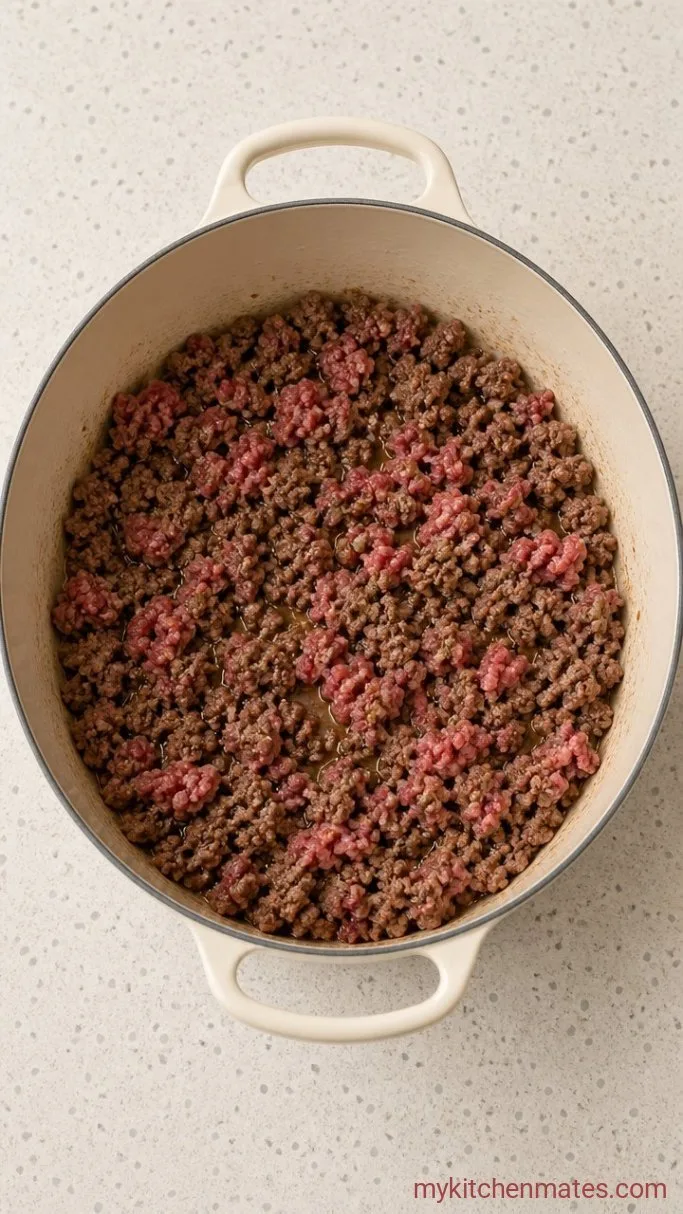
Set a large Dutch oven or heavy pot over medium-high heat and add the 2 tablespoons olive oil. Crumble in the 1 ½ pounds ground beef, breaking it apart with a wooden spoon, and let it cook undisturbed for a few minutes so a deep brown crust forms. Continue cooking, stirring occasionally, until the meat is well browned all over, about 8 minutes total.
You’ll see dark brown bits clinging to the bottom of the pot, that’s pure flavor. Use a slotted spoon to transfer the beef to a plate, leaving the rendered fat in the pot.
Step 2: Sauté the Aromatics
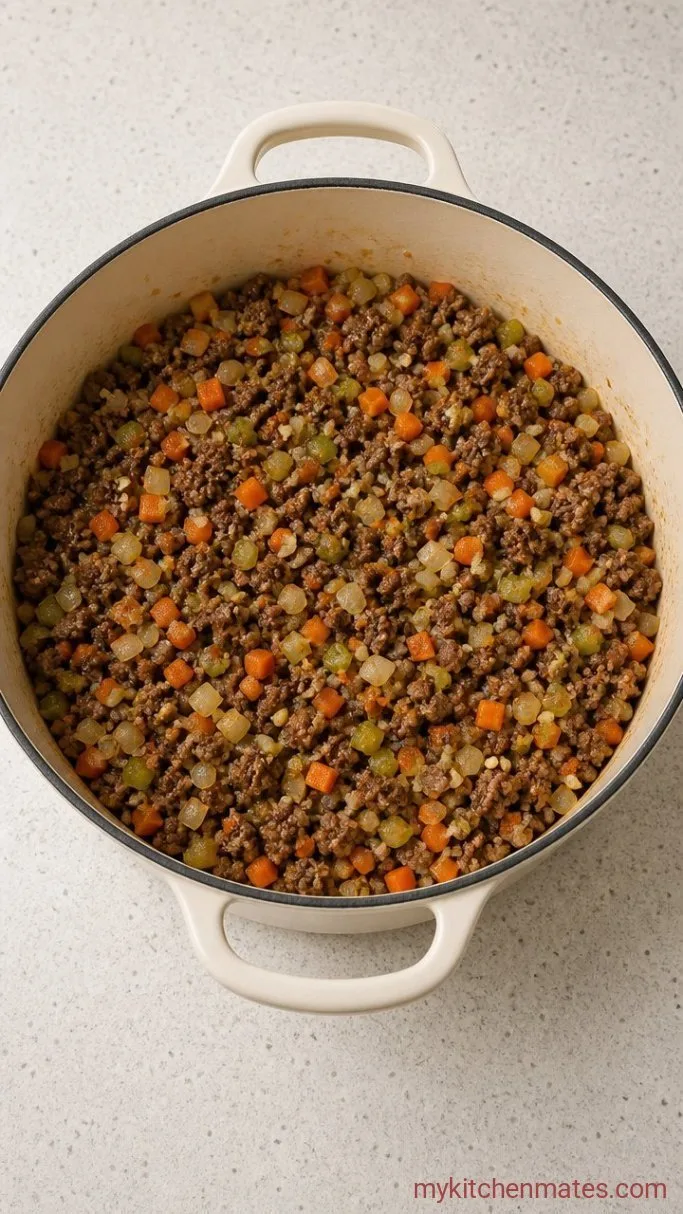
Drop the heat to medium, add the chopped onion, carrot, and celery with a pinch of salt. Cook, stirring often, until the vegetables soften and the onion turns translucent, about 5 minutes. Stir in the minced garlic and cook until fragrant, about 1 minute, then add the 3 tablespoons tomato paste.
Keep stirring the tomato paste into the vegetables for a solid 2 minutes. It will darken and start to smell sweet and toasty, that step deepens the color and flavor of the whole sauce.
Step 3: Deglaze with Juice
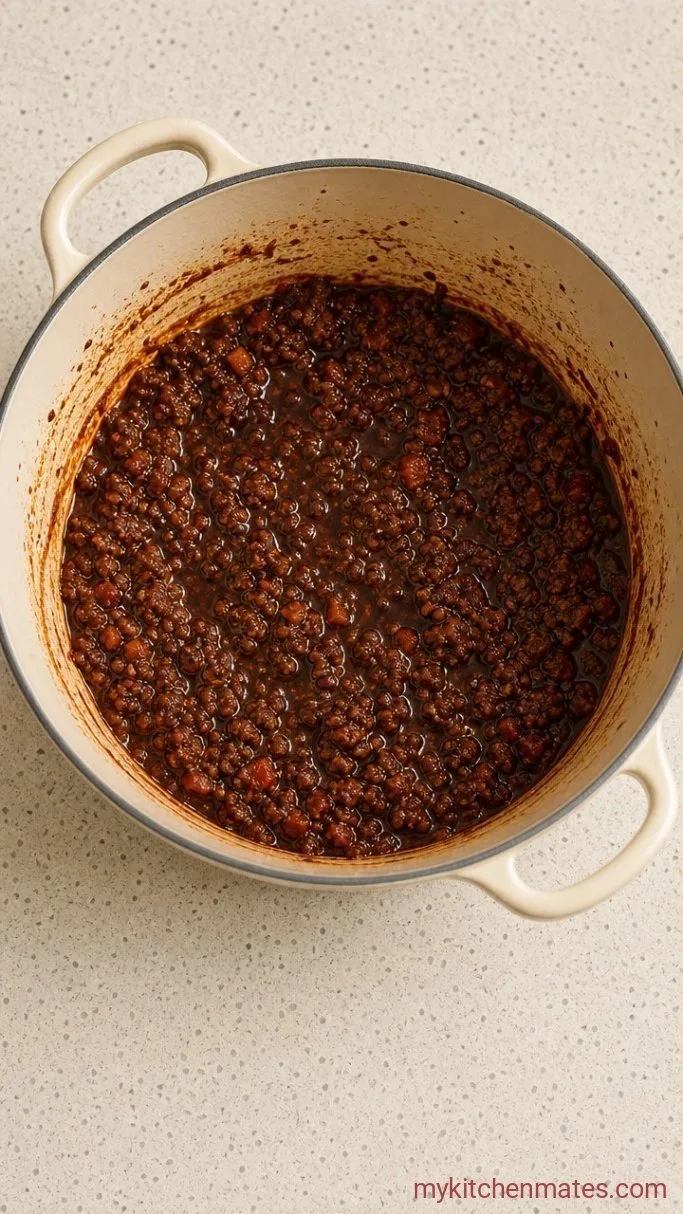
Pour in the ½ cup red grape juice and scrape up every bit of those browned bits from the bottom of the pot with your spoon. Let the juice bubble and reduce until it looks syrupy and most of the liquid has cooked off, about 2 minutes.
Once the juice has concentrated, return the browned beef to the pot, along with any juices that collected on the plate. Give everything a good stir to combine.
Step 4: Simmer the Sauce
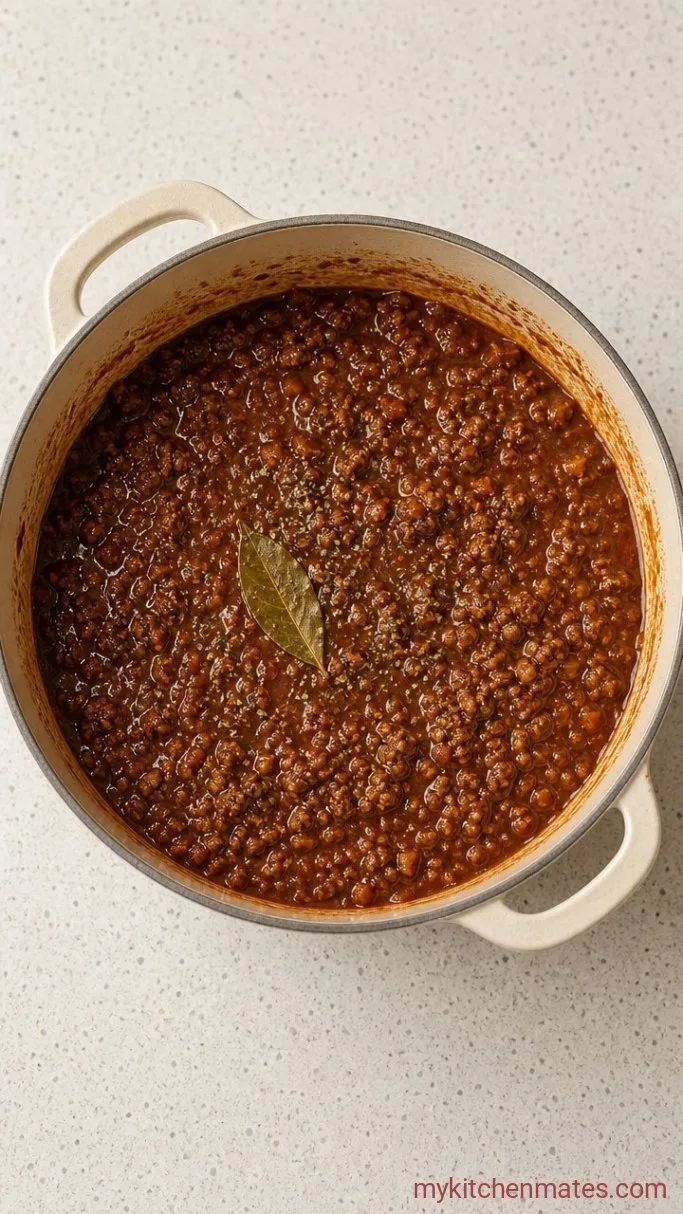
Add the can of crushed tomatoes, bay leaf, dried oregano, black pepper, and the pinch of sugar if you’re using it. Stir well, bring the sauce to a gentle simmer, then reduce the heat to low. Cover the pot partially and let it cook for at least 1 hour, stirring now and then to keep it from sticking.
The sauce will darken to a brick-red and thicken noticeably. Taste it after about 45 minutes and add salt as needed. For even more depth, you can let it go up to 2 hours, if it gets too thick, just add a splash of water.
Step 5: Ladle and Serve the Sauce
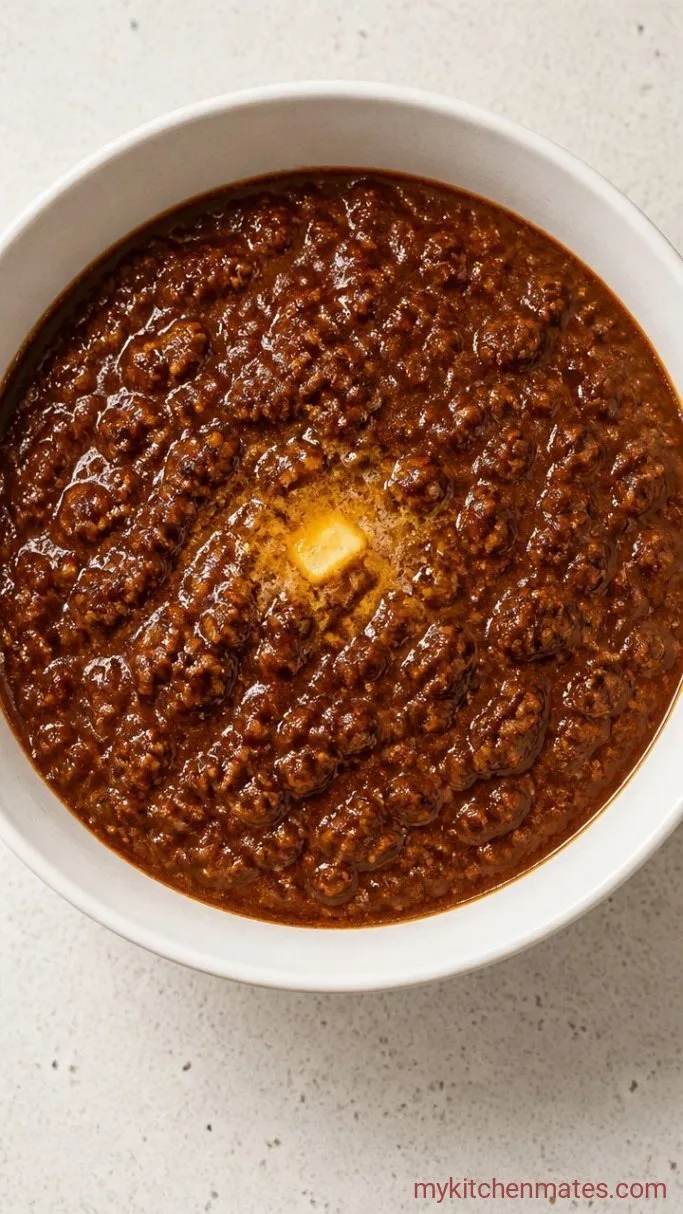
Fish out the bay leaf and stir in the 2 tablespoons cold butter until it melts and makes the sauce glossy. Give it a final taste and adjust the salt and pepper. Ladle the hot sauce generously over cooked spaghetti, rigatoni, or your favorite pasta.
A shower of grated Parmesan and a few torn basil leaves make it feel complete. The sauce is at its most photogenic right now, rich, dark, and clinging to the pasta.
A Few Tips for the Best Meat Sauce
- A heavy pot makes a difference: enameled cast iron or a thick-bottomed stainless steel pot distributes heat evenly and helps prevent scorching during the long simmer.
- Keep the heat low during simmering: a rapid boil can toughen the meat, so let the sauce barely bubble, just a few lazy blips here and there.
- Make it a day ahead if you can: like many braised dishes, the sauce tastes even deeper after a night in the fridge.
- Freeze it flat for easy storage: cool the sauce completely, then spoon it into zip-top freezer bags, press out the air, and lay them flat. That way portions thaw quickly in a bowl of warm water.
Simmer times by pot and desired thickness:
| Pot or Dutch oven | Time for a thick, spoon-coating sauce | Time for an almost ragu-like sauce |
|---|---|---|
| Enameled cast iron | 1 hour | 1 ½ hours |
| Stainless steel | 1 ¼ hours | 1 ¾ hours |
Storing and Freezing Meat Sauce
- Refrigerate: cool the sauce, then store in an airtight container for up to 5 days.
- Reheating: rewarm gently in a saucepan over medium-low heat, stirring in a splash of water to loosen it up, or microwave in a covered bowl, stirring halfway through.
What to Serve with Classic Meat Sauce
Spaghetti and tagliatelle are naturals because the ribbons hold onto the sauce, while hollow pastas like rigatoni catch little pockets of meat. A spoonful on creamy polenta turns it into a cozy meal, and you can also use the sauce straight from the pot as the filling for a lasagna.
Frequently Asked Questions
Can I use ground turkey instead?
Yes, ground turkey works well, but since it is leaner, add an extra tablespoon of olive oil during browning to keep the sauce from feeling dry.
Can I make this in a slow cooker?
Absolutely. Brown the meat and aromatics on the stovetop as written, then transfer everything to the slow cooker with the tomatoes and spices. Cook on low for 6 to 8 hours.
Is this sauce gluten-free?
Yes, as written, all ingredients are naturally gluten-free. Serve it with gluten-free pasta or polenta.
My sauce tastes a little acidic. How do I fix it?
Stir in a pinch of sugar, or grate in an extra carrot and let it simmer another 15 minutes. Both help mellow the acidity.
Can I double the recipe?
Yes, just make sure your pot is large enough to brown the meat in a single layer without crowding. You might need to brown it in batches, and allow a little extra simmering time to reduce properly.
Classic Meat Sauce Recipe
Ingredients
Method
- Heat the olive oil in a large heavy pot over medium-high. Brown the ground beef until deeply browned, about 8 minutes. Transfer to a plate.
- Reduce heat to medium, add onion, carrot, and celery with a pinch of salt. Cook until softened, about 5 minutes. Stir in garlic and cook 1 minute, then add tomato paste and cook 2 minutes, stirring constantly.
- Pour in the red wine, scrape up browned bits, and simmer until reduced by half, about 2 minutes. Return the beef and any juices to the pot.
- Stir in crushed tomatoes, bay leaf, oregano, pepper, and sugar if using. Bring to a gentle simmer, then lower heat to low. Partially cover and cook for at least 1 hour, stirring occasionally, until thick and rich. Add salt to taste.
- Remove the bay leaf and stir in the cold butter until melted. Ladle over hot cooked pasta and serve with Parmesan and torn basil.
Notes
