
Easy Homemade Enchilada Sauce (Ready in 15 Minutes)

This easy homemade enchilada sauce is rich, smoky, and ready in 15 minutes. It uses basic pantry ingredients for deep, authentic flavor.
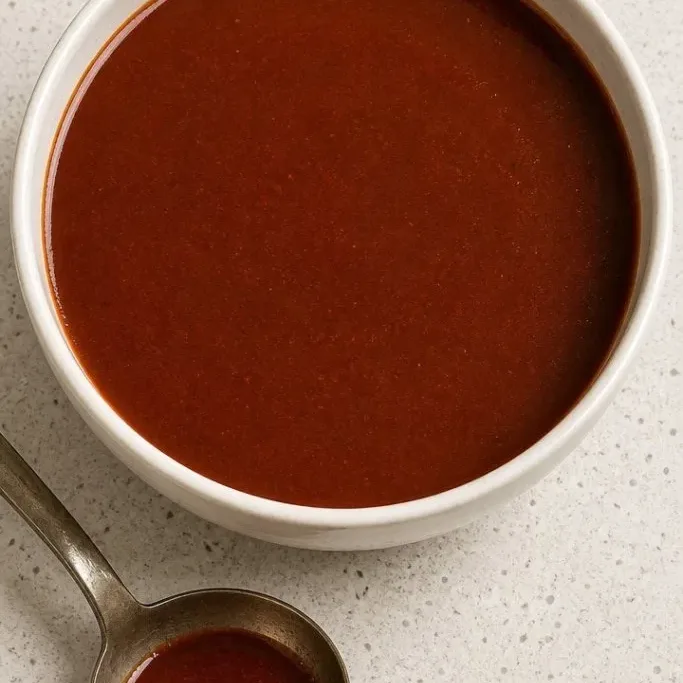
Skip the can and make it from scratch. It tastes far better than anything from a jar, and you control the heat and salt.
Why This Sauce Is Better From Scratch
The flavor is earthier and more complex than store-bought. Toasted chili powder and cumin bloom in oil, releasing a smoky warmth that powdered mixes just can’t match.
The texture is smooth and velvety, never thin or gloppy. A quick roux gives it enough body to coat enchiladas without turning pasty.
Ingredients
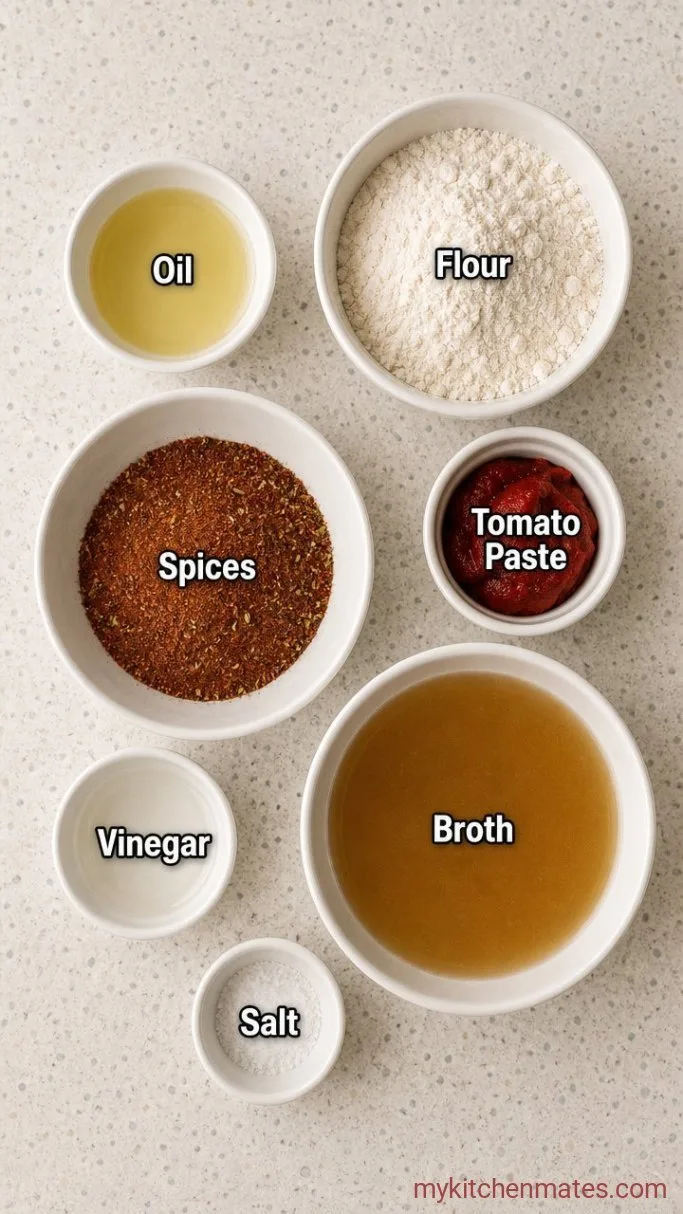
- 3 tbsp neutral oil: vegetable or canola work well, avocado oil is fine too.
- 3 tbsp all-purpose flour: this makes the roux that thickens the sauce.
- 3 tbsp chili powder: use a mild American-style blend for classic flavor.
- 1 tsp ground cumin: adds that essential earthy, smoky note.
- 1 tsp garlic powder: the pantry backbone of the sauce.
- ½ tsp dried oregano: Mexican oregano is ideal if you have it.
- 2 tbsp tomato paste: deepens the color and adds a subtle tang.
- 2 cups low-sodium vegetable or chicken broth: keeps the sauce savory without too much salt.
- 1 tsp white vinegar or apple cider vinegar: a small hit of acid that brightens everything.
- Salt to taste: start with ¼ tsp and adjust after simmering.
Variations / Substitutions
- Make it spicy: swap 1 tbsp of the chili powder for chipotle chili powder or add a pinch of cayenne.
- Gluten-free: use a 1:1 gluten-free flour blend in place of the all-purpose flour. The roux works the same way.
- Add fresh garlic: sauté 2 minced cloves in the oil before adding the flour for a sharper garlic punch.
- Change the vinegar: lime juice adds a brighter, citrusy finish if you prefer that over vinegar.
- No tomato paste: substitute 3 tbsp of canned tomato sauce. The color will be a touch lighter but still delicious.
Creamy Shrimp Enchiladas are one of our favorite ways to use this enchilada sauce.
How to Make Classic Enchilada Sauce
Step 1: Whisk the Roux

Place a medium saucepan over medium heat and pour in the 3 tbsp oil. When the oil shimmers, whisk in the 3 tbsp flour and cook for 1 minute, whisking constantly. The mixture should bubble gently and turn a pale golden color.
You will smell the raw flour cook off. That toasty note tells you the roux is ready for the next step.
Step 2: Stir in the Paste and Spices

Drop in the 2 tbsp tomato paste and whisk until the paste darkens slightly and the oil looks rusty red, about 30 seconds. Then add the 3 tbsp chili powder, 1 tsp cumin, 1 tsp garlic powder, and ½ tsp oregano. Stir for another 30 seconds. The spices will become fragrant and pasty.
Keep stirring so the dry spices don’t scorch. This bloom is what gives the sauce its deep, rounded flavor.
Step 3: Simmer the Sauce
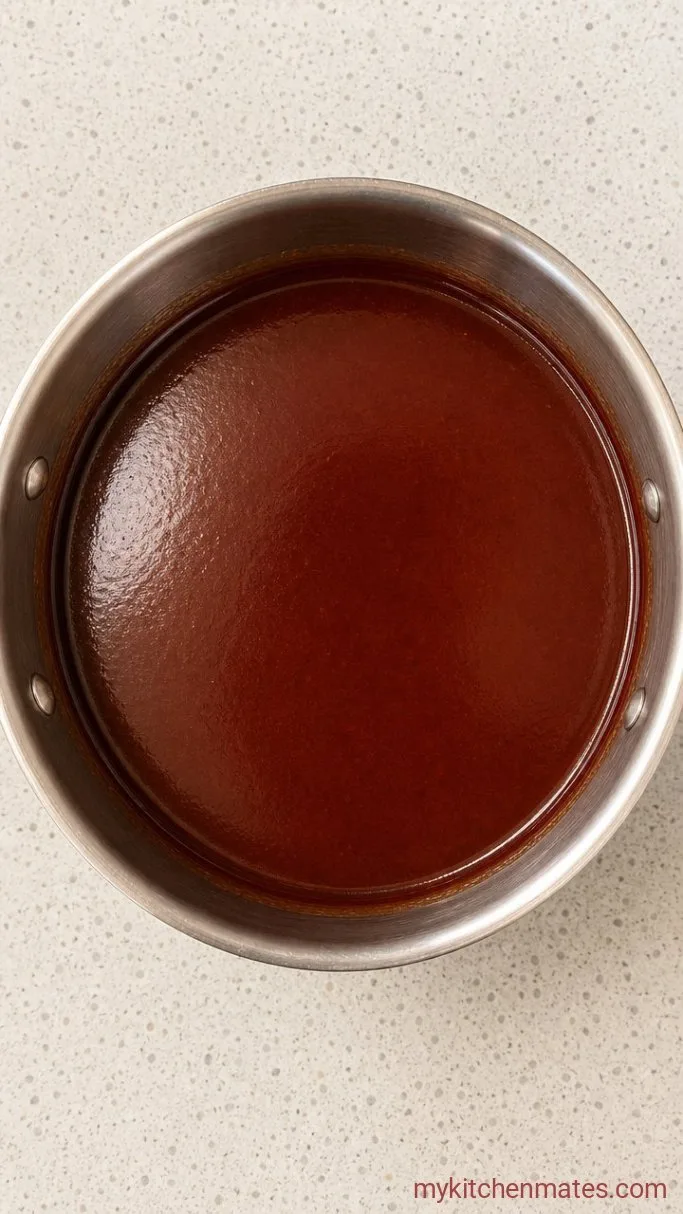
Slowly pour in the 2 cups broth while whisking to prevent lumps. Once the mixture is smooth, let it come to a gentle bubble, then reduce the heat to low. Simmer uncovered for 10 minutes, stirring every couple of minutes. The sauce will thicken and darken to a deep brick red.
A spoon dragged across the bottom of the pan should leave a trail that slowly fills in. That is how you know the sauce has the right consistency.
Step 4: Finish with Vinegar and Taste
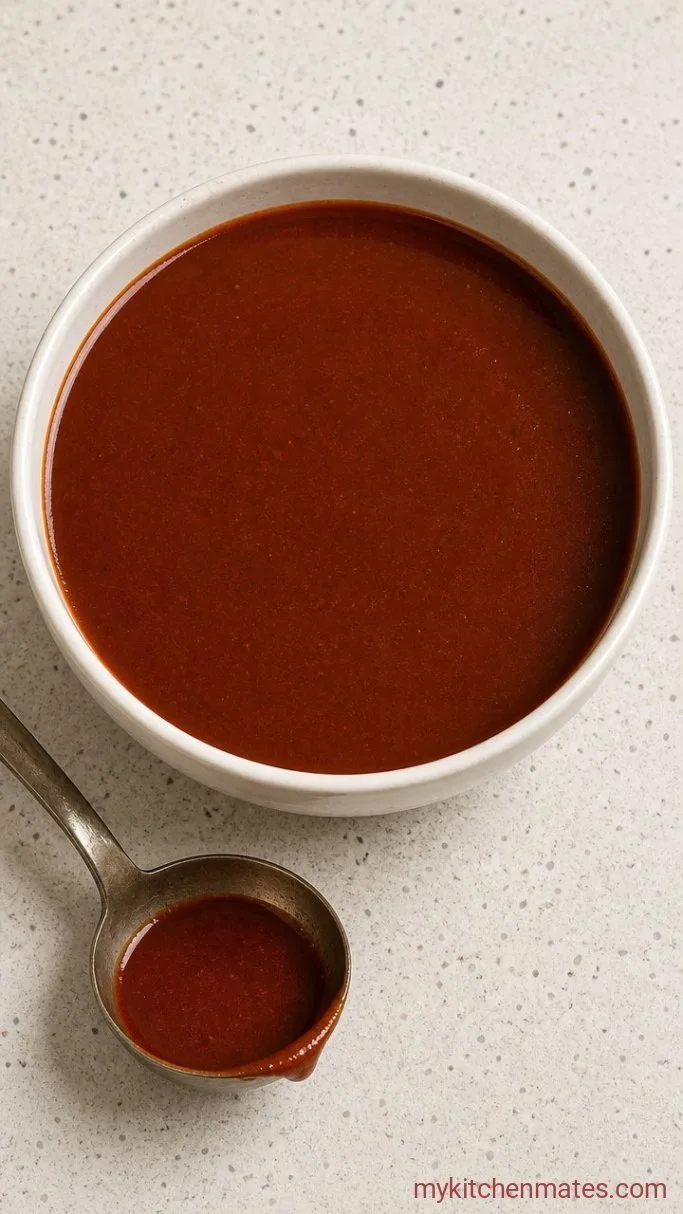
Remove the pan from the heat and stir in the 1 tsp vinegar. Taste the sauce and add salt, starting with ¼ tsp and adding more if needed. Use it right away or cool and store it.
The vinegar wakes up all the flavors without making the sauce sour. Taste again after adding salt because that little hit of acid also reduces the need for extra salt.
Tips for the Smoothest Sauce
- A flat whisk works best for keeping the roux lump-free, but a regular whisk is fine if you pour the broth slowly and whisk the whole time.
- If the sauce tastes bitter, it needs a pinch more salt or an extra splash of vinegar. Bitter notes usually come from under-seasoning or scorched spices.
- Use low-sodium broth. Regular broth can make the final sauce too salty once it reduces, especially if you add salt at the end.
- The sauce thickens further as it cools. If reheating, add a splash of broth or water to loosen it back to the perfect coating consistency.
Storing Leftover Sauce
- Refrigerate: Cool the sauce completely and transfer it to a sealed jar. It keeps in the fridge for up to 5 days.
- Freeze: Portion into small containers or freezer bags and freeze for up to 3 months. Thaw overnight in the fridge before reheating.
- Reheating: Warm gently in a saucepan over low heat, adding a little broth or water if it needs thinning. Stir often to prevent sticking.
Ways to Use Enchilada Sauce
This sauce is built for enchiladas, but it goes way beyond that. Spoon it over crispy roasted potatoes for a smoky kick. A thin layer spread inside a quesadilla adds a deep chili note that balances the melted cheese.
Frequently Asked Questions
Can I use fresh chilies instead of chili powder?
Yes, but the flavor and texture will change. You would need to rehydrate and blend dried chilies, then strain. Chili powder is chosen here for its speed and consistent, smooth texture.
My sauce tastes a little bitter. What went wrong?
The spices likely scorched in the oil. Keep the heat at medium and stir constantly during the bloom step, and never let the dry powder sit in the hot pan without moving.
Is this sauce spicy?
It is mild and family-friendly with standard chili powder. For heat, add up to ½ tsp cayenne or substitute a portion of the chili powder with a spicier blend.
Can I double the recipe?
Absolutely. Use a larger pot and expect the simmer time to increase by 3 to 5 minutes because more liquid takes longer to reduce.
Classic Enchilada Sauce Recipe
Ingredients
Method
- Whisk oil and flour in a saucepan over medium heat for 1 minute until pale golden.
- Stir in tomato paste and cook 30 seconds, then add chili powder, cumin, garlic powder, and oregano and stir another 30 seconds.
- Slowly whisk in broth, bring to a bubble, then reduce heat to low and simmer uncovered for 10 minutes until thickened.
- Remove from heat, stir in vinegar, and add salt to taste.
Notes
