
Crispy-Skin Cast Iron Salmon (20 Minutes)

Cast iron salmon turns a simple fillet into a show-off dinner with crackly skin and buttery, flaky flesh. It’s the fast, one-pan method that teaches you how heat and a little patience deliver deep golden crust every time.
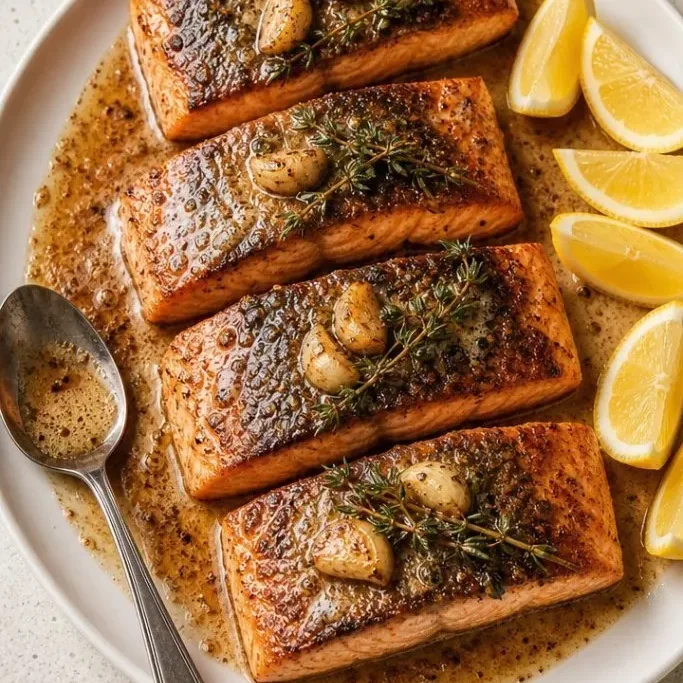
This is the kind of dish that teaches a skill you’ll lean on for years. A hot, heavy skillet and a quick butter baste at the end pull it all together, no cream or complicated sauce needed.
Why This Cast Iron Salmon Works
The skin crackles like parchment when you cut into it, while the flesh underneath stays tender and almost silky. Cast iron holds heat evenly, so you get a crisp sear without overcooking the center.
A spoonful of garlic-thyme butter, spooned over the top at the very end, adds richness and a bright herbal note. The dish feels elevated but comes together with just a few pantry ingredients and about 15 minutes of your attention.
Ingredients
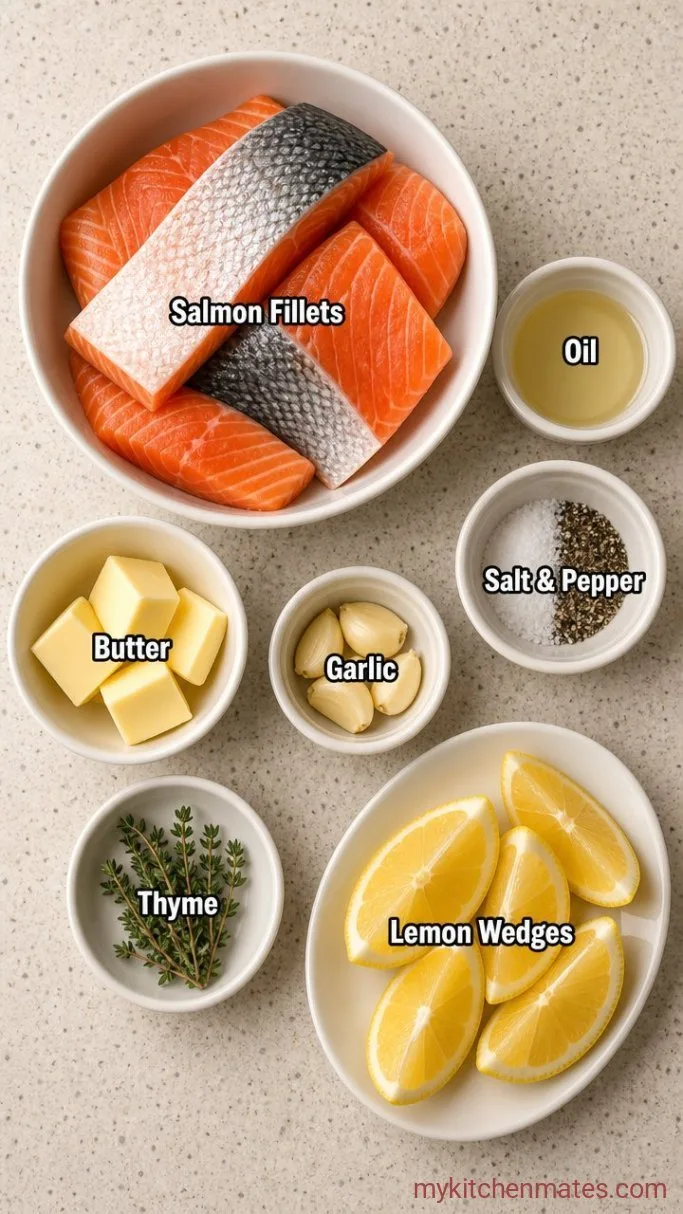
- 4 (6-oz) salmon fillets, skin-on: about 1 inch thick, pin bones removed
- 1 tbsp neutral oil: avocado or vegetable oil works best
- Kosher salt and black pepper
- 3 tbsp unsalted butter: cut into pieces so it melts quickly
- 3 garlic cloves: smashed with the flat of a knife
- 3 sprigs fresh thyme or rosemary: either herb is lovely with the buttery pan sauce
- Lemon wedges for serving
Variations / Substitutions
- Protein swap: Steelhead trout or arctic char cook identically and deliver the same crispy skin finish.
- Herb swap: Tarragon or oregano bring a different aromatic layer; use a light hand with oregano.
- Dairy-free option: Replace butter with 3 tbsp olive oil for basting. You’ll lose that buttery silkiness, so add an extra squeeze of lemon and a pinch of red pepper flakes at the end.
- No garlic: Skip the garlic and let the thyme do the work, the fish will still taste fresh and clean.
Cast Iron Steak is another reader favorite dinner worth making next.
How to Make Cast Iron Salmon
Step 1: Pat the Salmon Dry
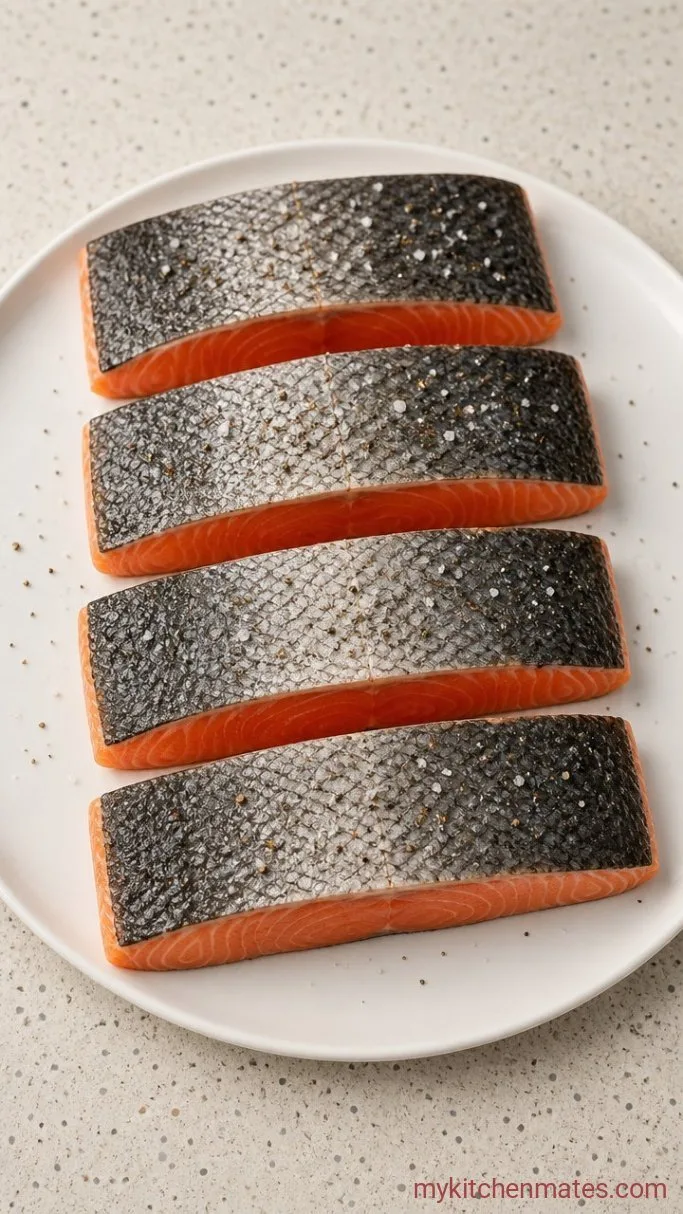
Blot the skin side of each fillet with a paper towel until it is completely dry. Season both sides generously with salt and pepper. Set a large cast iron skillet over medium-high heat and add the oil, letting it warm until it shimmers and just barely smokes, about 2 minutes.
That dry surface is the single most important step for crisp skin. Any moisture left on the fish will steam instead of sear, leaving you with flabby, pale skin.
Step 2: Sear Skin-Side Down
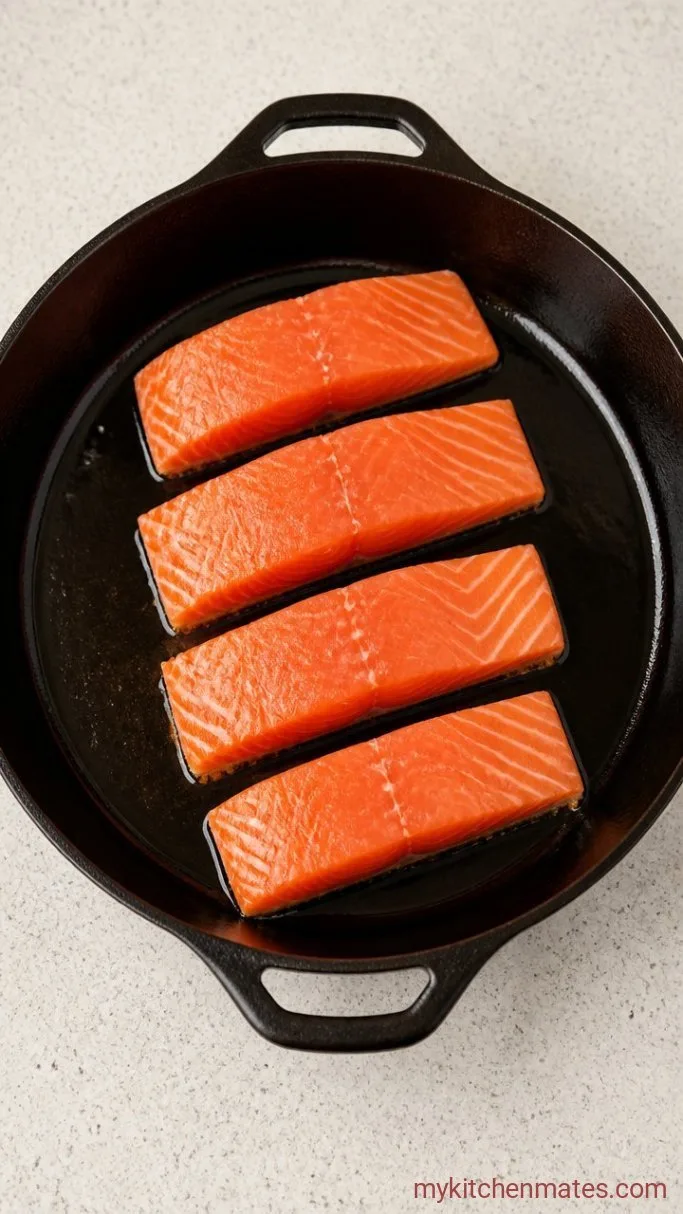
Lay the fillets in the skillet skin-side down, placing them away from you so the oil doesn’t splatter. Press each fillet gently with a fish spatula a few seconds so the skin makes even contact with the hot metal. Cook without moving the fish for 4 to 5 minutes, until the skin is deep golden and releases easily.
You’ll see the edges turn opaque and a bit lighter as the fish cooks from the bottom up. At 4 minutes, lift the corner of one fillet with the spatula, if it still sticks, give it 30 more seconds and try again.
Step 3: Flip and Baste with Butter
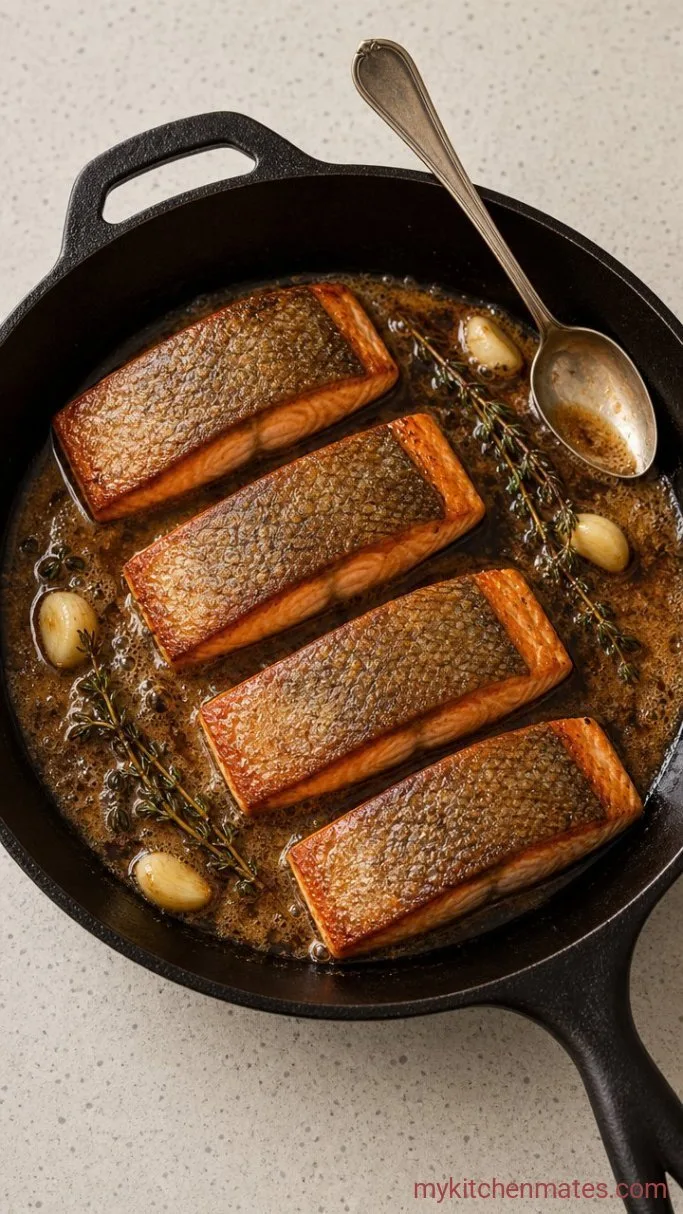
Carefully flip each fillet with a thin fish spatula. Immediately add the butter, smashed garlic, and thyme sprigs to the pan. Tilt the skillet slightly so the butter pools near the handle, then spoon the foaming butter over the tops of the fillets repeatedly for 1 to 2 minutes.
The butter will sizzle around the garlic and herbs, filling the kitchen with a warm, savory scent. You’re looking for the top of the salmon to turn a shade lighter and feel barely firm to the touch, no need to cook it through entirely at this stage.
Step 4: Spoon Over the Pan Sauce
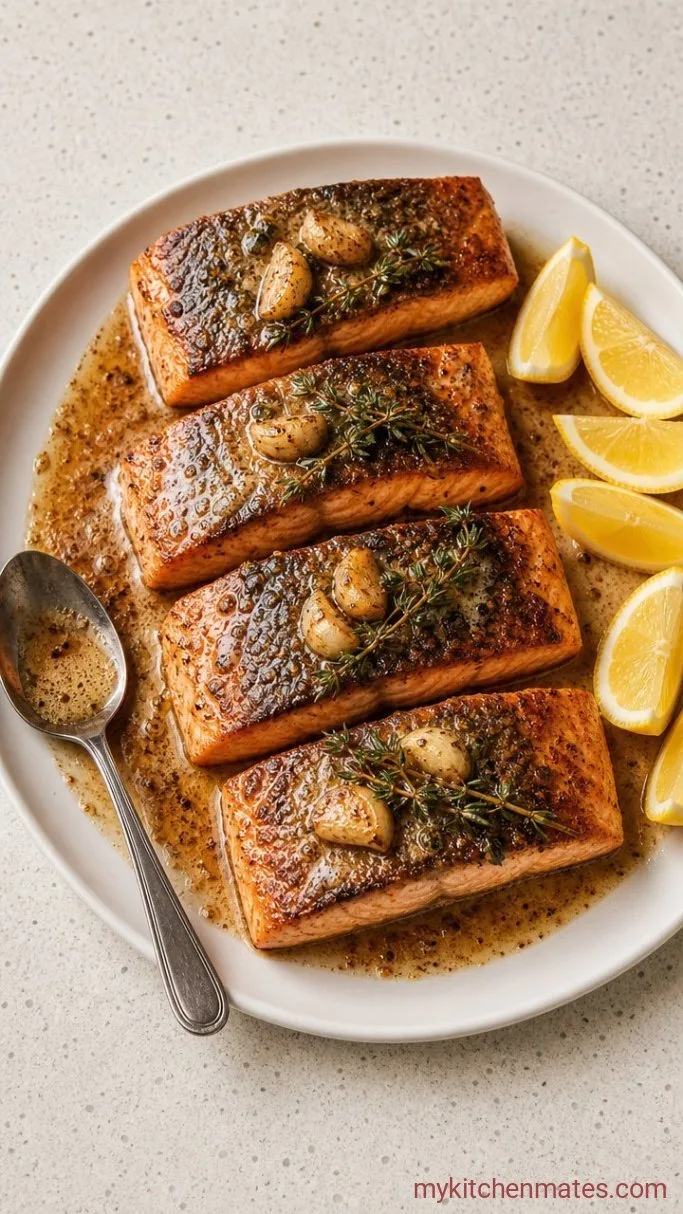
Remove the skillet from the heat. Spoon any remaining garlic-thyme butter over the fillets, then transfer the salmon to warm plates. Nestle a lemon wedge alongside each piece and serve right away while the skin is at its crunchiest.
The skin should snap under a fork, and the flesh inside will be tender with a hint of pink in the center. Pour any pan drippings over the top so nothing goes to waste.
Tips for the Crispiest Skin
- Preheat thoroughly: The oil should shimmer and start to give off faint wisps of smoke before the fish goes in. A pan that isn’t hot enough will glue the skin to the metal.
- Use a fish spatula: Its thin, flexible blade slides under the skin without tearing it and makes flipping feel effortless.
- Don’t rush the release: If the skin sticks when you check it, wait 30 seconds longer. It will free itself naturally once the crust forms.
- The butter baste does double duty: It flavors the fish and gently cooks the top of the fillet, so you don’t need to flip it again and risk breaking the skin.
Cook time varies a bit with fillet thickness. Aim for an internal temperature of 125°F (52°C) for medium.
| Thickness | Skin-Side Down | Flip & Baste |
|---|---|---|
| ¾ inch | 3–4 mins | 1 min |
| 1 inch | 4–5 mins | 1–2 mins |
| 1¼ inch | 5–6 mins | 2 mins |
Storing Leftovers
- Refrigerate: Cool the salmon completely, then place it in an airtight container and refrigerate for up to 2 days.
- Reheating: Warm it gently in a skillet over low heat with a splash of water, just until heated through, or flake it cold over a grain bowl.
What to Serve With Cast Iron Salmon
Lemony couscous or Israeli pearl couscous soaks up the butter sauce beautifully and adds a bright, chewy contrast. Sautéed spinach with a drizzle of olive oil balances the richness of the fish without stealing attention. Roasted asparagus, tossed with a little salt and pepper, brings a satisfying crunch that plays well with the tender salmon.
Frequently Asked Questions
Can I make this dairy-free?
Yes, use 3 tablespoons of olive oil instead of butter. The flavor won’t be as rich, so add a generous squeeze of lemon and a pinch of red pepper flakes after basting.
How do I know when the salmon is done?
An instant-read thermometer is the most reliable way. Look for 125°F to 130°F for medium, or press the fillet gently with your finger to feel it firm up.
My skin isn’t crispy—what went wrong?
The two most likely culprits are a pan that wasn’t hot enough or fish that wasn’t thoroughly dried. Give the oil a full 2 minutes over medium-high heat and really blot the skin until it feels tacky.
Can I cook more than four fillets at once?
Not unless you have a very large skillet or work in batches. Crowding the pan drops the temperature and traps steam, which ruins the crisp skin. Give each fillet a couple inches of space.
Cast Iron Salmon Recipe
Ingredients
Method
- Pat the salmon dry completely, season both sides with salt and pepper, and heat the oil in a large cast iron skillet over medium-high until shimmering.
- Lay fillets skin-side down, press gently with a spatula, and cook without moving for 4 to 5 minutes until the skin is deep golden and releases easily.
- Flip the fillets, add the butter, garlic, and herb sprigs, then tilt the pan and spoon the foaming butter over the fish for 1 to 2 minutes.
- Remove from heat, spoon any remaining pan sauce over the salmon, and serve immediately with lemon wedges.
Notes
