
Cast Iron Steak with Garlic Butter (No Oven, All Stovetop)

A steakhouse dinner on a Tuesday night sounds ambitious, but a hot cast iron skillet gets you there faster than you think. This pan-seared steak delivers a deep, salty crust and a rosy, buttery center in under 20 minutes, no oven, no smoke alarms, just real stove-top heat.
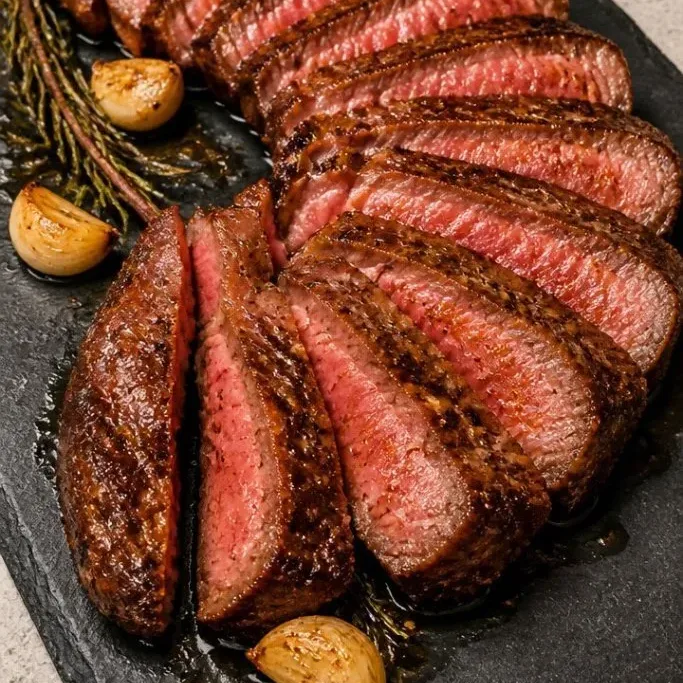
You need a good piece of meat, a few pantry staples, and a little patience while the skillet does the work. It is the kind of meal that feels like a splurge but costs less than takeout.
Why This One Stays in My Rotation
I come back to this recipe because the crust is what you actually want from a steak. The cast iron holds heat in a way that turns the outside crisp and savory without overcooking the inside.
Butter basting with garlic and rosemary adds richness that seeps into every bite, but it never feels heavy or complicated. The pan does most of the work while you spoon and watch.
Leftovers, if there are any, stay tender and make a killer steak salad the next day. It is a 15-minute effort that tastes like a deliberate Sunday supper.
Ingredients
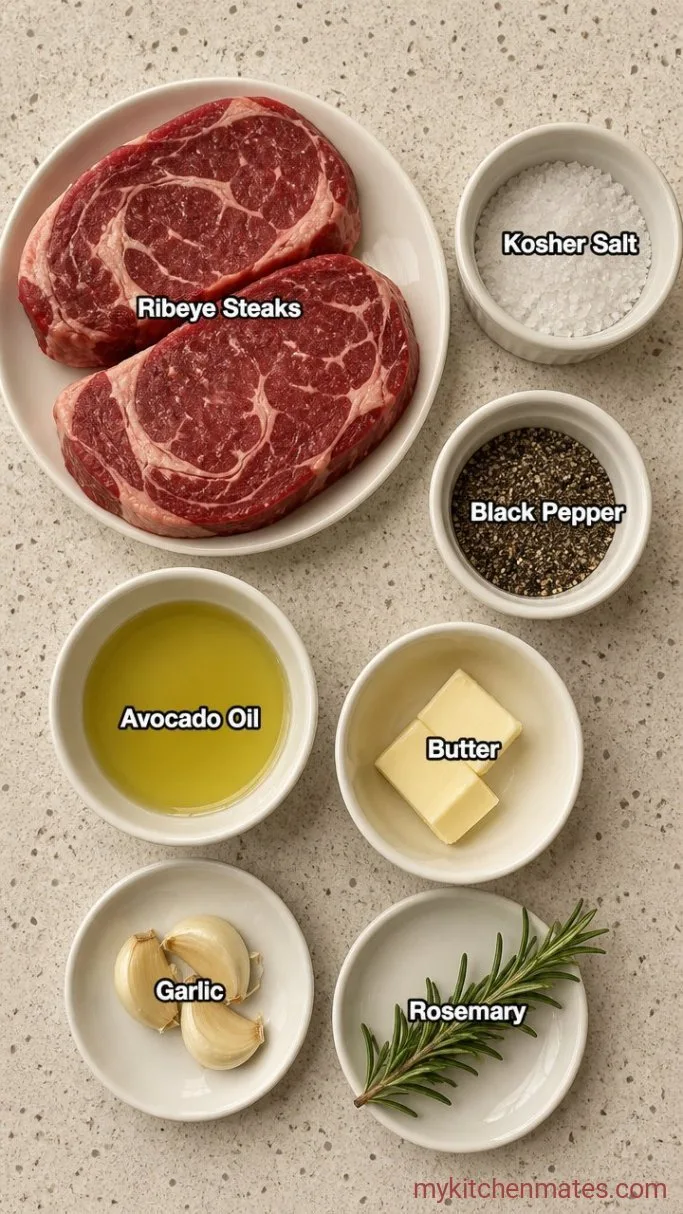
- 2 (8 to 10 oz) boneless ribeye or strip steaks, about 1 inch thick: ribeye has the most marbling, strip steaks are leaner but still tender
- 1 tsp kosher salt: coarse salt seasons the meat without dissolving too fast
- ½ tsp freshly ground black pepper: use a coarse grind for texture
- 1 tbsp avocado or canola oil: high smoke point oils keep the pan from burning before the crust sets
- 2 tbsp unsalted butter: adds nuttiness and helps build the baste
- 3 garlic cloves, smashed: they release their flavor slowly without burning
- 1 sprig fresh rosemary (optional): earthy and piney, it infuses the butter
Variations / Substitutions
- Filet mignon: cook a minute less per side because it is lean and dense
- Sirloin: a budget-friendly cut that works, just watch the time so it stays juicy
- Thyme or sage: swap the rosemary for whichever fresh herb you have on hand
- Dairy free: skip the butter and finish with a drizzle of good olive oil and a pinch of flaky salt
- Extra spice: top the rested steak with a spoonful of chili crisp right before serving
Buttery Skillet Cabbage and Potatoes go great on the side with this recipe.
How to Make Cast Iron Steak with Garlic Butter
Step 1: Bring the Steaks to Room Temperature and Season
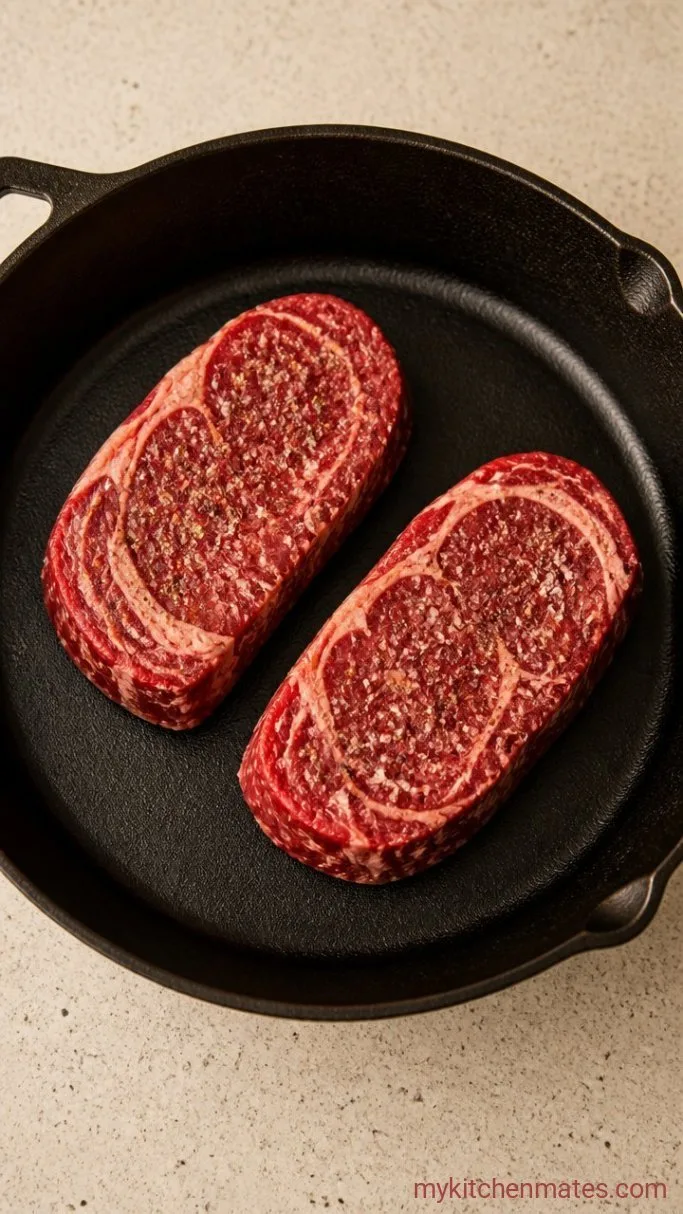
Pat both steaks completely dry with paper towels and season them generously on all sides with the 1 tsp salt and the ½ tsp pepper. Let them sit on a plate at room temperature for 30 minutes. That 30-minute rest is the real secret to even cooking, so don’t skip it.
The surface should feel dry and cool, not clammy. A dry steak sears rather than steams, setting you up for that deep brown crust.
Step 2: Heat the Skillet and Sear the First Side
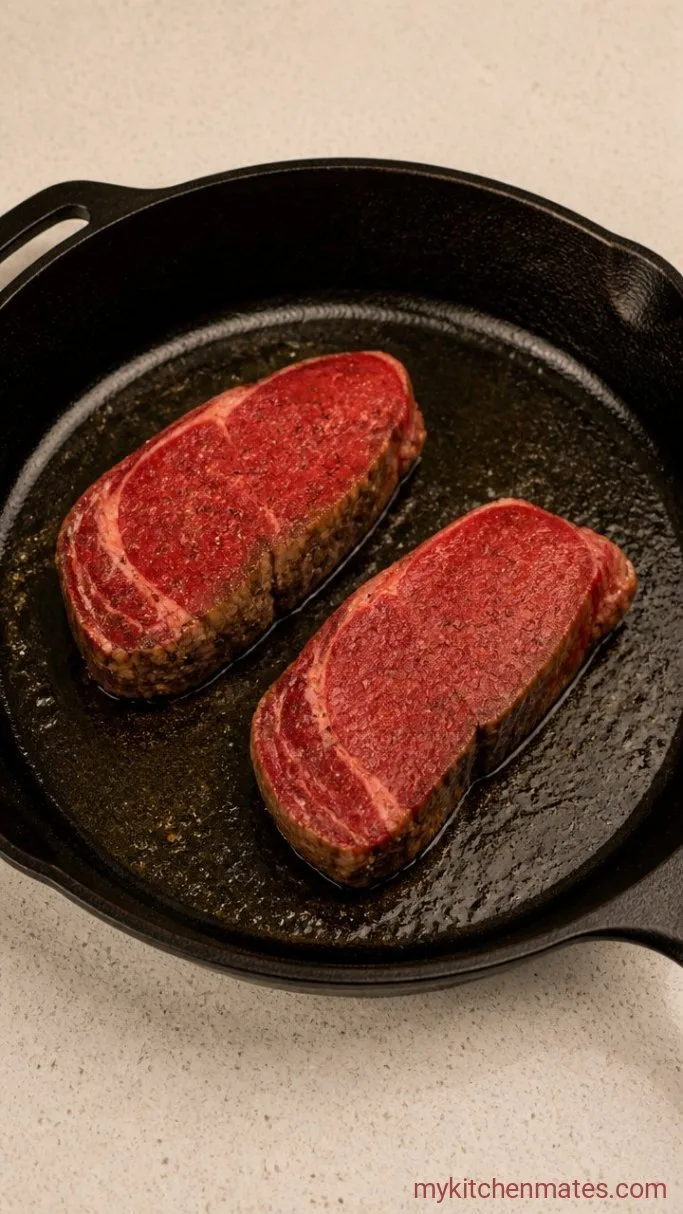
Set a 10-inch cast iron skillet over high heat and let it get screaming hot, about 3 full minutes. Add the 1 tbsp oil and swirl to coat the pan, then carefully lay the steaks in away from you. Press them gently with a spatula for full contact. Sear without moving for about 4 minutes, until a dark mahogany crust forms.
The kitchen will smell like toasted beef and hot iron. If the steak sticks, give it another 30 seconds, it releases on its own when the crust is ready.
Step 3: Flip the Steaks and Add the Butter and Aromatics
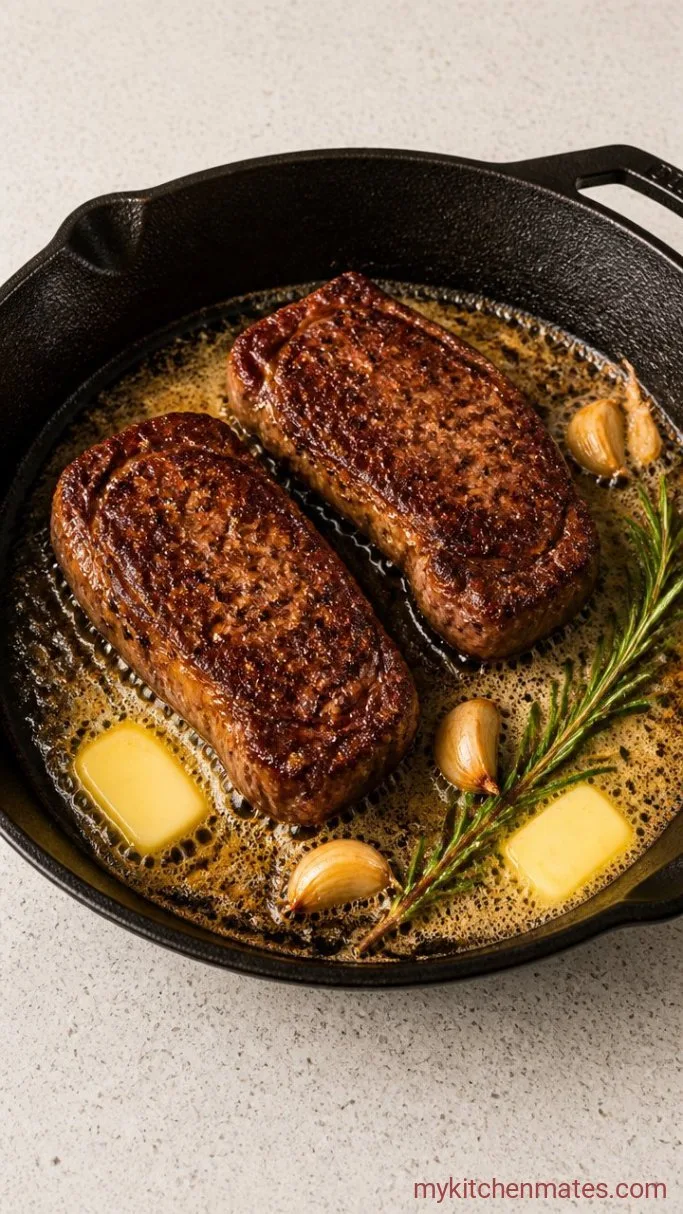
Use tongs to flip both steaks. Immediately drop in the 2 tbsp butter, the smashed garlic cloves, and the rosemary sprig. The butter will melt and foam in a few seconds, so tilt the pan slightly toward you to pool it near the handle.
The garlic will sizzle and the rosemary leaves will pop, filling the air with that warm, herbaceous scent. You are about a minute away from steak that tastes like a weekend project.
Step 4: Baste the Steaks and Check Doneness
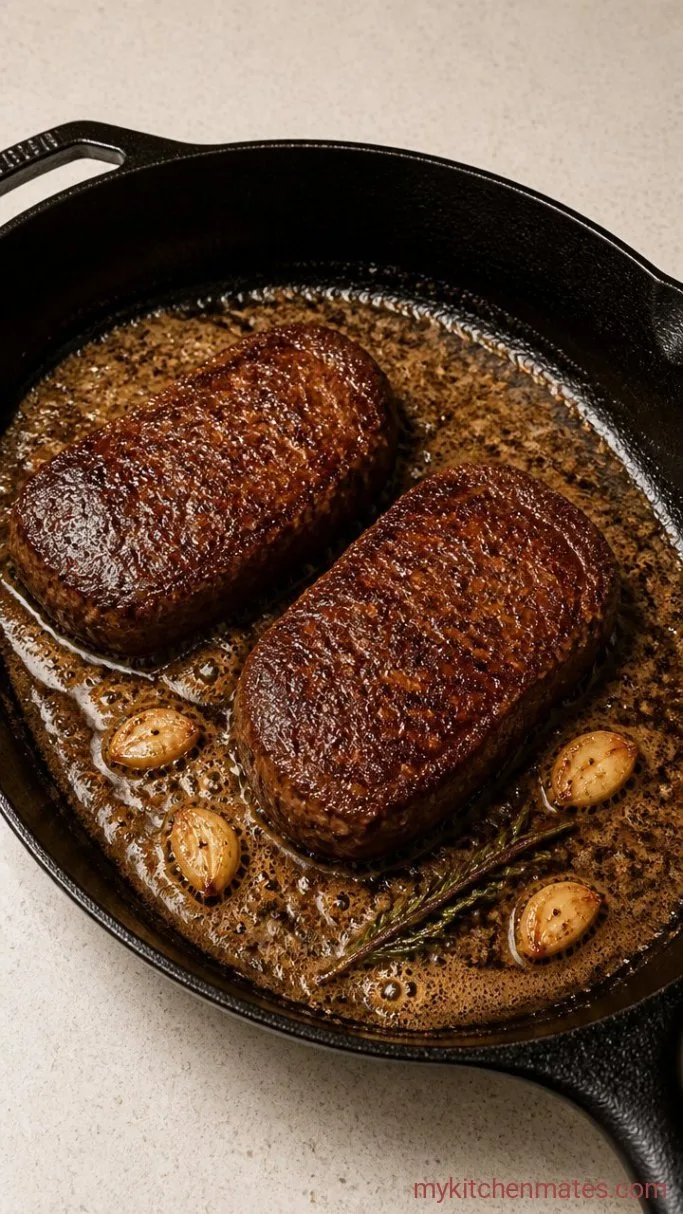
Spoon the bubbling butter over the tops of the steaks continuously, basting for 1 to 2 minutes. If you have an instant-read thermometer, start checking after 1 minute: pull the steaks at 125°F for medium-rare or 130°F for medium. For steaks thicker than 1 inch, you may need an extra minute of basting.
The butter will deepen to a golden brown and smell nutty. The meat should feel slightly springy when you press it with a finger, with a browned, crisp cap on top.
Step 5: Rest and Slice the Steaks
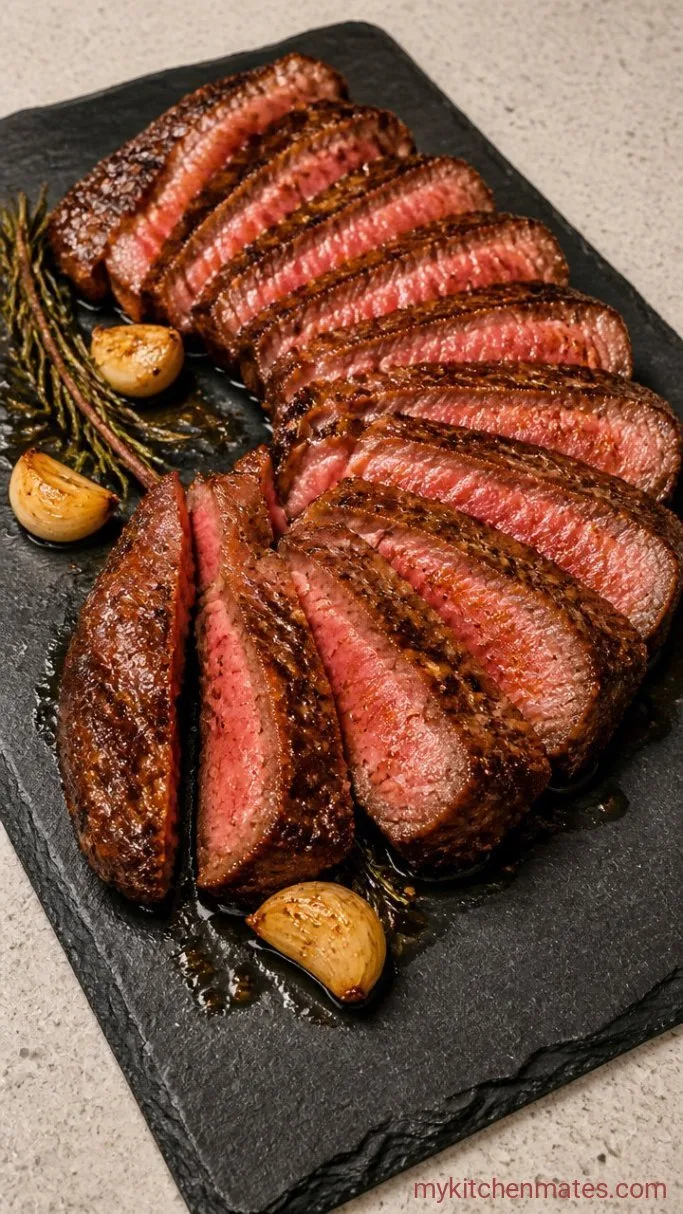
Move the steaks to a cutting board and let them rest for a full 5 minutes. The carryover heat will push the temperature about 5 degrees higher, landing right where you want it. Slice the meat against the grain into thick strips and spoon any pan drippings over the top.
The crust stays crackly and the center stays pink. A tiny pinch of flaky sea salt right before the plate hits the table makes every bite pop.
A Few Tips for a Killer Crust
- Use a high smoke point oil: avocado or canola oil prevents the pan from smoking and burning before your crust sets.
- Do not crowd the pan: if you cook more than two steaks, work in batches so the skillet holds its heat.
- Thick steaks are your friend: aim for at least 1 inch, because thin steaks overcook before a crust can develop.
- Let the steak tell you it is ready: a digital thermometer gives you the most reliable cue, but the finger-touch method works if you know your doneness.
- Butter burns if the pan is too hot: lower the heat to medium-high just before you add the butter if you see smoke rising after the flip.
Cook times for medium-rare steaks of different thicknesses (carryover will add about 5°F while resting):
| Thickness | First Side | Second Side & Baste | Total Cook Time |
|---|---|---|---|
| 1 inch | 4 minutes | 2 minutes | 6 minutes |
| 1.5 inches | 5 minutes | 3 minutes | 8 minutes |
| 2 inches | 6 minutes | 4 minutes | 10 minutes |
Storing Leftover Steak
- Refrigerate: store sliced or whole steak in an airtight container for up to 3 days. Slicing before storing makes it easier to use later.
- Reheating: reheat gently in a skillet over low heat with a splash of water or broth to keep it moist. The microwave will turn it rubbery.
- Serve cold: cold steak sliced thin over arugula with parmesan is one of the best lunches you will pack all week.
What to Serve with Cast Iron Steak
Creamy mashed potatoes soak up every drop of the buttery pan juices, so they are a natural partner. For something green, quick-sautéed green beans with a squeeze of lemon cut through the richness and add a little brightness. A bold red grape juice, stands up to the charred crust without getting lost.
Frequently Asked Questions
Can I use a nonstick skillet instead of cast iron?
No. Nonstick pans cannot handle the high heat needed for a good sear, and the coating degrades above 500°F. A heavy stainless steel pan works as an alternative.
My steak sticks to the pan every time. What is going wrong?
The pan is not hot enough or you are moving the steak too early. Let it sear completely undisturbed. The meat will let go on its own once a crust forms.
Can I cook a frozen steak this way?
No. A frozen steak will burn on the outside long before the center cooks through. Thaw it fully in the refrigerator overnight, then let it come to room temperature before seasoning.
Why did my butter burn and taste bitter?
The pan was too hot when you added the butter. Add it only after you flip the steak, and if you see smoke, drop the heat to medium-high before the butter goes in.
Cast Iron Steak Recipe
Ingredients
Method
- Pat steaks dry and season all sides with salt and pepper. Let sit at room temperature for 30 minutes.
- Heat a cast iron skillet over high heat for 3 minutes. Add oil, then sear steaks for about 4 minutes, until they release easily and show a dark crust.
- Flip steaks, then add butter, garlic, and rosemary to the pan.
- Tilt the pan and spoon butter over steaks for 1 to 2 minutes, basting constantly. Pull at 125°F for medium-rare.
- Rest on a cutting board for 5 minutes, slice against the grain, and spoon any pan juices over the top.
Notes
