
Golden Cast Iron Skillet Cornbread

This skillet cornbread bakes up with a crackling golden crust and a tender, buttery crumb, all from one pan. The hot cast iron is what gives it that deep, crisp bottom you just can’t get from a regular baking dish.
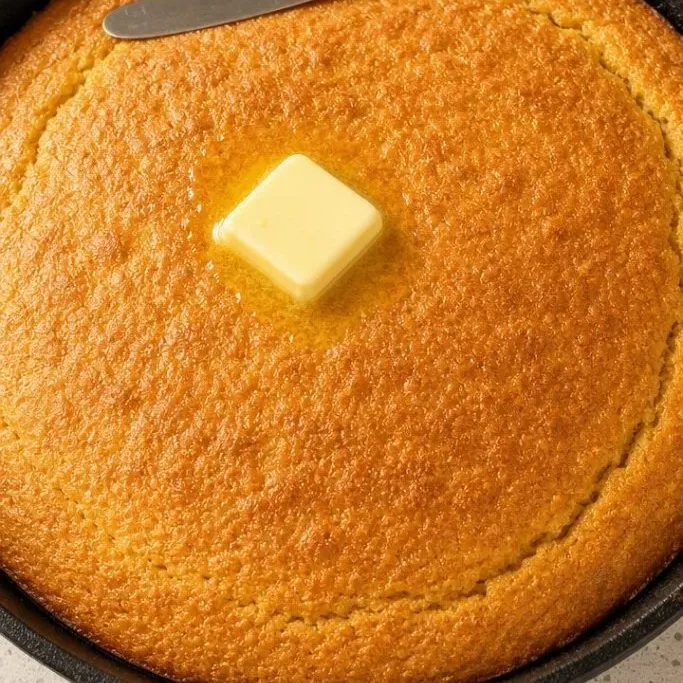
It comes together in about half an hour with simple pantry ingredients. That makes it the side dish I reach for most when the meal needs something warm and honest.
Why This Cornbread Works
A hot skillet sizzles the batter the second it hits, creating that lacy, crispy edge. The cornmeal stays stone-ground and a little gritty in the best way, while the buttermilk keeps the center soft.
It is not overly sweet, but there is just enough sugar to round out the corn flavor. The butter does double duty, flavoring the crumb and greasing the pan so every slice lifts out clean.
Ingredients
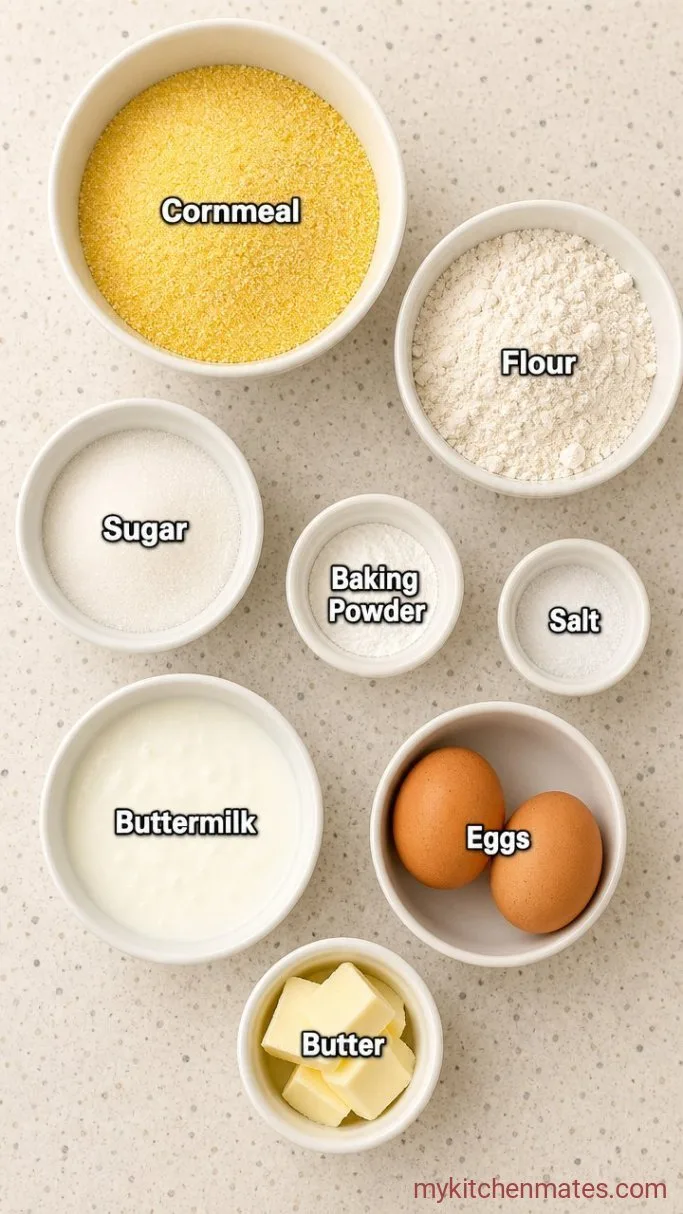
- 1 ½ cups yellow cornmeal: stone-ground or medium grind works best; fine grind will make the crumb more cake-like.
- 1 cup all-purpose flour: gives the bread structure and a bit of lightness.
- 2 tablespoons granulated sugar: optional, but even a little helps the crust brown deeper.
- 1 tablespoon baking powder: make sure it is fresh so the cornbread rises well.
- ½ teaspoon salt: fine sea salt or table salt.
- 1 ½ cups buttermilk: full-fat for richness, or shake up 1 ½ cups milk with 1 ½ tablespoons vinegar as a quick stand-in.
- 2 large eggs: at room temperature if you have the time.
- ¼ cup unsalted butter: for melting in the skillet to grease it and flavor the crust.
- ¼ cup unsalted butter, melted: for the batter, cooled slightly so it does not cook the eggs.
Variations / Substitutions
- Savory cornbread : leave out the sugar and fold in ¼ cup chopped pickled jalapeños and ½ cup shredded sharp cheddar.
- Dairy-free : swap the buttermilk for oat milk with a tablespoon of lemon juice, and use a neutral oil or vegan butter for the skillet and batter.
- Sweeter version : increase the sugar to ¼ cup and brush the top with honey butter the moment it comes out of the oven.
- Gluten-free : replace the all-purpose flour with a 1:1 gluten-free flour blend that contains xanthan gum, and the texture stays close.
Shrimp and Sausage Jambalaya is next on our list if this skillet is your kind of dinner.
How to Make Golden Cast Iron Skillet Cornbread
Step 1: Heat the Skillet and Melt the Butter
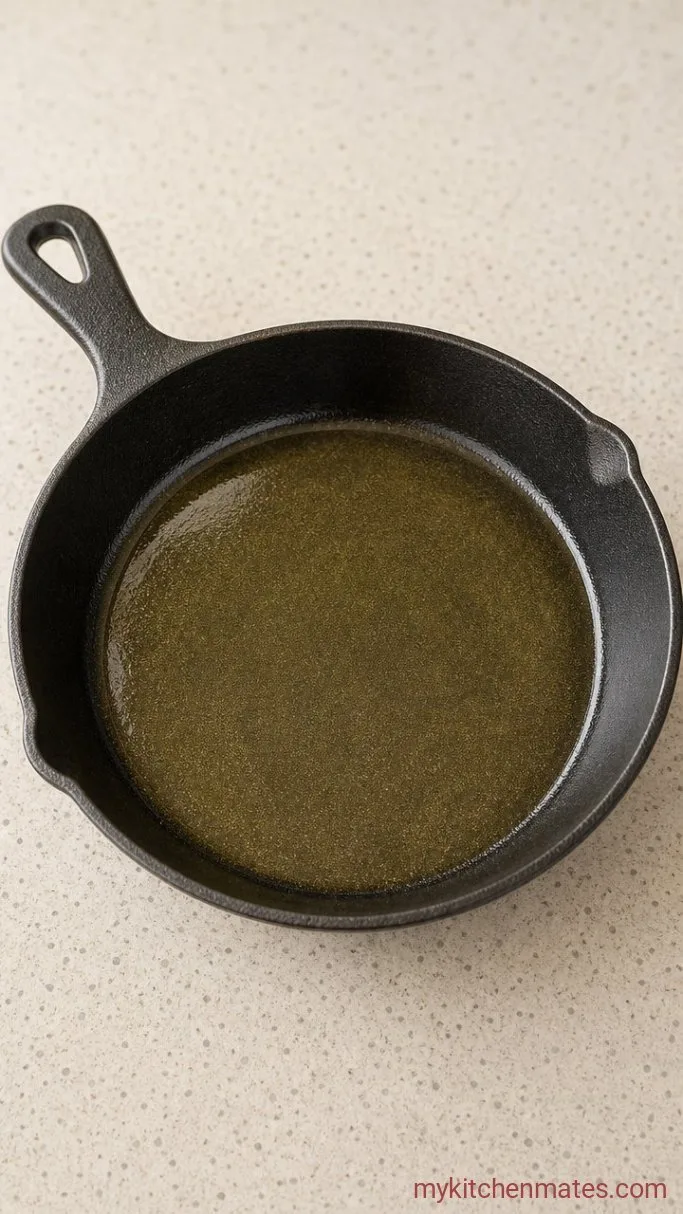
Set a 10-inch cast iron skillet on the middle rack of your oven and preheat it to 400°F (200°C). Add the ¼ cup of butter meant for the skillet and let it melt while the oven comes to temperature.
After about 10 minutes, carefully take the hot skillet out. Tilt it so the melted butter coats the bottom and halfway up the sides, then pour any extra butter into a small bowl to cool. You want an even, glossy film left in the pan.
This butter layer is what fries the bottom crust as it bakes, so do not skip it. Keep the skillet off of anything cold while you mix the batter so it stays hot.
Step 2: Mix the Dry Ingredients
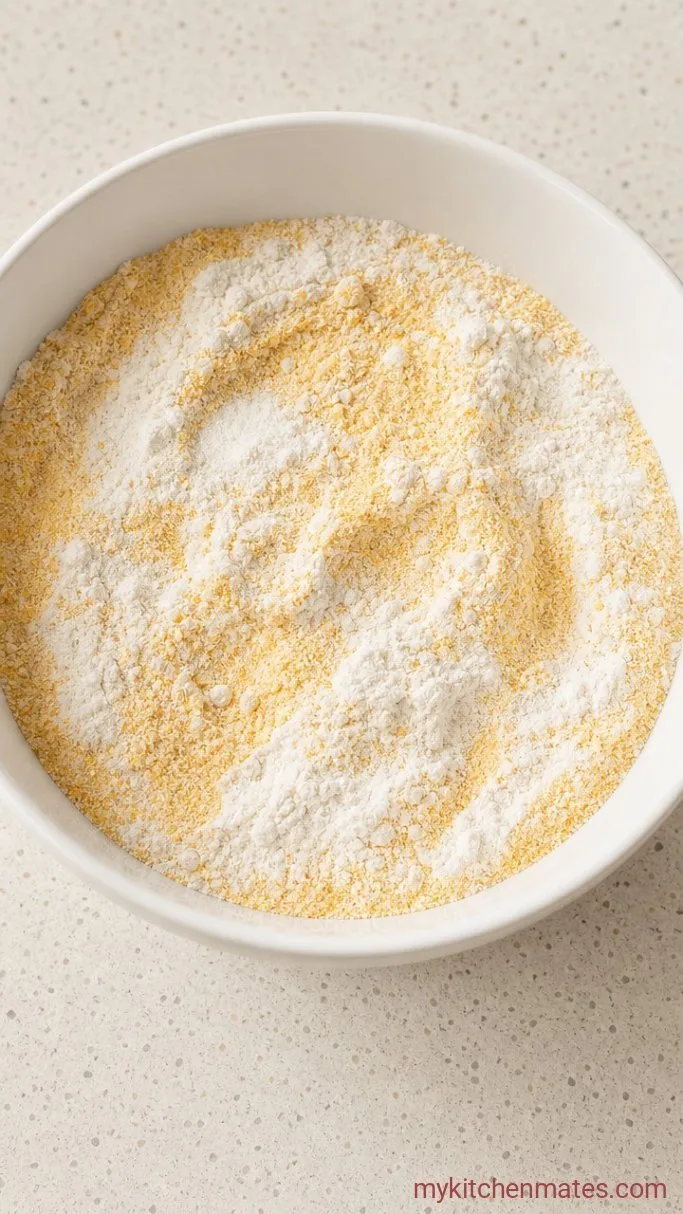
In a large bowl, whisk together the 1 ½ cups cornmeal, 1 cup flour, 2 tablespoons sugar, 1 tablespoon baking powder, and ½ teaspoon salt. Break up any clumps so the leavening spreads evenly.
You will see small flecks of cornmeal throughout the flour, and that is exactly right. The mixture should look uniform and feel light when you run a whisk through it.
A quick whisk now stops pockets of dry flour or baking powder later, which can taste bitter. Spend a good 30 seconds on this and you are set.
Step 3: Whisk the Wet Ingredients
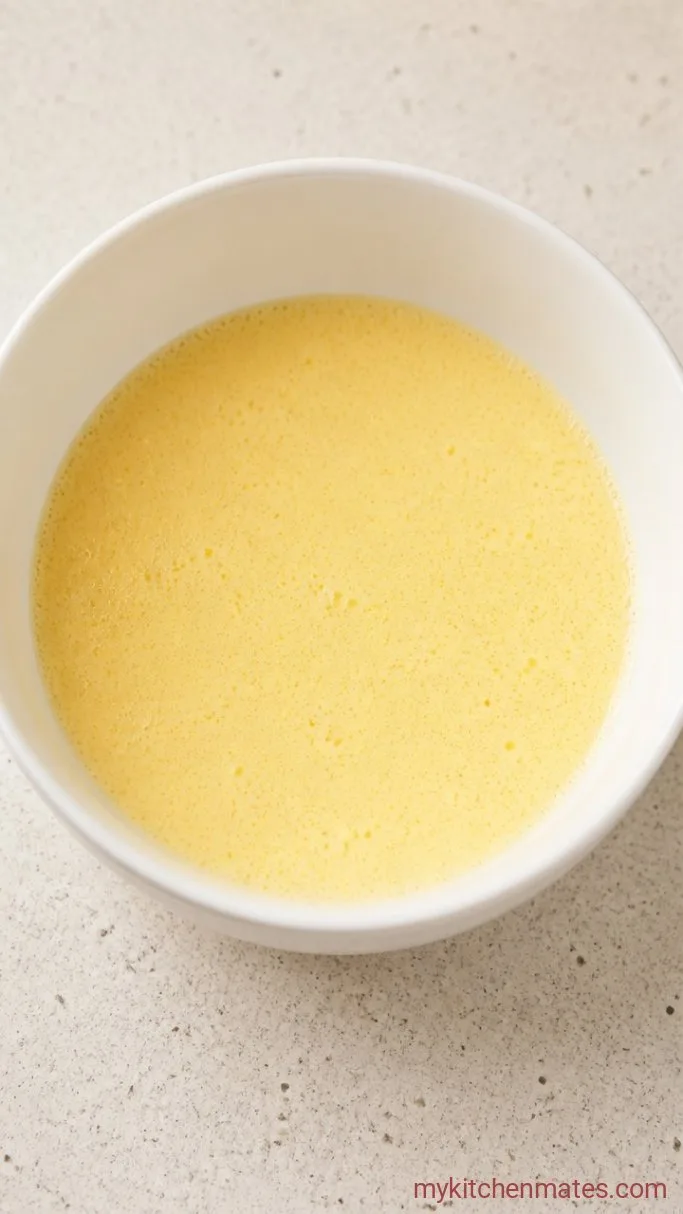
In another bowl, whisk the 1 ½ cups buttermilk, 2 eggs, and the ¼ cup of melted butter meant for the batter until everything is smooth. The mixture will look pale yellow with streaks of butter.
The eggs should be fully broken up so you do not get eggy ribbons in the baked cornbread. You can do this with a fork if that is what is clean.
The buttermilk will look thin compared to the thick dry mix you just made. That contrast is what helps form a tender crumb instead of a dense one.
Step 4: Combine the Batter and Pour It Into the Hot Skillet
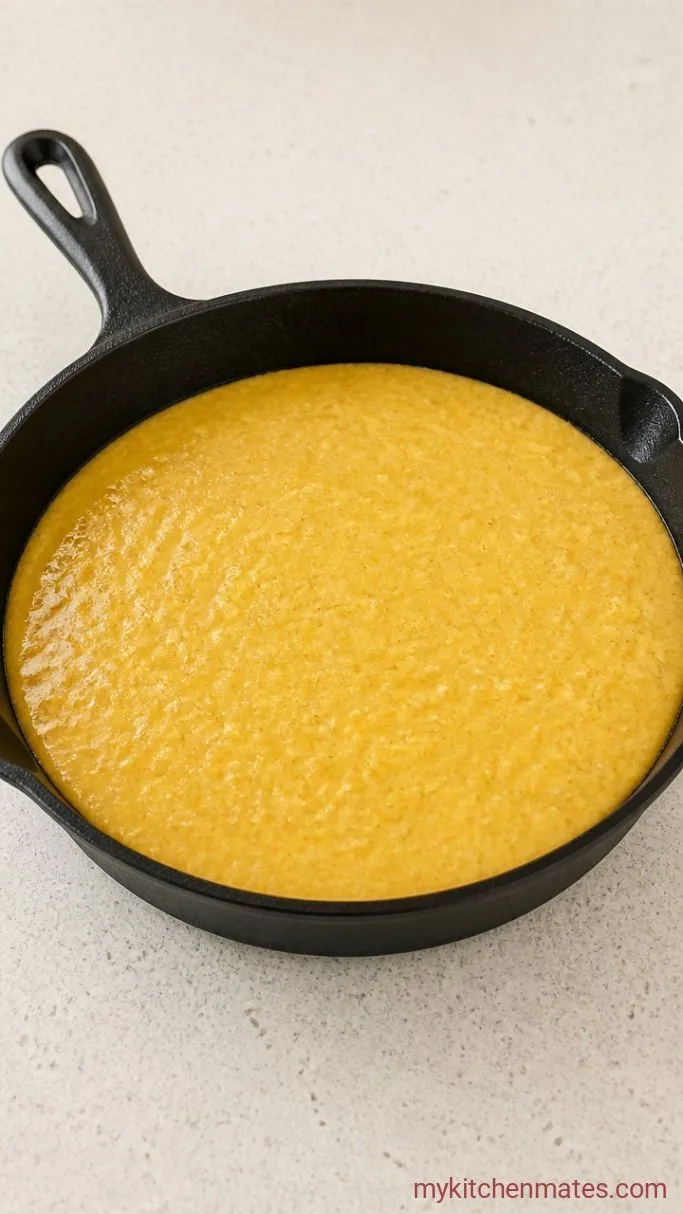
Pour the wet mixture into the dry ingredients all at once. Stir with a wooden spoon or spatula until just combined. The batter will be thick and lumpy, and you should stop the moment no dry streaks remain.
Overmixing activates the gluten and makes the cornbread tough. A few small lumps are good news, not a mistake.
Immediately scrape the batter into the hot buttered skillet. It will sizzle around the edges right away, which means the crust is already starting to set. Smooth the top gently with your spatula but do not press the batter down.
Step 5: Bake and Serve
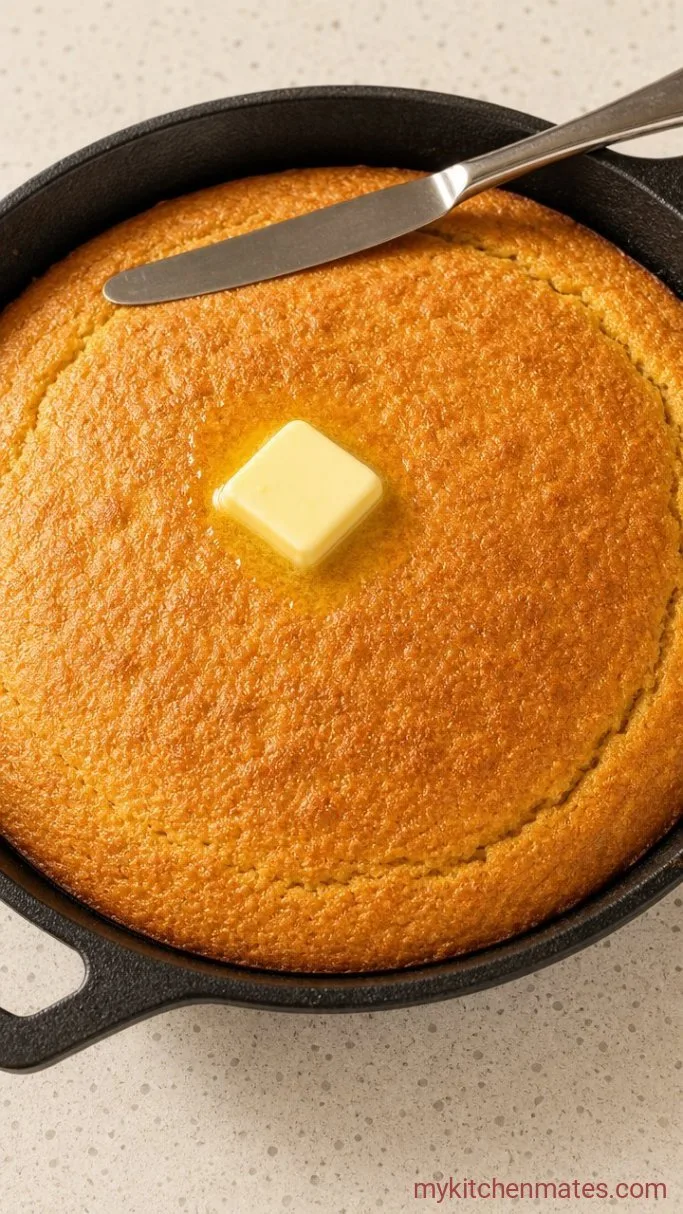
Get the skillet back into the 400°F (200°C) oven. Bake for 20 to 22 minutes, until the top is deep golden, the edges pull away from the pan, and a toothpick poked in the center comes out with just a few moist crumbs.
The cornbread will smell toasted and buttery. Let it cool in the skillet for 5 minutes so the bottom sets, then cut it right in the pan and serve the wedges while they are warm. The crust will be shatter-crisp, with steam rising from the soft center.
Tips for the Best Skillet Cornbread
- Get the skillet blazing hot before you add the batter.: A cooler pan will not create that sizzle and you will miss out on the crispy bottom.
- Use stone-ground cornmeal for texture.: Fine cornmeal bakes up soft and almost cakey; medium or coarse grind keeps the crumb pleasantly rustic.
- Dress it up right out of the oven.: Brush the top with a little extra butter or a drizzle of honey while it is still hot, and it will soak right in.
Bake times by skillet size. Keep an eye on the color and test with a toothpick when you are near the end.
| Skillet Size | Bake Time | Notes |
|---|---|---|
| 8-inch | 24-26 mins | The deeper batter needs a few extra minutes to set in the center. |
| 10-inch | 20-22 mins | This is the sweet spot tested in the recipe. |
| 12-inch | 18-20 mins | Thin cornbread bakes fast, so check it early to avoid a dry crumb. |
Storing Leftover Cornbread
- Refrigerate : Wrap wedges tightly in plastic wrap or keep them in an airtight container for up to 2 days. The crust softens a bit, but it is still good.
- Reheating : Pop pieces into a 350°F oven or toaster oven for 5 to 7 minutes to crisp the edges back up. A hot skillet with a tiny pat of butter works too.
What To Serve With Skillet Cornbread
A bowl of chili or a pot of pinto beans is the classic choice, and for good reason. The cornbread soaks up the broth and adds a buttery contrast to the spice. It also sits well next to fried chicken, where the crunchy coating and the soft crumb play off each other. For a lighter meal, try it with a big green salad tossed in a sharp vinaigrette, because the acidity cuts through the richness of the bread.
Frequently Asked Questions
Can I bake this in a regular cake pan?
You can, but you will not get the same crisp bottom. Use a 9-inch round pan and skip the step where you preheat it with butter. Grease the pan well and pour in the batter.
What if I don’t have buttermilk?
Mix 1 ½ cups whole milk with 1 ½ tablespoons white vinegar or lemon juice. Let it sit for 5 minutes to thicken and use it measure for measure.
Can I add whole corn kernels to the batter?
Yes, fold in ½ cup fresh or thawed frozen corn after you combine the wet and dry ingredients. It adds a nice pop of texture.
Why did my cornbread stick to the skillet?
A well-seasoned skillet and plenty of melted butter should keep it from sticking. If it grabs, run a thin spatula around the edge before cutting.
Golden Cast Iron Skillet Cornbread Recipe
Ingredients
Method
- Preheat oven to 400°F (200°C) with a 10-inch cast iron skillet inside. Add ¼ cup butter to the skillet and let it melt. Remove, tilt to coat, then pour any extra into a small bowl.
- Whisk together cornmeal, flour, sugar, baking powder, and salt in a large bowl.
- In another bowl, whisk buttermilk, eggs, and the ¼ cup melted butter until smooth.
- Pour wet mixture into dry, stir until just combined, then scrape batter into the hot skillet.
- Bake 20 to 22 minutes until golden and a toothpick comes out with moist crumbs. Cool 5 minutes in the pan, then slice and serve warm.
Notes
