
Canning Vegetable Soup for Quick Dinners

Canning vegetable soup at home gives you shelf-stable jars of hearty soup ready in minutes on a busy night. It’s a project that takes a few hours but pays off for months.
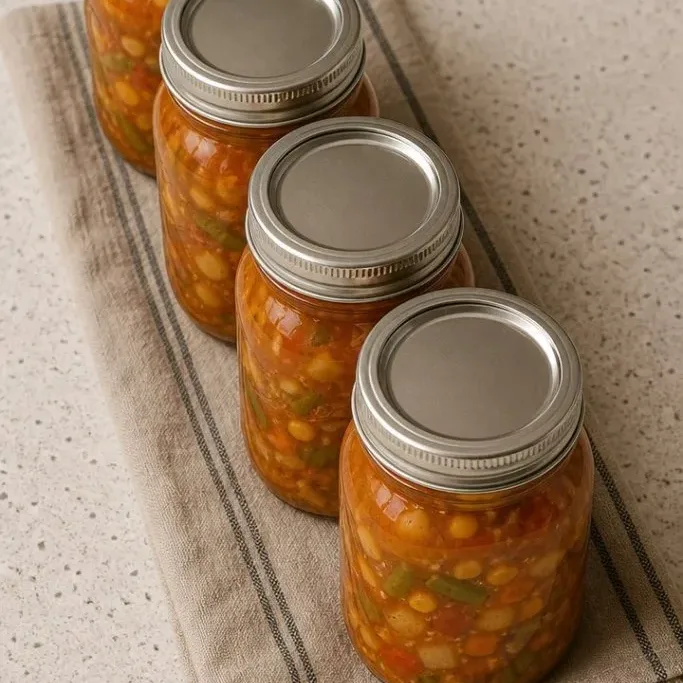
This recipe walks you through a simple mixed-vegetable soup that’s safe for pressure canning, no fancy ingredients needed. Let’s get some jars on the shelf.
Why This Soup Earns a Spot on the Shelf
This soup tastes like a garden in a jar—sweet carrots, tender green beans, and earthy potatoes swimming in a light tomato broth. The pressure canning locks in bright flavor without turning the vegetables to mush.
I keep jars in the pantry all winter for nights when cooking feels impossible. Heat it up, maybe add some crusty bread, and dinner is done.
Ingredients
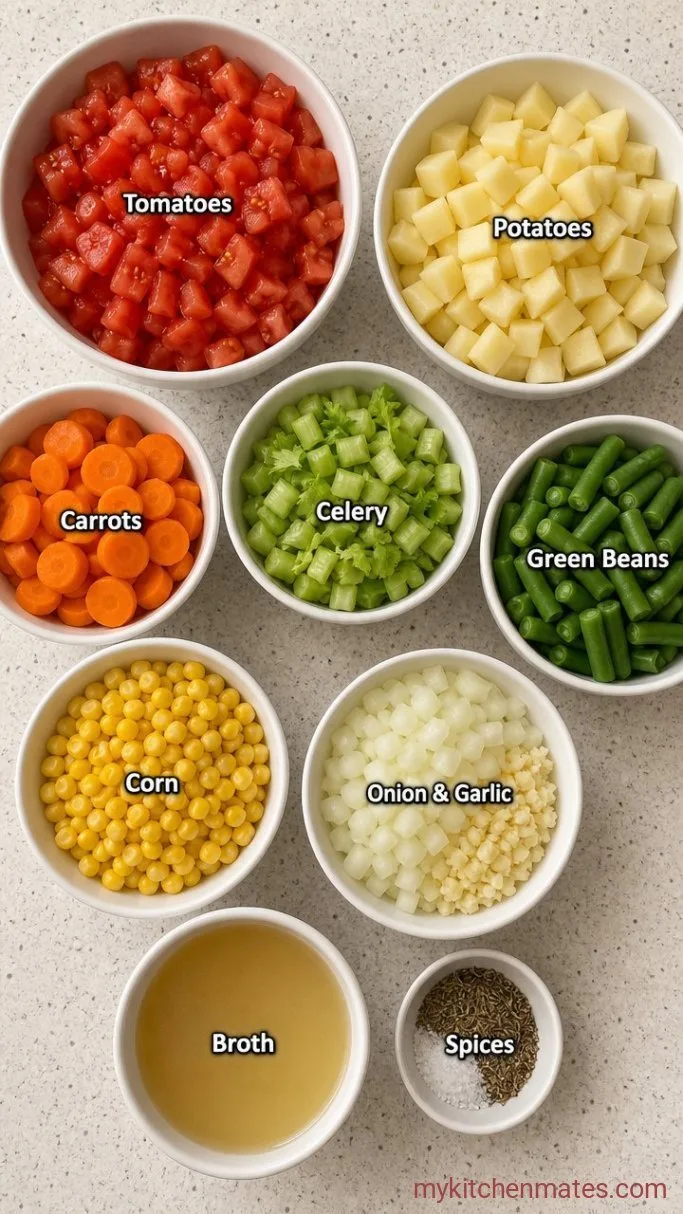
- 4 cups diced tomatoes (with their juices): fresh or canned, no added salt
- 2 cups diced potatoes, peeled: waxy varieties hold their shape best
- 1 ½ cups sliced carrots: about 3 medium
- 1 ½ cups chopped celery: include the leaves for extra flavor
- 1 ½ cups cut green beans: trimmed and snapped into 1-inch pieces
- 1 cup corn kernels: fresh or frozen
- 1 medium onion, diced: yellow or white
- 3 cloves garlic, minced: adjust to your taste
- 8 cups vegetable broth or water: low sodium gives you more control
- 2 teaspoons salt: canning salt dissolves cleanly
- ½ teaspoon black pepper
- 1 teaspoon dried thyme: (or a couple fresh sprigs)
Variations / Substitutions
- Swap the potatoes: Use diced turnips or parsnips instead—they stay firm and slightly sweet.
- Add other sturdy vegetables: Celery root, zucchini (peeled), or diced bell peppers all work well.
- Change the herb: Italian seasoning or a bay leaf (remove before jarring) are classic.
- Spice it up: A pinch of red pepper flakes goes in with the garlic if you like heat.
- Low-salt option: Drop the salt entirely and season later—the vegetables carry plenty of flavor.
No-Knead Farmhouse On Boone Sourdough Bread makes the perfect bread to serve with this soup.
How to Make Canned Vegetable Soup
Step 1: Chop and Prep the Vegetables
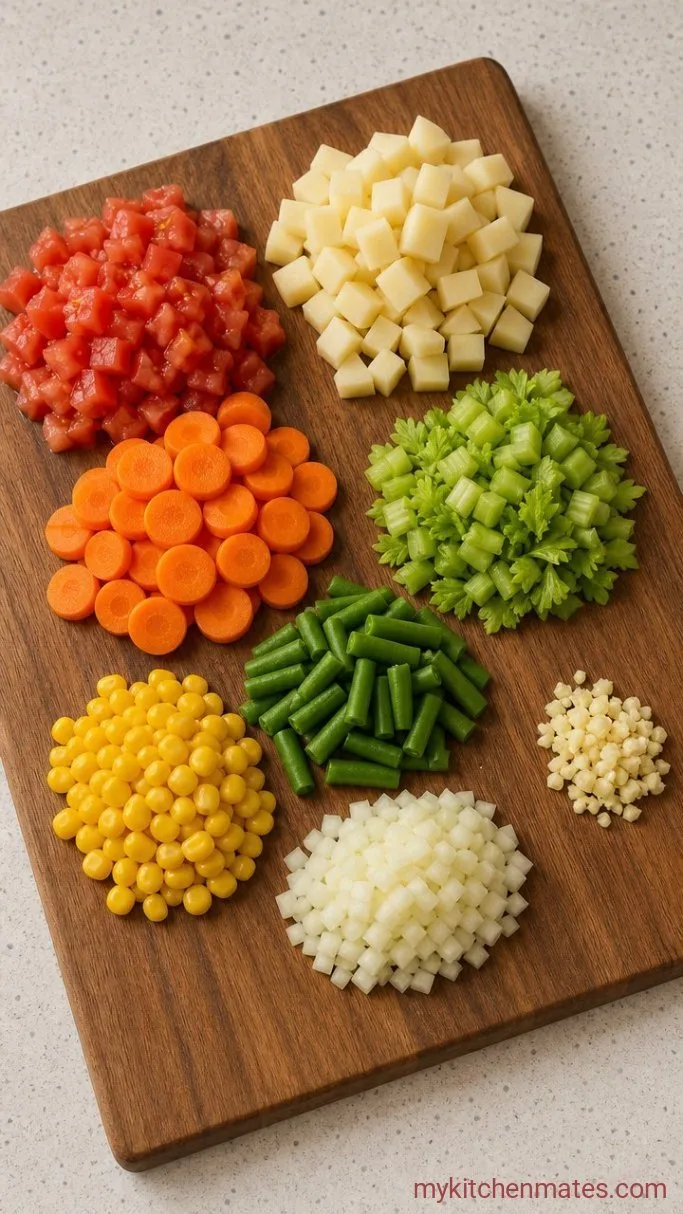
Wash, peel, and chop everything into bite-sized pieces, keeping the sizes similar across the pot. You want roughly 12 cups of combined vegetables.
Place the diced potatoes in a bowl of cold water while you work to keep them from browning, then drain before adding them later.
Step 2: Simmer the Soup Base
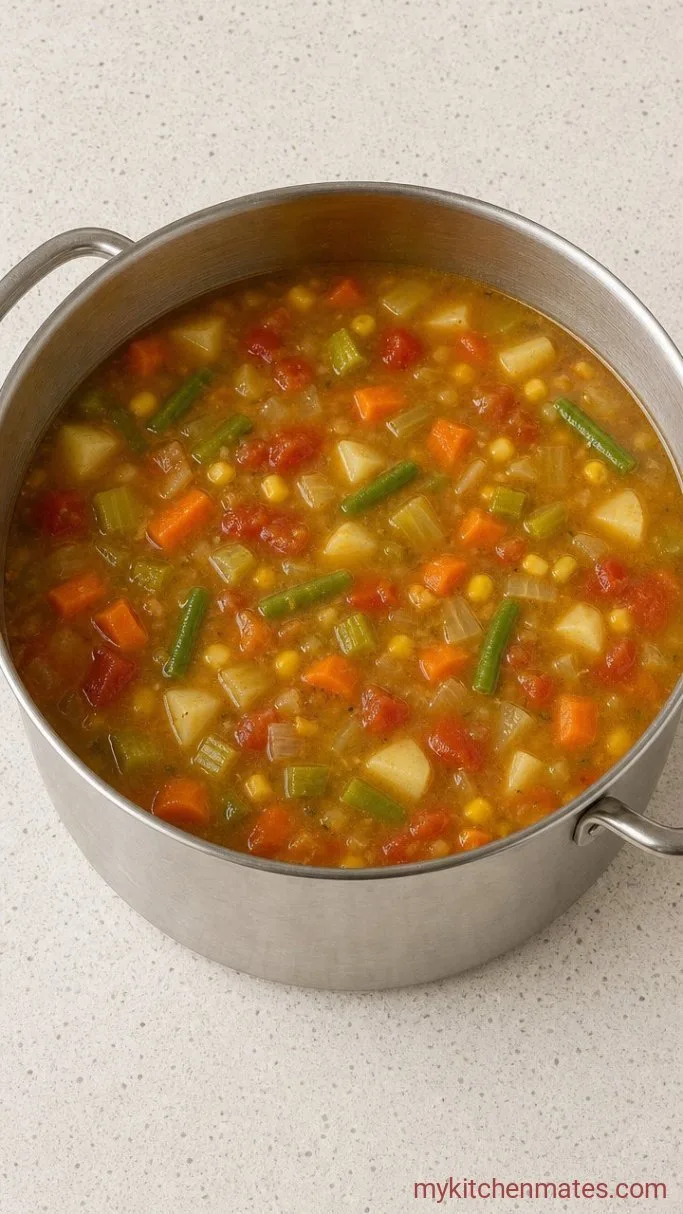
In a large stockpot, combine the 8 cups of broth, the tomatoes with their juices, the onion, garlic, salt, pepper, and thyme. Bring it to a boil over high heat.
Stir in all the chopped vegetables. Return to a boil, then drop the heat and simmer gently for 5 minutes—just enough to heat everything through and soften the edges slightly. The vegetables will finish cooking during the canning process.
Step 3: Fill the Hot Jars
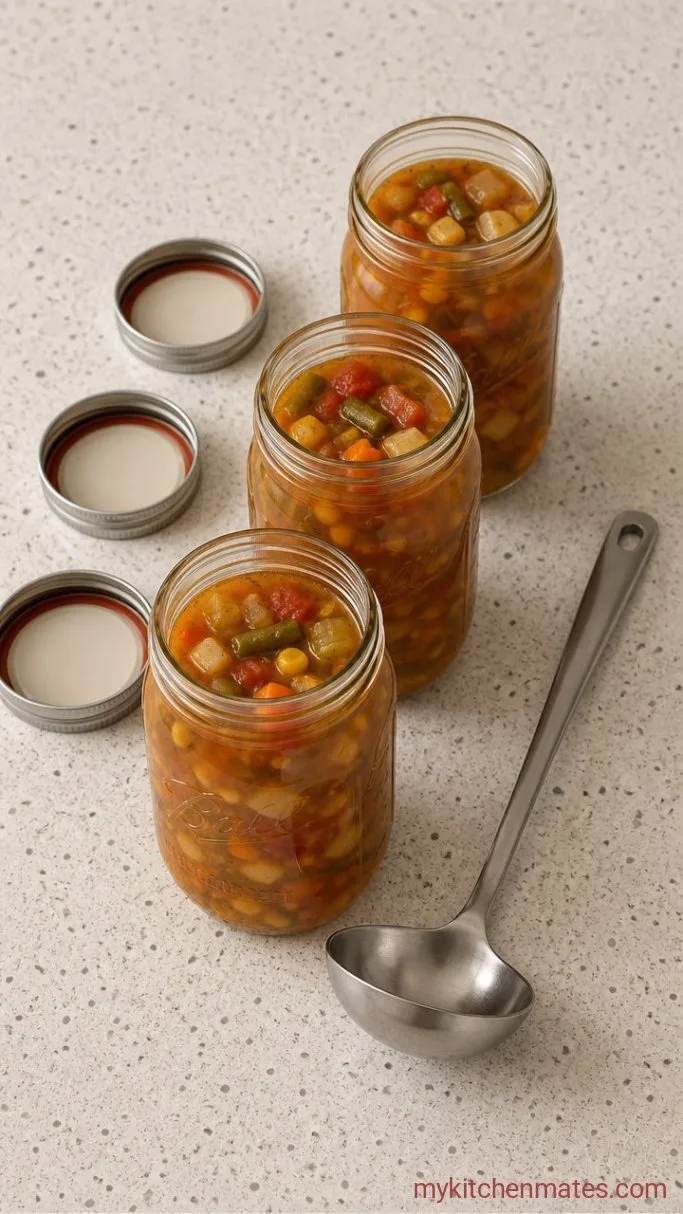
Set a pressure canner on the stove with the rack and several inches of water, and turn the heat to medium to let it warm while you fill jars. Have your clean pint or quart jars and new lids ready; keep them hot in a separate pot of simmering water.
Using a ladle, fill hot jars with the soup, packing vegetables in first until each jar is about half full of solids, then pour in broth, leaving a 1-inch headspace. Remove air bubbles with a small non-metal utensil, wipe the rims spotlessly with a damp cloth, and secure the lids fingertip tight.
Step 4: Process in the Pressure Canner
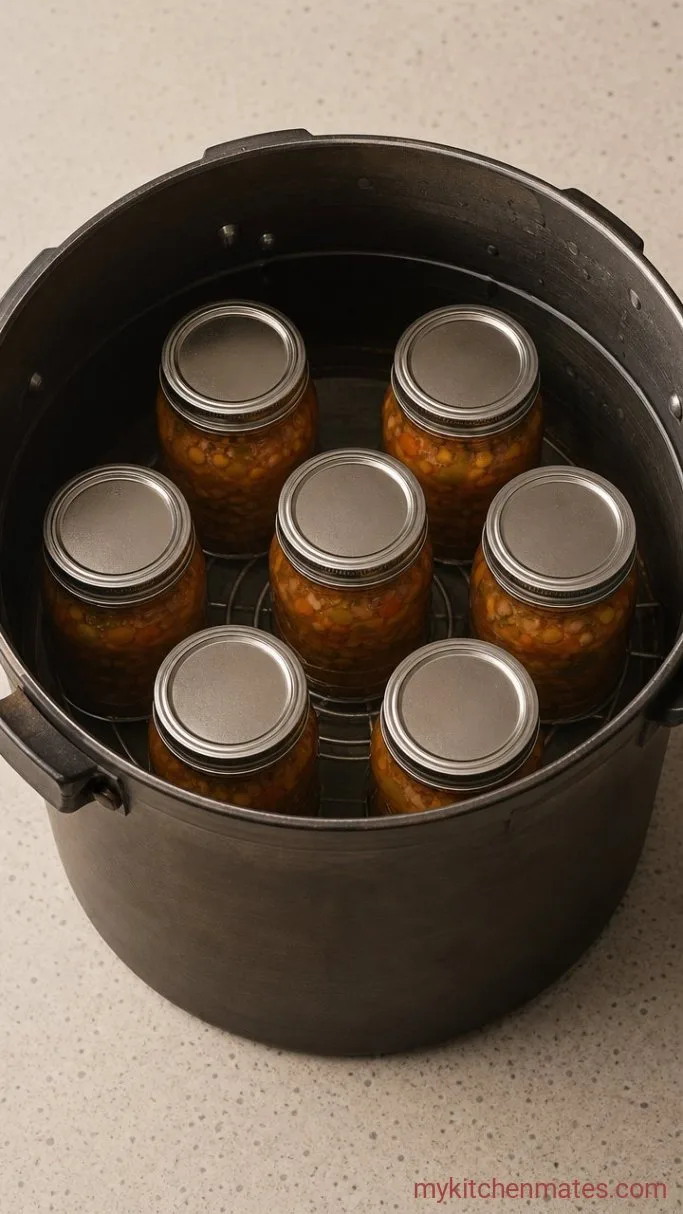
Carefully set the filled jars on the rack in the pressure canner, locking the lid. Vent steam for 10 minutes, then close the vent and bring the canner to the correct pressure for your altitude: 10 pounds with a weighted gauge, 11 pounds with a dial gauge.
Once steady, process pint jars for 60 minutes or quart jars for 75 minutes, keeping the pressure steady the entire time. When the timer goes off, turn off the heat and let the pressure fall naturally—do not rush it by opening the vent or running cold water.
Step 5: Cool, Check, and Store the Jars
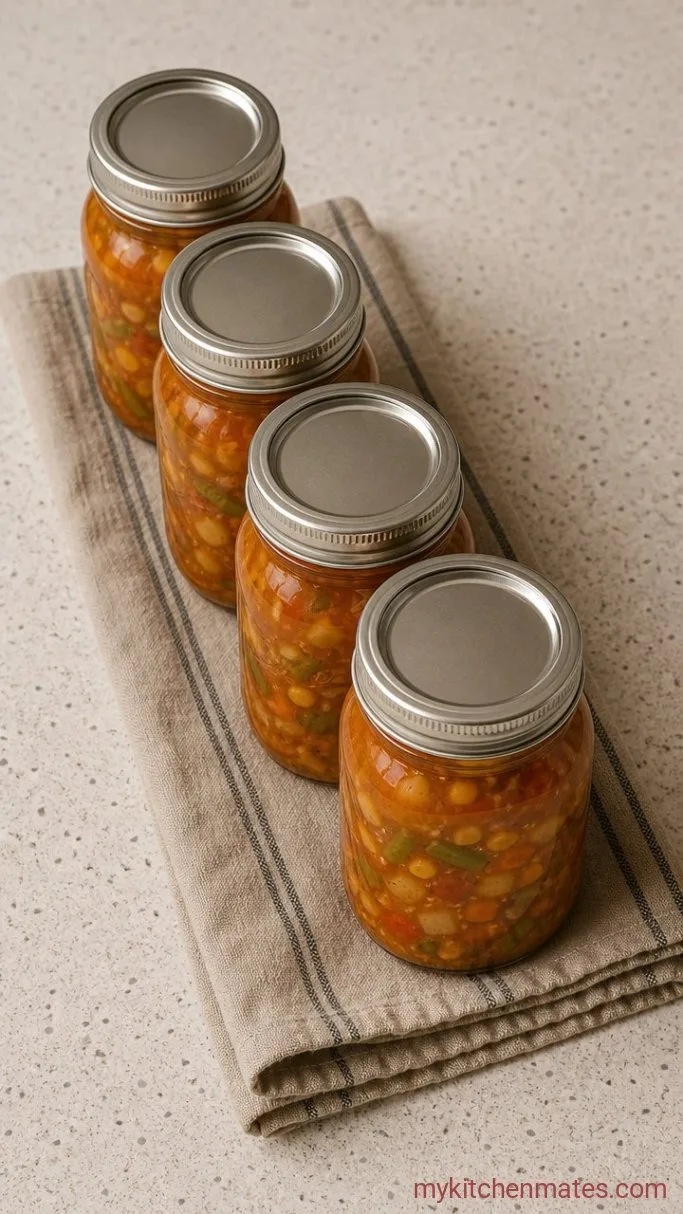
Lift the jars out with a jar lifter and set them on a towel on the counter, leaving at least an inch of space between them. You’ll hear little pops as the lids seal in the first hour.
Once fully cool, press each lid to check the seal; it shouldn’t flex. Any unsealed jars go right into the fridge and you eat that soup within the week. Wipe the sealed jars, label with the date, and tuck them away in a cool, dark place.
A Few Notes Before You Start
- You need a pressure canner, not a water bath canner—vegetable soup is low-acid and must be pressure canned for safety.
- Use the 1-inch headspace rule consistently. Overfilling can cause siphon or seal failure.
- If your altitude is above 1,000 feet, check a reliable chart for adjusted pressure; the times stay the same.
- Don’t skip the venting step. Trapped air in the canner leads to underprocessing.
- Stick with sturdy vegetables. Delicate ones turn to mush and leafy greens become bitter.
Processing times by jar size:
| Jar Size | Processing Time | Pressure (Weighted Gauge) | Pressure (Dial Gauge) |
|---|---|---|---|
| Pint jars | 60 mins | 10 psi | 11 psi |
| Quart jars | 75 mins | 10 psi | 11 psi |
Storing and Shelf Life
Sealed jars keep in a cool, dark pantry for up to 12 months. After opening, refrigerate and use within 5 days. To reheat, simply pour into a pot and warm gently—the soup needs no doctoring but tastes great with a splash of vinegar or fresh herbs.
What To Serve With Canned Vegetable Soup
Crusty bread or biscuits turn this into a full meal and soak up every drop of broth. For something heartier, a grilled cheese sandwich or a quick quesadilla makes the soup feel indulgent. A simple green side salad with a sharp vinaigrette balances the earthy sweetness of the vegetables.
Frequently Asked Questions
Can I use a water bath canner instead of a pressure canner?
No. Vegetable soup is low-acid and must be pressure canned to prevent botulism.
Can I add pasta or grains before canning?
No. They absorb broth, turn gummy, and interfere with safe heat penetration. Add them when you reheat.
Why not use leafy greens like spinach?
They discolor and become unpleasantly bitter during the long processing time. Stick to sturdy vegetables.
Can I change the vegetables?
Yes, but keep the total amount the same and choose firm, non-cruciferous vegetables—avoid broccoli, cauliflower, cabbage, and brussels sprouts.
Canned Vegetable Soup Recipe
Ingredients
Method
- Peel and chop all vegetables into similar bite-sized pieces; keep potatoes in water until needed.
- Bring broth, tomatoes, onion, garlic, salt, pepper, and thyme to a boil in a large stockpot.
- Add all vegetables, return to a boil, then simmer for 5 minutes.
- Pack hot jars with vegetables first, then ladle broth to 1-inch headspace, remove bubbles, wipe rims, and seal.
- Process in a pressure canner at 10 psi (11 dial gauge) for 60 minutes (pints) or 75 minutes (quarts), then let pressure fall naturally.
- Remove jars, let them cool undisturbed, check seals, and store in a dark pantry.
Notes
