
3-Ingredient Buttermilk Biscuits (Self-Rising Flour)

These buttermilk biscuits come together with just three base ingredients—self-rising flour, butter, and buttermilk—plus a brush of melted butter for a glossy top. You get tender, flaky layers without measuring any baking powder or baking soda.

Because self-rising flour already has the lift built in, all the work goes into handling the dough with a light touch. On a busy weeknight, that means fresh, golden biscuits in under half an hour.
Why This One Stays in the Rotation
Buttermilk gives the biscuits a subtle tang and a soft crumb that you don’t get from milk alone. Its acid reacts with the baking powder in the self-rising flour, pushing the layers apart as they bake.
With so few ingredients, technique carries the whole thing. Keeping the butter cold and folding the dough gently builds those shaggy peaks that break apart like clouds.
The recipe turns out reliably tall and tender on a first try. That kind of consistency is rare with a three-ingredient list, and it is the reason I reach for this version when I want biscuits on the table fast.
Ingredients
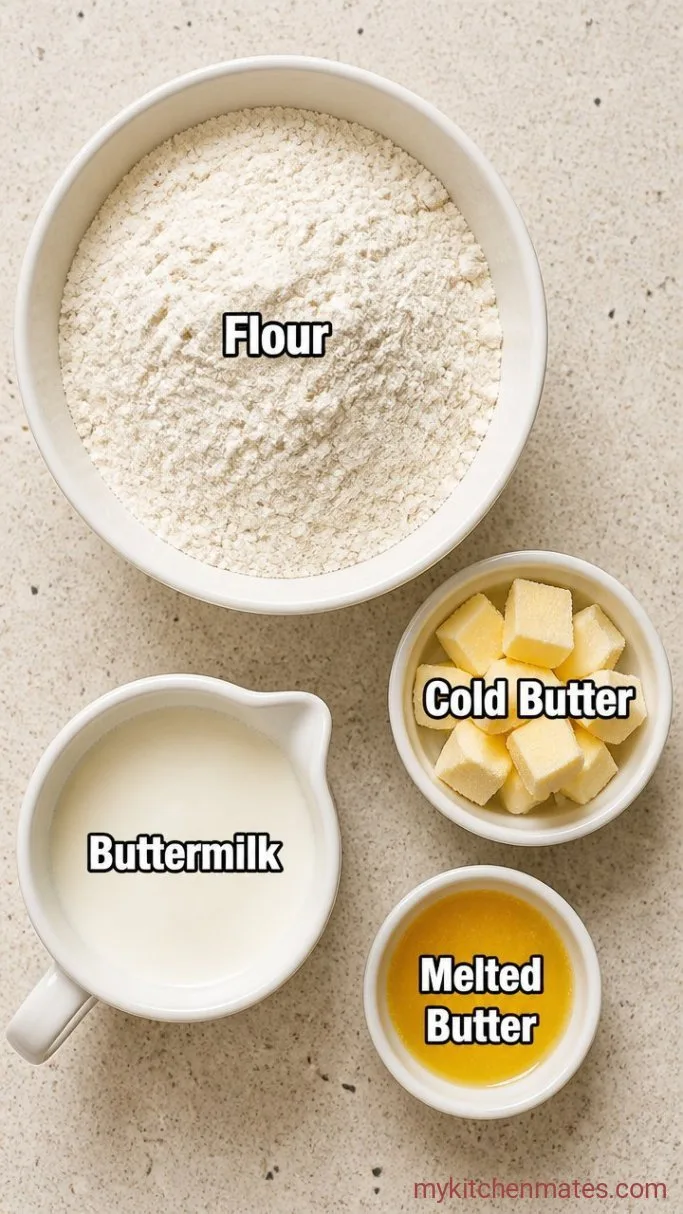
- 3 cups self-rising flour: White Lily or another soft winter wheat flour gives the lightest texture; if your flour has been sitting, whisk it first to loosen.
- 1/2 cup cold unsalted butter: cut into small cubes and kept in the fridge until the moment you need it
- 1 1/4 cups cold buttermilk: shaken well before measuring; full-fat makes the richest biscuits, but low-fat still works
- 2 tbsp melted butter for brushing: optional, but it gives the tops a warm golden sheen
Variations / Substitutions
- Flour: You can use any brand of self-rising flour, though biscuits made with a softer wheat will be noticeably flakier. Avoid bread flour, which makes them dense.
- Butter: If you only have salted butter, skip any extra salt the recipe might otherwise suggest—the self-rising flour already contains plenty.
- Buttermilk: In a pinch, stir 1 tablespoon lemon juice or white vinegar into 1 1/4 cups whole milk and let it sit 5 minutes. The tang will be milder but the rise will still hold.
- Herbs and Cheese: Fold 1/2 cup shredded sharp cheddar and a tablespoon of chopped chives into the dry ingredients before adding the buttermilk for a savory dinner biscuit.
Hamburger Vegetable Soup is a cozy soup to serve with these biscuits.
How to Make Buttermilk Biscuits
Step 1: Cut in the Butter
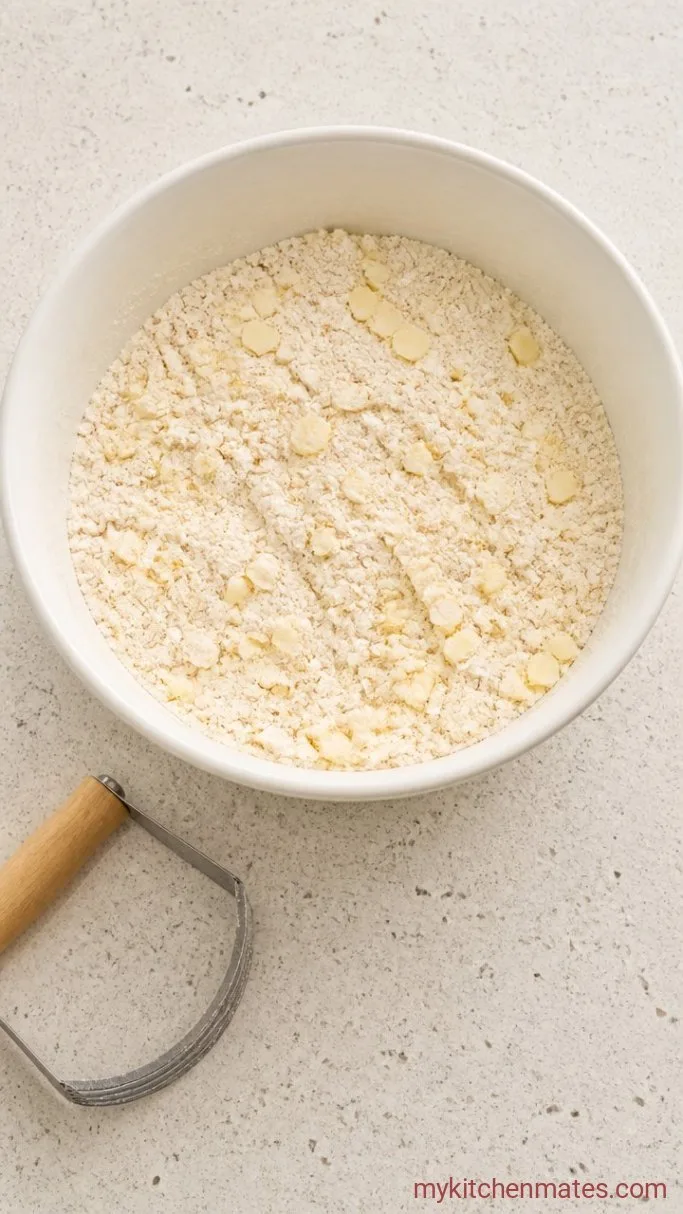
Preheat the oven to 450°F (230°C) and line a baking sheet with parchment. Dump the 3 cups self-rising flour into a large bowl and scatter the cold butter cubes across the top. Use a pastry blender or your fingertips to work the butter into the flour for about 90 seconds, until the largest pieces are roughly the size of peas.
The mixture should look like coarse meal with plenty of larger butter flakes still intact. Those cold, unblended bits are what melt into steam and lift the layers apart, so stop before the butter turns into a paste.
Step 2: Stir in the Buttermilk
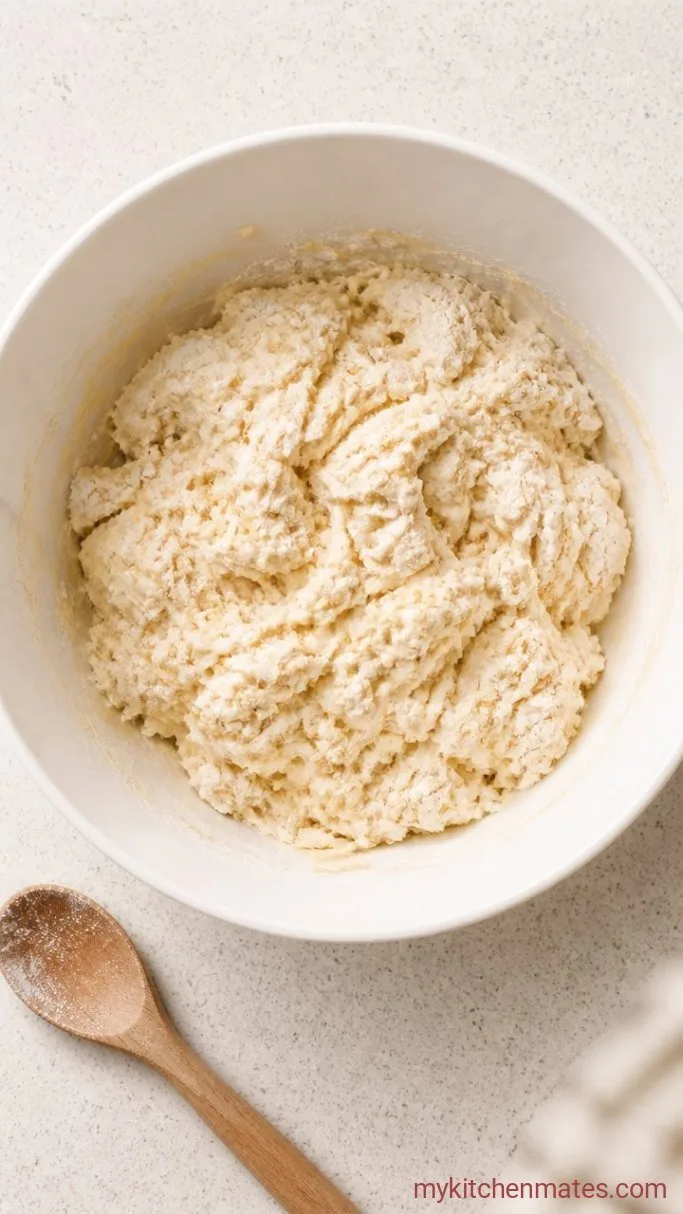
Make a well in the center of the flour mixture and pour in the 1 1/4 cups cold buttermilk. Stir with a fork for about 30 seconds, just long enough to bring the dough together and chase down any dry pockets. The dough will look shaggy and feel sticky, which is exactly where you want it.
Resist the urge to knead it in the bowl. The moment it holds a shape, you are done. Overworking here develops gluten and robs you of that soft, pull-apart crumb.
Step 3: Fold and Pat Out the Dough
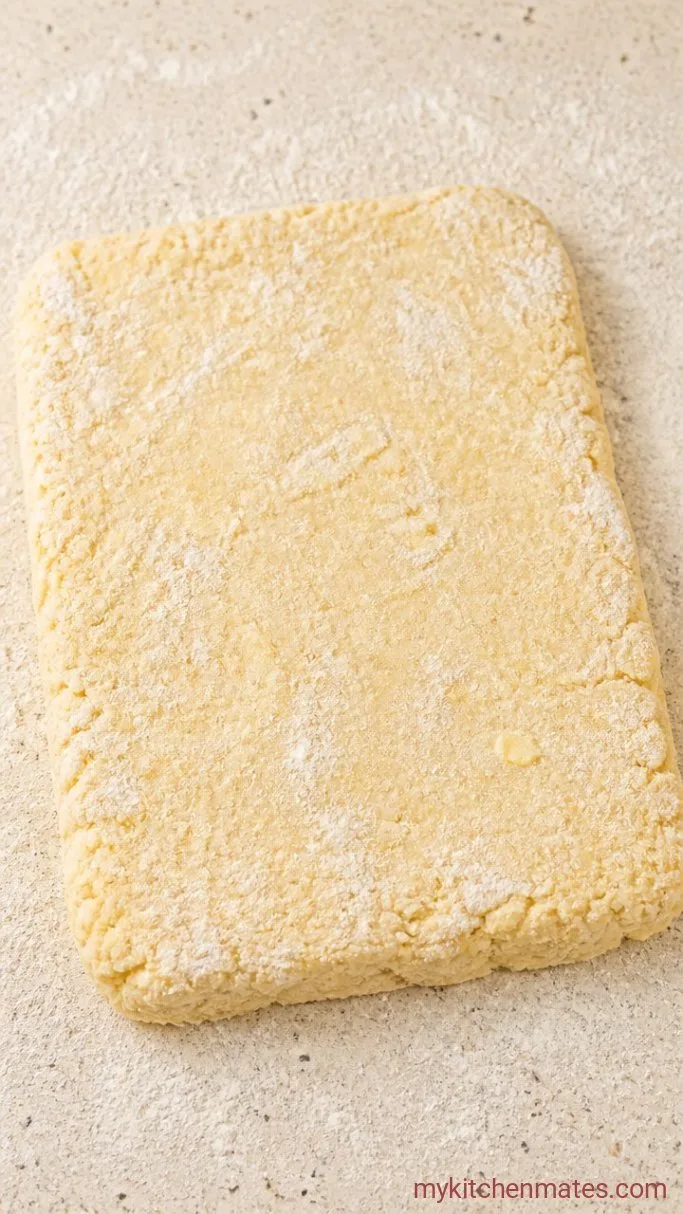
Turn the dough onto a lightly floured counter. With floured hands, pat it into a rough rectangle roughly 1 inch thick. Fold the dough in thirds like a letter, turn it 90 degrees, and pat it out again to 1 inch thick. Repeat the fold and turn one more time, taking about 2 minutes total.
This light stacking builds flaky layers without overhandling. The dough should still feel cold to the touch and be marbled with streaks of butter.
Step 4: Cut and Bake the Biscuits
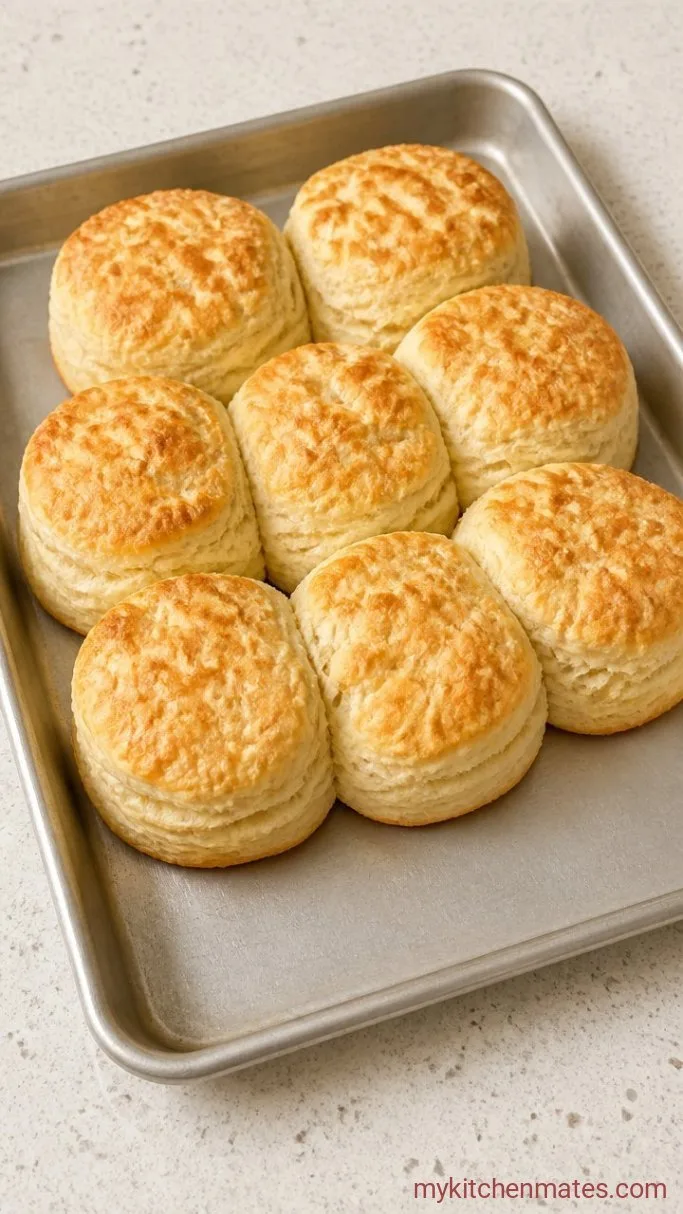
Flour a sharp 2 1/2-inch biscuit cutter and press straight down through the dough without twisting. Place the rounds about 1 inch apart on the prepared baking sheet. Gather the scraps, pat them gently back together, and cut one or two more.
Slide the sheet into the hot oven and bake for 12 to 14 minutes. The tops should be deeply golden and the biscuits will have puffed up nearly double their starting height.
Step 5: Brush and Serve While Warm
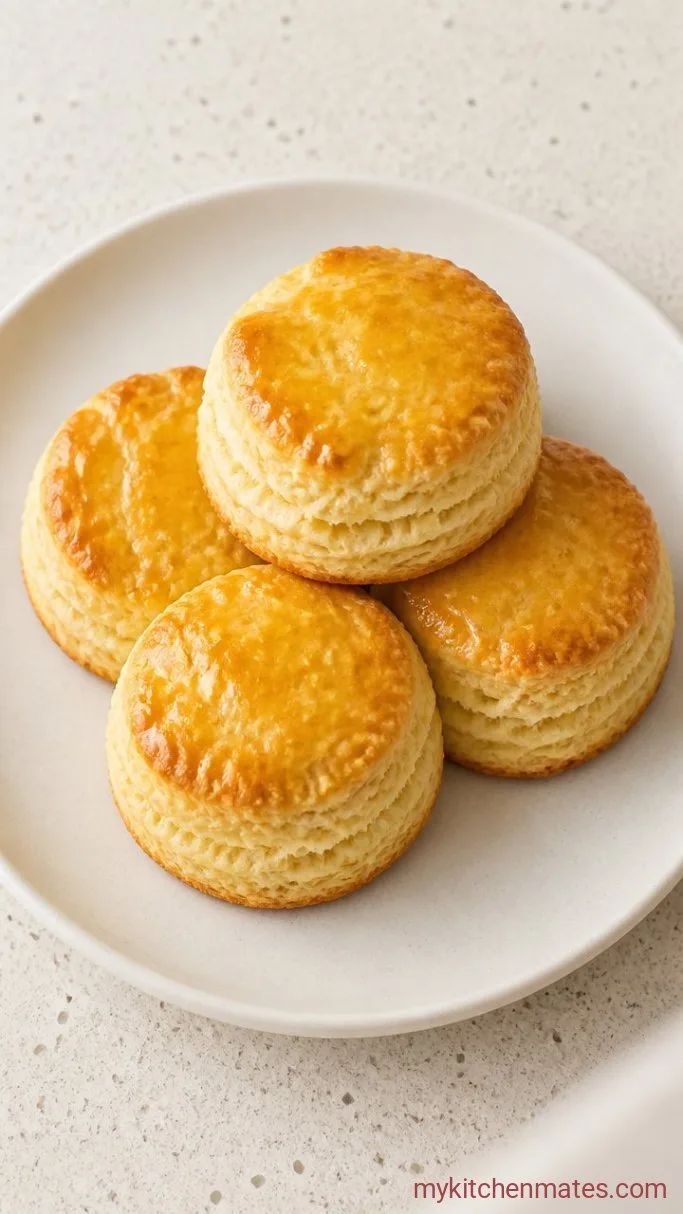
Pull the biscuits out of the oven and immediately brush the tops with the 2 tablespoons melted butter, if using. Let them rest on the sheet for 2 minutes, then move them to a wire rack. Serve them warm, splitting each one open to see the soft, steaming layers inside.
Tips for Tall, Flaky Biscuits
- Chill everything: Put the mixing bowl and fork in the fridge for a few minutes before you start. The colder the butter and buttermilk stay, the more dramatic the rise.
- Don’t twist the cutter: Pressing straight down seals the edges so the biscuits climb. A twist smears the dough and blocks the lift.
- Gather scraps gently: Re-rolled biscuits never rise quite as high, so squeeze the scraps together with a light hand. If you want every biscuit to look identical, cut the dough into squares with a knife and skip the re-roll entirely.
- Shake your buttermilk: The solids settle at the bottom, so a good shake before measuring makes sure the acidity is evenly mixed through the dough.
Storing Leftovers
- Refrigerate: Keep leftover biscuits in an airtight container at room temperature for up to 2 days, or in the fridge for up to 3 days. They taste best the day they are baked.
- Reheating: Wrap a biscuit in foil and warm it in a 300°F oven for 5 to 10 minutes, or split and toast it in a dry skillet.
- Serve cold: Day-old biscuits are still tender, especially with a smear of salted butter and honey.
What Goes Well With Buttermilk Biscuits
A plate of these biscuits feels right next to a ladle of sausage gravy—the richness of the gravy cuts through the biscuit’s tangy crumb. They also hold up beautifully split and stuffed with crispy fried chicken, or as the base for a bacon and egg sandwich. For something simpler, a puddle of sorghum butter or a spoonful of strawberry jam is enough to make them a complete breakfast.
Frequently Asked Questions
Can I double this recipe?
Yes, double all the ingredients and use a larger bowl. Work quickly so the butter stays cold, and expect to bake them in two batches or on two sheets rotated halfway through.
How do I make self-rising flour if I only have all-purpose?
For every cup of all-purpose flour, whisk in 1 1/2 teaspoons of baking powder and 1/4 teaspoon of fine salt. Sift the blend twice to distribute everything evenly.
My biscuits spread instead of rising. What went wrong?
The butter likely melted before the oven heat could set the structure. Make sure the butter goes straight from the fridge into the flour, and chill the shaped biscuits on the sheet pan for 5 minutes before baking if your kitchen is warm.
Can I freeze the dough?
Absolutely. Cut the biscuits, place them on a parchment-lined plate, and freeze until solid. Then transfer them to a freezer bag. Bake from frozen, adding 3 to 4 minutes to the bake time, with no need to thaw.
Buttermilk Biscuits Recipe
Ingredients
Method
- Heat oven to 450°F (230°C). Work cold butter into the flour until the largest pieces are pea size.
- Stir in cold buttermilk until a shaggy, sticky dough forms.
- Pat into a 1-inch-thick rectangle, fold in thirds, turn, and repeat once.
- Cut straight down with a floured biscuit cutter, place rounds on a parchment-lined sheet, and bake 12 to 14 minutes until golden.
- Brush with melted butter and cool 2 minutes on the sheet before serving warm.
Notes
