
Soft and Tangy Bread Machine Sourdough Bread

If you keep a sourdough starter, your bread machine can turn it into a tall, tangy loaf while you do something else. The machine handles every step from kneading to baking, so you get real sourdough flavor without hovering over a dough scraper.
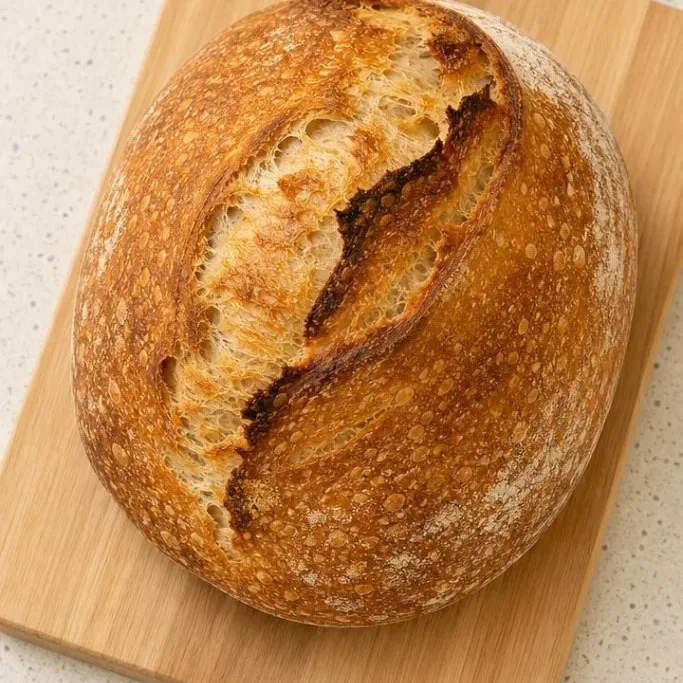
The crumb is light and chewy, the crust stays soft enough for sandwiches, and a slice toasted with butter is one of the simplest good things I can put on the table.
Why This Loaf Stays in My Rotation
I do not always want to schedule my day around a loaf of bread. This recipe respects that. The machine’s steady kneading builds better gluten than my arms ever do, and the pan shapes it into a nice even slice every time.
The flavor is mellow but definitely sourdough, because the dough gets a long, unhurried rise inside the machine. No hovering, no sticky countertops.
And when the whole kitchen smells like a bakery and I have not touched the dough once, I remember why I keep this one around.
Ingredients
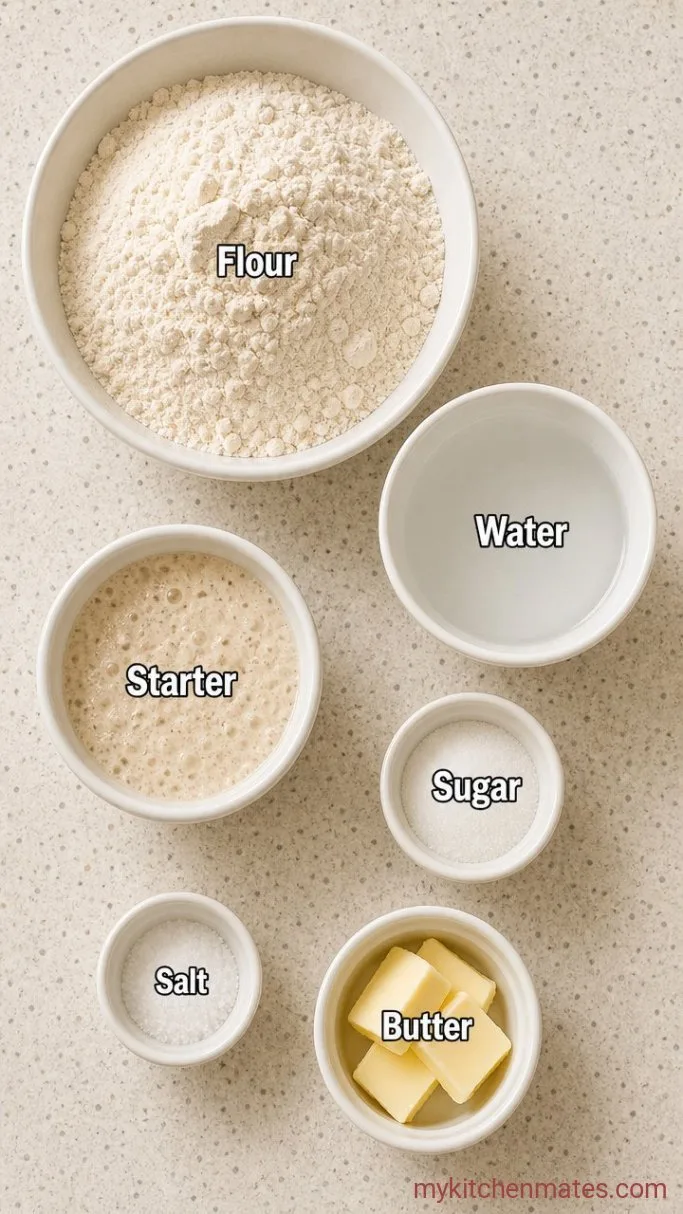
- 3 cups (360 g) bread flour: higher protein gives the loftiest rise
- 1 cup (240 ml) lukewarm water: about 85°F, not hot
- ½ cup (120 g) active sourdough starter: fed 4 to 6 hours ahead, bubbly and doubled
- 1 tbsp sugar: just enough to feed the starter, not for sweetness
- 1 ½ tsp fine sea salt
- 2 tbsp unsalted butter, softened: or olive oil, for a tender crumb
Variations / Substitutions
- Swap the sugar for honey: add the same amount; the crust may brown a bit faster
- Use olive oil instead of butter: the loaf will be a little less rich but still soft
- Add 1 tbsp caraway or sesame seeds: fold them in after the machine kneads if you can, or sprinkle on top
- Replace ½ cup of the bread flour with white whole wheat flour: the flavor gets nuttier; you may need an extra tablespoon of water
- If you are out of bread flour, all-purpose works: the loaf will be slightly shorter and less chewy
Cabbage Soup Diet Soup goes perfectly with this bread for a cozy meal.
How to Make Bread Machine Sourdough Bread
Step 1: Load the Ingredients into the Machine
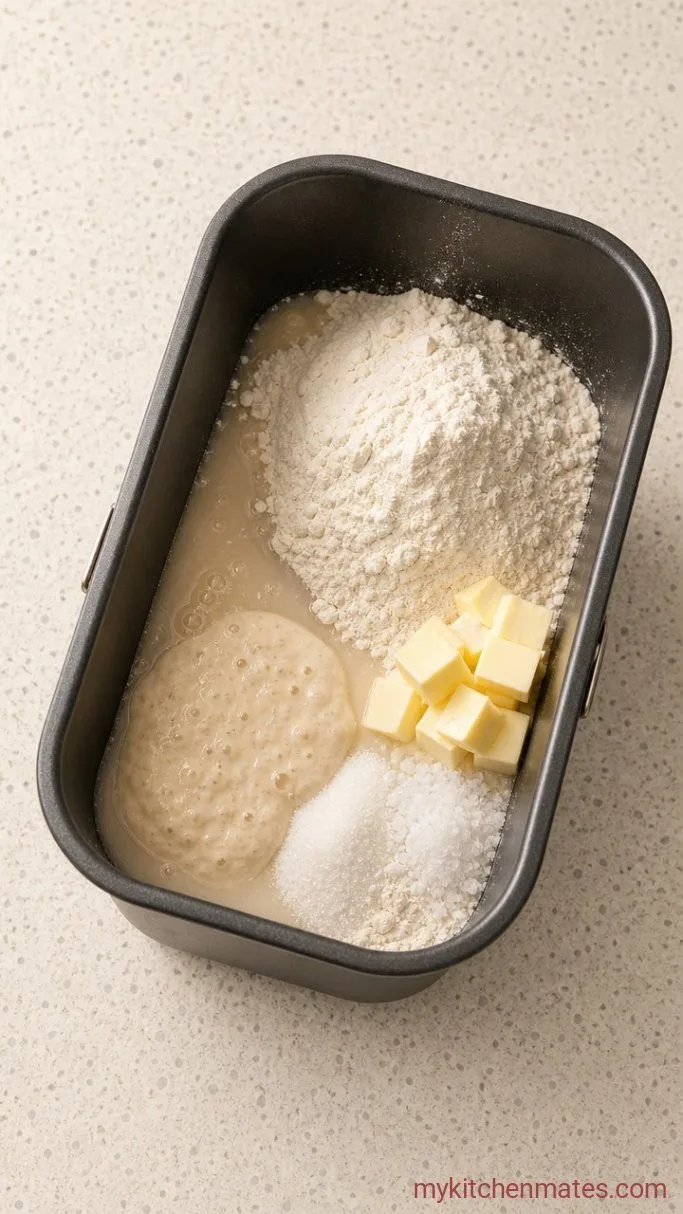
Pour the 1 cup lukewarm water and the ½ cup active sourdough starter into the bread machine pan. Add the 3 cups bread flour, 1 tbsp sugar, and 1 ½ tsp salt on top. Drop the 2 tbsp softened butter into a corner.
Place the pan in the machine and lock it in. No need to stir; the paddle will do the work. The order here puts the liquid against the paddle first, which helps mixing, but follow your own machine’s logic if it recommends dry ingredients first.
Step 2: Knead the Dough with the Dough Cycle
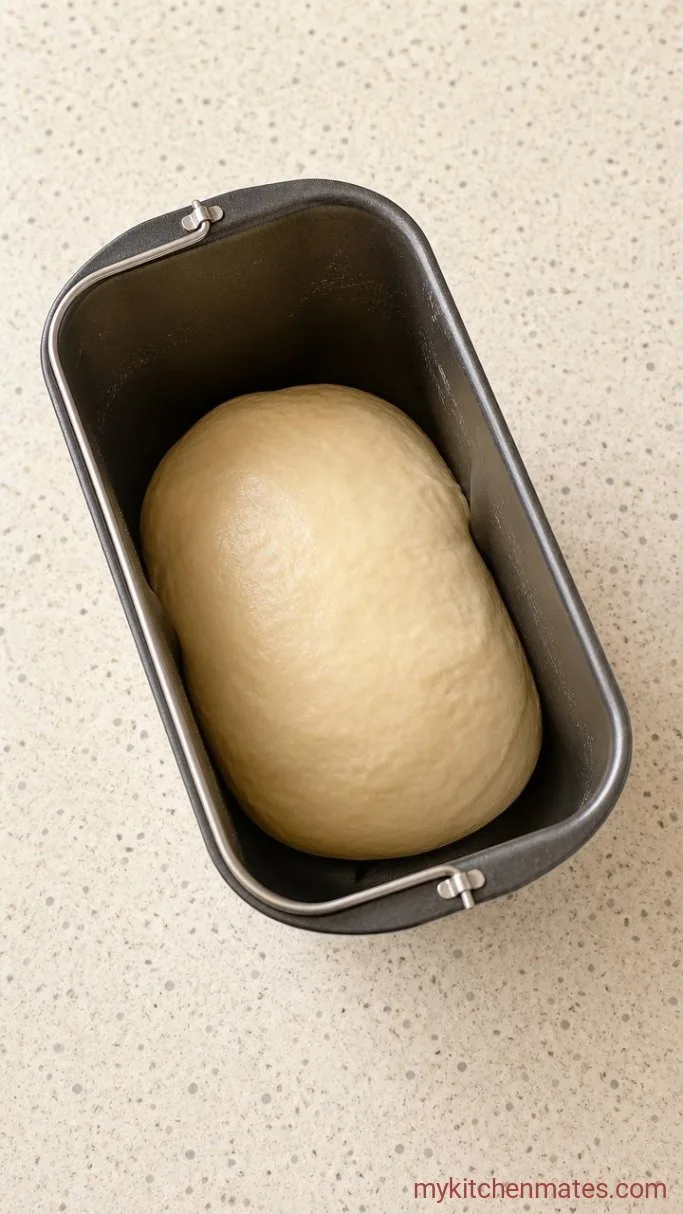
Select the “Dough” setting on your machine. Press start and let it run. After about 5 minutes, peek inside. The dough should come together into a smooth ball that is slightly tacky but does not stick to the sides. If it looks shaggy and dry, add water 1 teaspoon at a time. If it looks soupy, flour by the tablespoon.
Once the kneading phase finishes (usually after 10 to 15 minutes), the machine will beep. Do not let it move into its automatic rise. Unplug the machine or cancel the cycle. The dough will feel soft and elastic, and that is your cue you are on track.
Step 3: Let the Dough Rise in the Machine
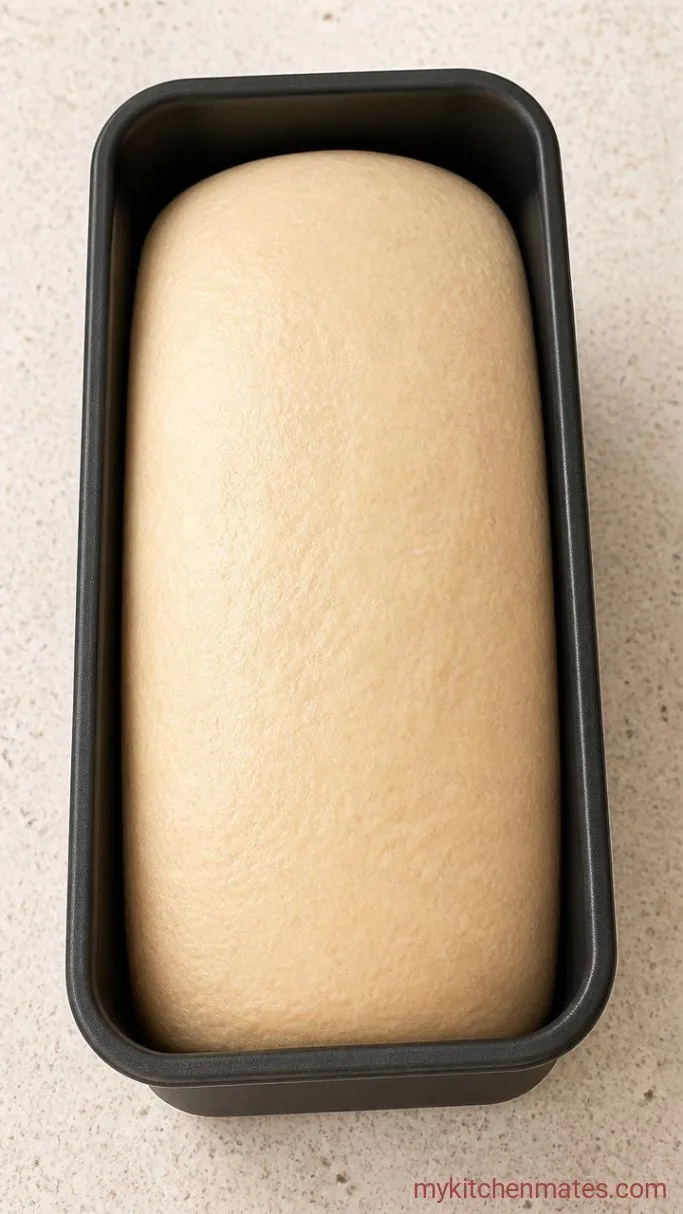
Keep the dough right in the pan, lid closed, with the machine unplugged. Walk away. Depending on your kitchen’s temperature and your starter’s verve, the rise will take 2 to 4 hours. You want it puffy and well domed, just about doubled in volume.
This slow proof is what builds the tang, so do not rush it. The dough is ready when a lightly floured finger pressed into the top leaves an indentation that springs back slowly.
Step 4: Bake the Loaf
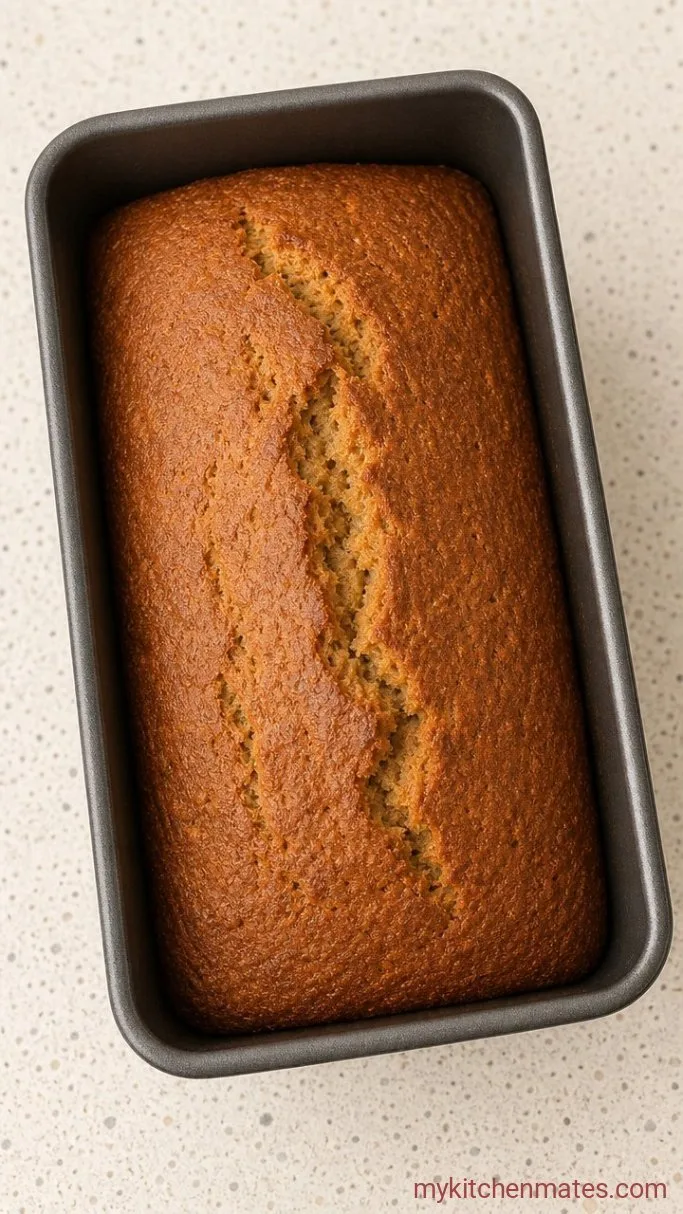
Plug the machine back in and select the “Bake” cycle. Set the timer for 60 minutes if your machine lets you. If it only has a full cycle option, just start the basic cycle and let it run; the loaf will still come out nicely. The dough may deflate a little as the paddle turns at first, but it will recover.
The crust will turn a deep golden brown, and the kitchen will fill with that unmistakable sourdough smell. For the surest doneness, poke an instant-read thermometer into the center of the loaf; it should read between 190°F and 200°F (88°C to 93°C). If it is not there yet, add 10 more minutes.
Step 5: Turn Out and Cool the Loaf
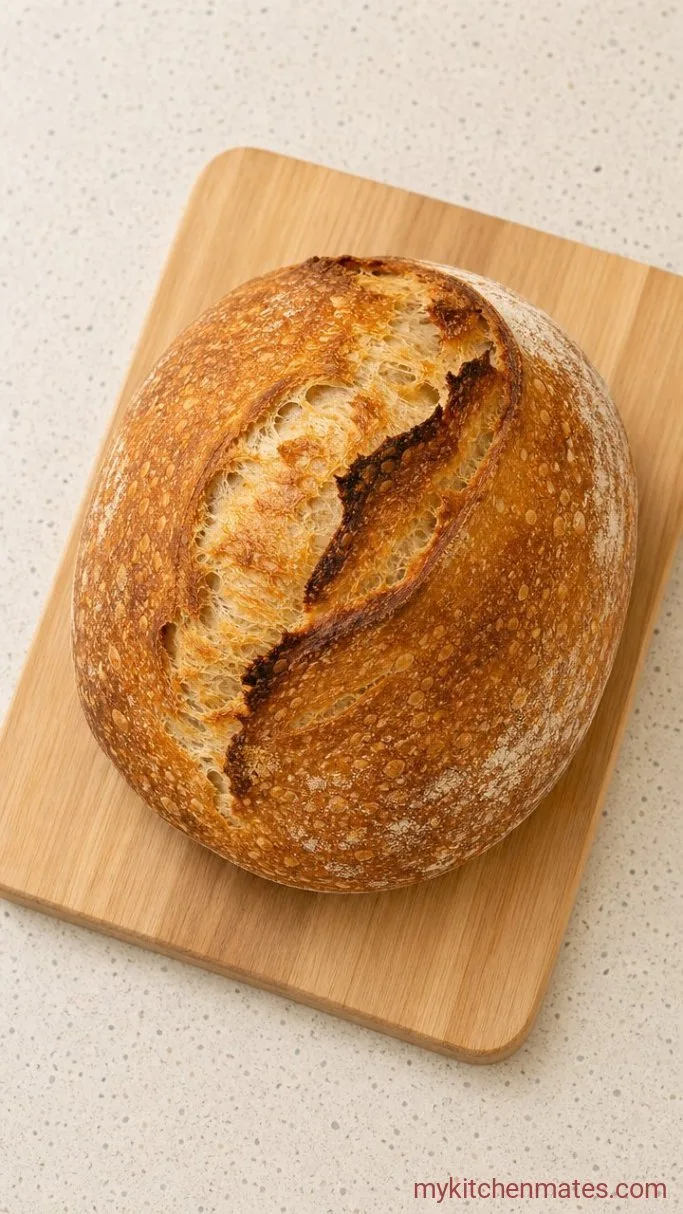
Use oven mitts to lift the pan out of the machine. Let the bread sit in the pan for 10 minutes so the crumb sets, then turn it out onto a wire rack. The loaf will be tall and deeply golden, and the crust may crackle softly as it hits the cooler air.
I know it is tempting to slice straight away, but letting it cool completely gives you clean slices and the full chewy crumb. If you just cannot wait, tear off the heel and slather it with butter while the rest cools. No judgment.
Tips for the Best Machine Sourdough
- Your starter must be truly active: if it does not double within 4 to 6 hours after feeding, the loaf will be dense. Feed it the night before for a morning bake, or in the morning if you plan to bake mid-afternoon.
- Watch the dough during the first knead: weather and flour brands change how much water is needed. A soft, smooth ball is the goal.
- If your machine lacks a bake-only cycle: let the dough rise as written, then simply start the basic white cycle and allow it to run fully. The machine will punch it down and reshape it, which is not ideal but still makes good sandwich bread.
- For a thicker, crunchier crust: remove the baked loaf from the pan and place it directly on an oven rack at 400°F (200°C) for 5 minutes, then cool.
- Slice and freeze what you will not eat in 2 days: sourdough goes stale faster than yeasted bread. Freezing it sliced lets you pull out pieces to toast.
Adjust the recipe for your loaf size:
| Loaf Size | Bread Flour | Water | Active Starter | Sugar | Salt | Butter |
|---|---|---|---|---|---|---|
| 1 lb | 2 cups (240 g) | ⅔ cup (160 ml) | ⅓ cup (80 g) | 2 tsp | 1 tsp | 1 tbsp |
| 1.5 lb | 3 cups (360 g) | 1 cup (240 ml) | ½ cup (120 g) | 1 tbsp | 1 ½ tsp | 2 tbsp |
| 2 lb | 4 cups (480 g) | 1 ⅓ cups (320 ml) | ⅔ cup (160 g) | 1 tbsp + 1 tsp | 2 tsp | 3 tbsp |
Storing and Keeping It Fresh
- Room temperature: keep the cooled loaf in a bread bag or tightly wrapped in foil for up to 3 days. Avoid the fridge, which dries out the crumb.
- Reheating: slice and toast to bring back that just-baked chew. No need to thaw first if frozen.
- Serve cold: this bread is perfectly good untoasted for sandwiches; the crust stays soft enough.
What Goes Well With This Sourdough
A thick slab toasted under the broiler with sharp cheddar turns into the easiest open-faced melt. It also makes a sturdy base for a BLT when tomatoes are in season. For dinner, serve it alongside a brothy bean soup or a slow-simmered beef stew, and let it soak up the last bits of the bowl.
Frequently Asked Questions
Can I use sourdough discard instead of active starter?
Yes, but the loaf will be denser and need a longer rise, up to 6 hours. Feeding your starter a few hours ahead gives the best height.
My bread machine does not have a dough cycle. Can I still make this?
Yes. Use the basic white cycle and let it run from start to finish. The machine will handle the timing; the loaf may be slightly less airy but will still bake up well.
Why did my loaf come out dense and short?
The most likely culprit is a weak starter. Make sure your starter doubles reliably within 4 to 6 hours. Also, check that you did not add too much flour during kneading.
Can I make this gluten-free?
Sourdough relies heavily on gluten for structure, so a straight swap will not work. If you experiment with a gluten-free flour blend that includes xanthan gum, expect a different texture. I have not tested it.
How do I get a darker crust without an oven?
Many machines have a “dark crust” or “medium/dark” setting. Choose that before starting the bake cycle. A light brush of milk over the dough just before baking also deepens the color.
Bread Machine Sourdough Bread Recipe
Ingredients
Method
- Pour the water and starter into the bread machine pan. Add the flour, sugar, and salt. Dot the butter in a corner.
- Select the “Dough” cycle and start. Check after 5 minutes; the dough should form a soft, slightly tacky ball.
- When the cycle finishes, unplug the machine and let the dough rise in the closed machine until doubled, 2 to 4 hours.
- Plug in and select the “Bake” cycle. Set for 60 minutes, or start the basic cycle. Bake until the loaf is deep golden and reads 190°F to 200°F inside.
- Cool in the pan for 10 minutes, then turn out onto a rack to cool completely before slicing.
Notes
