
10 Asian Soup Recipes Easy Enough for Any Weeknight

Asian soups come together fast because the broth does the heavy lifting. You start with a good chicken or mushroom stock, add ginger, garlic, soy, and sesame, then let quick-cooking ingredients soak it up. These easy Asian soup recipes take that same foundation in ten different directions, from silky egg ribbons to spicy coconut broth.

For the simplest weeknight start, try the 15 Minute Egg Drop Soup. Want dumplings? Go to Shanghai Chicken Wonton Soup. Like heat? The Hot and Sour Chicken Soup and Korean Kimchi Tofu Soup carry it, and 30 Minute Beef Noodle Soup makes a full dinner bowl.
Which Asian Soup Should You Make?
| Recipe | Flavor profile | Best for |
|---|---|---|
| 15 Minute Egg Drop Soup | Silky, mild, ginger-garlic | A quick weeknight dinner |
| Shanghai Chicken Wonton Soup | Savory, aromatic, gingery | Dumpling lovers |
| Easy Miso Soup with Tofu | Salty, earthy, umami | A light lunch |
| Thai Coconut Chicken Soup | Rich, tangy, creamy | Coconut and lime fans |
| Hot and Sour Chicken Soup | Peppery, tangy, meaty | Cold night with heat |
| Korean Kimchi Tofu Soup | Fiery, fermented, deep | Kimchi lovers |
| 30 Minute Beef Noodle Soup | Warm-spiced, hearty, brothy | A filling dinner bowl |
| Japanese Clear Onion Soup | Light, sweet, savory | A gentle starter |
| Curried Salmon and Coconut Soup | Rich, spicy, creamy | Seafood curry fans |
| Chinese Corn and Crab Soup | Sweet, silky, delicate | Crab lovers and kids |
15 Minute Egg Drop Soup
This is the one I make when dinner is late and the fridge is bare. The cornstarch slurry turns a thin broth into that velvety takeout texture, and the eggs go in at the very end so they stay soft and ribboned.

Ingredients (makes 4 servings)
- Low-sodium chicken stock: 1.5 L (6 cups)
- Fresh ginger, julienned: 15 g (1 tbsp)
- Garlic cloves, smashed: 2
- Low-sodium soy sauce: 45 ml (3 tbsp)
- Sesame oil: 10 ml (2 tsp)
- Cornstarch: 20 g (2 tbsp), mixed with 30 ml (2 tbsp) cold water
- Large eggs: 4, beaten
- Frozen peas: 120 g (1 cup)
- Scallions, sliced: 3
- White pepper: 1/4 tsp
Instructions
Step 1: Put the 1.5 L chicken stock, ginger, and garlic into a pot and bring it to a lively simmer over medium-high heat. When bubbles start popping at the edges, about 5 minutes, reduce the heat to medium and let the ginger perfume the broth. You will smell it before you see any real colour change.
Step 2: Stir in the 45 ml soy sauce, 10 ml sesame oil, and 1/4 tsp white pepper. Whisk the 20 g cornstarch slurry, then pour it in while stirring steadily, and cook for 2 minutes. The broth will go from thin to lightly glossy, which is exactly what you want for the egg drop.
Step 3: Pour the 4 beaten eggs in a thin stream while you stir in one direction. The eggs will set into long, soft strands almost immediately. Turn off the heat, add the 120 g frozen peas and scallions, and let everything sit for 1 minute so the peas warm through.
Step 4: Taste the soup and add a little more soy if you like it saltier. Ladle it into warm bowls and serve hot, while the egg ribbons are soft and the broth is still steaming.
Shanghai Chicken Wonton Soup
This one takes a little folding, but the wontons freeze beautifully and turn a quick broth into a full dinner. Ground chicken, ginger, and toasted sesame oil keep the filling juicy, and the wrappers cook in minutes.

Ingredients (makes about 36 wontons, 6 bowls)
- Ground chicken: 450 g (1 lb)
- Shanghai wonton wrappers: 36
- Low-sodium chicken stock: 2 L (8 cups)
- Bok choy, halved: 6 small heads
- Fresh ginger, grated: 20 g (4 tsp)
- Scallions, thinly sliced: 6, divided
- Low-sodium soy sauce: 60 ml (1/4 cup), divided
- Toasted sesame oil: 15 ml (1 tbsp)
- Large egg: 1
- White pepper: 1/2 tsp
Instructions
Step 1: Combine the 450 g ground chicken, half the scallions, 20 g grated ginger, 15 ml sesame oil, the egg, 1/2 tsp white pepper, and 1 tbsp of the soy sauce. Use your hands or a spoon to mix everything until the filling turns sticky and slightly paste-like, about 2 minutes.
Step 2: Place one wonton wrapper on your palm and spoon 1 tsp of the chicken filling into the centre. Dip your finger in water, moisten the edges, fold the wrapper in half, and press out the air. Bring the two corners together over your fingertip and pinch them shut. Repeat with the remaining wrappers and filling, keeping the finished wontons covered with a damp cloth.
Step 3: Bring the 2 L chicken stock and remaining soy sauce to a boil in a large pot. Drop the wontons in two batches, and cook them for 4 minutes. You will see them float to the top and the wrappers turn translucent around the edges.
Step 4: Add the 6 halved bok choy heads in the last 2 minutes of cooking, so you can soften them while they stay bright green. Turn your heat down to a gentle simmer if the broth looks ready to boil over.
Step 5: Divide the wontons and bok choy among deep bowls, ladle the hot broth over them, and scatter the remaining scallions on top. Serve right away, with extra soy sauce and sesame oil at the table if you want a stronger finish.
Easy Miso Soup with Tofu
For a lighter lunch, I skip the heavy stock and make a quick dashi with just kombu and bonito flakes. That gives you the salty, earthy base that white miso settles into, with tofu and wakame keeping the bowl simple.

Ingredients (makes 3 bowls)
- Water: 1.2 L (5 cups)
- Kombu (dried kelp): 10 g (1 sheet)
- Bonito flakes: 10 g (1 cup)
- White miso paste: 90 g (1/3 cup)
- Soft tofu, cut into 2 cm cubes: 350 g (12 oz)
- Dried wakame: 10 g (2 tbsp)
- Scallions, thinly sliced: 3
Instructions
Step 1: Put the 1.2 L water and kombu in a pot and set it over medium heat. You want the water to come to a bare simmer, with tiny bubbles framing the edges, then pull the kombu out before the water actually boils. Turn off the heat, add the 10 g bonito flakes, and let them steep for 5 minutes.
Step 2: Strain the dashi through a fine sieve and return the clear broth to the pot. Scoop about 120 ml of warm dashi into a small bowl and whisk it with the 90 g white miso paste until smooth, then stir the mixture back into the pot. You will see the broth turn soft and cloudy but still light.
Step 3: Add the 350 g tofu and 10 g wakame, and heat them over low heat for 3 minutes. Keep your heat low, and do not let the soup boil once the miso is in, or the tofu will toughen and the miso can turn grainy.
Step 4: Remove your pot from the heat, add the scallions, and ladle the soup into three bowls. Serve it right away, while the tofu is warm through and the wakame is tender.
Thai Coconut Chicken Soup
This is my weeknight take on tom kha, built on coconut milk, lemongrass, and lime. Ginger carries the same bright floral warmth, and the mushrooms and chicken poach gently so the broth stays rich and clean.

Ingredients (makes 5 servings)
- Boneless chicken thighs, sliced: 700 g (1.5 lb)
- Full-fat coconut milk: 800 ml (2 cans)
- Low-sodium chicken stock: 750 ml (3 cups)
- Lemongrass stalks, bruised: 2
- Fresh ginger, sliced: 40 g (1/4 cup)
- Shiitake mushrooms, sliced: 200 g (2 cups)
- Fish sauce: 30 ml (2 tbsp)
- Coconut sugar: 15 g (1 tbsp)
- Lime juice: 45 ml (3 tbsp)
- Red chilies, sliced: 2
Instructions
Step 1: Spoon 120 ml of the coconut milk into a pot and set it over medium heat. Cook it for 3 minutes, stirring with your spoon, until it thickens slightly and beads of coconut oil appear on the surface.
Step 2: Add the remaining 680 ml coconut milk, 750 ml chicken stock, lemongrass, 40 g ginger, fish sauce, and 15 g coconut sugar. Bring everything to a gentle simmer and let it cook for 5 minutes so the aromatics release into the broth.
Step 3: Slide in the 700 g chicken thighs and 200 g shiitake mushrooms, then simmer for 8 minutes. You will know the chicken is done when the pieces turn uniformly white and feel firm to the touch.
Step 4: Remove the lemongrass stalks, stir in the 45 ml lime juice, and add the sliced red chilies. Taste the broth and add a little more fish sauce if you want deeper salt.
Step 5: Ladle the soup into wide bowls, making sure each one gets plenty of chicken and mushrooms. Serve hot, and spoon a little of the rich coconut broth over each piece of chicken.
Hot and Sour Chicken Soup
This soup is all about balance, black vinegar for tang, white pepper for heat, and soy for that deep savory pull. Shredded cooked chicken keeps it fast, and the egg ribbons make every spoonful feel rich.

Ingredients (makes 6 servings)
- Low-sodium chicken stock: 1.5 L (6 cups)
- Cooked chicken breast, shredded: 450 g (1 lb)
- Bamboo shoots and wood ear mushrooms: 150 g (1 cup) shoots, 30 g (1/2 cup) sliced mushrooms
- Firm tofu, cut into thin strips: 200 g (7 oz)
- Chinese black vinegar: 60 ml (1/4 cup)
- Low-sodium soy sauce: 45 ml (3 tbsp)
- White pepper: 1 tsp
- Cornstarch: 30 g (3 tbsp), mixed with 60 ml (1/4 cup) cold water
- Large eggs: 2, beaten
- Sesame oil and scallions: 10 ml (2 tsp) oil, 4 scallions, sliced
Instructions
Step 1: Pour the 1.5 L chicken stock into a pot and bring it to a simmer over medium heat. Add the 150 g bamboo shoots, 30 g wood ear mushrooms, and 200 g tofu strips, then cook for 5 minutes so the vegetables soften and the tofu absorbs the broth.
Step 2: Stir in the 60 ml black vinegar, 45 ml soy sauce, and 1 tsp white pepper. Let the broth come back to a gentle bubble, then whisk in the 30 g cornstarch slurry and cook for 2 minutes. You will see the soup turn glossy and feel slightly thicker on your spoon.
Step 3: Drizzle the 2 beaten eggs into the hot broth while you stir slowly in one direction. The eggs will set into thin ribbons almost immediately. Add the 450 g shredded chicken and let it warm through for 2 minutes.
Step 4: Turn off the heat, add the 10 ml sesame oil and sliced scallions, then taste. You can add a little more black vinegar if you want the tang sharper or more white pepper for extra heat. Ladle into bowls and serve hot.
Korean Kimchi Tofu Soup
Kimchi gives this soup its sour, spicy depth, and a spoonful of gochujang pushes it into full barbecue-like heat. Silken tofu makes every bite creamy against the fermented cabbage, so the broth feels bold but still soft.
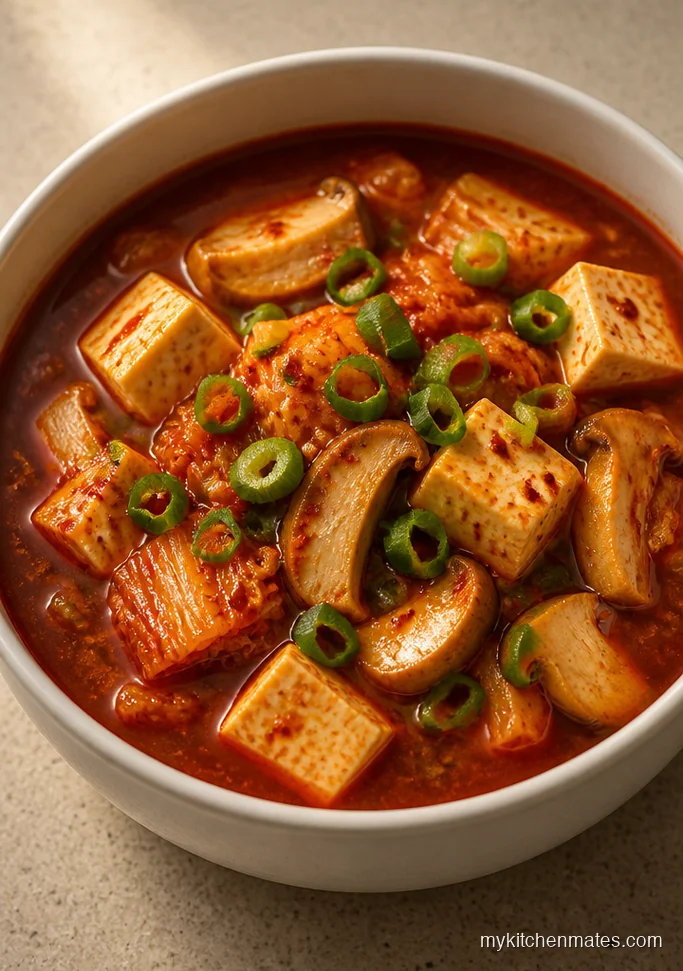
Ingredients (makes 2 generous bowls)
- Napa cabbage kimchi, chopped: 300 g (2 cups)
- Beef broth: 1 L (4 cups)
- Silken tofu, drained: 350 g (12 oz)
- Gochujang: 45 g (3 tbsp)
- Gochugaru: 15 g (1 tbsp)
- Sesame oil: 15 ml (1 tbsp)
- Garlic cloves, minced: 4
- King oyster mushrooms, sliced: 150 g (1 cup)
- Scallions, sliced: 3
- Kosher salt: 1/2 tsp
Instructions
Step 1: Heat the 15 ml sesame oil in a pot over medium heat. Add the 4 minced garlic cloves, 300 g kimchi, 15 g gochugaru, and 45 g gochujang, then cook for 5 minutes. The kimchi will turn glossy and deepen in colour, and you will smell the spice before it starts to stick.
Step 2: Pour in the 1 L beef broth and add the 150 g king oyster mushrooms. Bring the broth to a boil, then lower the heat so it just bubbles at the edges, and let it cook for 10 minutes. Your kitchen will fill with a sharp, warm scent.
Step 3: Slide the 350 g silken tofu into the pot in large chunks, trying not to break them too much. Simmer for 3 minutes so the tofu heats through and takes on the red broth, then taste and add the 1/2 tsp salt if your kimchi was less salty.
Step 4: Turn off the heat, scatter the scallions over the top, and divide the soup between two deep bowls. Serve it hot, with a spoon for the broth and a separate plate if you want to eat the tofu with rice.
30 Minute Beef Noodle Soup
This is the fast pho-style bowl for a weeknight, with toasted spices doing the work that hours of simmering usually would. Thin beef slices cook in the hot broth right before you eat, so they stay tender and just pink.

Ingredients (makes 8 servings)
- Beef sirloin, sliced very thin: 900 g (2 lb)
- Dried rice noodles: 400 g (14 oz)
- Low-sodium beef stock: 2.2 L (9 cups)
- Star anise pods: 3
- Cinnamon stick: 1
- Fresh ginger, sliced: 50 g (1/4 cup)
- Yellow onion, halved: 1 large
- Fish sauce: 45 ml (3 tbsp)
- Coconut sugar: 20 g (1 tbsp)
- Bean sprouts and Thai basil, for serving: 200 g (2 cups) sprouts, 1 cup basil leaves
Instructions
Step 1: Set a large dry pot over medium heat. Add the 3 star anise pods and cinnamon stick, and toast them for 2 minutes, shaking the pot until you can smell warm spice. Add the 50 g ginger slices and halved onion, and let them char for 3 minutes.
Step 2: Pour in the 2.2 L beef stock, 45 ml fish sauce, and 20 g coconut sugar. Bring everything to a boil, then drop the heat to a gentle simmer. Cover your pot and let the broth work for 15 minutes so the spices and onion give up their flavour.
Step 3: Cook the 400 g rice noodles in a separate pot of boiling water according to your package directions, then drain and divide them among the serving bowls.
Step 4: Strain the broth through a fine sieve and return it to the pot, then bring it back to a full boil. Place the 900 g beef slices over the noodles in the bowls, then ladle the boiling broth over the beef. Let it sit for 1 minute, and you will see the meat turn from bright red to pale pink.
Step 5: Top each bowl with bean sprouts and Thai basil, and serve right away. Keep extra fish sauce on the table if you want a heavier, saltier bowl.
Japanese Clear Onion Soup
This is that delicate, slightly sweet hibachi-style clear soup, made in one pot with carrot, celery, and onion. The fried shallots on top add the crisp, savory finish that the light broth wants.

Ingredients (makes 4 small bowls)
- Low-sodium chicken stock: 1 L (4 cups)
- Yellow onion, coarsely chopped: 1 medium
- Carrot, coarsely chopped: 1 medium
- Celery stalk, coarsely chopped: 1
- Garlic cloves, smashed: 2
- Fresh ginger, sliced: 15 g (1 tbsp)
- Low-sodium soy sauce: 15 ml (1 tbsp)
- Sesame oil: 5 ml (1 tsp)
- Fried shallots and sliced mushrooms: 30 g (1/4 cup) shallots, 80 g (1 cup) mushrooms
- Scallions, thinly sliced: 2
Instructions
Step 1: Heat the 5 ml sesame oil in a pot over medium heat. Add the chopped onion, carrot, celery, garlic, and ginger, and cook for 6 minutes. You are looking for soft, lightly browned edges, and you will smell a sweet, roasted aroma.
Step 2: Pour in the 1 L chicken stock and 15 ml soy sauce, then bring your pot to a boil. Reduce the heat and simmer for 20 minutes so the vegetables give up their sweetness to the broth. Add the 80 g mushrooms in the final 5 minutes.
Step 3: Strain the broth through a fine sieve into a clean pot, pressing gently on the vegetables with your spoon. You can discard the cooked vegetables, but keep the mushrooms to add back to the bowls if you want more texture.
Step 4: Divide the clear broth among four small bowls, then top each one with the fried shallots and scallions. Serve your soup hot, while the fried shallots are still crisp on top.
Curried Salmon and Coconut Soup
Red curry paste and coconut milk make a fast, rich base that works beautifully with salmon. The fish steams in the broth at the end, so it stays silky, and spinach wilts in for colour and a little freshness.

Ingredients (makes 4 servings)
- Salmon fillets, skinless, cut into chunks: 600 g (1.3 lb)
- Full-fat coconut milk: 800 ml (2 cans)
- Low-sodium chicken stock: 500 ml (2 cups)
- Red curry paste: 60 g (4 tbsp)
- Fresh ginger, grated: 15 g (1 tbsp)
- Lemongrass stalk, bruised: 1
- Fish sauce: 15 ml (1 tbsp)
- Coconut sugar: 10 g (2 tsp)
- Baby spinach: 150 g (5 oz)
- Lime juice: 30 ml (2 tbsp)
Instructions
Step 1: Spoon 60 ml of the coconut milk into a pot and set it over medium heat. Add the 60 g red curry paste and cook it for 3 minutes, stirring constantly, until the paste darkens and beads of oil rise to the surface. You will see the colour deepen quickly.
Step 2: Stir the remaining 740 ml coconut milk, 500 ml chicken stock, 15 g ginger, lemongrass, 15 ml fish sauce, and 10 g coconut sugar into your pot. Bring the broth to a gentle simmer and let it cook for 5 minutes.
Step 3: Add the 600 g salmon chunks, lower the heat, and cover the pot. Cook for 5 minutes, or until the salmon turns opaque in the centre. You can check a thick piece by nudging it with a spoon, it should feel firm but still yield.
Step 4: Fish out the lemongrass stalk, then add the 150 g baby spinach and 30 ml lime juice. Stir until the spinach wilts, about 1 minute, and taste the broth. Add a little more fish sauce if you want a deeper salt.
Step 5: Ladle the soup into shallow bowls, making sure each one gets a few pieces of salmon and plenty of spinach. Serve hot, so you get a little of everything in each spoonful.
Chinese Corn and Crab Soup
Thick, sweet, and delicate, this is the soup I make when I want something comforting in under 20 minutes. Creamed corn gives it velvety body, and the crab goes in at the very end so it stays tender.

Ingredients (makes 6 servings)
- Low-sodium chicken stock: 1.5 L (6 cups)
- Creamed corn: 400 g (1 can)
- Frozen corn kernels: 150 g (1 cup)
- Lump crab meat, picked over: 340 g (12 oz)
- Egg whites: 3, lightly beaten
- Cornstarch: 25 g (2 1/2 tbsp), mixed with 45 ml (3 tbsp) cold water
- Sesame oil: 5 ml (1 tsp)
- White pepper: 1/4 tsp
- Scallions, sliced: 3
- Kosher salt: 1/2 tsp
Instructions
Step 1: Put the 1.5 L chicken stock, 400 g creamed corn, and 150 g frozen corn into a pot and bring it to a simmer over medium heat. Add the 1/2 tsp kosher salt and 1/4 tsp white pepper, then cook for 5 minutes so the frozen corn heats through.
Step 2: Whisk the 25 g cornstarch with the cold water, then pour the slurry into the bubbling soup while you stir. Cook for 2 minutes, and you will see the soup thicken enough to coat the back of your spoon.
Step 3: Lower the heat so the soup is barely moving. Drizzle in the 3 egg whites in a thin stream while you stir slowly, and they will set into soft white ribbons. Fold in the 340 g crab meat gently and let it warm for 1 minute.
Step 4: Turn off the heat, stir in the 5 ml sesame oil and sliced scallions, and ladle the soup into six bowls. Serve it hot, and you will get a silky spoonful every time.
Across all of these, the one move that matters most is building the broth before you add delicate ingredients. Give your aromatics time in the fat, let the liquid bubble, and taste before the eggs, fish, or tofu go in. A well-seasoned broth carries every version here.
Pick one, set your heat right, and you will have a bowl that feels far more settled than the time it took to make.
