
Crusty Asiago Sourdough Bread with Cheesy Pockets

This Asiago sourdough bread is the kind of loaf that stops you mid-sentence. A chewy, open crumb riddled with sharp pockets of melted cheese and a crackly, golden crust that practically shatters when you slice into it.
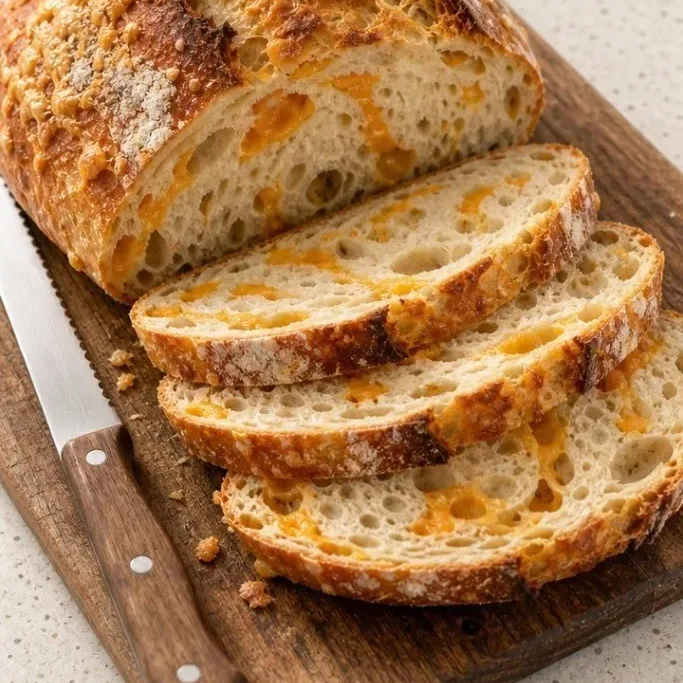
You mix it the night before, let time do the heavy lifting, and by the next afternoon your kitchen smells like the best bakery you’ve ever walked past.
Why This Loaf Stays in My Rotation
The cheese isn’t just a topping; it’s folded into the dough so every bite pulls a salty, nutty little burst. The crust gets those dark, lacy patches where the Asiago hits the pan, crisp and almost frico-like.
It makes weekday toast feel special and turns a simple soup into a meal. The dough itself is forgiving, built on a long, slow fermentation that builds flavor without a lot of hands-on work.
Ingredients
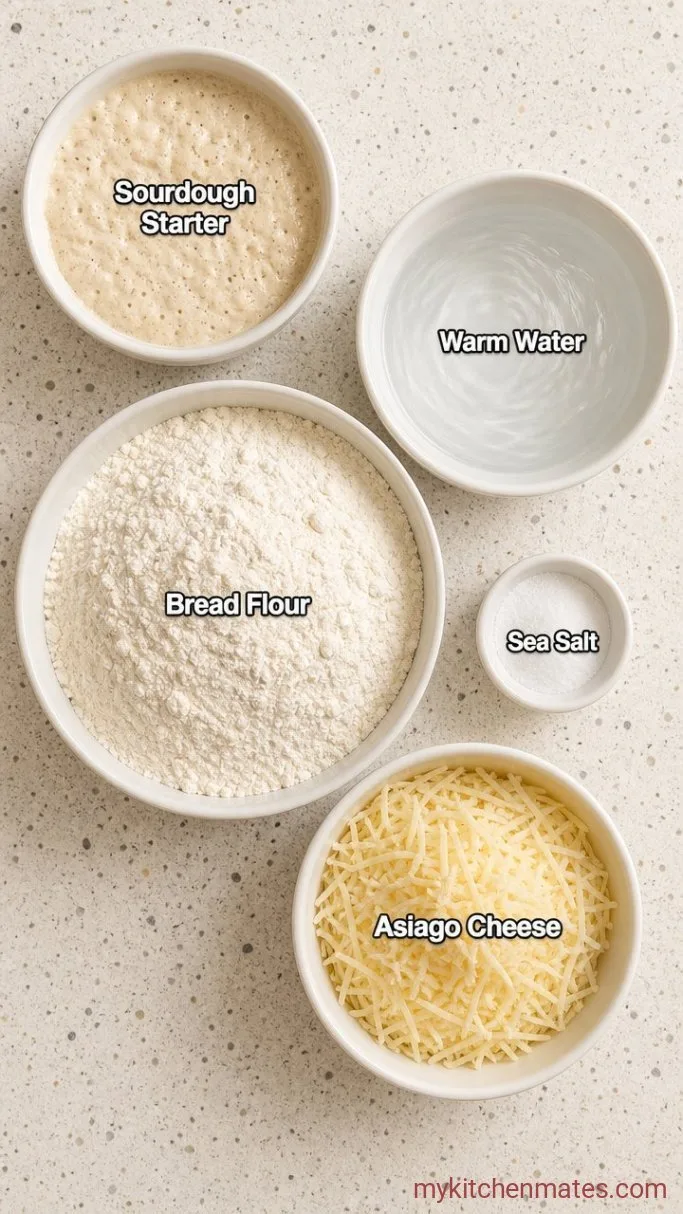
- 100 g active sourdough starter (100% hydration): feed it 4-6 hours before; it should be bubbly and pass the float test
- 375 g warm water: around 85°F (29°C), just warm to the touch
- 500 g bread flour: the higher protein gives the loaf structure and that chewy crumb
- 10 g fine sea salt: a little less than 2 tsp
- 150 g Asiago cheese, shredded: use a sharp, aged Asiago for the strongest flavor; grate it yourself so it melts into thin, lacy pockets
Variations / Substitutions
- Swap the cheese: aged cheddar, Parmesan, or Gruyère all work beautifully; each one changes the sharpness and melt.
- Add fresh herbs: fold in 1 tbsp chopped rosemary or thyme with the cheese for a savory, aromatic loaf.
- Go whole wheat: replace up to 100 g of the bread flour with whole wheat flour for a nuttier, denser crumb, and add an extra 15 g water.
- Spice it up: a teaspoon of cracked black pepper or a pinch of red pepper flakes folded in with the cheese adds a gentle warmth.
Thick and Creamy New England Clam Chowder from Scratch makes a comforting soup to pair with this bread.
How to Make Asiago Sourdough Bread
Step 1: Mix the Dough
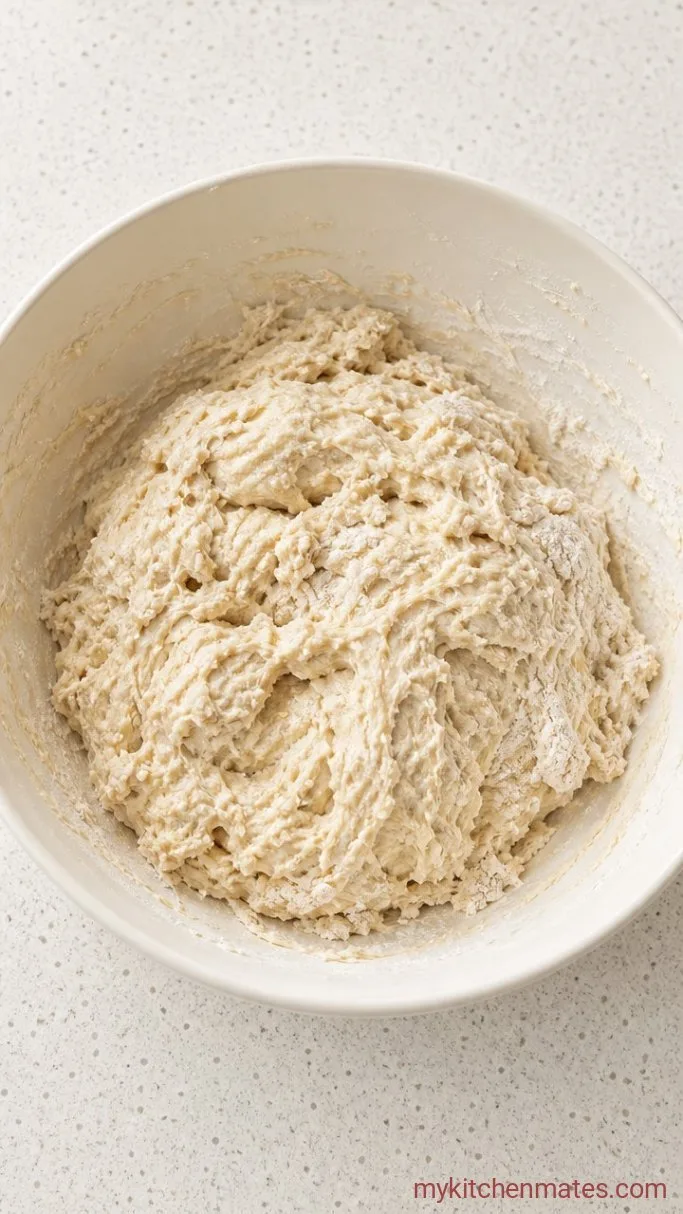
In a large bowl, mix the active starter with the 375 g warm water until it looks like cloudy milk. Add the 500 g bread flour and 10 g salt, then use a sturdy spatula or your hand to combine everything until no dry flour remains. The dough will be shaggy and sticky, that’s exactly what you want. Cover the bowl and let it rest for 30 minutes so the flour can fully hydrate.
After that short rest, you’ll notice the dough has relaxed a little and feels slightly softer, even though it still looks rough. This autolyse step makes the dough much easier to handle later.
Step 2: Fold in the Asiago and Bulk Ferment
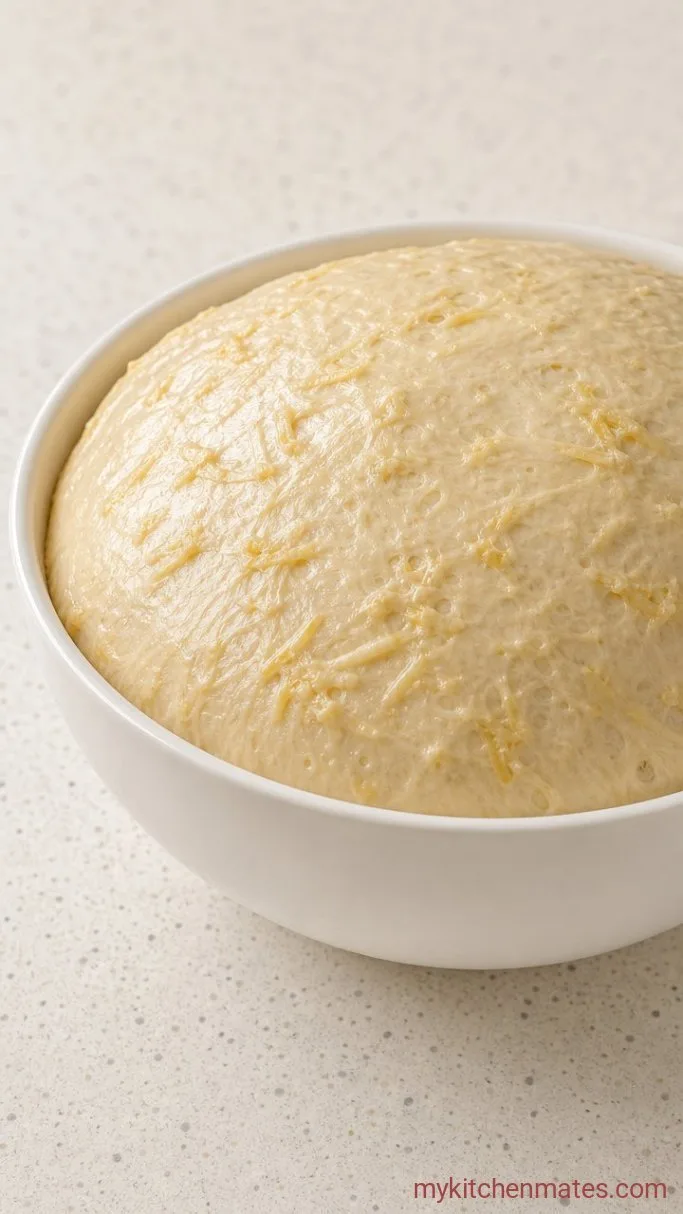
Scatter the 150 g shredded Asiago over the dough. With wet hands, reach under one side, pull it up and fold it over the top. Rotate the bowl a quarter turn and repeat until you’ve worked around the circle, about 4 folds. Cover and let the dough rest for 30 minutes at warm room temperature, ideally around 75°F (24°C).
Repeat this folding process 2 more times at 30-minute intervals, for a total of 3 sets. By the last fold, the dough will feel smooth and stretchy, and the cheese will be evenly distributed. Let the dough continue to rise until it’s nearly doubled in volume and you see a few large bubbles on the surface. This can take 3 to 4 hours total, depending on your kitchen.
Step 3: Shape the Loaf
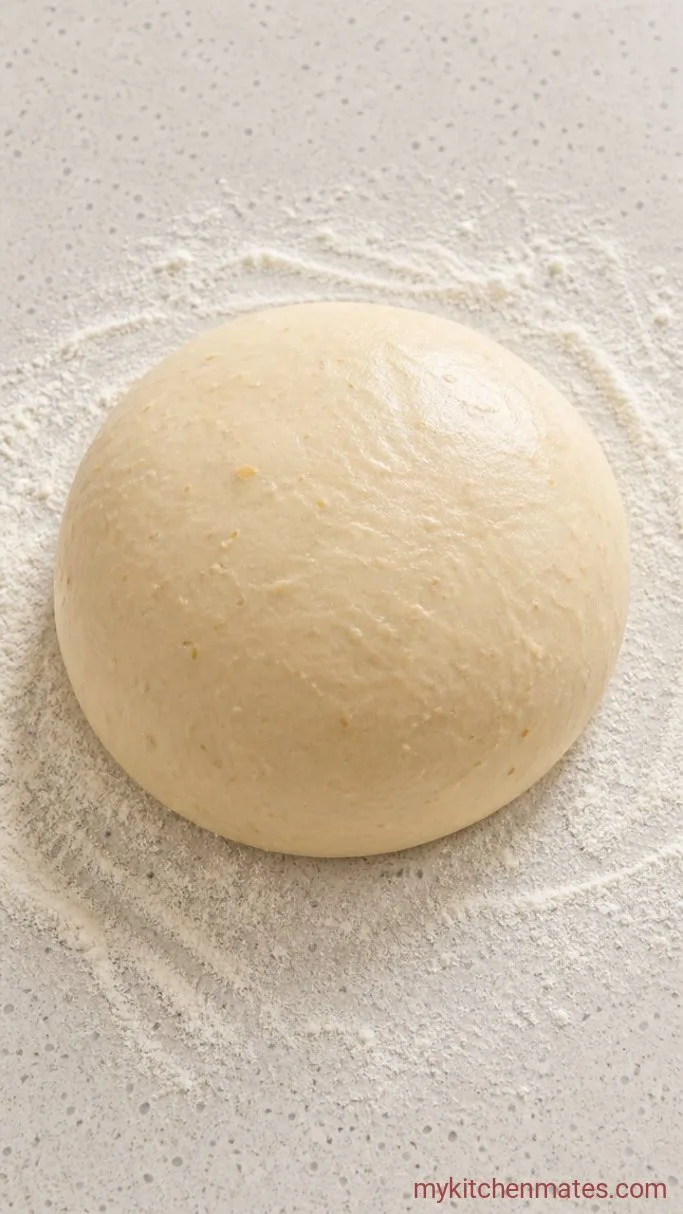
Turn the dough out onto a lightly floured surface, being careful not to deflate it too much. Gently stretch it into a rough rectangle, then fold the sides in toward the center like a letter. Starting from the short end, roll it up into a tight log, using the counter’s friction to build surface tension. Pinch the seams closed.
Place the shaped loaf seam-side up in a floured banneton or a bowl lined with a floured tea towel. The dough should feel plump and taut under your hand. Cover it loosely and let it proof at room temperature for 60 to 90 minutes, or chill it overnight in the fridge for a more complex flavor and easier scoring. If you go the cold route, bake straight from the fridge.
Step 4: Score and Bake
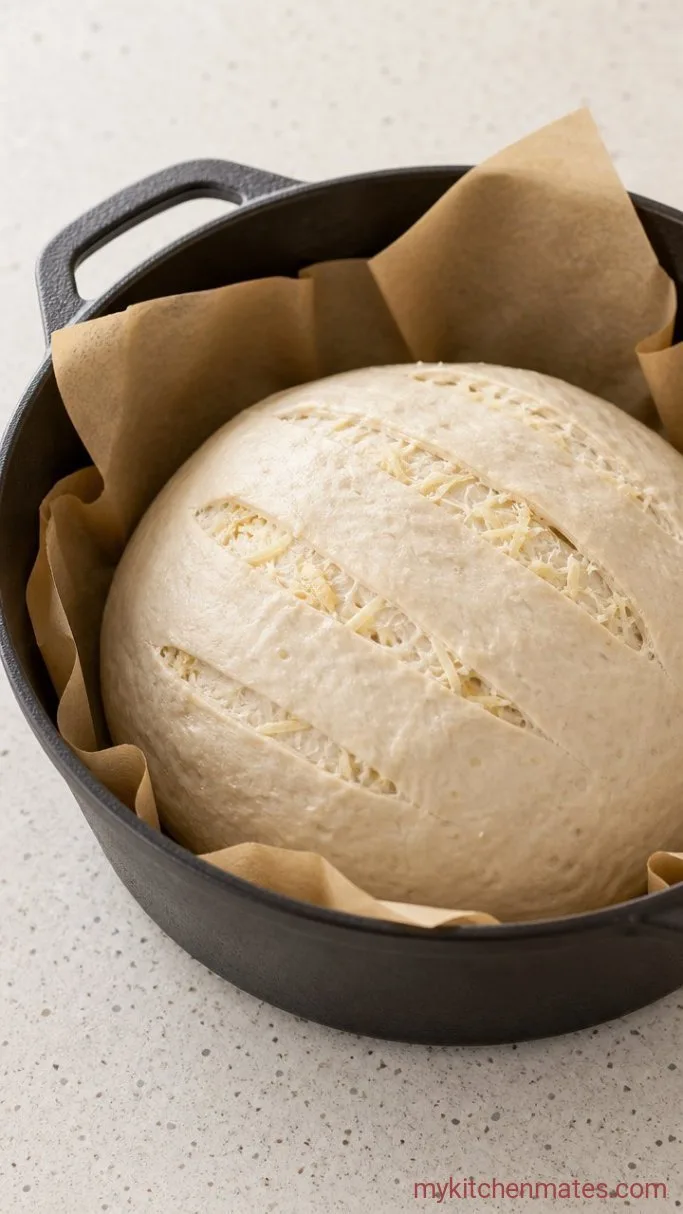
At least 30 minutes before baking, set a Dutch oven with its lid on the middle rack and heat your oven to 450°F (230°C). When the oven is ready, turn the proofed loaf out onto a sheet of parchment paper. Use a sharp lame or razor blade to score the top with one confident slash about ½ inch deep. A clean, swift cut gives the bread room to spring open in the heat.
Lift the loaf by the parchment and lower it into the hot Dutch oven. Cover immediately and bake for 30 minutes. Then remove the lid and bake for another 15 to 20 minutes. A few minutes before the end, you’ll smell the cheese crisping and see deep amber patches on the crust. The loaf is ready when it sounds hollow when tapped on the bottom and the exposed cheese looks lacy and dark gold.
Step 5: Slice and Serve
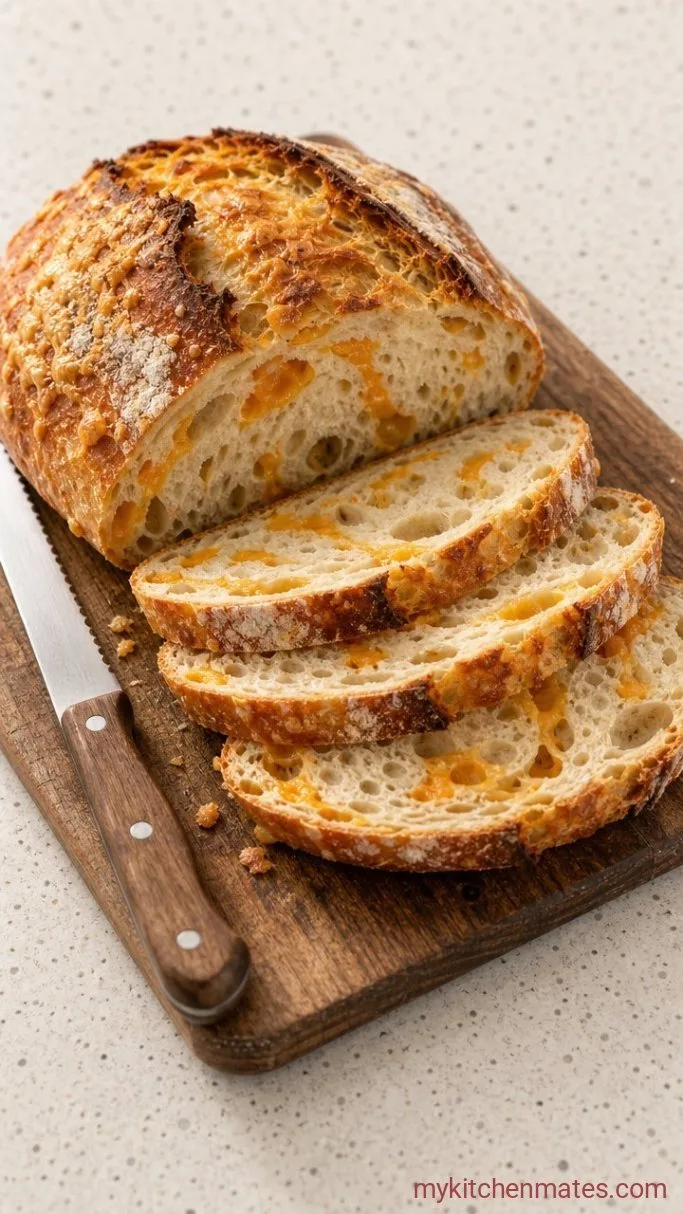
Transfer the loaf to a cooling rack and leave it alone for at least 1 hour. Cutting too soon will steam the crumb and turn it gummy. Once cooled, slice into thick slabs with a serrated knife and serve. The crust crackles under the blade, and the cut face shows glossy pockets of melted Asiago threaded through the crumb.
A Few Notes Before You Start
- A sourdough starter that isn’t active enough will give you a dense, sad loaf. Make sure it doubles in volume within 4 to 6 hours of feeding before you mix the dough.
- Grate the cheese yourself and chill it in the fridge while the dough rests. Cold shreds hold their shape better during the folds, so you get distinct cheesy pockets instead of it all melting into the crumb.
- Trust your eyes more than the clock during bulk fermentation. The dough should look puffy, feel airy when you nudge it, and leave a slight indent when poked gently.
- If the crust is browning too fast after removing the lid, tent a small piece of foil over the darkest spots without sealing it; the cheese contains fat that can darken quickly.
Keeping Your Sourdough Fresh
This bread stays crusty for about a day at room temperature, then softens into a wonderful chewy texture. Store it cut-side down on a wooden board or in a paper bag for up to 3 days; plastic makes the crust go leathery.
For longer storage, slice the loaf once fully cooled, separate the slices with parchment, and freeze them in a zip-top bag. Toast straight from frozen, or warm slices in a 350°F (175°C) oven for 5 to 7 minutes until the cheese melts again.
What Goes Well with This Asiago Loaf
A bowl of creamy tomato soup is the obvious, wonderful choice, the sharp cheese in the bread plays beautifully off the sweet acidity of the tomatoes. For breakfast, toast a thick slice and top it with a fried egg so the yolk runs into the cheesy crumb. It also makes an incredible grilled cheese; a little smear of Dijon mustard on the inside brings out the nuttiness even more.
Frequently Asked Questions
Can I use all-purpose flour instead of bread flour?
Yes, you can, but the loaf will have a softer, less open crumb. Bread flour’s extra protein helps the dough hold shape and rise tall, especially with the weight of the cheese.
Why did my cheese leak out and burn on the Dutch oven?
Shreds on the very surface can melt and run. Rolling the loaf with good surface tension and tucking any exposed cheese into the seams helps keep it inside. A sheet of parchment under the loaf also catches any drips.
How do I know when the loaf is truly done baking?
A hollow thump on the bottom is the best signal, but if your loaf feels heavy for its size, bake it uncovered an extra 5 to 7 minutes. The cheese can make it seem done earlier than it really is inside.
Can I skip the Dutch oven and still get a good crust?
You can. Place a baking stone or inverted sheet pan in the oven to preheat, slide the loaf onto it, and toss a handful of ice cubes onto the oven floor for steam. The crust won’t be quite as blistered, but it will still be crisp.
Asiago Sourdough Bread Recipe
Ingredients
Method
- Mix the starter and water, then add flour and salt. Combine until no dry flour remains, cover, and rest 30 minutes.
- Scatter cheese over the dough and perform a series of 3 stretch-and-fold sets at 30-minute intervals. Let bulk ferment until nearly doubled, 3 to 4 hours.
- Turn dough out, shape into a tight batard, and place seam-side up in a floured banneton. Proof 60 to 90 minutes at room temperature, or chill overnight.
- Preheat a Dutch oven in a 450°F (230°C) oven. Turn loaf onto parchment, score deeply, and bake covered 30 minutes, then uncovered 15 to 20 minutes until deeply golden.
- Cool on a rack at least 1 hour before slicing and serving.
Notes
