
3-Ingredient All-Butter Pie Crust

This crust comes together with just flour, butter, and ice water. It bakes into a shatteringly flaky shell that works for sweet or savory pies.
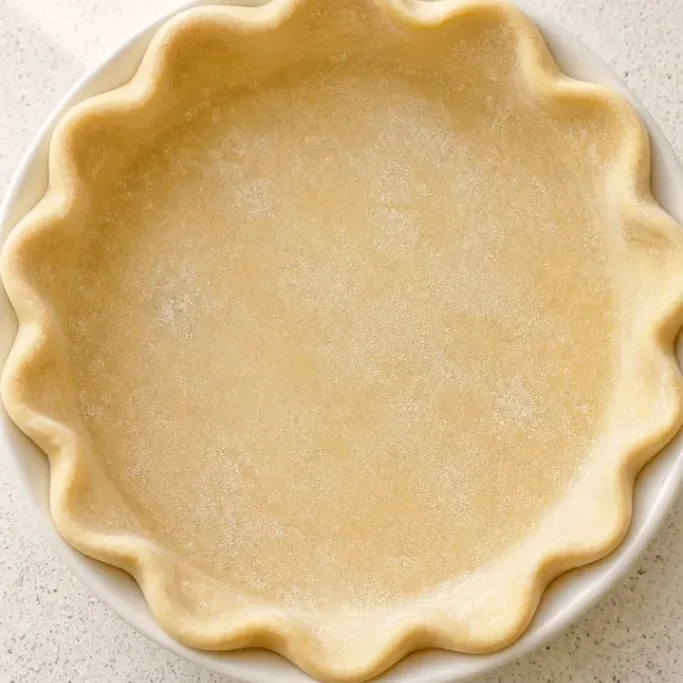
You don’t need a food processor or any special flour. The key is keeping the butter cold and handling the dough as little as possible.
Why This Crust Works Every Time
The ratio of flour to butter here is simple and forgiving. Those butter chunks steam as the crust bakes, creating distinct, paper-thin layers that lift apart.
I like that this dough tastes cleanly of butter, without any shortening or added sugar. It’s sturdy enough to hold a juicy peach filling but tender enough to cut with a fork.
Chilling the dough before you roll it out lets the gluten relax, which stops the crust from shrinking in the pan. A cold rest also re-solidifies the butter so the pastry stays flaky, not greasy.
Ingredients

- 2 1/2 cups all-purpose flour: spooned and leveled, nothing fancy needed
- 1 cup cold unsalted butter: cut into small cubes, straight from the fridge
- 6 to 8 tablespoons ice water: add just enough to bring the dough together
Variations / Substitutions
- Gluten-free: swap in a 1:1 all-purpose gluten-free flour blend. The dough will feel a little more delicate, so roll it between two sheets of parchment.
- Vegan: use a cold vegan butter stick. The pastry gets the same flaky texture.
- Bump up the flavor: for a sweet crust, stir 1 tablespoon granulated sugar into the flour. For a savory one, add 1/2 teaspoon fine salt and a pinch of dried thyme or rosemary.
Baked Red Velvet Cheesecake is another dessert you’d probably love if you enjoy this pie.
How to Make 3-Ingredient Pie Crust
Step 1: Cut in the Butter

Toss the 2 1/2 cups flour into a large mixing bowl. Add the cold butter cubes and use a pastry cutter or your fingertips to work them into the flour quickly. Stop when the mixture looks like coarse sand with some pea-sized butter pieces still scattered through it. You want those visible bits; they create the flaky pockets.
The dough should hold together when you squeeze a handful, but still feel crumbly. If you use your hands, keep the contact brief so the butter doesn’t soften.
Step 2: Add the Ice Water

Drizzle 6 tablespoons of ice water over the flour mixture and toss everything gently with a fork. The dough will start clumping into shaggy pieces. If it stays dusty, add another tablespoon of water at a time, tossing after each addition, until you can press the mixture into a cohesive mass.
It will look a little rough and uneven, and that’s exactly right. Overworking it here makes the crust tough, so stop as soon as it holds together.
Step 3: Chill the Dough
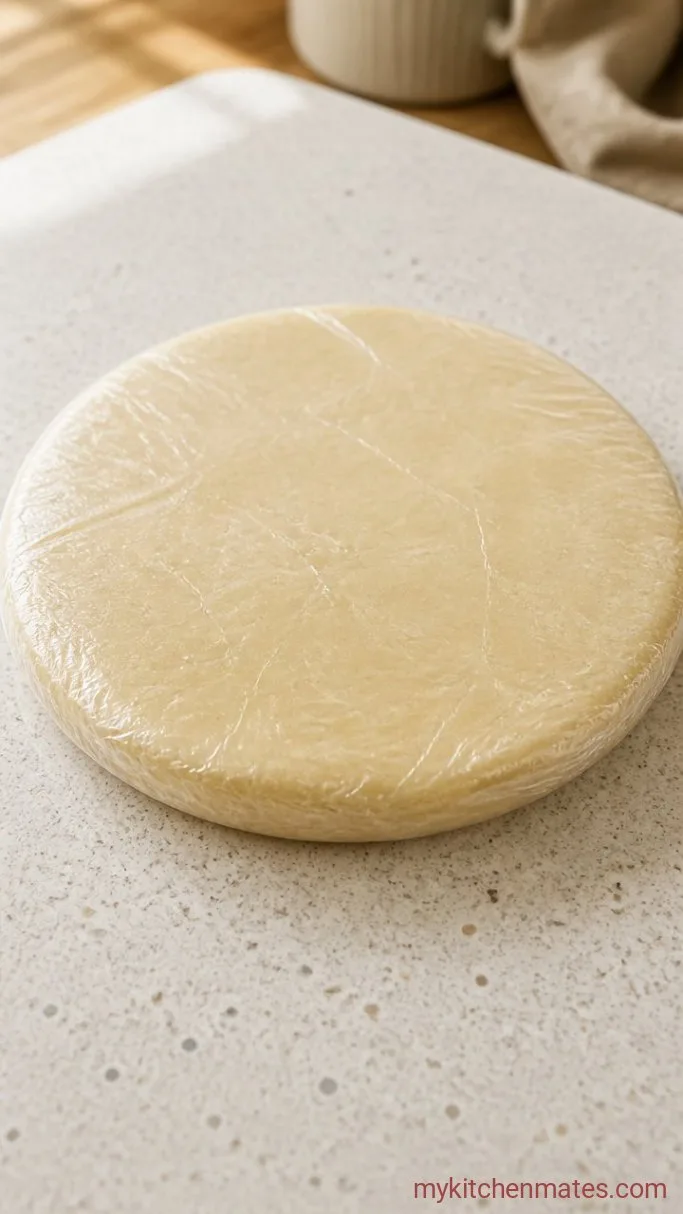
Turn the dough out onto a clean work surface and gather it into a ball. Divide it in half, flatten each half into a disc about an inch thick, and wrap them tightly in plastic. Slide the discs into the fridge for at least 1 hour, or up to 2 days.
The chilled dough will feel firm and not sticky at all when you unwrap it. A cold rest is what prevents the crust from shrinking in the oven later.
Step 4: Roll and Shape the Crust

Lightly flour your counter and a rolling pin. Place one chilled disc on the surface and press it down gently with the rolling pin a few times to warm it just enough to roll. Roll from the center outward, turning the dough a quarter turn after each pass, until you have a circle about 12 inches across and roughly 1/8 inch thick.
Lift the dough by draping it over your rolling pin and ease it into a 9-inch pie plate. Trim the overhang to about 1 inch, fold it under, and crimp the edge with your fingers or a fork. From here, you can fill the crust and bake, or chill it again while you prepare the filling.
Tips for a Flaky Pie Crust
- Keep everything cold.: Chill the butter, the water, and even the flour if your kitchen is warm. Warm fat melts before the structure sets, which makes a dense crust.
- Don’t skip the rest.: Letting the dough relax in the fridge stops it from pulling away from the pan edge as it bakes.
- Use a light hand.: When you roll, start with a few gentle presses to soften the disc without cracking it, then use even, steady strokes.
- Trim and crimp with confidence.: A thick, even rim crimp holds its shape better than a thin one that flattens in the oven.
- If you plan to blind bake the crust, chill the shaped shell for 30 minutes first, then line it with parchment and pie weights and bake at 400°F (200°C) for about 20 minutes before removing the weights.
Keeping Dough Fresh
- Refrigerate: Wrap the discs tightly in plastic and keep them in the fridge for up to 3 days. Let them sit at room temperature for 5 to 10 minutes before rolling if they feel rock hard.
- Freeze: Double-wrap the discs and freeze for up to 3 months. Thaw overnight in the refrigerator, then roll as usual.
What Goes Well With This Pie Crust
Fill the shell with a simple apple or cherry filling for a classic double-crust pie. The butter pastry also balances a rich, savory quiche loaded with spinach and gruyère. For something casual, use the dough to make a free-form galette; the rustic folds get extra crisp edges because the butter-rich dough puffs around the fruit.
Frequently Asked Questions
Can I make this crust without a food processor?
Yes. A pastry cutter or your fingertips do the job perfectly. Work quickly to keep the butter cold, and stop when you see those little pea-sized bits.
What if my dough cracks when I start rolling?
It’s likely too cold. Let it rest on the counter for 5 minutes, then pat the cracks together with damp fingers. A few drops of cold water pressed into the fissure also help.
Can I use salted butter?
You can. The crust will pick up a little extra salt, which works nicely with savory fillings. For sweet pies, the slightly salty note can be pleasant, but unsalted butter keeps the flavor neutral.
Why does my crust shrink in the oven?
The dough didn’t rest long enough after you rolled and shaped it. A 30-minute chill in the pie plate, or at least an hour for the wrapped discs, gives the gluten time to relax.
Do I need to blind bake this crust?
It depends on your filling. For a custard pie or fresh fruit tart, blind baking prevents a soggy bottom. For a juicy fruit pie that bakes a long time, you can often skip it and bake the filled crust directly.
3-Ingredient Pie Crust Recipe
Ingredients
Method
- Toss the flour and cold butter cubes in a bowl. Cut the butter into the flour until the mix looks like coarse sand with some pea-sized butter pieces.
- Drizzle in 6 tablespoons of ice water and toss with a fork. Add more water a tablespoon at a time just until the dough sticks together when pressed.
- Gather the dough into a ball, divide it in half, and flatten each half into a disc. Wrap tightly and refrigerate for at least 1 hour.
- Roll one disc into a 12-inch circle on a floured surface, transfer it to a 9-inch pie plate, trim the edge, and crimp. Use immediately or chill until ready to bake.
Notes
