
Garlicky White Chicken Lasagna

This white chicken lasagna skips the tomato and leans into a buttery, garlicky béchamel instead. Layers of tender shredded chicken, spinach, and creamy ricotta stack between oven-ready noodles, and it all bakes into a bubbly, golden-topped dinner that feels a little special without a lot of work.
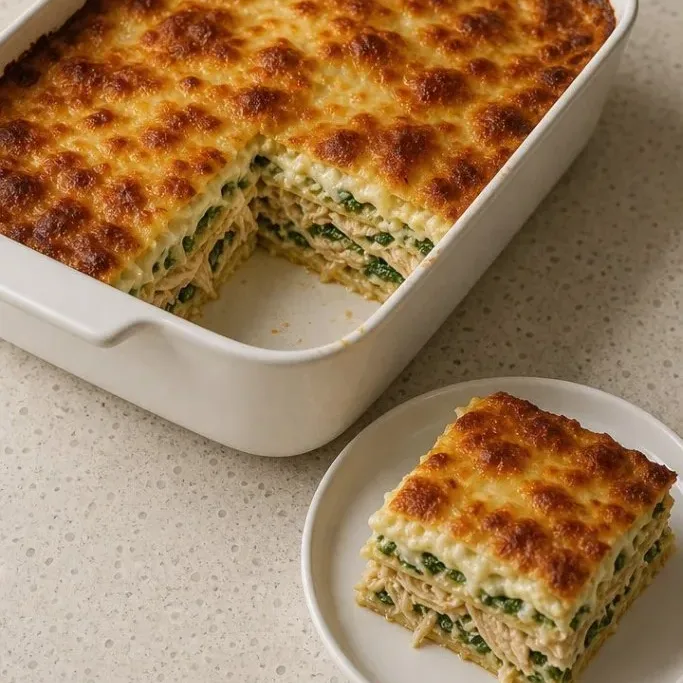
If you have a rotisserie chicken on hand, this comes together fast for a lasagna. Even with a quick poach of chicken breasts, the active time stays reasonable, and the payoff is a rich, comforting pan of pasta I keep coming back to.
What Makes This White Lasagna So Good
The béchamel does the heavy lifting here. I cook garlic in butter before whisking in flour and milk, so the sauce carries a savory warmth that runs through every bite. It coats the noodles without any heavy, pasty feel.
The ricotta layer brings a creamy tang that balances the richness. I mix it with an egg so it sets just enough to hold the lasagna together when you slice it, leaving the layers distinct rather than sliding apart.
A little spinach tucked in adds color and a gentle earthiness, but it never takes over. The chicken stays moist because the sauce insulates it, and the whole top gets that chewy, browned edge of mozzarella and parmesan.
Ingredients

- 9 oven-ready lasagna noodles: no boiling, straight from the box.
- 2 cups cooked, shredded chicken: rotisserie works beautifully here.
- 1 (15 oz) container whole milk ricotta: the full-fat kind keeps things creamy without pooling water.
- 2 cups shredded low-moisture mozzarella: divided; save some for the top.
- ½ cup grated parmesan: adds a salty bite to every layer.
- 1 (10 oz) box frozen chopped spinach, thawed and squeezed dry: or 5 oz fresh baby spinach, wilted and squeezed.
- 4 tablespoons unsalted butter: the base of the béchamel.
- 4 cloves garlic, minced: fresh, not jarred, for the sauce.
- ¼ cup all-purpose flour: thickens the béchamel.
- 2½ cups whole milk: warmed, to help the sauce come together smoothly.
- 1 large egg: mixed with the ricotta so the layer sets.
- ½ teaspoon salt: adjusted to taste, since parmesan and mozzarella bring some salt.
- ¼ teaspoon ground nutmeg: optional, but a pinch in white sauces makes them taste fuller.
- Black pepper: fresh cracked, to taste.
Variations / Substitutions
- Swap the protein: leftover turkey works, or poach 2 boneless, skinless chicken breasts in salted water until 165°F, then shred.
- Greens choice: frozen spinach is the fastest. Fresh spinach wilts in a hot skillet in 2 minutes; just make sure to squeeze out most of the liquid so the lasagna does not get watery.
- Dairy-free: I have not tested a dairy-free version here, but a plant-based butter, unsweetened oat milk, and a good melty vegan mozzarella could work. The ricotta is trickier; a thick, plain vegan cream cheese might be the best stand-in.
- Noodle swaps: regular lasagna noodles work fine, just boil them first. Gluten-free oven-ready noodles also hold up well.
Creamy White Chicken Lasagna Soup goes perfectly with this lasagna for a cozy meal.
How to Make Garlicky White Chicken Lasagna
Step 1: Whisk the Garlic Béchamel

Set a medium saucepan over medium heat and melt the 4 tablespoons of butter. Add the minced garlic and cook, stirring, for about 1 minute, just until it smells fragrant. Do not let it brown, or the sauce will carry a bitter edge.
Whisk in the ¼ cup of flour and cook the paste, still stirring, for 1 minute to lose the raw flour taste. Slowly pour in the 2½ cups of milk while whisking constantly, then keep cooking, whisking often, for 4 to 5 minutes until the sauce thickens enough to coat the back of a spoon. Off the heat, stir in the ¼ teaspoon nutmeg, ½ teaspoon salt, and several cracks of black pepper. The sauce will look smooth and pale gold. Set it aside; it will thicken a little more as it cools.
Step 2: Mix the Ricotta Filling
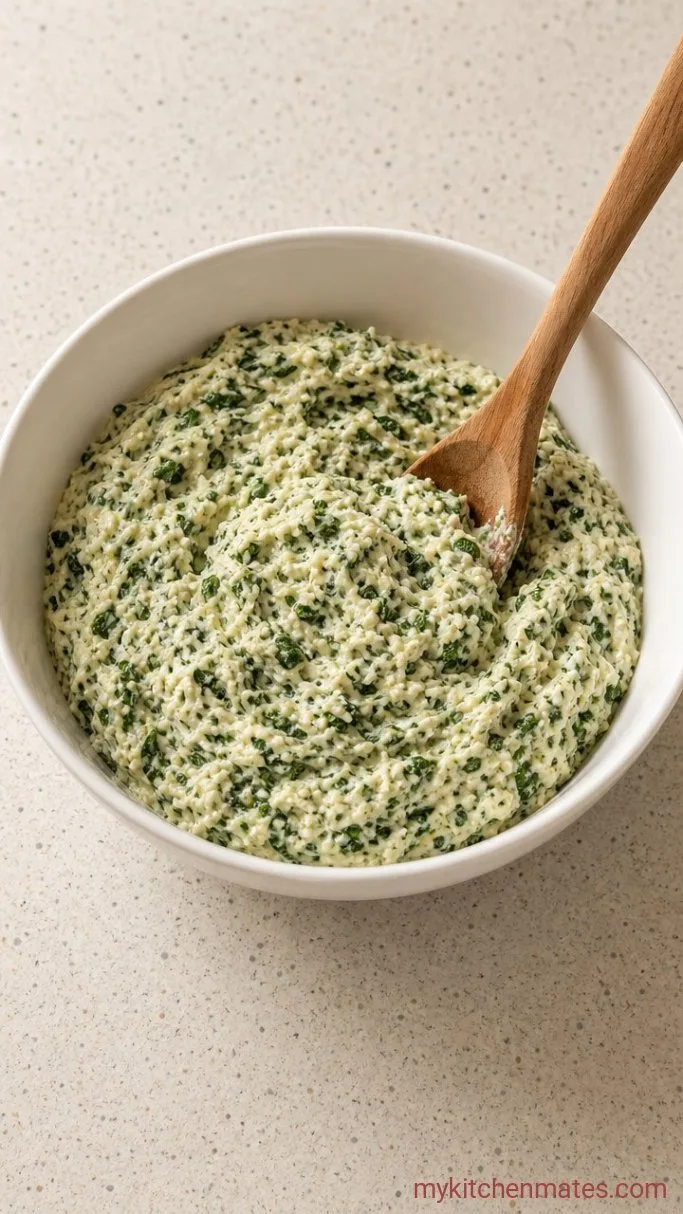
In a medium bowl, stir together the whole container of ricotta, 1 large egg, and about a third of the grated parmesan (roughly 3 tablespoons). Mix it well until the egg disappears into the cheese and the mixture looks uniform.
Fold in the thawed, squeezed spinach and a pinch of salt and pepper. The ricotta turns a soft green with flecks, and the egg will help it set into a sliceable layer later. Cover the bowl and set it aside while you get the baking dish ready.
Step 3: Build the Layers
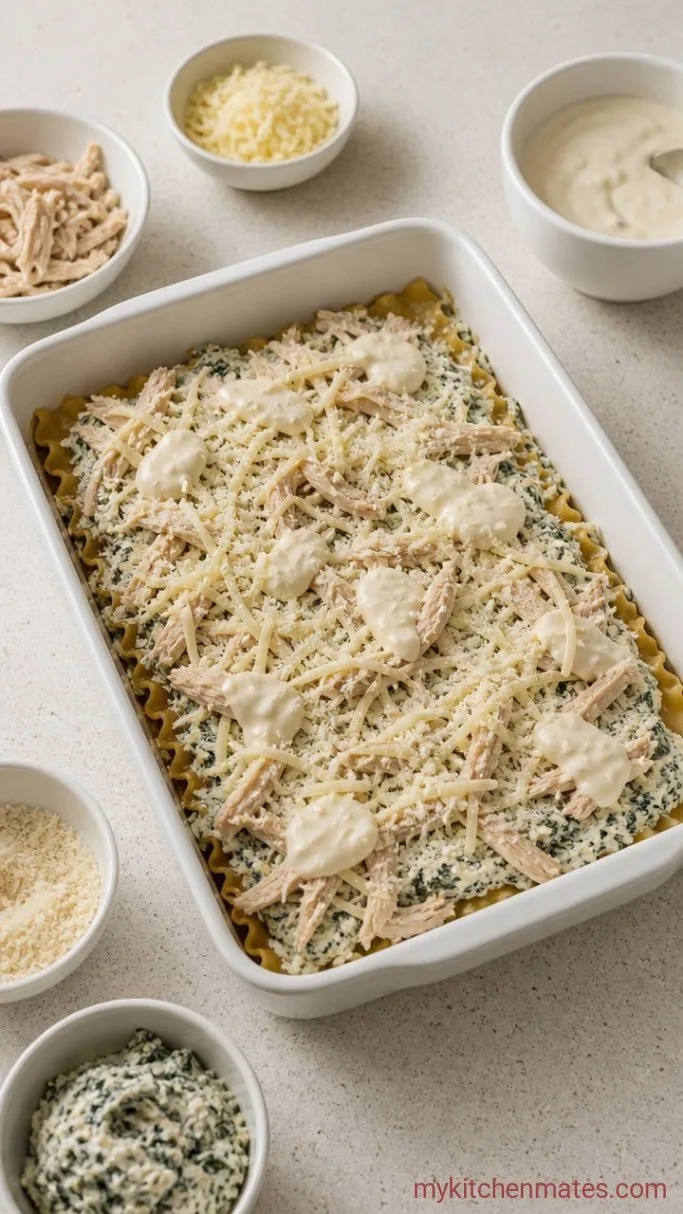
Preheat your oven to 375°F (190°C). Grease a 9×13-inch baking dish lightly with butter or spray. Spread a thin layer of the béchamel across the bottom, just enough to cover it so the noodles do not stick. Lay 3 oven-ready lasagna noodles on top; they may not touch the edges, and that is fine.
Spoon half the ricotta-spinach mixture over the noodles and spread it gently with the back of a spoon. Scatter a third of the shredded chicken evenly across the ricotta, then sprinkle a third of the mozzarella over the chicken. Drizzle about a third of the remaining béchamel on top. Repeat the sequence: 3 noodles, the rest of the ricotta, another third of the chicken and mozzarella, then another third of the béchamel. Top with the last 3 noodles, the last third of the chicken, and pour the final béchamel over everything. Finish with the remaining mozzarella and all of the leftover parmesan. You will have a neat stack with cheese covering the top.
Step 4: Bake Until Golden
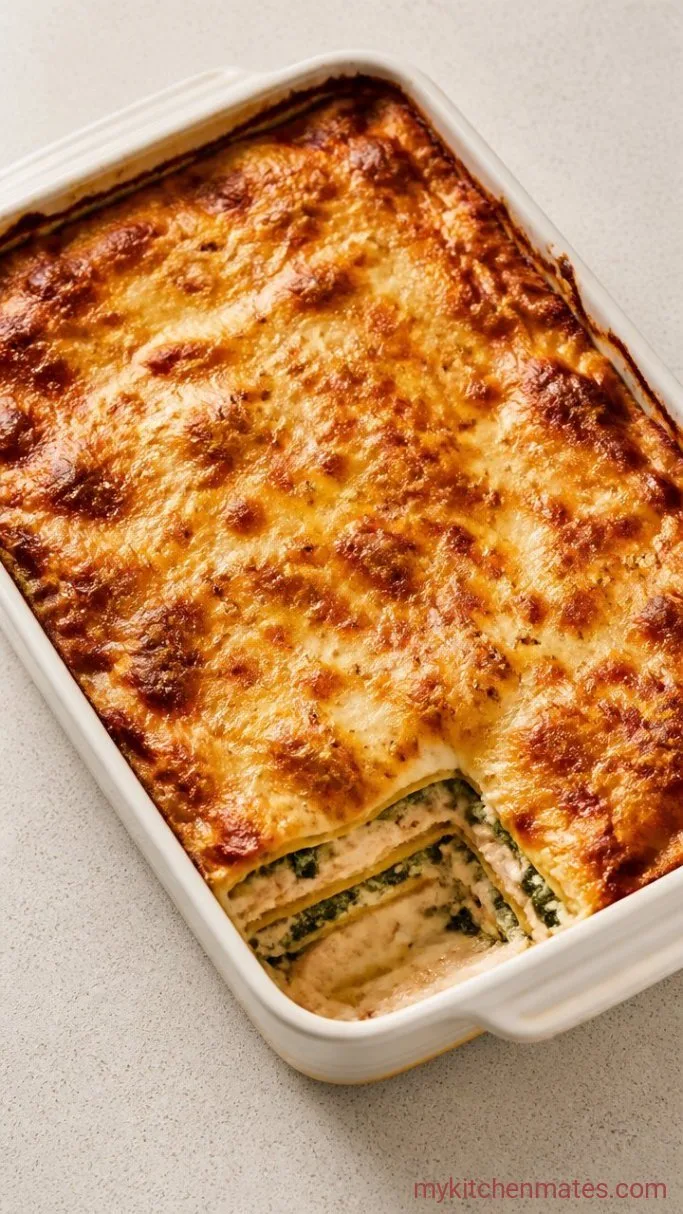
Cover the dish with foil, tenting it slightly so the cheese does not stick, and bake for 25 minutes at 375°F. After 25 minutes, remove the foil and continue baking for 10 to 15 minutes more, until the top is bubbly and turning deep golden in spots.
The edges should look set, and a knife slipped into the center will feel hot. The kitchen will smell like garlic and browned cheese. If you like a darker top, switch the broiler on for the last 1 to 2 minutes, but stay close because it can shift from golden to burnt fast.
Step 5: Rest and Slice
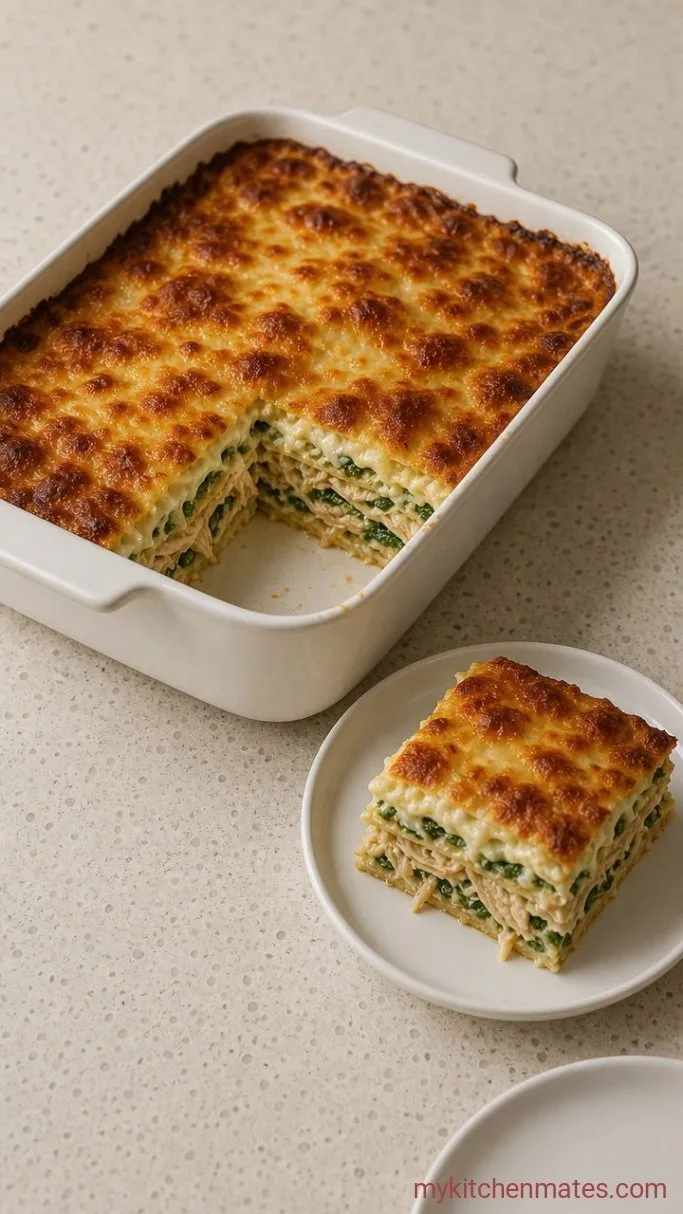
Pull the lasagna from the oven and let it sit on the counter for a full 10 minutes. It carries on cooking a little from the carryover heat, and the tight, bubbly layers settle so you get clean slices instead of a soupy first cut.
Run a knife along the edges to loosen any cheese stuck to the dish, then slice into big squares and lift them out with a wide spatula. The cross-section shows ribbons of green spinach, pale chicken, and cream-colored noodles, all held together by the set ricotta.
A Few Notes Before You Start
- Squeeze the spinach hard after thawing and draining. Any extra water in it will thin the ricotta layer and make the bottom of the lasagna looser.
- Whole milk ricotta works best because low-fat versions can release more liquid. If that is all you have, drain it in a fine mesh strainer for 15 minutes before mixing.
- The béchamel thickens as it sits, so do not worry if it looks slightly loose when you pour it. It will set up in the oven.
- A sharp chef’s knife or a serrated knife both work for slicing; let the blade do the work so you do not press the layers out the sides.
Storing Leftovers
- Refrigerate: Cover the cooled dish tightly and store in the fridge for up to 4 days. The slices reheat well.
- Reheating: Warm individual portions in the microwave or cover the whole pan with foil and reheat in a 350°F oven until hot in the center, about 20 minutes. A splash of milk on top before covering helps it stay creamy.
What to Serve With Garlicky White Chicken Lasagna
A bright, acidic side cuts the richness of the white sauce. I like a simple arugula salad dressed with lemon juice and olive oil, with a little parmesan shaved on top. The peppery greens and sharp lemon wake up every bite. For a more substantial meal, add some crusty bread rubbed with garlic, nothing fancy.
Frequently Asked Questions
Can I use fresh spinach instead of frozen?
Yes. Wilt 5 ounces of fresh baby spinach in a dry skillet until just collapsed, then cool and squeeze out the liquid before mixing it into the ricotta.
Can I freeze this lasagna?
Absolutely. Assemble it unbaked, cover tightly, and freeze for up to 3 months. Bake straight from frozen, covered, at 375°F for about 60 minutes, then uncover and bake until bubbly and hot in the center.
Can I skip the egg in the ricotta layer?
You can, but the layer will be softer and slices may not hold their shape as well. The egg helps it set firmly.
Is there a way to cut down on the richness?
Swap half the whole milk for reduced-fat milk, but keep the full-fat ricotta and butter. The sauce will still taste creamy without being quite as heavy.
Garlicky White Chicken Lasagna Recipe
Ingredients
Method
- Melt butter in a medium saucepan over medium heat. Add garlic and cook 1 minute. Whisk in flour and cook 1 minute. Slowly whisk in milk, then cook, whisking often, until thickened, 4 to 5 minutes. Off heat, stir in nutmeg, salt, and pepper. Set aside.
- Stir together ricotta, egg, about 3 tablespoons of the parmesan, and the squeezed spinach. Season with salt and pepper.
- Preheat oven to 375°F (190°C). Grease a 9×13-inch baking dish. Spread a little béchamel on the bottom. Layer 3 noodles, half the ricotta mixture, ⅓ of the chicken, ⅓ of the mozzarella, and ⅓ of the remaining béchamel. Repeat: 3 noodles, remaining ricotta, another ⅓ chicken and mozzarella, another ⅓ béchamel. Top with last 3 noodles, remaining chicken, last of the béchamel, then remaining mozzarella and parmesan.
- Cover with foil and bake 25 minutes. Uncover and bake 10 to 15 minutes more, until golden and bubbly. Broil 1 to 2 minutes if you want a darker top.
- Let the lasagna rest 10 minutes, then slice and serve.
Notes
