
One-Pot Vegetarian Minestrone Soup

Vegetarian minestrone soup might be the most forgiving recipe in my kitchen. It takes whatever vegetables are in the crisper and turns them into a warm, filling dinner with almost no fuss.
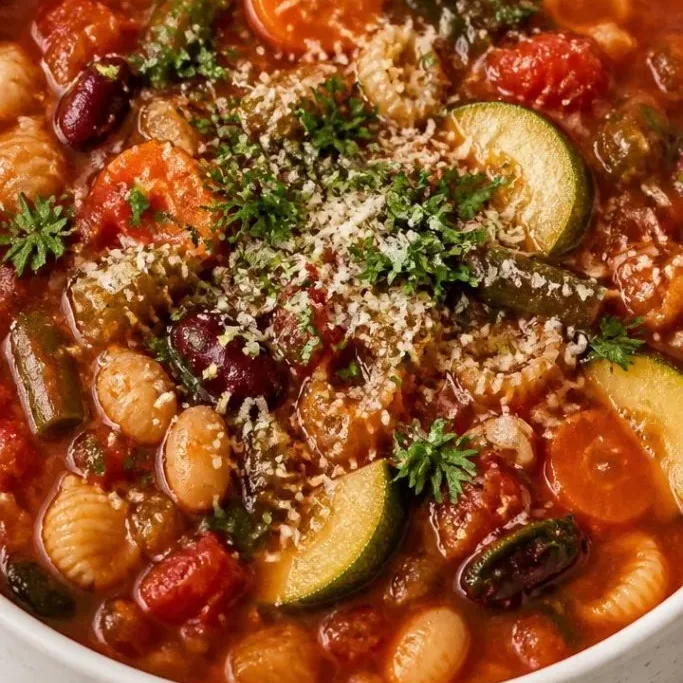
The broth gets its body from canned tomatoes and a Parmesan rind (if you have one), while kidney beans and small pasta make it substantial enough for a main course. Even on the busiest weeknight, you can have a pot bubbling on the stove in about 20 minutes of hands-on work.
Why This Soup Stays in the Rotation
Minestrone doesn’t demand exact vegetables. You can swap in whatever looks good at the market, and the base of tomato, beans, and pasta stays the same, giving you a soup that tastes like you planned ahead.
The Parmesan rind adds a savory depth that no amount of salt can replicate, and the vegetables soak up the broth without turning to mush. I keep coming back to it because the leftovers are even better the next day, with the flavors fused and deeper.
Ingredients

- 2 tbsp olive oil: any neutral oil works
- 1 medium onion, diced: yellow or white
- 2 carrots, peeled and diced: about 1 cup
- 2 celery stalks, diced: about 3/4 cup
- 3 garlic cloves, minced
- 1 tsp dried oregano
- 1 bay leaf
- 1 can (14.5 oz) diced tomatoes: with their juices
- 4 cups vegetable broth: store-bought or homemade
- 1 Parmesan rind (2- to 3-inch piece): optional but recommended
- 1 can (15 oz) kidney beans, drained and rinsed
- 1 can (15 oz) cannellini beans, drained and rinsed
- 1 cup green beans, trimmed and cut into 1-inch pieces
- 1 medium zucchini, diced
- 1 cup small pasta: ditalini, small shells, or elbow macaroni
- Salt and black pepper
- 1/4 cup chopped fresh parsley: divided
- Grated Parmesan for serving
Variations / Substitutions
- Swap the vegetables: use diced bell pepper, chopped kale, or shredded cabbage instead of zucchini or green beans. Any quick-cooking vegetable works.
- Change the beans: chickpeas or pinto beans substitute 1:1 for either type. Use two cans of the same bean if that’s what you have.
- Make it gluten-free: use a gluten-free small pasta (cook according to the package timing) or omit the pasta and add an extra can of beans.
- Skip the cheese: leave out the Parmesan rind and finish with a drizzle of good olive oil and a pinch of nutritional yeast for a vegan version.
- Add a bit of heat: a pinch of red pepper flakes goes in with the garlic.
Vegetarian Baked Ziti makes an easy main to round out the meal with this soup.
How to Make One-Pot Vegetarian Minestrone Soup
Step 1: Sauté the Aromatics
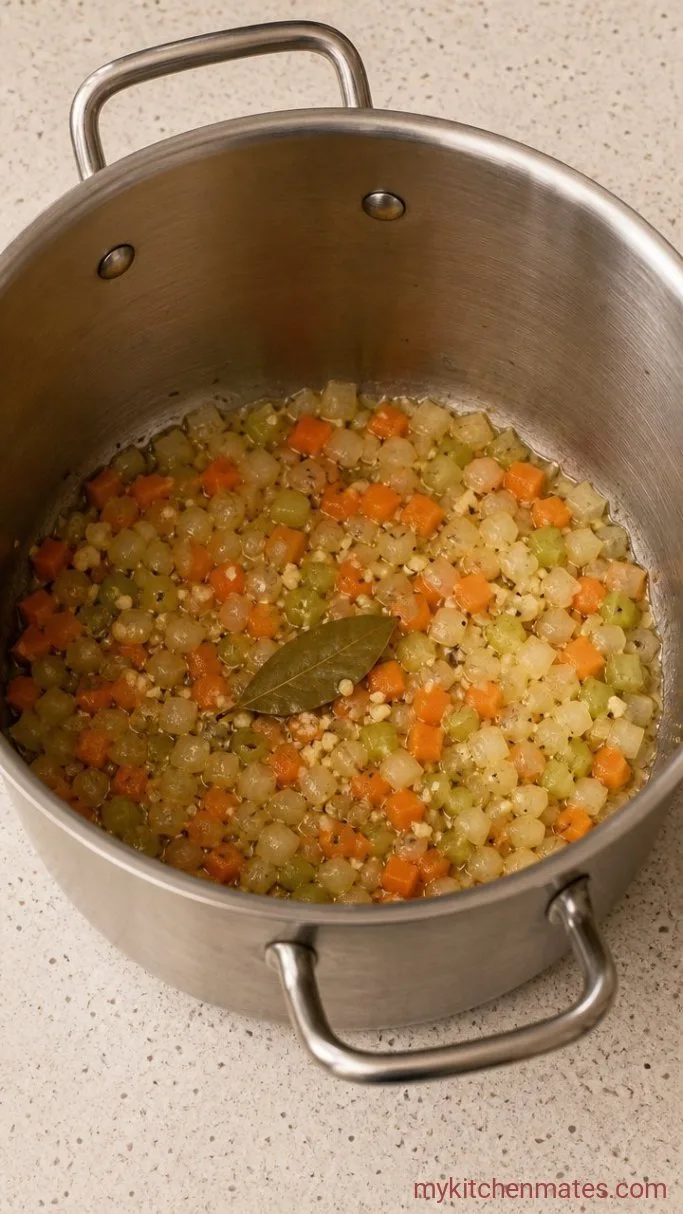
Heat the 2 tbsp olive oil in a large heavy pot or Dutch oven over medium heat. Add the diced onion, carrots, and celery, and cook, stirring a few times, until the onion turns translucent and the vegetables begin to soften, about 6 minutes.
You’ll smell the garlic and oregano bloom as you stir them in, and the kitchen will fill with that warm, savory scent that tells you the soup is off to a good start.
Step 2: Simmer the Broth
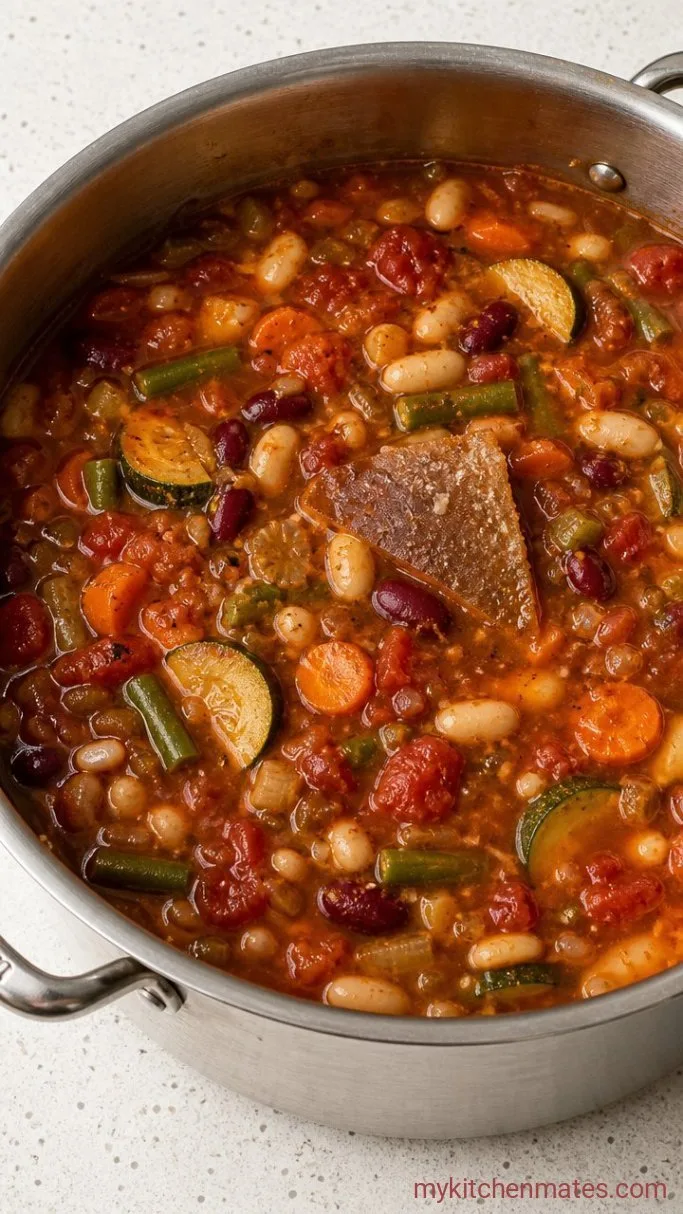
Pour in the diced tomatoes with their juices and all 4 cups of vegetable broth. Add the bay leaf and the Parmesan rind, then bring the pot to a boil over high heat. Once it’s bubbling, lower the heat to a gentle simmer, cover partially, and cook for 20 minutes, until the carrot pieces are tender when pierced with a fork.
By now the broth will have turned a deep reddish-orange and taken on an almost meaty richness from the rind. Taste it, and you’ll notice it still needs the final ingredients and a bit of salt, but the base is already layered and full.
Step 3: Cook the Pasta in the Soup
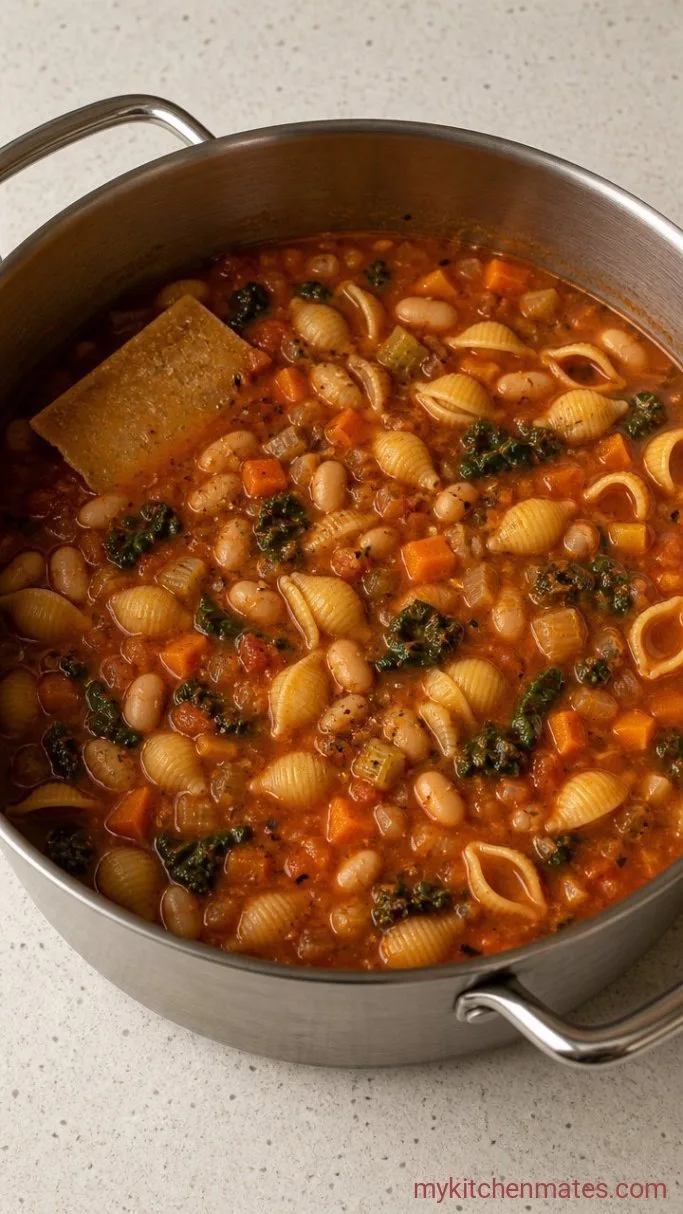
Stir in the kidney beans, cannellini beans, green beans, zucchini, and the 1 cup of pasta. Raise the heat to get the soup back to a brisk simmer, then cook uncovered, stirring occasionally, until the pasta is al dente and the vegetables are just tender, 8 to 10 minutes.
The soup will thicken slightly as the pasta releases its starch; if it looks too tight for your taste, add a splash of hot water or extra broth. You want a brothy soup that still coats the back of a spoon.
Step 4: Ladle and Serve the Soup
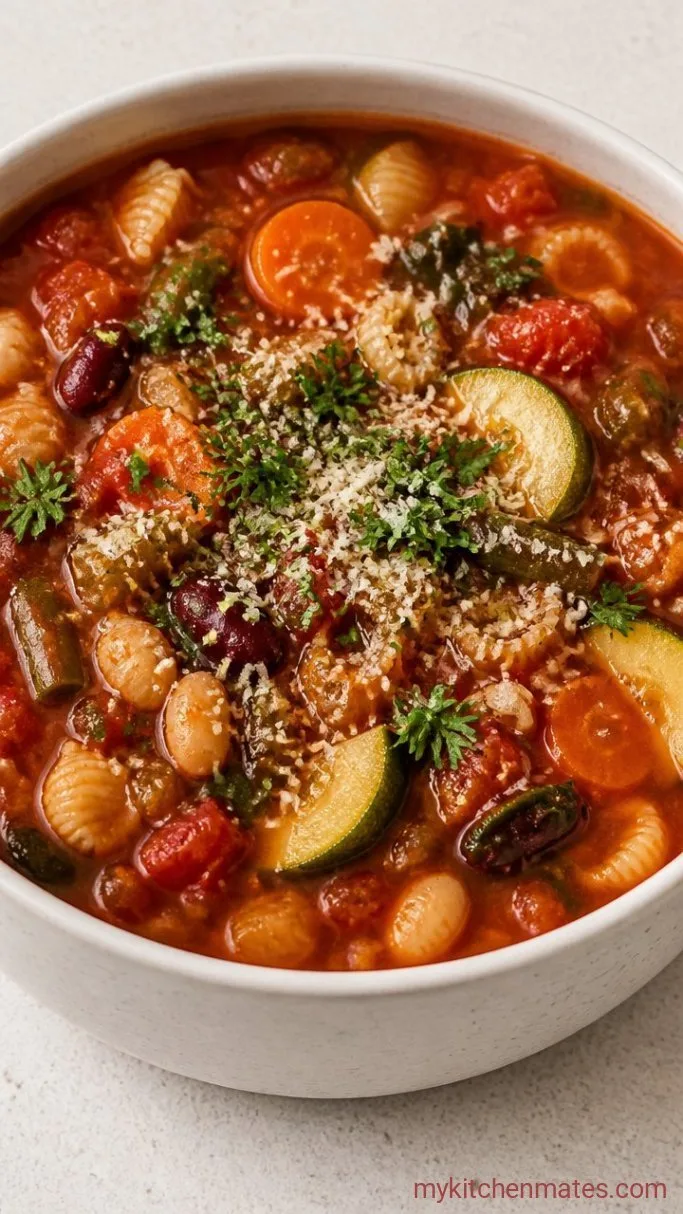
Remove the bay leaf and the Parmesan rind with tongs. Stir in half of the chopped parsley, then taste and adjust with salt and a good crack of black pepper. Ladle the steaming soup into bowls, scatter the remaining parsley over the top, and finish with a generous shower of grated Parmesan.
A Few Notes Before You Start
- Use the rind if you can: The Parmesan rind is optional, but it melts a savory backbone into the broth that you can’t get from salt or stock alone. Just fish it out before serving.
- Keep the pasta from drinking all the broth: If you plan on having leftovers, consider cooking the pasta separately and adding it to each bowl. That way the noodles won’t bloat in the fridge.
- The vegetable lineup is a suggestion: Minestrone is meant to be flexible. Swap in spinach at the very end, add diced potato, or use canned corn. Let the season guide you.
- Season as you go: The broth tastes saltier after the pasta cooks, so go easy at first and adjust at the end.
Cook times for common small pasta shapes:
| Pasta Shape | Approximate Cook Time (mins) |
|---|---|
| Ditalini | 8 to 10 |
| Small shells | 9 to 11 |
| Elbow macaroni | 7 to 9 |
| Orzo | 6 to 8 |
Storing Leftovers
- Refrigerate: Cool the soup completely and store it in an airtight container for up to 4 days.
- Reheating: Gently warm in a pot over medium-low, adding a little broth or water to loosen it up, since the pasta will absorb liquid as it sits.
- Serve cold: This soup is best hot, so I don’t recommend serving it cold.
What to Serve with Minestrone
This soup is a one-pot meal, but it loves a companion. I like a thick slice of crusty sourdough for dipping, or a quick arugula salad with lemon and olive oil to cut through the richness. If you want something heartier, a grilled cheese sandwich pressed with mozzarella and a smear of pesto is the kind of indulgence that turns a simple soup into a full-on comfort dinner.
Frequently Asked Questions
Can I use dried beans instead of canned?
Yes, but you’ll need to soak and cook them separately beforehand, because the acidity of the tomatoes can keep dried beans from softening. Add the fully cooked beans toward the end of the simmer.
How do I keep the pasta from getting mushy in the leftovers?
The easiest trick is to cook the pasta separately and ladle the soup over it in each bowl. If you cook the pasta in the pot, it will keep absorbing broth, so it’s best to enjoy that version right away.
Is this minestrone vegan?
As written it’s vegetarian because of the Parmesan rind and cheese garnish. For a vegan version, skip the rind and use a drizzle of extra virgin olive oil plus a pinch of nutritional yeast at the table instead.
Can I freeze minestrone?
You can, but I’d remove the pasta first or freeze the soup before adding the noodles. Cooked pasta turns unpleasantly soft when frozen and thawed. The broth, vegetables, and beans freeze well for up to 3 months.
One-Pot Vegetarian Minestrone Soup Recipe
Ingredients
Method
- Heat olive oil in a large pot over medium heat. Add onion, carrots, and celery, and cook until the onion is translucent, about 6 minutes. Stir in garlic and oregano and cook 30 seconds.
- Add diced tomatoes, vegetable broth, bay leaf, and Parmesan rind. Bring to a boil, then reduce heat, cover partially, and simmer for 20 minutes, until carrots are tender.
- Stir in kidney beans, cannellini beans, green beans, zucchini, and pasta. Return to a simmer and cook uncovered, stirring occasionally, until pasta is al dente, 8 to 10 minutes.
- Remove the bay leaf and rind. Stir in half the parsley and season with salt and pepper. Ladle into bowls, top with remaining parsley and a generous amount of grated Parmesan.
Notes
