
Creamy Vegan Rice Pudding

This vegan rice pudding tastes exactly like the classic, but uses full-fat coconut milk to get that rich, spoon-coating texture. No dairy, no eggs, just a short list of ingredients and a stovetop simmer.
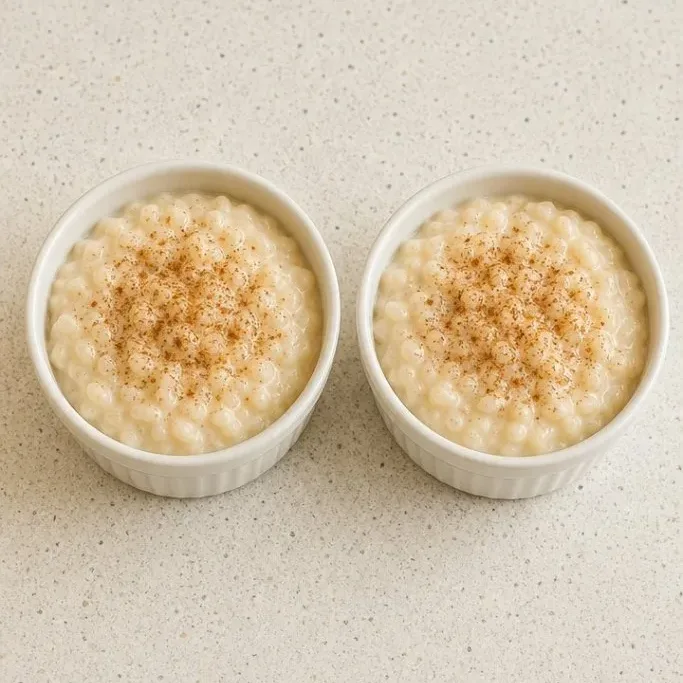
The kitchen fills with cinnamon, vanilla, and warm coconut while it cooks, and the pudding itself is thick, slightly sweet, and totally comforting. It takes about half an hour, so it works on a weeknight when you want a dessert that feels a little more special than a bowl of fruit.
What Makes This Rice Pudding So Good
The coconut milk does all the heavy lifting. It brings the same richness you would get from whole milk and cream, but the flavor stays gentle, not tropical. You taste the vanilla and cinnamon first, then a subtle sweet backdrop from the rice and sugar.
Short-grain rice gives the pudding its soft, tender bite. I use arborio or sushi rice because they release starch as they cook, which thickens everything naturally. There is no cornstarch or flour in this recipe, just rice, liquid, sugar, and a little patience.
Ingredients
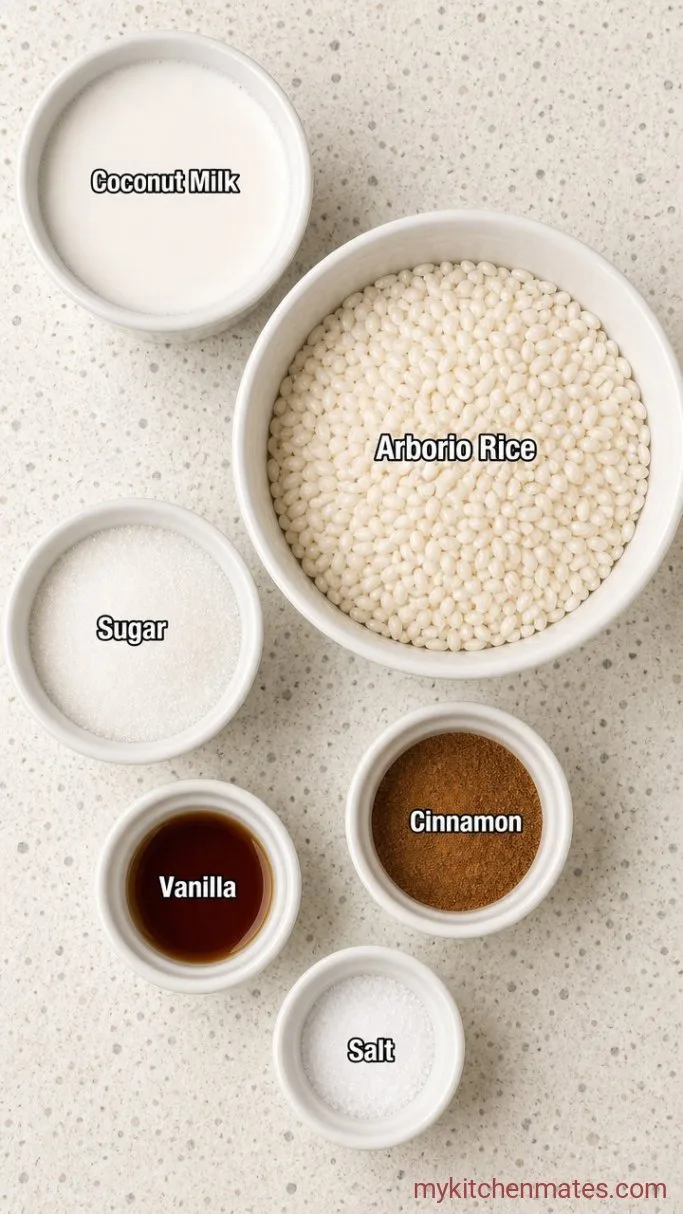
- 1 cup short-grain white rice (arborio or sushi rice): rinsing removes extra surface starch so the pudding does not turn gummy.
- 2 (13.5 oz) cans full-fat coconut milk (about 3 1/2 cups): use the full-fat kind, not light, for a creamy finish.
- 1/2 cup granulated sugar: cane sugar dissolves cleanly. You can swap in coconut sugar or maple syrup if you like a deeper taste, see variations.
- 1 tsp vanilla extract: adds warmth at the end so the flavor stays bright.
- 1/2 tsp ground cinnamon: plus more for dusting at the end.
- 1/4 tsp fine sea salt: just enough to round out the sweetness.
Variations / Substitutions
- Maple syrup instead of sugar: use 1/3 cup maple syrup. The pudding will be a shade darker and have a gentle caramel note.
- Coconut sugar for a toasted flavor: same amount as granulated. The final color will be a little tan and the taste leans toward brown sugar.
- Cardamom instead of cinnamon: swap in 1/4 tsp ground cardamom for a floral, citrusy note. A little splash of rose water at the end also works well.
- Nut-free option: replace coconut milk with oat milk and add 2 tbsp of refined coconut oil for richness. The texture will be thinner but still pleasant.
- Less sweet version: drop the sugar to 1/4 cup. The pudding will taste more like breakfast than dessert. If you like ginger rice pudding, you can stir in a teaspoon of grated fresh ginger with the cinnamon.
Hearty Vegan Breakfast Burrito goes perfectly with this rice pudding for an easy brunch spread.
How to Make Vegan Rice Pudding
Step 1: Rinse the Rice
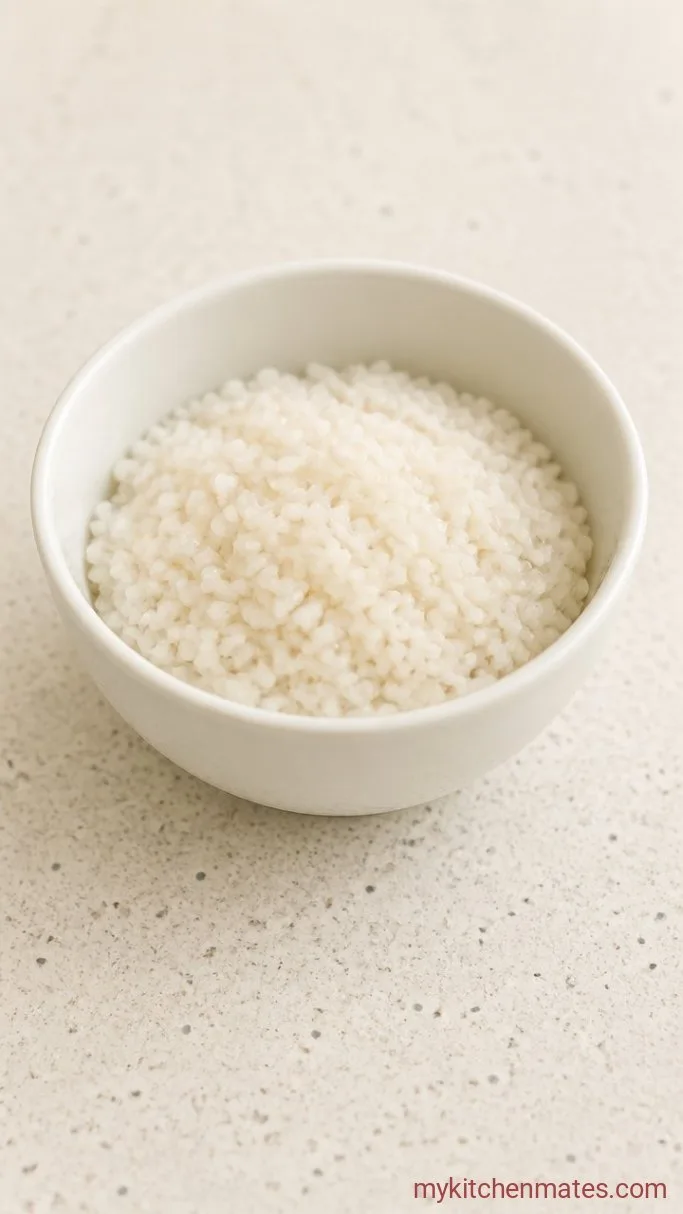
Put the 1 cup of rice in a fine-mesh strainer and rinse under cold running water for about 2 minutes, or until the water runs mostly clear. Give the strainer a few shakes to get rid of the extra water.
The rinsing step matters here because it washes away loose starch that can make the pudding gluey instead of creamy. Skipping it is the most common reason the final texture feels thick and pasty rather than soft.
Step 2: Combine Everything and Bring to a Boil
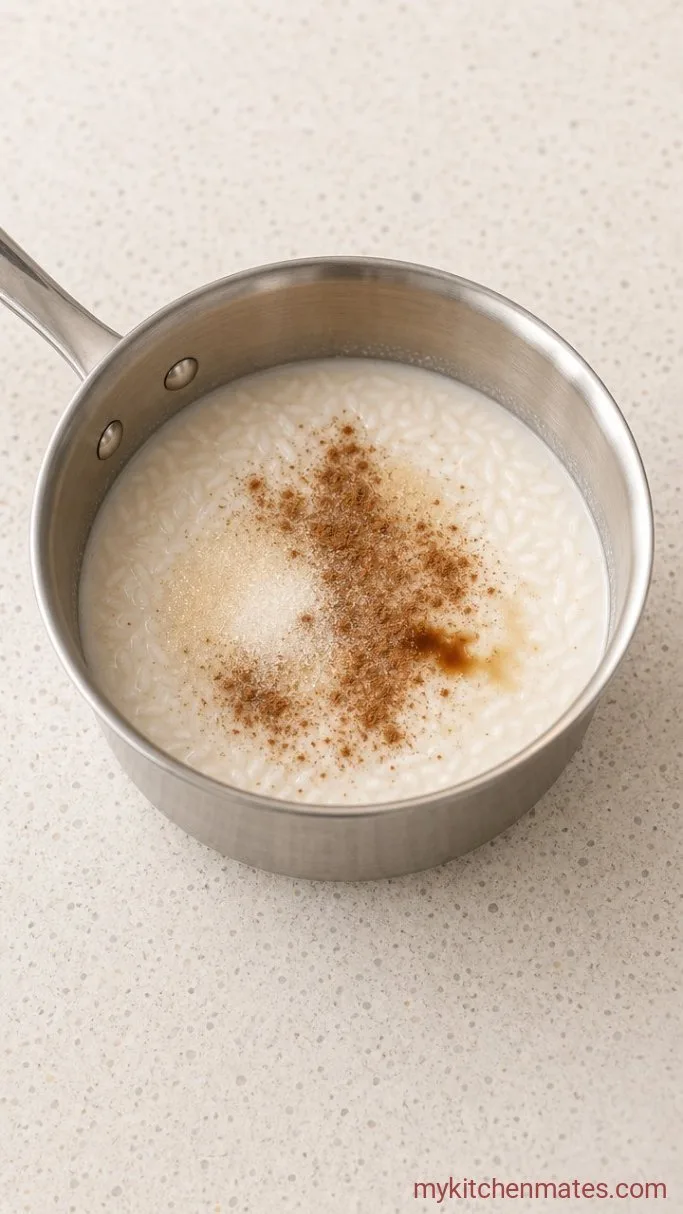
Tip the rinsed rice into a medium saucepan, then pour in both cans of coconut milk, the 1/2 cup sugar, 1/2 tsp cinnamon, and 1/4 tsp salt. Stir once to mix, then set the pan over medium heat.
Cook until the mixture reaches a steady, low boil, which takes about 5 minutes. You will see small bubbles form around the edges first, then the whole surface will gently roll. Stir once or twice so the rice does not settle and stick.
Step 3: Simmer the Pudding
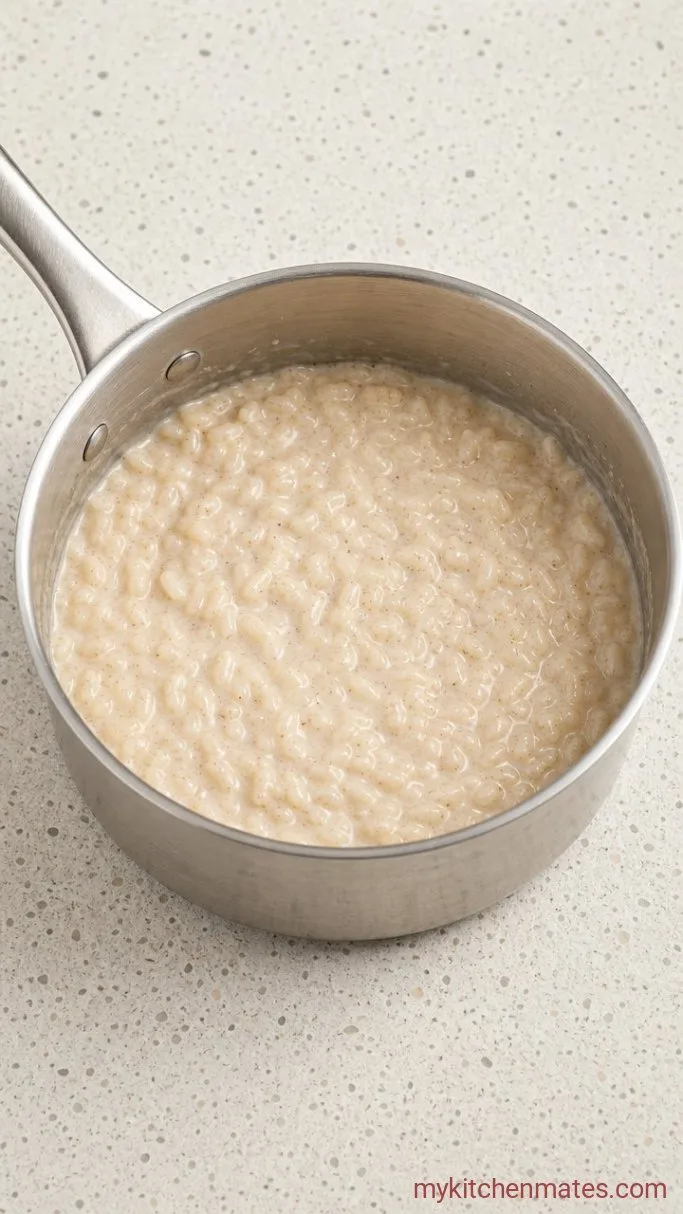
Once it is boiling, turn the heat down to low. The liquid should stay at a quiet simmer, not a hard bubble. Cover the pan, leaving the lid slightly ajar so a little steam can escape.
Let the rice cook for 20 to 25 minutes, stirring every 5 minutes with a wooden spoon. You are looking for the rice to become tender and the mixture to thicken into a loose porridge. When you drag the spoon through, the pudding will slowly fill the path back in. If it looks too thin at the 20-minute mark, keep simmering uncovered for another 3 to 5 minutes. The pudding will continue to set as it cools, so take it off the heat when it is still a little looser than you want it to be at the table.
Step 4: Ladle and Garnish
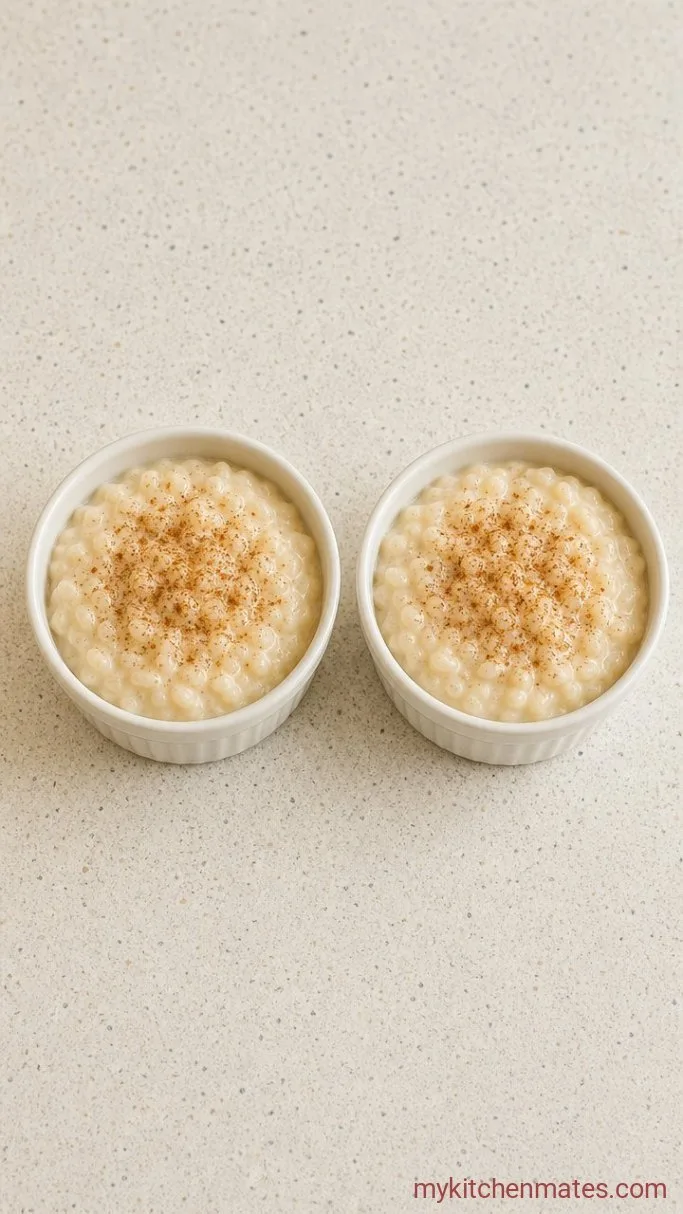
Turn off the heat and stir in the 1 tsp vanilla extract. Taste and add a pinch more salt if the sweetness feels flat. Ladle the pudding into four bowls right away, or let it cool for 10 minutes first. Dust the tops with a little extra cinnamon.
Serve it warm, and the steam will carry the vanilla and coconut up as you set the bowls down. If you like a little crunch, a small handful of chopped toasted almonds on top is a nice finish.
A Few Notes Before You Start
- Stir, but do not stir too often. Every 5 minutes keeps the rice from sticking, but constant stirring can break the grains and make the pudding mushy.
- The pudding thickens as it sits. If you are making it ahead, take it off the heat when it still looks a little loose. You can always add a splash of oat milk when reheating to loosen it back up.
- Cinnamon can get bitter if it cooks too long, so I add half at the start and dust the rest on top at the end.
- Leftover coconut cream often separates in the can. Before opening, shake each can well or scoop the solid cream out and whisk it into the liquid.
Storing Leftovers
- Refrigerate: Cool the pudding completely, then spoon it into an airtight container. It keeps well in the fridge for up to 4 days. The texture will be thicker when cold.
- Reheating: Warm single portions in a saucepan over low heat with a splash of oat milk or water, stirring gently until loose and hot again, about 3 minutes. A microwave also works in 30-second bursts.
- Serve Cold: You can eat the pudding straight from the fridge. It will be dense and firm, almost like a coconut rice pudding bar. It is good with fresh berries on top.
Frequently Asked Questions
Can I use long-grain rice?
You can, but the texture will be different. Long-grain rice like basmati or jasmine does not release as much starch, so the pudding will be looser and the grains will feel more separate. If that is what you have, cook it the same way but expect a thinner result.
Why did my pudding turn out too thick?
The most common reason is cooking it too long or not leaving it slightly loose before cooling. The starches keep setting as the pudding cools, so pulling it off the heat when it is still a little runny prevents an overly stiff final texture. If it does get too thick, stir in warm coconut milk or oat milk a little at a time.
Can I make this sugar-free?
Yes. You can leave the sugar out entirely and rely on the natural sweetness of the coconut milk. For a zero-calorie option, a few drops of liquid stevia stirred in at the end work well. Start with 3 to 4 drops and taste. The flavour profile changes, but the creaminess stays.
Is this recipe gluten-free?
Yes. Rice, coconut milk, sugar, vanilla, cinnamon, and salt are all naturally gluten-free. Just confirm that your vanilla extract is labelled gluten-free if cross-contamination matters to you.
Vegan Rice Pudding Recipe
Ingredients
Method
- Rinse the rice under cold running water for about 2 minutes until the water runs nearly clear. Drain well.
- In a medium saucepan, combine the rinsed rice, coconut milk, sugar, cinnamon, and salt. Stir once, then place over medium heat. Cook until the mixture comes to a steady low boil, about 5 minutes, stirring once or twice.
- Reduce the heat to low so the liquid is at a gentle simmer. Cover the pan leaving the lid slightly ajar, and cook for 20 to 25 minutes, stirring every 5 minutes. The rice should be tender and the pudding should look like a loose porridge that slowly fills in behind a spoon.
- Turn off the heat and stir in the vanilla extract. Taste and add a pinch more salt if needed. Ladle into bowls, dust with extra cinnamon, and serve warm.
Notes
