
Flaky Vegan Pie Crust (No Dairy, No Shortening)

A good vegan pie crust can be tricky to nail without butter or shortening. This one uses coconut oil to get those flaky layers, and it holds together beautifully when you roll it out.
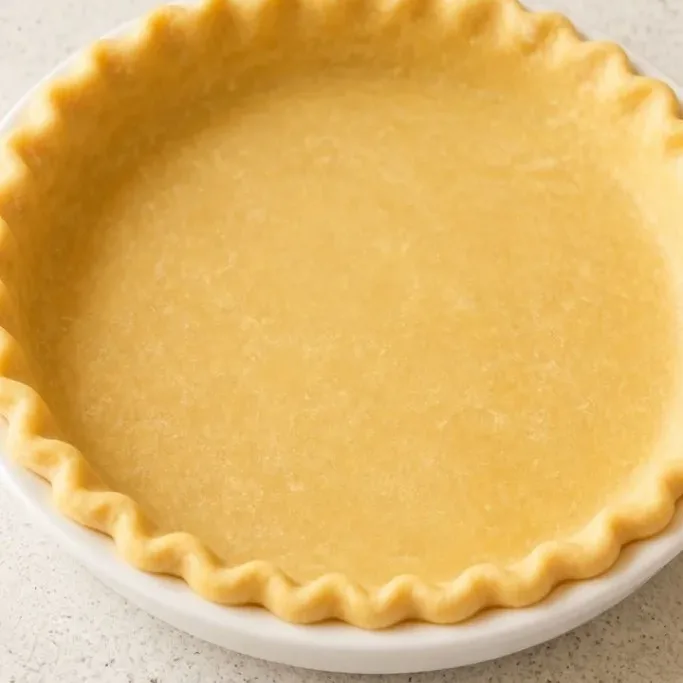
It comes together with a few pantry staples, and the dough is sturdy enough for a heavy fruit pie or a silky custard. Once you get the chill time right, it is hard to mess up.
What Makes This Vegan Pie Crust So Reliable
I have tested a lot of vegan doughs, and this is the one I keep coming back to. The coconut oil stays solid when chilled, so in the hot oven it creates steam that lifts the dough into crisp, flaky layers just like butter would.
The texture is tender and never greasy. It rolls out with minimal cracking because the gluten is developed just enough, not so much that the crust turns tough.
The flavor is neutral, so you only need one recipe for both sweet fruit pies and savory galettes. A little sugar and salt round it out without making it taste noticeably sweet.
Ingredients
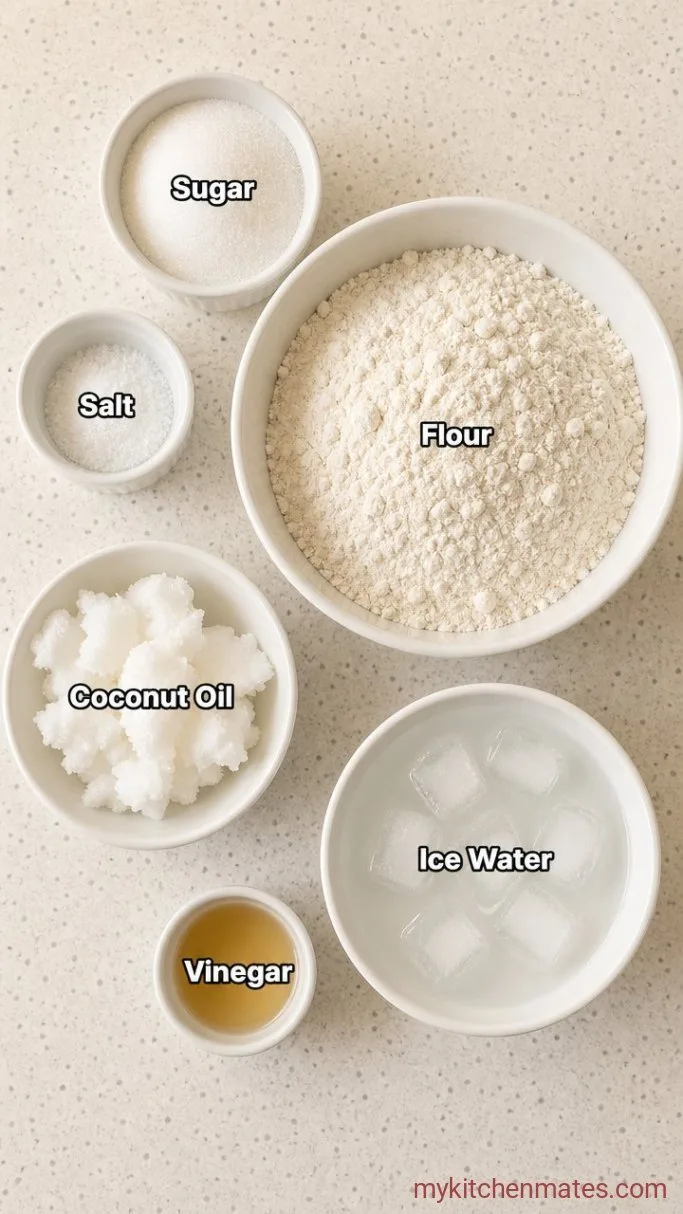
- 1 ½ cups all-purpose flour: spooned and leveled for accuracy
- 1 tbsp granulated sugar: helps with browning, skip for savory pies
- ½ tsp salt
- ½ cup solid coconut oil, chilled: must be firm, not liquid
- 4 to 6 tbsp ice water: add slowly until the dough just holds together
- 1 tsp apple cider vinegar: optional, keeps the pastry tender
Substitutions
- Whole wheat flour: swap up to half the all-purpose for a nuttier flavor, though the crust will be a little less flaky.
- Coconut sugar: use in place of granulated sugar for a deeper caramel note in sweet pies.
- Vegan butter: you can use cold vegan butter sticks instead of coconut oil, same amount.
- Gluten-free flour blend: a 1:1 all-purpose gluten-free blend works, but the dough is more fragile so handle it gently.
Vegan Peach Cobbler is another reader favorite dessert worth making next.
How to Make Vegan Pie Crust
Step 1: Mix the Dry Ingredients and Cut in the Coconut Oil
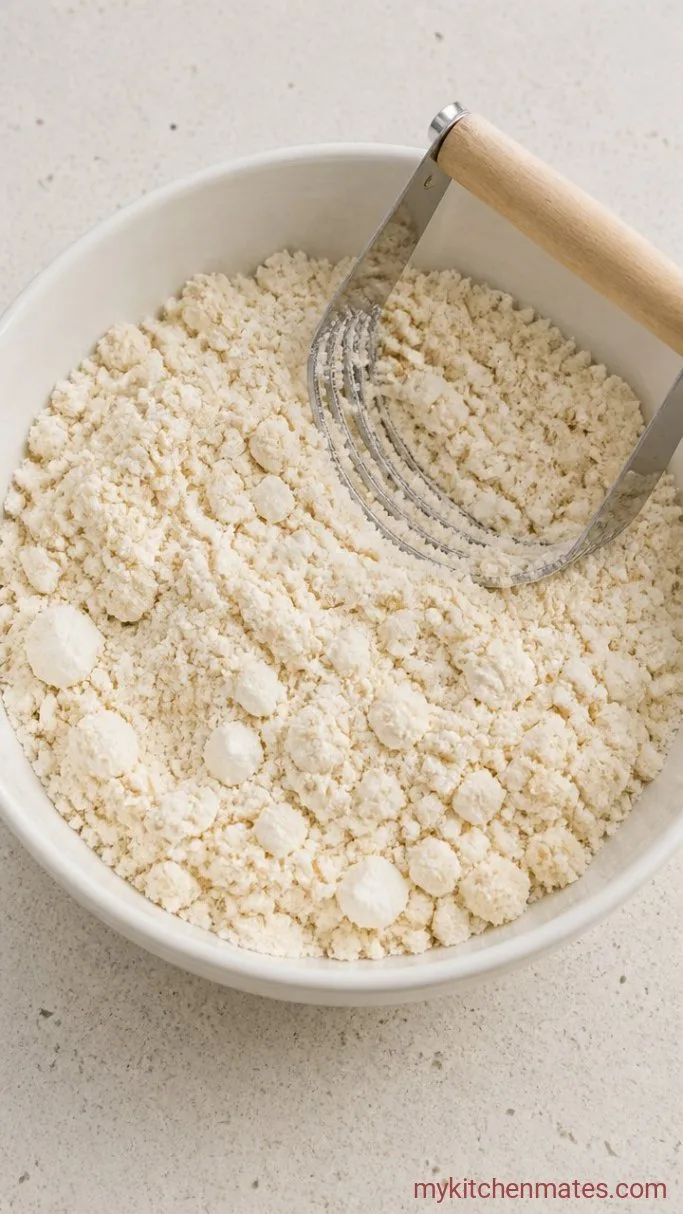
In a large bowl, whisk together the 1 ½ cups flour, 1 tbsp sugar, and ½ tsp salt. Add the ½ cup chilled solid coconut oil. Use a pastry cutter or your fingertips to work the oil into the flour until the mixture looks like coarse sand with some pea-sized pieces left.
You want to keep the oil cold the whole time. In a warm kitchen, pop the bowl in the fridge for 10 minutes if the oil starts to feel greasy. Those visible bits of solid coconut oil are what will puff into layers later.
Step 2: Add the Ice Water and Form the Dough
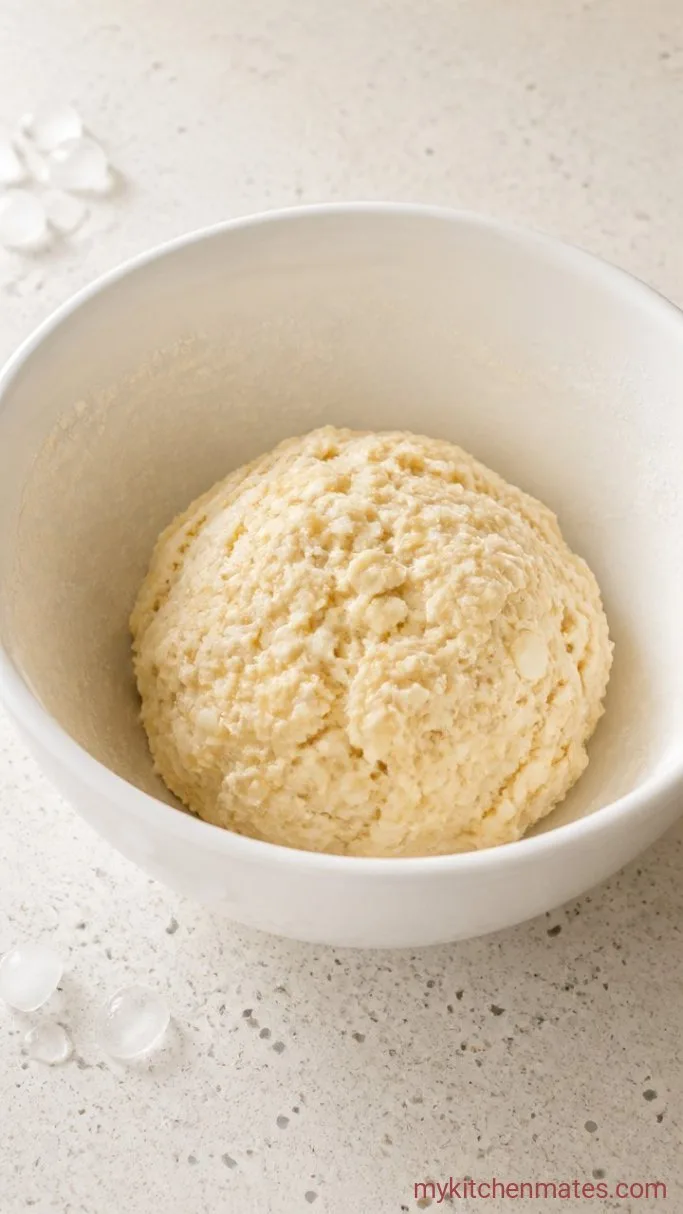
Drizzle in 4 tbsp of the ice water and the optional 1 tsp apple cider vinegar. Toss the mixture with a fork until it begins to clump. If it still looks dry, add more water 1 tbsp at a time. Press the dough together with your hands; it should hold its shape without being sticky, about 2 minutes of handling.
The dough will look a bit shaggy, but it should not crack apart when you squeeze it. Overworking it makes the crust tough, so stop as soon as it comes together.
Step 3: Chill the Dough
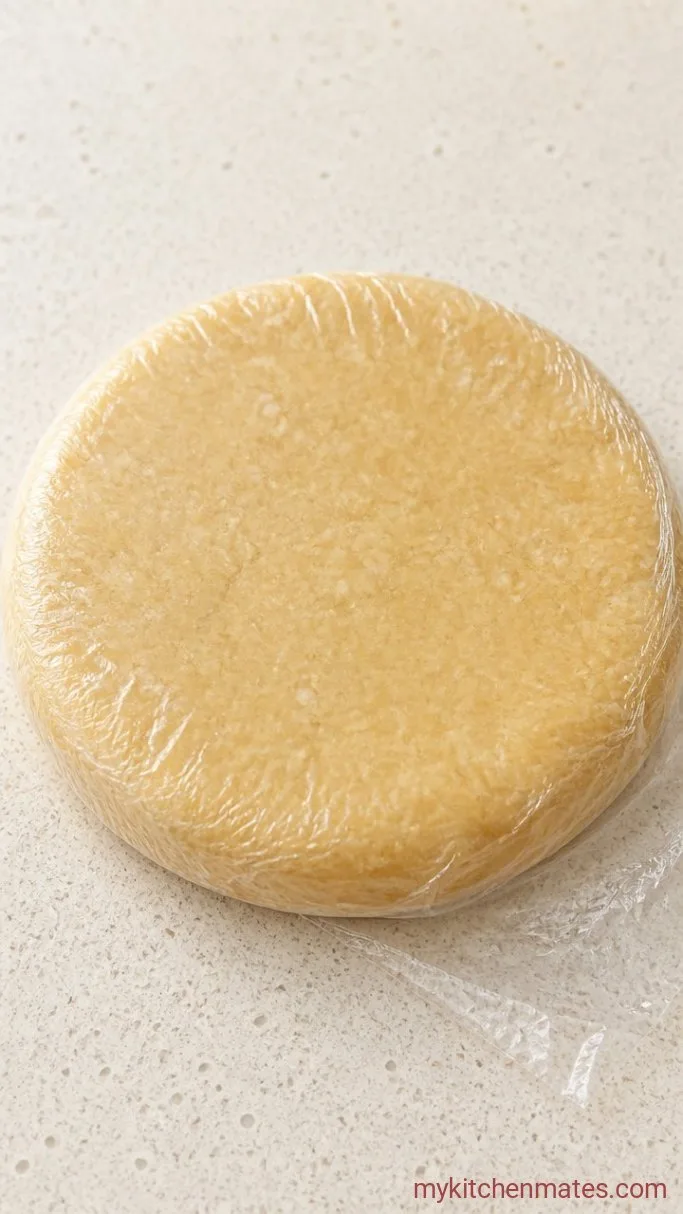
Flatten the dough into a disc about 1 inch thick and wrap it tightly in plastic wrap. Refrigerate for at least 30 minutes, and up to 2 days. Chilling rests the gluten and firms up the coconut oil, which makes the dough far easier to roll out later.
You can also freeze the wrapped disc for up to 3 months. Just move it to the fridge the night before you plan to use it.
Step 4: Roll Out the Crust
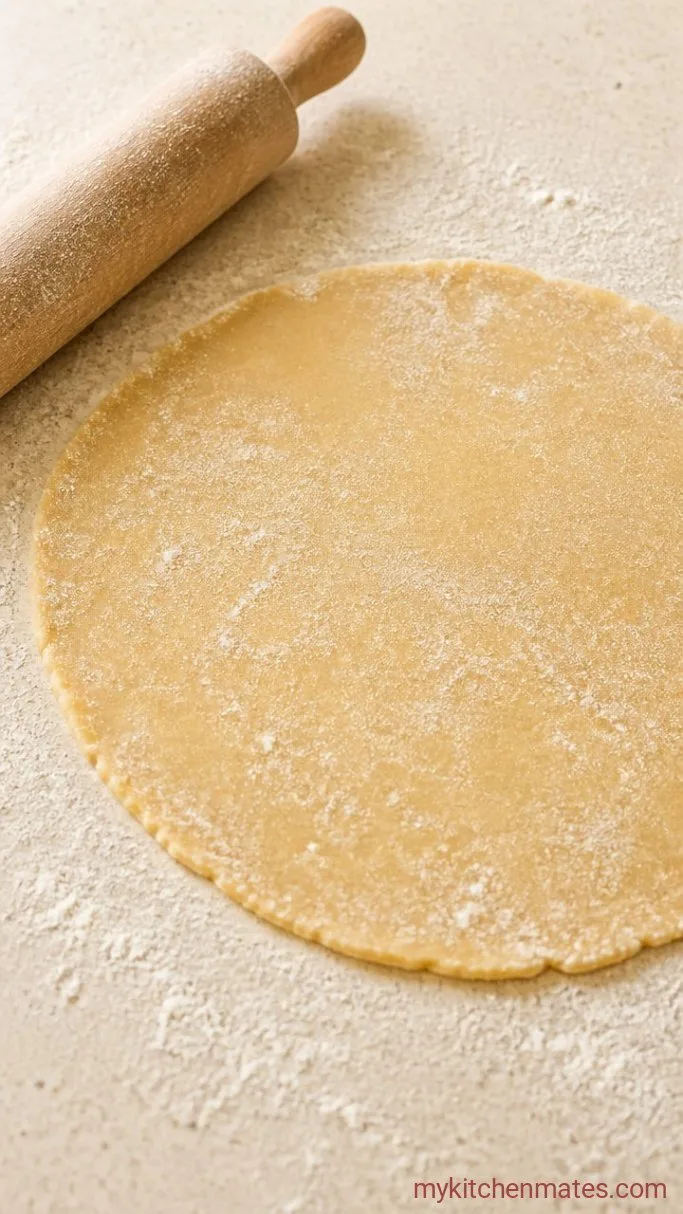
Place the chilled dough on a lightly floured surface and let it sit for 5 to 10 minutes if it feels rock hard. Roll it from the center outward, turning the dough often and dusting with flour as needed, until you have a circle about 12 inches across and ⅛ inch thick.
Keep your rolling pin and the counter lightly floured. If the edges crack, just pinch them back together and keep rolling.
Step 5: Fit and Trim the Crust
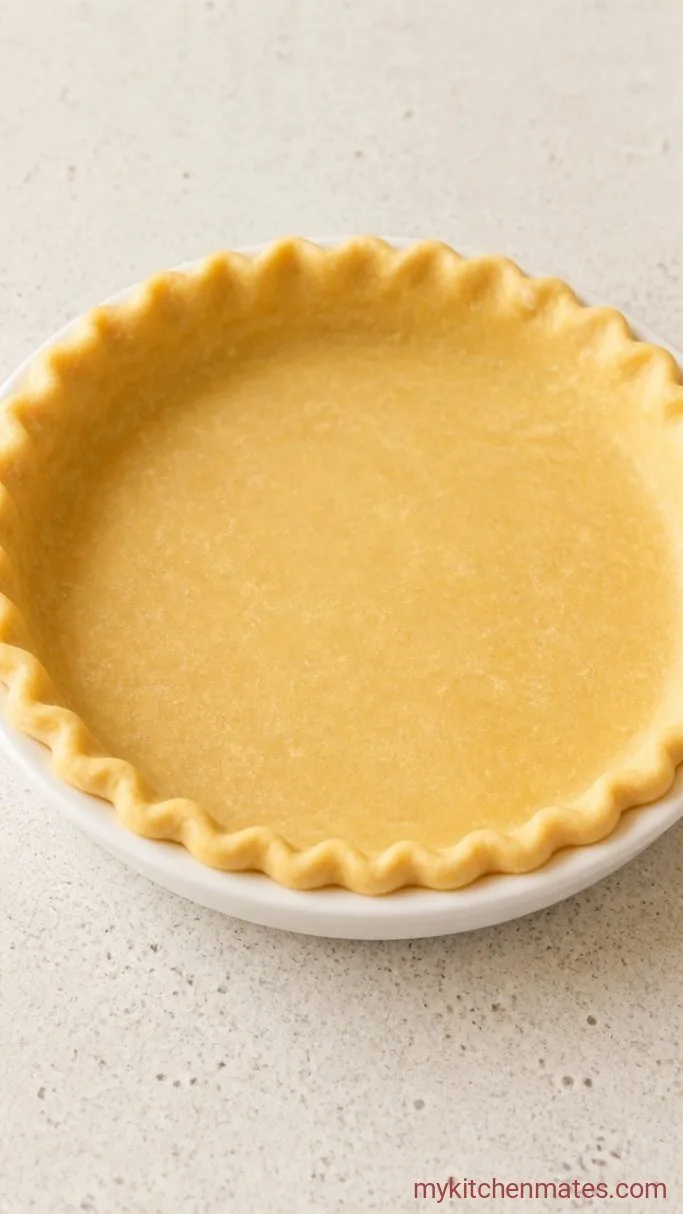
Gently fold the dough in half, then in half again, and lift it into a 9-inch pie plate. Unfold and press it into the bottom and up the sides without stretching. Trim the overhang to roughly ½ inch, fold it under itself, and crimp the edges with your fingers or a fork. Your homemade crust is ready to fill and bake according to your pie recipe.
Tips for a Flaky Crust
- A kitchen scale takes the guesswork out of flour measurement. 1 ½ cups of all-purpose flour weighs about 190 grams.
- Vinegar relaxes the gluten a little, so the dough rolls with less cracking. It is optional, but I never skip it.
- If you have a food processor, you can pulse the flour and coconut oil in seconds. Add the water slowly with the motor running, but stop as soon as a dough starts to form.
- For a crisp bottom crust, preheat a baking sheet on a lower oven rack and set your pie pan right on it before baking.
Keeping the Dough Fresh
- Refrigerate: The wrapped disc keeps in the fridge for up to 2 days. Let it sit at room temperature for 10 minutes before rolling if it feels too firm.
- Freeze: Tightly wrapped dough freezes well for up to 3 months. Thaw overnight in the fridge.
- Baked crust: A fully baked shell can be stored at room temperature, wrapped airtight, for 2 days.
What Goes Well With Vegan Pie Crust
This crust is neutral enough for both sweet and savory fillings. In the fall, try it with a spiced apple or pear filling. A silky pumpkin custard or a juicy mixed berry filling in summer sits well in these flaky layers. On the savory side, it holds up to a rich mushroom and leek galette or a hearty vegan pot pie.
Frequently Asked Questions
Can I blind bake this crust for a fully baked shell?
Yes. Prick the bottom with a fork, line with parchment, and fill with pie weights or dried beans. Bake at 375°F (190°C) for 20 minutes. Remove the weights, then bake 10 more minutes until the surface is dry and lightly golden.
What if I do not have apple cider vinegar?
Leave it out. The crust will still be flaky, but the dough may crack a little more as you roll it. A splash of vodka works the same way if you have it.
Can I use this dough for tarts or galettes?
Absolutely. For a tart, press the dough into a fluted tart pan instead of rolling it out full size. For a galette, roll into a rough 14-inch circle, pile the filling in the center, and fold the edges over.
My crust puffed up too much while blind baking. What went wrong?
You likely forgot to prick the bottom. Those steam vents are essential. Next time, poke the surface all over with a fork before baking.
Vegan Pie Crust Recipe
Ingredients
Method
- Whisk flour, sugar, and salt in a large bowl. Add coconut oil and cut in with a pastry cutter until the mixture looks like coarse sand with pea-sized bits remaining.
- Drizzle in 4 tbsp ice water and vinegar. Toss with a fork until clumps form, adding more water 1 tbsp at a time if needed. Press together into a dough.
- Flatten into a disc, wrap tightly, and refrigerate at least 30 minutes.
- On a floured surface, roll the dough into a 12-inch circle, ⅛ inch thick, turning and dusting as needed.
- Fold the dough, transfer to a 9-inch pie plate, and press into place. Trim overhang to ½ inch, fold under, and crimp. Use as directed in your pie recipe.
Notes
