
Rich Vanilla Bundt Cake with Vanilla Bean Glaze

This rich vanilla bundt cake is the kind of dessert I pull out when I want something that feels special but doesn’t need fussy layers or fancy decorating. The crumb stays tender for days, thanks to a mix of buttermilk and sour cream, and a glossy vanilla bean glaze drips down every ridge.
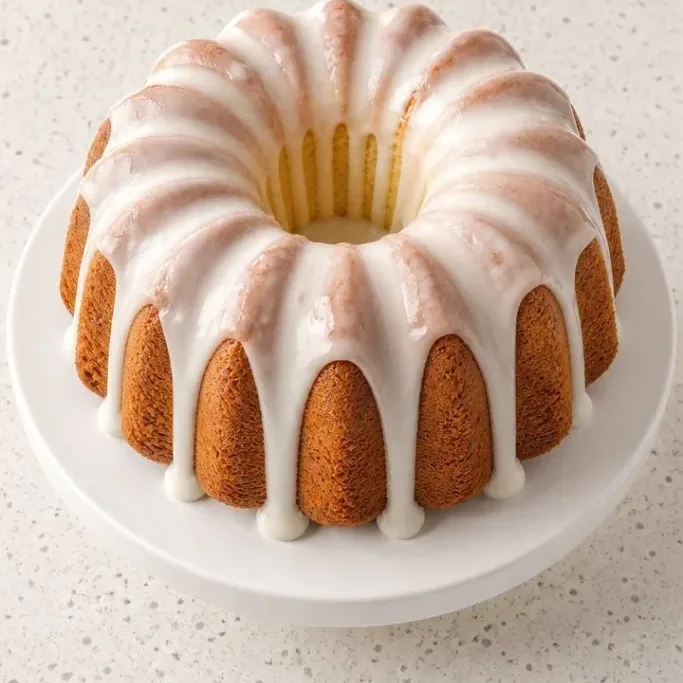
It’s a straightforward cake that bakes up golden and smells like a bakery. If you’re looking for a reliable cake that looks impressive on the stand, this is it.
Why This Vanilla Bundt Cake Works
Double vanilla is the secret here. I use a generous tablespoon of real vanilla extract in the batter and a vanilla bean paste in the glaze so the floral, buttery notes come through in every bite. No artificial flavors, just pure, warm vanilla.
The crumb is tight but moist, not dry or crumbly, and the cake releases from the pan beautifully if you butter and flour it well. It tastes even better the next day after the flavors settle.
Ingredients
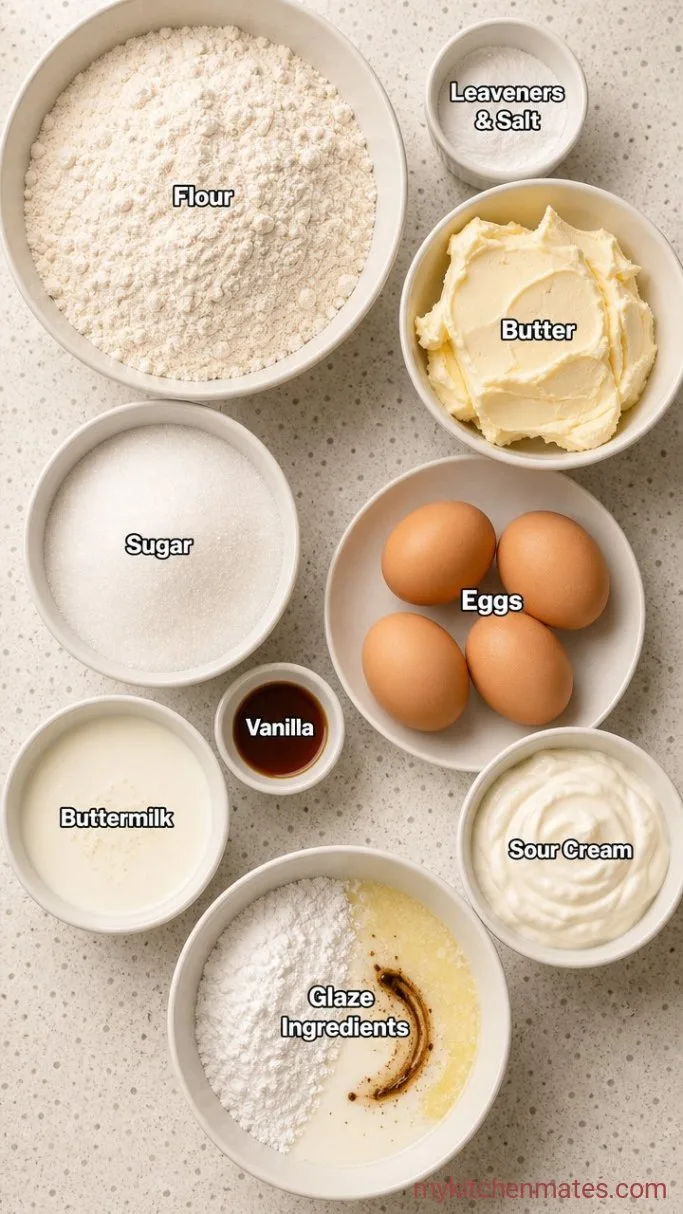
For the cake:
- 3 cups all-purpose flour: spooned and leveled, not scooped
- 1 tsp baking powder
- 1/2 tsp baking soda
- 1 tsp fine sea salt
- 1 cup unsalted butter, softened: leave at room temperature for an hour
- 2 cups granulated sugar
- 4 large eggs, at room temperature
- 1 tbsp pure vanilla extract
- 1 cup buttermilk, at room temperature
- 1/2 cup full-fat sour cream, at room temperature
For the glaze:
- 1 1/2 cups powdered sugar, sifted
- 2 to 3 tbsp whole milk
- 1 tbsp unsalted butter, melted
- 1 tsp vanilla bean paste or vanilla extract
Variations / Substitutions
- Swap the buttermilk: If you don’t have buttermilk, mix 1 cup whole milk with 1 tbsp lemon juice or white vinegar and let it sit 5 minutes. It will thicken and work just as well.
- Change the vanilla: For a more pronounced vanilla flavor, use vanilla bean paste in the cake batter instead of extract. If you have a vanilla bean, scrape the seeds into the sugar and rub them together before creaming.
- Make it citrusy: Add 2 tbsp fresh lemon zest to the sugar before creaming for a lemon-vanilla bundt cake. Swap the vanilla glaze for a lemon juice and powdered sugar drizzle.
- Try a cream cheese glaze: Beat 2 oz softened cream cheese with 1 cup powdered sugar, a splash of milk, and vanilla for a tangier finish.
- Gluten-free: Use a 1-to-1 gluten-free all-purpose flour blend that contains xanthan gum; the cake will still be moist.
Moist Mini Vanilla Cake is next on our list if this cake is your kind of dessert.
How to Make Rich Vanilla Bundt Cake
Step 1: Cream the Butter and Sugar

Preheat the oven to 350°F (175°C). Generously butter a 10- or 12-cup bundt pan, then dust with flour and tap out the excess. In a stand mixer with the paddle attachment, beat the 1 cup softened butter and 2 cups sugar on medium speed until light and fluffy, about 3 to 4 minutes. Stop to scrape down the bowl once or twice.
The mixture should look pale and feel airy when you rub a bit between your fingers. This step builds the cake’s structure, so don’t rush it.
Step 2: Beat in the Eggs and Vanilla

With the mixer on low, add the 4 large eggs one at a time, beating well for about 20 seconds after each addition and scraping the bowl as needed. Then mix in 1 tbsp vanilla extract.
The batter may look slightly curdled after adding eggs; that’s normal. The buttermilk and sour cream will smooth it out soon.
Step 3: Alternate the Dry and Wet Ingredients

In a separate bowl, whisk together the 3 cups flour, 1 tsp baking powder, 1/2 tsp baking soda, and 1 tsp salt. With the mixer on its lowest speed, add the flour mixture in three additions, alternating with the 1 cup buttermilk and 1/2 cup sour cream, beginning and ending with the flour. Mix just until no dry streaks remain, about 1 minute on low.
The batter should be thick, pale, and smooth. Use a spatula to give the bowl one final fold to catch any flour at the bottom.
Step 4: Bake the Bundt Cake

Scrape the batter into the prepared bundt pan and smooth the top with a spatula. Bake on the middle rack for 50 to 55 minutes, until a toothpick inserted in the center comes out with a few moist crumbs attached. The internal temperature should read 200°F to 205°F (93°C to 96°C) on an instant-read thermometer.
Let the cake cool in the pan on a wire rack for 10 minutes. It will pull away from the sides slightly. Then invert the pan onto the rack and lift it off gently. The cake should release cleanly; if it sticks a bit, tap the pan firmly on the counter.
Step 5: Drizzle and Serve

While the cake cools, whisk the 1 1/2 cups sifted powdered sugar, 2 tbsp milk, 1 tbsp melted butter, and 1 tsp vanilla bean paste in a small bowl until smooth. If the glaze is too thick, add another teaspoon of milk at a time until it falls in a thick ribbon from the whisk.
Once the cake is completely cool (otherwise the glaze will melt off), set the cake on a serving plate. Pour the glaze over the top, letting it drip unevenly down the sides. Let it set for about 10 minutes, then slice and serve with that glossy, crackly finish.
A Few Notes Before You Start
- Bring all cold ingredients (butter, eggs, buttermilk, sour cream) to room temperature. This helps the batter emulsify evenly and prevents the cake from turning out dense. If you forget, place eggs in a bowl of warm water for 10 minutes and microwave the buttermilk briefly in 5-second bursts.
- When measuring flour, spoon it into the measuring cup and level it off. Scooping directly from the bag can pack in extra flour and dry out the cake.
- If your bundt pan is dark metal, start checking for doneness 5 minutes early, as the cake may brown and bake faster than a light-colored pan.
Bake times adjust slightly by pan size:
| Pan Size | Bake Time |
|---|---|
| 10-cup bundt pan | 55 to 60 minutes |
| 12-cup bundt pan | 50 to 55 minutes |
Keeping the Cake Fresh
- Refrigerate: Store the cooled cake under a cake dome or wrapped loosely in plastic at room temperature for up to 3 days. Refrigerate for up to 5 days, but bring slices to room temperature before serving for the best texture.
- Reheating: A 10-second zap in the microwave revives that just-baked softness, especially for leftover slices.
What to Serve With This Bundt Cake
A slice alongside a strong French press coffee makes a perfect afternoon break; the coffee’s bitterness cuts the glaze’s sweetness. For a holiday table, set out bowls of fresh berries and lightly sweetened whipped cream so guests can top their own. Or lean into indulgence and place a scoop of vanilla bean ice cream right next to a warm slice.
Frequently Asked Questions
Can I make this cake without a bundt pan?
Yes. Pour the batter into two greased 8×4-inch loaf pans and bake at the same temperature for 45 to 50 minutes, or until a toothpick comes out clean.
My buttermilk has separated. Is it still safe to use?
Yes, separation is normal. Shake the carton well before using, and it will work fine. If it smells off or has gone lumpy beyond the usual tang, discard it.
Can I freeze this bundt cake?
Absolutely. Wrap the completely cooled, unglazed cake tightly in plastic wrap and then foil. Freeze for up to 2 months. Thaw overnight at room temperature and glaze before serving.
Why did my glaze turn out too thin?
Add more powdered sugar, a tablespoon at a time, until it thickens to a slow-dripping consistency. If it’s too thick, thin it with a tiny splash of milk.
Rich Vanilla Bundt Cake with Vanilla Bean Glaze Recipe
Ingredients
Method
- Preheat oven to 350°F (175°C). Butter and flour a 10- or 12-cup bundt pan. Beat butter and sugar until light and fluffy.
- Add eggs one at a time, beating 20 seconds after each, then mix in vanilla.
- Alternately add dry ingredients and buttermilk+sour cream, mixing just until combined.
- Bake 50 to 55 minutes, cool in pan 10 minutes, then invert onto a rack to cool completely.
- Whisk powdered sugar, milk, melted butter, and vanilla paste into a thick glaze. Drizzle over the fully cooled cake, let set, and serve.
Notes
