
Spicy, Saucy Thai Drunken Noodles (Pad Kee Mao)

Pad Kee Mao, or Thai drunken noodles, is a fiery stir-fry of wide rice noodles, fresh basil, and a bold sauce that comes together faster than any delivery driver.
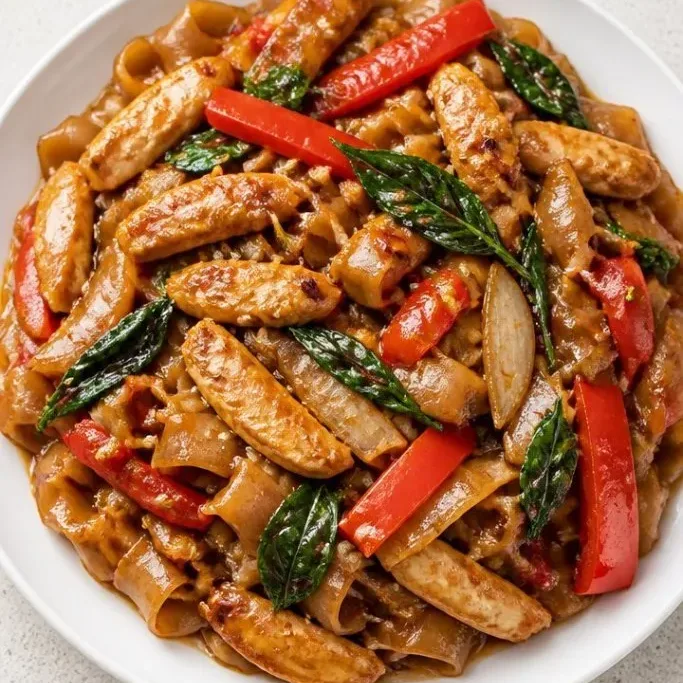
Despite the name, there is no alcohol involved. Just enough heat to make you reach for a cold drink. This is a weeknight staple that hits salty, spicy, and a little sweet in every bite.
Why This Drunken Noodles Recipe Works
I have made this dish more times than I can count, and it is the sauce that keeps me coming back. The dark soy and oyster sauce give it a deep, almost caramelized richness that balances the chili heat. The wide rice noodles soak up every bit of it, and the holy basil leaves add that unmistakable peppery, anise-like hit you cannot get from regular basil.
This version stays quick without cutting corners. You do not need a wok, a large skillet works, and the whole thing comes together in the time it takes to boil water. The key is getting your pan screaming hot so the noodles char a little at the edges, just like from a street cart.
Ingredients
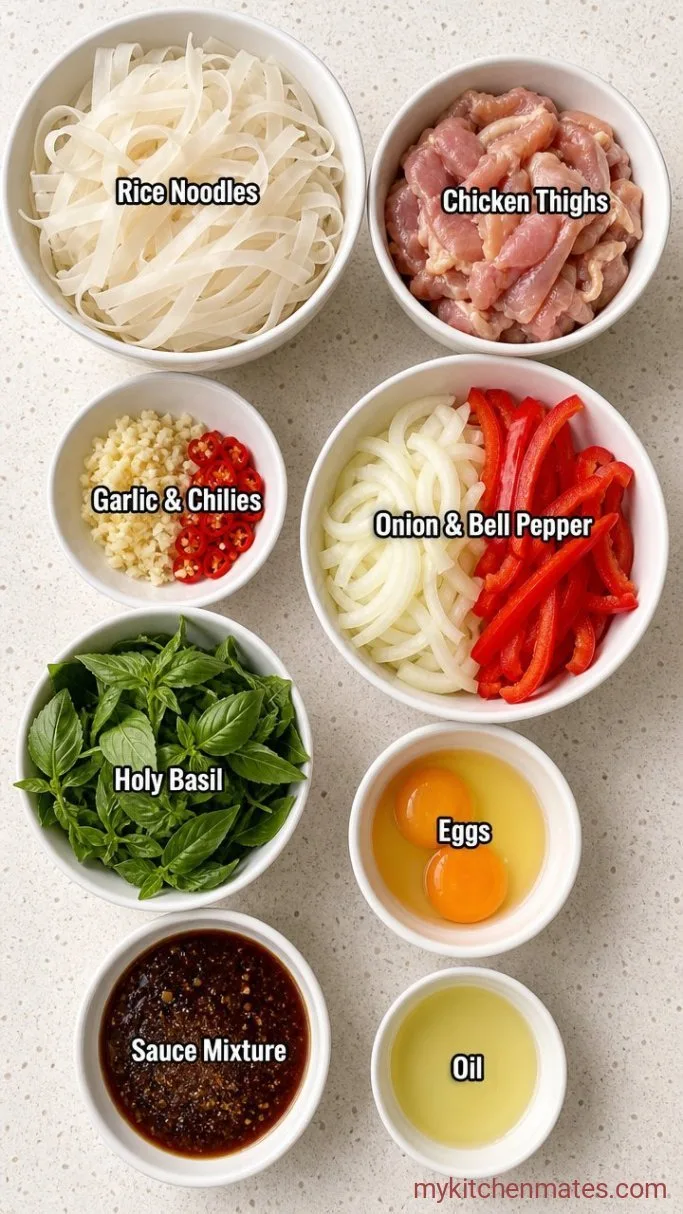
- 8 oz wide rice noodles: the extra-wide dried variety, often labeled for pad see ew or stir-fry
- 8 oz boneless, skinless chicken thighs: sliced thinly against the grain
- 2 tbsp vegetable oil: any neutral oil with a high smoke point
- 3 cloves garlic: minced
- 2 to 4 red Thai chilies: thinly sliced, adjust to your heat tolerance
- 1 small yellow onion: sliced into thin wedges
- 1 red bell pepper: sliced into thin strips
- 1 cup fresh holy basil leaves: loosely packed, Thai basil works in a pinch
- 2 large eggs: lightly beaten
For the sauce
- 2 tbsp oyster sauce
- 1 tbsp dark soy sauce
- 1 tbsp light soy sauce
- 1 tbsp fish sauce
- 2 tsp sugar
- ¼ tsp ground white pepper
Variations and Substitutions
- Chicken: Swap in beef flank steak, or peeled shrimp. Cook times may vary, shrimp needs barely a minute per side.
- Make it vegetarian: Use extra-firm tofu pressed and cubed, and replace oyster sauce with a vegetarian stir-fry sauce. Omit fish sauce and use a little extra light soy with a pinch of salt.
- No holy basil: Thai basil is sweeter and less peppery but still brightens the dish. Avoid Italian basil, it wilts too fast and tastes completely different.
- Gluten-free: Check that your soy sauces and oyster sauce are labeled gluten-free, or use tamari instead.
- Adjust the heat: Dial the chilies down to one, or swap in a spoonful of sambal oelek for a mellower chili flavor that still brings warmth.
Thai Noodle Salad goes great with these noodles when you want something fresh on the side.
How to Make Thai Drunken Noodles
Step 1: Soak the Noodles and Mix the Sauce
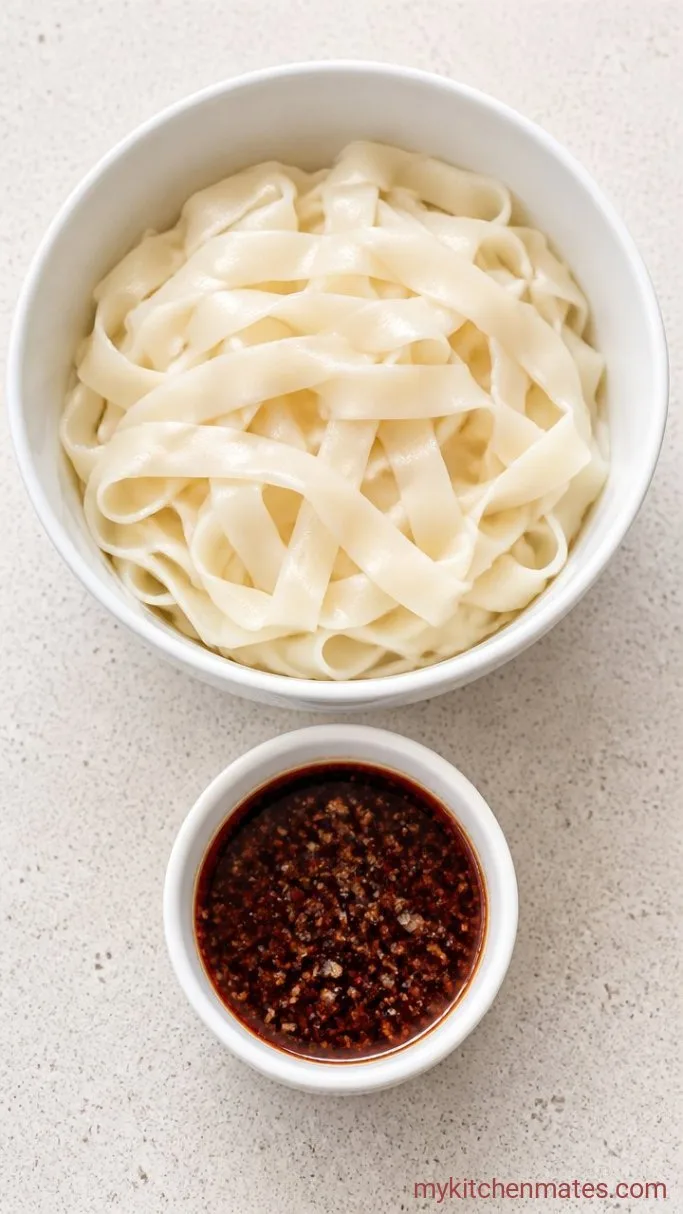
Place the 8 oz dried rice noodles in a large bowl and cover them with hot water. Soak for about 20 minutes, until they are pliable but still a little firm at the center. Give them a stir halfway through so they do not stick together. Drain well and set aside.
Whisk the 2 tbsp oyster sauce, 1 tbsp dark soy, 1 tbsp light soy, 1 tbsp fish sauce, 2 tsp sugar, and ¼ tsp white pepper together in a small bowl. This sauce is the motor of the dish, salty and deeply savory. Set it next to the stove so it is ready when the pan is hot.
Step 2: Sear the Chicken
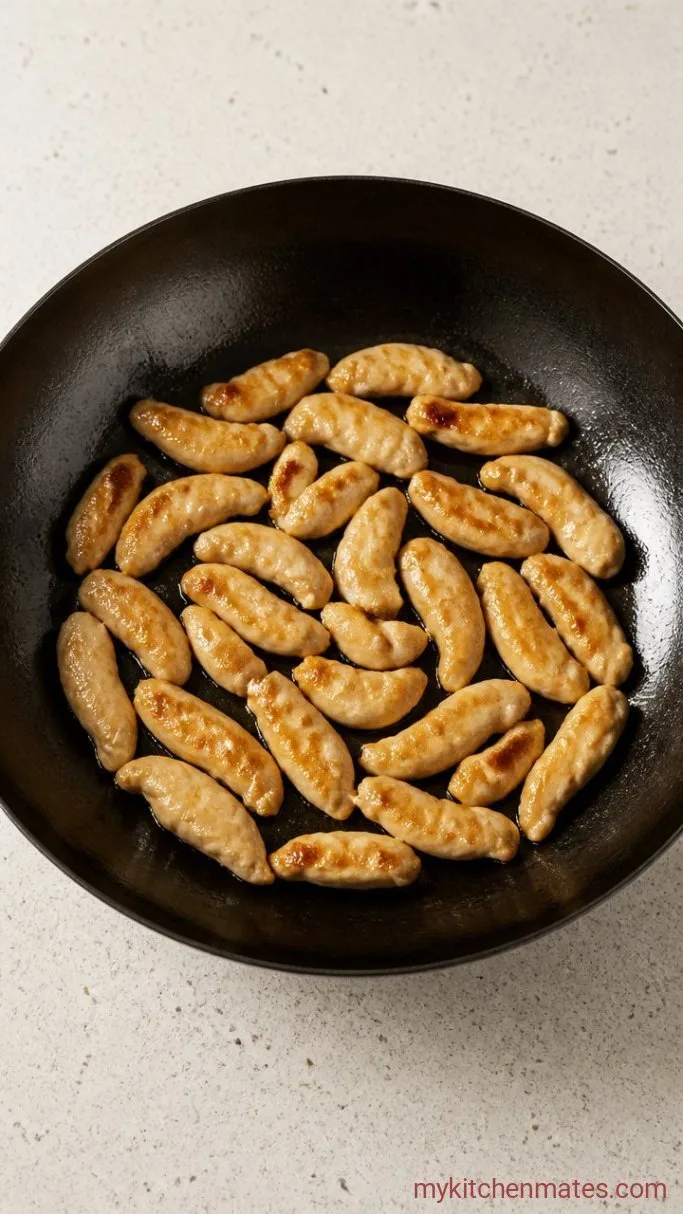
Heat 1 tbsp of oil in a large skillet or wok over high heat until it shimmers. Add the sliced chicken thighs in a single layer and let them sear undisturbed for about 2 minutes, until the edges turn golden. Flip and cook another 2 to 3 minutes, until the chicken is no longer pink inside.
You should hear a loud sizzle the whole time. If the pan is crowded, cook the chicken in two batches so it browns instead of steaming. Transfer the cooked chicken to a plate and keep it nearby.
Step 3: Sauté the Aromatics and Peppers
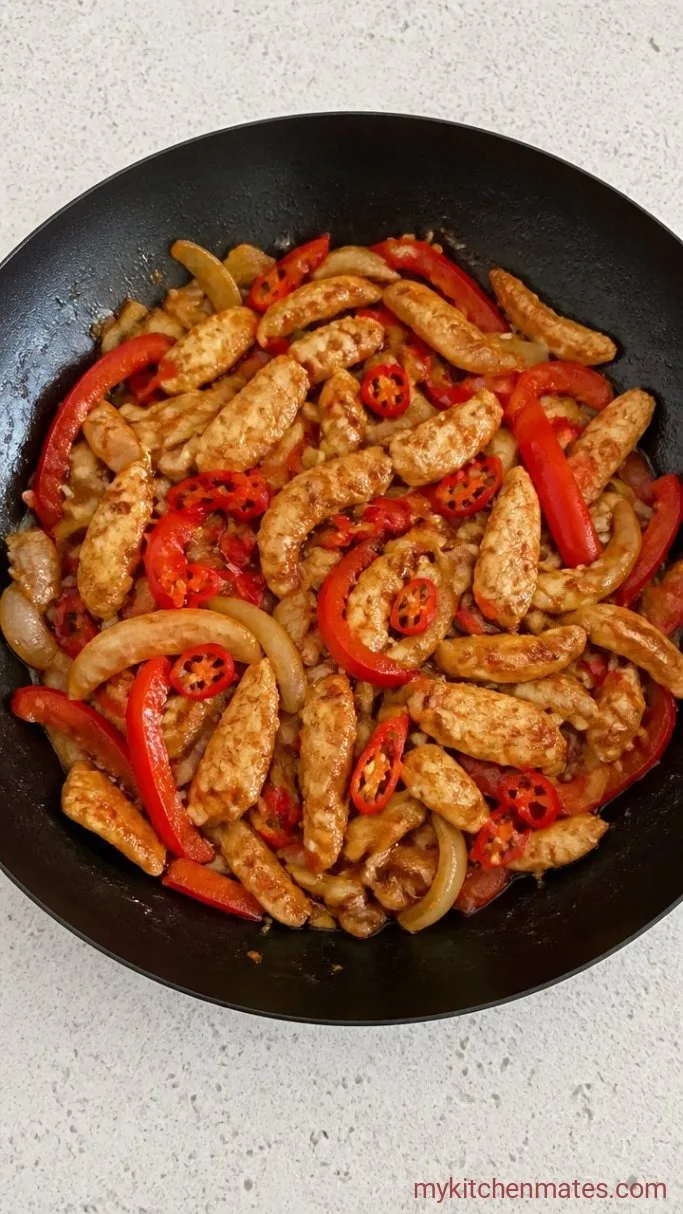
Add the remaining 1 tbsp oil to the same pan, still over high heat. Toss in the minced garlic and sliced Thai chilies and stir for about 30 seconds, just until fragrant. Throw in the onion wedges and bell pepper strips and cook for another 1 to 2 minutes, stirring often. The vegetables should soften slightly but still have a little bite.
Push the vegetables to one side of the pan and pour the beaten eggs into the empty space. Scramble them quickly, breaking them into large curds as they set. Once they are just cooked through, mix them into the vegetables.
Step 4: Toss in the Noodles and Sauce
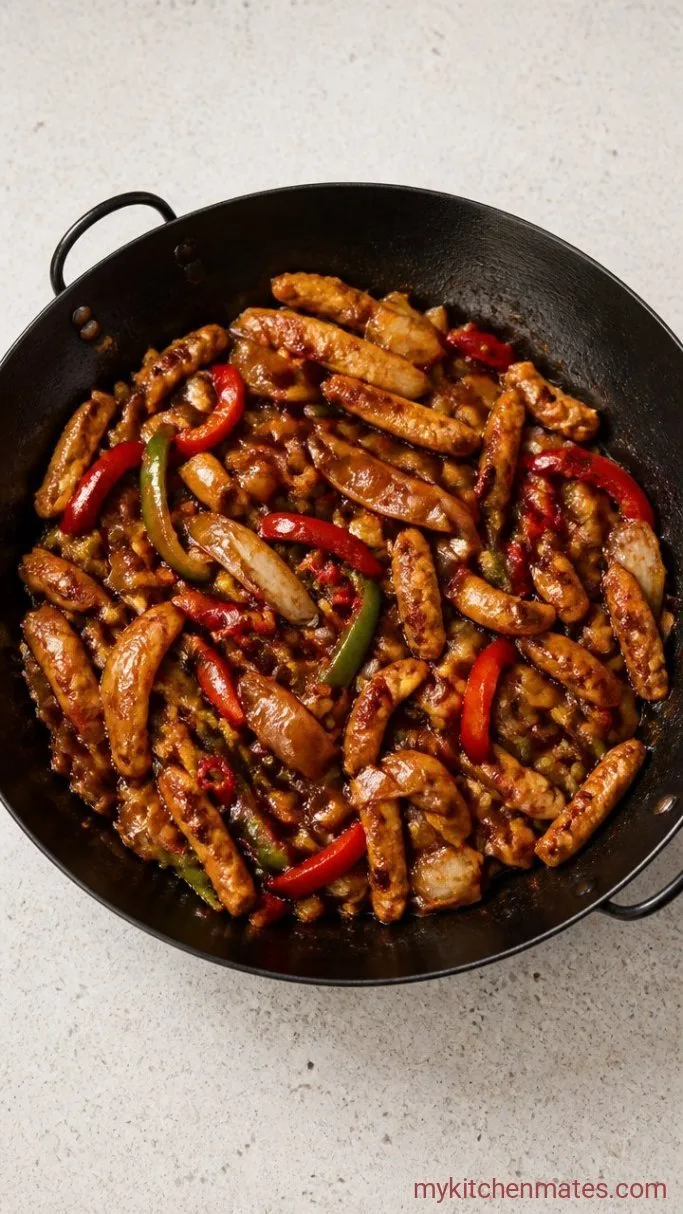
Add the drained noodles and the seared chicken back into the skillet. Pour the sauce over everything. Use tongs or two spatulas to toss and lift the noodles, coating every strand in sauce. Keep the heat high and cook for 1 to 2 minutes, until the noodles start to char in spots and the sauce clings to them.
You are looking for a few toasted, darkened edges on the noodles and no liquid pooling in the pan. If the noodles stick a little, that is a good sign, just keep them moving.
Step 5: Fold in Basil and Serve
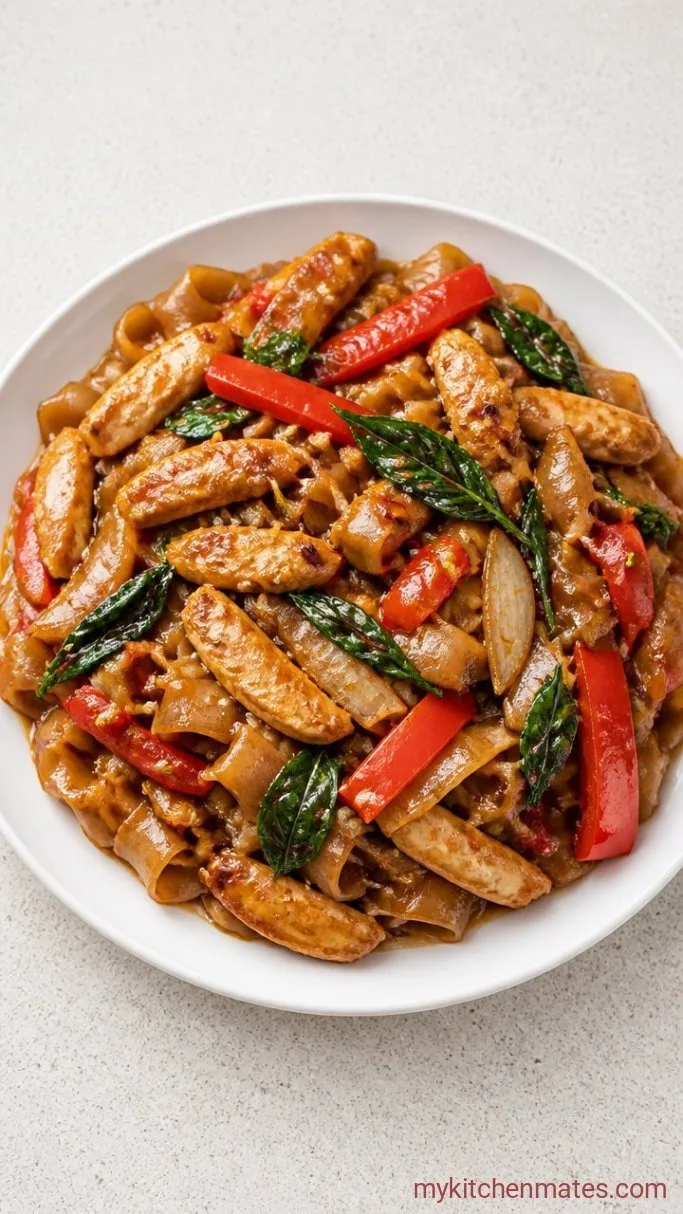
Turn off the heat and immediately scatter the 1 cup of holy basil leaves over the noodles. Toss gently for 10 to 15 seconds, just until the basil wilts from the residual heat. The fragrance that hits you right now is unmistakable, peppery and sweet in a way that completes the dish.
Divide the noodles between wide bowls and serve right away, while the steam is still rising and the basil is glossy and dark.
A Few Notes Before You Start
- How to get that char: A heavy carbon steel wok or cast iron skillet holds heat best. Let the pan get hot enough that a drop of water evaporates on contact before adding oil.
- Noodle texture: Do not boil the noodles, the soak in hot water is enough. Overcooked noodles will fall apart during the stir-fry.
- Ingredient order: Have everything sliced, minced, and measured before the first ingredient hits the pan. The cooking moves fast once the heat is on.
- Holy basil vs. Thai basil: Holy basil has serrated leaves and a spicier, almost clove-like bite. Thai basil is milder with purplish stems. Either gives the dish its signature aroma, but holy basil is the more traditional one if you can find it.
Storing Leftovers
- Refrigerate: leftover noodles in an airtight container for up to 3 days. The basil will lose some punch, but the flavor holds up well.
- Reheating: Warm them in a hot skillet with a tiny splash of water, tossing until heated through. The microwave works too, but you will not get back the charred edges.
What to Serve with Thai Drunken Noodles
A cold, crisp lager cuts right through the heat and the richness of the sauce. If you want something non-alcoholic, an iced Thai tea with its creamy sweetness is a classic match. For a crunchy side, a simple cucumber salad with rice vinegar and a sprinkle of crushed peanuts gives a cool contrast.
Frequently Asked Questions
Can I use fresh rice noodles instead of dried?
Yes. Fresh wide rice noodles do not need soaking, just separate them gently and add them straight to the pan. They cook even faster, so reduce the final toss time by about 30 seconds.
I do not have dark soy sauce, can I leave it out?
You can, but the noodles will lose their deep mahogany color and part of that caramel note. Double the light soy sauce and add an extra teaspoon of sugar to get closer to the intended flavor.
How do I make this dish less spicy without losing flavor?
Use just one Thai chili, or remove the seeds and membranes before slicing. The sauce and basil still deliver all the savory notes, just with a gentle warmth instead of a full burn.
What protein substitutes work best for vegetarians?
Firm tofu works great. Press it well, cut into bite-sized cubes, and pan-fry until golden on all sides before setting it aside. It sears almost like the chicken. You can also use pan-fried tempeh or big chunks of mushroom for a meaty texture.
Thai Drunken Noodles Recipe
Ingredients
Method
- Soak the rice noodles in hot water for about 20 minutes until pliable, then drain. Whisk together the oyster sauce, dark soy sauce, light soy sauce, fish sauce, sugar, and white pepper.
- Heat 1 tbsp oil in a large skillet over high heat. Sear the chicken for 2 minutes per side, then remove to a plate.
- Add the remaining 1 tbsp oil, sauté the garlic and chilies for 30 seconds, then add the onion and bell pepper and cook 1 to 2 minutes. Push vegetables aside, scramble the eggs, then mix together.
- Return the chicken and drained noodles to the pan, pour the sauce over, and toss over high heat for 1 to 2 minutes until the noodles are charred in spots and coated.
- Remove from heat, fold in the holy basil leaves until just wilted, and serve immediately.
Notes
