
30-Minute Creamy Thai Chicken Curry

This Thai chicken curry comes together in one pan and hits the table in about half an hour. The sauce is rich and fragrant, with just enough heat from red curry paste and a little sweetness from coconut milk.
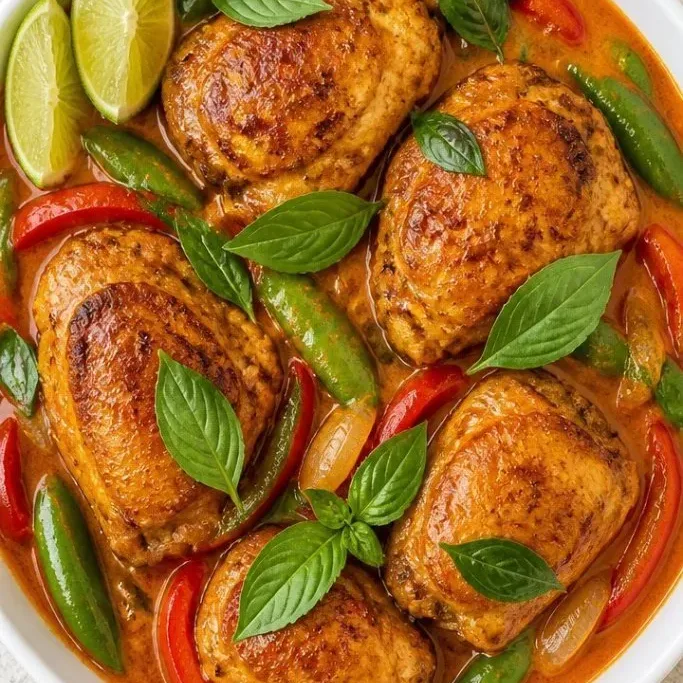
I keep the ingredient list short so it works on a busy weeknight, and the method is forgiving even if your knife skills are rusty.
Why This Thai Curry Has a Permanent Spot
The sauce tastes deep and coconutty without feeling heavy. Fish sauce and a squeeze of lime at the end wake up every layer, so it never turns flat or one-note.
Chicken thighs stay tender even if you let the pot go a minute longer than you meant to. That alone earns it a regular rotation when I need something reliable that tastes like I put in twice the effort.
Ingredients
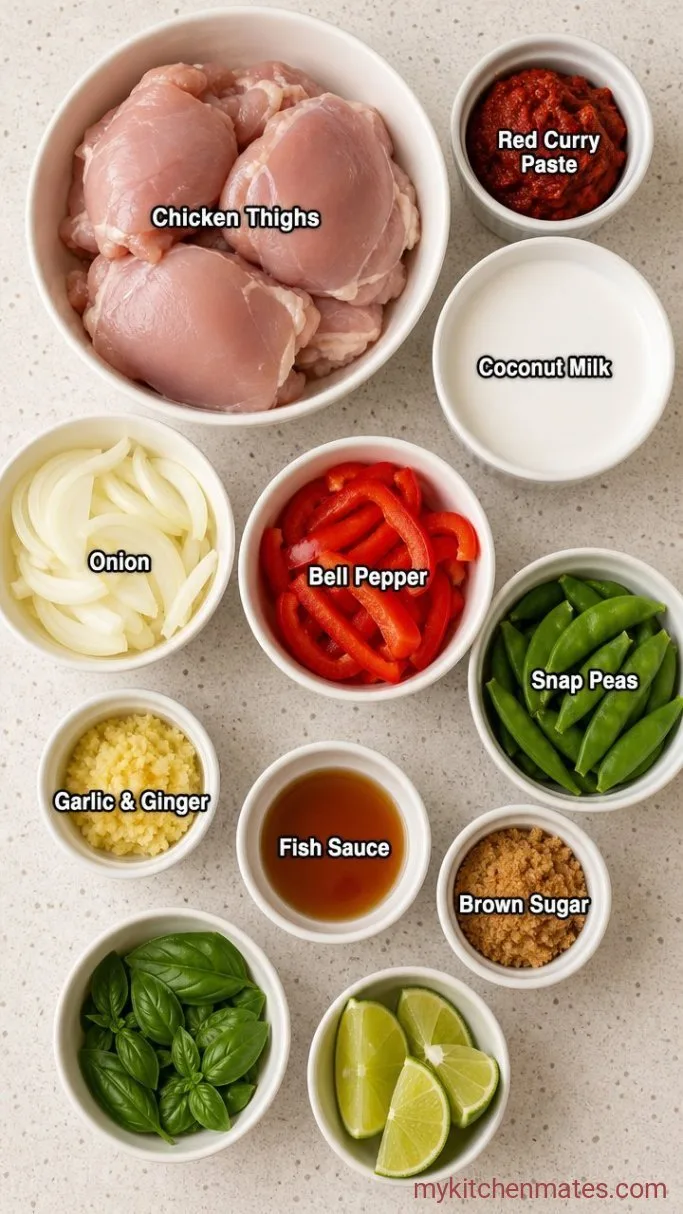
- 1 ½ lbs boneless, skinless chicken thighs: thighs stay juicy, but breasts work if you cut them into even chunks and pull them out as soon as they are cooked through.
- 1 tbsp vegetable oil: any neutral oil with a high smoke point, like avocado or canola.
- 1 small yellow onion, sliced into thin half-moons: red onion or a couple of shallots also work.
- 1 red bell pepper, sliced: use whatever color you have, green or orange are fine.
- 2 cloves garlic, minced: adjust upward if your cloves are tiny.
- 1 tbsp fresh ginger, grated: the jarred paste works in a pinch, measure the same.
- 3 tbsp Thai red curry paste: I use Thai Kitchen or Maesri brand. For a milder curry, start with 2 tbsp and add more later.
- 1 can (14 oz) full-fat coconut milk: light coconut milk makes a thinner sauce, so stick with full-fat.
- 1 tbsp fish sauce: adds salt and umami. Soy sauce can fill in but the result loses a little depth.
- 1 tbsp brown sugar: light or dark, just enough to balance the heat.
- 1 cup snap peas: snow peas, green beans, or thinly sliced carrots all swap in nicely.
- ¼ cup fresh basil leaves, preferably Thai basil: regular Italian basil will work, use a little more.
- Lime wedges, for serving.
Variations / Substitutions
- Use shrimp or tofu: firm tofu cubed and seared until golden, or peeled shrimp added in the last 3 minutes of simmering.
- Swap the curry paste: green curry paste makes a fresher, brighter sauce. Panang paste gives a thicker, nuttier finish.
- Dial the heat up or down: stir in a sliced bird’s eye chili with the aromatics for more fire, or reduce paste to 2 tbsp and add extra coconut milk for a gentle version.
- Make it veggie-heavy: stir in a handful of baby spinach at the end, or add a drained can of bamboo shoots with the coconut milk.
Creamy Thai Coconut Chicken Soup is a cozy soup to serve with this curry.
How to Make Thai Chicken Curry
Step 1: Sear the Chicken
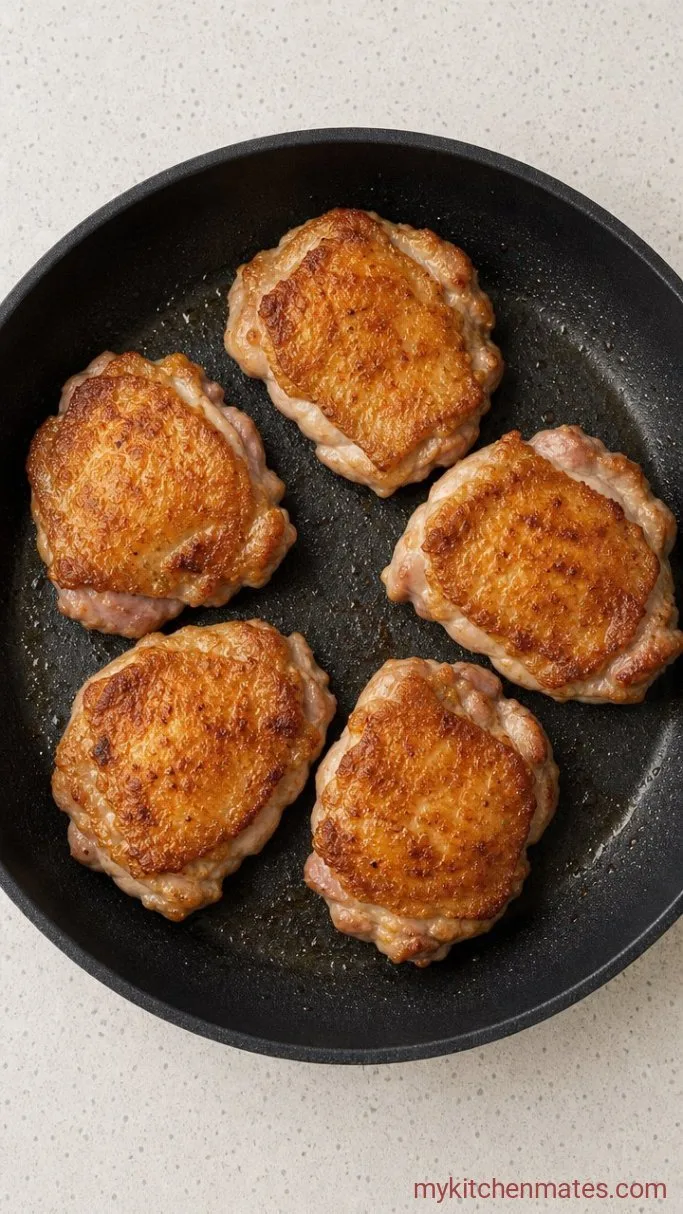
Heat the 1 tbsp vegetable oil in a large skillet or wide pot over medium-high heat. Pat the 1 ½ lbs chicken thighs dry with a paper towel, season them lightly with salt, and lay them in the hot pan in a single layer. Let them cook without moving them for about 4 minutes, until the undersides turn deep golden.
Flip and cook the other side another 3 to 4 minutes. The chicken does not need to be cooked through at this stage, just nicely browned. Transfer the thighs to a plate and set them aside for now.
Step 2: Sauté the Aromatics
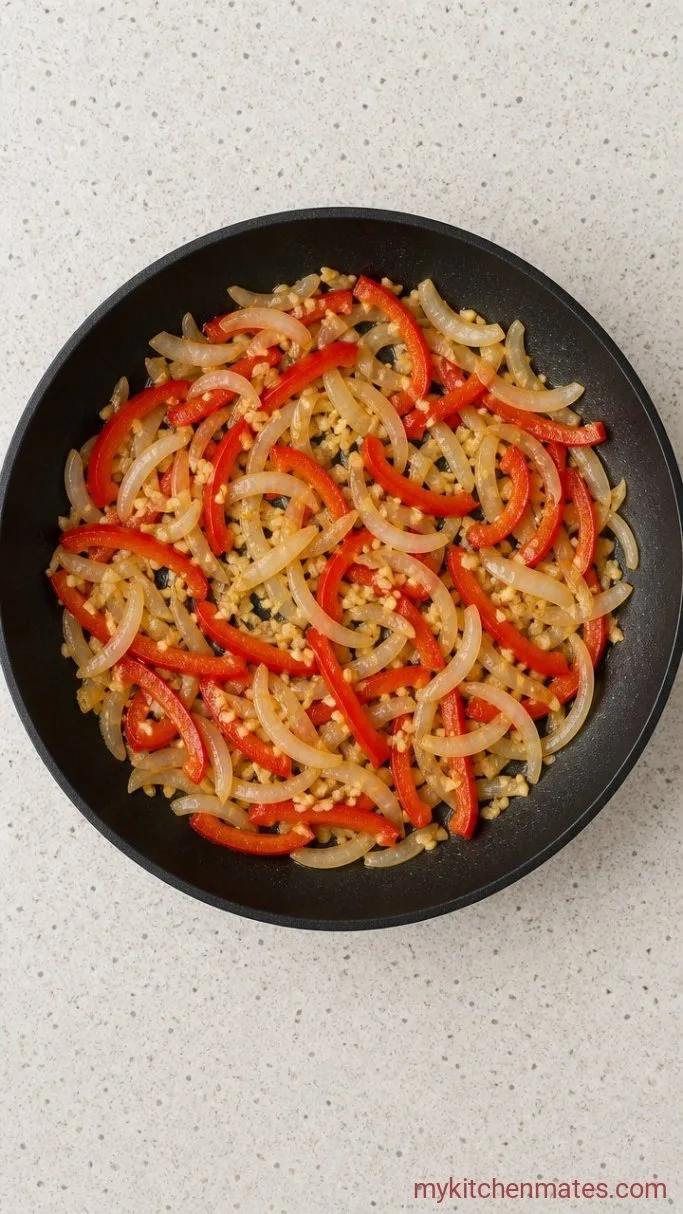
Lower the heat to medium and toss the sliced onion and red bell pepper into the same skillet. Let them soften for about 3 minutes, stirring once or twice, until the onion starts turning translucent and the pepper loses its raw crunch.
Add the 2 cloves minced garlic and the 1 tbsp grated ginger to the pan. Keep stirring for another 30 seconds, just until the mixture smells really fragrant and the raw garlic edge disappears.
Step 3: Simmer the Curry
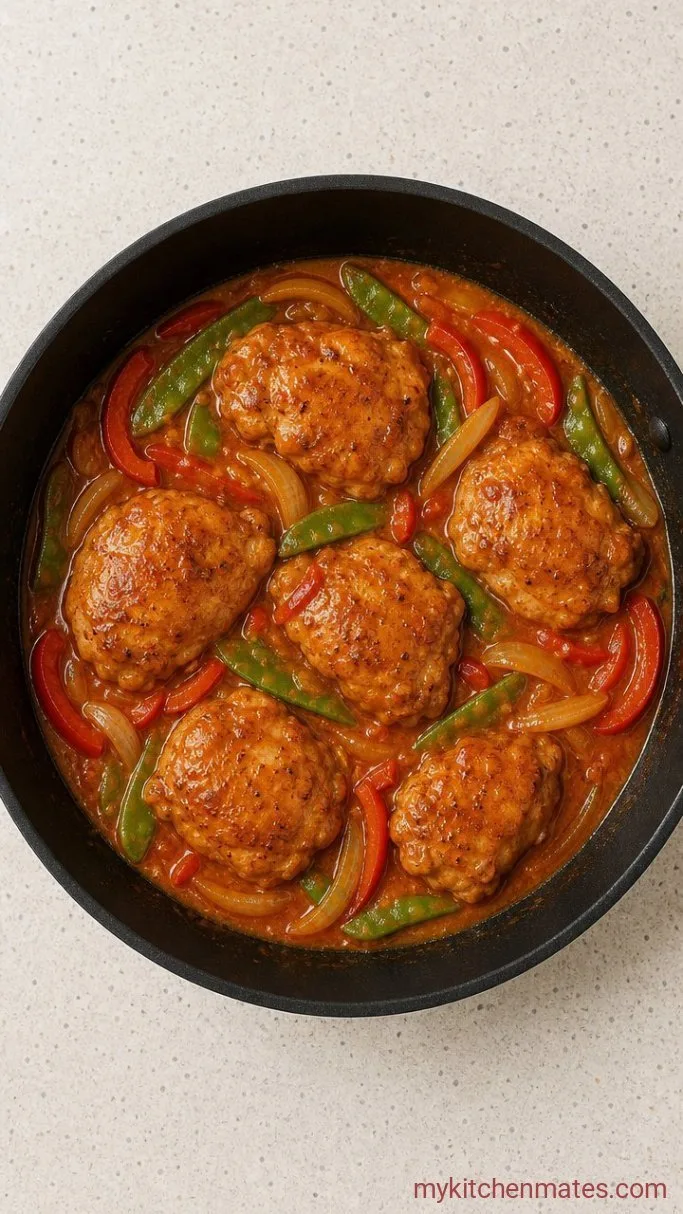
Scoop the 3 tbsp red curry paste into the pan and stir it into the vegetables. Let it toast for about 1 minute, which deepens the flavor and takes away any tinny taste from the paste.
Pour in the 14 oz coconut milk, add the 1 tbsp fish sauce and 1 tbsp brown sugar, and stir everything together until the paste disperses evenly. Slide the seared chicken and any juices back into the sauce, then bring it all to a gentle simmer. Lower the heat so it bubbles softly and cook for 10 minutes, turning the chicken once halfway through, until the meat feels firm and the sauce thickens slightly.
Step 4: Finish with Basil and Lime
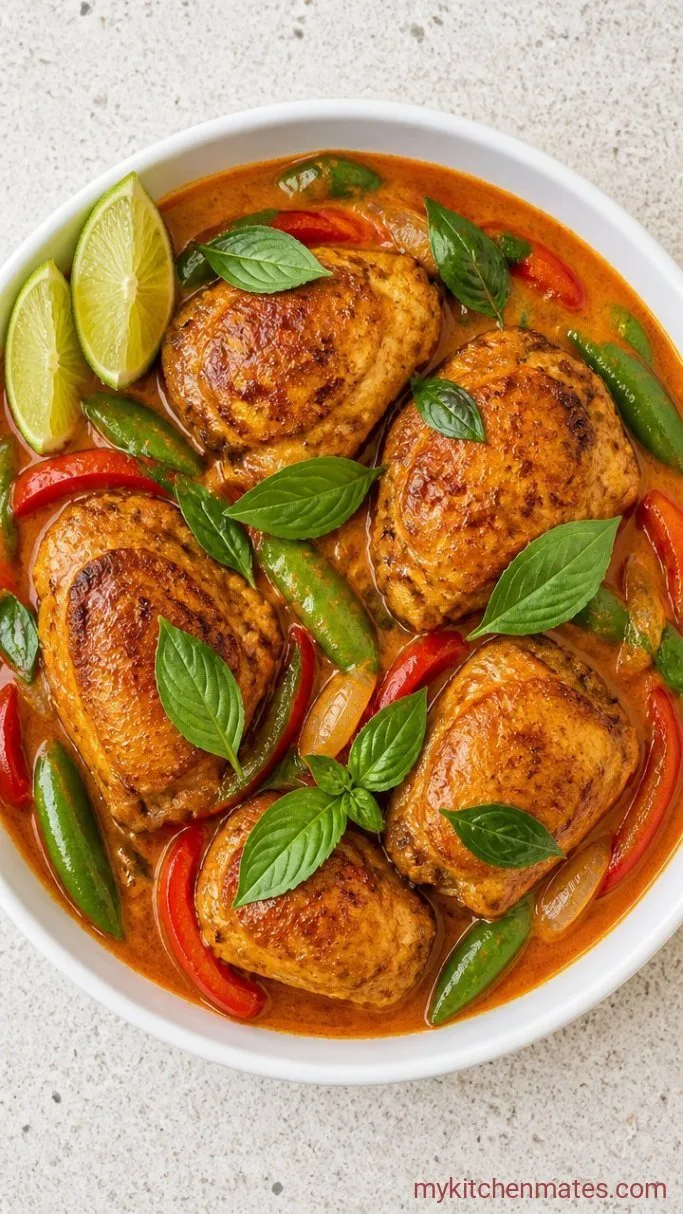
Remove the pan from the heat and toss in the 1 cup snap peas and the ¼ cup fresh basil leaves. Let the residual heat soften the peas and wilt the basil for about a minute while you give it all a final stir.
Spoon the curry over jasmine rice or coconut rice, and serve with lime wedges on the side so everyone can add a bright squeeze right before eating.
How to Get a Rich, Creamy Sauce
- Don’t shake the coconut milk can. Scoop the thick cream off the top first and use that to bloom the curry paste for an even silkier base, then add the thinner liquid later.
- Let the paste toast. That minute in the pan before the liquid goes in makes the sauce taste rounder and less raw.
- Simmer, never boil. A hard boil can split the coconut milk and make the sauce look grainy. Keep the bubbles small and lazy.
- Season at the end. Taste after you add the peas and basil, and adjust with an extra splash of fish sauce for salt or a pinch more sugar if it feels too sharp.
Storing Leftovers
- Refrigerate: cooled curry keeps in an airtight container for up to 4 days, and the sauce actually mellows and improves overnight.
- Reheating: warm gently on the stovetop over low heat with a splash of water or coconut milk to loosen the sauce. The microwave works too, use half power and stir often.
What to Serve with Thai Chicken Curry
Jasmine rice is the classic pairing because its fragrance echoes the basil and coconut without competing. A simple cucumber salad with rice vinegar and a pinch of sugar cuts through the richness and feels refreshing. If you want something to scoop with, warm roti or naan are both great for swiping up every last drop of sauce.
Frequently Asked Questions
Can I use chicken breast instead of thighs?
Yes, cut two large boneless, skinless breasts into even bite-sized chunks. Sear them the same way but pull them out sooner, since they cook faster and can turn dry if overdone.
Do I have to use full-fat coconut milk?
Full-fat gives the creamiest, most stable sauce. Lite coconut milk works in a pinch but the texture will be thinner and the sauce more likely to separate when reheated.
How do I fix a sauce that looks split or grainy?
Rescue it by whisking in a spoonful of warm water or a little fresh coconut cream off the heat, which brings the emulsion back together.
Can I freeze Thai chicken curry?
Yes, freeze it in a sealed container for up to 2 months. The snap peas will soften, so you might omit them and stir in fresh ones when you reheat if texture matters a lot to you.
How do I make it vegetarian?
Swap the chicken for cubed firm tofu, sear it until golden, and replace the fish sauce with soy sauce and a squeeze of extra lime juice for brightness.
Thai Chicken Curry Recipe
Ingredients
Method
- Heat oil in a skillet over medium-high. Sear seasoned chicken thighs until golden on both sides, about 4 minutes per side, then set aside.
- Reduce heat to medium and sauté onion and bell pepper for 3 minutes. Add garlic and ginger, stir 30 seconds until fragrant.
- Add curry paste and toast 1 minute. Pour in coconut milk, fish sauce, and sugar. Return chicken and any juices, simmer for 10 minutes, turning once.
- Remove from heat, stir in snap peas and basil, let wilt 1 minute. Serve over rice with lime wedges.
Notes
