
Homemade Spinach and Ricotta Ravioli with Sage Butter

Fresh pasta is one of those kitchen projects that sounds intimidating but rewards you with something store-bought can’t match. This spinach and ricotta ravioli pairs a silky, tender dough with a creamy, savory filling, all finished with nutty brown butter and crispy sage leaves.
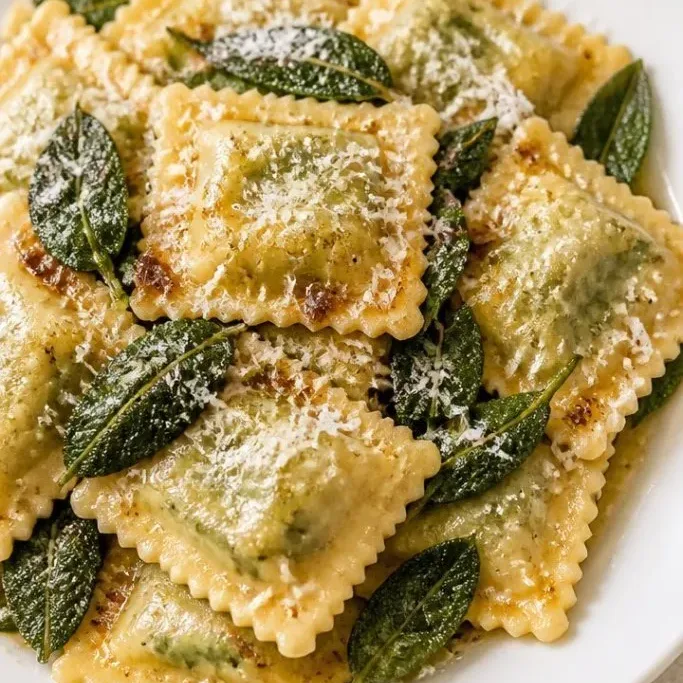
Make a batch on a Sunday afternoon and you’ve got a showstopping dinner that feels like an indulgence but comes from simple ingredients like flour, eggs, and good ricotta.
What Makes These Ravioli So Good
The pasta dough comes together with just a few pantry staples and kneads into a smooth, springy sheet that rolls thin without tearing. It has a gentle chew that holds up to the soft filling without dominating it.
The filling itself is all about balance. Good ricotta gives a clean, milky richness while wilted spinach adds earthy depth. A little Parmesan and nutmeg bring it all together without masking anything, and the sage butter at the finish ties the whole plate into one cohesive, comforting dish.
Ingredients
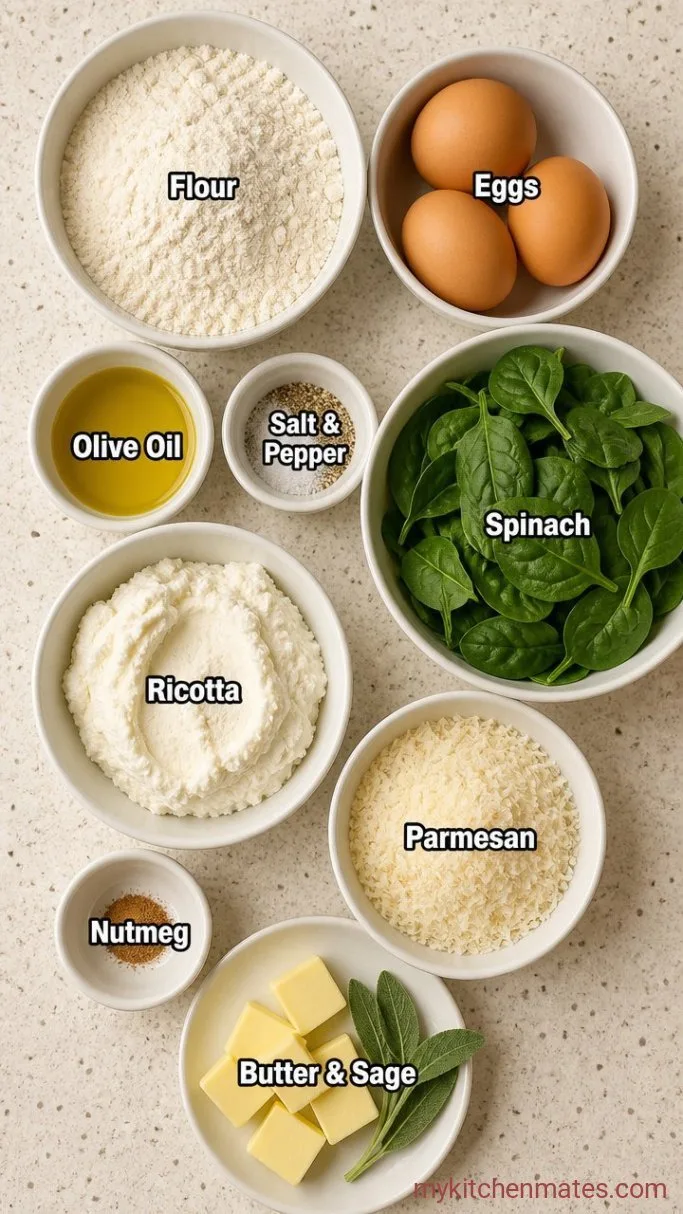
- 2 cups (250 g) all-purpose flour, plus more for dusting: spooned and leveled so the dough isn’t too heavy
- 3 large eggs: at room temperature, they blend in more smoothly
- 1 tbsp olive oil: adds a little suppleness to the dough
- ½ tsp fine salt: seasons the pasta itself, not just the filling
- 5 oz (140 g) fresh spinach: roughly 5 cups loosely packed
- 1 cup (250 g) whole-milk ricotta: drain off any watery liquid so the filling stays thick
- ½ cup (45 g) grated Parmesan cheese: the dry, sandy kind that melts into the mix, plus more for serving
- ¼ tsp freshly grated nutmeg: just a whisper, it wakes up the greens
- Salt and black pepper: to taste
- 4 tbsp unsalted butter: cold from the fridge is fine, it will melt down
- 12 fresh sage leaves: smallish ones work best; they get crisp without burning
Variations and Substitutions
- Swap the spinach: Swiss chard or sturdy kale work well. Just wilt them thoroughly and squeeze out every drop of moisture.
- Dairy-free version: use a firm plant-based ricotta and swap Parmesan for a dairy-free hard cheese or nutritional yeast. The butter can be replaced with a good olive oil for the final toss.
- Change the sauce: a simple tomato sauce spooned over the ravioli is classic, or keep it light with just olive oil and cracked pepper.
- Try a different herb: if sage isn’t your thing, rosemary sprigs or thyme browned in the butter bring their own warmth.
Creamy Shrimp Fettuccine Alfredo is next on our list if this ravioli is your kind of dinner.
How to Make Spinach and Ricotta Ravioli
Step 1: Knead the Pasta Dough
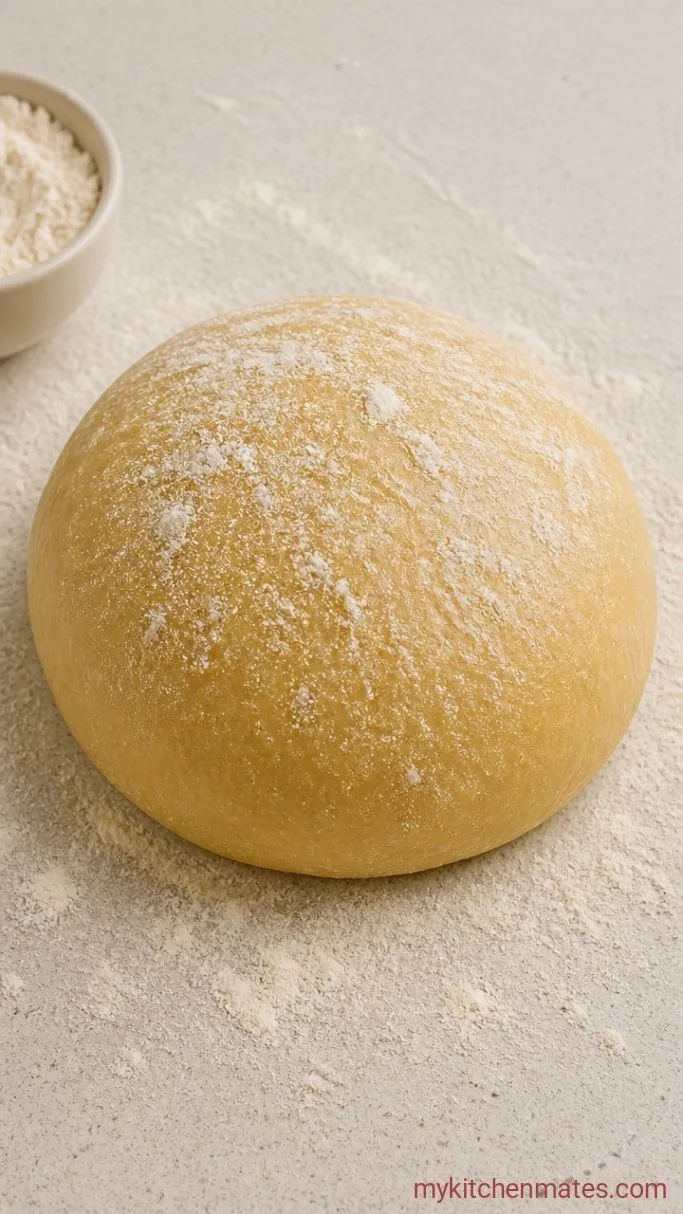
Mound 2 cups of flour onto a clean work surface and stir in the ½ tsp salt. Make a well in the center, crack in the 3 eggs, and add the 1 tbsp olive oil. Use a fork to gently beat the eggs and oil while slowly drawing flour in from the sides until a shaggy mass forms. Then switch to your hands and knead for 8 to 10 minutes, adding only a dusting of flour if it sticks badly.
The dough will transform from a rough, shreddy lump into a smooth, taut ball that springs back when you poke it. It should feel firm but not dry, similar to a soft earlobe.
Wrap it tightly in plastic and let it rest at room temperature for 30 minutes. This rest relaxes the gluten so the dough rolls out easily later without fighting back.
Step 2: Wilt the Spinach and Mix the Filling
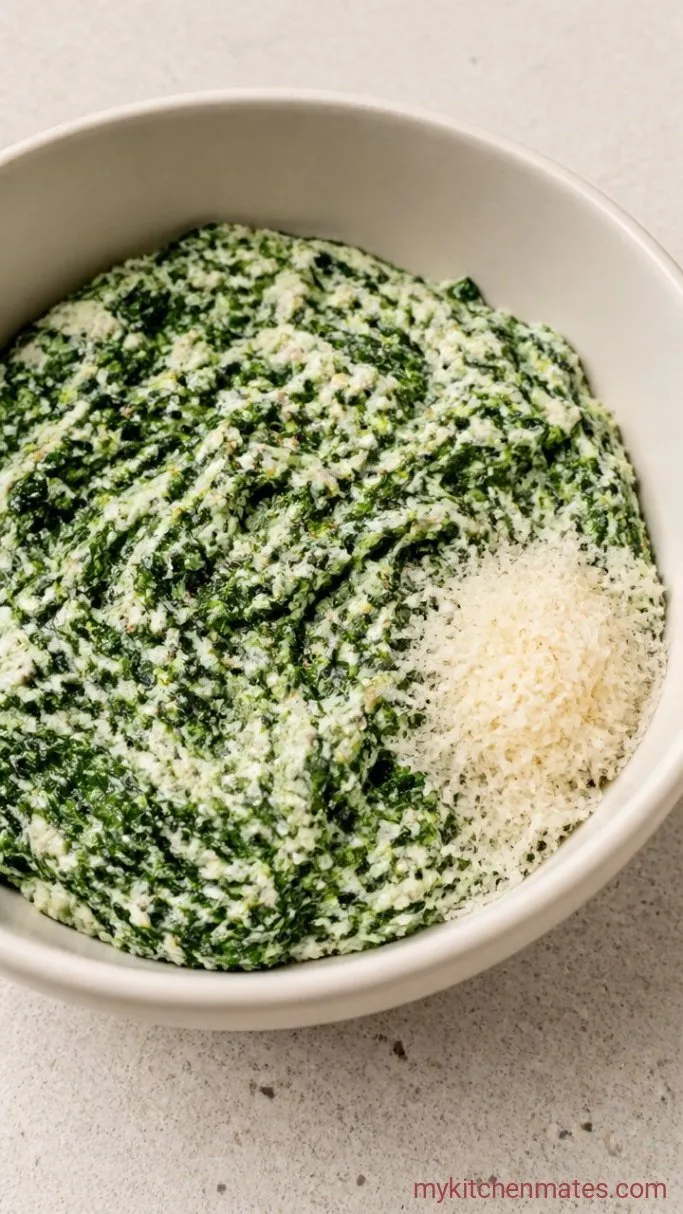
Place a large dry skillet over medium heat and add the 5 oz fresh spinach. Toss it with tongs until just wilted, about 2 to 3 minutes. Immediately transfer the spinach to a fine-mesh strainer and press out as much liquid as you can with the back of a spoon. Let it cool for a moment, then chop it finely.
In a bowl, combine the chopped spinach, 1 cup ricotta, ½ cup Parmesan, ¼ tsp nutmeg, and a generous pinch each of salt and pepper. Stir until everything is evenly distributed and the filling looks creamy and bright green.
Taste the filling now and adjust the seasoning. It should be well salted because the pasta itself is mild, and the Parmesan will carry a lot of the savory punch.
Step 3: Roll Out the Pasta Sheets
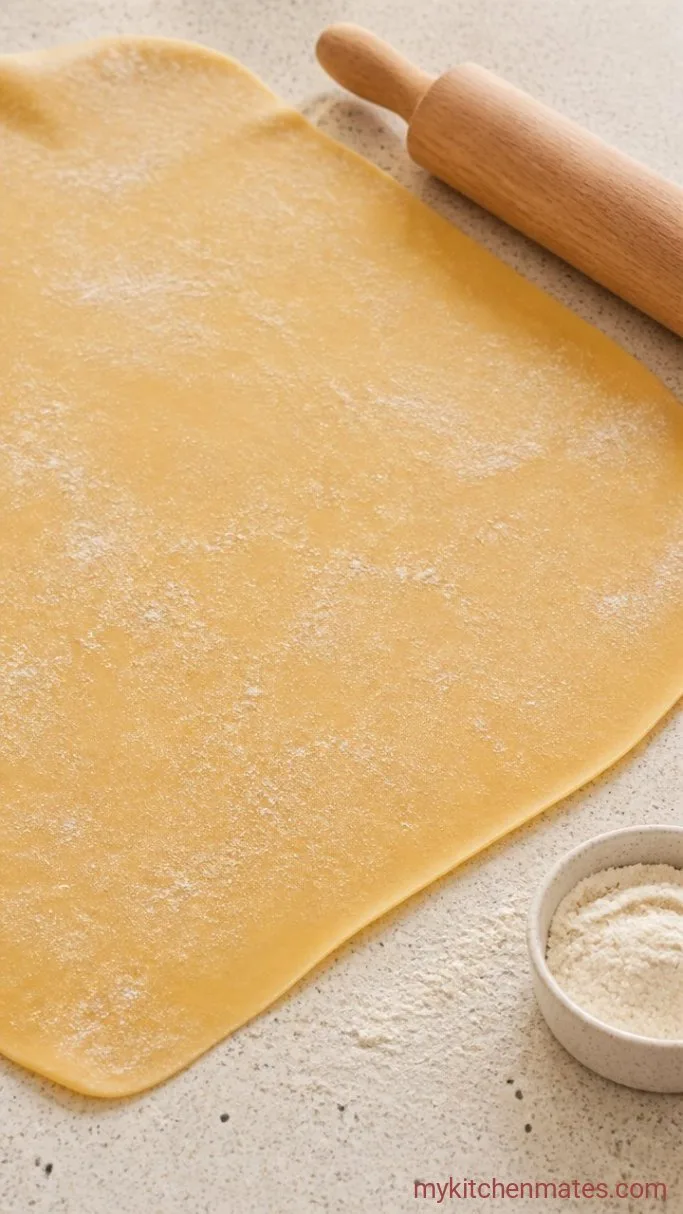
Divide the rested dough into 4 equal pieces and keep the ones you aren’t using wrapped so they don’t dry out. Flatten one piece into a rough rectangle and feed it through a pasta machine on the widest setting. Fold it into thirds, turn it 90 degrees, and pass it through again. Repeat folding and passing twice more to build structure, then start thinning it out, reducing the setting one notch at a time.
You want sheets thin enough that you can just make out the shadow of your hand through them, roughly 1/16 inch (1.5 mm) thick. Dust them lightly with flour between passes to prevent any sticking. At the thinnest setting, the dough sheet should be supple and almost translucent when held up to light.
If you don’t own a pasta machine, a rolling pin will get you there. Roll the dough as thin and even as you can on a floured surface, applying steady pressure and checking the thickness often.
Step 4: Fill and Shape the Ravioli
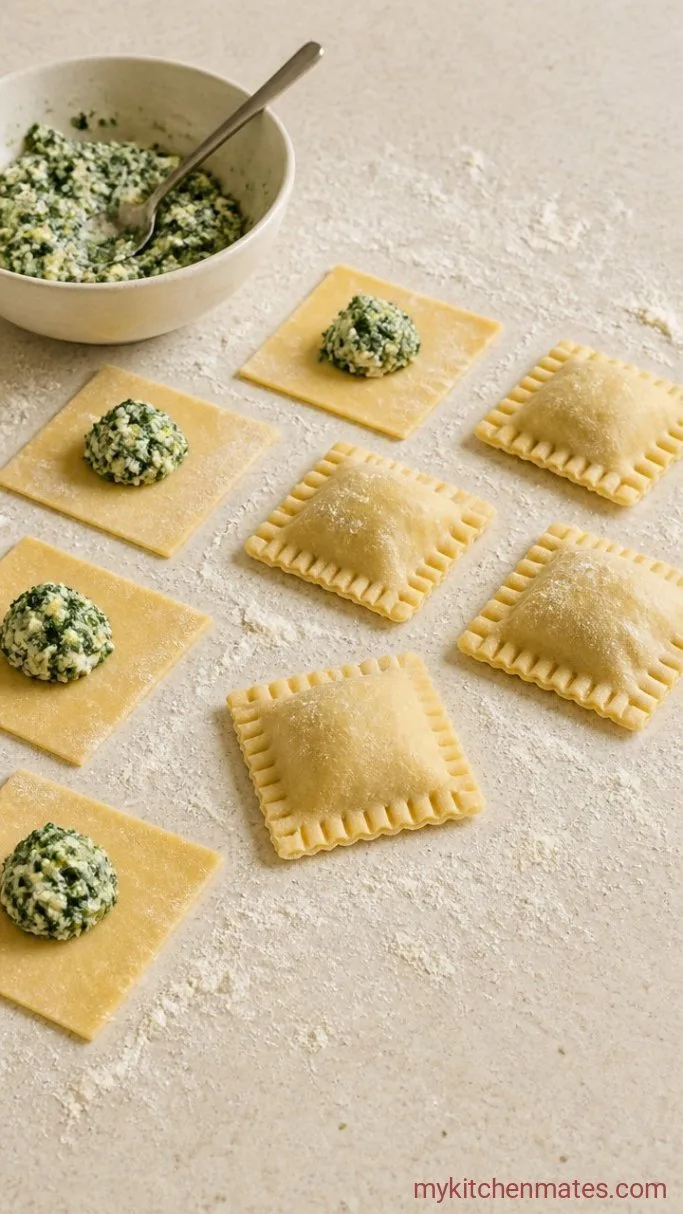
Lay one pasta sheet on a floured work surface. Place heaping teaspoon-sized mounds of filling about 2 inches apart in neat rows. Dip your finger in water and lightly moisten the dough around each mound, then drape a second sheet over the top. Press down around each mound of filling to seal, working from the center outward so you push out any trapped air.
The ravioli will look like neat little pillows with a slight bump from the filling. Any air pockets trapped inside can cause them to burst during boiling, so take your time pressing around each one.
Cut between the mounds with a sharp knife, a fluted pastry wheel, or a round biscuit cutter to form individual ravioli. Transfer them to a floured baking sheet while you finish the rest.
Step 5: Boil the Ravioli
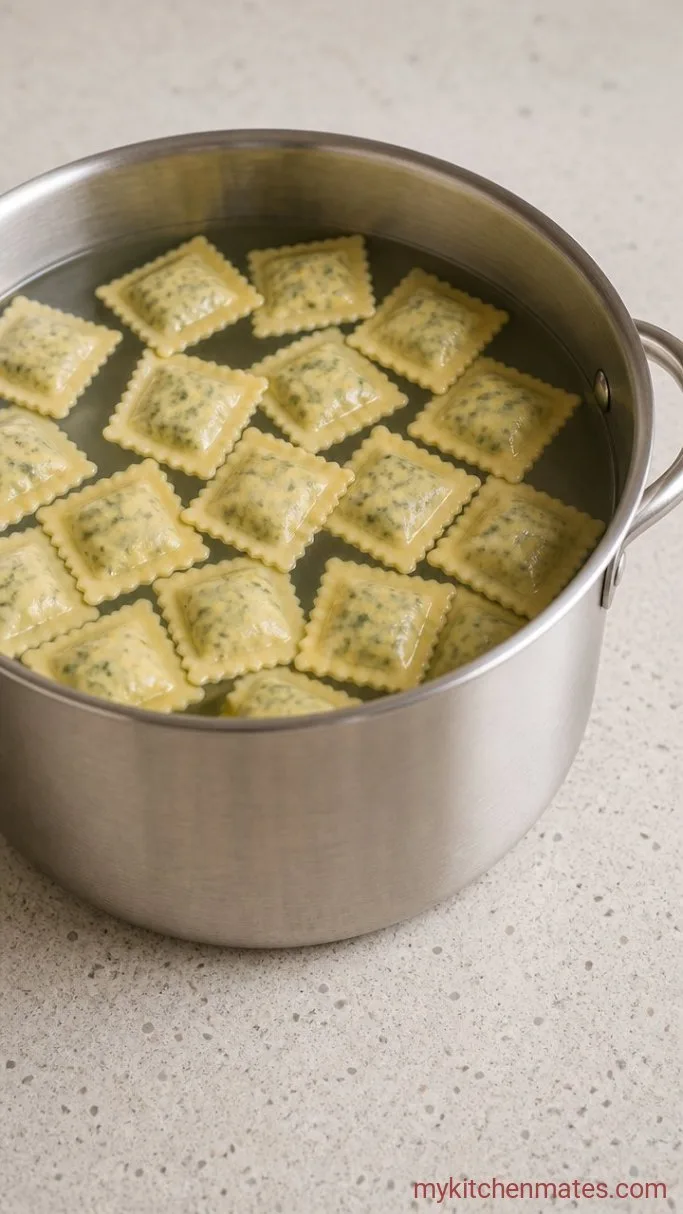
Bring a large pot of generously salted water to a rolling boil over high heat. Slip the ravioli into the water in a single layer, working in batches so they aren’t crowded. Fresh pasta cooks quickly, so set a timer for 3 minutes.
The ravioli will puff slightly and float to the surface as they cook. That floating, paired with the timer, tells you they’re done. Use a slotted spoon or spider to lift them out gently, letting excess water drain away.
Hold the cooked ravioli on a warm plate or in a very low oven while you finish the rest, and then move straight to the butter.
Step 6: Toss in Sage Butter and Serve
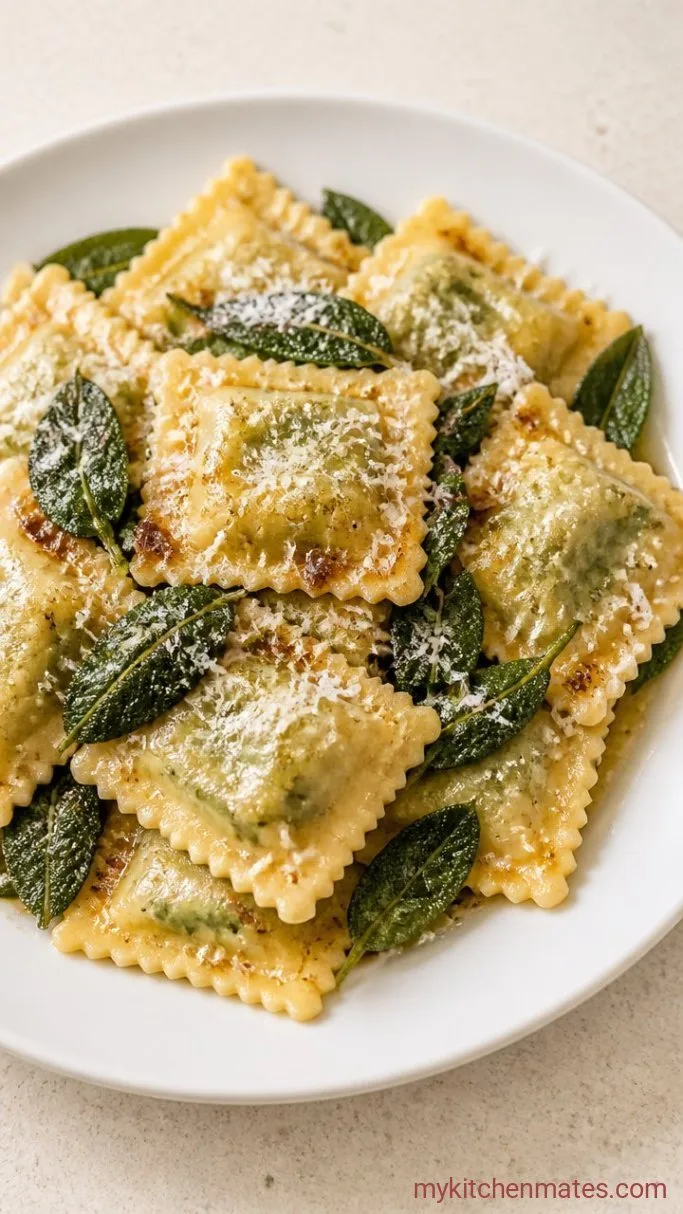
Set a large skillet over medium heat and add the 4 tbsp butter. Once melted, drop in the 12 sage leaves and let everything sizzle together. Swirl the pan occasionally and cook until the butter turns a deep golden color, smells nutty, and the sage leaves crisp up, about 3 to 4 minutes total.
Add the drained ravioli directly to the skillet and toss gently so every piece gets coated in the brown butter. Spoon any stray crispy sage leaves and buttery pools over the top as you plate.
Serve right away with a shower of extra Parmesan. The sage will be fragile and crisp, the ravioli glossy with butter, and the first cut reveals that bright green filling inside.
Tips for Better Ravioli
- Choose the right ricotta.: A good whole-milk ricotta that is creamy but not watery makes all the difference. If yours has a lot of liquid pooling in the tub, drain it in a cheesecloth-lined sieve for 15 minutes before measuring.
- Don’t skip the nutmeg.: It’s a small amount, but it bridges the spinach and dairy in a way that makes the filling taste rounder and more finished.
- Take the pasta thin.: Ravioli made with even slightly thick dough can feel heavy. Err on the side of rolling as thin as you dare.
- Freeze uncooked extras.: Arrange any uncooked ravioli in a single layer on a floured tray and freeze until solid. Once frozen, pack them into a zip-top bag. They can go straight from freezer to boiling water, just add an extra minute or two to the cook time.
- Watch the butter.: Once the foam subsides and you see brown specks on the bottom of the pan, pull it off the heat. It keeps cooking for a few seconds, so catching it at deep gold prevents bitterness.
Storing Leftover Ravioli
- Refrigerate: Cooked ravioli will keep in an airtight container in the fridge for up to 2 days. Toss them with a little olive oil so they don’t stick together.
- Reheating: Warm them gently in a skillet with a splash of water or a bit more butter. A brief 30-second microwave also works, though the texture softens slightly.
What to Serve with Spinach and Ricotta Ravioli
A handful of arugula dressed simply with lemon juice and olive oil cuts through the richness of the butter and cheese. If you want a vegetable on the side, quick-sautéed broccolini with garlic and chili flakes echoes the earthy notes of the filling without competing.
A crisp, white grape juice sits well next to the nutty brown butter. For a non-alcoholic option, sparkling water with a squeeze of lemon keeps the meal feeling bright.
Frequently Asked Questions
Can I use frozen spinach instead of fresh?
Yes. Thaw about 5 ounces of frozen spinach and squeeze it vigorously in a clean kitchen towel until it feels almost dry. The filling will be slightly darker but just as good.
How do I keep ravioli from bursting while boiling?
Two things help. Seal the dough thoroughly around each mound, with no air pockets, and don’t overfill. A heaping teaspoon of filling per raviolo is plenty. Also, keep the water at a steady boil, not a violent, jostling one.
Can I make the pasta dough ahead of time?
You can. Wrap the dough tightly and refrigerate it overnight. Pull it out about 30 minutes before rolling to let it lose its chill, so it isn’t too stiff to work with.
Do I need a pasta machine?
No. A rolling pin and some elbow grease will get you there. The key is patience and a well-floured surface. The final sheet won’t be perfectly uniform, but the ravioli will still be delicious.
Spinach and Ricotta Ravioli Recipe
Ingredients
Method
- Mound flour and salt, create a well, add eggs and oil, and mix into a shaggy dough. Knead for 8 to 10 minutes until smooth, then wrap and rest for 30 minutes.
- Wilt spinach in a dry pan over medium heat for 2 to 3 minutes, squeeze dry, chop finely, and mix with ricotta, Parmesan, nutmeg, salt, and pepper.
- Divide dough, roll through a pasta machine to the thinnest setting, or roll by hand until almost translucent. Dust with flour to prevent sticking.
- Place small mounds of filling on one sheet, brush water around them, top with a second sheet, seal without air pockets, and cut into individual ravioli.
- Boil ravioli in salted water for 3 to 4 minutes until they float. Remove with a slotted spoon and drain gently.
- Melt butter in a skillet, add sage, and cook until golden and nutty, about 3 to 4 minutes. Toss ravioli in the butter and serve immediately with extra Parmesan.
Notes
