
Crispy, Spicy Spaghetti Alla Assassina

Spaghetti all’assassina is Bari’s cult pasta: the noodles get toasted in a hot pan until the bottom turns dark and crackly, then you slowly feed them a fiery tomato broth until they’re stained deep red and coated in a sticky, spicy sauce.

It looks like a kitchen experiment but it comes together in one skillet. You end up with pasta that’s both chewy-soft and shatteringly crisp, carrying a heat that builds without blowing your head off.
What Makes This Spaghetti So Good
The charred edges are the whole point. When dry spaghetti hits hot oil and sits undisturbed, the starches fuse and brown, giving you smoky, almost burnt-sugar notes that mingle with the chili.
That same starch thickens the tomato water as you ladle it in, so the sauce clings to every strand instead of pooling on the plate. The final flash of dry heat crisps the bottom again right before serving, so you get both the soft, saucy interior and that shard-like crackle in every bite.
Ingredients
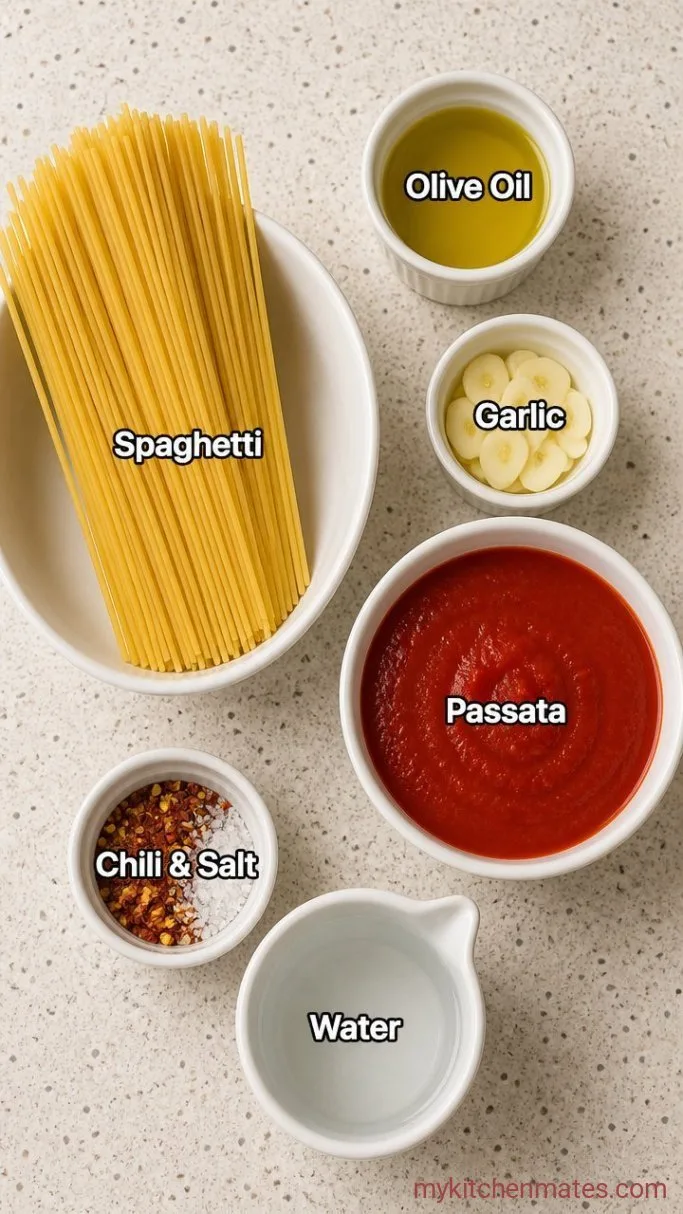
- 200g spaghetti: standard dried spaghetti, not fresh
- 3 tbsp extra virgin olive oil: use a fruity one, not too grassy
- 2 garlic cloves: thinly sliced
- 1 tsp chili flakes: adjust to your heat preference
- 1 cup passata: (250ml): smooth strained tomatoes
- 1/2 tsp fine sea salt
- 1 1/2 cups water: (360ml)
Variations / Substitutions
- Swap chili flakes for a fresh red chili: slice it thin and fry it with the garlic for a brighter heat. The rest of the method stays the same.
- Gluten-free spaghetti: a thick, sturdy corn and rice blend works best. Thinner GF spaghetti can crumble during toasting, so watch the charring time and turn it gently.
- Sweeten if needed: if your passata is particularly sharp, add a generous pinch of sugar to the broth.
Pasta alla Norma is next on our list if this spaghetti is your kind of dinner.
How to Make Spaghetti Alla Assassina
Step 1: Toast the Spaghetti
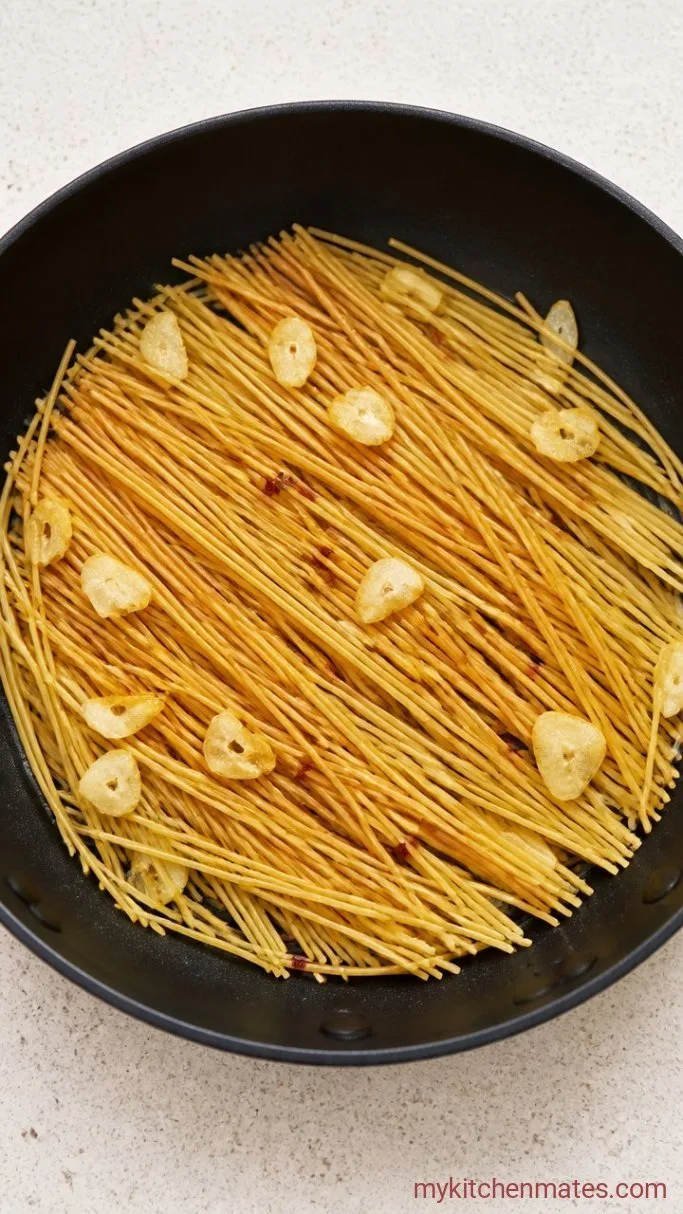
Pour the 3 tbsp olive oil into a large nonstick or well-seasoned cast-iron skillet and set it over medium heat. Slide in the sliced garlic and 1 tsp chili flakes and cook, stirring, until the garlic is just turning golden and the oil is fragrant, about 1 minute. Lay the dry spaghetti into the hot oil, breaking the strands in half if you need to so they fit in a single layer. Press down gently with a spatula and let the pasta cook untouched for about 3 minutes, until the underside is deeply charred, almost burnt in spots.
The kitchen will smell like toasted bread and spicy oil. While the spaghetti chars, stir the passata, water, and salt together in a jug or bowl so the broth is ready.
Step 2: Splash in the Broth
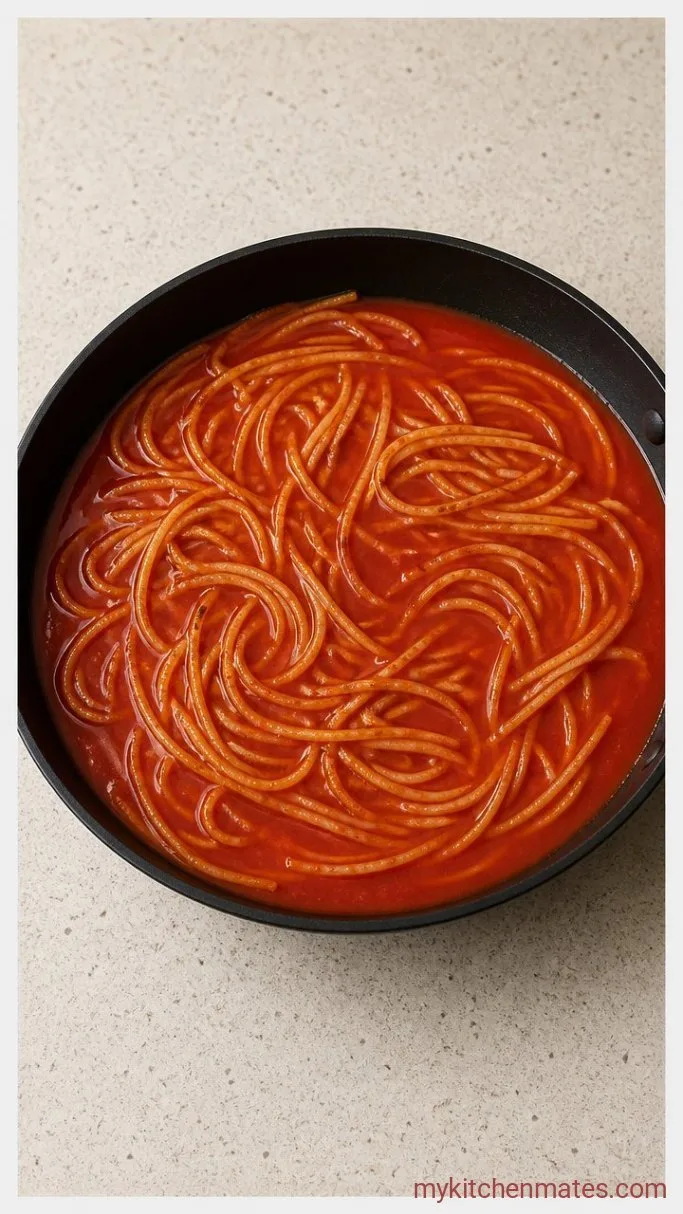
Ladle about a cup of the tomato water into the pan. It will hiss and steam violently. Use a wooden spatula to scrape up all the charred bits from the pan bottom and stir the spaghetti so it separates. Keep everything moving until the liquid is mostly absorbed, about 3 minutes.
You’ll see the sauce turn from a thin pinkish liquid into a thicker, deeper red as the pasta starts releasing its starch. The strands will look slack and pliable now, not brittle.
Step 3: Feed the Pasta Like a Risotto
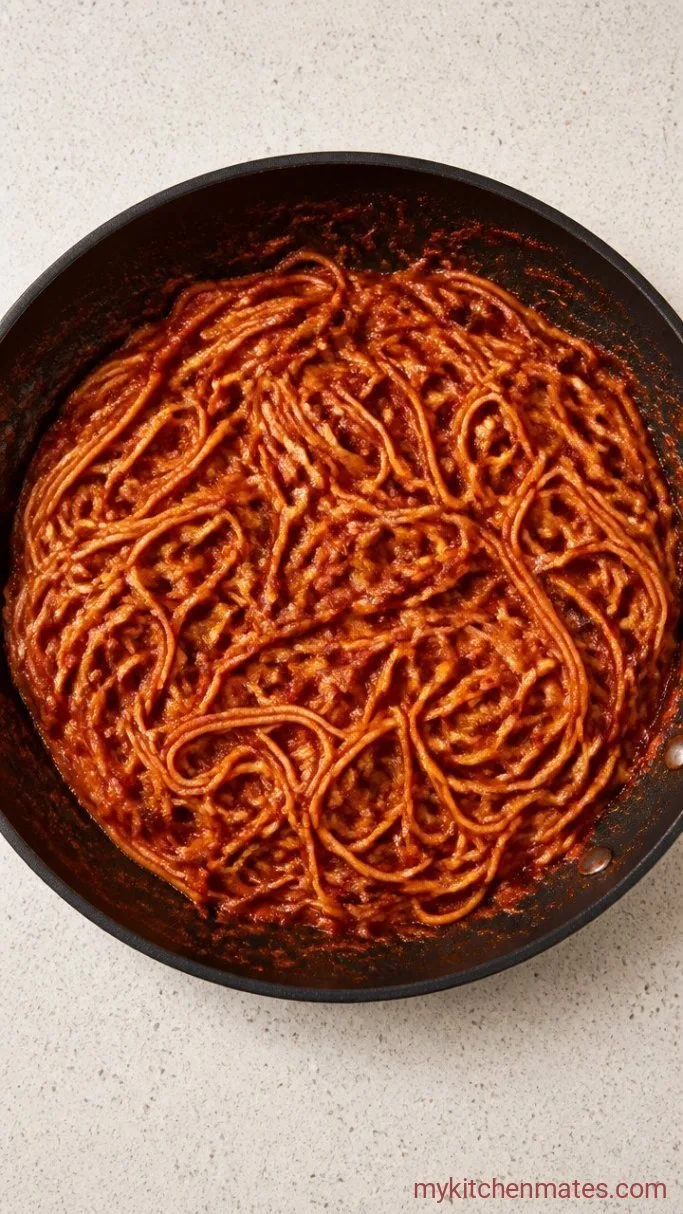
Continue adding the broth a ladleful at a time, waiting until each addition is nearly gone before you pour in the next. Stir and scrape the pan almost constantly so nothing sticks and burns unevenly. The whole process from the first splash of broth usually takes 12 to 15 minutes. Taste a strand at the 12-minute mark: it should be al dente and the sauce should be thick and glossy, not pooling at the sides.
If the pan threatens to dry out too fast, nudge the heat down a little. The goal is a gentle bubble that reduces the liquid while the starch thickens everything into a deep red coating.
Step 4: Crisp the Bottom and Serve
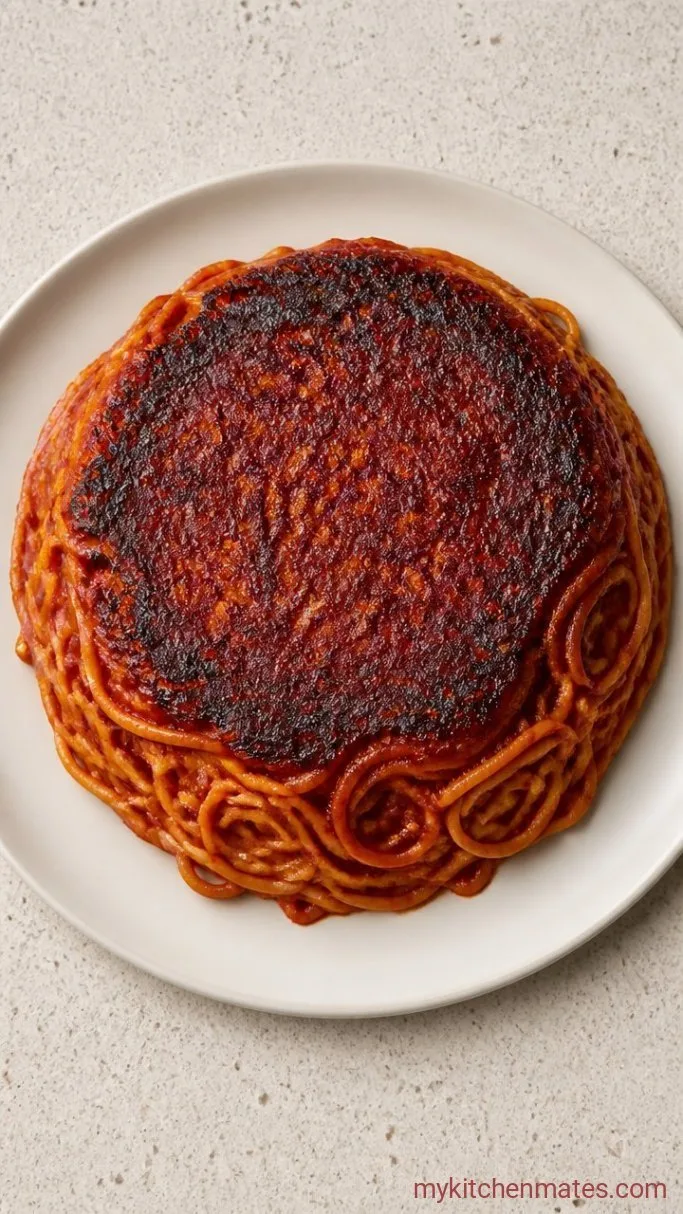
Once the pasta is ready and the last bit of broth has almost vanished, stop stirring for a full minute. This lets a new charred crust form on the bottom of the pan. Slide the whole tangle onto a plate, scraping up every dark, crunchy scrap, and serve it right away while the contrast between crisp edges and supple strands is at its best.
A Few Notes for the Best Char
- Pick the right pan:: A nonstick skillet makes the charred layer release easily. A well-traveled cast-iron pan works too, but carbon steel or stainless steel can glue the pasta down hard.
- Don’t rush the first toast:: That initial dark, smoky layer is the signature of the dish. Let the spaghetti sit truly undisturbed for the full 3 minutes before you think about turning it.
- Keep an eye on the heat:: If the pan smokes before the 3-minute mark or the garlic turns black, lower the burner. Medium heat should be enough for a heavy skillet.
- Sugar can balance the acid:: A small pinch of sugar stirred into the passata broth takes the edge off if your tomatoes taste especially sharp. Start with just a little.
What To Do With Leftovers
Store any leftover assassin’s spaghetti in an airtight container in the fridge for up to 2 days. The crisp will soften completely, but you can bring it back. Reheat it in a dry nonstick skillet over medium heat, tossing now and then, until the pasta is hot and the bottom has a chance to crisp again. A microwave will turn it gummy, so skip it.
What To Serve With Spaghetti Alla Assassina
A simple, sharp salad works best. A plate of arugula dressed with lemon juice, olive oil, and a pinch of salt cuts the richness of the oil and the heat of the chili without competing. If you want a drink, a glass of Primitivo or a dry southern Italian red has enough fruit to stand up to the charred notes.
Frequently Asked Questions
Can I use fresh pasta instead of dried?
No. Fresh spaghetti would fall apart during the dry toasting step. You need the sturdy structure of dried pasta to catch that char without turning to mush.
My spaghetti isn’t getting crispy. What went wrong?
Most likely the pan wasn’t hot enough before you added the pasta, or you stirred too early. The noodles need direct contact with hot oil and a few undisturbed minutes to form a dark crust.
Is this dish really spicy?
It carries a gentle, building warmth, not a scorching burn. You can adjust the chili flakes from the start or serve extra chili oil on the side if you want more fire.
Why is my pasta sticking and tearing when I turn it?
The pan probably doesn’t have a good nonstick surface, or the oil amount is too shy. A proper nonstick skillet and a full 3 tablespoons of oil make turning the charred pasta much easier without tearing the strands.
Spaghetti Alla Assassina Recipe
Ingredients
Method
- Heat the olive oil in a large nonstick skillet over medium heat. Add the sliced garlic and chili flakes and cook until fragrant, about 1 minute. Lay the dry spaghetti in the pan in a single layer, breaking it to fit. Press down gently and cook undisturbed for about 3 minutes, until the underside is deeply charred. Turn the pasta in sections and toast the other side for another 2 to 3 minutes. Meanwhile, stir the passata, water, and salt together in a jug.
- Ladle about 1 cup of the broth into the pan. Scrape up the charred bits with a wooden spatula and stir to separate the spaghetti. Cook, stirring often, until the liquid is nearly absorbed, about 3 minutes.
- Continue adding the broth a ladleful at a time, stirring almost constantly, until the pasta is al dente and the sauce is thick and glossy, 12 to 15 minutes. Taste and adjust the salt if needed.
- Once the last liquid has nearly evaporated, stop stirring for about 1 minute to let a new charred crust form on the bottom. Slide the spaghetti onto a plate, scrape up every crispy bit, and serve immediately.
Notes
