
Juicy Sous Vide Chicken Breast (Never Dry)

Sous vide chicken breast is the one thing that turned me from someone who overcooked chicken half the time into someone who nails it every single go.
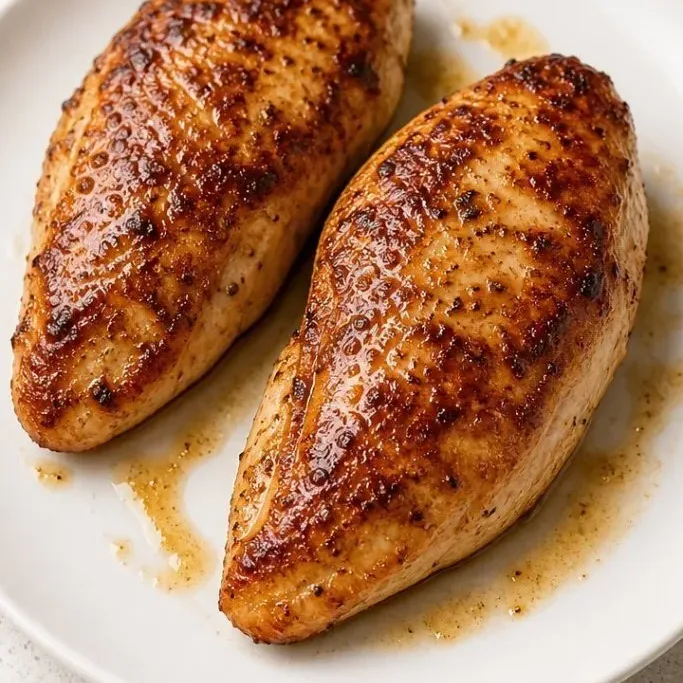
It comes out so juicy you could almost skip the sauce, and the method is straightforward once you know the right temperature and time.
Why This Chicken Breast Actually Stays Juicy
Because the water bath holds the meat at exactly the temperature you set, never higher. The chicken cooks gently all the way through with no chance of hitting that dry, stringy stage.
I keep coming back to this recipe because it is predictable. You get the same tender, moist chicken on a Tuesday as on a Sunday, and it makes meal prep a breeze.
Ingredients
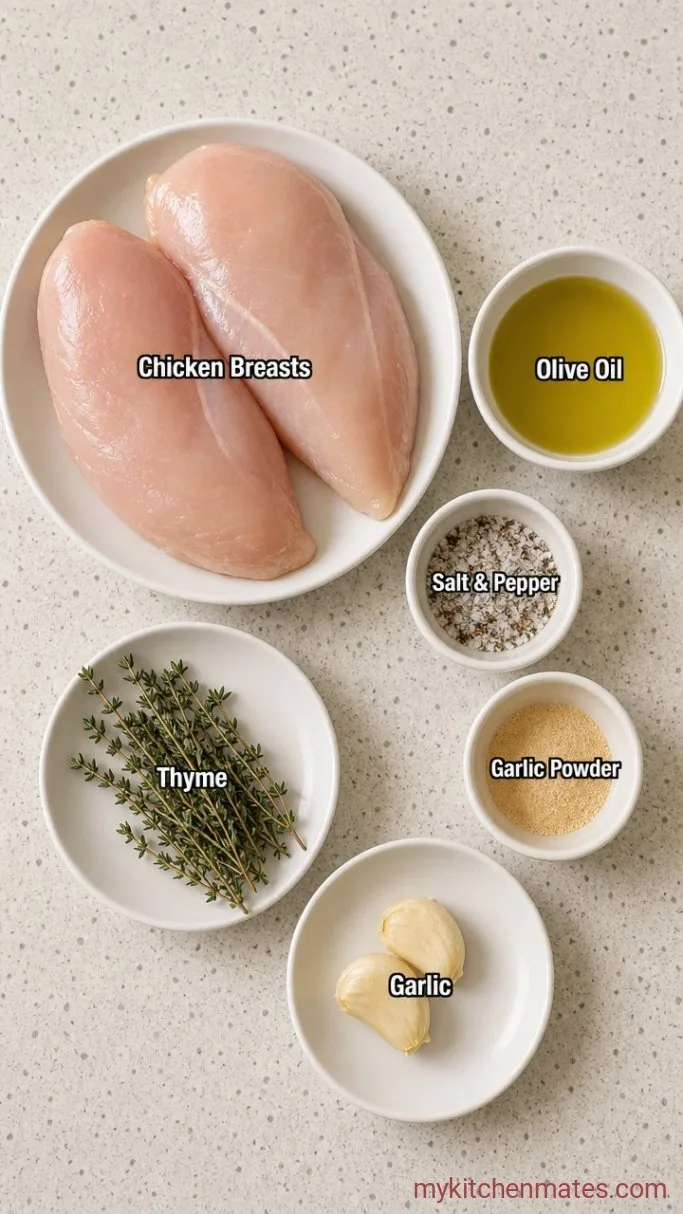
- 2 boneless skinless chicken breasts: about 8 oz (225 g) each, even thickness if possible
- 1 tsp kosher salt: use half if using fine table salt
- 1/2 tsp freshly ground black pepper
- 1/2 tsp garlic powder: optional, adds a subtle warmth
- 2 sprigs fresh thyme or rosemary: or any woody herb you like
- 2 cloves garlic: smashed with the flat of a knife
- 1 tbsp olive oil or unsalted butter: helps carry the seasoning in the bag
Variations / Substitutions
- Bone-in, skin-on breasts: same time and temperature; crisp the skin under a broiler at the end
- Different aromatics: try tarragon, oregano, or a couple of lemon slices
- Add a little heat: a pinch of cayenne or smoked paprika with the salt
- Dairy-free: stick with olive oil; butter is not essential
Crispy Roasted Sweet Potatoes and Brussels Sprouts are an easy side dish to serve with this recipe.
How to Make Sous Vide Chicken Breast
Step 1: Season the Chicken
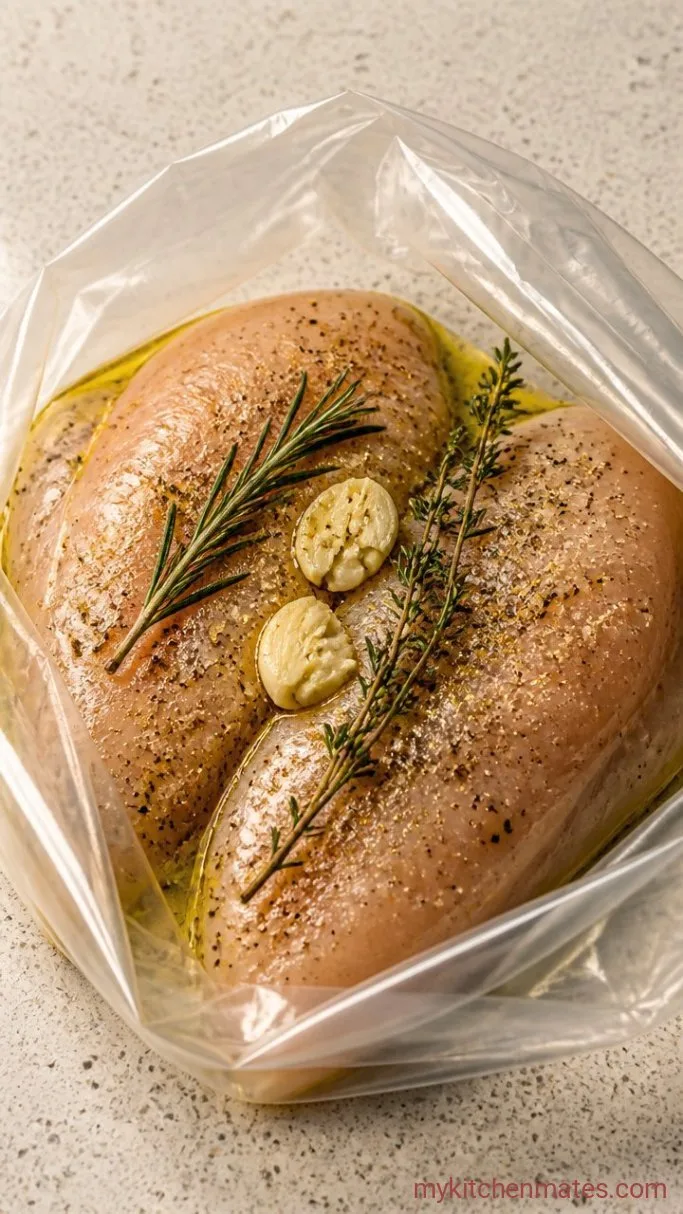
Pat the chicken breasts completely dry with paper towels. Sprinkle all sides with the 1 tsp kosher salt, 1/2 tsp black pepper, and 1/2 tsp garlic powder, rubbing them evenly over the surface.
Don’t skimp on patting dry. Excess moisture dilutes the seasoning and prevents a good sear later. The seasoning should stick all over like a very fine crust.
Step 2: Seal the Bag
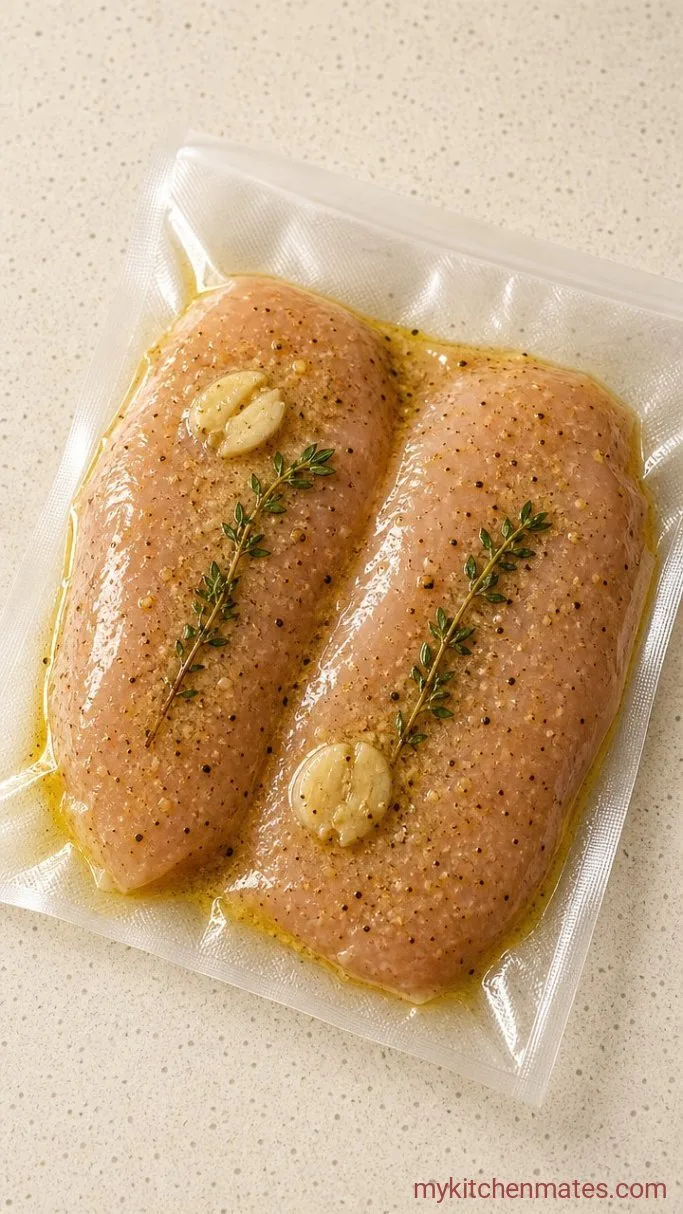
Place each seasoned breast into a separate vacuum-sealer bag (or a heavy-duty zipper-lock bag). Tuck a sprig of thyme, a smashed garlic clove, and about 1/2 tbsp olive oil (or a small pat of butter) into each bag.
If you have a vacuum sealer, use the moist setting so you don’t crush the meat. For zipper-lock bags, use the water displacement method: lower the open bag into a pot of water, let the pressure push out the air, and seal just before the top reaches the water. The chicken should be snug but not squeezed.
Step 3: Cook in the Water Bath
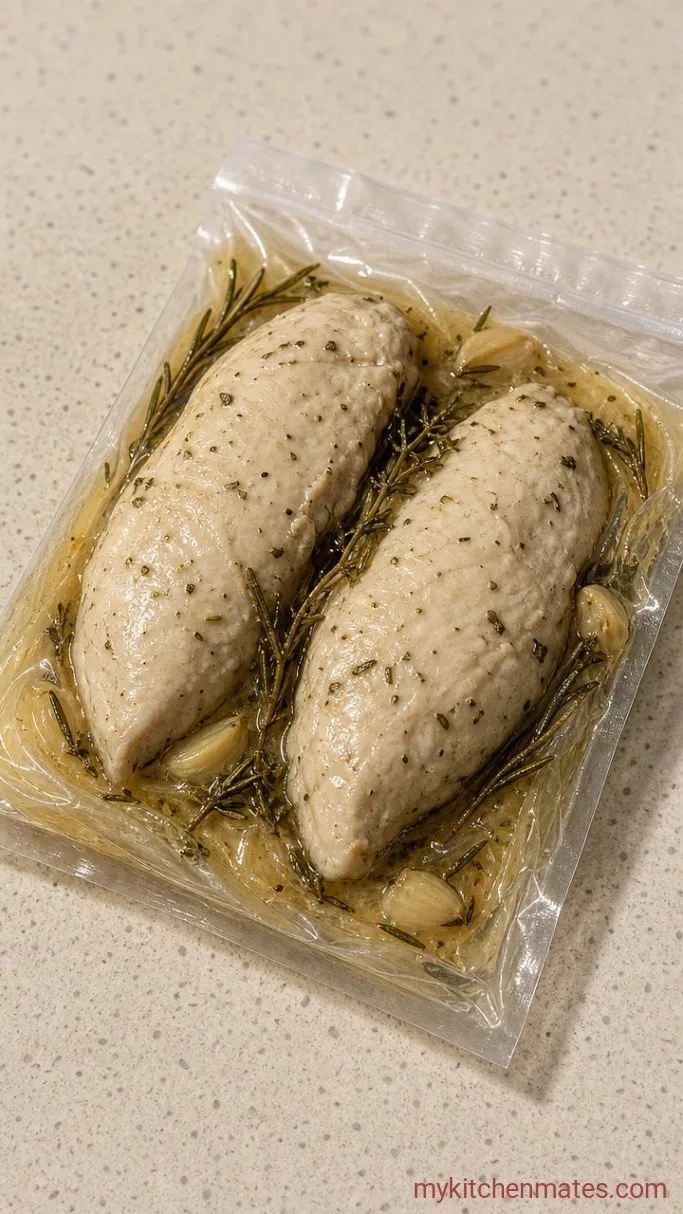
Preheat your sous vide water bath to 145°F (63°C). Once it reaches temperature, submerge the sealed bags fully, making sure they are not floating or overlapping. Cook for 1 hour 30 minutes.
The water needs to circulate freely, so clip the bags to the side or use a rack if you have one. After that 1.5 hours the chicken is fully pasteurized and safe, but you can leave it for up to 4 hours without losing texture.
Step 4: Sear and Serve
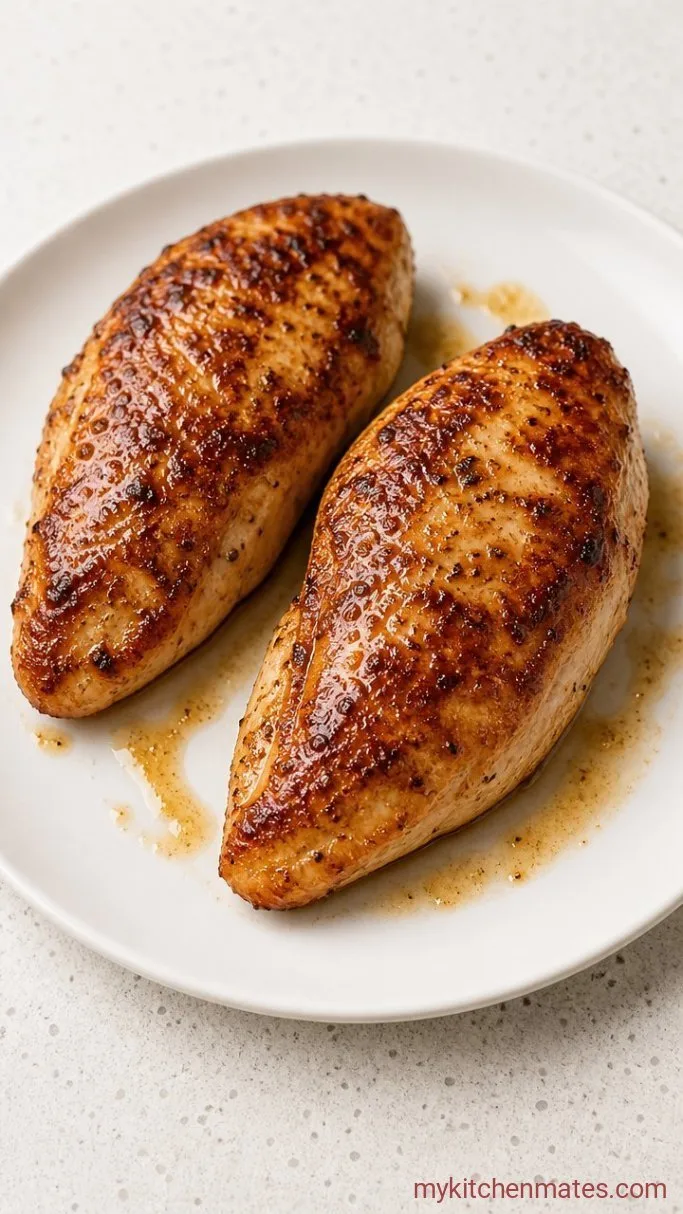
Remove the bags from the water, take the chicken out, and pat it very dry with fresh paper towels. Heat a heavy skillet (cast iron is best) over high heat and add a thin slick of oil. Once the oil is shimmering, lay the breasts in carefully and sear for about 1 minute per side, until the outside turns deep golden.
You are only searing for color and a bit of crust, not cooking the interior further. If you want extra gloss, add a small knob of butter after the first flip and baste briefly. Slice across the grain and serve right away while it is hot and glistening.
Tips for the Best Sous Vide Chicken
- Pat the chicken dry before seasoning and again after the water bath. Any surface moisture is the enemy of a good crust.
- If your chicken breasts are thicker than 1.5 inches, add 30 minutes to the cook time.
- Do not skip the garlic and herbs in the bag. They perfume the meat gently without overpowering.
- For meal prep, season and seal the chicken the night before and store in the fridge. Drop them straight into the water bath and add 15 minutes to the cook time.
Cook times by thickness at 145°F (63°C):
| Thickness | Time |
|---|---|
| 1 inch (2.5 cm) | 1.5 to 2 hours |
| 1.5 inches (3.8 cm) | 2 to 2.5 hours |
| 2 inches (5 cm) | 2.5 to 3 hours |
Keeping Cooked Chicken Juicy
Refrigerate: Store in an airtight container with a spoonful of the bag juices for up to 4 days.
Reheating: Warm gently in a skillet over low heat with a splash of water or broth, just until heated through. A microwave works in a pinch but tends to dry the texture.
What to Serve With Sous Vide Chicken Breast
Slice it over a big Caesar salad for a lunch that feels substantial. Serve it alongside roasted broccoli and a baked sweet potato for a clean weeknight dinner. Toss the slices with a quick pan sauce made from the bag juices and a squeeze of lemon, then spoon over orzo.
Frequently Asked Questions
Can I cook frozen chicken breasts sous vide?
Yes. Place frozen seasoned breasts directly in the bag and add 60 minutes to the cook time. No need to thaw.
Is 145°F safe for chicken?
Yes, at that temperature the meat is pasteurized after about 8.5 minutes once the center reaches 145°F, and our 1.5-hour cook time ensures safety throughout the entire breast.
Do I have to sear the chicken?
No, the chicken is fully cooked and safe right from the bag, but searing gives you a browned crust and deeper flavor. You can skip it if you are in a hurry.
Why did my chicken turn out rubbery?
A rubbery texture often comes from cooking too long at a very low temperature. Stick to 145°F and no more than 4 hours for boneless breasts.
Sous Vide Chicken Breast Recipe
Ingredients
Method
- Pat chicken dry and season all sides with salt, pepper, and garlic powder.
- Place each breast in a bag with herbs, garlic, and oil; seal using a vacuum sealer or water displacement.
- Cook in a 145°F (63°C) water bath for 1 hour 30 minutes.
- Remove chicken, pat very dry, and sear in a hot oiled skillet for about 1 minute per side. Slice across the grain and serve.
Notes
