
Quick Weeknight Salmon Quiche (Canned Salmon)

This salmon quiche comes together fast with a store-bought crust and a can of salmon, but it tastes like something you spent hours on. The filling is rich and custardy, with bright pops of dill and nutty Gruyère, so it works just as well for a weeknight dinner as it does for a lazy weekend brunch.

If you’ve never made a quiche before, this recipe is a good place to start. The steps are straightforward, and you don’t need any special skills beyond whisking and pouring.
What Makes This Salmon Quiche So Good
Canned salmon gives you all the savory flavor of fresh without the extra step of cooking and flaking. It’s already tender, and it stays moist inside the custard.
The custard itself has just the right balance of richness and lightness thanks to a mix of heavy cream and milk. Too much cream makes a quiche feel heavy; a little milk keeps it silky but not cloying.
I lean on Gruyère for its meltability and subtle nuttiness, but a sharp cheddar or even smoked Gouda would change the whole character in a good way.
Ingredients
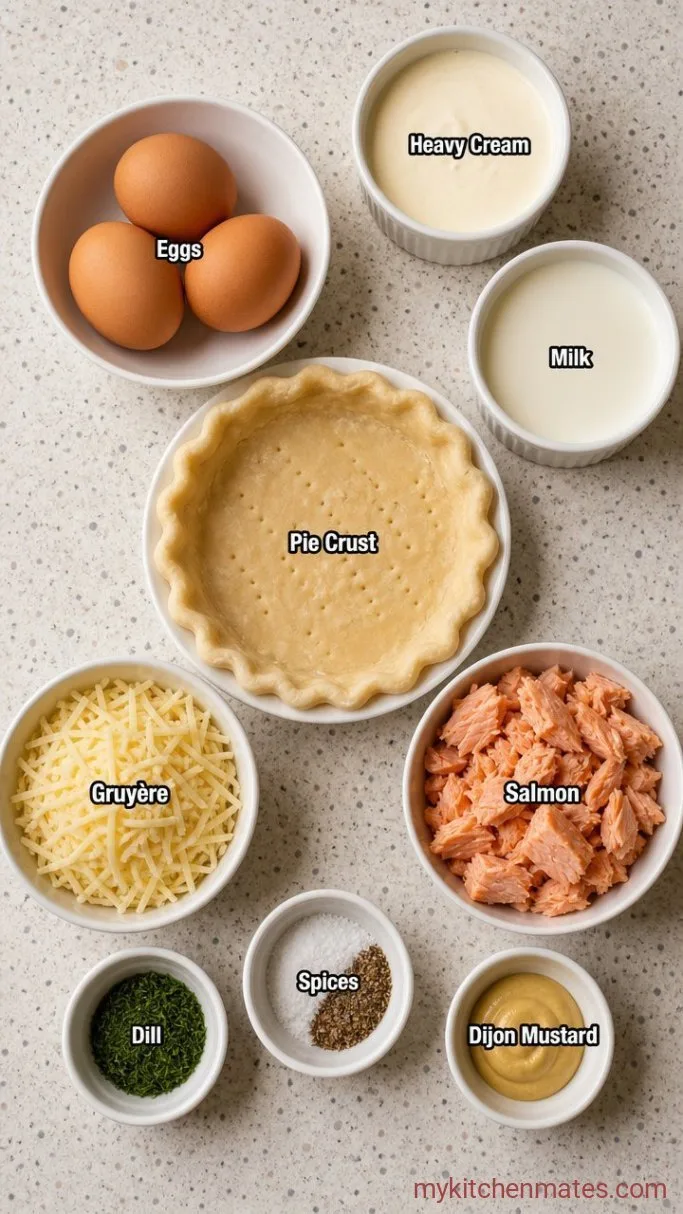
- 1 unbaked 9-inch pie crust, store-bought or homemade: if frozen, thaw according to package directions
- 3 large eggs: cold or room temperature both work here
- 1 cup heavy cream: or substitute an equal amount of half-and-half
- 1/2 cup whole milk: 2% works in a pinch, but whole milk gives the creamiest result
- 1 cup shredded Gruyère cheese (4 oz): Swiss, sharp cheddar, or fontina all swap in well
- 1 (6 oz) can boneless skinless salmon, drained and flaked into large pieces: check for small bones and discard them
- 1/4 cup finely chopped fresh dill: or 1 tablespoon dried dill
- 1/4 teaspoon salt
- 1/8 teaspoon black pepper
- Pinch of ground nutmeg: just enough to warm the custard, not shout at you
- 1 tablespoon Dijon mustard (optional): for brushing the prebaked crust
Variations / Substitutions
- Use fresh or leftover cooked salmon: flake about 6 ounces and follow the same steps. Just skip any strong seasoning that might fight the dill.
- Swap the herb: chives, parsley, or a mix of tarragon and chervil all work instead of the dill.
- Make it dairy-free: use an unsweetened plain oat cream or coconut cream plus a little plant-based milk, and pick a dairy-free cheese that melts well.
- Turn it into a smoked salmon quiche: replace the canned salmon with about 4 ounces of thinly sliced cold-smoked salmon folded into the custard after you layer the cheese.
- Add a veggie: scatter 1/2 cup of thawed frozen peas or lightly sautéed spinach over the salmon before you pour the custard.
Spring Asparagus Quiche is another breakfast you’d probably love if you enjoy this quiche.
How to Make Salmon Quiche
Step 1: Blind Bake the Crust
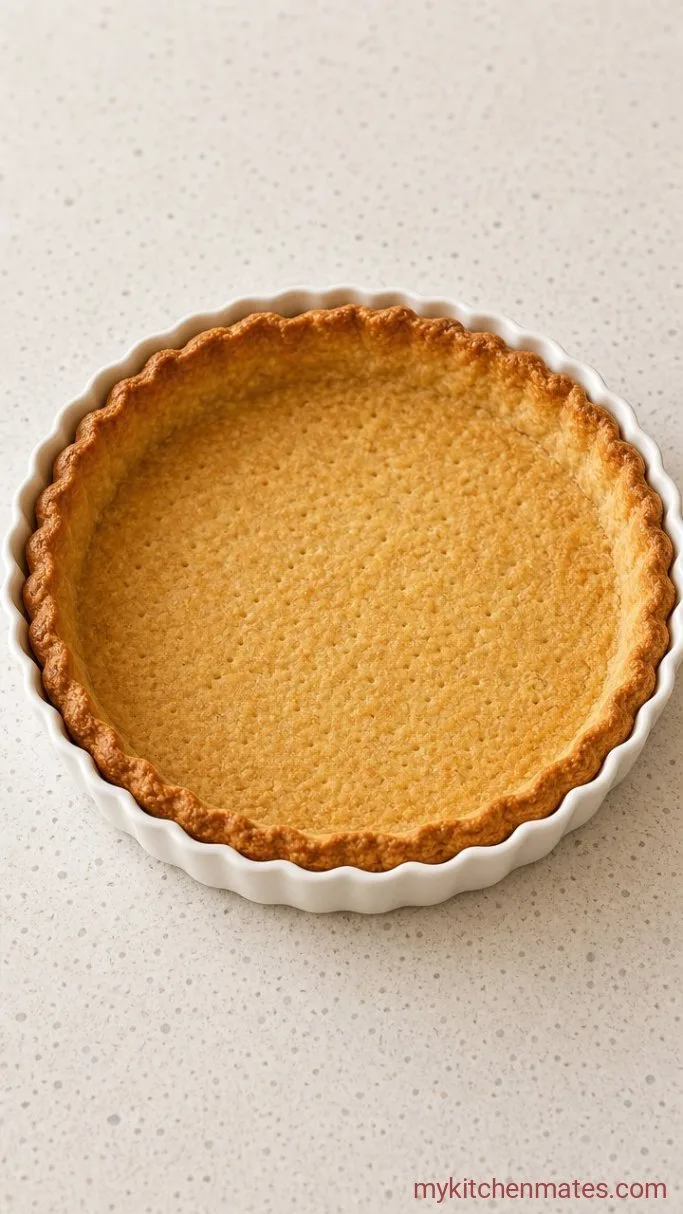
Preheat your oven to 375°F (190°C). Ease the pie crust into a 9-inch pie dish, crimp the edges if you like, and prick the bottom all over with a fork. Line the crust with a sheet of parchment paper and fill it with pie weights or dried beans. Bake for 12 minutes.
Carefully lift out the parchment and weights, then return the crust to the oven for another 5 minutes. The bottom should look dry and no longer shiny, and the edges will be just starting to turn pale golden. This first bake keeps the bottom from turning soggy once the filling goes in.
Step 2: Whisk the Filling
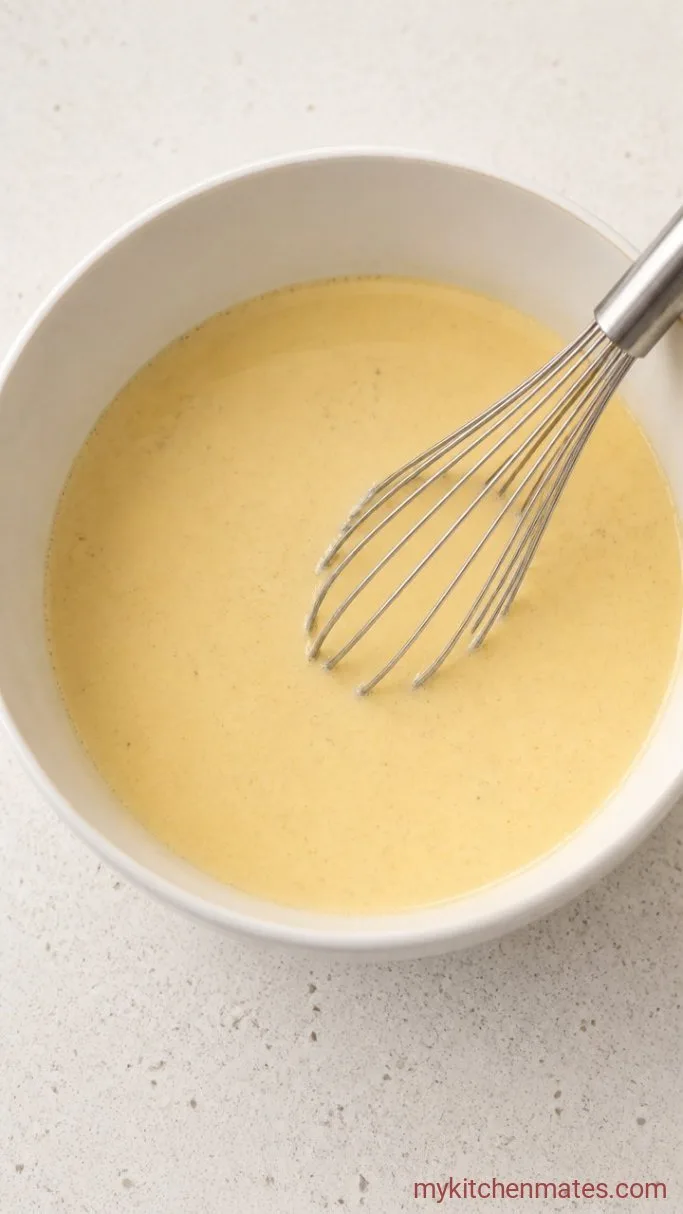
In a large bowl, whisk the 3 eggs, 1 cup heavy cream, 1/2 cup milk, 1/4 teaspoon salt, 1/8 teaspoon pepper, and a pinch of nutmeg for about 1 minute, until the mixture is smooth and even with no streaks of yolk. A whisk does a better job than a fork here because it breaks up the eggs fast and adds just a little air.
Step 3: Layer the Quiche
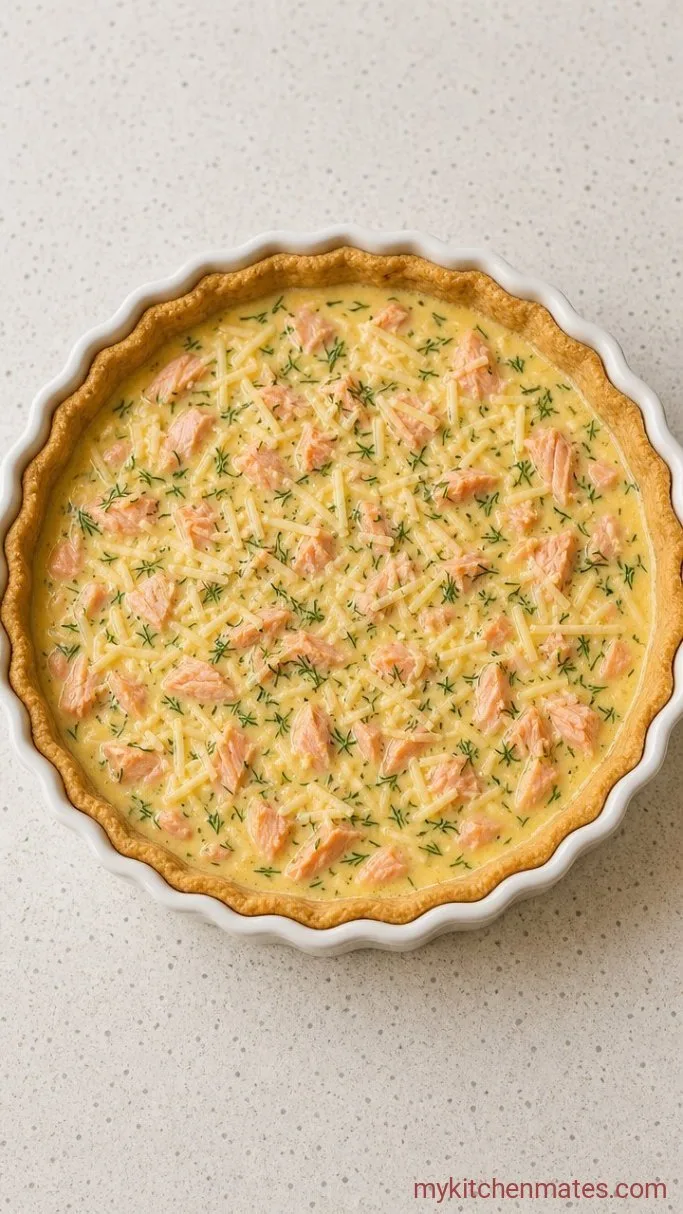
If you’re using the Dijon mustard, brush it over the still-warm crust now. Scatter the flaked salmon, shredded Gruyère, and chopped dill evenly across the bottom, which takes just a minute. Slowly pour the egg mixture over everything.
The cheese and salmon will float a little; that’s fine. The custard will set around them as it bakes and hold it all together.
Step 4: Bake the Quiche
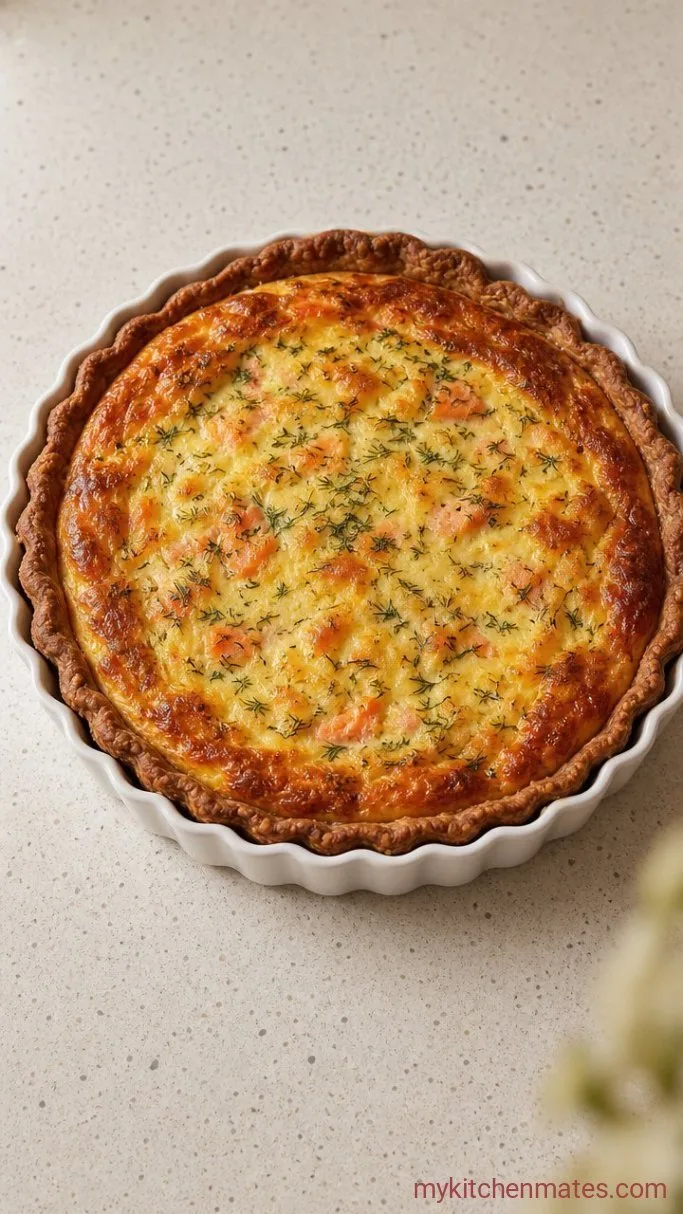
Carefully slide the quiche into the oven and bake for 35 to 40 minutes. The quiche is ready when the edges are puffed and deep golden, and the center still has a slight wobble when you gently shake the pan. It will continue to set as it cools.
If the crust edges brown too quickly, tent the whole pie loosely with foil for the last 10 minutes of baking.
Step 5: Cool and Serve
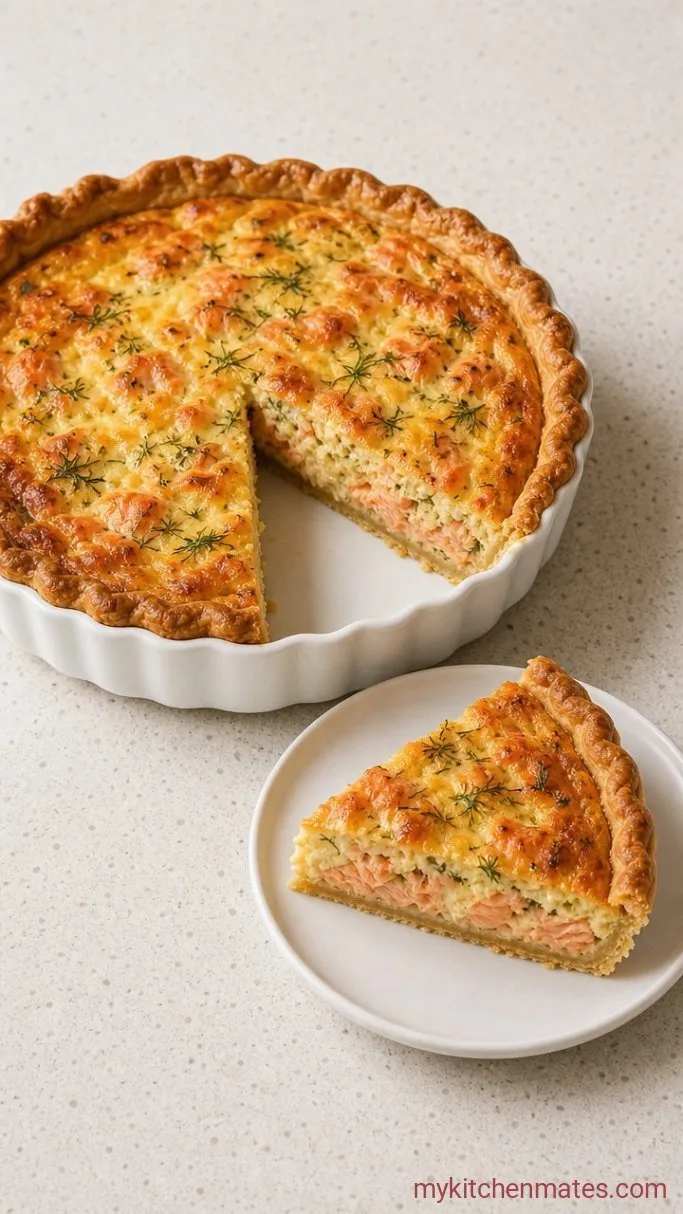
Let the quiche rest on a wire rack for at least 10 minutes before you slice it. Cut into wedges and serve warm or at room temperature. The custard will be creamy and just firm enough to hold its shape, with those pretty pieces of salmon and green flecks of dill showing in every slice.
A Few Tips Before You Start
- Keep the pie crust cold until you’re ready to roll it out or fit it into the pan. Cold dough relaxes less in the oven and holds its crimp better.
- Don’t overbeat the eggs; whisk just until everything is combined. Overbeating can puff the quiche in the oven and then let it fall, leaving a spongy texture.
- An instant-read thermometer takes the guesswork out of doneness. The center should read about 175°F (80°C) when it’s done.
- Leftover quiche makes a great packed lunch the next day, served cold or gently rewarmed.
Bake times for different pans:
| Pan Type | Bake Time (after layering) |
|---|---|
| 9-inch pie dish | 35 to 40 mins |
| 10-inch tart pan | 30 to 35 mins |
| Six 4-inch mini quiche tins | 20 to 25 mins |
Keeping Leftover Quiche
- Refrigerate: Cover the cooled quiche tightly and refrigerate for up to 4 days.
- Reheating: Warm slices in a 300°F (150°C) oven for 10 to 15 minutes, or in the microwave in short bursts if you’re in a hurry.
- Serve Cold: Quiche tastes wonderful straight from the fridge, especially packed for a lunch or picnic.
What to Serve with Salmon Quiche
A simple green salad with a sharp lemon vinaigrette is my favorite pairing. The brightness of the lemon cuts through the richness of the custard and keeps each bite feeling fresh. Roasted asparagus works well too; its slight char and vegetal sweetness sit right next to the salmon and dill. On a brunch table, a bowl of lightly dressed cucumber and cherry tomatoes adds crunch and color.
Frequently Asked Questions
Can I use fresh salmon instead of canned?
Yes. You’ll need to cook about 6 ounces of fresh salmon first, then let it cool and flake it. Pan-seared or baked both work, just avoid heavy seasoning that would clash with the dill.
Can I make this quiche crustless?
You can. Grease the pie dish well, skip the crust steps, layer the filling directly in the pan, and bake for about 30 to 35 minutes. The custard will set without the crust, though the edges may brown a bit more.
Can I freeze salmon quiche?
Yes. Let the baked quiche cool completely, wrap it tightly in plastic and then foil, and freeze for up to 2 months. Thaw overnight in the fridge and reheat in a 300°F oven until warmed through.
My quiche sank in the middle. What went wrong?
It likely overbaked, or the eggs and liquids puffed up and then collapsed. Use an instant-read thermometer next time and pull the quiche when the center reads around 175°F (80°C). A little wobble is good.
Can I use all milk instead of cream?
You can, but the custard will feel thinner and less silky. Replace both the cream and milk with 1 1/2 cups of whole milk, and expect a slightly firmer, less rich texture.
Salmon Quiche Recipe
Ingredients
Method
- Preheat oven to 375°F (190°C). Line a 9-inch pie dish with the crust, prick the bottom with a fork, and blind bake with pie weights for 12 minutes. Remove weights and bake 5 minutes more.
- Whisk the eggs, cream, milk, salt, pepper, and nutmeg in a large bowl for about 1 minute until smooth.
- Brush the warm crust with Dijon mustard (if using). Scatter salmon, cheese, and dill evenly over the crust, then pour the egg mixture over everything.
- Bake for 35 to 40 minutes, until the edges are puffed and golden and the center still jiggles slightly when shaken.
- Cool the quiche on a wire rack for at least 10 minutes. Slice and serve warm or at room temperature.
Notes
