
25-Minute Sheet Pan Salmon and Asparagus

The honey garlic glaze on this salmon hits that exact sweet-savory spot that makes you want to scrape every bit off the pan. The asparagus roasts right alongside, picking up just a little of the sticky sauce while staying bright and crisp.
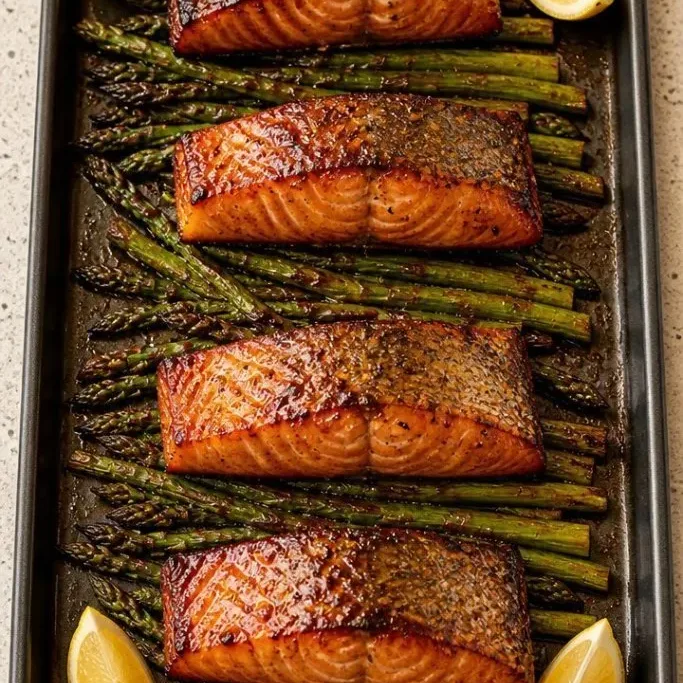
Everything happens on one sheet pan, so you spend five minutes prepping and the rest of your evening doing anything but washing dishes. It’s the kind of dinner I lean on when I want something that tastes like I tried, even though I barely did.
What Makes This Salmon So Good
The honey caramelizes under the broiler into a glossy, almost-crackly coating on the fish. It never gets cloying because the soy sauce and garlic cut through the sweetness with a salty depth that keeps each bite balanced.
The asparagus pan-roasts at the same high heat, so the tips char a little and the stalks stay tender but never flabby. You get a complete plate of food with zero skillet juggling.
Ingredients
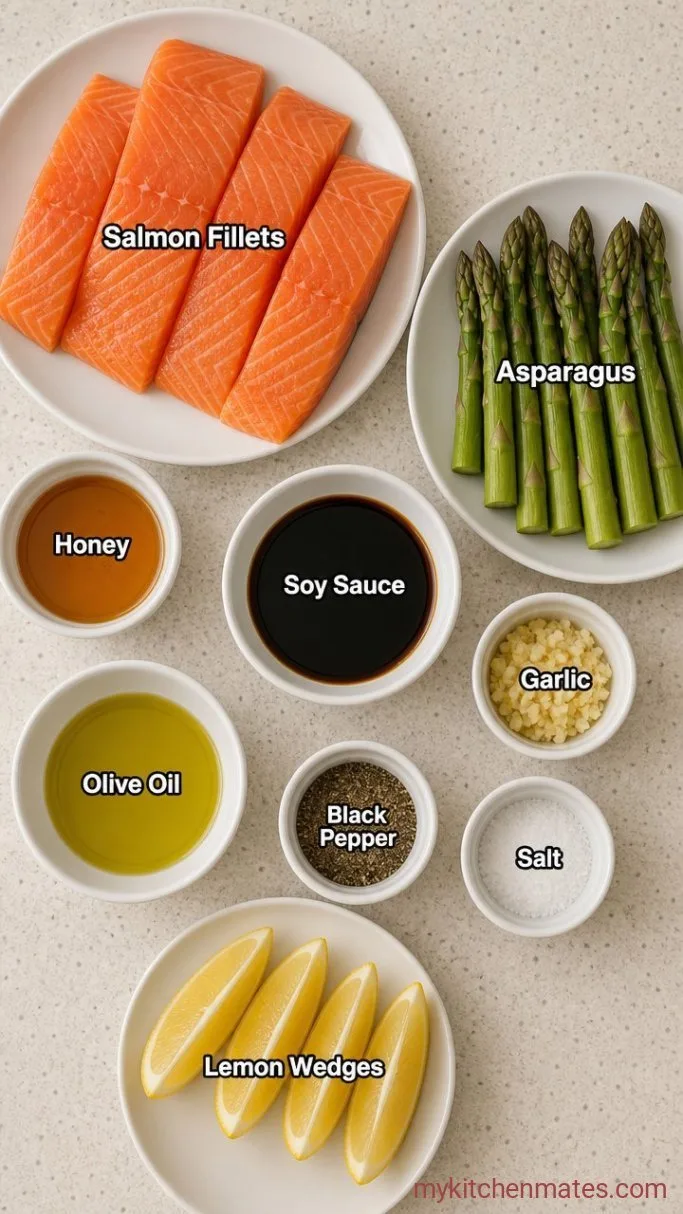
- 4 salmon fillets (each about 6 oz): I use skin-on; it helps the fish hold together and gets crispy in the oven.
- 1 lb asparagus: choose thicker spears so they can stand up to the heat without turning limp.
- 3 tbsp honey: the base of the glaze, any mild variety works.
- 2 tbsp low-sodium soy sauce: I like the control of adding salt later.
- 3 cloves garlic: finely minced, not grated, so it doesn’t burn as easily under the broiler.
- 1 tbsp olive oil: plus a little extra for drizzling the asparagus.
- ½ tsp black pepper: fresh cracked gives the best bite.
- Salt: about ¼ tsp for the salmon, a pinch for the asparagus.
- Lemon wedges: for squeezing over at the end.
Variations / Substitutions
- Swap the protein: trout or arctic char fillets cook in nearly the same time. Chicken thighs work too; just bake them 10 minutes before adding the asparagus.
- Switch the vegetable: green beans, broccolini, or even halved brussels sprouts roast well in a single layer. Thick-cut zucchini needs less time, so add it halfway.
- Replace the honey: pure maple syrup or light brown sugar gives a different but equally good sticky finish. Start with 2 tbsp and taste the glaze.
- Add a little heat: a pinch of red pepper flakes or a tiny spoonful of chili garlic sauce in the glaze wakes everything up.
- Make it dairy-free: the recipe is naturally dairy-free. Just double-check your soy sauce has no added dairy.
Shrimp and Sausage Sheet Pan Dinner is another dinner you’d probably love if you enjoy this asparagus.
How To Make Sheet Pan Salmon and Asparagus
Step 1: Whisk the Glaze
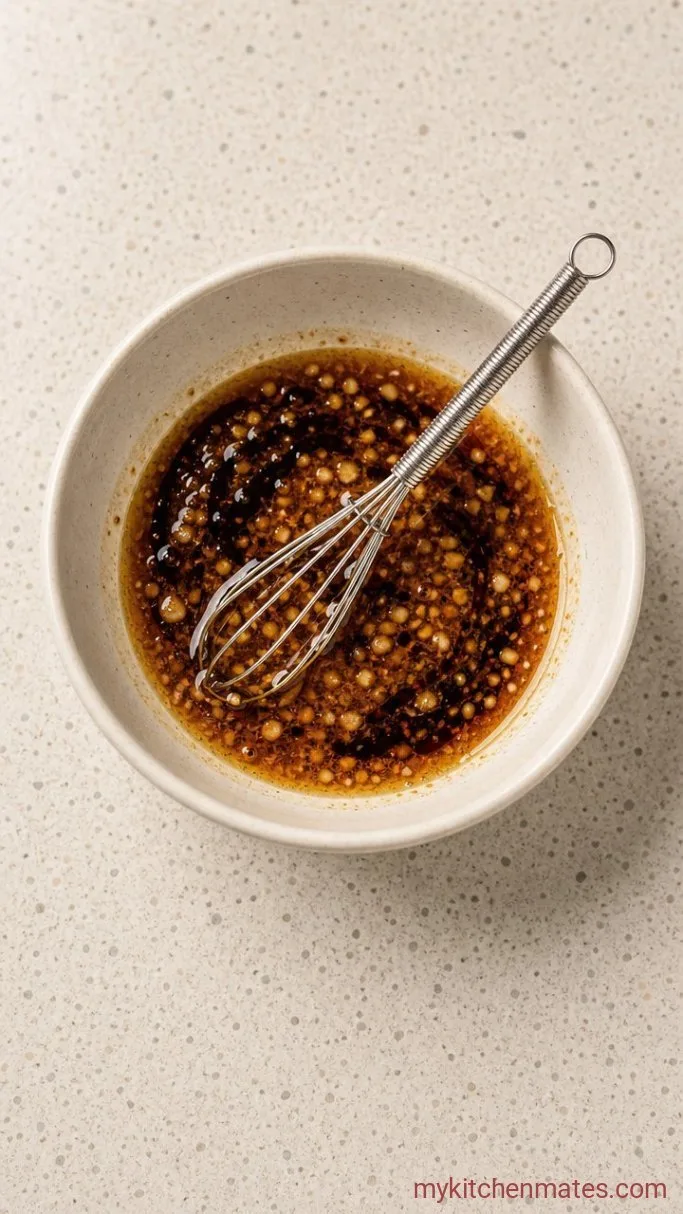
In a small bowl, stir together the 3 tbsp honey, 2 tbsp soy sauce, the minced garlic, 1 tbsp olive oil, and the ½ tsp black pepper. Whisk until the honey loosens up and the mixture looks uniform. It will be thin and smell sharply of garlic with a sweet undertone.
Don’t add salt yet. The soy sauce carries enough saltiness for the fish; you can adjust at the table if needed.
Step 2: Arrange the Salmon and Asparagus
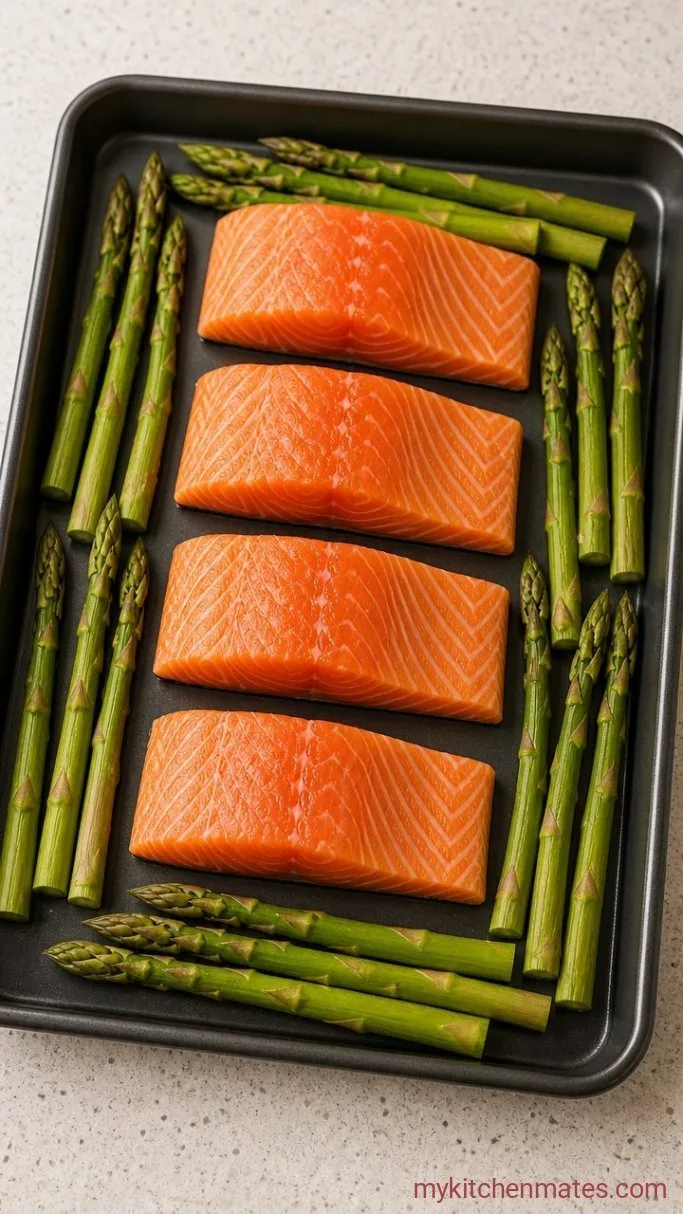
Preheat your oven to 400°F (200°C) and line a rimmed baking sheet with parchment paper or foil. Pat the salmon fillets completely dry with paper towels, then set them skin side down on the prepared sheet. Scatter the asparagus around the fish in a single layer.
Drizzle the asparagus with just a little olive oil and toss it gently to coat. Season the salmon with a pinch of salt (about ¼ tsp total across all fillets) and the asparagus with a tiny pinch. The salmon should look glossy from its own oils, and the asparagus should have a light sheen but no pooling oil on the pan.
Step 3: Brush and Bake
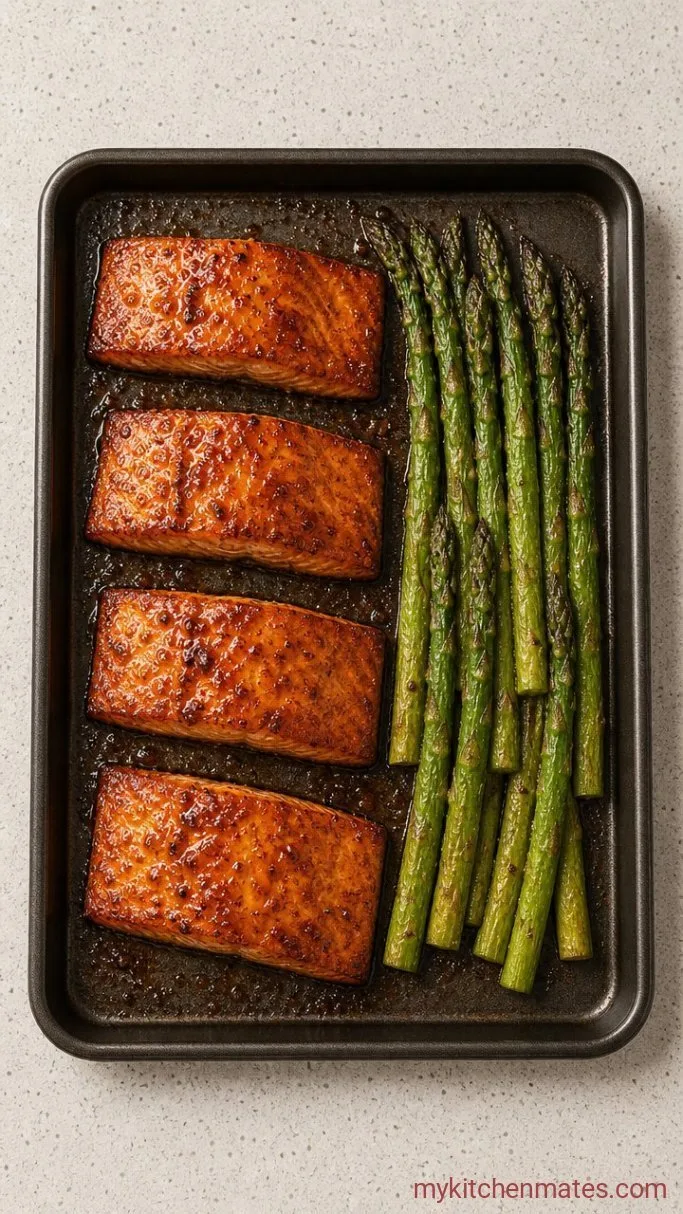
Spoon half the glaze over the tops of the salmon fillets and use a brush or the back of the spoon to spread it evenly. Slide the pan into the oven and bake for 8 minutes. At the 8-minute mark, pull the pan out. The glaze will have started to set but still look wet.
Now spoon the remaining glaze over the salmon and drizzle any extra over the asparagus. Give the asparagus a quick turn so it gets coated on all sides. Return the pan to the oven and bake for another 5 to 7 minutes, until the salmon is just opaque at the center and flakes when pressed gently. A thermometer in the thickest part should read 125°F to 130°F for a medium, moist finish.
Step 4: Broil and Serve
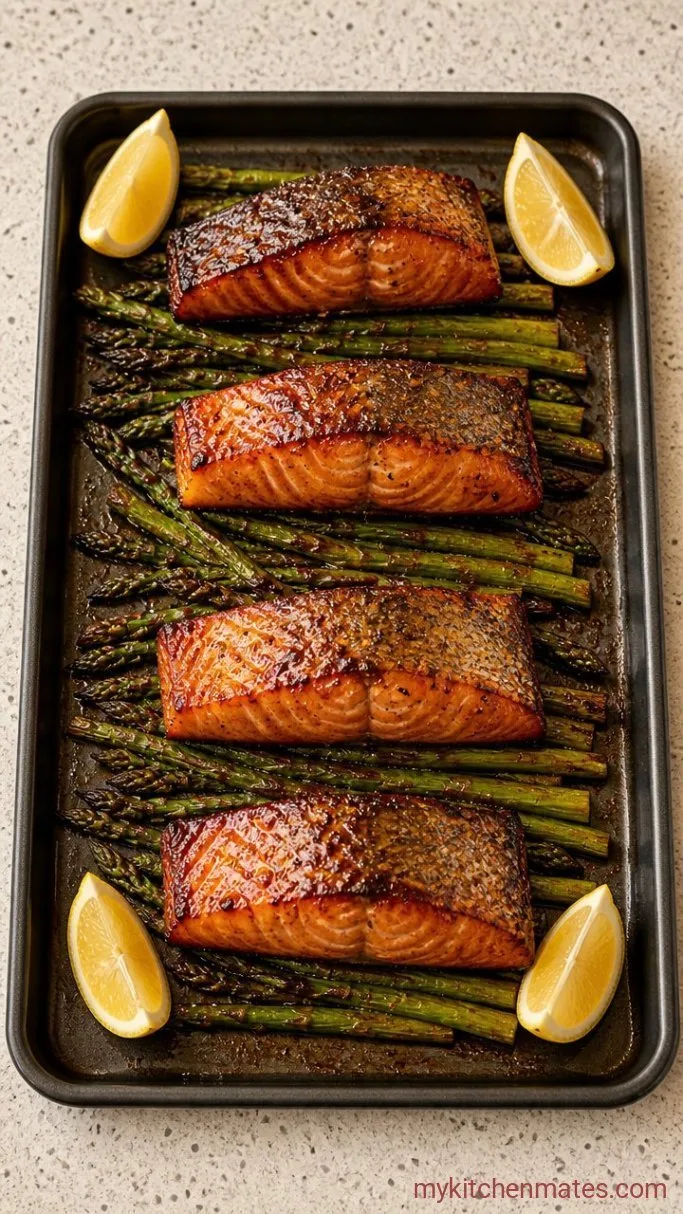
Switch the oven to broil and leave the pan on the middle rack. Broil for 2 to 3 minutes, watching the whole time, until the glaze bubbles and the edges of the salmon start to char in a few spots. The asparagus tips will darken and crisp.
Pull the pan out and immediately transfer the salmon and asparagus to plates. Squeeze fresh lemon over everything and serve while the glaze is still sticky and warm.
Tips for Perfect Sheet Pan Salmon
- Choose fillets that are all about the same thickness so they finish at the same time. If one is thinner, pull it out a minute early.
- Pat the salmon as dry as you can before seasoning. Any surface moisture steams instead of sears, and you’ll miss that caramelized top.
- Keep the asparagus in a true single layer with a little space between spears. If they pile up, they’ll steam and lose their snap.
- Use an instant-read thermometer and pull the salmon at 125°F. Carryover heat will take it to a perfect 130°F after resting for a minute.
Cook times by salmon thickness:
| Thickness | Bake Time (after adding rest of glaze) |
|---|---|
| ¾ inch | 3 to 5 minutes |
| 1 inch | 5 to 7 minutes |
| 1½ inches | 7 to 9 minutes |
Storing Leftovers
- Refrigerate: Cool the salmon and asparagus completely, then store them together in an airtight container for up to 2 days.
- Reheating: Warm the salmon in a 275°F oven on a foil-lined sheet just until it’s heated through, about 8 minutes. The microwave works in a pinch but tends to dry it out.
- Serve Cold: Flaked cold salmon over a crisp salad is just as good the next day, especially with a little extra lemon.
What To Serve With Honey Garlic Salmon
Steamed jasmine rice or a scoop of quinoa soaks up the extra glaze and gives the meal more heft. A simple cucumber salad with rice vinegar cuts through the richness, and the cool crunch next to the warm fish is a nice contrast. If I want something green beyond the asparagus, a handful of arugula dressed lightly with olive oil and lemon does the job without adding any extra cooking.
Frequently Asked Questions
Can I use salmon without skin?
Yes, the cooking time stays the same. Handle the fillets gently when moving them to the pan, because skinless salmon flakes more easily.
What if I don’t have honey?
Maple syrup and light brown sugar both work well. Start with a little less than the honey amount and taste the glaze before brushing it on.
Can I use frozen salmon?
Sure, just thaw it completely in the fridge overnight and pat it extremely dry before you season it. Any leftover moisture will keep the glaze from sticking.
How do I keep the asparagus from getting limp?
Roast at a high heat, use thick spears, and never crowd them on the pan. Thin asparagus simply cooks too fast for the salmon’s bake time.
Honey Garlic Sheet Pan Salmon and Asparagus Recipe
Ingredients
Method
- Whisk together the honey, soy sauce, garlic, olive oil, and black pepper in a small bowl.
- Preheat oven to 400°F (200°C) and line a rimmed baking sheet. Pat salmon dry, place skin side down, and arrange asparagus around it in a single layer. Drizzle asparagus lightly with olive oil, season salmon with ¼ tsp salt and asparagus with a pinch of salt.
- Brush half the glaze over the salmon fillets. Bake for 8 minutes.
- Remove the pan and spoon the remaining glaze over the salmon and asparagus, turning the asparagus to coat. Bake for 5 to 7 minutes more, until salmon reaches 125°F to 130°F at the center.
- Switch oven to broil and broil the pan on the middle rack for 2 to 3 minutes, until the glaze bubbles and edges char. Serve immediately with lemon wedges.
Notes
