
No-Knead Rye Sourdough Bread

This no-knead rye sourdough gives you a deep, nutty loaf with a shatteringly crisp crust and an open crumb, all from a dough that practically takes care of itself. You mix it in the evening, go to sleep, and shape it in the morning so a warm loaf is waiting by dinner.
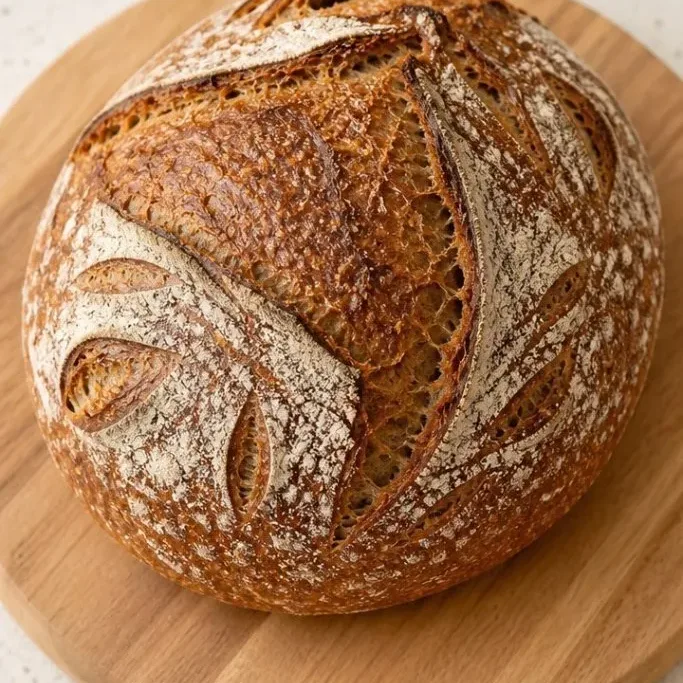
What Makes This Rye Sourdough Reliable
Rye flour brings a subtle earthy sweetness that plain white bread can’t match, but it also makes dough stickier. A long, cool overnight fermentation tames that stickiness and develops flavor without any kneading, so you get consistent results even if your starter isn’t perfect.
The method uses a handful of stretch-and-folds instead of heavy kneading. You touch the dough for maybe three minutes total, and the oven and a hot Dutch oven do the rest. The crust ends up dark, blistered, and so thin it crackles when you press it.
Ingredients
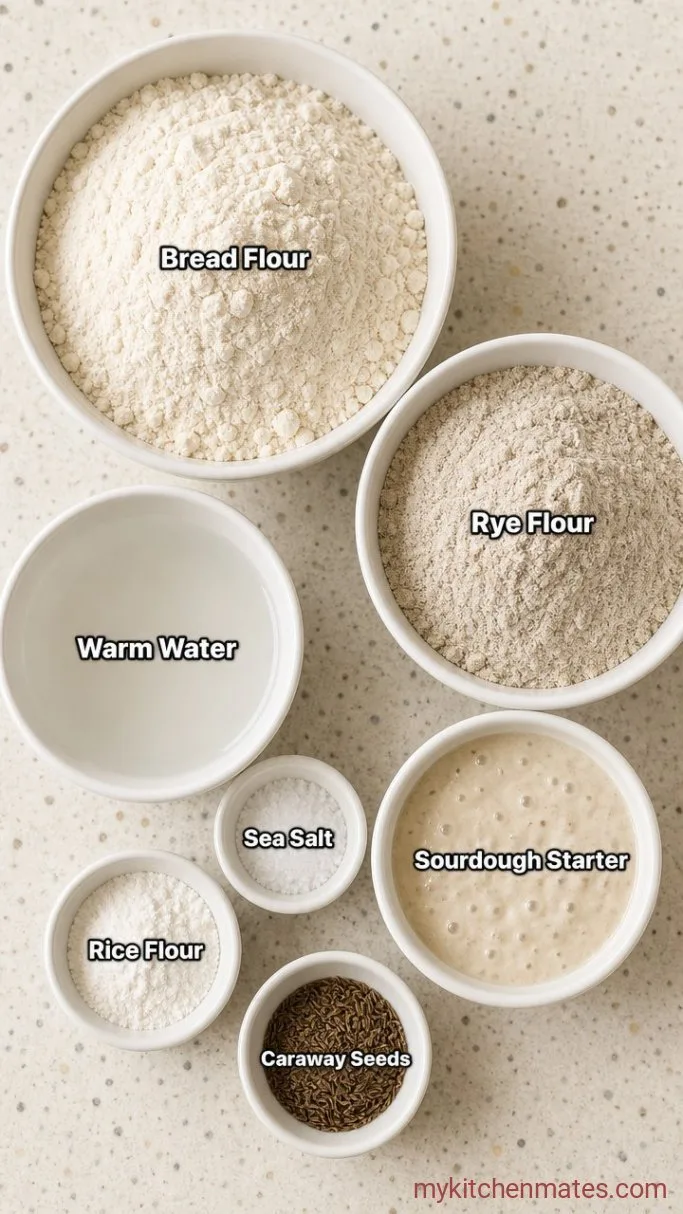
- 350 g bread flour: high-protein flour gives the loaf its structure and rise
- 150 g whole rye flour: the whole grain adds a nutty, slightly malty flavor
- 375 g warm water, about 85°F (29°C): warmth jump-starts fermentation without being too hot
- 100 g active sourdough starter (100% hydration): fed and bubbly, ideally at its peak before you mix
- 10 g fine sea salt: balances the fermentation and sharpens the rye’s sweetness
- Rice flour or extra bread flour for dusting: prevents sticking during the final proof
- Optional: 1 tbsp caraway seeds: for a traditional rye aroma
Variations / Substitutions
- Swap in all-purpose flour for bread flour: you’ll get a slightly softer, less chewy crumb, but the loaf still rises well
- Add 1 to 2 tsp caraway or fennel seeds: mix them in with the salt to echo classic deli rye
- Use a seeded crust: after shaping, gently roll the dough in a mix of sesame, sunflower, or poppy seeds before placing it in the banneton
- Make it fully whole grain: replace all bread flour with whole wheat or spelt, but expect a denser crumb and increase water by 20 g
Creamy Potato Soup goes perfectly with this bread for a cozy meal.
How to Make No-Knead Rye Sourdough Bread
Step 1: Mix the Dough and Autolyse
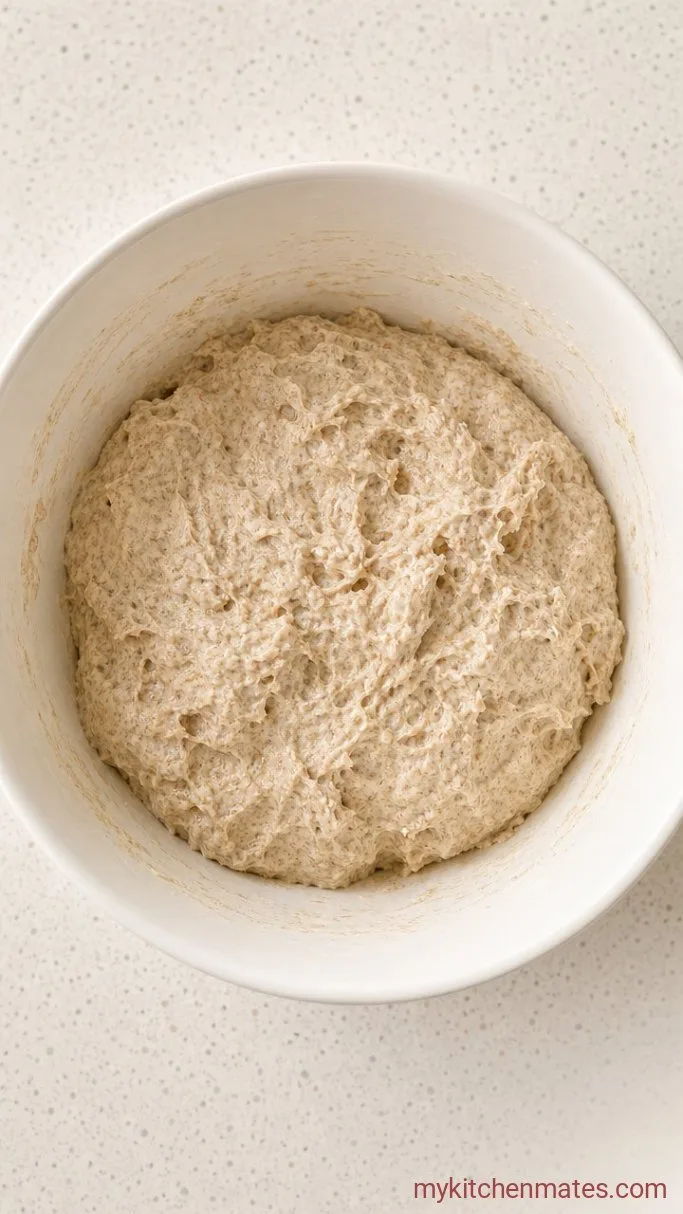
In a large bowl, stir the 375 g warm water and 100 g active starter with a spatula until the starter dissolves and the water looks milky. Add the 350 g bread flour and 150 g rye flour, then mix until no dry spots remain. The dough will be shaggy and a little sticky. Cover the bowl with a plate or plastic wrap and let it rest for 1 hour. This rest, called an autolyse, lets the flours fully hydrate so the gluten begins developing on its own.
Step 2: Incorporate the Salt and Fold
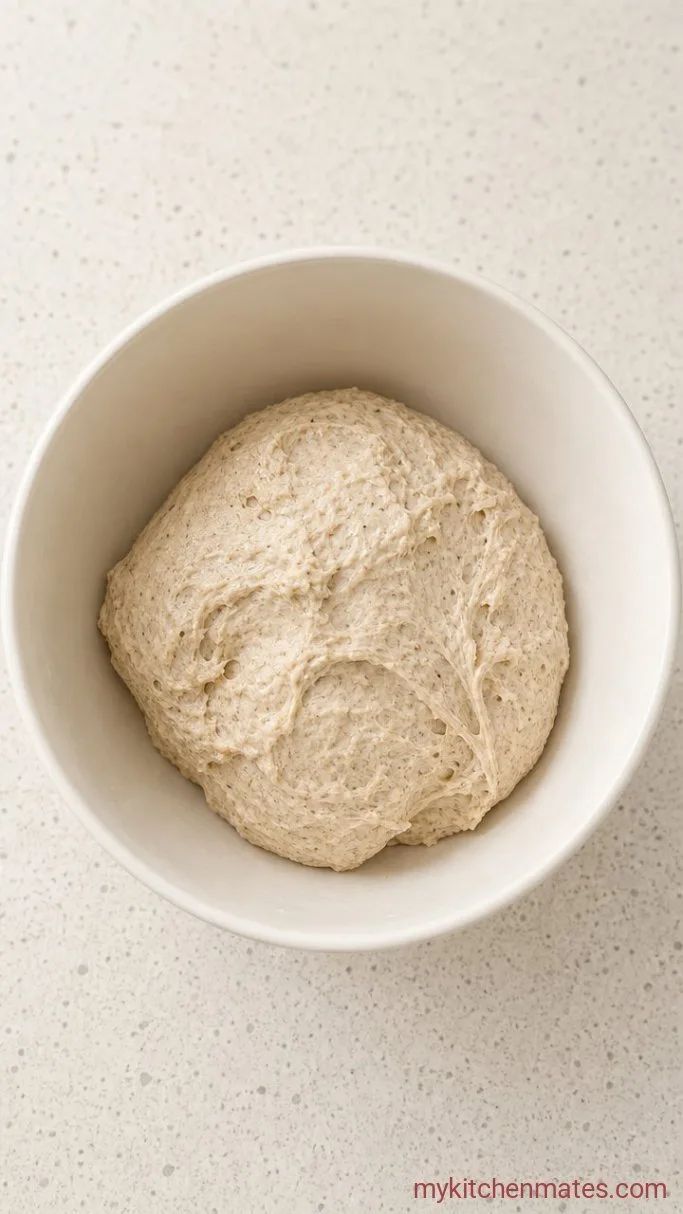
Sprinkle the 10 g salt evenly over the dough’s surface and pour a splash of water, about 15 g, over the top to help the salt dissolve. With a wet hand, reach under the dough, lift one side, and fold it over the center. Rotate the bowl a quarter turn and repeat, doing 4 to 5 folds total until the dough feels evenly salted and tightens slightly. At this stage it will still look lumpy and slack, and that’s fine.
Step 3: Strengthen with Coil Folds
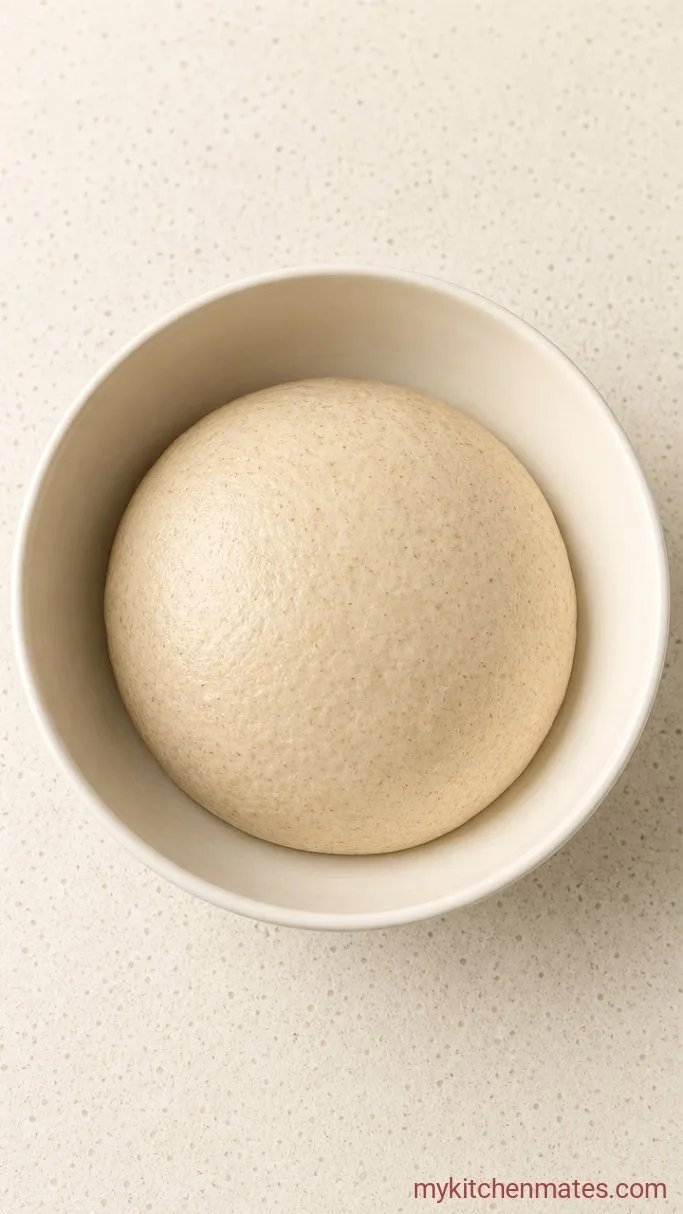
Cover the dough and let it rest for 30 minutes. Then, with a wet hand, perform a coil fold: slide both hands under the middle of the dough, lift until the dough stretches and the bottom pulls away from the bowl, then lower it so the ends tuck underneath. Rotate the bowl a quarter turn and repeat, 3 or 4 lifts total. After each fold you’ll notice the dough becomes smoother and more domed. Cover again and repeat the coil fold two more times at 30-minute intervals, for a total of three sets over 1.5 hours. After the last fold, cover tightly and let the dough rise at room temperature (ideally 70 to 74°F) for 7 to 12 hours, until it has nearly doubled and the top is rounded and puffed with visible bubbles.
Step 4: Shape and Proof
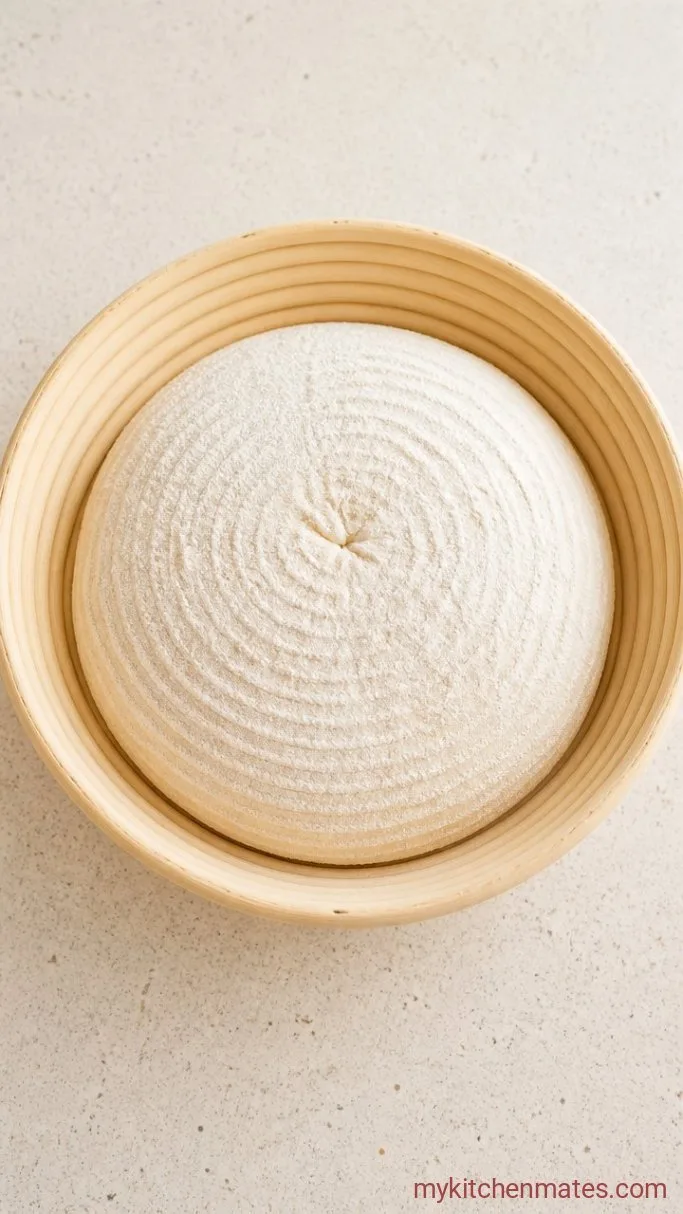
Turn the dough onto a lightly floured surface and gently shape it into a tight round. Pull the corners into the center, then flip the dough over and use cupped hands to drag it across the counter, building tension in a smooth skin. Place the round seam side up in a banneton or a bowl lined with a well-floured cloth. Cover with a damp towel and let it proof at room temperature for 1 to 2 hours, until a gentle poke with a floured finger slowly springs back and leaves a shallow indent. Meanwhile, if your kitchen is very warm, move the banneton to the fridge for the last 30 minutes to make scoring easier.
Step 5: Bake and Turn Out the Loaf
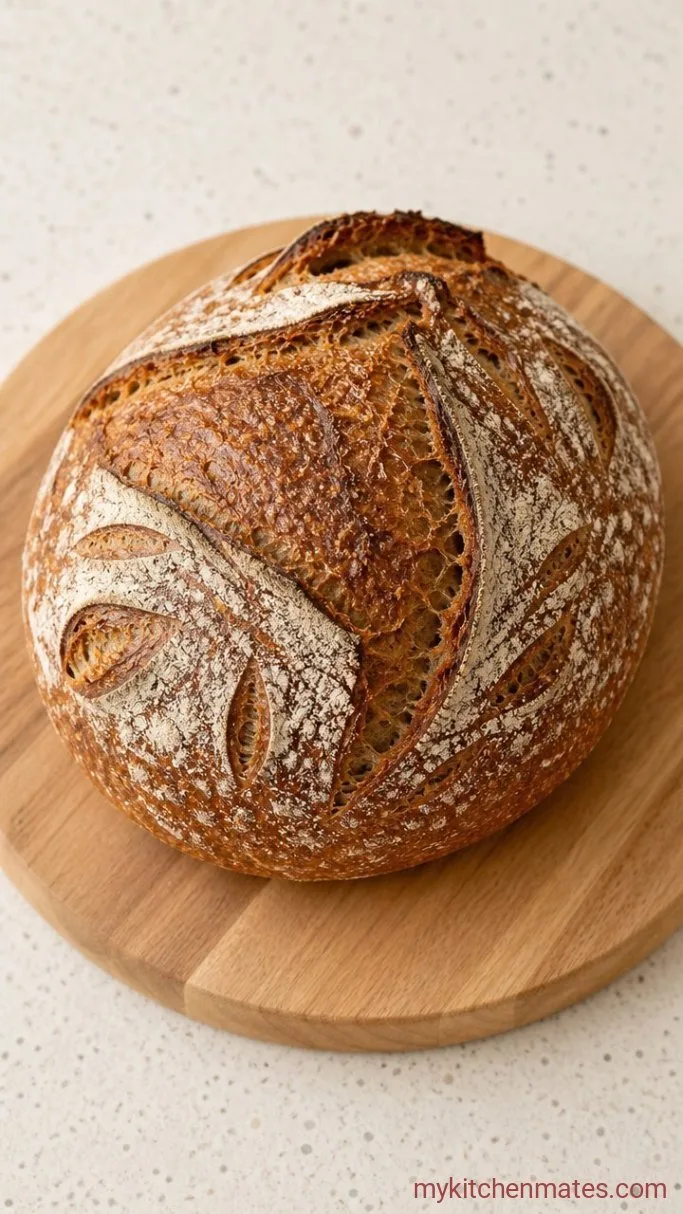
Place a Dutch oven with its lid on the middle rack of your oven and preheat to 450°F (230°C) for at least 30 minutes. When the oven is ready, cut a piece of parchment slightly larger than the base of your loaf. Invert the loaf onto the parchment so the seam side is down, slash the top with a sharp lame or razor blade at a shallow angle, about ½ inch deep. Use the parchment to lower the dough into the hot Dutch oven, cover, and bake for 25 minutes. Remove the lid and bake another 20 to 25 minutes, until the crust is deep amber and the loaf sounds hollow when tapped on the bottom. Lift it out by the parchment and let it cool on a rack for at least 2 hours before slicing.
Tips for a Crackling Rye Crust
- Weigh every ingredient. Rye flour absorbs water differently than white flour, and a scale keeps the hydration right every time.
- Use a starter that passes the float test. If a spoonful of starter floats in water right after feeding, it’s ready to leaven the bread.
- Don’t skip the lid. Those first 25 minutes of steam inside the Dutch oven are what create the thin, blistered crust rye is known for.
- If the dough overproofs and collapses when turned out, you can still bake it in a loaf pan for a respectable sandwich loaf.
Bulk fermentation times vary by kitchen temperature:
| Room temp | Approximate bulk time |
|---|---|
| 65°F (18°C) | 12 to 14 hours |
| 70°F (21°C) | 9 to 11 hours |
| 75°F (24°C) | 7 to 9 hours |
| 80°F (27°C) | 5 to 7 hours |
Storing Leftover Rye Sourdough
- Refrigerate: Once cooled completely, store cut side down on a wooden board for up to 2 days, or in a paper bag inside a bread box. Plastic bags soften the crust, so use them only for freezing.
- Freeze: Slice the loaf and freeze in a zip-top bag for up to 3 months. Toast slices from frozen, no need to thaw.
- Serve Cold: This bread is excellent toasted straight from the freezer for quick breakfasts.
What to Serve With Rye Sourdough
The nutty, slightly tangy crumb pairs beautifully with smoked salmon and a smear of cream cheese, where the richness balances the bread’s earthiness. A bowl of beet borscht or a hearty lentil soup lets the rye soak up broth without falling apart. For something simple, try it with salted butter and thin slices of sharp cheddar, the fat softens the crust’s bite and rounds out the sourdough tang.
Frequently Asked Questions
Can I use all rye flour instead of a mix?
No, a 100% rye dough won’t develop enough gluten to trap gas, so you’ll end up with a dense, gummy brick.
What if my starter isn’t bubbly enough to float?
Feed it twice 12 hours apart with equal weights of flour and water, and wait until it doubles within 4 to 6 hours before mixing your dough.
Can I bake this without a Dutch oven?
Yes, place a metal pan of boiling water on the bottom rack and bake the loaf on a preheated stone or sheet tray for the first 15 minutes, then remove the water pan to finish.
How do I get an even darker crust?
Remove the lid after 20 minutes instead of 25, and bake uncovered for 25 to 30 minutes total, watching closely so the bottom doesn’t burn.
No-Knead Rye Sourdough Bread Recipe
Ingredients
Method
- In a large bowl, mix the water and starter, then stir in the flours until no dry spots remain. Cover and autolyse for 1 hour.
- Sprinkle the salt and a splash of water over the dough, then fold 4 to 5 times with a wet hand until tension builds.
- Cover and rest 30 minutes, then perform a coil fold. Repeat two more sets of folds at 30-minute intervals, then cover tightly and let the dough rise at room temperature for 7 to 12 hours until nearly doubled.
- Turn the dough onto a floured surface, shape into a tight round, and place seam side up in a floured banneton. Proof for 1 to 2 hours until a poke springs back slowly.
- Preheat a Dutch oven at 450°F (230°C) for 30 minutes. Invert the loaf onto parchment, score the top, and bake covered for 25 minutes. Uncover and bake 20 to 25 minutes more, then cool on a rack for at least 2 hours before slicing.
Notes
