
Roasted Vegetable Lasagna with Creamy Béchamel

A roasted vegetable lasagna that leans on a quick béchamel and plenty of golden cheese, no tomato sauce required. The veggies get deeply caramelized before layering, so every bite has a sweet, savory richness that feels a lot fancier than the effort it takes.
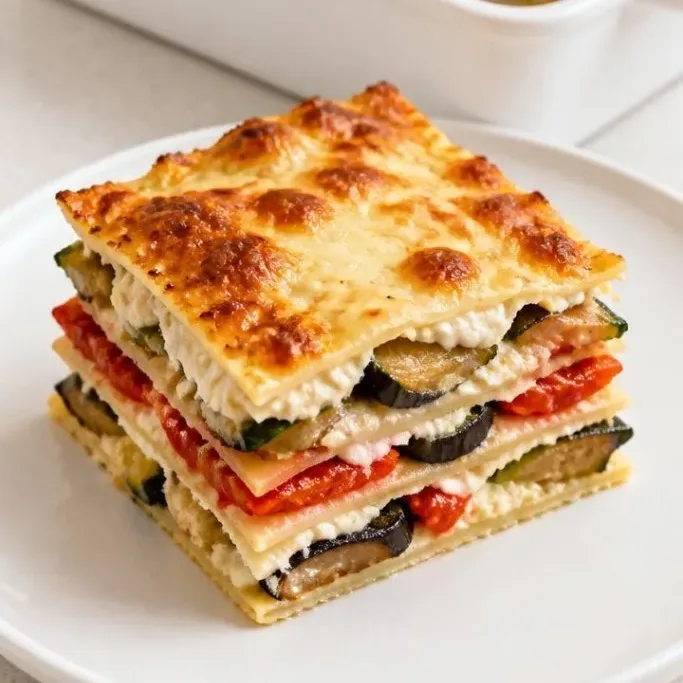
It’s the kind of dish you can pull off on a quiet Sunday and still have leftovers that reheat like a dream on Tuesday. The edges crisp up while the center stays lush and creamy, exactly what you want from a meatless main that doesn’t compromise on comfort.
Why This Lasagna Always Hits the Spot
Roasting the vegetables before they touch the noodles is the single move that sets this apart. You get concentrated flavor and just enough browning, which means the lasagna never turns watery or bland, even with zucchini and eggplant.
The béchamel is a simple butter, flour, and milk affair, no harder than a white sauce. It carries the roasted veggies without drowning them, and the whole milk gives it a velvety body you can’t get from a jarred sauce.
Layers of no-boil noodles, creamy béchamel, caramelized vegetables, and two kinds of cheese come together into something that tastes like you spent all afternoon on it. The top bakes into a crackly, bronzed crust while underneath stays tender and almost spoonable.
Ingredients
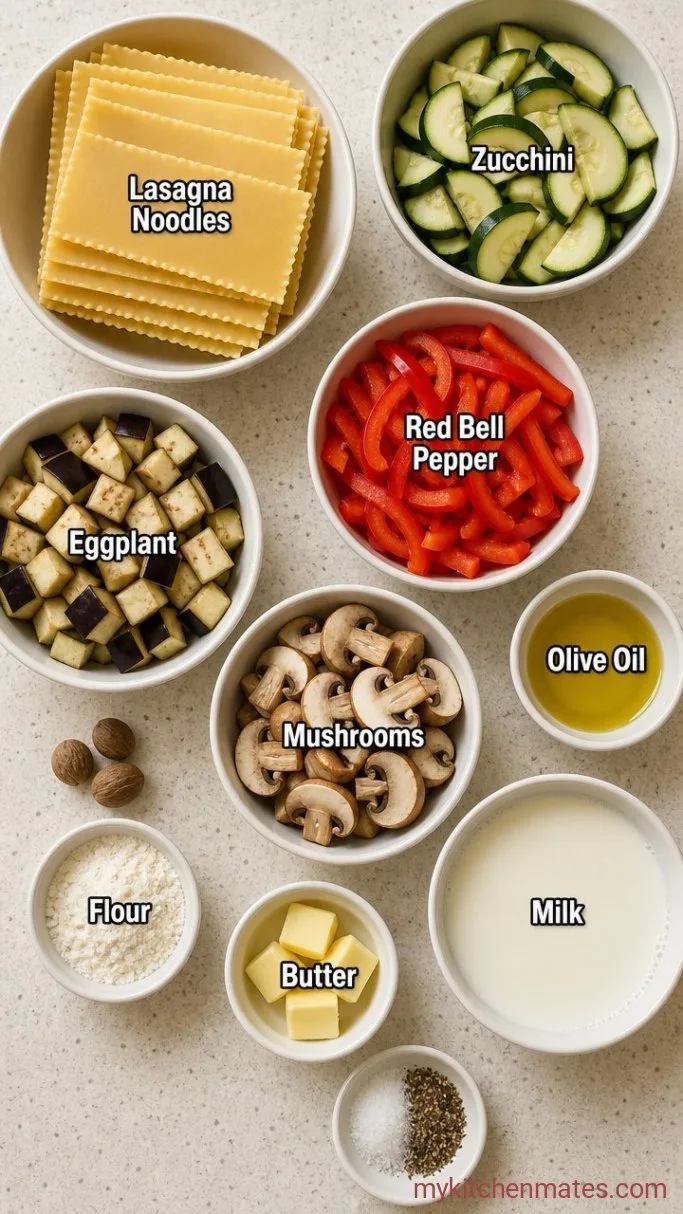
- 9 no-boil lasagna noodles: the flat sheets work best here; if you only have curly ones, they work too
- 1 medium zucchini, sliced into ¼-inch half-moons: no need to peel
- 1 medium red bell pepper, cut into 1-inch strips
- 1 small eggplant, cubed into ¾-inch pieces: about 12 oz
- 8 oz cremini mushrooms, quartered: white mushrooms are fine in a pinch
- 3 tbsp olive oil: enough to coat the vegetables lightly
- 1 tsp kosher salt: divided between veggies and béchamel
- ½ tsp black pepper: divided
- 3 tbsp unsalted butter
- 3 tbsp all-purpose flour
- 3 cups whole milk, warmed slightly
- ¼ tsp freshly grated nutmeg: the small addition that wakes up the béchamel
- 2 cups shredded whole-milk mozzarella: about 8 oz
- 1 cup grated Parmesan: about 3 oz
Variations / Substitutions
- Vegetables: swap in sliced portobellos, yellow squash, or thin wedges of fennel. The key is cutting them into similar sizes so they roast evenly.
- Dairy-free: use a plant butter, a neutral oil, and unsweetened almond or oat milk for the béchamel, plus your favorite meltable vegan mozzarella and a nutritional yeast based parmesan.
- No-boil vs. regular noodles: regular lasagna sheets work if you boil them just until pliable, then drain and lay them flat. The assembly timing stays the same.
- Make it heartier: spread a cup of cooked, crumbled Italian sausage or sautéed lentils between the vegetable layers for extra substance.
- Herb finish: tuck a few fresh basil leaves between the layers or scatter chopped parsley over the top after baking.
Frozen Ravioli Lasagna is next on our list if this lasagna is your kind of dinner.
How to Make Roasted Vegetable Lasagna
Step 1: Roast the Vegetables
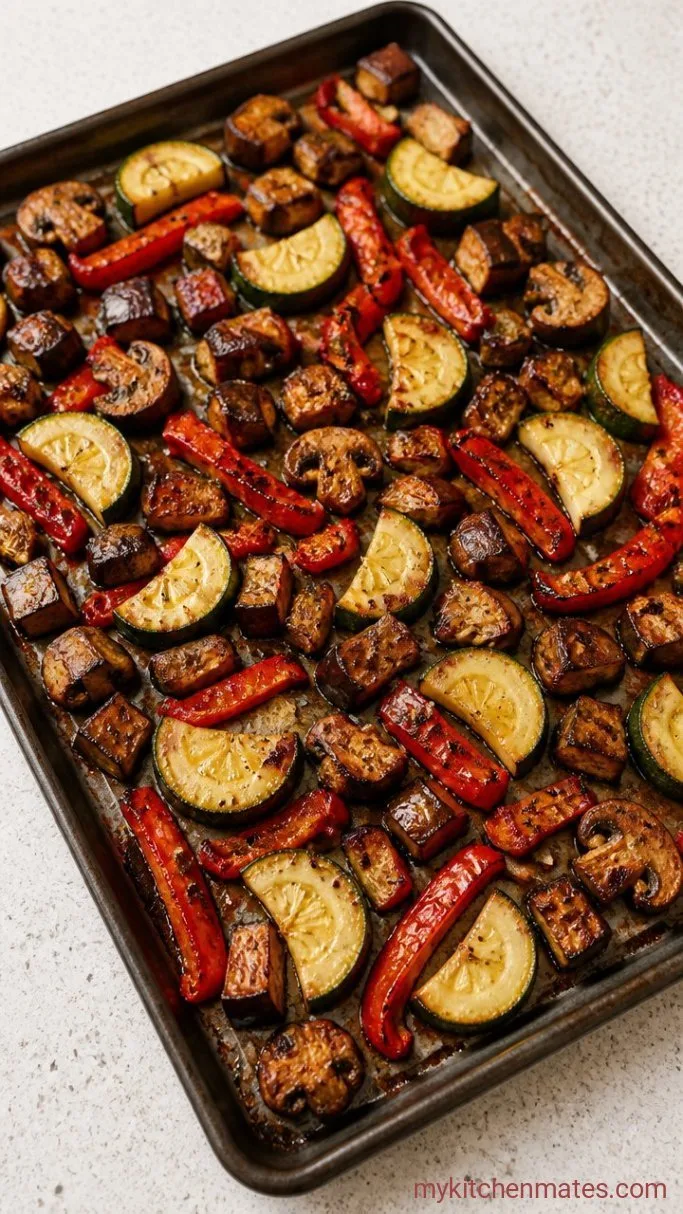
Preheat the oven to 425°F (220°C) and line a large rimmed baking sheet with parchment. Toss the zucchini, bell pepper, eggplant, and mushrooms with the 3 tbsp olive oil, ½ tsp of the kosher salt, and ¼ tsp of the black pepper until everything is lightly coated. Spread the vegetables into a single layer, giving them a little space so they caramelize instead of steaming.
After about 25 minutes, the edges of the zucchini and eggplant will be deep golden and the peppers will have softened. You want the mushrooms to have shrunk and released most of their moisture, so the pan looks dry, not soupy. A little char on the eggplant tips is a good sign, not a mistake.
Step 2: Whisk Together the Béchamel

While the vegetables roast, start the béchamel. Melt the 3 tbsp butter in a medium saucepan over medium heat. Once it foams, whisk in the 3 tbsp flour and cook, stirring constantly, for about 2 minutes. You are looking for the mixture to smell nutty and turn a shade lighter, but not brown.
Slowly pour in the 3 cups warmed milk, whisking hard to break up any lumps. Bring it to a gentle simmer, then lower the heat and cook for 5 to 7 minutes, whisking often, until the sauce coats the back of a spoon. Off the heat, stir in the remaining ½ tsp salt, ¼ tsp pepper, and the ¼ tsp nutmeg. The sauce will thicken a little more as it sits, which is exactly what you want for layering.
Step 3: Assemble the Lasagna
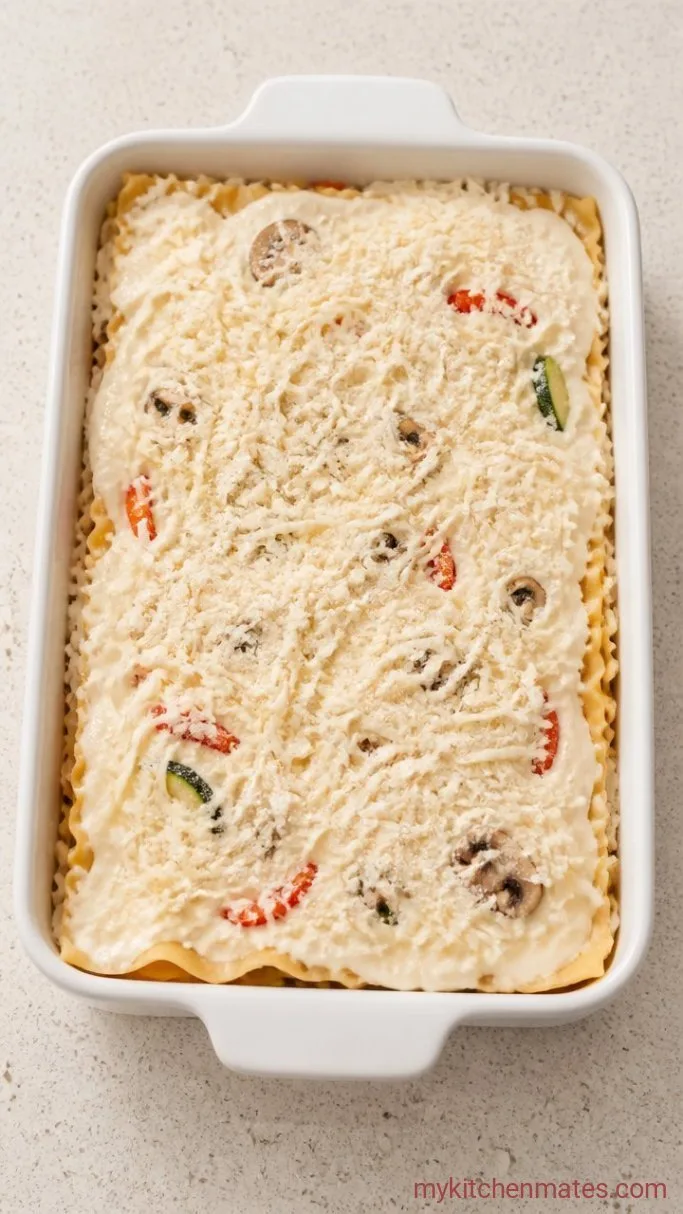
Lower the oven to 375°F (190°C). Spread a thin layer of béchamel, about ⅓ cup, over the bottom of a 9×13-inch baking dish. Place 3 noodles over the sauce, then scatter one-third of the roasted vegetables on top. Drizzle with another ⅓ cup béchamel and sprinkle with a generous handful each of mozzarella and Parmesan.
Repeat the layers two more times, noodles, vegetables, béchamel, cheeses, ending with a final noodle layer. Spoon the remaining béchamel over the top noodles, covering them completely so they soften while baking, and finish with the last of the mozzarella and Parmesan. The dish will look tall and promising, with little peaks of vegetable peeking through.
Step 4: Bake the Lasagna
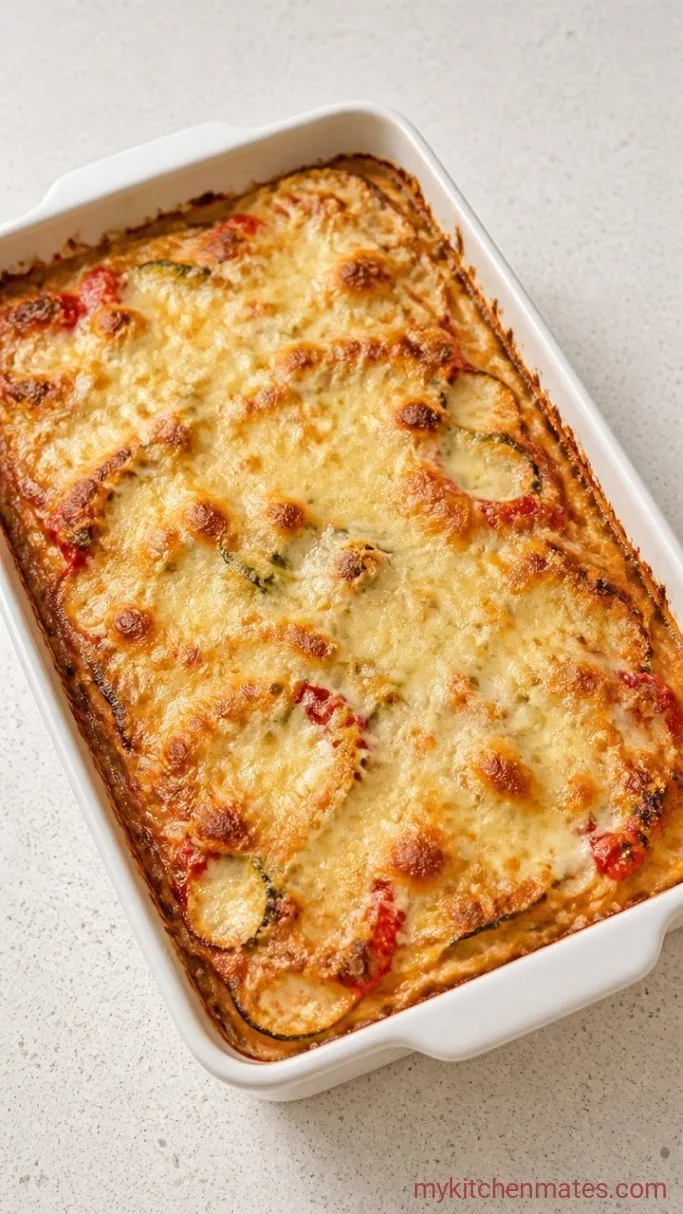
Cover the dish loosely with foil, tented so the cheese doesn’t stick, and bake for 25 minutes. Remove the foil and bake another 10 to 15 minutes, until the top is bubbly and deeply golden in spots. The edges of the noodles will curl a bit and the cheese should have formed a lacy, crisp crust.
If the top is browning faster than you like, loosely cover it again. The béchamel will bubble up around the sides, and a thin knife inserted in the center will slide through the noodles with zero resistance.
Step 5: Slice and Serve
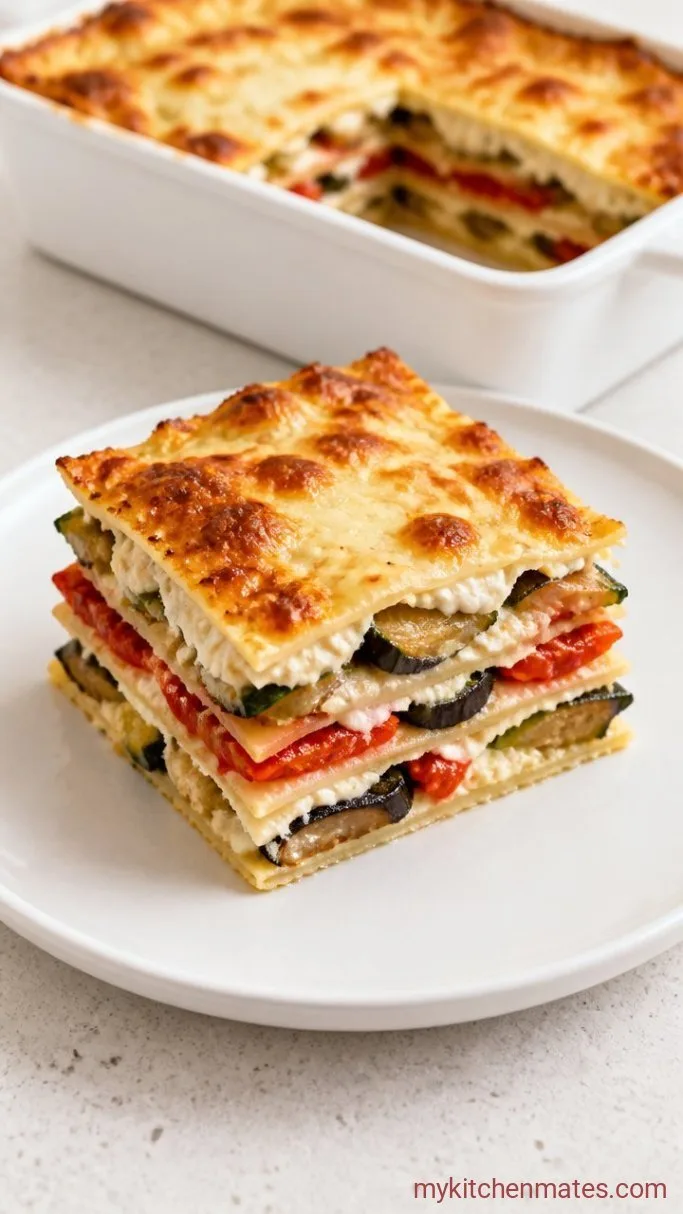
Let the lasagna rest on the counter for 10 to 12 minutes before slicing. This is the hardest wait, but it’s the difference between neat squares and a slide-off-the-spatula mess. The béchamel sets up just enough to hold the layers together without stiffening.
Slice into 8 squares and use a wide spatula to lift them out. The first piece might not be perfect, and that’s fine. Serve with the golden top facing up so you can see the bronzy cheese and the colorful vegetable layers underneath.
Tips for a Lasagna That Never Gets Soggy
- Salting the vegetables and roasting them at high heat drives off moisture before layering. Crowding the pan or skipping the single-layer spread is the fastest way to a watery lasagna.
- Warm the milk before whisking it into the roux so the béchamel comes together faster and lump-free.
- No-boil noodles rely on the béchamel’s moisture to soften, so don’t skimp on the sauce between layers. Every inch of noodle should be covered.
- Letting the assembled lasagna sit for 10 minutes before it goes into the oven gives the noodles an extra head start on hydration.
Scale it for a smaller 8×8-inch pan:
| Original 9×13 | Halved 8×8 |
|---|---|
| 9 noodles | 5 to 6 noodles |
| 1 zucchini, 1 pepper, 1 eggplant, 8 oz mushrooms | ½ zucchini, ½ pepper, ½ eggplant, 4 oz mushrooms |
| 3 tbsp butter, 3 tbsp flour, 3 cups milk | 2 tbsp butter, 2 tbsp flour, 2 cups milk |
| 2 cups mozzarella, 1 cup Parmesan | 1 cup mozzarella, ½ cup Parmesan |
Storing and Reheating Leftovers
- Refrigerate: Cooled lasagna keeps in an airtight container for up to 4 days. The slices firm up in the fridge, which actually makes them easier to reheat in one piece.
- Reheating: Warm individual portions in a 350°F oven, covered, for about 15 minutes, or microwave in 90-second bursts until hot. A small splash of milk over the top before reheating revives the béchamel.
- Serve cold: A cold slice straight from the fridge is surprisingly good, especially when the top stays a little crisp.
What to Serve with Roasted Vegetable Lasagna
A simple arugula salad with lemon vinaigrette cuts through the richness of the béchamel and cheese. The peppery leaves and bright acidity keep the meal from feeling heavy. Warm, crusty bread is a given, something with a good chew to mop up any béchamel left on the plate. For a greener side, blistered green beans or broccolini with a squeeze of lemon take just a few minutes while the lasagna rests.
Frequently Asked Questions
Can I use regular boiled lasagna noodles instead of no-boil?
Yes, boil them until just pliable, about 1 minute less than the package directs, then drain and lay them flat. The assembly and bake time stay the same.
How do I make this lasagna ahead of time?
Assemble the dish completely, let it cool, then cover and refrigerate for up to 24 hours. Bake straight from the fridge, adding about 10 extra minutes covered before uncovering.
Can I freeze it?
Yes, freeze the assembled and unbaked lasagna tightly wrapped for up to 3 months. Thaw in the refrigerator overnight before baking, or bake from frozen, adding 20 to 25 minutes covered.
My béchamel got lumpy. What went wrong?
Usually the milk was too cold or poured in too fast. Whisk it vigorously over low heat and the lumps will smooth out, or strain it for a quick fix.
Roasted Vegetable Lasagna Recipe
Ingredients
Method
- Preheat oven to 425°F (220°C). Toss zucchini, bell pepper, eggplant, and mushrooms with olive oil, ½ tsp salt, and ¼ tsp pepper. Spread in a single layer on a baking sheet and roast 25 minutes, until golden and dry.
- Melt butter in a saucepan over medium heat. Whisk in flour and cook 2 minutes. Slowly whisk in warm milk, bring to a simmer, and cook 5 to 7 minutes until thickened. Stir in remaining ½ tsp salt, ¼ tsp pepper, and nutmeg.
- Lower oven to 375°F (190°C). Spread ⅓ cup béchamel in a 9×13 dish. Layer 3 noodles, one-third of the vegetables, ⅓ cup béchamel, and a handful each of mozzarella and Parmesan. Repeat twice, ending with noodles, remaining béchamel, and cheeses.
- Cover loosely with foil and bake 25 minutes. Uncover and bake 10 to 15 minutes more until golden and bubbly.
- Let the lasagna rest 10 to 12 minutes, then slice into 8 squares and serve.
Notes
