
Roasted Pumpkin Soup with Crispy Sage

Roasted pumpkin soup is the kind of meal that shows up once the weather turns cool and never really leaves the rotation. Blending caramelized pumpkin with garlic and sage gives it a deep, savory sweetness that canned pumpkin just can’t match.

It comes together with a handful of ingredients and about an hour, most of that hands-off while the oven does the work. The crispy sage on top turns a quiet bowl of soup into something you look forward to all day.
Why Roasting Makes All the Difference
Roasting draws out the pumpkin’s natural sugars and concentrates the flavor in a way boiling never will. Those browned edges and sticky pan bits are where most of the taste lives, so I scrape every last one into the blender.
Adding whole garlic cloves and a quartered onion to the same sheet pan means they turn soft and mellow while the pumpkin roasts. No extra sauté pan, no extra steps. The soup ends up smooth and rich, with a subtle sweetness that needs nothing more than salt and a bit of nutmeg.
Ingredients
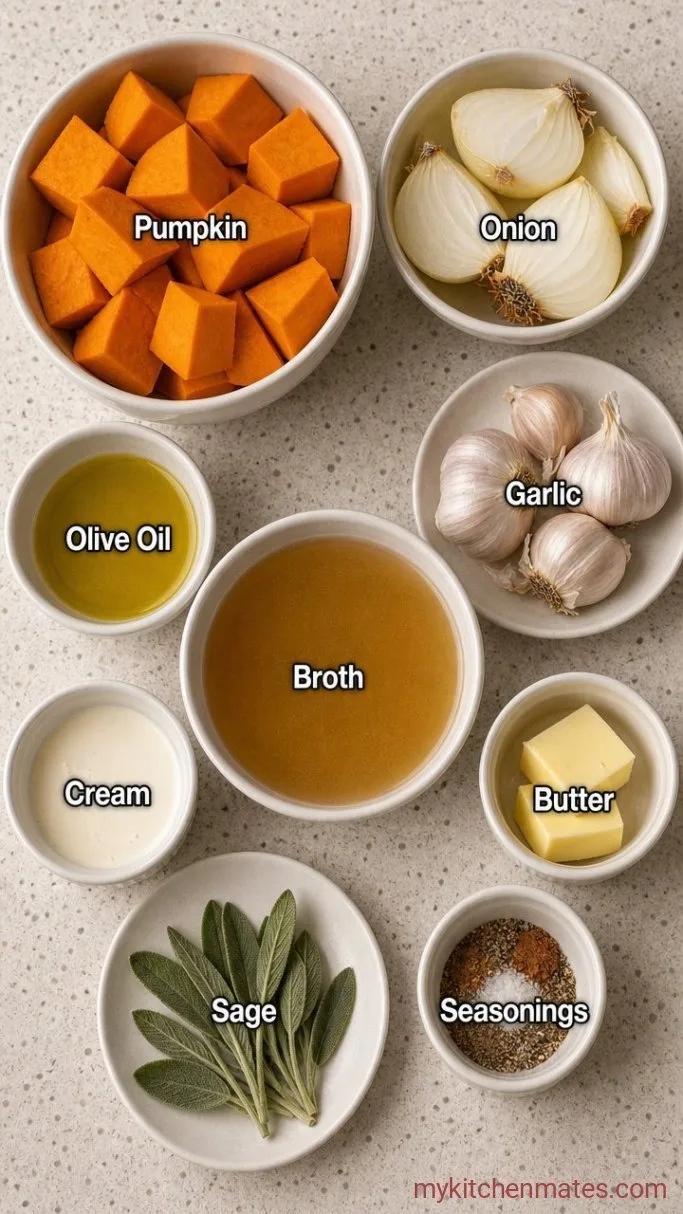
- 1 medium sugar pumpkin (about 2 1/2 lbs): peeled, seeded, and cut into 2-inch chunks; butternut squash works just as well
- 1 medium yellow onion: quartered, roots trimmed but left intact so the layers stay together during roasting
- 4 cloves garlic: leave the skins on for roasting so they steam inside
- 3 tbsp olive oil: enough to coat the vegetables lightly
- 1 tsp kosher salt: for tossing, plus more to taste
- 1/2 tsp black pepper: freshly cracked if you have it
- 4 cups vegetable broth: warm or room temperature, so the soup heats faster later
- 1/4 cup heavy cream: adds body without making the soup too rich; coconut cream works for a dairy-free version
- 1/4 tsp ground nutmeg: a little goes a long way, just enough to warm the flavor
- 2 tbsp unsalted butter: for frying the sage
- 12 fresh sage leaves: look for large, unblemished leaves that will crisp up nicely
Variations / Substitutions
- Swap the sage: rosemary sprigs or thyme branches roasted alongside the pumpkin give a different herbal note; strain them out before blending.
- Make it vegan: use full-fat coconut cream instead of heavy cream and olive oil instead of butter for the crispy sage (the leaves will still crisp, just a little less rich).
- Add an apple: one peeled, cored, and chopped sweet apple roasted with the pumpkin brings a fresh, fruity layer to the soup.
- Swap the pumpkin: butternut squash, kabocha, or even a mix of carrots and sweet potatoes all roast beautifully and yield a similar velvety texture.
Cinnamon Swirl Coffee Cake Loaf is perfect for serving on the side of this soup.
How to Make Roasted Pumpkin Soup
Step 1: Roast the Vegetables
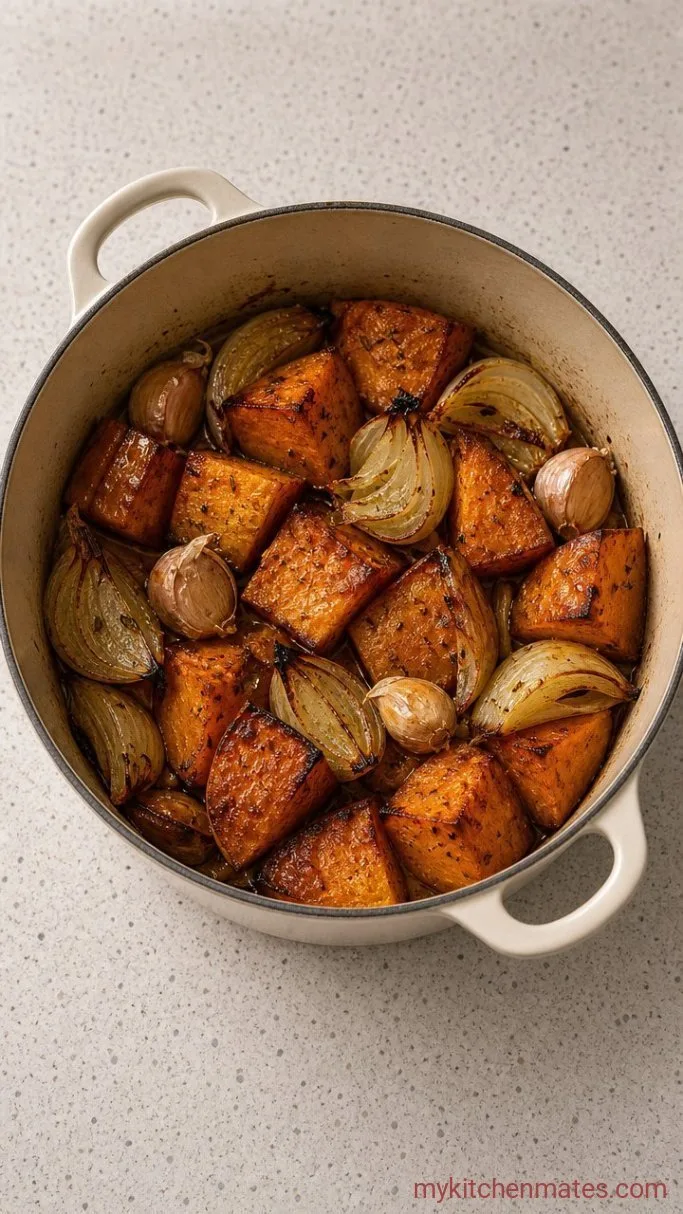
Preheat the oven to 400°F (200°C) and line a large rimmed baking sheet with parchment. Toss the 2-inch pumpkin chunks, quartered onion, and whole garlic cloves with the 3 tbsp olive oil, then scatter them in a single layer. Sprinkle on the 1 tsp kosher salt and 1/2 tsp black pepper. Roast for 30 to 35 minutes, stirring once halfway through, until the pumpkin is tender when pierced with a knife and the edges are caramelized.
You will see deep amber spots on the pumpkin and onions, and the garlic cloves will feel soft when you press them. The smell alone will tell you this step was worth it.
Step 2: Blend the Soup

Let the vegetables cool for about 5 minutes, just until you can handle the garlic. Squeeze the roasted garlic out of its skins and into a blender. Add the pumpkin, onion, any browned bits from the parchment, and 2 cups of the vegetable broth. Secure the lid, then blend on low, increasing to high, until completely smooth. If your blender is small, work in two batches, dividing the broth evenly.
The soup will be thick and almost fluffy, with an intense orange color. At this point it looks almost too thick, but more broth and cream will thin it out in the next step.
Step 3: Simmer and Season

Pour the purée into a heavy pot and stir in the remaining 2 cups broth, the 1/4 cup heavy cream, and the 1/4 tsp ground nutmeg. Bring to a gentle simmer over medium heat, then reduce the heat to low and cook for 5 to 10 minutes, stirring now and then, until the soup is heated through and the flavors settle. Taste and add more salt if it needs it.
The soup will loosen to a silky, pourable consistency that just coats the back of a spoon. If it still feels too thick, a splash of broth or water will fix it.
Step 4: Ladle and Top with Crispy Sage

In a small skillet, melt the 2 tbsp butter over medium heat. Once it stops foaming, add the 12 sage leaves in a single layer and fry for about 1 minute per side, just until they darken and stop sizzling. Transfer the leaves to a paper towel with a slotted spoon. Ladle the soup into warm bowls, drizzle a little of the sage butter over each one, and top with the crisp leaves.
Serving right away keeps the sage crunchy and the butter glossy. The deep orange soup with dark green flecks and a glisten of butter on top is exactly the bowl you want to carry to the table.
A Few Tips Before You Start
- Choose a dry-fleshed pumpkin.: Sugar pumpkins, also called pie pumpkins, have dense flesh that purées smoothly. Large carving pumpkins turn watery and stringy, so skip those for soup.
- Don’t crowd the baking sheet.: The vegetables need space to roast, not steam. If the chunks are too close, they’ll release moisture and never caramelize. Use two sheets if needed.
- Cool the soup slightly before blending.: Steam can build up in a blender and push the lid off. Let the roasted vegetables rest a few minutes, and never fill the jar more than halfway with hot liquid.
- Adjust the thickness after blending.: The soup tends to thicken as it sits, so when you reheat leftovers, add a splash of broth to bring it back to a loose, velvety texture.
- Save the extra sage butter.: Any butter left in the pan after frying the sage can be drizzled over roasted potatoes or tossed with pasta another night.
Storing Leftover Pumpkin Soup
- Refrigerate: Cool completely, then store in an airtight container for up to 4 days. The soup often tastes even better the next day as the flavors meld.
- Reheating: Warm gently in a pot over low heat, stirring occasionally. Add a little broth or water if it has thickened too much. The microwave works in a pinch, but the stovetop keeps the texture smoother.
- Freezing: Pour cooled soup into freezer-safe containers, leaving a little headspace, and freeze for up to 3 months. Thaw overnight in the fridge before reheating. The crispy sage is best made fresh, so plan to fry a few leaves just before serving.
What to Serve with Roasted Pumpkin Soup
A crusty loaf of sourdough is the simplest move. The tangy chew contrasts the rich, smooth soup and gives you something to swipe through every last drop. A grilled cheese sandwich with sharp cheddar and a smear of apple butter picks up the sweet, roasted notes while adding crunch and salt. For something lighter, a bitter greens salad with a sharp vinaigrette cuts the creaminess and rounds out the meal.
Frequently Asked Questions
Can I use canned pumpkin purée instead of roasting fresh?
You can, and it will save time. Skip Step 1 entirely and start with about 3 cups of canned purée. In Step 2, sauté the onion and garlic in a little oil first, then blend with the pumpkin and broth. The soup will be milder, with less caramelized depth, but still comforting.
Is this soup freezable?
Yes, it freezes beautifully. Let it cool completely, then freeze in portions. The texture may separate a bit after thawing, but a quick whisk while reheating brings it back together. Leave the crispy sage off until serving day.
How do I make it spicier?
Add a pinch of cayenne or a spoonful of harissa when you stir in the broth and cream. Even a few cracks of extra black pepper at the end can lift the whole bowl.
Why did my soup turn out watery?
That usually happens when a large carving pumpkin is used instead of a sugar pumpkin, or when the vegetables steam on a crowded pan. Next time, use a denser squash and give the chunks plenty of room on the baking sheet. If the soup is already made, simmer it a few minutes longer to reduce.
Roasted Pumpkin Soup Recipe
Ingredients
Method
- Preheat oven to 400°F (200°C). Toss pumpkin, onion, and garlic with olive oil, salt, and pepper on a lined baking sheet in a single layer. Roast 30 to 35 minutes until tender and caramelized, stirring once.
- Let cool 5 minutes, then squeeze garlic out of skins. Transfer roasted vegetables and any pan drippings to a blender, add 2 cups broth, and blend until completely smooth, working in batches if needed.
- Pour purée into a pot, stir in remaining 2 cups broth, cream, and nutmeg. Simmer over low heat 5 to 10 minutes, stirring occasionally. Adjust salt to taste.
- In a small skillet, melt butter and fry sage leaves 1 minute per side until crisp. Ladle soup into bowls and drizzle with sage butter, then top with crispy leaves.
Notes
