
Slow-Simmered Red Beans and Rice

This red beans and rice owes its deep, smoky character to browned andouille sausage and a pot that barely bubbles on the stove for a couple of hours. The beans soften into a creamy broth, and the whole kitchen smells like a Louisiana Sunday.

You don’t need much beyond onion, celery, bell pepper, and a heavy lid. Let patience do the rest, and you get a bowl that’s hearty enough to stand on its own but only gets better spooned over fluffed white rice.
What Makes This Red Beans and Rice So Good
A long, low simmer lets the beans break down naturally, so the liquid turns velvety without any cream or butter. Andouille sausage gives it a smoky, spicy backbone that tastes like it cooked all day, even though it did not.
I keep this version in regular rotation because it’s forgiving and filling. Stir it a few times, mash some beans against the side of the pot, and the texture comes together in a way that feels a little more special than weeknight beans usually do.
Ingredients
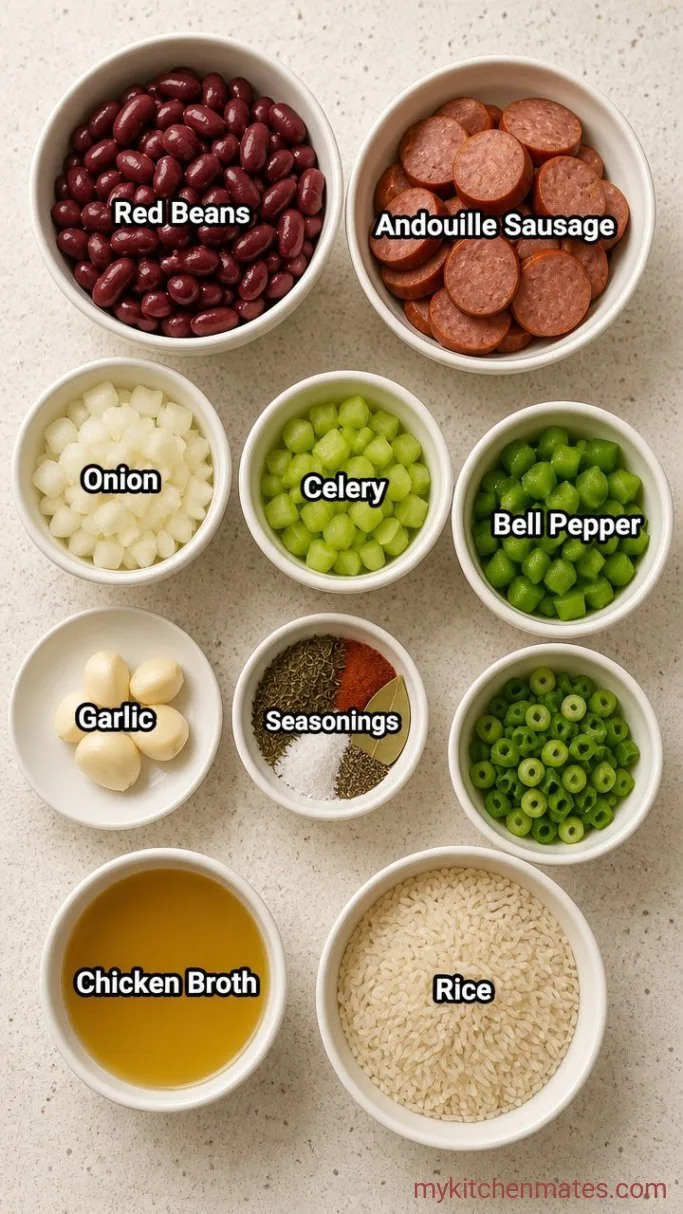
- 1 lb dried red beans (kidney or small red beans): soak overnight in cold water; both types hold their shape well during the long simmer
- 1 tbsp vegetable oil: for browning the sausage
- 12 oz andouille sausage, sliced into half-moons: a smoky, spicy Louisiana sausage; kielbasa works in a pinch
- 1 large yellow onion, diced
- 2 celery ribs, diced
- 1 green bell pepper, diced
- 3 garlic cloves, minced
- 1 bay leaf
- 1 tsp dried thyme
- 1/2 tsp cayenne pepper: start with less if you prefer mild heat
- 4 cups chicken broth: use low-sodium so you can control the salt
- 2 cups water
- 2 tsp kosher salt, plus more to taste
- 1/2 tsp black pepper
- 2 cups long-grain white rice: cooked separately for serving
- Sliced green onions: for garnish
Variations / Substitutions
- Vegetarian version: skip the sausage, use vegetable broth, and add 1 teaspoon smoked paprika and a few drops of liquid smoke when the beans go in.
- Meat swap: smoked turkey leg or ham hock can replace andouille; simmer them whole with the beans, then pull the meat off the bone before serving.
- Heat level: dial cayenne down to a pinch for a mild pot, or add a minced jalapeño with the bell pepper for a brighter kick.
- Herb change: thyme is traditional, but oregano or marjoram bring a slightly different earthiness that works well here.
Louisiana Shrimp Etouffee makes an easy main to round out the meal with this rice.
How to Make Slow-Simmered Red Beans and Rice
Step 1: Sauté the Sausage and Vegetables

Heat the 1 tablespoon oil in a large heavy pot or Dutch oven over medium heat. Add the sliced andouille and cook, stirring once or twice, until the edges start to brown, about 5 minutes. Use a slotted spoon to transfer the sausage to a plate, leaving the rendered fat in the pot.
Toss the diced onion, celery, and bell pepper into that same pot and cook, stirring often, until they soften and just begin to pick up color around the edges, about 8 minutes. The vegetables will smell sweet and the bottom of the pot should look glossy, not dry.
Step 2: Simmer the Beans

Stir the minced garlic, bay leaf, dried thyme, and cayenne into the vegetables and let them cook for 1 minute until fragrant. Drain the soaked beans and add them to the pot along with the browned sausage, 4 cups chicken broth, and 2 cups water. Raise the heat to high and bring the liquid to a boil, then immediately lower it so the pot maintains a gentle simmer.
Cover with the lid slightly ajar and simmer for 1 hour, stirring once or twice to make sure nothing sticks. After an hour the beans will still be slightly firm but starting to soften, and the broth will already taste like sausage and herbs.
Step 3: Season and Thicken the Beans

Stir in the 2 teaspoons kosher salt and black pepper. Keep simmering, uncovered this time, for another 30 to 45 minutes. The liquid will reduce a little and the beans should be tender enough to crush easily with the back of a spoon.
Taste a bean. If it still has a chalky center, keep going in 15-minute increments. When you’re happy with the texture, use a wooden spoon to mash some of the beans against the side of the pot. This releases their starches and turns the broth creamy. Give everything a good stir and adjust the salt one last time if it needs it.
Step 4: Cook the Rice

While the beans finish, rinse the 2 cups long-grain white rice under cold water until the water runs clear. Combine the rice with 3 cups water and a pinch of salt in a medium saucepan, bring it to a boil, then cover and reduce the heat to low. Cook for 15 minutes, then remove from the heat and let it sit, still covered, for 5 minutes.
Fluff the rice with a fork right before you’re ready to serve. The grains should be separate and tender, not sticky.
Step 5: Ladle and Serve

Spoon a mound of rice into each bowl and ladle the beans and plenty of that creamy potlikker over the top. Scatter sliced green onions over everything while it’s still steaming hot. The bowl should look dark, glossy, and just a little smoky on the nose.
A Few Notes for Perfect Red Beans
- Soak the beans: Even a quick overnight soak makes a difference. If you forgot, cover them with boiling water and let them sit for an hour, but the skins may split more during cooking.
- Hold the salt early: Wait until the beans have simmered at least an hour before adding salt. Salt added too soon can keep the skins tough.
- Don’t boil hard: A low, steady simmer is what coaxes out the starch without breaking the beans into mush. If the pot boils aggressively, the beans can burst and turn grainy.
- Mash with restraint: You want the broth creamy, not a puree. Smash a third to half of the beans and leave the rest whole for texture.
Storing and Reheating Leftovers
Red beans taste even better the next day. Let everything cool, then transfer the beans (without the rice) to an airtight container and refrigerate for up to 4 days. Reheat gently on the stovetop over low heat, stirring in a splash of water or broth if it has thickened too much. Cook fresh rice to serve alongside.
What to Serve With Red Beans and Rice
This dish is a meal by itself, but a side of cornbread soaks up that rich broth like nothing else. A crisp green salad with a sharp vinaigrette cuts through the richness, and steamed collard greens with a splash of vinegar echo the same Louisiana table without clashing.
Frequently Asked Questions
Can I use canned red beans instead of dried?
Yes. You’ll need about three 15-ounce cans, rinsed and drained. Shorten the simmer to 25 minutes after they go into the pot, since they’re already tender, and use less liquid.
How do I make this in a slow cooker?
Brown the sausage and vegetables on the stovetop first, then transfer everything except the salt and rice to a slow cooker. Cook on low for 6 to 7 hours or high for 3 to 4 hours, then add the salt and mash the beans at the end.
Why are my beans still hard after two hours?
Old dried beans take much longer to soften. Acidic ingredients, like tomatoes or a lot of vinegar, can also slow the process down. Wait to add any acid until the beans are fully tender, and buy your beans from a place with good turnover.
Can I freeze the cooked beans?
Yes. Cool them completely and freeze in portions for up to 3 months. Thaw overnight in the fridge and reheat gently. The texture will be just a little softer, but the flavor stays deep.
Slow-Simmered Red Beans and Rice Recipe
Ingredients
Method
- Brown the sausage in oil, remove, then cook the onion, celery, and bell pepper in the rendered fat until softened.
- Stir in garlic, bay leaf, thyme, and cayenne for 1 minute. Add drained beans, sausage, broth, and water. Bring to a boil, then reduce to a gentle simmer, cover with the lid ajar, and cook for 1 hour.
- Add salt and pepper, then simmer uncovered 30 to 45 minutes more until beans are tender. Mash some beans against the pot to thicken the broth.
- Cook the rice separately while the beans finish. Rinse rice, simmer in salted water for 15 minutes, then rest covered for 5 minutes before fluffing.
- Spoon rice into bowls, ladle beans and broth over the top, and finish with green onions.
Notes
