
Classic Quiche Lorraine with Bacon and Gruyère

Classic quiche lorraine is a savory French tart built on a buttery, flaky crust, filled with a rich egg custard, smoky bacon, and nutty melted cheese. It is one of those dishes that feels both elegant and completely approachable, perfect for a weekend brunch or a light dinner with a crisp salad on the side.

The filling is all about balance: heavy cream and whole milk give the custard a silky, tender set without being too dense, while thick-cut bacon and a generous handful of Gruyère carry every bite. A whisper of nutmeg and freshly cracked black pepper brings the whole thing together without overcomplicating it.
Why This Quiche Stays in the Rotation
I make this quiche more often than any other because it is reliable every single time. The crust stays crisp, the custard stays creamy, and the bacon stays smoky, even if I am moving a little slower on a Sunday morning.
What I love most is the texture. Blind-baking the crust first means you get a crisp bottom that never turns soggy, even hours after it comes out of the oven. The filling firms up just enough to slice cleanly but still has that soft, almost custardy wobble in the center that makes it feel like something from a French bakery.
It is also a recipe that does not punish you for using a store-bought crust or swapping in a different cheese. You can dress it up with chives or serve it plain, and it will still be the first thing to disappear from the table.
Ingredients
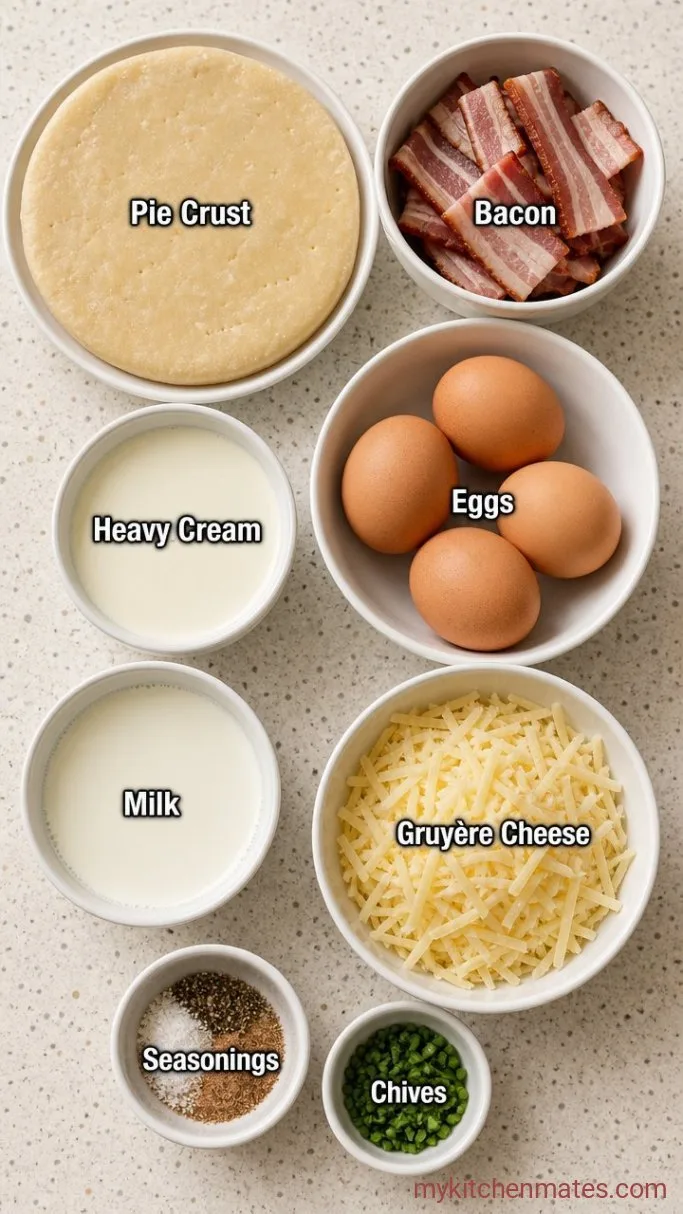
- 1 (9‑inch) unbaked pie crust, homemade or store‑bought: use a deep‑dish crust if you can and keep it chilled until blind‑baking so the butter stays cold.
- 6 oz thick‑cut bacon, cut into small strips (lardons): the bacon flavor carries the whole quiche, so pick one with real smokiness.
- 4 large eggs, at room temperature: gives the custard structure without being tough when you whisk.
- 1 ¼ cups heavy cream: creates that silky, tender texture. Swapping it all for milk will make the custard thin and watery.
- ½ cup whole milk: balances the richness of the cream so the quiche does not feel heavy.
- ½ tsp kosher salt: Diamond Crystal; if you use table salt, start with ¼ tsp.
- ¼ tsp freshly ground black pepper: a generous amount, but you can dial it back if you prefer.
- ⅛ tsp freshly grated nutmeg: just a whisper lifts the egg and cream without tasting spicy.
- 1 cup (4 oz) shredded Gruyère cheese: buy a block and shred it yourself; pre‑shredded cheese has anti‑caking agents that keep it from melting smoothly.
- 1 tbsp chopped fresh chives (optional): adds a little color and oniony freshness right before serving.
Variations and Substitutions
- Bacon swap: pancetta or even chopped prosciutto work well, though pancetta will be less smoky and prosciutto will be saltier, so adjust the added salt.
- Cheese choices: Swiss or Comté are the closest stand‑ins for Gruyère and melt just as nicely. A mild cheddar will give a sharper finish that still works.
- Add vegetables: if you want to bulk up the filling, fold in ½ cup of caramelized onions or sautéed mushrooms after cooking the bacon. Pat them dry so they do not release water into the custard.
- No chives: a tiny pinch of dried thyme or a few chive‑sized snips of scallion greens keeps the same fresh note.
Overnight Challah French Toast Casserole is another breakfast you’d probably love if you enjoy this quiche.
How to Make Classic Quiche Lorraine
Step 1: Blind‑Bake the Crust
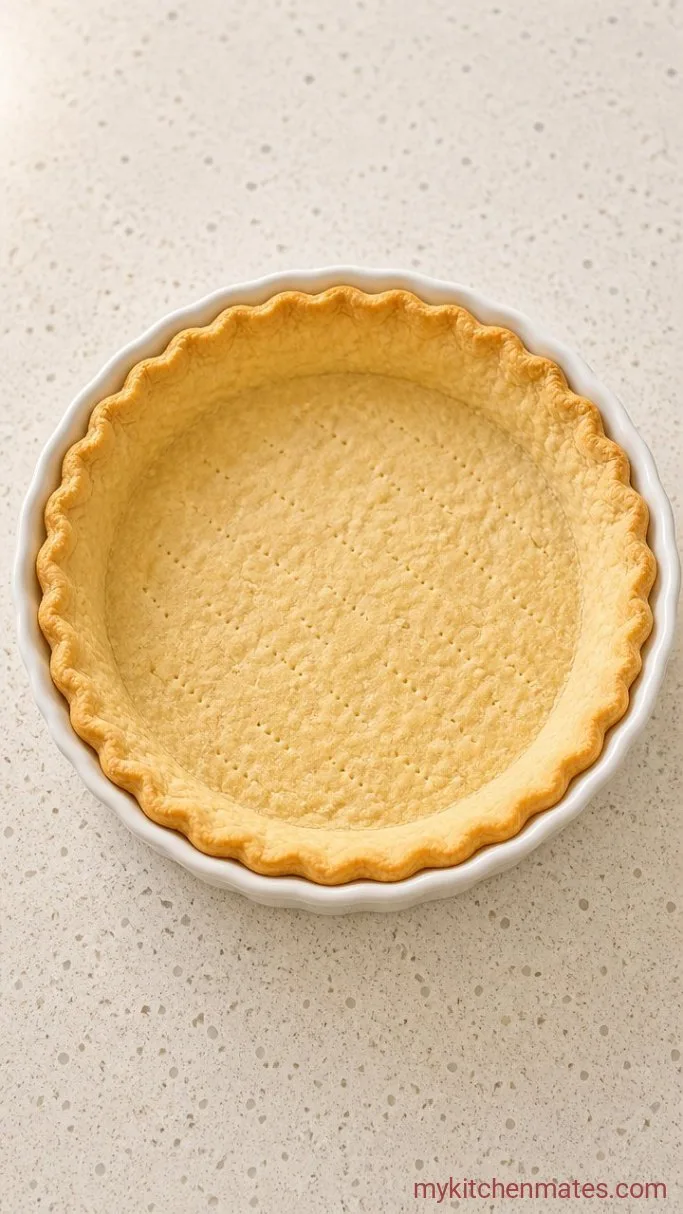
Preheat the oven to 375°F (190°C). Roll out the 9‑inch pie crust and ease it into a standard pie dish, then crimp the edges however you like. Line the crust with parchment paper and fill it with pie weights or dried beans, all the way up the sides.
Bake the weighted crust for 15 minutes, until the bottom looks dry but not yet browned. Remove the parchment and weights, prick the bottom all over with a fork, then return the crust to the oven for another 5 to 7 minutes. You want a pale golden color and a surface that feels dry to the touch. Set it aside to cool slightly while you move on to the bacon.
Step 2: Crisp the Bacon
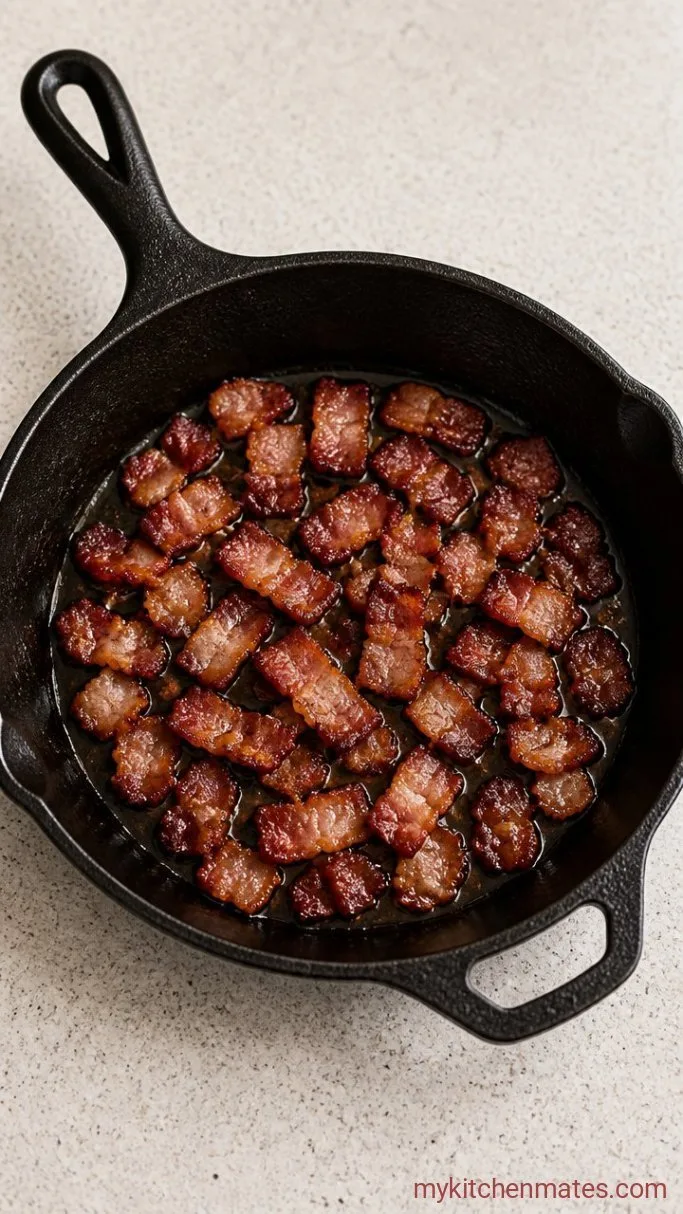
Set a skillet over medium heat and add the 6 oz of bacon strips. Let them cook without messing with them too much, stirring occasionally, until the fat renders out and the bacon turns crisp, about 5 to 7 minutes.
You will hear the sizzle quiet down and see the strips darken. Transfer the bacon to a paper‑towel‑lined plate with a slotted spoon so the excess grease drains away. You can save the rendered fat for another use or discard it.
Step 3: Whisk the Custard
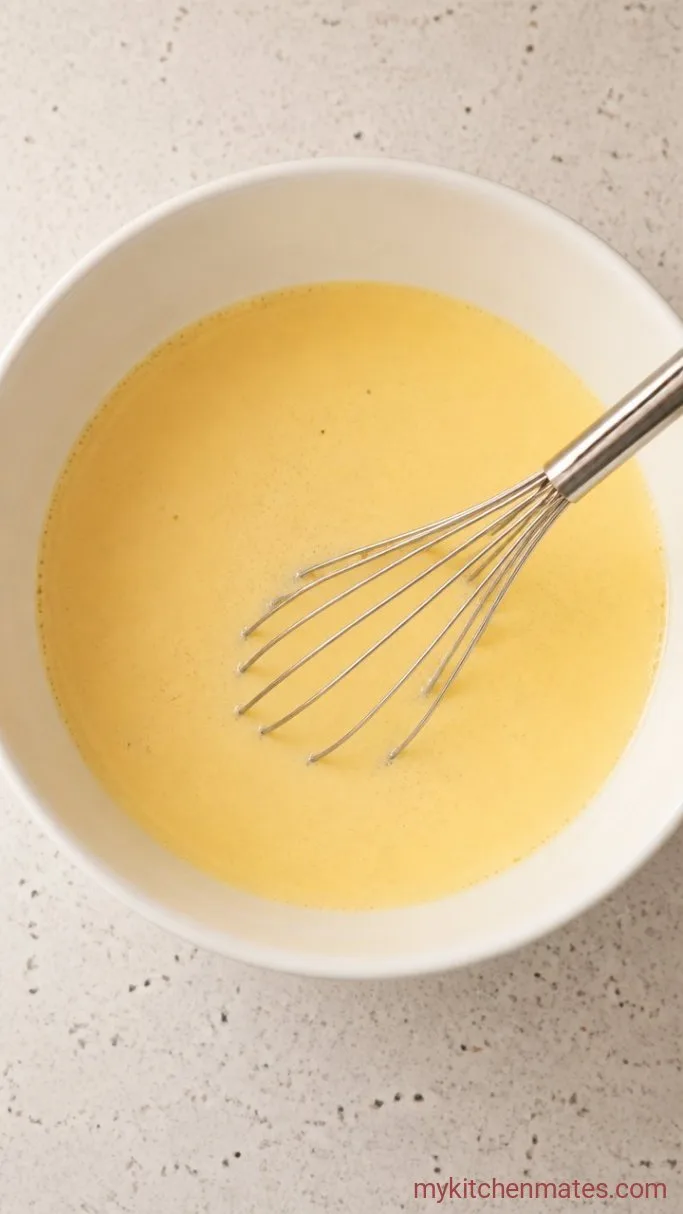
In a medium bowl, crack in the 4 large eggs and add the 1 ¼ cups heavy cream, ½ cup whole milk, ½ tsp salt, ¼ tsp pepper, and ⅛ tsp nutmeg. Whisk until the mixture is completely smooth and you do not see any streaks of egg white.
The custard should look pale yellow and feel slightly thickened from the cream. This is what sets into that soft, sliceable center, so do not skimp on the whisking here.
Step 4: Layer the Quiche
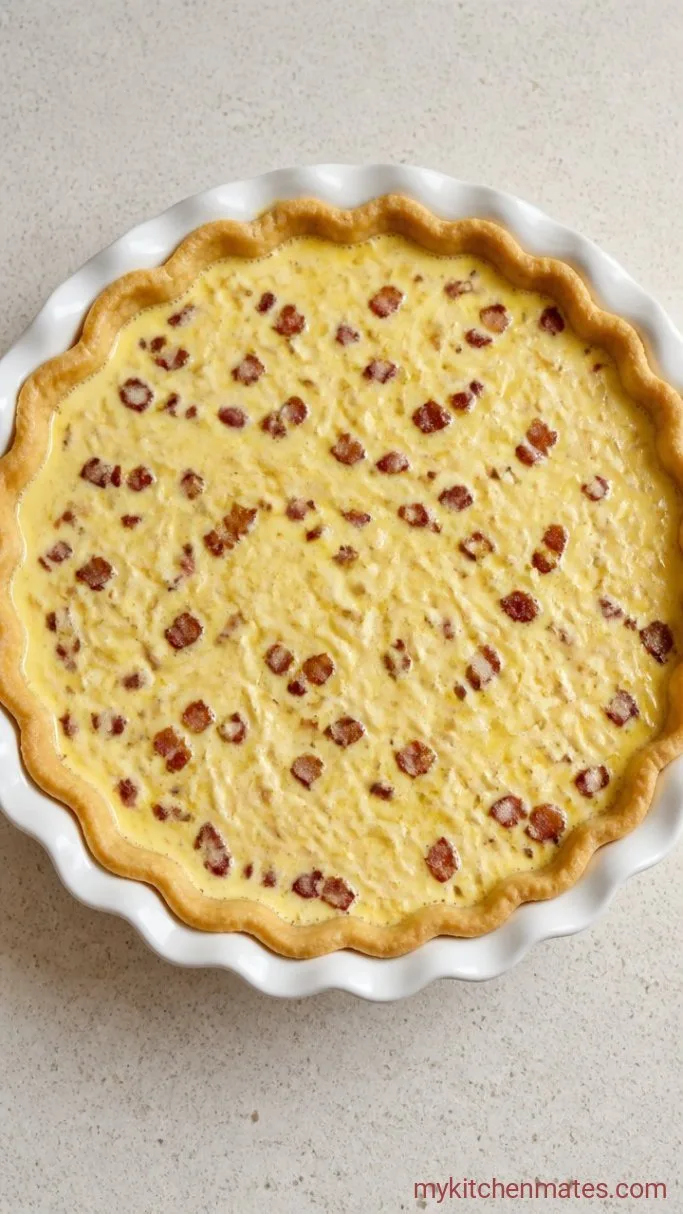
Scatter the cooked bacon evenly over the bottom of the blind‑baked crust. Sprinkle ¾ cup of the shredded Gruyère on top of the bacon, letting it fall into the gaps.
Carefully pour the custard mixture over the bacon and cheese. It will rise up around the filling. Scatter the remaining ¼ cup of Gruyère and the optional chives across the top so you get little golden pockets of cheese as it bakes.
Step 5: Bake Until Set

Reduce the oven temperature to 350°F (175°C) and place the quiche on the middle rack. Bake for 35 to 40 minutes, or until the edges are fully set and puffed while the center still has a slight jiggle when you gently nudge the dish.
The top will be deeply golden and the kitchen will smell like toasted cheese and bacon fat. That little wobble means the custard will finish carrying over from residual heat after you pull it out, giving you a creamy center instead of a dry one.
Step 6: Cool and Slice

Let the quiche rest on a wire rack for 10 to 15 minutes. This is the hardest part, but it gives the custard time to finish setting so you get clean, tidy slices.
Run a thin knife around the edge of the dish, then cut into wedges and serve warm. The crust will be crisp, the filling will be creamy, and the cheese will be still be a little melty.
Tips for a Crisp Crust and Silky Custard
- Chill your crust before blind‑baking, even if it is store‑bought. Ten minutes in the freezer firms up the butter so the sides do not slump in the oven.
- Do not skip the pie weights. Without them the crust will puff and shrink, and you lose the room for the filling.
- Use heavy cream and whole milk together. All milk makes a watery custard; all cream can turn a little greasy as it bakes. The combination gives you that smooth, tender slice without being too rich.
- Check for doneness at 35 minutes. Every oven runs a little differently, and an over‑baked quiche turns spongy. The center should still tremble a bit when you shake the dish lightly.
Bake times vary by how deep your pie dish is:
| Pan type | Bake time at 350°F |
|---|---|
| Standard 9‑inch pie dish | 35 to 40 minutes |
| Deep‑dish 9‑inch pie dish | 45 to 50 minutes |
Storing Leftover Quiche
- Refrigerate: cool the quiche completely, then wrap it tightly and store in the fridge for up to 3 days.
- Reheating: warm individual slices in a 300°F oven for about 10 minutes, or until heated through. A toaster oven works well too and keeps the crust from getting limp.
- Serve cold: the custard stays sliceable straight from the fridge, and many French households serve quiche that way for a quick lunch.
What to Serve with Quiche Lorraine
A simple green salad with a sharp lemon vinaigrette cuts straight through the richness of the cream and bacon. The acid wakes everything up. For something heartier, a bowl of tomato soup or a light leek and potato soup makes a cozy pairing on a cool evening.
Frequently Asked Questions
Can I use half‑and‑half instead of heavy cream and milk?
Yes, you can replace both with 1 ¾ cups half‑and‑half. The custard will be slightly less rich but still creamy.
Is it necessary to blind‑bake the crust?
Yes, a fully baked bottom crust prevents the dreaded soggy base that happens when egg custard sits on raw dough.
Can I freeze quiche lorraine?
Yes, wrap the fully cooled quiche tightly and freeze for up to 2 months. Defrost overnight in the fridge and reheat in a 300°F oven.
Why did my quiche puff up and then sink?
That is normal, and it happens because the eggs expand in the oven then settle as the quiche cools. The tart will look lightly domed when hot and flatten as it rests, which is exactly what you want.
Quiche Lorraine Recipe
Ingredients
Method
- Preheat oven to 375°F. Line crust with parchment and pie weights; bake 15 minutes. Remove weights, prick bottom, and bake 5 to 7 minutes more until pale golden. Set aside.
- Cook bacon in a skillet over medium heat until crisp, about 5 to 7 minutes. Drain on paper towels.
- Whisk eggs, cream, milk, salt, pepper, and nutmeg in a bowl until smooth.
- Scatter bacon and ¾ cup Gruyère in the crust. Pour custard over, then top with remaining cheese and chives.
- Reduce oven to 350°F and bake 35 to 40 minutes, until edges are set and center still jiggles slightly.
- Cool on a wire rack for 10 to 15 minutes, then slice and serve warm.
Notes
