
Pantry Puttanesca Sauce (20 Minutes)

Puttanesca sauce is the weeknight answer when the fridge looks bare but you still want a pasta dish that punches way above its weight. Bold, briny, and just a little spicy, it comes together almost entirely from cans and jars you probably have right now.
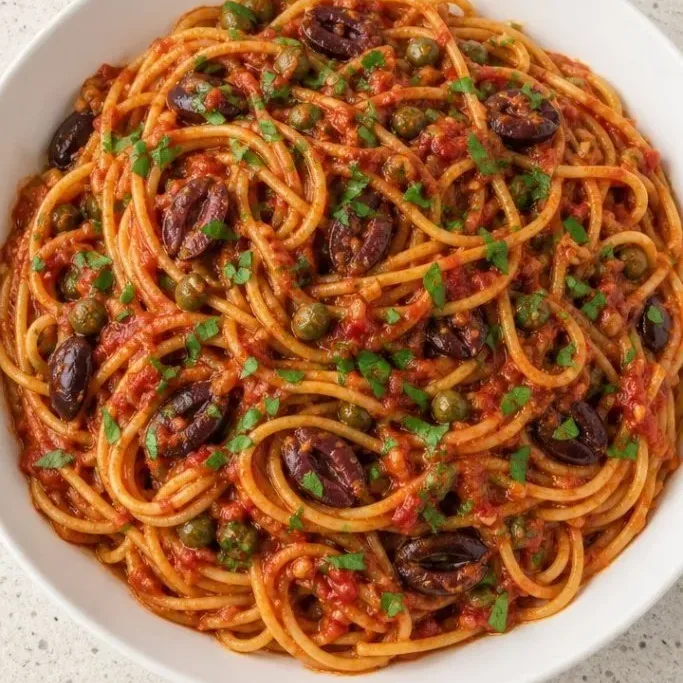
In the time it takes to boil water and cook spaghetti, you can pull off a sauce that tastes like it simmered all afternoon. It’s my go-to for those evenings when cooking feels like a chore but takeout isn’t in the cards.
What Makes This Sauce a Weeknight Hero
The flavors are intense and balanced without any fussy technique. Salty olives, briny capers, and oil-packed anchovies melt into a garlicky tomato base that coats every strand of pasta. There’s no chopping beyond a few garlic cloves and halving some olives, and the whole thing simmers while you set the table.
I reach for this when I want something that feels a little luxurious but requires zero planning. The anchovies disappear into the sauce, leaving behind a deep savory backbone that makes it taste far more complex than a 20-minute sauce has any right to.
Ingredients
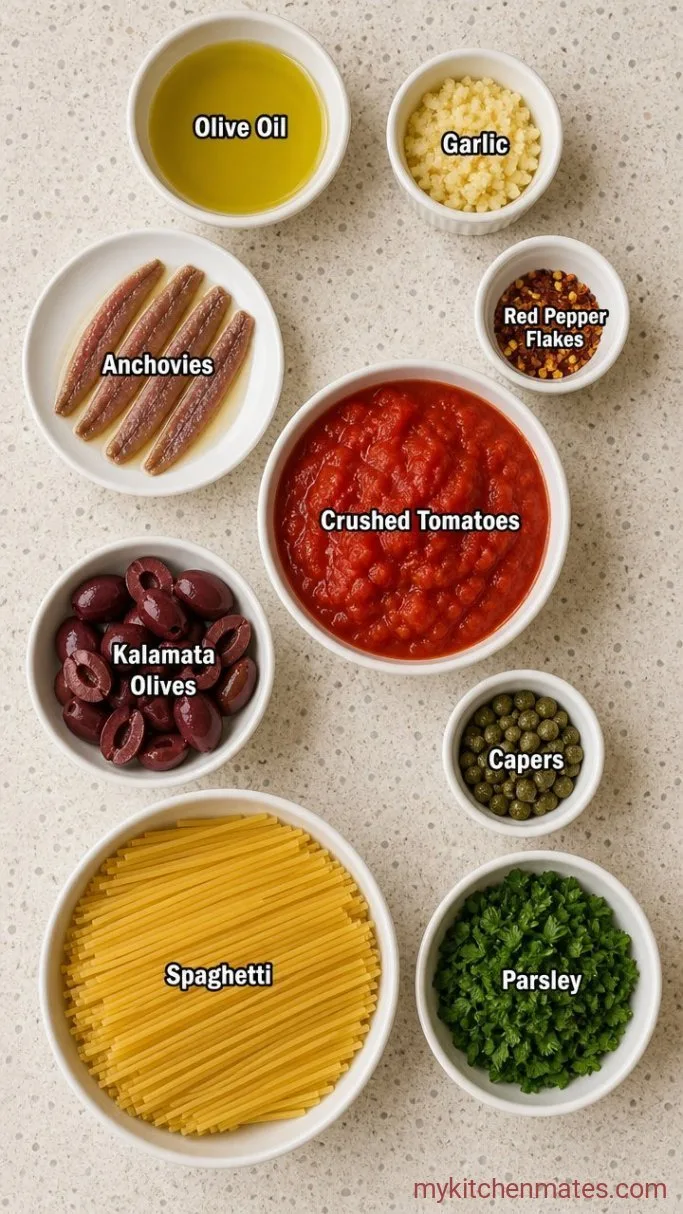
- 3 tbsp olive oil: a good everyday oil, nothing too delicate.
- 4 garlic cloves, minced: you can smash and roughly chop them if you prefer.
- 4 anchovy fillets, oil-packed: they dissolve completely into the oil and add umami, not fishiness.
- 1/2 tsp red pepper flakes: adjust to your heat tolerance.
- 1 (28 oz) can crushed tomatoes: use whole peeled and crush them by hand for a chunkier sauce.
- 1/2 cup pitted Kalamata olives, halved: the deep purple brininess is key.
- 2 tbsp capers, drained: the little nonpareil kind works best.
- Salt, to taste: only if needed; the olives and capers carry a lot of salt.
- 1 lb spaghetti or linguine: choose whatever long pasta you have.
- Handful fresh parsley, chopped: for a fresh, grassy finish.
Variations / Substitutions
- Anchovy-free: swap the anchovies for 1 tsp white miso paste stirred in with the tomatoes for a similar savory depth.
- Olive swap: use oil-cured black olives or a mix of green and black for a different briny profile.
- Extra bite: add a splash of red vinegar or a teaspoon of lemon juice right before tossing to brighten the sauce.
- Herb change: chopped fresh oregano or basil can stand in for parsley if that’s what’s on hand.
Crispy Salt and Pepper Tofu is an easy way to put this sauce to good use.
How to Make Puttanesca Sauce
Step 1: Sizzle the Garlic and Anchovies
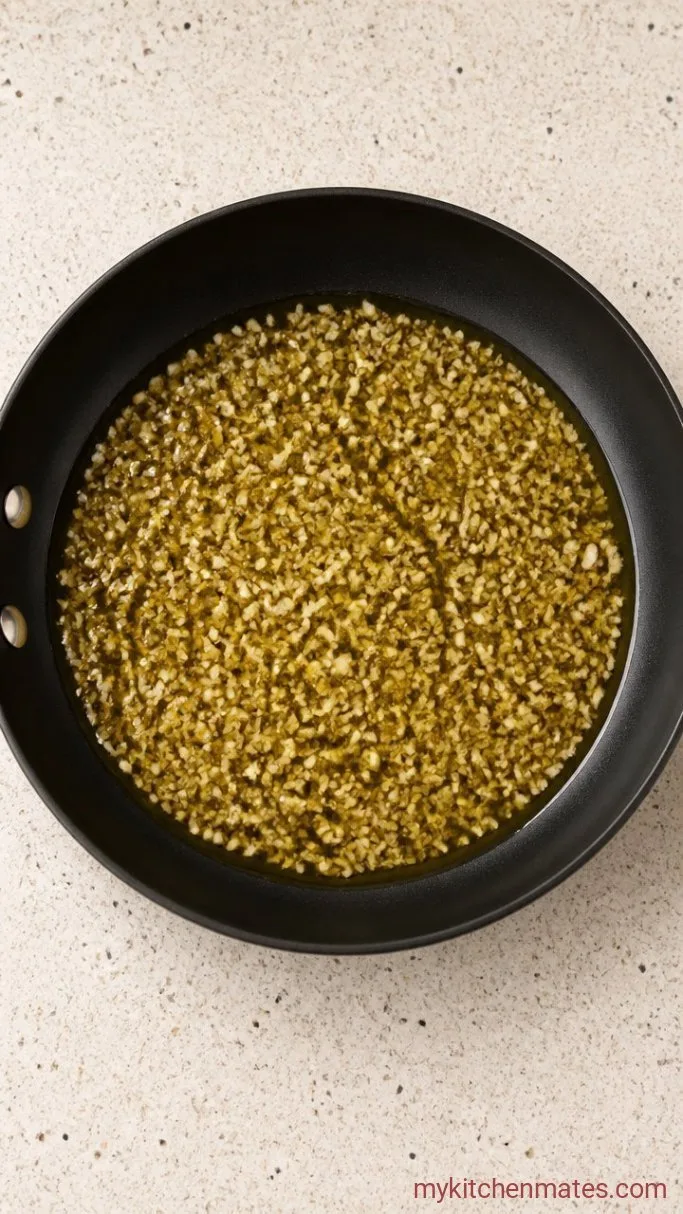
Pour the 3 tbsp olive oil into a large, deep skillet and set it over medium heat. Once the oil shimmers, add the 4 minced garlic cloves and stir continuously for about 1 minute, just until the edges turn pale gold. Drop in the 4 anchovy fillets and use a wooden spoon to press them against the pan; they will break apart and melt into the oil within a minute or so. Sprinkle in the 1/2 tsp red pepper flakes and stir for 30 seconds more.
The garlic should smell fragrant and sweet, not browned or burnt, and the anchovies will have disappeared into an invisible salty paste that seasons the oil evenly.
Step 2: Add the Tomatoes
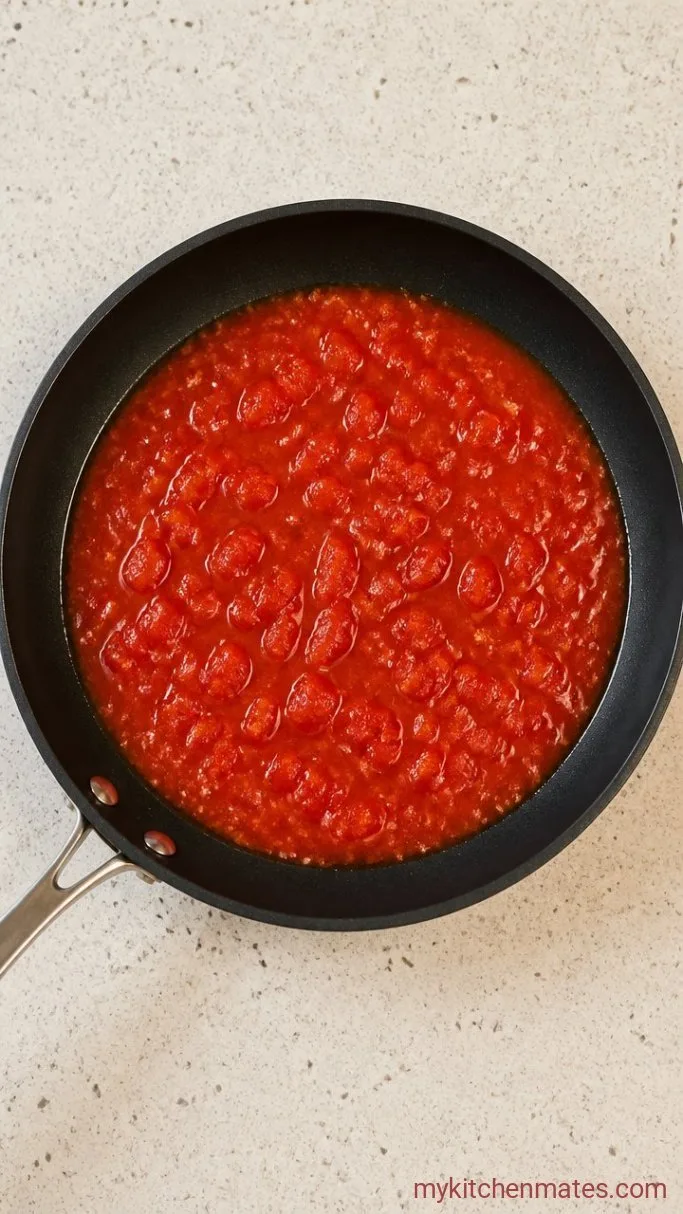
Pour the entire can of crushed tomatoes into the skillet and stir everything together. Raise the heat to bring the sauce to a lively bubble, then lower it to maintain a gentle simmer. Cook uncovered for 12 minutes, stirring once or twice, until the sauce thickens slightly and the flavors marry.
You will notice the color deepen from bright red to a rich, brick hue, and the oil will pool a bit around the edges. Resist the urge to rush this simmer; that short time is what softens the tomato’s raw edge.
Step 3: Stir in the Olives and Capers
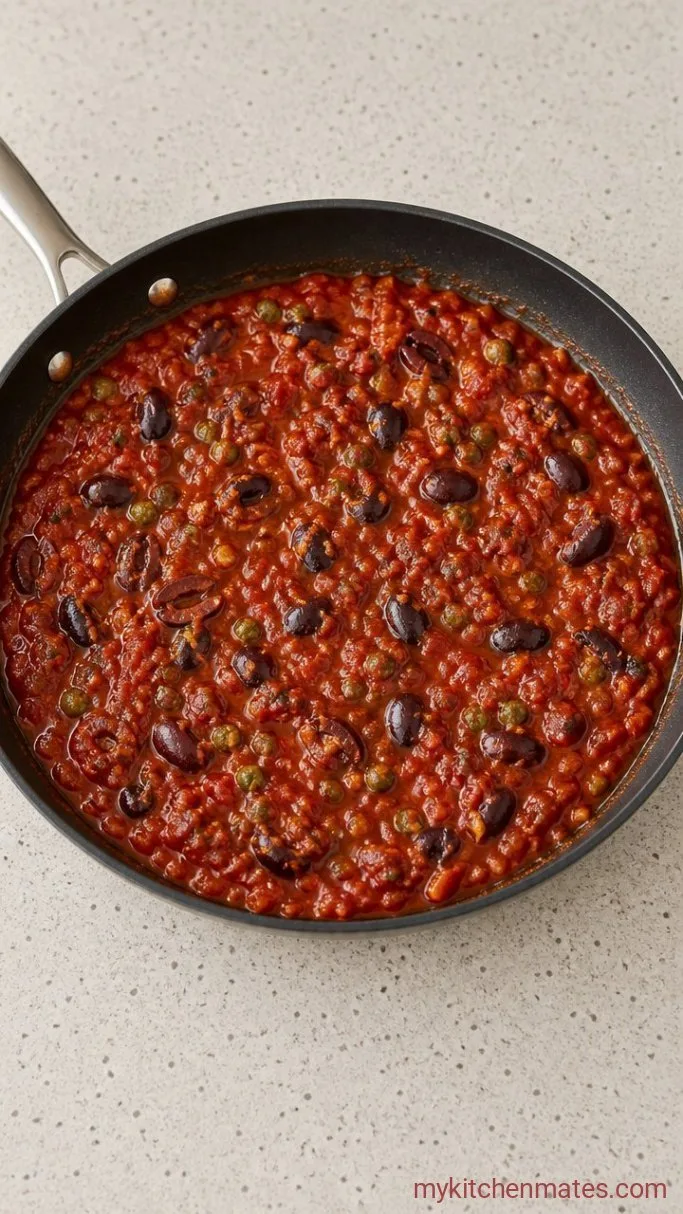
Tumble in the 1/2 cup halved Kalamata olives and the 2 tbsp drained capers. Stir well and let the sauce simmer for another 3 minutes, just to warm the briny bits through without cooking away their punch. Taste the sauce at this point and decide if it needs a small pinch of salt, but in most cases the capers and olives provide enough.
The olives will soften slightly but keep their meaty bite, and the capers add little saline pops throughout.
Step 4: Boil the Pasta
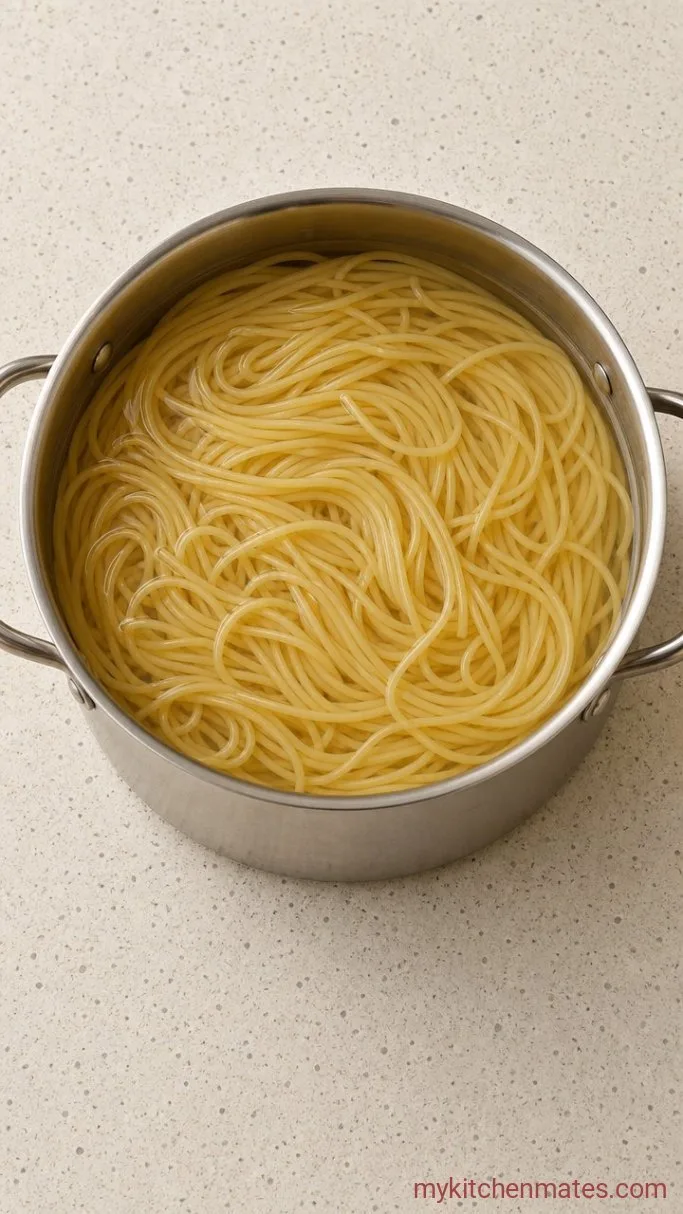
While the sauce bubbles, bring a large pot of generously salted water to a rolling boil. Add the 1 lb spaghetti and cook according to the package directions until al dente, usually about 9 to 10 minutes. Right before draining, scoop out a mugful of the starchy pasta water and set it aside.
When you bite a strand, it should offer a pleasant resistance at its center, no chalky core but not mushy either.
Step 5: Toss and Serve
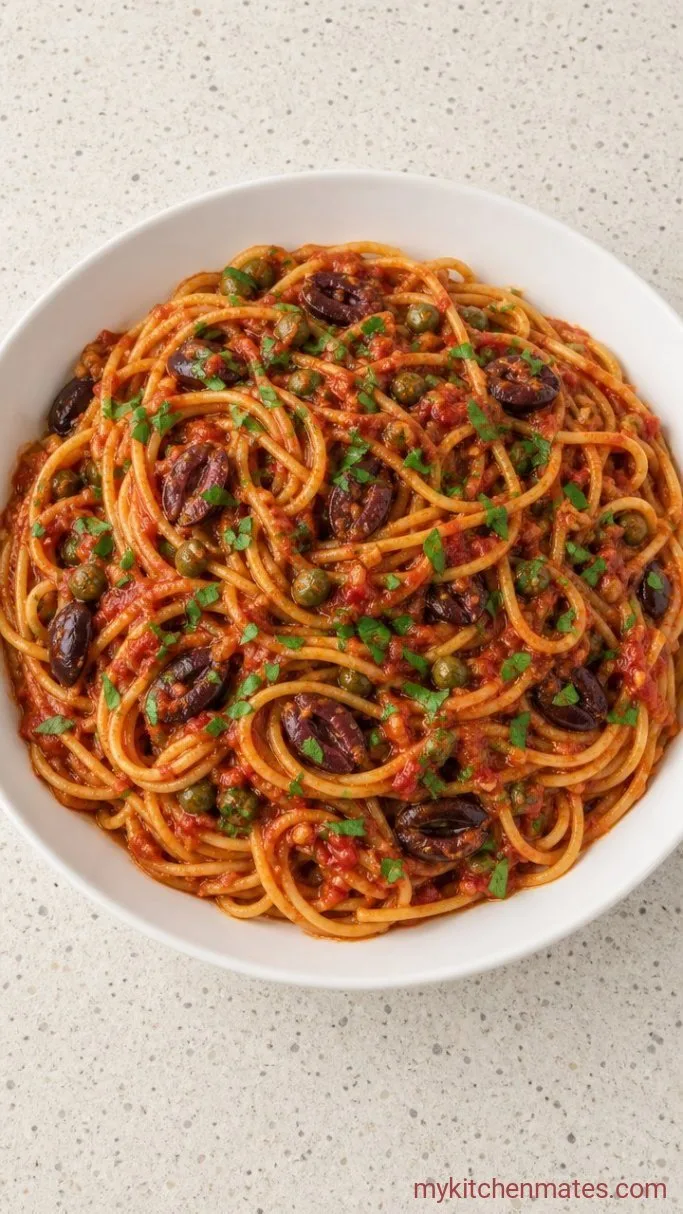
Drain the spaghetti well and transfer it directly into the skillet with the sauce. Turn off the heat and use tongs to toss everything together, adding a splash of the reserved pasta water if the sauce looks tight. Keep tossing until every strand is glossy and well coated. Divide among bowls and scatter plenty of chopped parsley over the top, plus an extra pinch of red pepper flakes if you like heat.
The steam rising off the bowls carries a salty, garlicky aroma that tells everyone dinner is ready long before you call them to the table.
A Few Tips Before You Start
- Start your pasta water early so it’s boiling by the time the sauce has simmered for a few minutes. Sync the two and everything finishes together.
- Do not let the garlic brown deeply; burnt garlic turns acrid and will ruin the sauce’s clean flavor.
- Those anchovies are not optional for depth, but they dissolve so completely that even skeptical eaters won’t detect them, only a savory richness.
- If the sauce tastes flat, a tiny splash of red vinegar right before tossing sharpens every flavor without tasting sour.
Storing Leftover Sauce
- Refrigerate: cool any extra sauce completely, then store in an airtight container for up to 4 days. The flavors actually improve overnight.
- Reheating: warm gently in a skillet with a tablespoon of water to loosen it. Avoid high heat, which can make the olives taste bitter.
What to Serve with Puttanesca Sauce
A simple green salad with a lemon vinaigrette cuts through the sauce’s richness beautifully. Crusty bread or garlic toasts are non-negotiable for wiping the bowl clean. A crisp, dry white grape juice plays off the briny notes without competing.
Frequently Asked Questions
Can I make this sauce ahead of time?
Yes, the sauce holds well in the fridge and the flavors get even deeper. You can make it up to two days in advance and reheat while the pasta cooks.
Is there a way to skip the anchovies entirely?
You can omit them, but the sauce will lose its umami backbone. For a vegan version that still has depth, stir in a teaspoon of white miso paste with the tomatoes.
How spicy is this dish with the given amount of red pepper flakes?
Moderate and warming, not fiery. Halve the amount for a mild sauce or double it if you enjoy a real kick.
Can I use a different pasta shape?
Absolutely. Short shapes like penne or rigatoni catch the chunky bits well, and bucatini is a traditional favorite because the hollow center gets filled with sauce.
Puttanesca Sauce Recipe
Ingredients
Method
- Heat oil in a large skillet over medium heat. Add garlic and cook 1 minute until pale gold. Press anchovies into the oil until they dissolve, then stir in red pepper flakes.
- Pour in crushed tomatoes, bring to a bubble, then simmer 12 minutes until slightly thickened.
- Add olives and capers; simmer 3 more minutes. Taste and add salt only if needed.
- Meanwhile, cook pasta in salted boiling water until al dente. Reserve a mug of pasta water before draining.
- Drain pasta and toss with sauce in the skillet, adding pasta water as needed. Serve topped with parsley and extra pepper flakes.
Notes
