
Dark and Tangy Pumpernickel Sourdough Bread

This pumpernickel sourdough bread brings deep, roasted flavor and a molasses-rich tang in every slice. It’s the kind of loaf that stands up to sharp cheese and hearty soup, with a burnished crust and a crumb that stays moist for days.

I’ll walk you through a slow rye levain, a gentle stretch-and-fold routine, and a Dutch oven bake that gives you a dark, glossy loaf worth the wait.
What Makes This Pumpernickel Sourdough So Good
The dark rye flour and unsweetened cocoa build a subtle bitterness that balances the molasses, while the long overnight levain brings a clean sourdough tang. It’s not sweet, but deeply savory, with a nutty, earthy complexity that lingers.
Even a day or two later, the crumb stays tender because the rye’s natural gums hold moisture. Toasted, it becomes even richer, with a hint of caraway if you choose to add it.
Ingredients
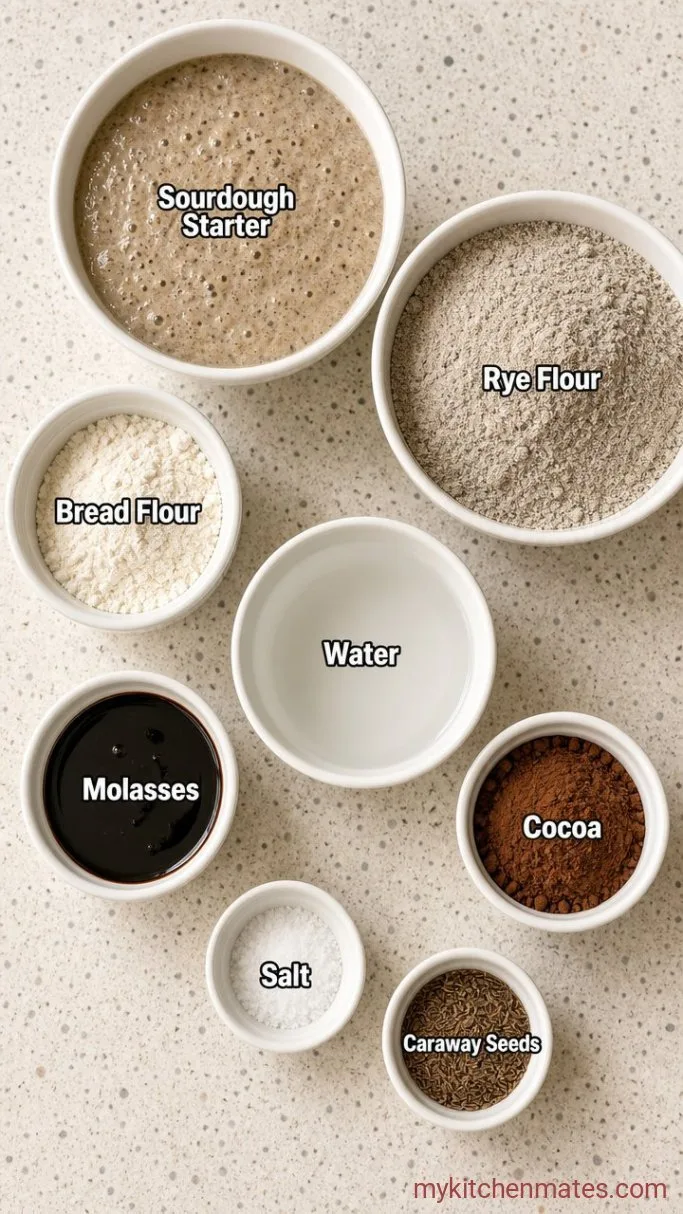
- 100g active sourdough starter: fed and bubbly, 100% hydration
- 150g dark rye flour: use whole grain rye for the deepest color and flavor
- 300g bread flour: provides structure and a lighter chew
- 300g warm water (80°F / 27°C): divided for levain and dough
- 40g unsulphured molasses: look for blackstrap if you like a stronger, more mineral taste
- 15g unsweetened cocoa powder: adds color and a hint of bitterness, not a chocolate taste
- 10g fine sea salt
- 1 tbsp caraway seeds (optional): skip if you prefer a plain loaf
Variations / Substitutions
- Sweetener: Replace the molasses with barley malt syrup for a milder, toastier sweetness.
- Seeds: Omit the caraway entirely or swap in an equal amount of fennel seeds.
- Flour: If you only have light rye, use it; the color and flavor will be less intense but still delicious.
Creamy Pioneer Woman Tomato Soup is a cozy soup to serve with this bread.
How To Make Dark and Tangy Pumpernickel Sourdough Bread
Step 1: Build the Rye Levain
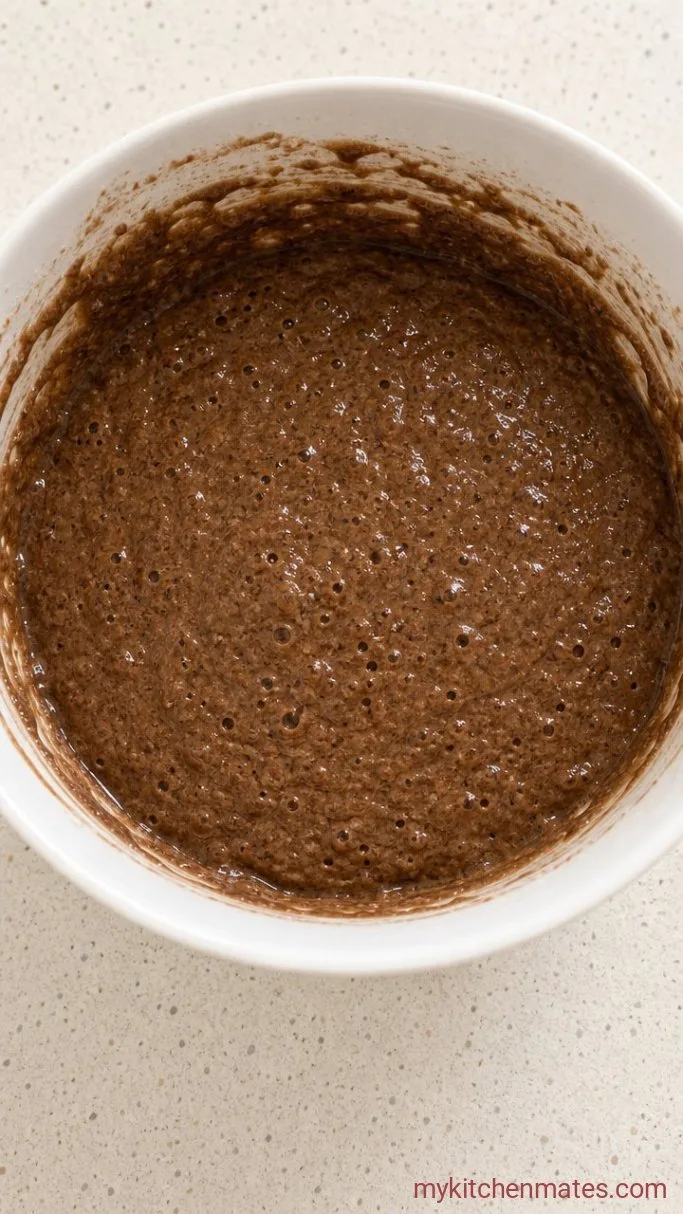
The night before you plan to bake, stir together 50g of your active sourdough starter, 100g of the dark rye flour, and 100g of the warm water in a jar. Cover loosely and let it sit at room temperature for 8 to 12 hours, until it has roughly doubled and shows a domed, puffy top.
The levain will look thick and slightly glossy, with a strong earthy-sour aroma. When you scoop it, you’ll see a network of tiny bubbles from the fermentation.
This long, slow build develops the bread’s pronounced tang and begins breaking down the rye so the crumb bakes up tender rather than dense.
Step 2: Mix the Dough
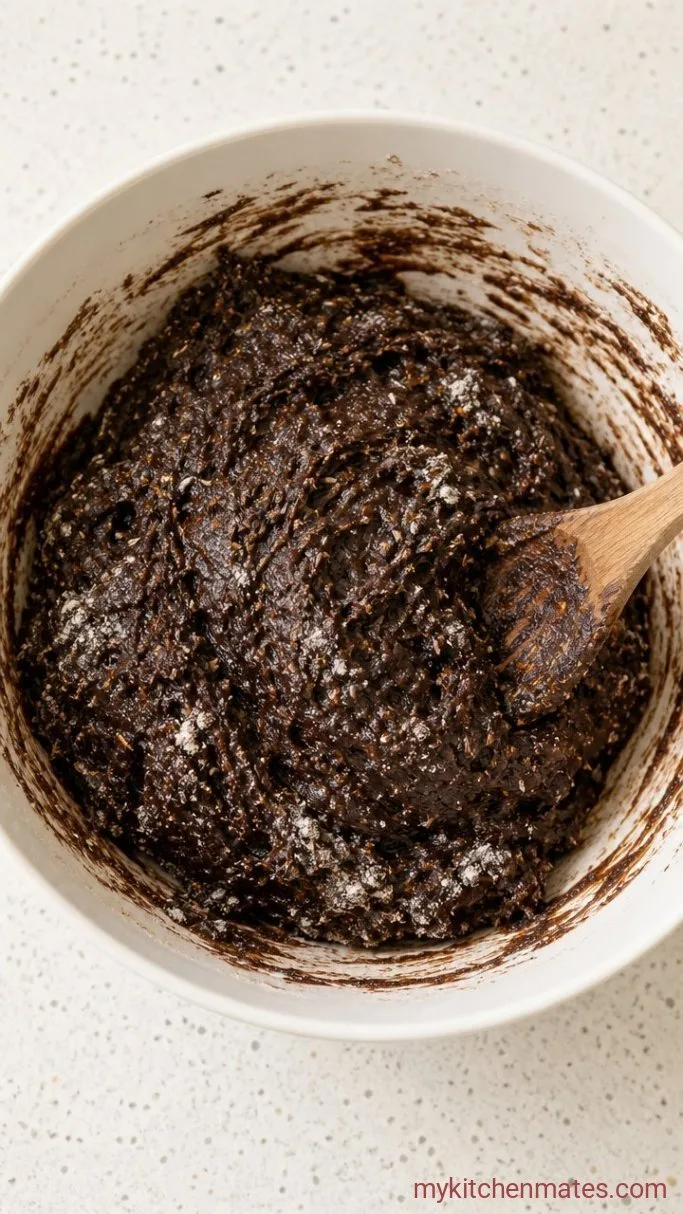
In a large bowl, combine the remaining 300g bread flour, 50g dark rye flour, 15g cocoa powder, and 10g salt. In a separate measuring cup, dissolve the 40g molasses into the remaining 200g warm water. Pour the molasses water and all of the levain into the dry ingredients. Mix with your hand or a sturdy spoon just until no dry flour remains, about 1 to 2 minutes. The dough will be sticky and shaggy. Cover the bowl and let it rest for 30 minutes.
After the rest, the dough feels slightly more elastic and a little less tacky. The cocoa turns it a deep, almost black-brown, and you’ll smell the molasses clearly.
This autolyse gives the flour time to fully hydrate and starts gluten development without any kneading, which makes the later stretches much more effective.
Step 3: Bulk Ferment and Stretch
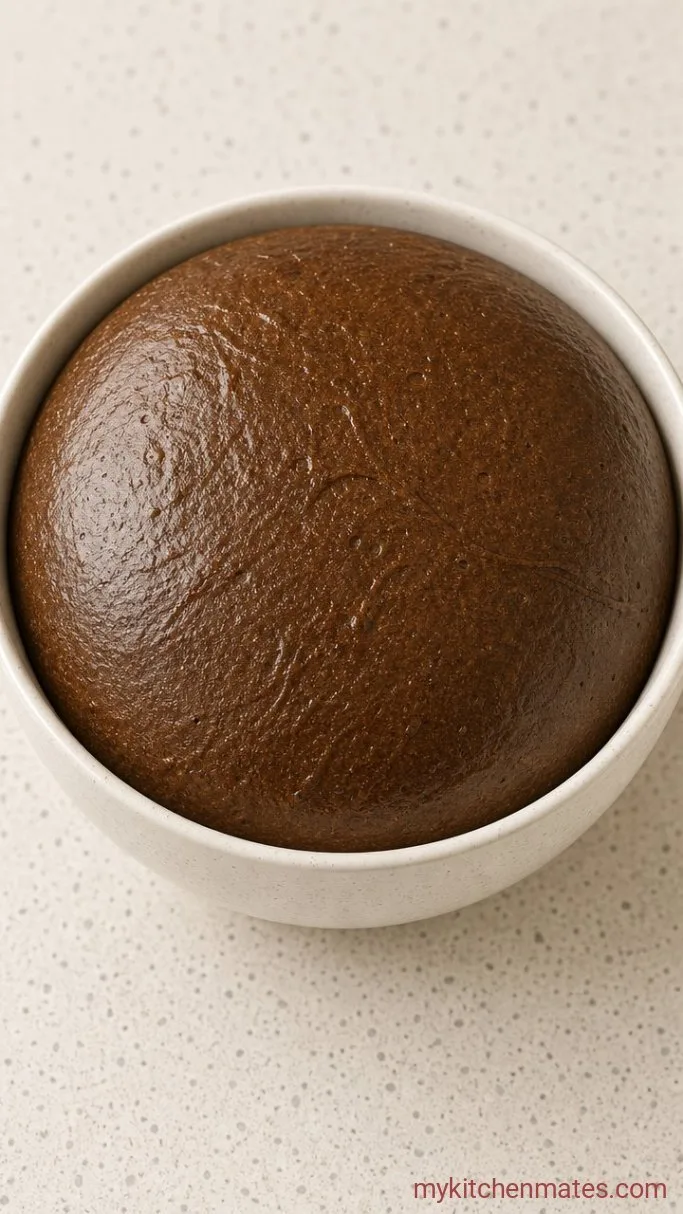
With a wet hand, reach under one side of the dough, stretch it upward until you feel resistance, and fold it over the center. Rotate the bowl a quarter turn and repeat until you’ve folded all four sides, about 4 to 6 folds. Cover and let it rest for 30 minutes. Repeat this stretch-and-fold set 3 more times at 30-minute intervals, so you complete 4 sets over 2 hours. After the last fold, cover and let the dough continue to ferment until it has increased in volume by about 40 to 50 percent.
During bulk fermentation the dough will relax and spread between folds, then tighten up after each set. By the end it should look puffy on top and jiggle when you shake the bowl gently. A visible network of finer bubbles under the surface is a good sign.
Rye doughs rarely double like all-wheat doughs, so don’t wait for a full doubling or the loaf may overproof and fall flat in the oven.
Step 4: Shape the Loaf
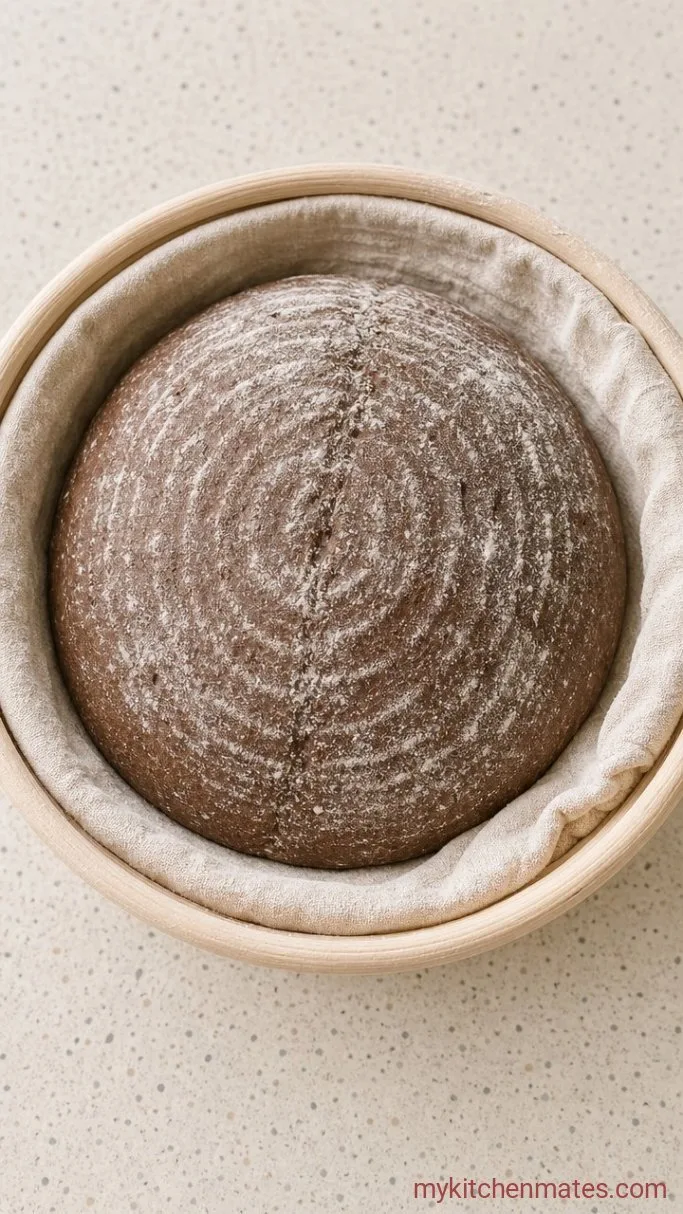
Turn the dough out onto a lightly floured counter. With floured hands, pat it into a rough rectangle about 8×10 inches. Fold the top third down to the middle and the bottom third up over it, like folding a letter. Starting from the short end, roll the dough into a tight log, pinching the seam closed with your fingertips. Place the shaped loaf seam-side up in a floured banneton or a bowl lined with a floured tea towel.
Cover with a damp cloth and let it proof at room temperature for 1 to 2 hours, until it has risen by about 30 percent. When you lightly press a floured finger into the dough, the indentation should slowly spring back but not disappear entirely.
For even deeper flavor and a slightly taller loaf, you can place the covered banneton in the refrigerator for a cold proof of 8 to 12 hours at this point. If you’re baking the same day, just move on to the next step once it passes the finger-poke test.
Step 5: Score, Bake, and Slice
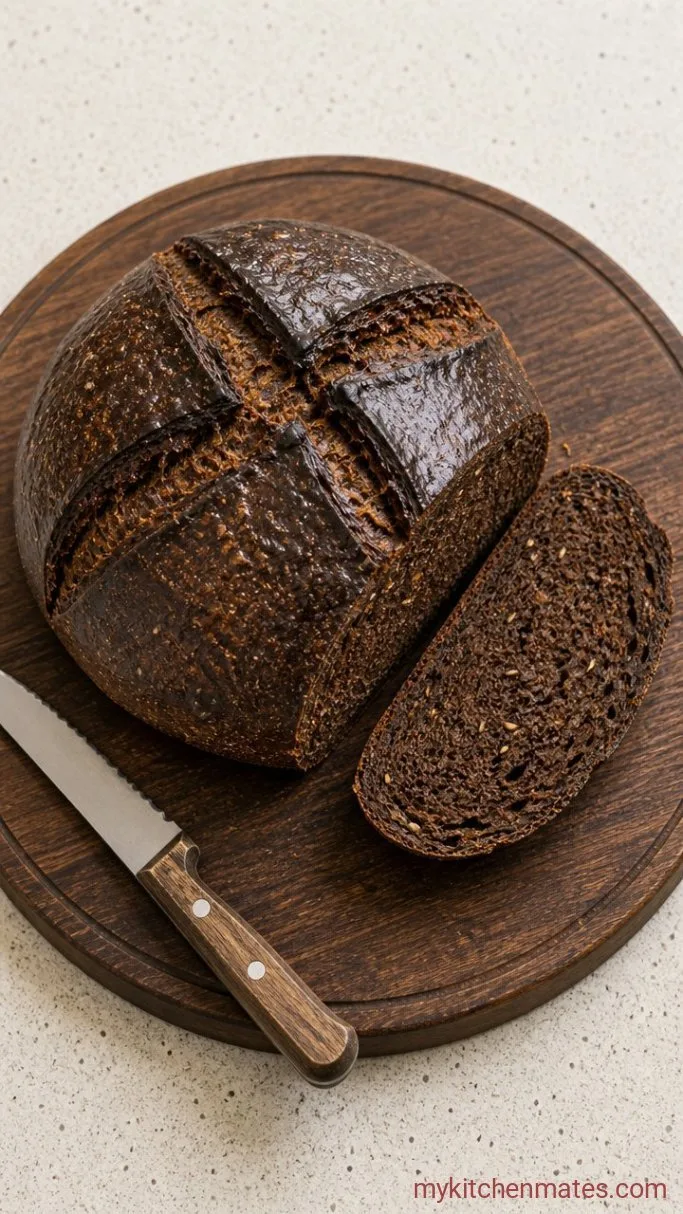
At least 45 minutes before baking, set a Dutch oven with its lid inside your oven and preheat to 450°F (230°C). When the oven is ready and the dough is proofed, turn the loaf out onto a piece of parchment paper. Slash the top with a sharp lame or razor held at a 30-degree angle, cutting about ¼ inch deep. Use the parchment to lower the loaf into the preheated Dutch oven, cover it, and bake for 25 minutes.
Remove the lid and bake another 15 to 20 minutes, until the crust is deeply browned and the loaf sounds hollow when you knock on the bottom. The internal temperature at the center should reach 200°F (93°C).
Transfer the bread to a wire rack and let it cool completely before slicing, at least 2 hours. When you finally cut into it, the crumb will be glossy and tender, with a tight but soft grain. Slice and serve warm or at room temperature.
Tips for a Perfect Pumpernickel Loaf
- If you don’t have a Dutch oven, bake the loaf on a preheated baking stone with a metal pan of hot water on the oven floor to create steam. Bake at 450°F for 20 minutes with steam, then remove the water pan and finish baking another 15 to 20 minutes.
- For an even darker, shinier crust, brush the top of the shaped loaf with a mixture of 1 tablespoon molasses and 1 tablespoon water just before scoring.
- A mature starter that reliably doubles within 4 to 6 hours of feeding gives the best rise and tang. If your starter is sluggish, give it a few feedings with a portion of rye flour to boost activity.
- Weigh every ingredient with a kitchen scale. Rye absorbs water differently than wheat, so cup measurements will throw off the hydration and leave you with a frustratingly wet or dry dough.
Bake times by method:
| Method | Temperature | Covered/Steam Time | Total Bake Time |
|---|---|---|---|
| Dutch oven | 450°F (230°C) | 25 mins covered | 40 to 45 mins |
| Open bake with steam pan | 450°F (230°C) | 20 mins with steam | 35 to 40 mins |
Storing Leftover Bread
- Room temperature: Wrap the loaf in a clean tea towel or paper bag and keep it at room temperature for up to 3 days. The crust will soften a bit, but the interior stays moist.
- Freeze: Slice the cooled loaf and freeze pieces flat in a zip-top bag. Toast frozen slices straight from the freezer; they’ll taste nearly fresh-baked.
- Reheating: A whole stale loaf can be revived by running it under a trickle of water and baking at 350°F for 10 minutes. The crust crisps right back up.
What To Serve With Pumpernickel Sourdough
A thick slice with salted butter and smoked trout is my favorite quick lunch. The bread’s molasses notes also pair beautifully with a sharp aged cheddar or a funky blue cheese. For a heartier meal, ladle a bowl of split pea soup or beef and barley stew and dunk the bread right in. The earthy rye stands up to big, savory flavors without getting lost.
Frequently Asked Questions
Can I make this without cocoa powder?
Yes, it’s optional. Without it the loaf will be lighter in color and a bit less bitter, but still have plenty of deep rye taste.
My dough was too sticky to shape. What went wrong?
Rye flour makes dough tacky, and a warm kitchen can increase stickiness. Use wet hands and a light dusting of flour while shaping, and try reducing the water by 20g next time if your flour absorbs less.
Why didn’t my loaf rise much in the oven?
It may have overproofed during the final proof or the starter wasn’t active enough. Check that your levain doubles within 8 hours, and don’t let the shaped loaf go past a 30 percent rise before baking.
Can I use instant yeast instead of sourdough?
You can, but you’ll lose the sourdough tang. To make a quick version, add ½ teaspoon instant yeast to the dough mix and skip the levain; the fermentation times will be much shorter, and the flavor will be milder.
Dark and Tangy Pumpernickel Sourdough Bread Recipe
Ingredients
Method
- The night before, mix 50g starter, 100g dark rye flour, and 100g warm water in a jar. Cover and rest 8 to 12 hours until doubled.
- Combine the remaining bread flour, dark rye flour, cocoa, and salt in a bowl. Dissolve molasses in the remaining water, then add it and all of the levain to the dry ingredients. Mix to a shaggy dough, cover, and rest 30 minutes.
- Perform 4 sets of stretch-and-folds at 30-minute intervals, then let the dough bulk ferment until puffy and increased by 40 to 50 percent.
- Shape the dough into a tight log, place seam-side up in a floured banneton, and cover. Proof at room temperature 1 to 2 hours until risen by 30 percent, or cold proof 8 to 12 hours in the fridge.
- Preheat a Dutch oven at 450°F (230°C) for 45 minutes. Turn the loaf onto parchment, score the top, and bake covered 25 minutes. Uncover and bake 15 to 20 minutes more, until 200°F (93°C) internal. Cool completely on a rack, then slice and serve.
Notes

Great recipe!
I do have one question. The ingredient list has 100g of active sourdough starter. We use 50g of the 100g for the rye levain. So when I combine everything I have my rye levain, plus the extra 50g of regular levain/starter that I am going to the entire mixture?
I have made this recipe a couple of times and have not use the leftover 50g of plain levain/starter and the bread has turned out amazing. Only thing that I keep thinking it should be loftier. Right, wrong, or either way?
You’re doing it correctly. Only 50g of the active starter goes into the rye levain. The other 50g is not added to the dough; you can save it as discard or return it to your starter jar.
The finished levain contains the 50g starter plus the added rye flour and water, and that is what gets mixed into the dough. Using the extra 50g starter would make the dough ferment faster and could affect the flavor and timing.
As for loft, this is naturally a denser loaf because of the high percentage of rye flour, molasses, and cocoa. Your loaf should still be pleasantly puffy, but it will not rise like a mostly white-flour sourdough.
For a slightly taller loaf, make sure the levain is at or near peak activity, avoid letting the dough overproof, and consider using a banneton that supports the shape well during the final proof.