
Pressure Cooker Beef Stew in Under an Hour

This pressure cooker beef stew gives you spoon-tender meat and rich, savory broth in about an hour. It tastes like it bubbled away all afternoon but fits into a busy weeknight.
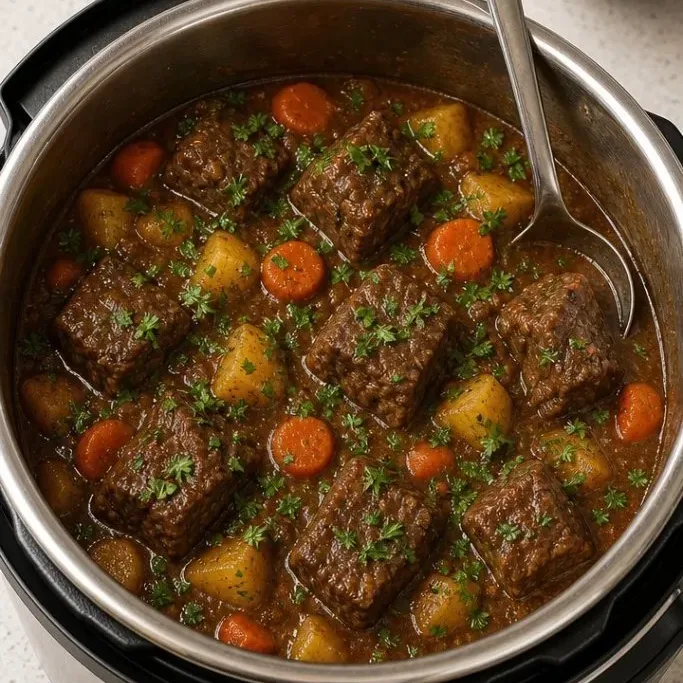
The deep flavor comes from browning the beef right in the pot and deglazing with red grape juice, so every bit of that caramelized goodness ends up in the stew.
Why This Pressure Cooker Stew Works
The high pressure breaks down the chuck roast fast, while the natural release keeps the meat juicy and relaxed instead of seizing up. You get deeply flavored broth because you sear the beef first and cook the tomato paste until it darkens, not just stir it in raw.
Potatoes and carrots hold their shape without turning to mush, and the whole thing finishes with a brightness from a handful of fresh parsley. It is the kind of stew that feels like Sunday dinner even when you start it after work.
Ingredients

- 2 lbs beef chuck roast: cut into 2‑inch chunks; this cut gets silky under pressure
- 1 tsp kosher salt, plus more to finish: used for seasoning the meat before searing
- ½ tsp black pepper
- 2 tbsp vegetable oil: divided, for searing
- 1 large yellow onion: chopped
- 3 cloves garlic: minced
- 2 tbsp tomato paste
- 1 cup dry red grape juice: use something you would drink, or sub extra beef broth
- 2 cups beef broth: low‑sodium so you control the salt
- 1 tbsp Worcestershire sauce
- 2 tsp fresh thyme leaves: or ¾ tsp dried thyme
- 2 bay leaves
- 3 medium Yukon Gold potatoes: cut into 1‑inch chunks
- 3 medium carrots: peeled and cut into 1‑inch rounds
- 2 tbsp cornstarch mixed with 2 tbsp cold water: only if you want a thicker stew
- ¼ cup chopped flat‑leaf parsley: for serving
Variations / Substitutions
- Swap the protein: boneless lamb shoulder or venison stew meat both work beautifully with the same timing.
- Change the herb: rosemary is a good match; use 1 tsp fresh, minced, and add it with the thyme.
- Use sweet potatoes: swap the Yukon Golds for sweet potatoes, but reduce the pressure cook time to 30 minutes to keep them from breaking down.
- Make it dairy‑free: the recipe is already dairy‑free as written; just check your Worcestershire label.
- Different veg: parsnips replace the carrots nicely, or add a handful of frozen peas after cooking for a pop of green.
Flaky Biscuits go great with this stew for soaking up every last bite.
How To Make Pressure Cooker Beef Stew
Step 1: Sear the Beef
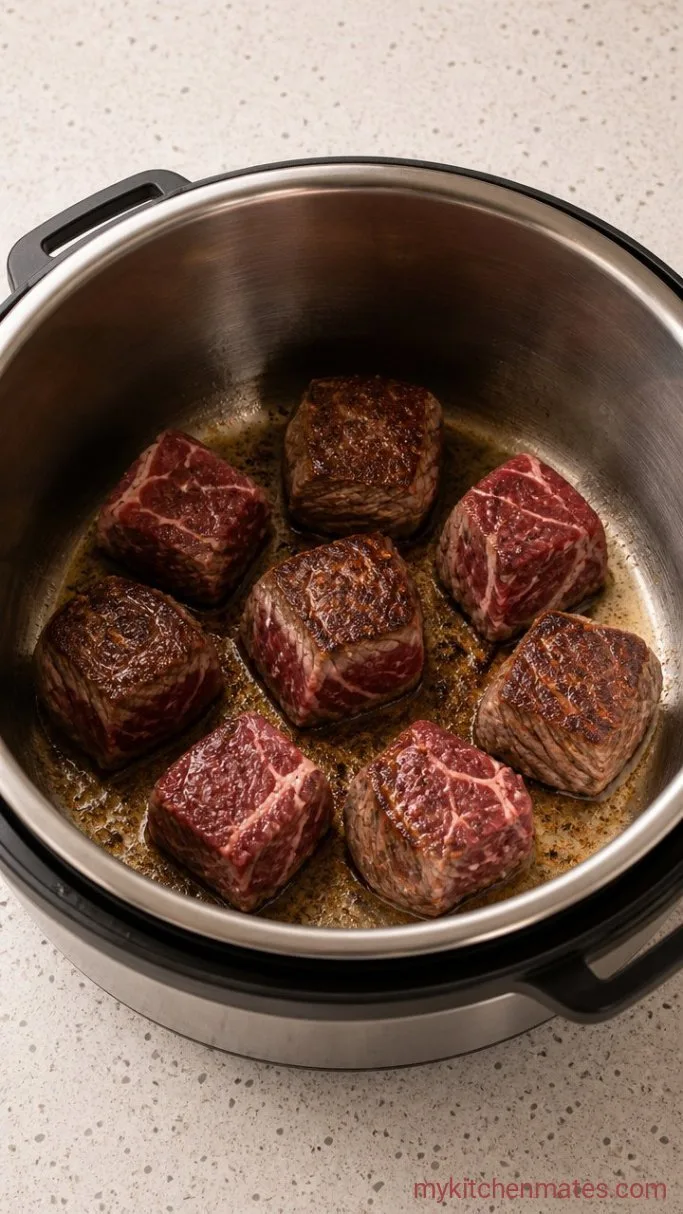
Season the 2 lbs of beef chunks all over with 1 tsp kosher salt and ½ tsp black pepper. Set a 6‑quart pressure cooker to high Sauté, add 1 tbsp of the vegetable oil, and once it shimmers, add half the beef in a single layer. Cook, turning once, until deeply browned, about 4 minutes per side.
You are looking for a crust that sticks just a little then releases on its own. If you crowd the pot, the meat will steam instead of sear, so work in two batches and add the remaining 1 tbsp oil for the second round. Transfer the browned beef to a plate and set it aside.
Step 2: Cook the Aromatics
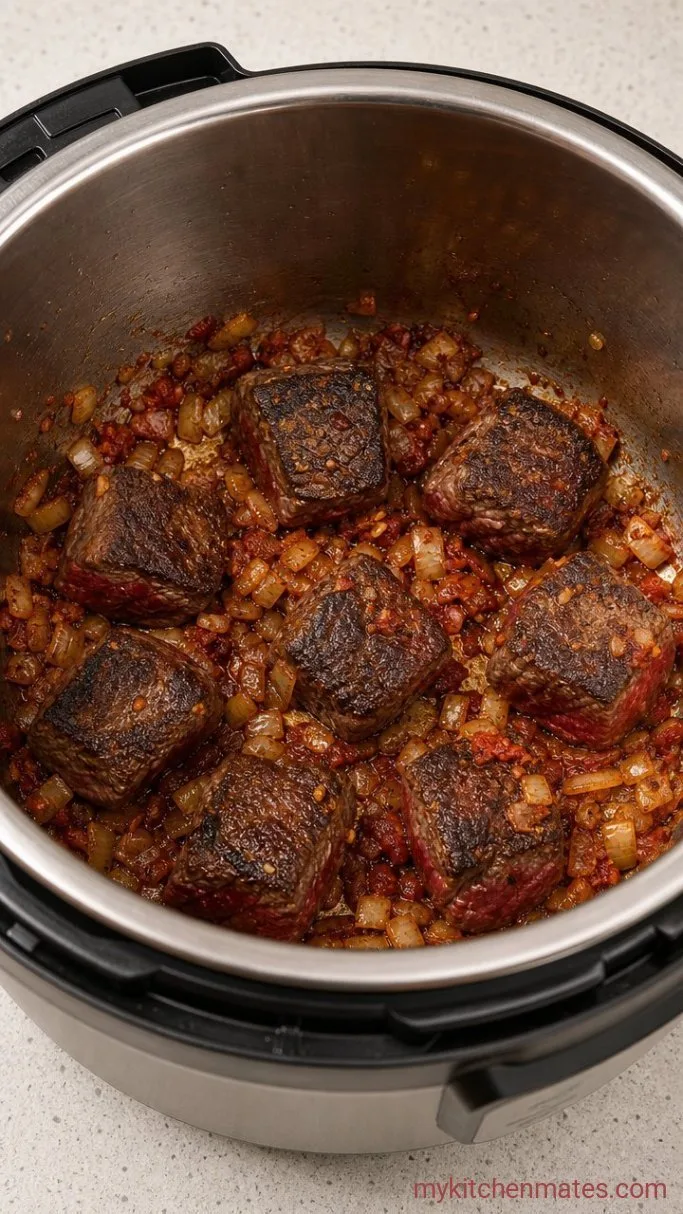
Reduce the Sauté heat to medium. Add the chopped onion to the empty pot and cook, scraping up any browned bits, until the onion softens and turns translucent, about 5 minutes. Stir in the minced garlic and cook just until fragrant, 30 seconds, then add the 2 tbsp tomato paste.
Stir the tomato paste into the onion mixture and let it cook until it turns a shade darker and smells sweet and rich, about 2 minutes. This step builds the backbone of the stew, so do not rush past it.
Step 3: Deglaze and Build the Stew
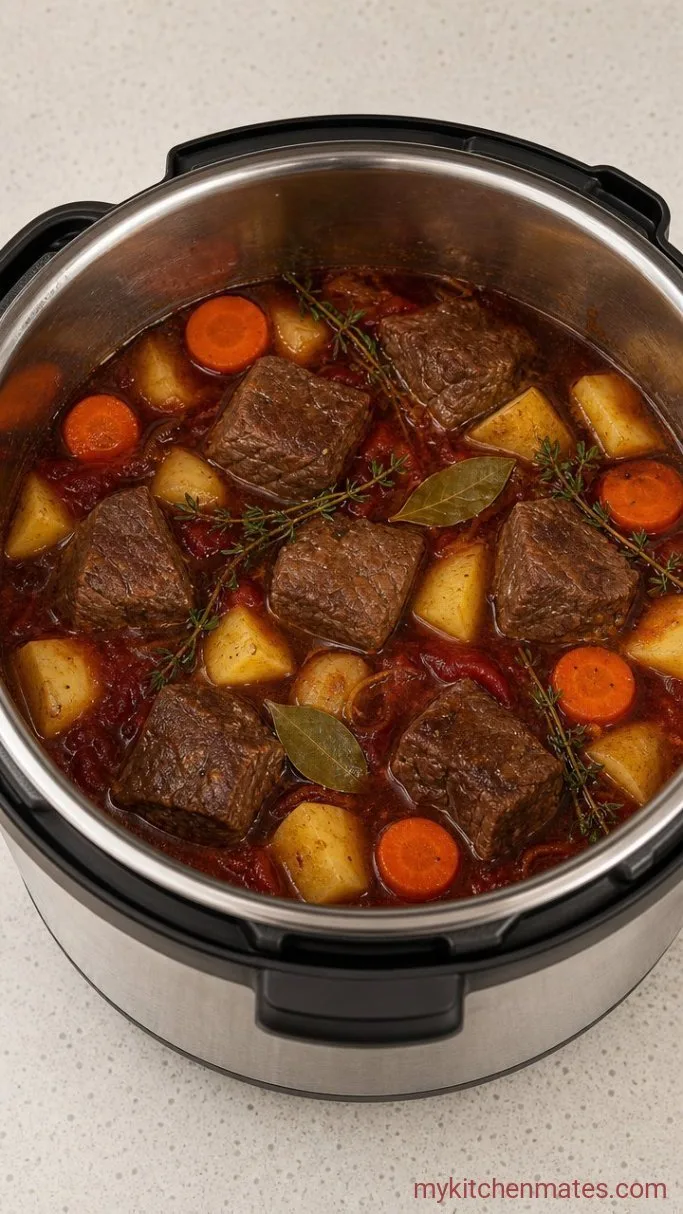
Pour in the 1 cup red grape juice and use a wooden spoon to scrape every browned bit off the bottom of the pot. Let the juice bubble for about a minute, then add the 2 cups beef broth, 1 tbsp Worcestershire, 2 tsp thyme leaves, and 2 bay leaves. Stir in the potatoes, carrots, and the seared beef along with any juices that collected on the plate.
The liquid will not cover all the solids completely, and that is fine. Just make sure the potatoes and carrots are submerged about halfway. Hit Cancel to turn off Sauté.
Step 4: Pressure Cook
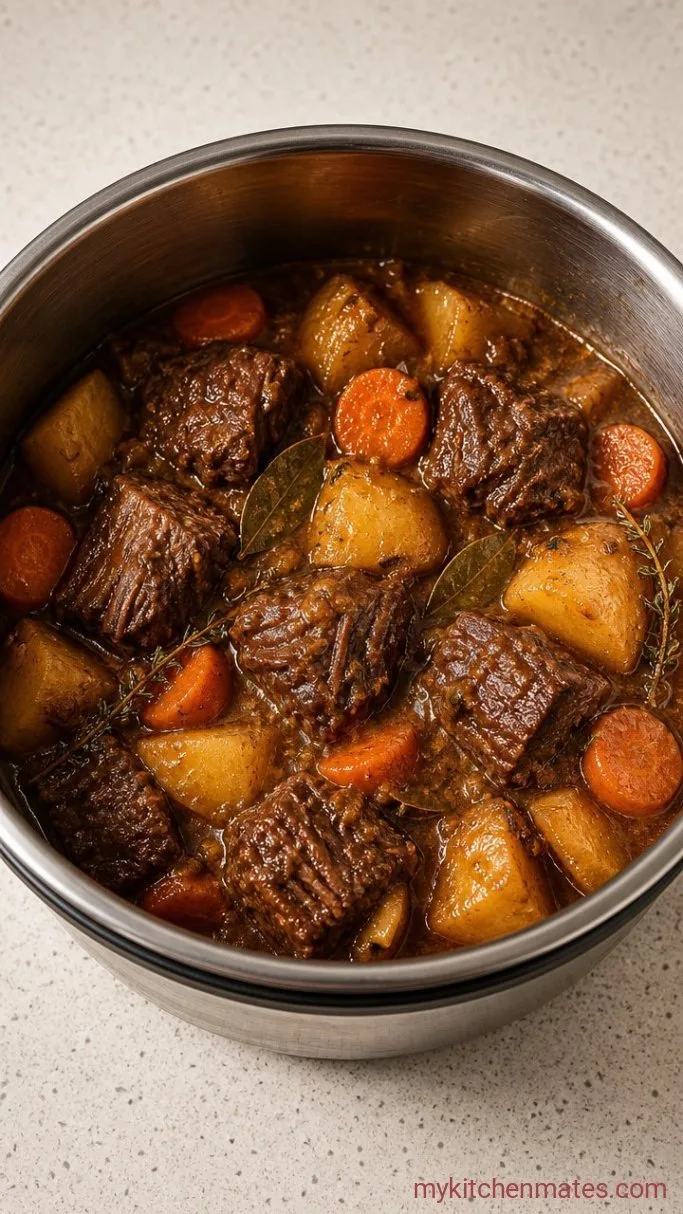
Secure the lid, set the valve to Sealing, and cook on Manual high pressure for 35 minutes. When the timer goes off, leave the pot alone for a full 10‑minute natural pressure release. After that, carefully move the valve to Venting to let out any remaining steam.
The natural release lets the meat fibers relax gradually, so the beef stays tender instead of tightening up. Open the lid away from you, and the steam that rises will smell like the richest Sunday roast.
Step 5: Ladle and Serve
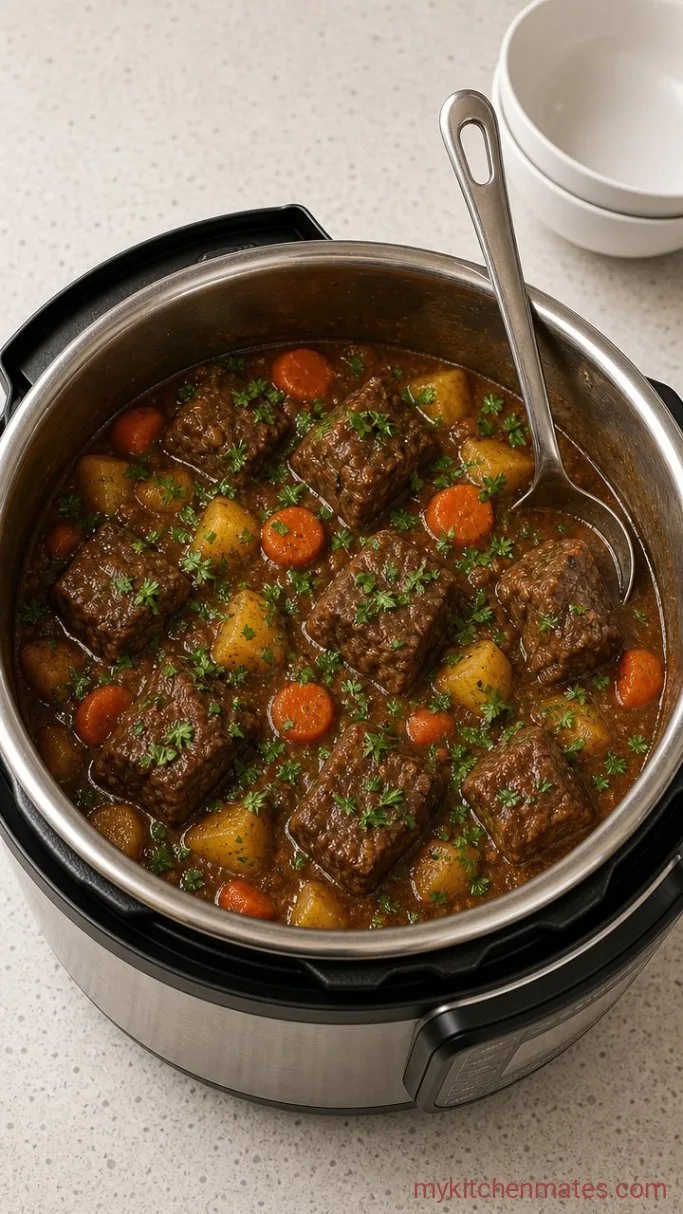
Fish out the bay leaves and taste the broth for salt. If you want a thicker stew, set the pot to Sauté, stir in the cornstarch slurry, and let it bubble for about 2 minutes until it coats the back of a spoon. Stir in the chopped parsley right before you ladle the stew into deep bowls.
Serve it piping hot with nothing more than a side of crusty bread, and the carrots will be tender, the potatoes creamy, and the meat effortless to pull apart.
Tips for the Best Pressure Cooker Stew
- Do not skip the sear.: That deep browning on the beef is what gives the broth its dark color and savory taste; a quick partial sear still beats none at all.
- Cut the beef into even 2‑inch chunks.: Irregular pieces mean some will be dry while others are still tough; uniform size cooks evenly.
- Use the natural release.: Quick‑releasing all the steam at once can make the meat tense up, so those 10 minutes are worth it.
- Hold the salt until the end if your broth is salty.: Low‑sodium broth lets you control the seasoning, but if you use a regular broth, taste before adding extra salt.
Storing Leftover Stew
- Refrigerate: cooled stew in an airtight container for up to 4 days. The flavor often deepens overnight.
- Reheating: is simple on the stovetop over medium‑low heat, or in the microwave, stirred halfway through. Add a splash of broth if it thickened too much.
- Freeze: for up to 3 months. Thaw in the fridge overnight and reheat gently. The potatoes can soften a bit after freezing, but the taste stays solid.
What To Serve With Beef Stew
A torn baguette or warm buttered bread is the obvious choice because you want something to swipe through the last bit of broth. For a little freshness, a simple arugula salad dressed with lemon juice and olive oil cuts the richness. If you want extra carbs, buttered egg noodles spooned under the stew soak up the sauce in the best way.
Frequently Asked Questions
Can I use frozen beef for this recipe?
No, frozen beef will not sear properly and the pressure cooker will struggle to bring it to temperature in a predictable time. Thaw the meat completely first.
Can I make this in a slow cooker instead?
Yes. Sear the beef and cook the aromatics on the stovetop, then transfer everything except the parsley to a slow cooker and cook on Low for 7 to 8 hours or High for 4 to 5 hours.
Why did my potatoes turn mushy?
They were likely cut too small or the pressure was released too quickly. Cut them into generous 1‑inch chunks and use a 10‑minute natural release for better texture.
How do I thicken the stew without a cornstarch slurry?
You can mash a few of the cooked potato chunks into the broth with a fork while the pot is on Sauté, or simmer the stew uncovered for 5 to 10 minutes to reduce it naturally.
Pressure Cooker Beef Stew Recipe
Ingredients
Method
- Season the beef with salt and pepper. Using the high Sauté setting, heat 1 tbsp oil and sear the beef in two batches until deeply browned on all sides, about 4 minutes per side. Transfer to a plate.
- Reduce Sauté heat to medium. Add the onion and cook until softened, about 5 minutes. Stir in garlic and tomato paste and cook until the paste darkens, about 2 minutes.
- Pour in the red wine, scraping up browned bits, and let it bubble 1 minute. Add broth, Worcestershire, thyme, bay leaves, potatoes, carrots, and the seared beef with any juices. Stir to combine and hit Cancel.
- Lock the lid, set to high pressure, and cook for 35 minutes. Let the pressure release naturally for 10 minutes, then quick‑release any remaining pressure.
- Remove bay leaves. For a thicker stew, switch to Sauté, stir in the cornstarch slurry, and simmer 2 minutes. Stir in parsley, taste for salt, and ladle into bowls.
Notes
