
Quick Pesto Shrimp Pasta

A fast, fresh pasta dinner that leans on bright basil pesto and juicy shrimp. It comes together in about 20 minutes, making it a reliable choice for busy weeknights when you still want something that tastes like you spent real time on it.
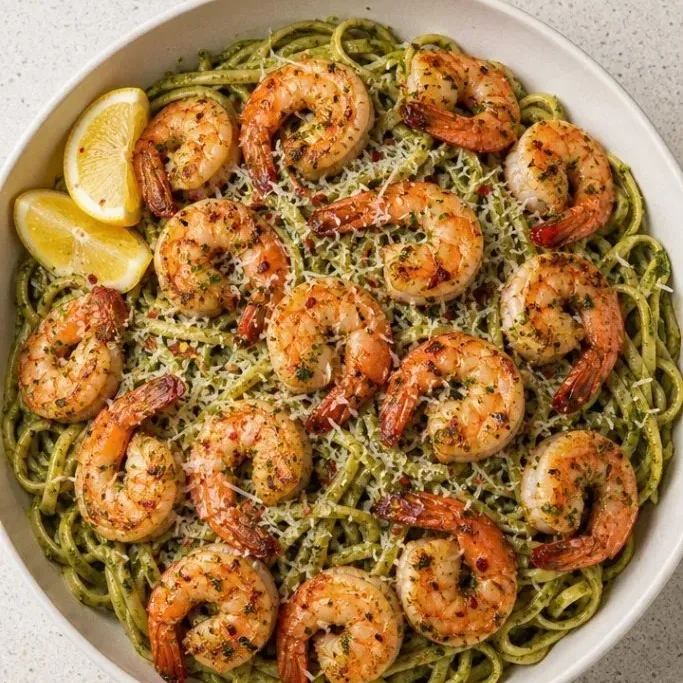
Why This Pasta Stays in My Rotation
The pesto does most of the heavy lifting here, so the ingredient list stays short. Shrimp cook in under three minutes, and the whole dish feels lighter than a cream sauce but still coats every strand of pasta.
The garlic sizzles in olive oil right before you toss everything together, so you get that warm, savory hit without the raw bite. I keep a jar of good pesto in the fridge for nights exactly like this one.
Ingredients
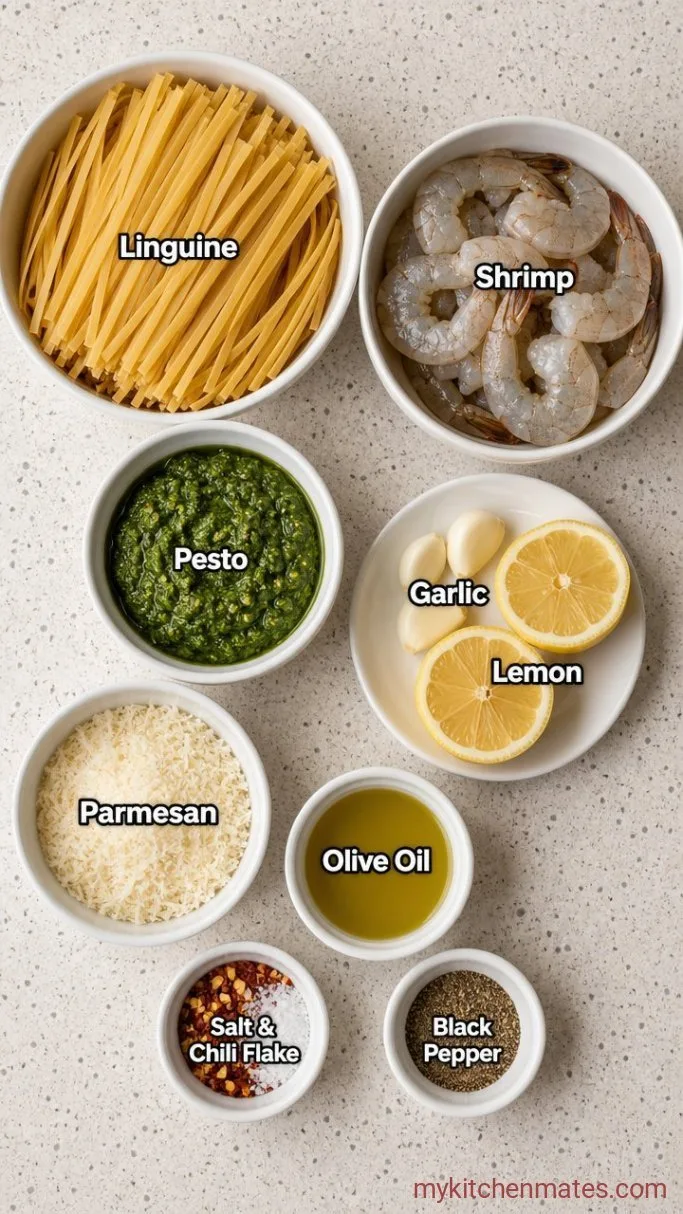
- 12 oz linguine or spaghetti: long pasta works best, but any shape you have will do
- 1 lb large raw shrimp, peeled and deveined: tails on or off, your call; thaw completely if frozen
- ½ cup basil pesto: store-bought or homemade, at room temperature
- 2 tbsp olive oil: plus a little extra for drizzling if you like
- 3 cloves garlic, minced: fresh gives the best aroma
- ½ tsp kosher salt: divided, plus more for the pasta water
- ½ tsp red pepper flakes (optional): a pinch of heat you can skip or double
- Freshly ground black pepper: a few cracks from the mill
- Lemon wedges and grated Parmesan for serving
Variations / Substitutions
- Swap the shrimp for cubed chicken breast: brown the chicken first and cook it through before adding garlic, since it needs more time.
- Add a handful of halved cherry tomatoes or baby spinach: stir them in with the pesto so they just barely wilt.
- Make it dairy-free: use a vegan pesto and skip the Parmesan, or finish with a spoon of toasted pine nuts instead.
- Change the herb: a sun-dried tomato pesto or arugula pesto both work, just keep the same amount.
Shrimp Scampi Sauce for Pasta and More makes this pasta even better, and it takes just minutes.
How to Make Pesto Shrimp Pasta
Step 1: Cook the Pasta
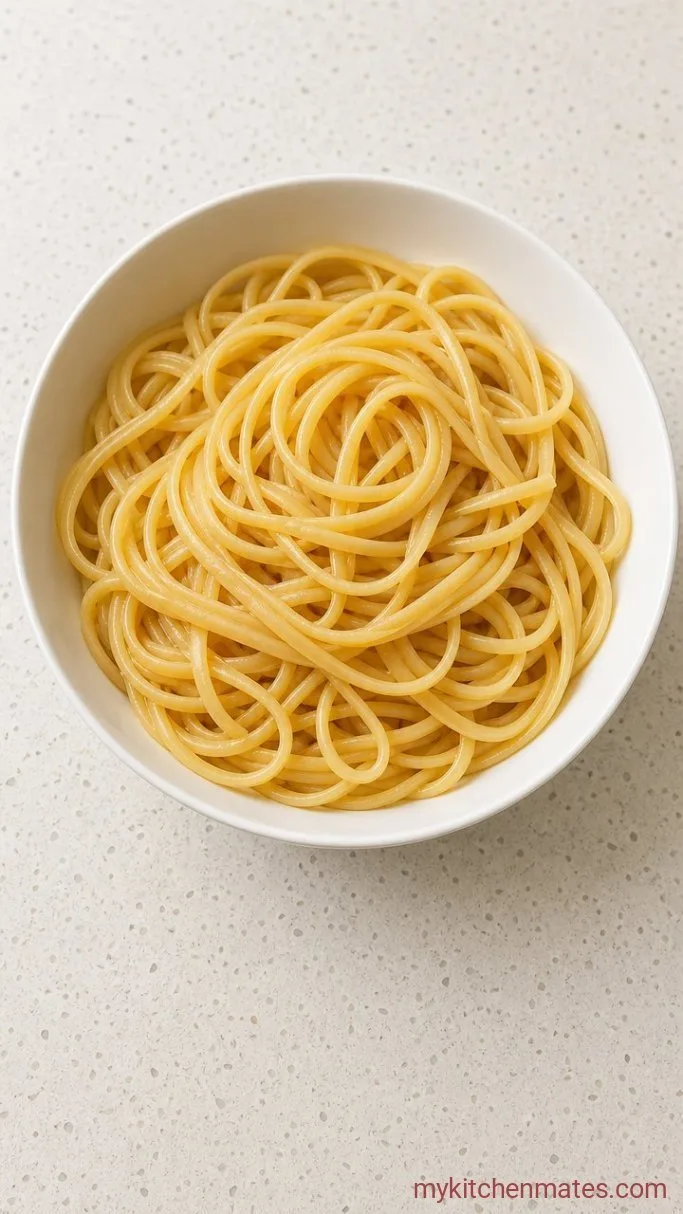
Bring a large pot of water to a boil and salt it generously, about a tablespoon of kosher salt. Drop in the 12 oz of linguine and cook until al dente, roughly 8 to 9 minutes, stirring once or twice so nothing sticks.
Right before you drain it, scoop out a mugful of the starchy pasta water and set it aside. You will use a splash of that later to loosen the sauce.
Step 2: Sear the Shrimp
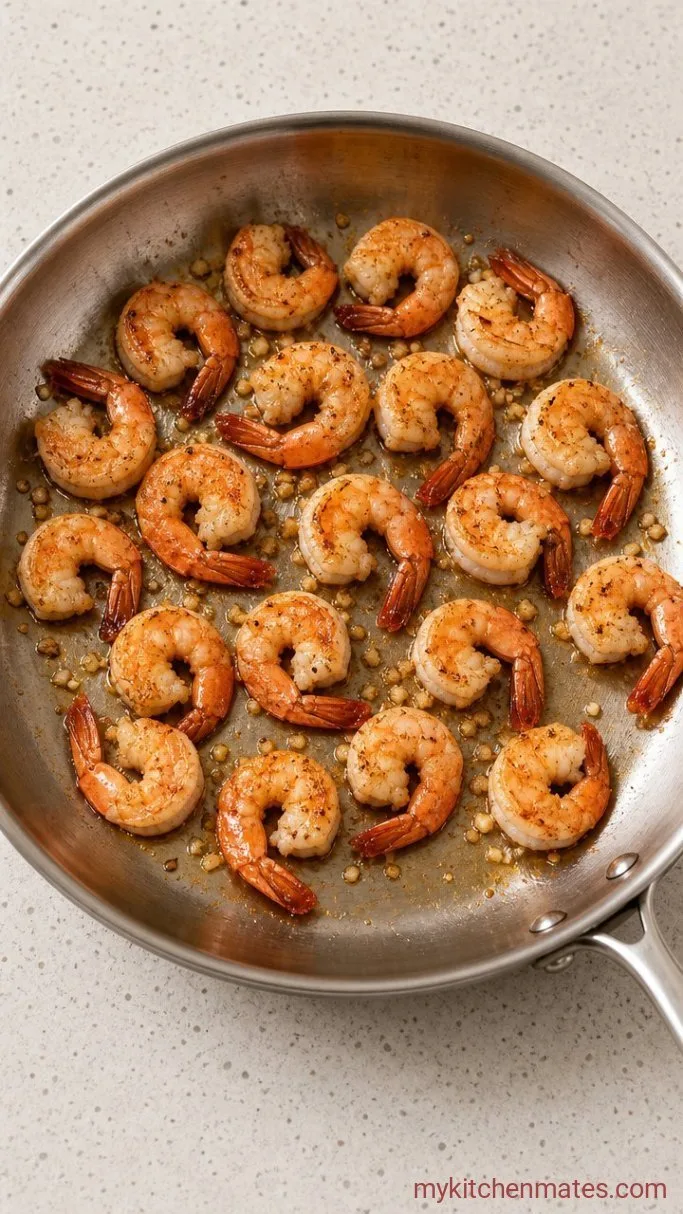
While the pasta cooks, pat the shrimp dry with paper towels and season them with half the salt and a few grinds of black pepper. Warm the 2 tbsp of olive oil in a large skillet over medium-high heat until it shimmers.
Add the shrimp in a single layer and let them cook undisturbed for about 2 minutes. The edges will turn pink and opaque, and you should see a little golden color on the underside. Flip them and cook another 30 to 60 seconds, just until they are firm and curled into a loose C shape. Immediately transfer the shrimp to a plate.
The pan will still have some flavor stuck to it, which is exactly what you want for the next step.
Step 3: Coat the Pasta with Pesto
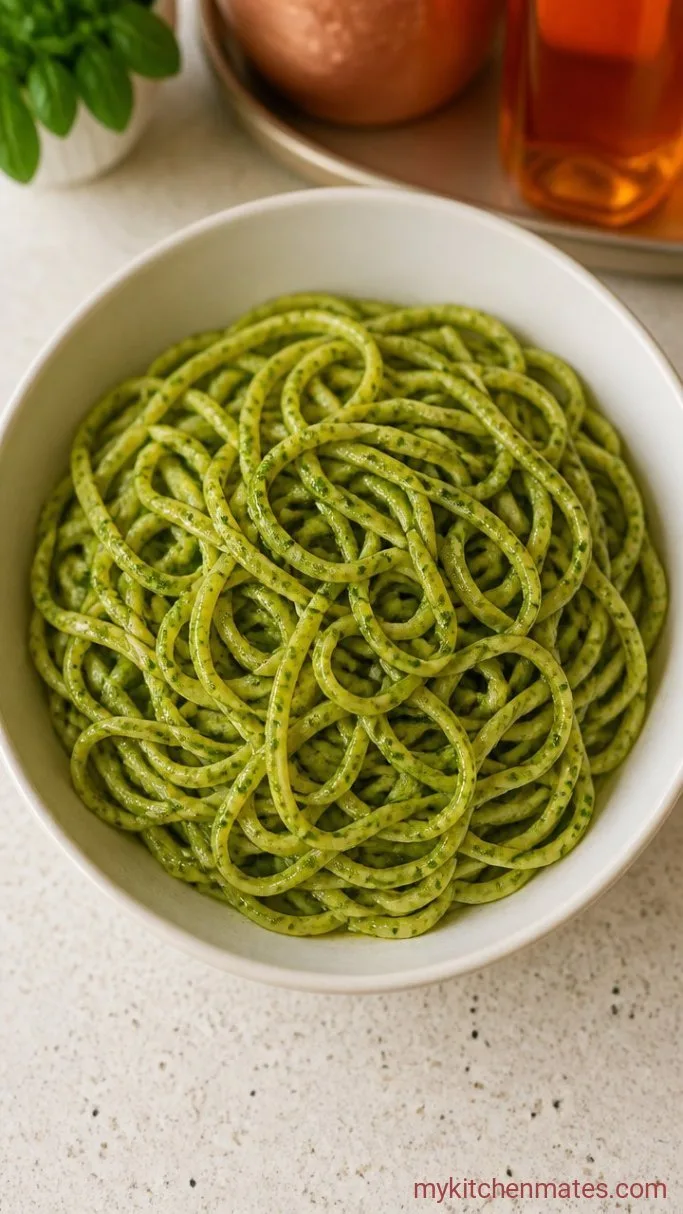
Lower the heat to medium and drop the 3 cloves of minced garlic into the same skillet. Stir for 30 seconds, until it smells fragrant but has not browned. Scrape the garlic and any browned bits onto the plate with the shrimp.
Add the drained pasta back to the pot or into a large bowl. Spoon in the ½ cup of pesto and toss until every strand is evenly coated. If the pesto feels tight, add a splash of the reserved pasta water, one tablespoon at a time, until the sauce looks glossy and clings to the noodles.
Step 4: Toss Everything Together and Serve
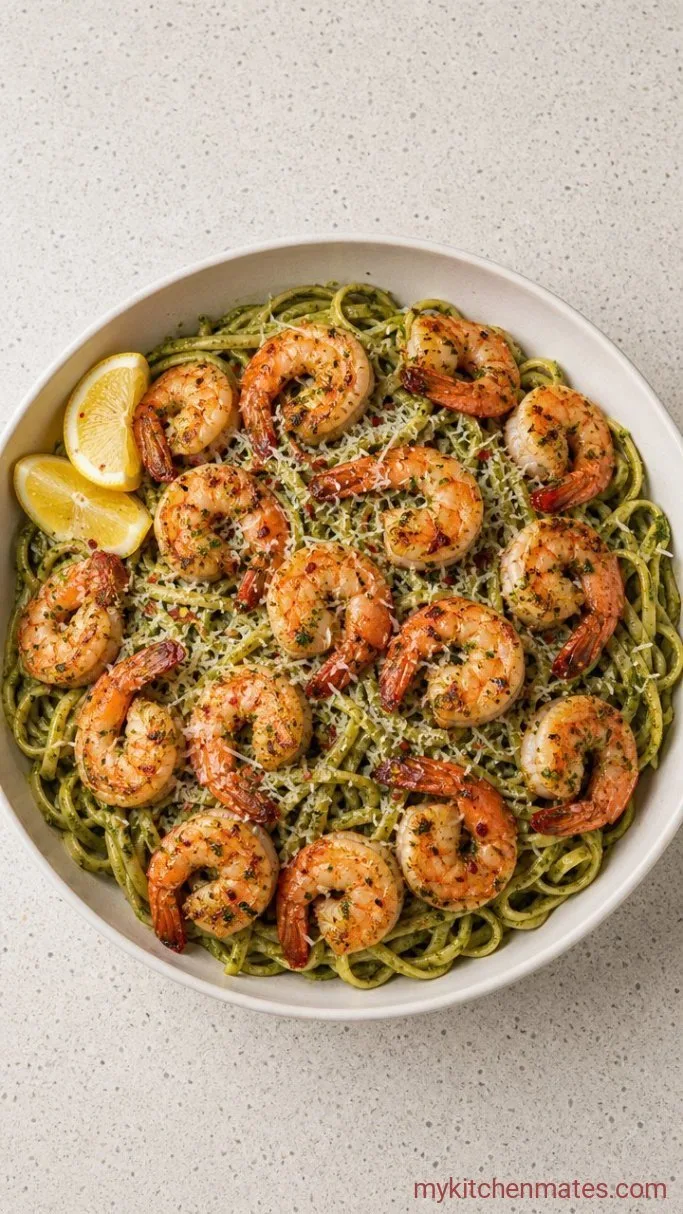
Return the shrimp, garlic, and any juices from the plate to the pasta. Toss gently to combine, then taste and add the remaining salt and the optional red pepper flakes if you want a little heat.
Plate the pasta while it is hot, top with grated Parmesan, and squeeze a lemon wedge over each bowl right before eating. The lemon brightens the basil and balances the richness of the oil.
A Few Notes Before You Start
- Bring the pesto to room temperature while you prep the other ingredients. Cold pesto straight from the fridge can seize up when it hits hot pasta and won’t coat as smoothly.
- Reserve more pasta water than you think you need. It is the easiest way to fix a sauce that feels dry, and it adds no extra oil or salt.
- Shrimp go from perfect to rubbery in seconds, so pull them off the heat as soon as they curl and turn opaque. They will finish cooking from residual heat when you toss them back in later.
Cook times for shrimp vary a little depending on size, so stick to the visual cues more than the clock:
| Shrimp size (count per lb) | Sear first side | Sear second side |
|---|---|---|
| 16-20 (extra-large) | 2 to 2½ mins | 45 to 60 secs |
| 21-25 (large) | 1½ to 2 mins | 30 to 45 secs |
| 26-30 (medium) | 1 to 1½ mins | 20 to 30 secs |
Storing Leftover Pasta
- Refrigerate: Keep any leftovers in a sealed container for up to 2 days. The pesto will darken a little as it sits, but the flavor holds up.
- Reheating: Warm gently in a skillet over low heat with a splash of water or broth to loosen the sauce. The microwave works in a pinch, but go in 30-second bursts so the shrimp do not toughen.
- Serve cold: This pasta is actually good straight from the fridge. Let it sit out for 10 minutes, then give it a fresh squeeze of lemon and a little extra Parmesan.
What to Serve With Pesto Shrimp Pasta
A crisp, simple salad on the side keeps the meal feeling balanced. I like peppery arugula tossed with olive oil and a pinch of salt, the bite plays well against the basil. Garlic bread or toasted ciabatta are also good for scooping up any leftover pesto that pools at the bottom of the bowl. If you want to turn it into a bigger spread, roasted asparagus or broccolini with a squeeze of the same lemon tie everything together without adding extra work.
Frequently Asked Questions
Can I use frozen shrimp?
Yes. Thaw them completely under cold running water, then pat them very dry before seasoning. Any extra moisture will steam the shrimp instead of searing them.
What if I do not have fresh garlic?
You can use ½ teaspoon of garlic powder, but add it with the pesto instead of in the pan, so it does not scorch. The flavor will be mellower, so taste and adjust.
Is this dish gluten-free?
It is if you swap the pasta for your favorite gluten-free spaghetti or penne and use a pesto that does not contain wheat-based thickeners. Most jarred pestos are naturally gluten-free, but check the label.
Can I make it ahead for a crowd?
The shrimp are best cooked right before serving, but you can boil the pasta and toss it with a little oil a few hours ahead. Reheat it briefly, then proceed with the shrimp and pesto when you are ready to eat.
Pesto Shrimp Pasta Recipe
Ingredients
Method
- Boil salted water, cook pasta until al dente, reserve 1 cup pasta water, then drain.
- Pat shrimp dry, season with half the salt and pepper, sear in hot oil 2 minutes per side until pink and curled, then remove.
- Lower heat, sauté garlic 30 seconds, then add it to the shrimp. Toss pasta with pesto and a splash of pasta water until glossy.
- Return shrimp and juices to pasta, toss, season with remaining salt and red pepper flakes, and serve with Parmesan and lemon.
Notes
