
Easy Basil Pesto Penne (Ready in 20 Minutes)

This pesto penne hits the table in about the time it takes to boil water. The sauce comes together in a blender while the pasta cooks, so dinner feels fresh without much work.
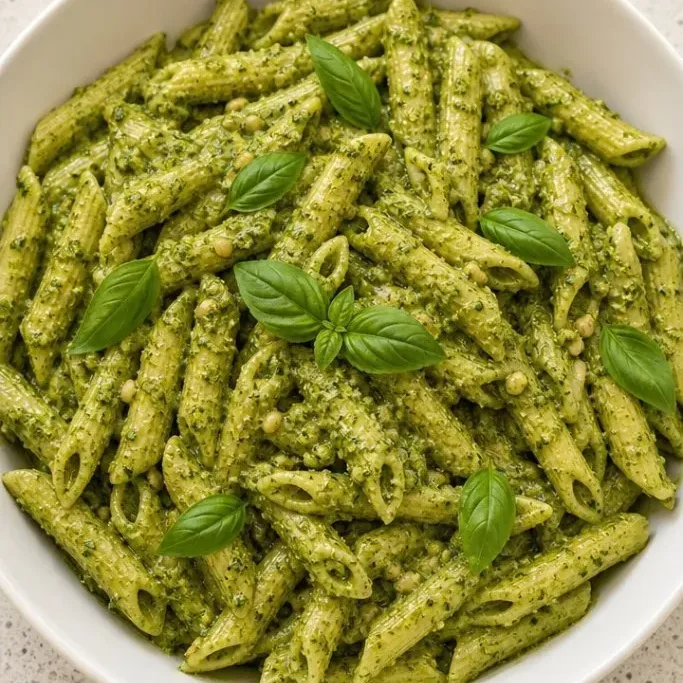
It is bright, garlicky, and a little nutty, with just enough Parmesan to make the whole bowl taste rich. A splash of pasta water turns the pesto into a silky coat, not just a loose paste.
Why This One Stays in My Rotation
Fresh pesto tastes so much more alive than the jarred stuff. Basil, raw garlic, and good olive oil give you a sauce that is sharp, grassy, and creamy all at once.
The texture is what really makes it. When you toss the hot penne with a splash of starchy water, the pesto clings to every tube instead of slipping off. You get a proper bite every time.
I also love that it tastes just as good cold the next day. I pack the leftovers straight from the fridge and call it lunch.
Ingredients
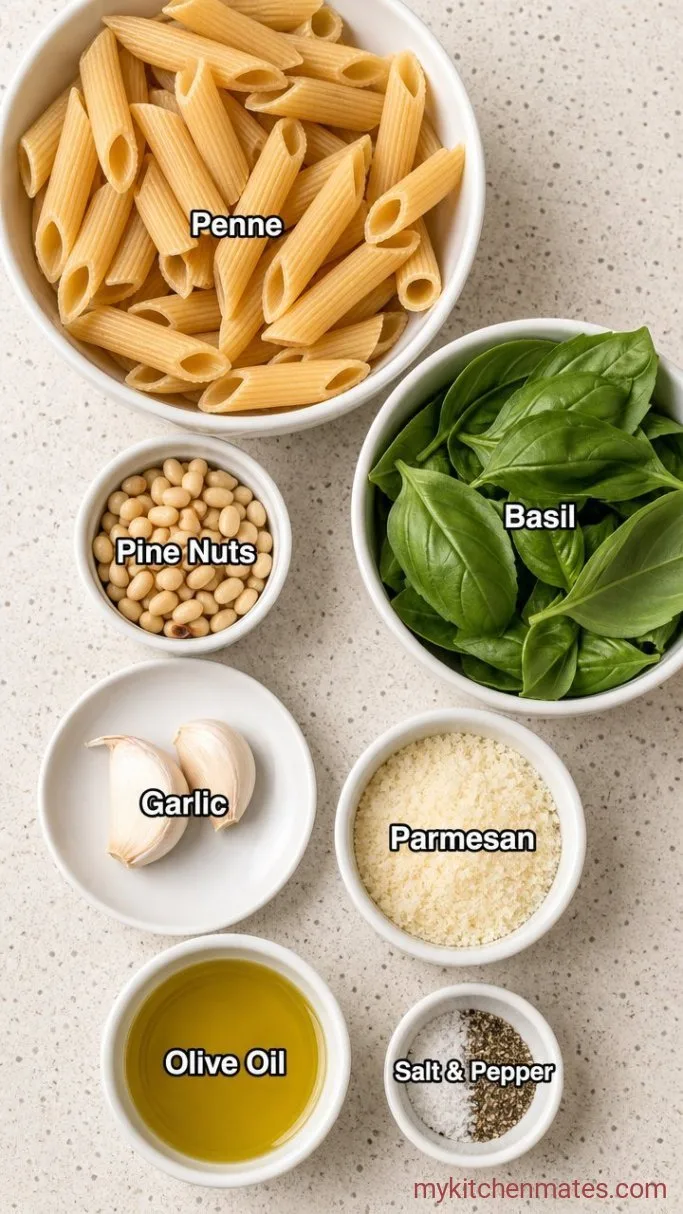
- 1 lb penne pasta: ridged tubes hold the sauce best, but any short shape works
- 2 cups packed fresh basil leaves: use sweet Italian basil for classic flavor
- 1/3 cup pine nuts: toast them first to deepen the nuttiness
- 2 garlic cloves: start small, you can always add more
- 1/2 cup finely grated Parmesan cheese: plus extra for serving
- 1/2 cup extra virgin olive oil: the fruitier the oil, the better the pesto
- 1/2 tsp kosher salt: adjust after tasting
- Fresh black pepper: a generous grind
- Reserved pasta water: the key to a creamy sauce (about 1/2 cup)
Variations
- Nut free: swap pine nuts for toasted sunflower seeds or leave them out entirely, though the sauce will be thinner.
- Dairy free: use a good spoonful of nutritional yeast instead of Parmesan and finish with a squeeze of lemon.
- Herb swap: replace up to half the basil with parsley or baby spinach for a milder, slightly earthy note.
- Add protein: toss in shredded rotisserie chicken, cooked shrimp, or pan seared chickpeas at the end.
Basil Pesto Pasta Salad makes a bright, easy side salad for this recipe.
How to Make Pesto Penne Pasta
Step 1: Cook the Penne
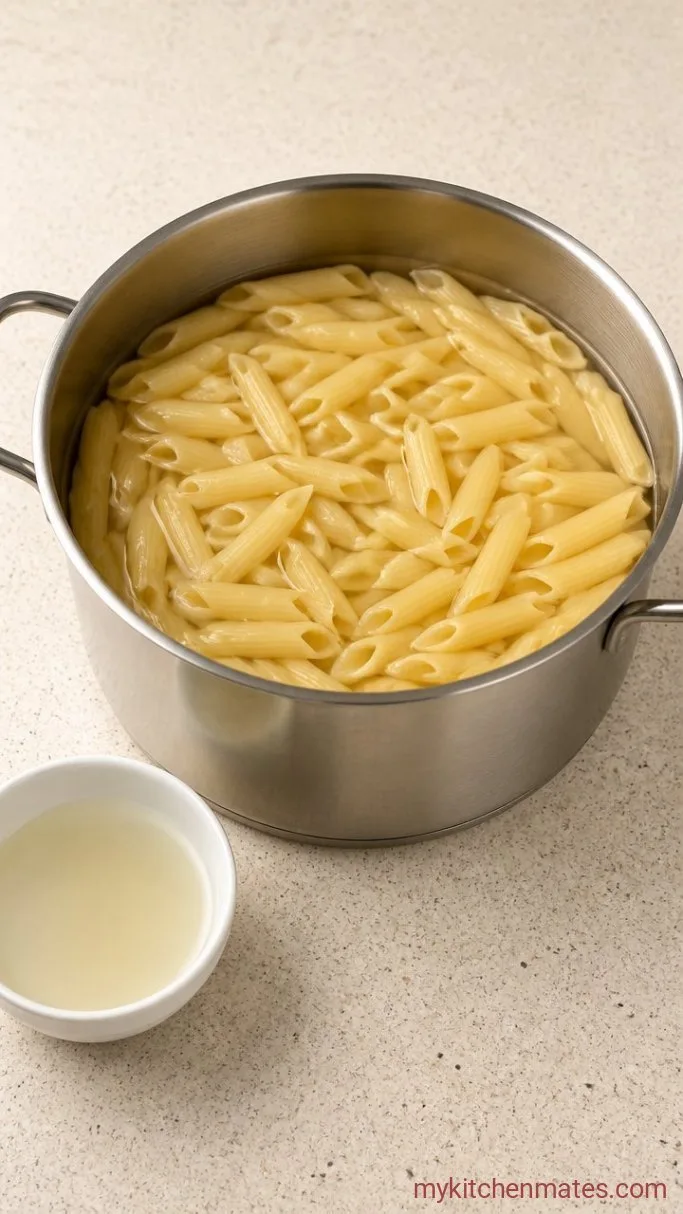
Bring a large pot of heavily salted water to a boil, then add the 1 lb penne. Cook until the pasta is just tender with a slight bite, about 12 minutes, tasting a piece a minute before the package time says to stop. Right before you drain, scoop out about 1/2 cup of the starchy pasta water and set it aside. Drain the penne but do not rinse it.
Step 2: Make the Pesto
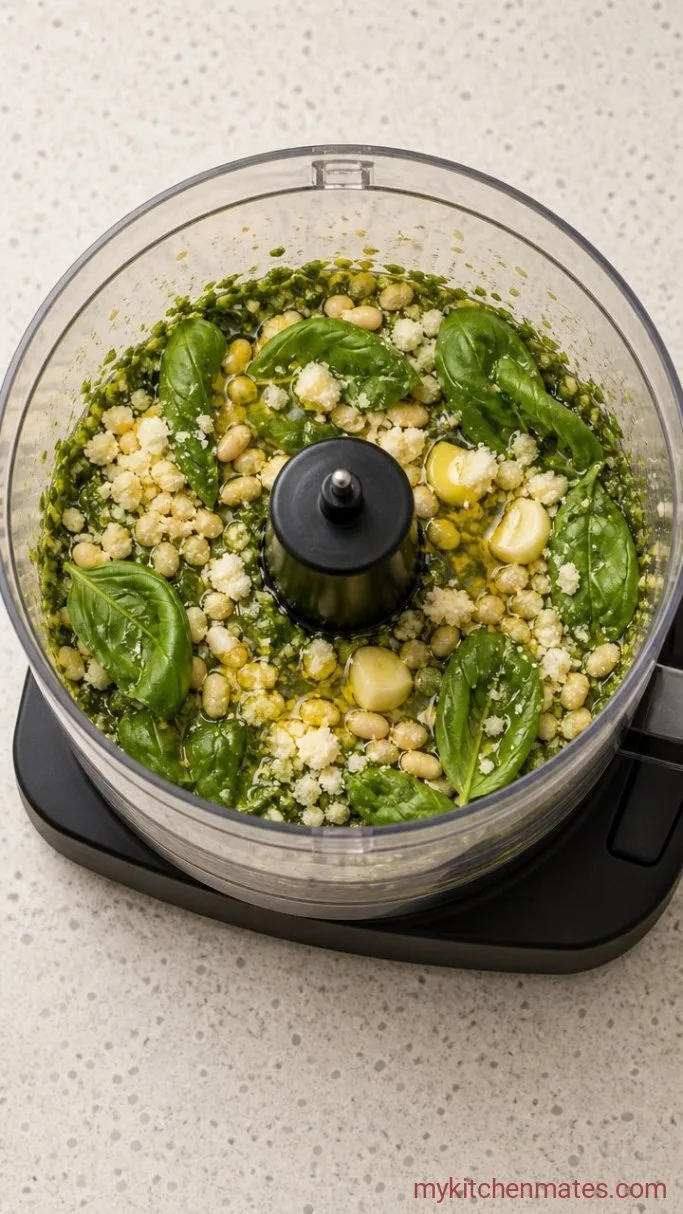
While the water comes to a boil, toast the 1/3 cup pine nuts in a small dry skillet over medium heat for 2 to 3 minutes, shaking the pan often, until they turn golden and smell nutty. Tip them into a food processor or blender right away so they do not keep cooking. Add the 2 cups basil leaves, 2 garlic cloves, and 1/2 tsp kosher salt. Pulse a few times until everything is chopped fine. With the machine running, slowly pour in the 1/2 cup olive oil until the mixture looks like a rough paste. Stop and scrape down the sides, then add the 1/2 cup grated Parmesan and a few grinds of black pepper. Pulse just until blended. The pesto should still have some texture, not be totally smooth.
Step 3: Toss the Pasta and Serve
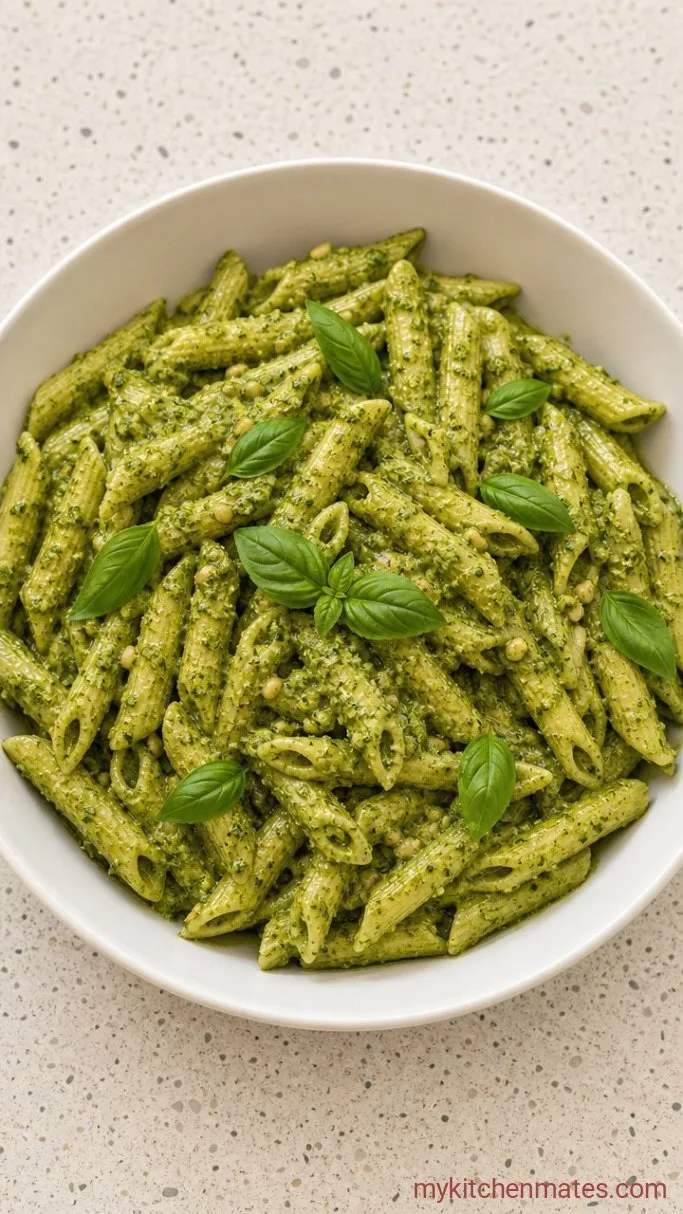
Return the hot drained penne to the pot or a wide serving bowl. Scrape all the pesto on top and add a splash of the reserved pasta water, maybe 2 tablespoons to start. Toss everything together with tongs for about 1 minute, adding more pasta water a spoonful at a time, until the sauce thins enough to coat each piece. Taste and add another pinch of salt or pepper if you need it. Pile the pasta into bowls and finish with a little extra grated Parmesan on top. Serve right away while it is warm and the basil still smells fresh.
A Few Notes Before You Start
- Cold blending keeps pesto green. If your basil or processor bowl feels warm, chill both for 5 minutes before you start so the heat does not dull the color.
- Always toast the pine nuts. Raw ones taste flat and waxy compared to the deep flavor you get in just a couple minutes.
- The pasta water is not optional. That starchy, salty splash is what turns clumpy pesto into a sauce that actually glazes the penne.
Storing Leftover Pesto Penne
- Refrigerate: pack the cooled pasta into an airtight container and keep it for up to 3 days. Press a piece of plastic wrap directly onto the surface if you made extra pesto on its own, to stop browning.
- Serve cold: this is one of those pastas that tastes great straight from the fridge. Let it sit at room temp for 10 minutes and give it a quick toss.
- Reheating: warm gently in a skillet with a splash of water over low heat. The microwave works in a pinch, but the basil loses its brightness fast.
What to Serve with Pesto Penne
A simple side balances all that richness. I like to put out a bowl of lightly dressed arugula with lemon and shaved Parmesan, the pepperiness cuts through the oil. For something more substantial, roast a tray of cherry tomatoes or zucchini alongside and pile them on top. If you want a protein, a seared chicken breast or a few grilled shrimp turn the bowl into a full dinner without much extra effort.
Frequently Asked Questions
Can I make pesto without pine nuts?
Yes. Toasted walnuts or almonds give a similar creamy crunch. Sunflower seeds work too if you need a nut free option.
What if I do not have fresh basil?
You can use half flat leaf parsley and half baby spinach for a milder sauce. It will taste less like classic pesto but still be bright and herby.
Why did my pesto turn dark?
Basil oxidizes quickly once blended. Blitz it briefly and store any extra with a thin layer of olive oil on top to slow browning.
Can I use pre shredded Parmesan?
I would not. The store packaged shreds are coated to stop clumping and do not blend into the pesto as smoothly. A block grated fresh melts into the sauce much better.
Pesto Penne Pasta Recipe
Ingredients
Method
- Cook penne in a large pot of salted boiling water until al dente, about 12 minutes. Reserve 1/2 cup pasta water, then drain.
- Toast pine nuts in a dry skillet over medium heat for 2-3 minutes until golden. Blend pine nuts, basil, garlic, and salt in a food processor, then slowly add olive oil with the machine running. Pulse in Parmesan and pepper until just combined.
- Toss hot pasta with pesto and a splash of pasta water, adding more water as needed until the sauce coats the penne. Serve with extra Parmesan.
Notes
