
Slow-Roasted Prime Rib with Garlic-Herb Crust

This prime rib roast comes out with a deeply savory garlic-herb crust and a juicy, evenly pink center. It’s the kind of centerpiece that turns a dinner into an occasion, and the hands-on work is surprisingly manageable.
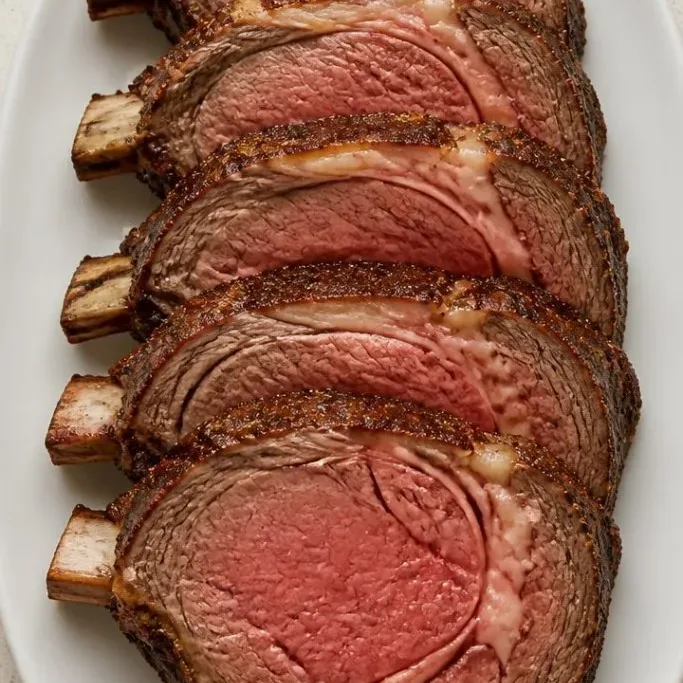
The slow-roast-then-sear method gives you a roast that’s pink from edge to edge, with no overcooked gray band. Just a beautiful blush from crust to center and a crackly seasoned exterior.
Why This Rib Roast Works
The low-and-slow start brings the roast up to temperature gently, so it stays pink all the way through. The high-heat finish turns the herb-and-garlic coating into a savory, crackly crust.
I keep coming back to this method because it takes the guesswork out of a big-ticket cut. You don’t need a grill or a rotisserie, just an oven, a roasting pan, and a probe thermometer.
Ingredients
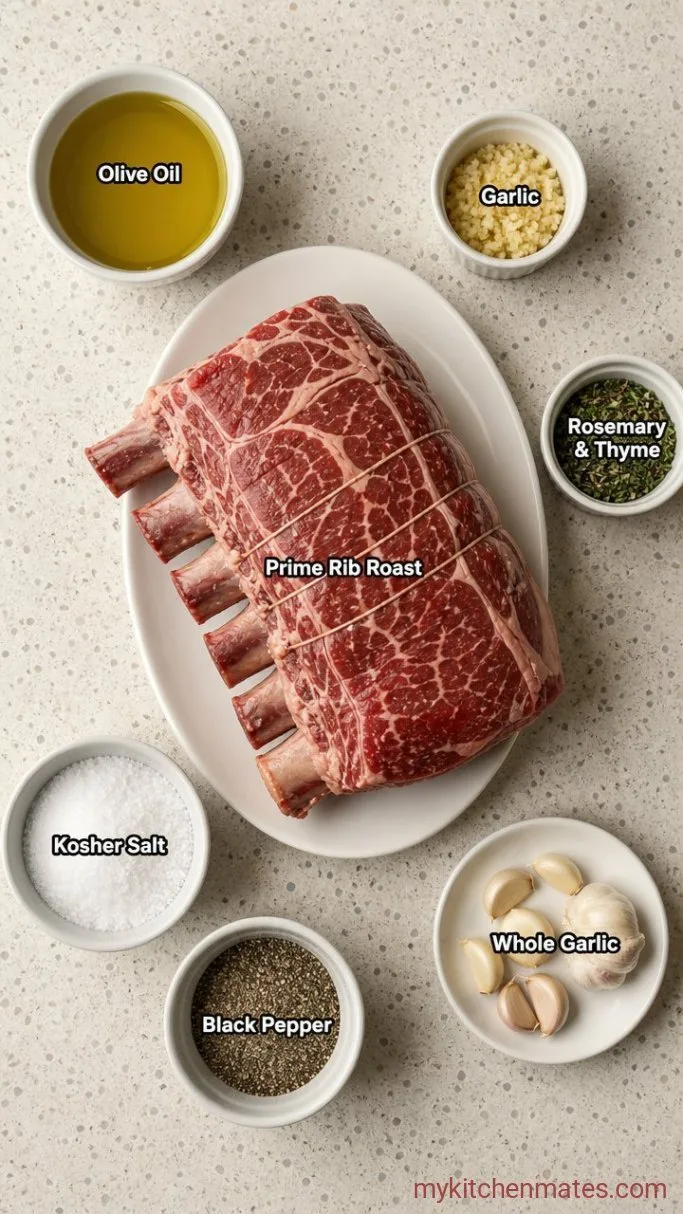
- 1 bone-in prime rib roast (3 to 4 ribs, about 8 to 10 lb): ask your butcher to cut the bones off the roast and tie them back on; this makes carving easy later.
- 3 tbsp olive oil: helps the seasoning stick and encourages browning.
- 4 garlic cloves, minced: use fresh for the boldest flavor.
- 2 tbsp finely chopped fresh rosemary
- 1 tbsp finely chopped fresh thyme leaves
- 1 tbsp kosher salt: enough to season generously; if you have time to dry brine overnight, use the same amount.
- 2 tsp freshly ground black pepper
Variations / Substitutions
- Herbs: swap rosemary and thyme for sage and parsley, or use 2 tbsp of your favorite fresh herb blend. Dried herbs work too, but reduce each tablespoon of fresh to 1 teaspoon of dried.
- Garlic paste: roast a whole head of garlic and mash it into the rub for a sweeter, mellower note.
- Spice heat: add 1 tsp of crushed red pepper flakes or a pinch of cayenne to the rub if you like a little warmth.
- Dairy-free: the recipe is already dairy-free; no changes needed.
Crispy Air Fryer Smashed Potatoes go great on the side with this prime rib.
How To Make Slow-Roasted Prime Rib
Step 1: Season the Roast
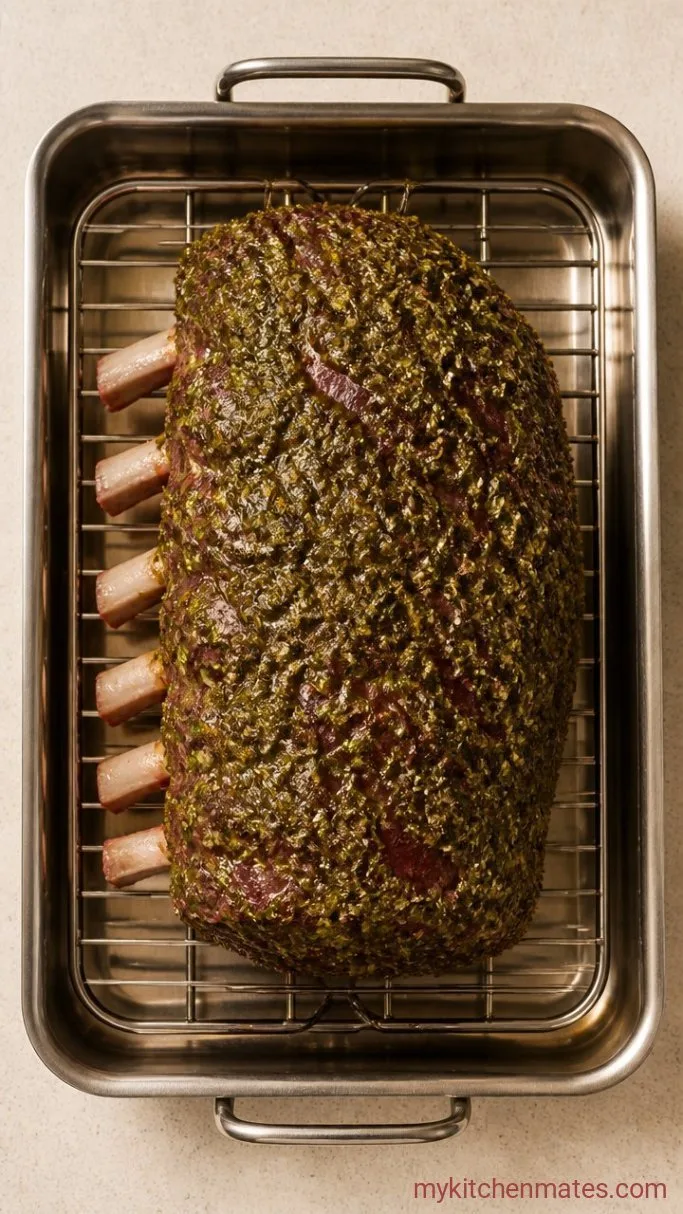
Remove the prime rib from the fridge 1 hour before you plan to cook. Pat it dry all over with paper towels, then set it on a rack in a roasting pan. In a small bowl, stir together the 3 tbsp olive oil, 4 minced garlic cloves, 2 tbsp rosemary, 1 tbsp thyme, 1 tbsp salt, and 2 tsp pepper. Rub this mixture all over the roast, pressing it into every crevice.
The surface will look glossy and flecked with herbs. The salt will start drawing moisture to the surface after about 30 minutes, which is exactly what you want for that crust later.
Letting the meat lose its deep chill before it hits the oven helps the roast cook more evenly. An hour on the counter is long enough to take the edge off without letting it warm up dangerously.
Step 2: Slow Roast the Beef
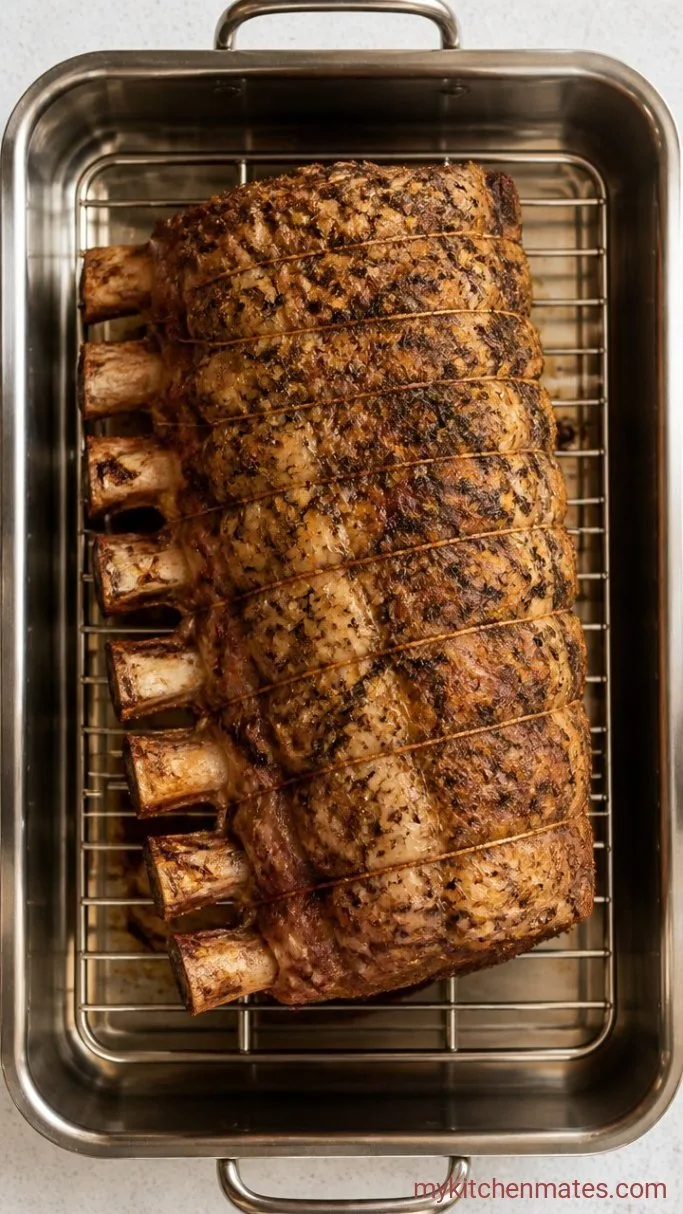
Preheat the oven to 250°F (120°C) with a rack set in the lower third. Slide the roasting pan onto the rack and push a probe thermometer into the thickest part of the meat, keeping the tip away from bone. Roast until the internal temperature reaches 120°F (49°C) for medium-rare, which will take about 2 to 2½ hours depending on the size of your roast.
The outside will look pale and unappetizing at this stage. That’s normal because the low heat doesn’t brown the meat yet, but the inside is slowly climbing to just the right doneness.
Try to keep the oven door closed as much as possible. Each peek lets heat escape and can add 10 or 15 minutes to your cook time.
Step 3: Rest the Roast and Crank the Heat
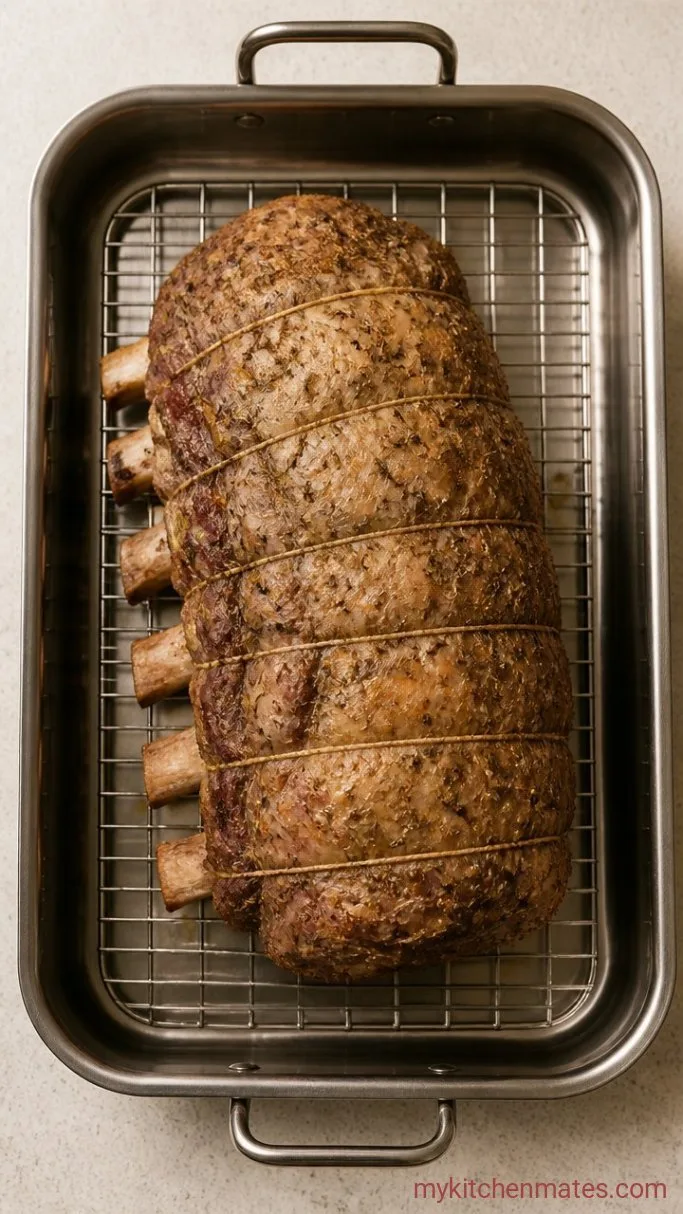
When the roast hits 120°F, pull the pan out of the oven, tent the meat loosely with aluminum foil, and leave it on the counter to rest for 30 minutes. The internal temperature will keep rising to about 130°F (54°C) as it sits. While the roast rests, turn the oven temperature up to 500°F (260°C) and let it come to full heat.
The meat will look relaxed now, with a few beads of juice on the surface. The foil tent keeps it warm without steaming off your seasoned coating.
This rest is critical because it lets the muscle fibers relax and hold onto their juices. If you skip it and slice right away, you’ll lose a lot of liquid onto the cutting board.
Step 4: Sear the Crust
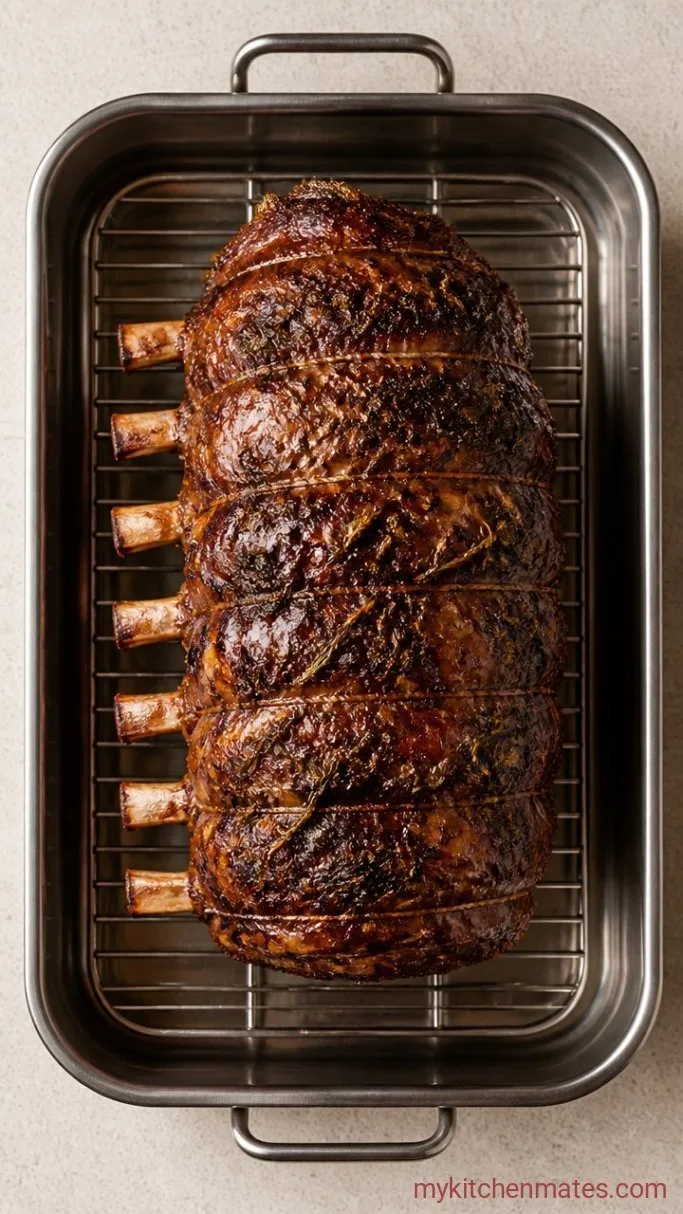
Remove the foil and slide the roasting pan back into the now-blazing 500°F oven. Roast for 6 to 10 minutes, watching closely, until the outside is deeply browned and the garlic-herb coating crackles and darkens in spots.
The kitchen will fill with the smell of sizzling garlic and roasted herbs. The fat cap will puff and blister, and the whole surface will take on a rich mahogany color.
This quick blast sets the crust without cooking the interior any further. The crust will be crisp and savory, and the center will stay a rosy, tender medium-rare.
Step 5: Carve and Serve the Prime Rib
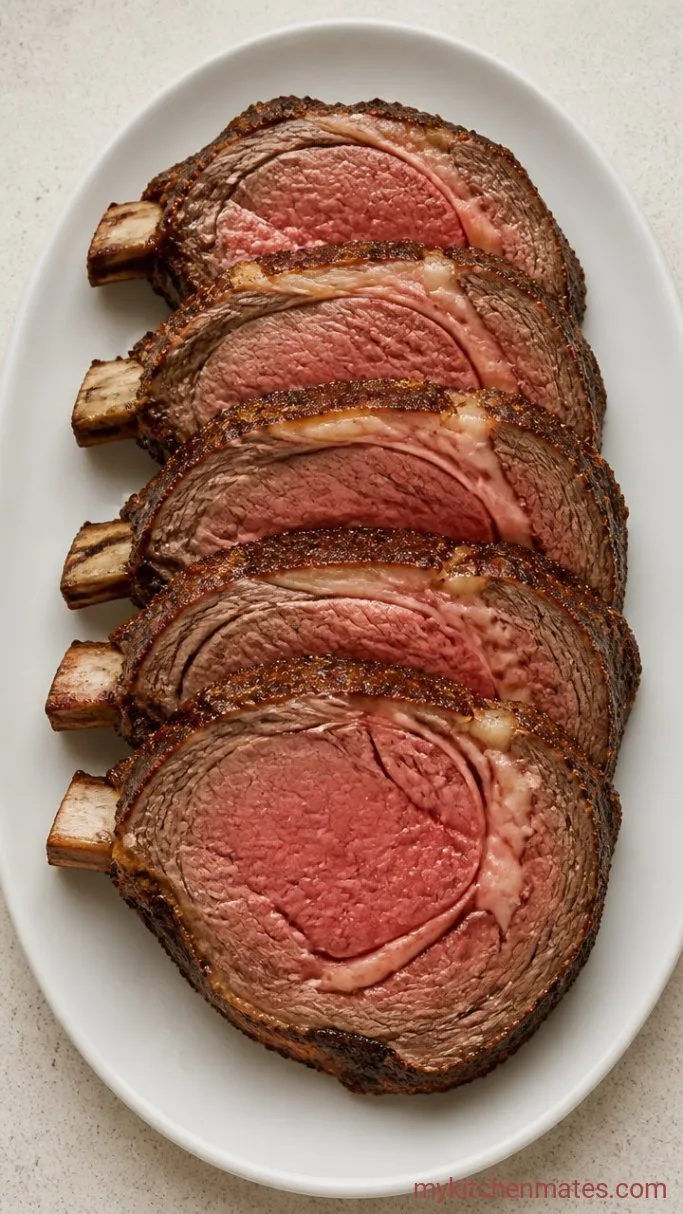
Transfer the roast to a cutting board and let it sit for 5 minutes, just long enough so you can handle it. Cut the twine, lift away the bone slab in one piece (save it for the cook’s treat), then slice the meat across the grain into generous ½-inch thick pieces.
The slices will show a beautiful blush from edge to edge with no gray band, and the crust will be dark and fragrant. Spoon any pan juices over the top and serve while still hot.
Tips for the Best Beef Rib Roast
- Ask your butcher to french the bones and tie the roast.: You get all the flavor of a bone-in roast without fighting the bones at carving time. Just snip the twine and lift the whole rack away in one piece.
- Dry brine the night before.: If you have the time, season the roast with salt and herbs 12 to 24 hours ahead, then leave it uncovered in the fridge on a rack. The surface dries out, which leads to an even better crust, and the salt seasons the meat all the way through.
- A leave-in probe thermometer makes this foolproof.: You’ll know exactly when the center hits 120°F without opening the door. An instant-read works too, but you’ll have to check more often near the estimated finish time.
- Don’t skip the rest after the slow roast.: That 30-minute pause before the sear is what lets the meat finish gently so you don’t overshoot your target temp during the final blast.
- Save the bones.: The slab of ribs you lift off is a snack in itself, or you can freeze it for stock.
Roast times by weight for medium-rare (remove at 120°F internal temp; the sear adds 6 to 10 minutes at the end):
| Weight | Time at 250°F |
|---|---|
| 8 lb (3 to 4 ribs) | 2 to 2½ hours |
| 10 lb (4 ribs) | 2½ to 3 hours |
| 12 lb (5 ribs) | 3 to 3½ hours |
Storing Leftovers
- Refrigerate:: Store sliced prime rib in an airtight container for up to 4 days. Stack slices with parchment between them so they don’t stick together.
- Reheating:: Reheat gently in a low oven (250°F) with a splash of broth or au jus until just warm, about 10 minutes. High heat will turn the pink meat gray and dry.
- Serve Cold:: Thin slices straight from the fridge are fantastic on sandwiches with horseradish and arugula.
What to Serve With Prime Rib
A sharp horseradish cream sauce cuts through the richness and wakes up each bite. Roasted potatoes tossed in beef drippings soak up flavor while the meat rests. For a classic plated dinner, add a pile of Yorkshire pudding and a simple green salad with a lemon vinaigrette to balance the meal.
Frequently Asked Questions
Can I make this recipe without a probe thermometer?
You can use an instant-read thermometer and check every 20 minutes after the first 1½ hours, but a probe is far more reliable. Guessing the temperature on a large roast too often ends in an overcooked center or a raw middle.
How do I reheat prime rib without ruining the pink center?
Warm slices on a sheet pan in a 250°F oven with a couple tablespoons of beef broth covering the bottom of the pan. In about 10 minutes the slices will be heated through but still pink. Avoid the microwave, which can turn the meat gray in seconds.
Can I cook a boneless prime rib roast the same way?
Yes, a boneless roast works just as well. It will cook slightly faster because there is no bone to insulate the meat, so start checking the internal temp about 30 minutes earlier than a bone-in roast of the same weight.
What if my roast is bigger than 10 pounds?
Simply extend the slow-roast time. A 5-rib, 12-pound roast might need up to 3½ hours at 250°F to reach 120°F. Use the probe thermometer rather than the clock to know when to pull it, and the timing table above as a rough guide.
Slow-Roasted Prime Rib Recipe
Ingredients
Method
- An hour before cooking, pat the roast dry. Stir together olive oil, garlic, rosemary, thyme, salt, and pepper. Rub the mixture all over the roast.
- Preheat the oven to 250°F with a rack in the lower third. Place the roast on a rack in a roasting pan, insert a probe thermometer, and slow roast until the internal temperature reaches 120°F, about 2 to 2½ hours.
- Remove the roast from the oven, tent it loosely with foil, and rest for 30 minutes. Increase the oven temperature to 500°F.
- Uncover the roast and return it to the 500°F oven. Sear for 6 to 10 minutes until deeply browned and the crust is crackly.
- Transfer to a cutting board, rest 5 minutes, then cut away the twine and bone slab. Slice across the grain into ½-inch thick slices and serve warm with pan juices.
Notes
