
Homemade Papad Recipe (Indian Lentil Crackers)

Making papad at home changes everything. The nutty, peppery crackle of a freshly roasted disc is miles away from anything you pull from a packet, and the hands on time is mercifully short.
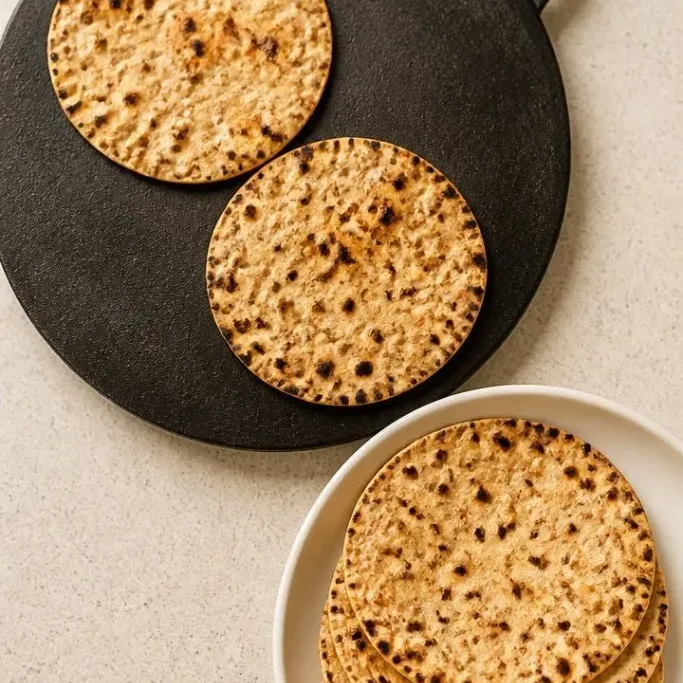
Once you taste a papad that’s still warm from the flame, with tiny black specks of cumin and the faint hum of asafoetida, you’ll find yourself making a fresh batch just for the smell of the kitchen.
Why Homemade Papad Is Worth It
The ingredient list is tiny — lentil flour, salt, a few spices, water — but the result is a cracker with deep, toasty flavour and a texture that shatters cleanly.
They dry in the sun or a warm corner of your kitchen, and then live happily in a tin for months. Roast only what you need at the last minute, and every meal gets a quick, crisp sidekick you made yourself.
Ingredients
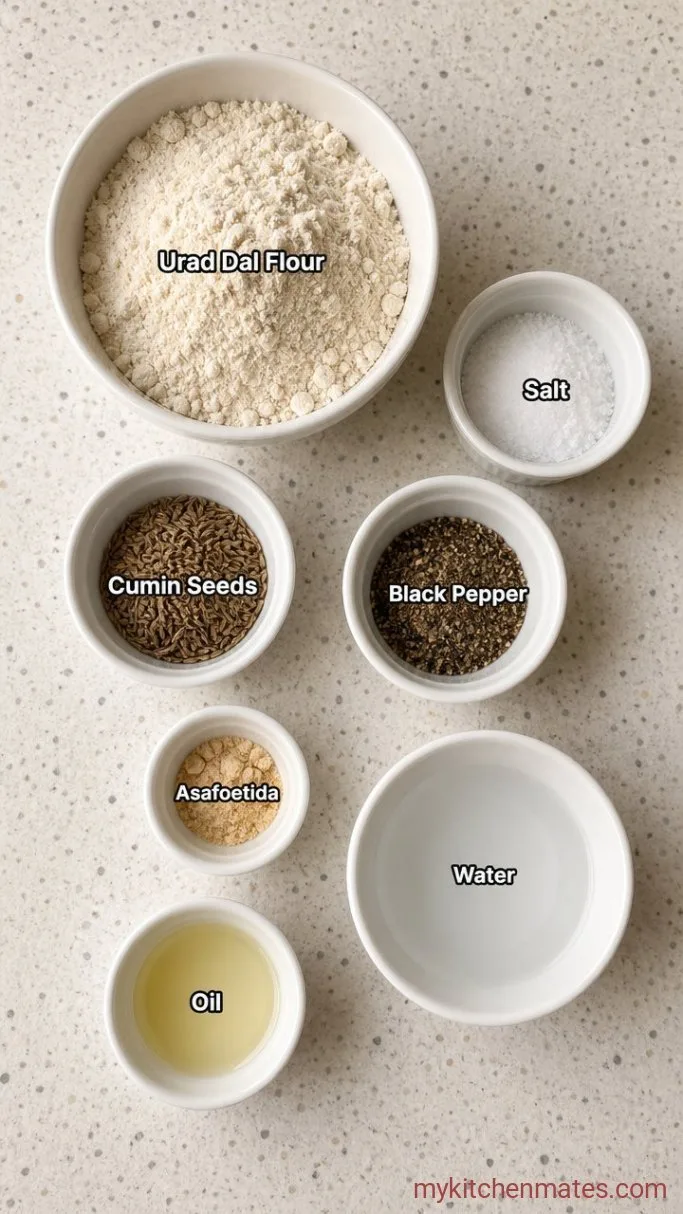
- 1 cup urad dal flour: Stone-ground flour gives the best nutty taste; fine commercial flour works but the dough can get sticky.
- ½ tsp salt
- ½ tsp cumin seeds
- ¼ tsp freshly ground black pepper
- A generous pinch of asafoetida (hing)
- 6 tbsp water, plus a little extra if the dough feels dry
- A dab of oil for the tawa, if not roasting over a direct flame
Variations / Substitutions
- Swap the cumin for carom seeds (ajwain): for a more aromatic, almost thyme like note.
- Add a pinch of red chilli powder: to the dough for a gentle heat that stays in the background.
- Use moong dal flour: instead of urad. The flavour is milder and the papads will be softer when roasted.
- Make masala papad: by topping a freshly roasted papad with finely chopped onion, tomato, coriander, and a squeeze of lemon.
Creamy White Bean Hummus is a dip that goes great with these crackers.
How to Make Homemade Papad
Step 1: Knead the Dough
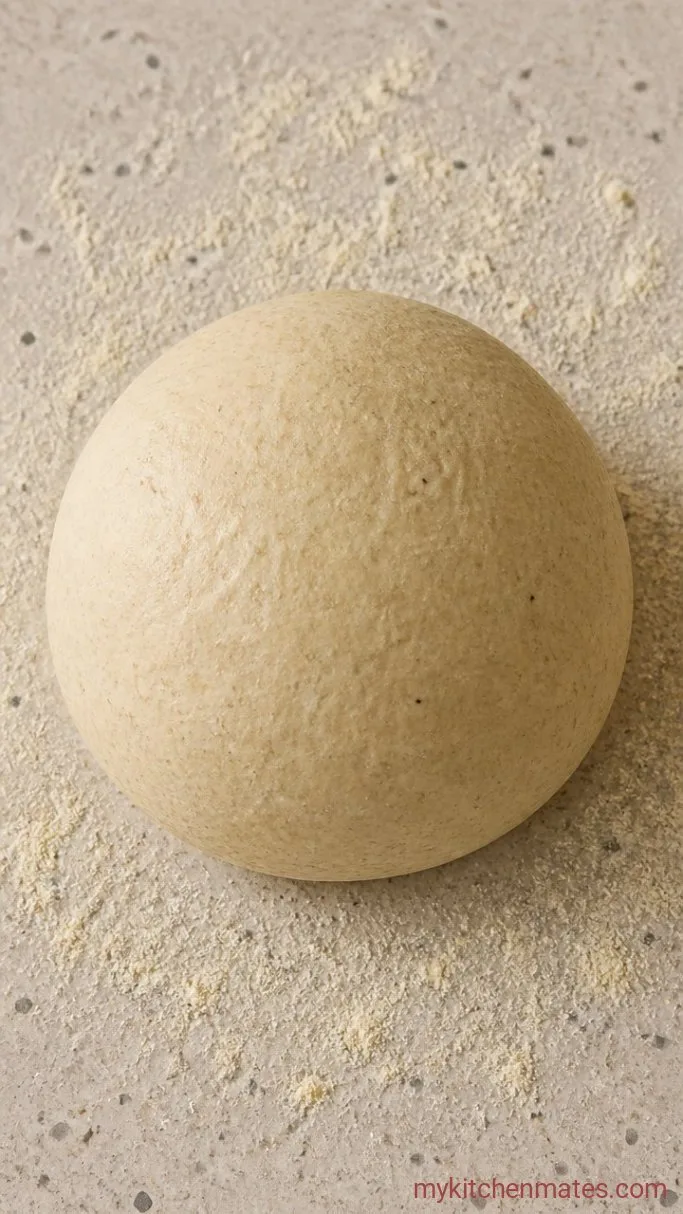
Put the 1 cup urad dal flour, ½ tsp salt, ½ tsp cumin seeds, ¼ tsp black pepper, and the pinch of asafoetida into a mixing bowl. Stir everything together so the spices are scattered evenly, then trickle in the 6 tbsp water a little at a time while you mix with your other hand.
The mixture will look crumbly at first. Keep pressing, folding, and kneading it in the bowl for about 8 minutes. What you’re after is a tight, smooth ball that springs back when you poke it. If it cracks, wet your palms and knead another minute or two. Cover the bowl and let the dough rest for 15 minutes so the flour hydrates fully. This quiet step makes rolling much easier.
Step 2: Roll the Papads
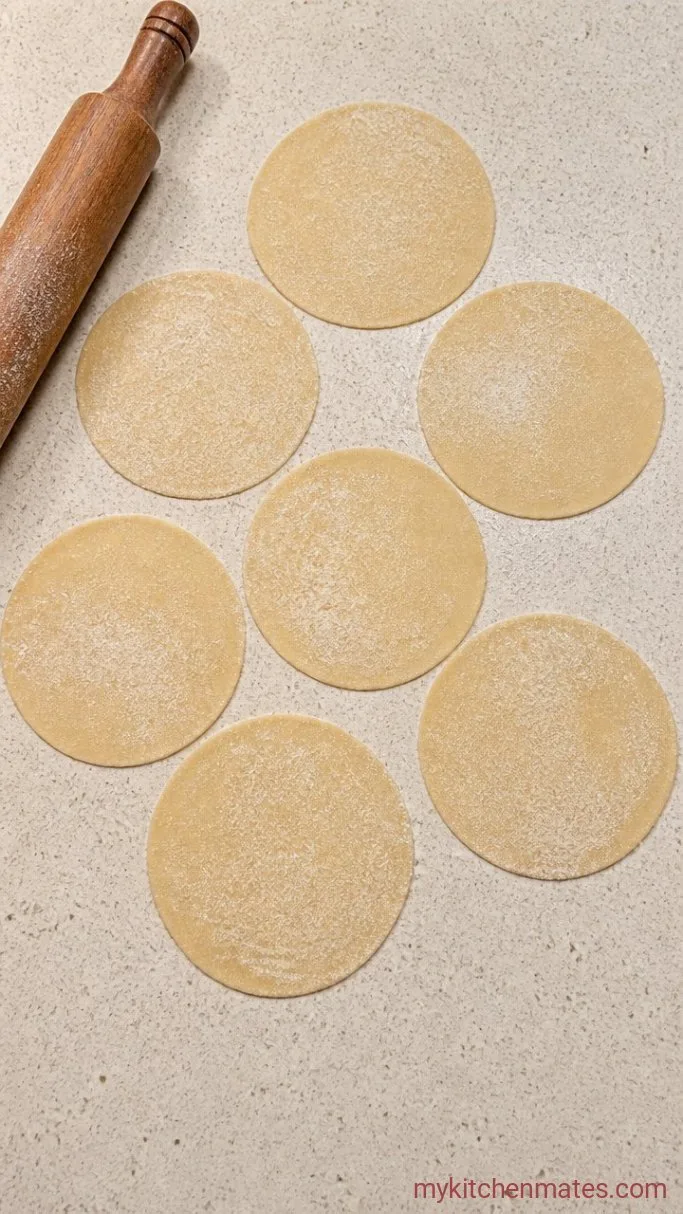
Divide the rested dough into 12 equal pieces, each roughly the size of a large marble, and roll them into neat balls between your palms. Dust a clean work surface with a little dry urad flour, then flatten one ball and begin rolling it out with a rolling pin.
Aim for a thin, even round about 5 inches across and almost translucent. Keep moving the disc, dusting with flour whenever it feels tacky. Thinness is everything here. A papad that’s even slightly thick in the centre will stay leathery instead of crackling when you roast it. If the edges tear, pinch them back together and keep rolling. Expect each one to take about a minute.
Step 3: Dry the Papads
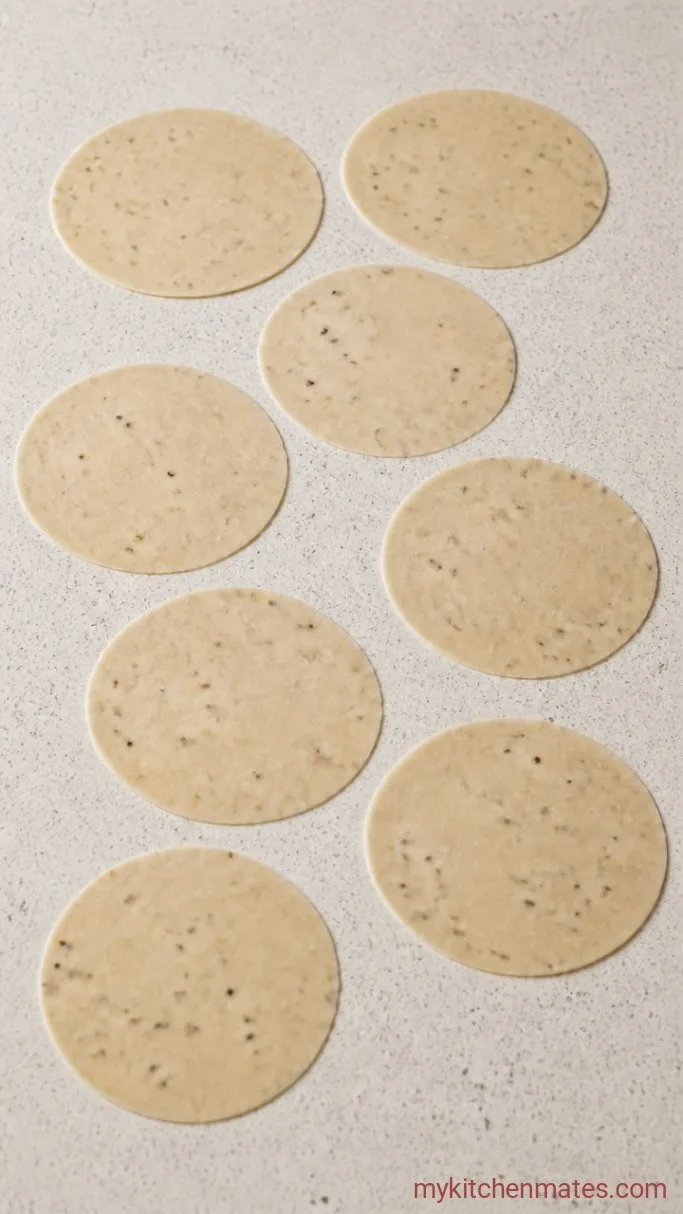
Lay the rolled discs in a single layer on a clean muslin cloth or a baking sheet lined with parchment. Make sure they don’t overlap. Place them in direct sunlight or in the warmest, airiest spot you have.
In full sun they dry in 4 to 6 hours. On a cloudy day it can take a full day or more. Check by trying to lift one gently. When it feels stiff and papery and holds its shape, it’s ready. The colour will dull from pale cream to chalky white, and the surface will be dry to the touch with no hint of stickiness. Don’t hurry this. Even a trace of leftover moisture will keep them from puffing later.
Step 4: Roast the Papads
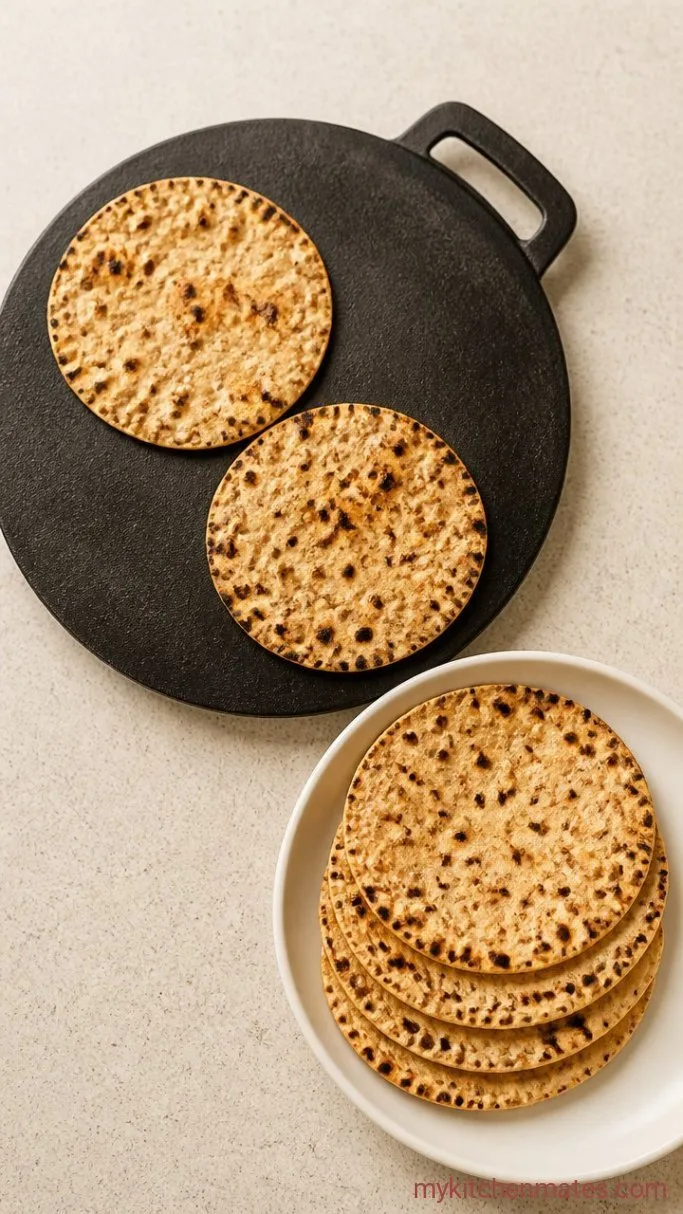
Set a dry tawa or heavy griddle over medium-high heat. Place a dried papad on the hot surface and press it down gently with a folded kitchen towel or a flat spatula for a few seconds. When you see golden brown spots appearing, flip it.
Keep pressing and turning every 5 seconds or so until the whole disc puffs up and turns crisp. You can also roast directly over a low gas flame using tongs, moving it constantly so it doesn’t burn. Serve them straight away with a dab of mango pickle, a spoonful of mint chutney, or just crumbled over a bowl of hot dal.
Tips for Perfect Papad
- Stone-ground urad dal flour gives the richest, nuttiest flavour. Finer flours can make the dough a little gummy.
- Under kneading leads to cracks later. Even if the dough feels smooth early on, give it the full 8 minutes.
- If the weather won’t cooperate, place the rolled discs in an oven with the pilot light on or use a dehydrator at 50 °C (120 °F) for 6 to 8 hours.
- Store the dried, unroasted papads separated by sheets of parchment in an airtight container. They’ll keep for months, and you roast only what you plan to eat.
Scale the batch easily with this ratio:
| Urad dal flour | Water | Papads (approx.) |
|---|---|---|
| 1 cup | 6 tbsp | 12 |
| 2 cups | 12 tbsp | 25 |
| 3 cups | 18 tbsp | 38 |
Storing Homemade Papad
Keep the fully dried discs in a dry, airtight tin at room temperature. They stay crisp ready for months. If any sense of softness creeps in, just give them a few more hours in the sun or a warm spot before roasting.
What Goes Well With Homemade Papad
These crackers are the crunchy sidekick to almost any Indian meal. I love them next to a simple dal and rice, tucked beside a rich paneer curry, or snapped over a bowl of khichdi for a welcome contrast. They also hold their own as a late afternoon snack with a cup of chai and a little raw mango pickle.
Frequently Asked Questions
Why won’t my papad puff when roasted?
If they stay flat, they’re likely a little too thick or still holding onto moisture. Let them dry longer next time and roll them thinner.
The dough keeps cracking while I roll. What’s wrong?
It probably needs a little more water or a few extra minutes of kneading. Wet your hands, knead briefly, and let the dough rest for 10 minutes before rolling again.
Can I bake these instead of roasting over a flame?
Yes. Place them on a baking sheet and bake at 200 °C (400 °F) for 2 to 3 minutes, flipping once, until they’re golden and puffed. Watch closely because they burn fast.
Papad Recipe
Ingredients
Method
- Combine urad dal flour, salt, cumin, black pepper, and asafoetida in a bowl. Add the water gradually and knead until a smooth, stiff dough forms. Cover and rest for 15 minutes.
- Divide the dough into 12 equal balls. Roll each into a thin, 5 inch round, using dry flour to prevent sticking.
- Place the discs on a cloth in a single layer and dry in direct sun for 4 to 6 hours, or in a warm, airy spot until stiff and papery.
- Roast each papad on a hot, dry tawa or over a low flame, pressing and turning until puffed and crisp.
Notes
