
15-Minute Crispy Pan Fried Salmon

Pan fried salmon sounds fancy, but it’s really one of the fastest and most reliable dinners you can pull off on a Tuesday night. The fish hits a hot oiled pan and the skin goes shatteringly crisp in minutes while the inside stays buttery and tender.
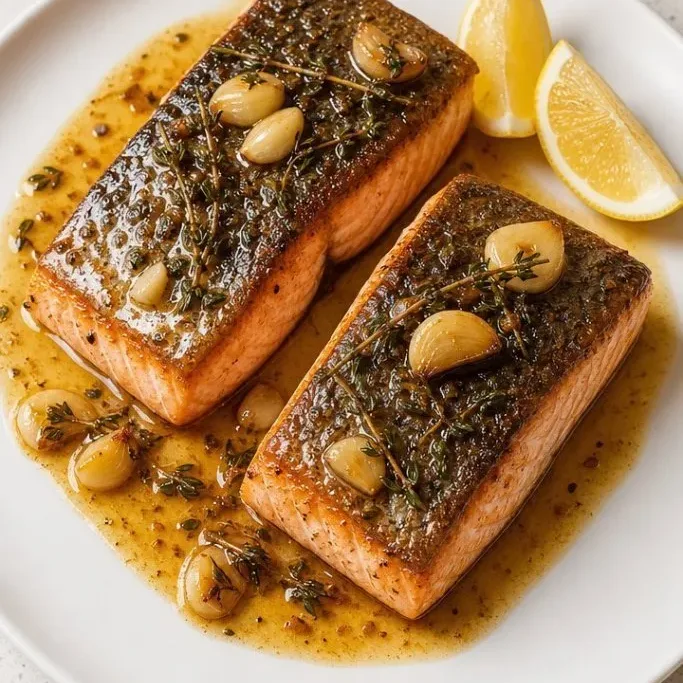
It’s the kind of meal that feels like a small win, and it leaves you with almost nothing to clean up afterward.
Why This Salmon Stays in My Weeknight Rotation
The skin is the first thing. When you get it right, it crackles like thin glass and tastes salty and rich. I’ve made this at least once a week for years because the whole thing comes together in the time it takes to steam a pot of rice.
The butter basting at the end pushes it over the edge. Garlic and fresh thyme bloom in the hot fat and you spoon it over the fillet so every bite gets that nutty, golden flavor. No sauce pan, no reduction, just the skillet doing the work.
Ingredients
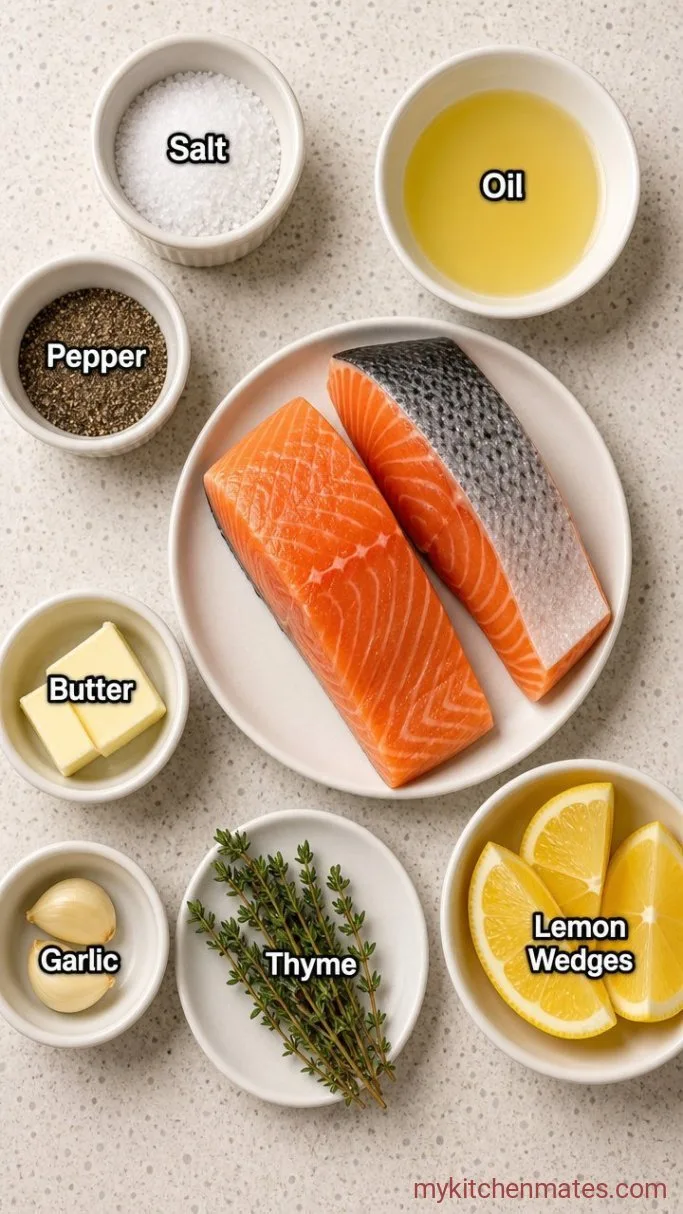
- 2 (6 oz) salmon fillets, skin on: center-cut keeps the thickness even, and dry skin gives the best crackle.
- 3/4 tsp kosher salt: or half that amount if using fine table salt.
- 1/4 tsp black pepper: freshly ground if you have it.
- 1 tbsp neutral oil: canola or avocado oil handles high heat without smoking.
- 2 tbsp unsalted butter: cold butter helps it melt slowly while basting.
- 2 garlic cloves, smashed: you want them whole so they perfume without burning.
- 3 sprigs fresh thyme: rosemary or a thin strip of lemon zest both work.
- Lemon wedges: for serving, because salmon and lemon are old friends.
Variations / Substitutions
- Swap the herbs: rosemary, dill, or even a bay leaf thrown in while basting will shift the fragrance without changing the method.
- Make it dairy free: skip the butter and baste with an extra drizzle of good olive oil and the pan juices instead.
- Add a pan sauce: after removing the fish, kill the heat, squeeze in lemon juice, and swirl in another tablespoon of cold butter off the stove. Spoon it over the fillets.
- Go skinless: the technique stays the same. Sear the presentation side first to build a crust, then flip and finish more gently.
Hearty Turkey Stuffed Peppers are another reader favorite dinner worth making next.
How to Make Pan Fried Salmon
Step 1: Season the Salmon
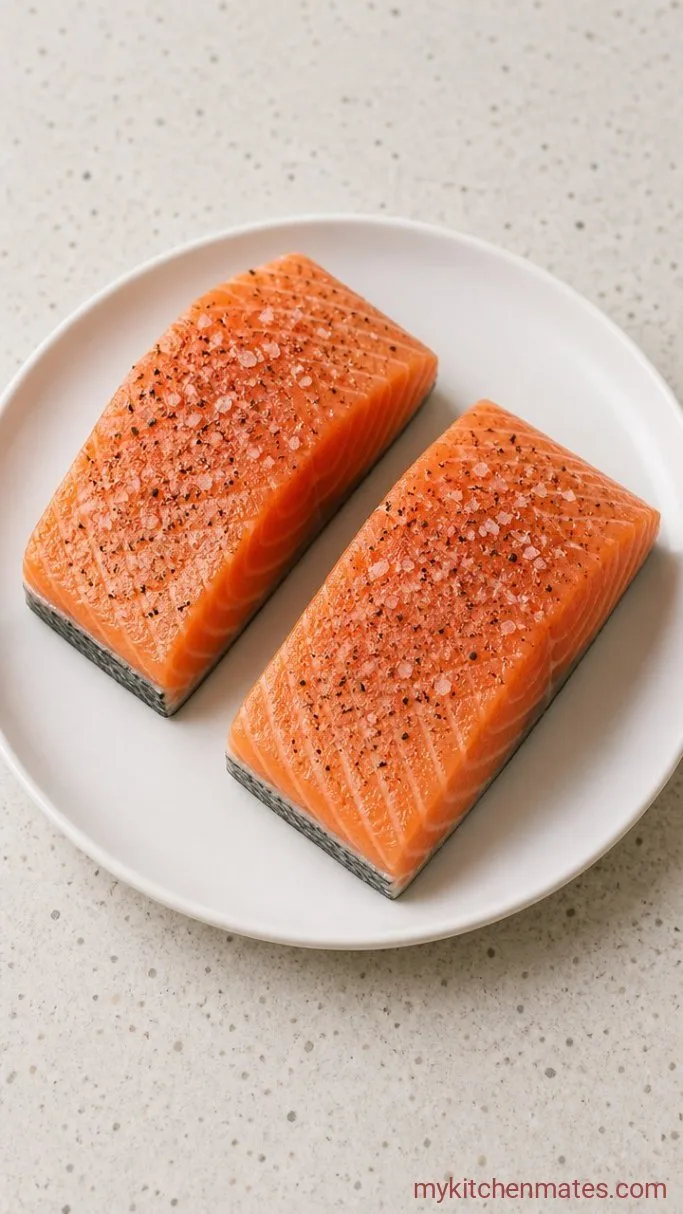
Set a heavy skillet, ideally cast iron or stainless steel, over medium-high heat and let it warm up for a full 2 minutes. While the pan heats, pat the salmon fillets completely dry with paper towels, then season the flesh side with the salt and pepper. Drying the skin now is the single thing that guarantees a crisp finish, so take an extra ten seconds on it. Drizzle the oil into the hot pan and tilt to coat the surface. It should shimmer and slide easily but never smoke.
You’ll know the pan is ready when a drop of water flicked in sizzles and bounces. If the oil smokes, pull the pan off the heat for a moment and lower the flame.
Step 2: Sear the Salmon Skin-Side Down
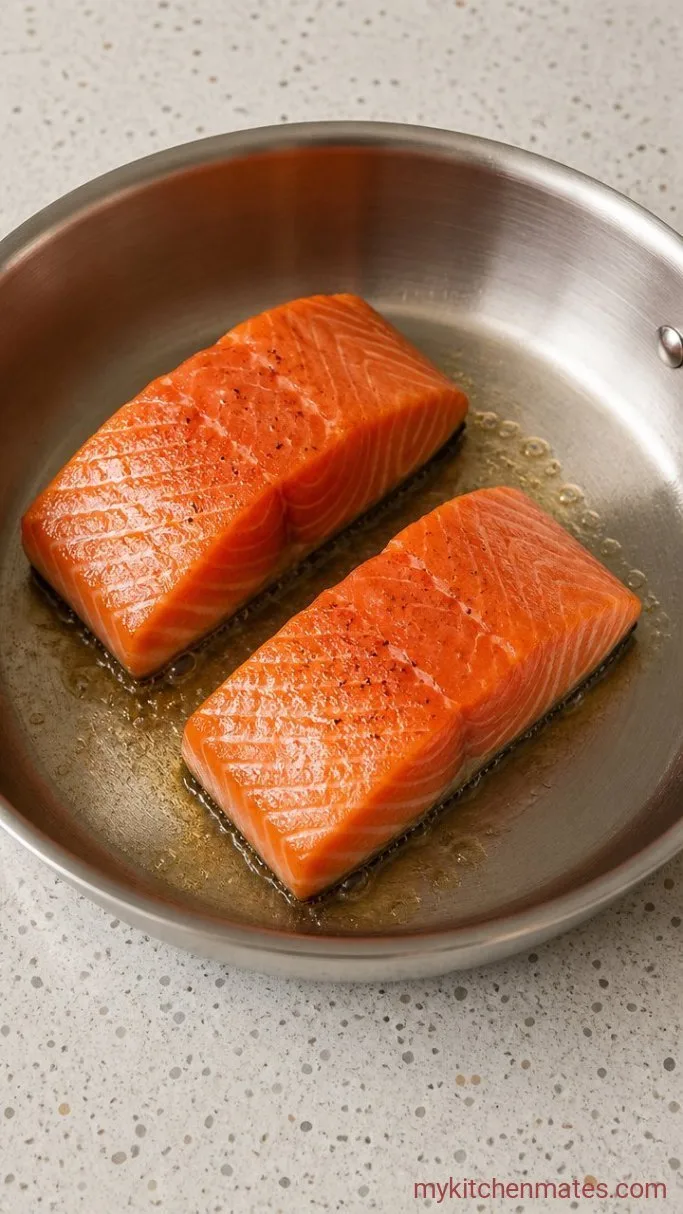
Lay the fillets in the pan skin side down, pressing each one gently with a fish spatula for the first 10 seconds so the skin makes full contact. You want to hear a steady, happy sizzle. Cook without moving them for 5 to 6 minutes, until the skin is deep golden and you can see the flesh lightening around the edges.
At this stage, the fish will release from the pan on its own. If it sticks when you test a corner, give it another 30 seconds. Forcing it early tears the skin.
Step 3: Flip and Baste with Butter
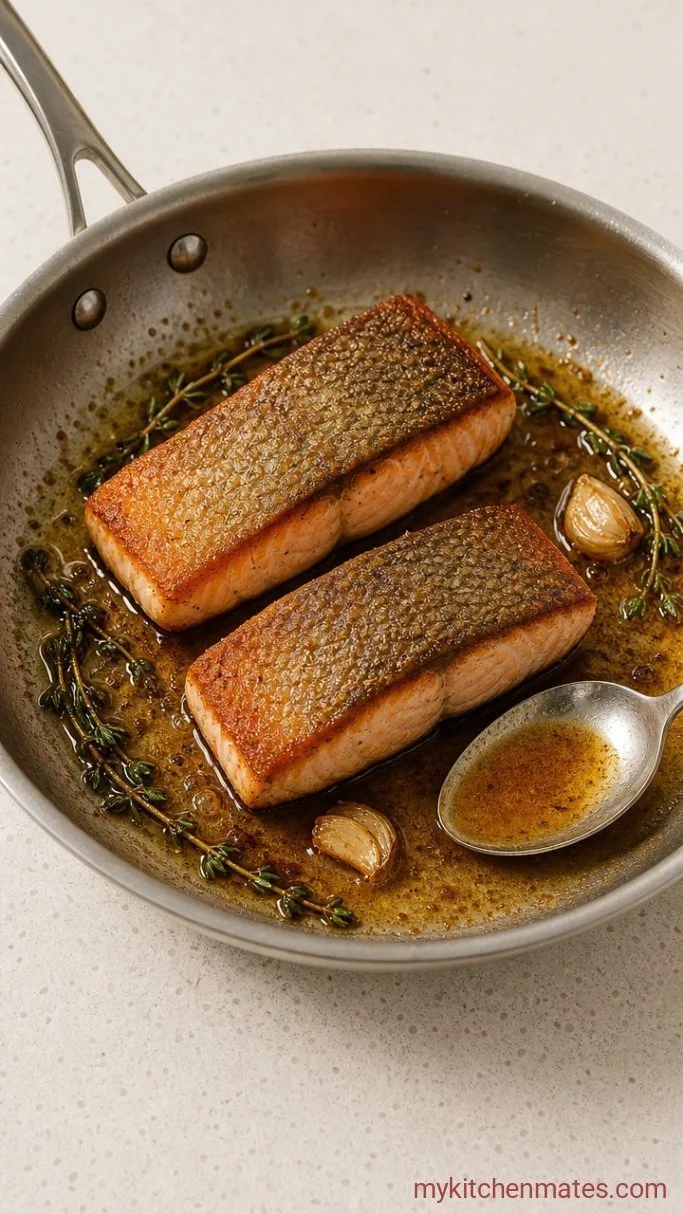
Reduce the heat to medium-low and flip the fillets. Immediately add the cold butter, the smashed garlic, and the thyme sprigs to the pan. As the butter melts, tilt the skillet slightly toward you so the golden liquid pools on one side. Use a large spoon to scoop it up and pour it over the top of each fillet, basting steadily for 1 to 2 minutes. The goal is a just-opaque center, which reads about 125°F to 130°F on an instant-read thermometer for medium doneness.
The whole kitchen will smell like toasted butter and garlic by now, and the thyme will start popping. Keep the spoon moving so the garlic doesn’t scorch in the direct heat.
Step 4: Plate and Spoon Over the Pan Butter
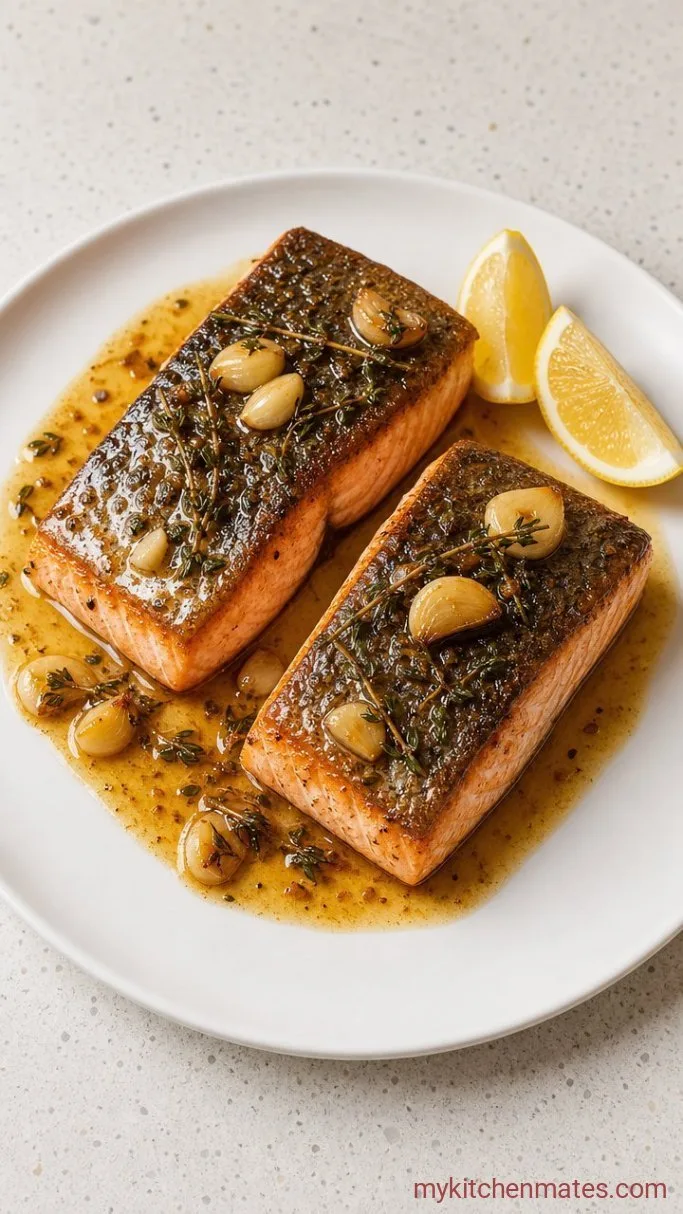
Remove the salmon to a warm plate, letting any extra butter drip back into the skillet. Spoon a ribbon of those garlicky pan juices right over the top, then set a lemon wedge alongside. The skin will stay crisp if you serve it right away, so call everyone to the table before it has a chance to soften.
A Few Tips Before You Start
- Dry skin is everything: even a trace of moisture steams instead of searing. Dab the skin side with a clean paper towel right before it hits the pan.
- Keep the heat adjustable: every stove runs differently. If the skin browns too fast, lower the temperature a notch so the flesh cooks through before the outside burns.
- Use a fish spatula: the thin, flexible edge slides under the fillet cleanly and holds the skin intact during the flip.
- Rest the salmon briefly: let it sit on the plate for about a minute. It finishes carrying over and the flesh relaxes just enough to flake cleanly.
Cook times change with the thickness of your fillet. Use this as a rough guide for skin-on salmon:
| Fillet thickness | Skin-side down | Flesh-side down | Rest |
|---|---|---|---|
| 1 inch (2.5 cm) | 5 minutes | 1 to 1.5 minutes | 1 minute |
| 1.5 inches (3.8 cm) | 6 to 7 minutes | 1.5 to 2 minutes | 1 minute |
| 2 inches (5 cm) | 7 to 8 minutes | 2 to 2.5 minutes | 1 minute |
Storing Leftovers
- Refrigerate: cooled salmon keeps in a sealed container for up to 2 days. The skin loses its crunch, but the flavor holds nicely.
- Reheating: a gentle warm in a nonstick pan over low heat brings it back without drying out. Skip the microwave when you can.
What to Serve with Pan Fried Salmon
The fish is rich enough that it leans into bright, snappy sides. A simple arugula salad with shaved fennel and a squeeze of lemon cuts right through the butter. Steamed jasmine rice soaks up every drop of those pan juices, and roasted asparagus with olive oil and flaky salt finishes quickly in the oven alongside.
If you have some crusty bread around, use it to wipe the skillet clean. Nobody needs to know.
Frequently Asked Questions
Can I use frozen salmon?
Yes, just thaw it completely in the fridge overnight first. Pat it extra dry before seasoning because thawed fillets carry more surface moisture.
Why does the skin stick to the pan?
Almost always, the pan wasn’t hot enough when the fish went in, or the skin wasn’t fully dry. A well-heated skillet and a thorough pat-down fix it most of the time.
Do I need a cast iron skillet?
It helps more than anything else because it holds heat so evenly, but any heavy-bottomed pan works. Just avoid thin nonstick pans that lose temperature the second cold fish hits them.
Can I leave out the butter and still get crispy skin?
Absolutely. The oil alone will crisp the skin beautifully. You’ll miss that basting flavor, so finish with a drizzle of good olive oil and fresh lemon instead.
Pan Fried Salmon Recipe
Ingredients
Method
- Pat salmon dry and season flesh with salt and pepper. Heat oil in a heavy skillet over medium-high heat until shimmering.
- Place salmon skin-side down, press gently for 10 seconds, and cook without moving for 5 to 6 minutes until skin is golden and crisp.
- Flip fillets, reduce heat to medium-low, add butter, garlic, and thyme. Baste with the melted butter for 1 to 2 minutes until just opaque in the center.
- Plate the salmon and spoon the pan butter over the top. Serve with lemon wedges.
Notes
