
Light and Airy Orange Chiffon Cake

This orange chiffon cake has a featherlight crumb and a bright, real citrus flavor that comes from plenty of fresh zest and juice. It’s the kind of cake that looks impressive on a stand but is straightforward enough for a relaxed weekend bake.
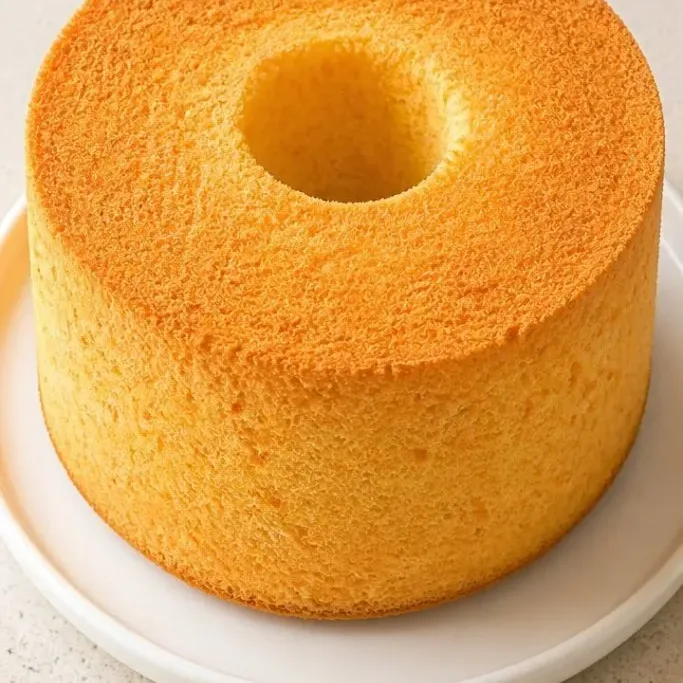
If you’ve steered clear of chiffon cakes because they seem fussy, this one is a good place to start. There’s no butter to cream and no finicky frosting, just a few careful folds that are easier than they sound.
Why This Orange Chiffon Cake Works
Oil keeps the cake tender and moist for days, so it never dries out like a butter cake can. The fresh orange zest carries the flavor, and because you whip the egg whites separately, the crumb stays airy without any baking powder aftertaste.
It bakes up sky-high in a tube pan and has a soft, cottony texture that’s just sweet enough. A dusting of powdered sugar is all the finish it needs, though a simple glaze never hurts.
Ingredients
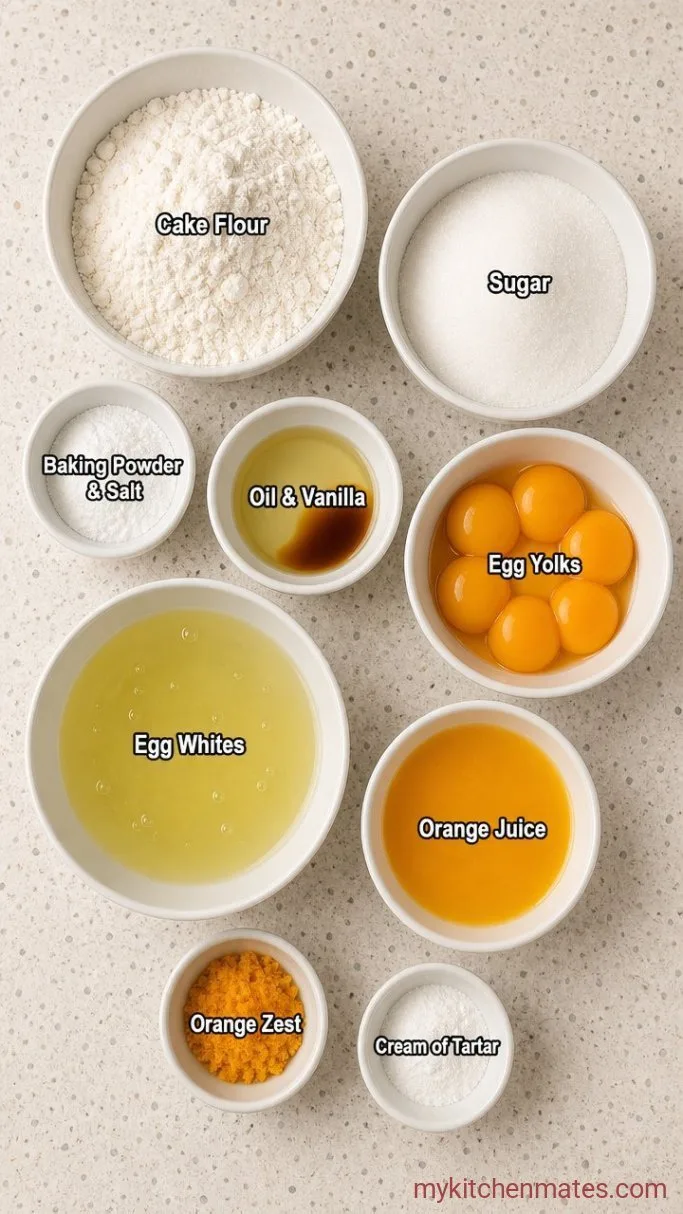
- 1 3/4 cups cake flour: spooned and leveled, not scooped; all-purpose works but the crumb will be a little less tender
- 1 cup granulated sugar, divided: half goes with the dry ingredients, half stabilizes the egg whites
- 2 teaspoons baking powder: gives an extra lift alongside the whipped whites
- 1/2 teaspoon fine salt: balances the sweetness and brightens the orange
- 1/3 cup neutral oil: vegetable or canola, for a moist texture that stays soft
- 6 large egg yolks, at room temperature: cold yolks won’t emulsify as smoothly
- 2/3 cup fresh orange juice: from about 2 medium oranges; bottled juice turns flat and overly sweet
- 2 tablespoons orange zest: the zest does all the flavor work, so pack it loosely
- 1 teaspoon vanilla extract: rounds out the citrus without distracting
- 6 large egg whites, at room temperature: they whip up much higher than cold whites
- 1/4 teaspoon cream of tartar: stabilizes the meringue so it holds air through folding and baking
Variations / Substitutions
- Lemon chiffon cake: swap the orange juice and zest for an equal amount of lemon juice and lemon zest; reduce the juice slightly if your lemons are very acidic
- Gluten-free option: replace the cake flour with a good quality 1:1 gluten-free flour blend that contains xanthan gum; the texture will be a bit more delicate but still airy
- Orange extract boost: add 1/2 teaspoon orange extract along with the vanilla for a punchier citrus note
- Lighter finish: serve dusted with powdered sugar, or spoon a thin orange glaze made from powdered sugar and juice over the top while it’s still slightly warm
Light and Airy Strawberry Sponge Cake is another dessert you’d probably love if you enjoy this cake.
How to Make Orange Chiffon Cake
Step 1: Whisk the Dry Ingredients
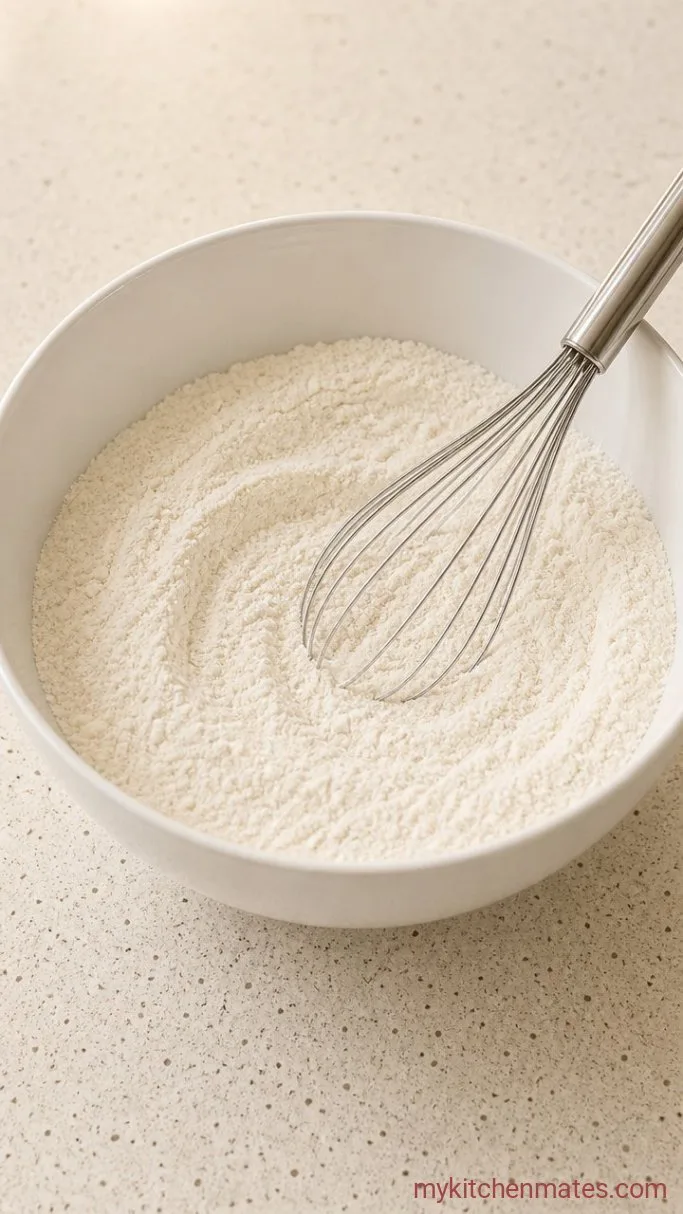
Preheat the oven to 325°F (165°C) with a rack in the lower third. In a large mixing bowl, whisk together the 1 3/4 cups cake flour, 1/2 cup of the sugar, the 2 teaspoons baking powder, and 1/2 teaspoon salt until no lumps of flour remain.
The mixture should look uniform and feel light when you lift the whisk. This even distribution makes sure every slice rises the same way.
Step 2: Mix the Liquid Base
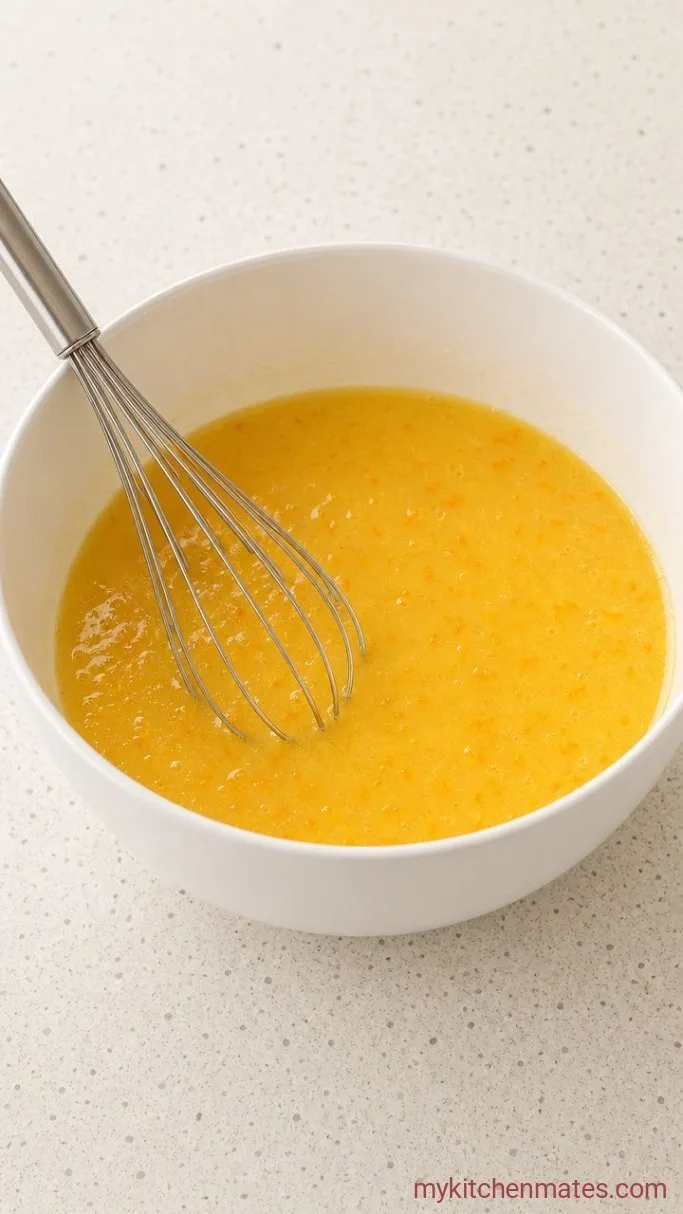
Add the 6 egg yolks, 1/3 cup oil, 2/3 cup orange juice, 2 tablespoons orange zest, and 1 teaspoon vanilla to the flour mixture. Whisk until the batter is smooth and glossy, about 1 minute of steady stirring. It will thin out and smell strongly of orange.
Stop once there are no streaks of flour. Overmixing at this stage can make the cake a little tough, but a few extra strokes are not a disaster.
Step 3: Whip the Egg Whites

In a completely clean, grease-free bowl, combine the 6 egg whites and 1/4 teaspoon cream of tartar. Using a hand mixer or stand mixer, beat on medium speed until the whites look foamy and opaque, about 1 minute. Increase the speed to medium-high and gradually rain in the remaining 1/2 cup sugar while beating. Continue for another 2 to 3 minutes, until the meringue holds stiff, glossy peaks that stand straight up when you lift the beaters.
The bowl should feel cool, and the meringue should be thick and marshmallow-like. If it slides down the sides of the bowl, keep beating a bit longer. Stop before it looks dry or clumpy, though, because overbeaten whites can break and deflate later.
Step 4: Fold the Batter Together
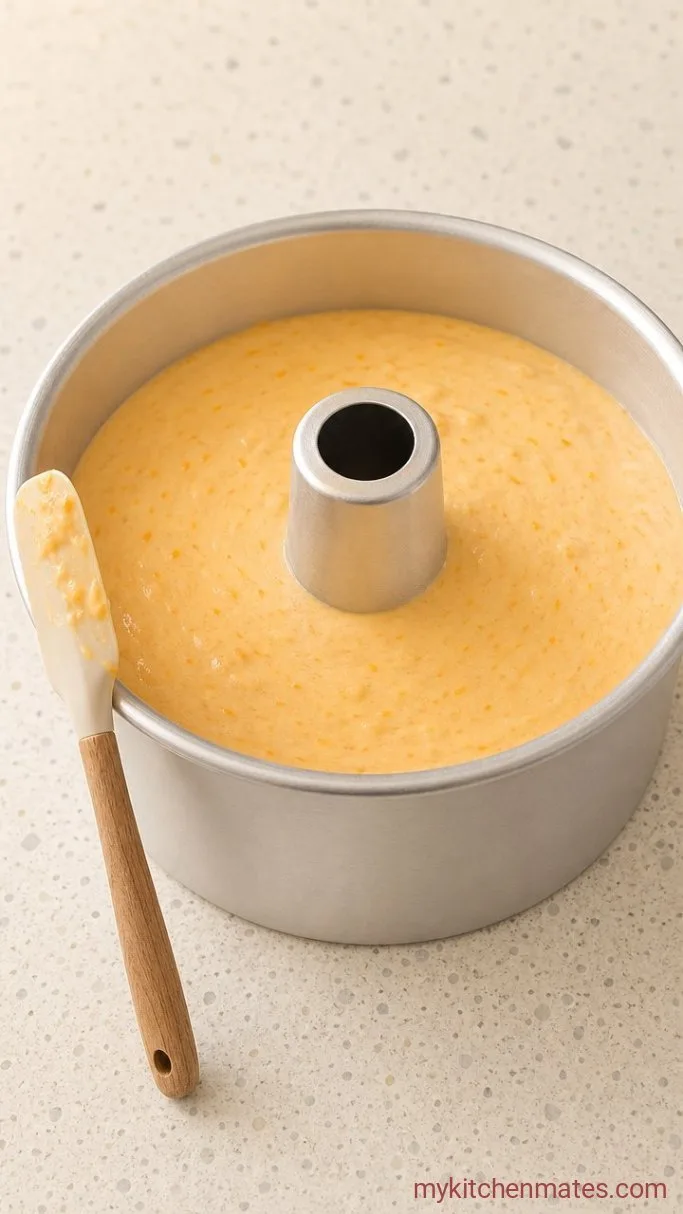
Scoop about one-third of the meringue into the yolk batter. Stir it in gently but thoroughly with a flexible spatula, lightening the thick batter so it’s easier to fold. Add the remaining meringue in two additions, using a wide sweeping motion: cut down through the center, scrape along the bottom, and lift the batter up and over. Rotate the bowl as you go, and stop as soon as you no longer see white streaks.
The batter will look fluffy and pale orange. A few small pockets of meringue are okay; overmixing deflates the air you just built. Work with a light hand and trust that the folds are doing their job.
Step 5: Bake the Cake
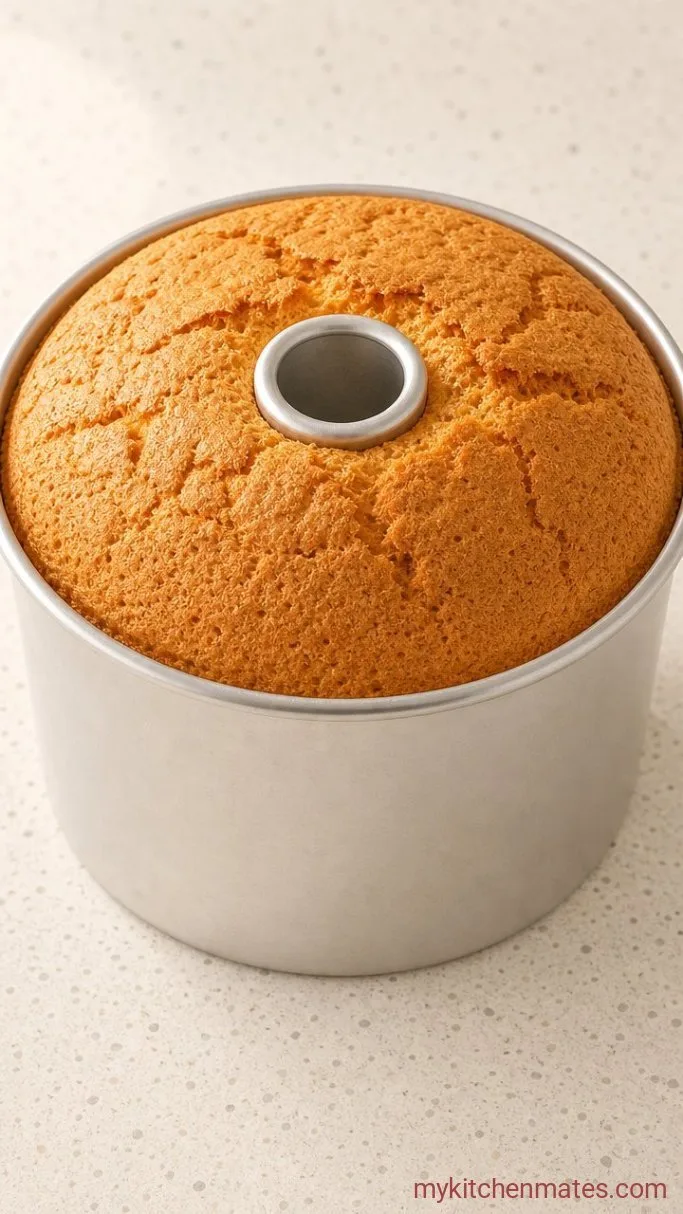
Pour the batter into an ungreased 10-inch tube pan with a removable bottom. Do not grease the pan; the batter needs to cling to the sides to climb. Smooth the top gently and give the pan a couple of firm taps on the counter to release any big air bubbles. Bake for 50 to 55 minutes, until the top is deep golden and springs back when pressed lightly, and a skewer inserted near the center comes out clean.
Avoid opening the oven door during the first 35 minutes of baking, because the meringue structure is still fragile. When the cake is done, immediately invert the pan onto the neck of a sturdy bottle or a wire rack set over a funnel. Let it cool completely upside down, which keeps the tall shape from collapsing as steam escapes. This will take about 90 minutes, and the cake must be fully cool before you unlatch the pan.
Step 6: Unmold and Serve the Cake
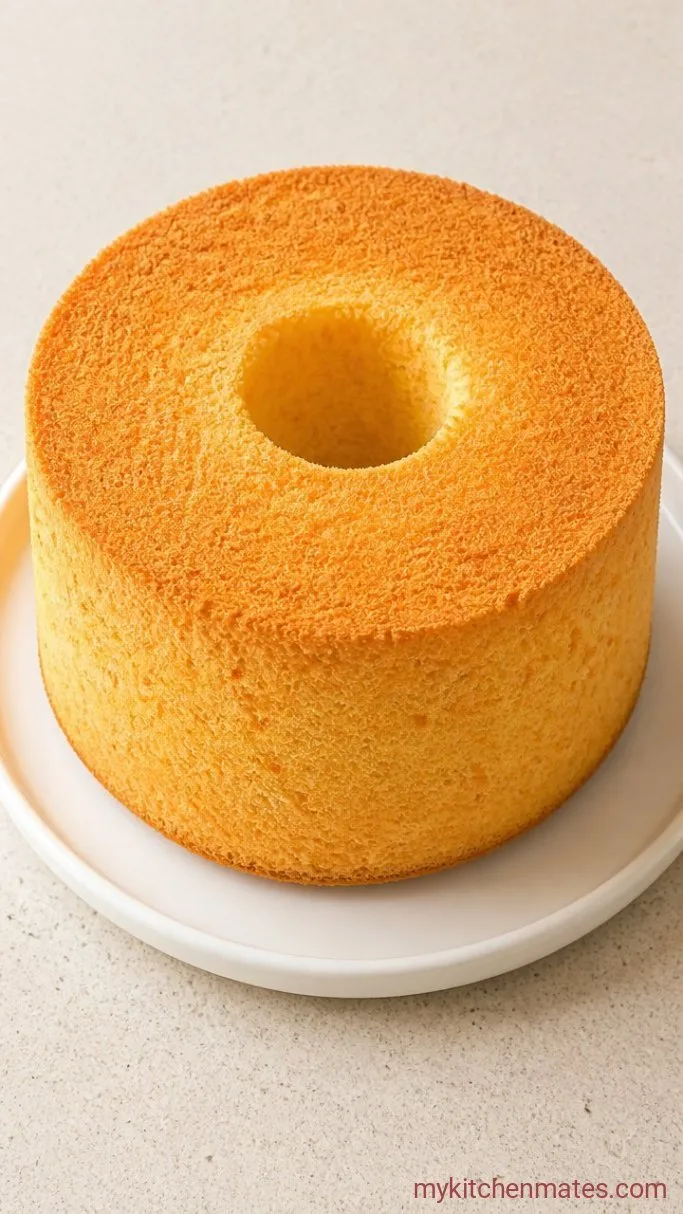
Run a thin, flexible knife or offset spatula around the inside edge of the pan and around the center tube, pressing against the pan rather than the cake. Release the sides and lift the cake out, still attached to the tube base. Slide the knife underneath the cake to free it from the bottom, then invert it gently onto a serving plate.
You’ll see the soft, golden crust and the tall, even crumb. Dust with powdered sugar or a quick orange glaze, slice with a serrated knife, and serve right away. The cake is light and fragrant, with a tender sponge that barely needs chewing.
Tips for the Lightest Orange Chiffon Cake
- Use a light-colored aluminum tube pan for the most even browning; darker pans can overbrown the delicate crust before the center sets.
- If you don’t have a bottle to invert the pan, set the pan upside down over a large metal funnel or four equally tall cans placed around the edges of the cake.
- Grate the orange zest just before you need it, and rub it briefly into the sugar for the dry mixture to release the oils.
- The cake keeps beautifully at room temperature for up to three days, tightly wrapped in plastic. The crumb actually gets softer overnight.
Storing Leftover Chiffon Cake
Keep the cake tightly wrapped at room temperature for up to 3 days. If you need to store it longer, refrigerate it well wrapped for up to 5 days, but bring slices back to room temperature before serving or the texture will feel dense. This cake does not need reheating and is not a great candidate for freezing; the delicate crumb can absorb moisture and turn gummy when thawed.
Frequently Asked Questions
Why did my cake collapse after baking?
The most common cause is not cooling it upside down long enough, or removing it from the pan while it’s still warm. The cake must be fully cool to set the structure.
Can I use bottled orange juice?
Fresh juice makes a noticeable difference here, because bottled juice lacks the bright acidity and tends to be sweeter. In a pinch, use a high-quality not-from-concentrate juice and omit any extra sugar.
Do I really need cream of tartar?
Yes, for a stable meringue that won’t weep or deflate. If you absolutely can’t get it, use 1/2 teaspoon white vinegar instead, but the egg white volume may be slightly lower.
Can I bake this in a regular round cake pan?
No, chiffon cakes rely on the tall tube pan to support their rise. A regular pan won’t give the batter enough height to climb, and the cake will likely overflow or sink in the middle.
My cake domed a lot on top. Is that normal?
A tall dome is typical for a chiffon cake. If you want a perfectly flat surface, you can slice off the dome after cooling and turn the cake upside down on the plate so the flat bottom becomes the top.
Orange Chiffon Cake Recipe
Ingredients
Method
- Preheat oven to 325°F. Whisk cake flour, 1/2 cup sugar, baking powder, and salt in a large bowl.
- Add egg yolks, oil, orange juice, orange zest, and vanilla; whisk until smooth.
- Beat egg whites and cream of tartar to soft peaks. Gradually add remaining 1/2 cup sugar and beat to stiff, glossy peaks.
- Fold one-third of meringue into the yolk batter to lighten, then gently fold in the rest in two additions until no white streaks remain.
- Pour into an ungreased 10-inch tube pan. Tap to remove bubbles, then bake 50–55 minutes until golden and a tester comes out clean. Cool upside down completely.
- Run a knife around the edges, release the cake, and place on a plate. Dust with powdered sugar or glaze and serve.
Notes
