
Slow-Cooked Old Fashioned Beef Stew

Old Fashioned Beef Stew is the kind of meal that fills the kitchen with a savory smell and leaves you with a pot of tender beef and vegetables in a rich, dark gravy. It takes a little time on the stove, but the actual work is straightforward, and the result is worth every minute.
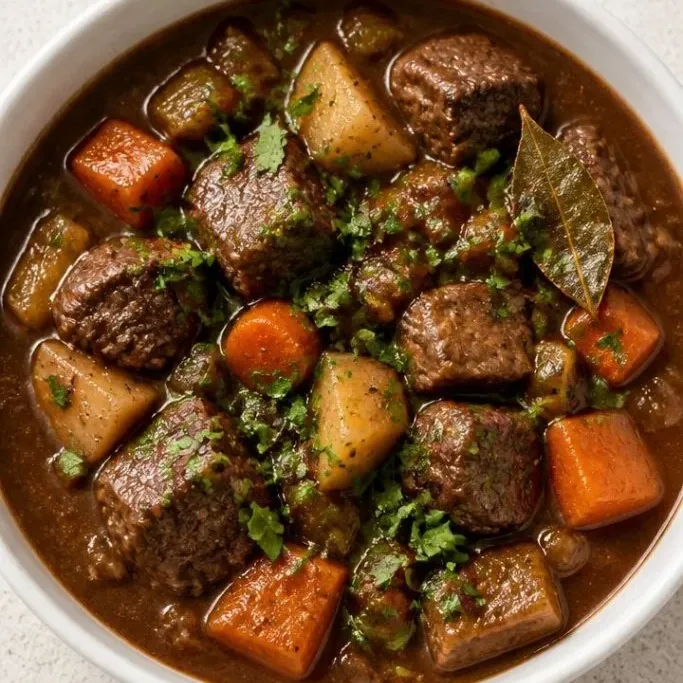
This version uses a simple sear-then-simmer method that builds deep flavor without any fussy steps.
What Makes This Stew a Keeper
The beef turns fall-apart tender, and the gravy tastes like it simmered all day, even though active time is under an hour. Each spoonful has soft carrots, potatoes, and pieces of meat in a broth that’s beefy with just a hint of tomato.
I make this all through the colder months, and I love that leftovers taste even better the next day, after the flavors settle.
Ingredients
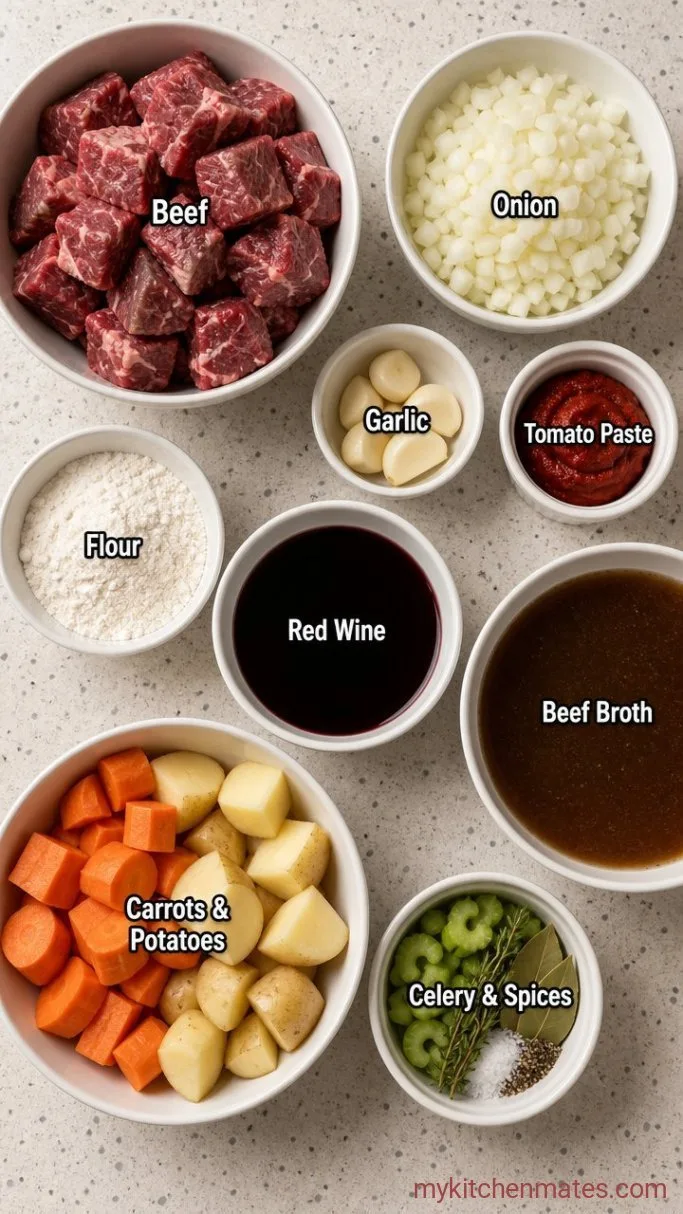
- 2 lbs beef chuck, cut into 1½-inch cubes: look for good marbling for the most tender stew
- 2 tbsp vegetable oil
- 1 large onion, diced
- 3 cloves garlic, minced
- 2 tbsp tomato paste
- 1/4 cup all-purpose flour
- 1 cup red grape juice (optional): use a dry red like Cabernet or merlot, or replace with extra beef broth
- 4 cups beef broth: low-sodium is best so you can control the salt
- 3 carrots, peeled and cut into 1-inch chunks
- 3 medium Yukon Gold potatoes, cut into 1-inch chunks
- 2 celery stalks, sliced
- 2 bay leaves
- 1 tsp dried thyme
- Salt and black pepper
- Fresh parsley, chopped (for serving)
Variations / Substitutions
- Slow cooker version: after searing and building the base, transfer everything to a slow cooker, cook on low for 7-8 hours, and add the vegetables in the last 2 hours.
- Instant Pot: use the sauté function for browning and building, then pressure cook on high for 35 minutes with a natural release. Add vegetables and pressure cook another 5 minutes.
- Gluten-free: swap the all-purpose flour for an equal amount of a 1-to-1 gluten-free flour blend.
- Different vegetables: parsnips or turnips work well in place of some of the potatoes.
Authentic Mexican Birria is the main dish we love pairing with this stew.
How to Make Old Fashioned Beef Stew
Step 1: Sear the Beef
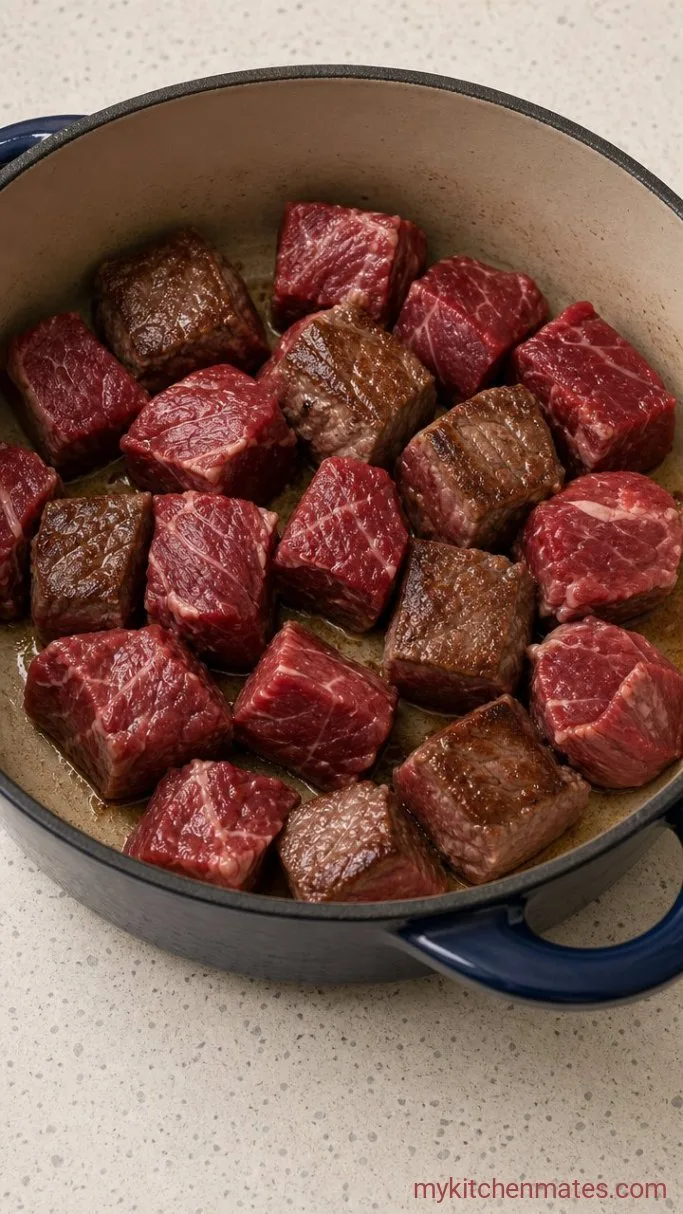
Pat the 2 lbs of beef chuck cubes dry with paper towels and season them well with salt and pepper. Heat the 2 tbsp vegetable oil in a large Dutch oven over medium-high heat. Working in two batches so the pot isn’t crowded, sear the beef on all sides until deeply browned, about 3-4 minutes per batch. Transfer the seared meat to a plate.
You’ll hear a loud sizzle when the beef hits the hot oil; if it doesn’t, the pot isn’t hot enough. The brown bits that cling to the bottom after searing are called fond, and they’re where a lot of the stew’s flavor comes from.
Taking the time to brown in batches keeps the pan temperature high so the beef sears instead of steaming. Skipping this step or crowding the pot leaves you with grey, boiled meat and a thinner-tasting broth.
Step 2: Sauté the Aromatics and Start the Roux
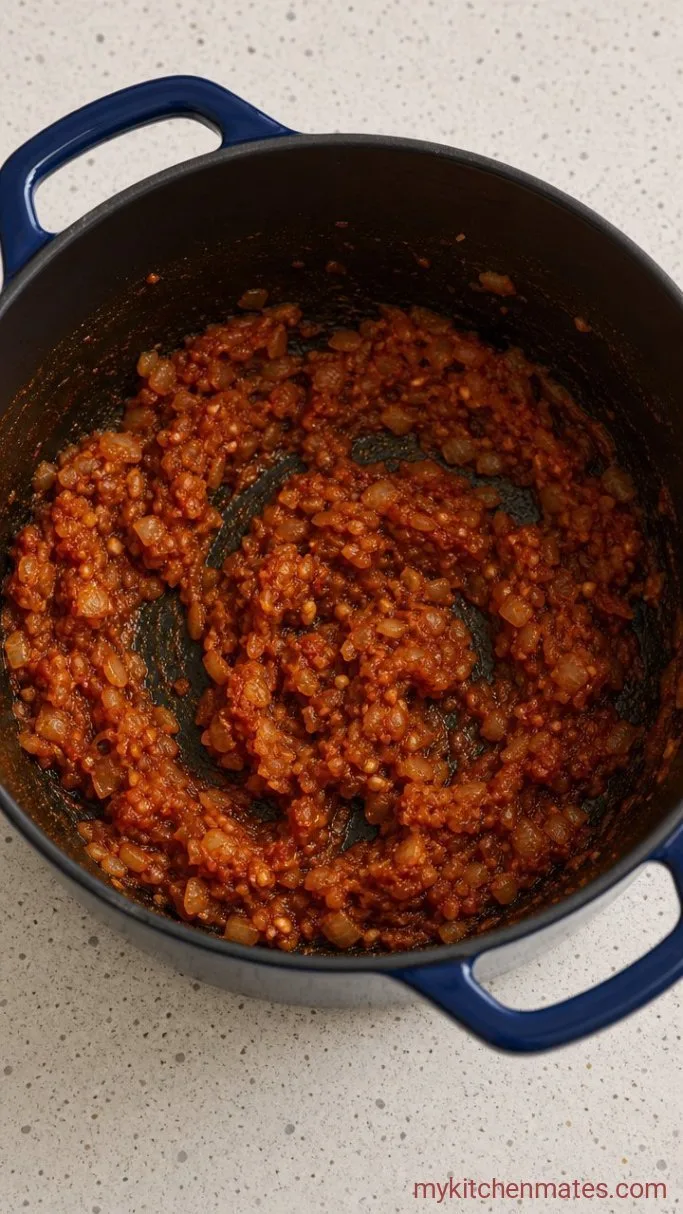
Turn the heat down to medium. Add the diced onion with a pinch of salt and cook, stirring occasionally, until soft and just beginning to turn golden, about 5 minutes. Stir in the 3 cloves minced garlic and cook for 30 seconds, until fragrant. Sprinkle the 1/4 cup flour over the onions and stir constantly for 1 minute to cook off the raw flour taste. Add the 2 tablespoons tomato paste and stir for another minute, until the paste darkens slightly.
The onion will release moisture that helps lift some of the fond from the pot, and the tomato paste will turn a brick-red color, giving the whole kitchen a slightly sweet, savory smell.
Cooking the flour and tomato paste at this stage removes any starchy edge and intensifies the tomato’s richness later in the stew. Keep the garlic moving so it doesn’t scorch; burnt garlic tastes bitter in the finished dish.
Step 3: Deglaze with Juice and Broth
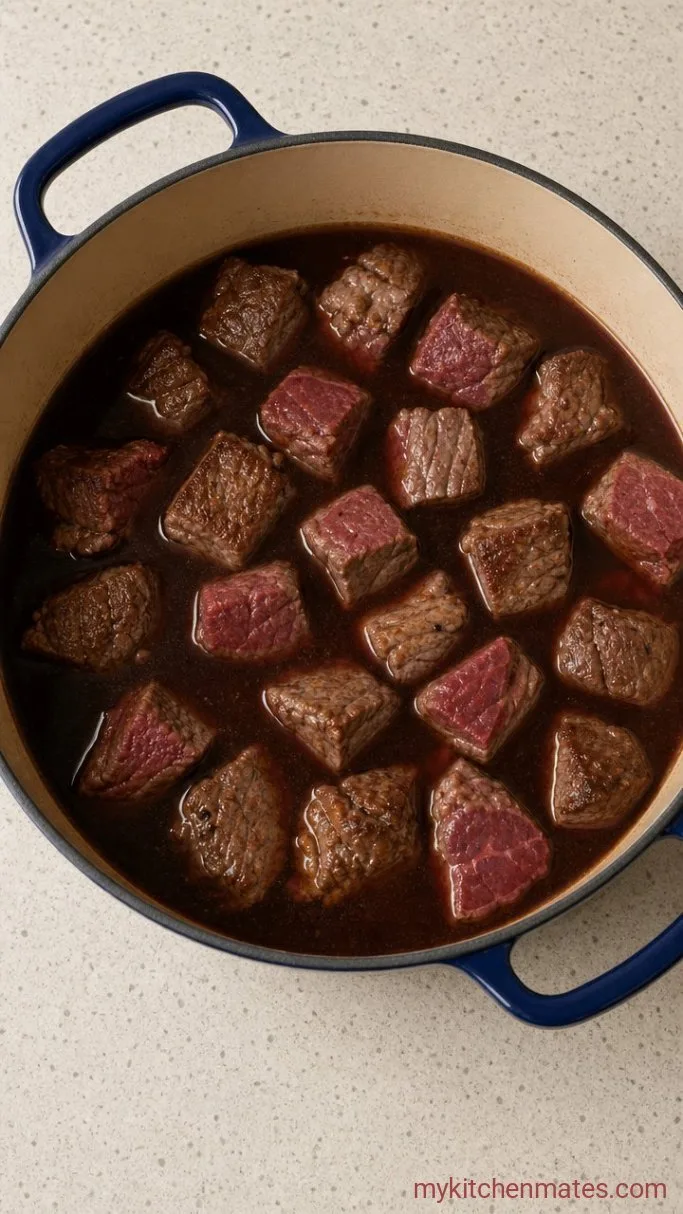
Pour in the 1 cup red grape juice (if using) while scraping the bottom of the pot firmly with a wooden spoon to dissolve every bit of the browned fond. Let the juice bubble and reduce by about half, roughly 2-3 minutes. Then add the 4 cups beef broth, 2 bay leaves, and 1 teaspoon dried thyme. Stir everything together.
The liquid will take on a deep, glossy brown color as it combines with the paste and fond. At this point the base already smells like a rich stew.
If you’re skipping the juice, just add the full amount of broth and a tablespoon of red grape juice for brightness. Either way, don’t rush the deglazing; those stuck-on bits need a minute of scraping to fully release.
Step 4: Simmer the Beef
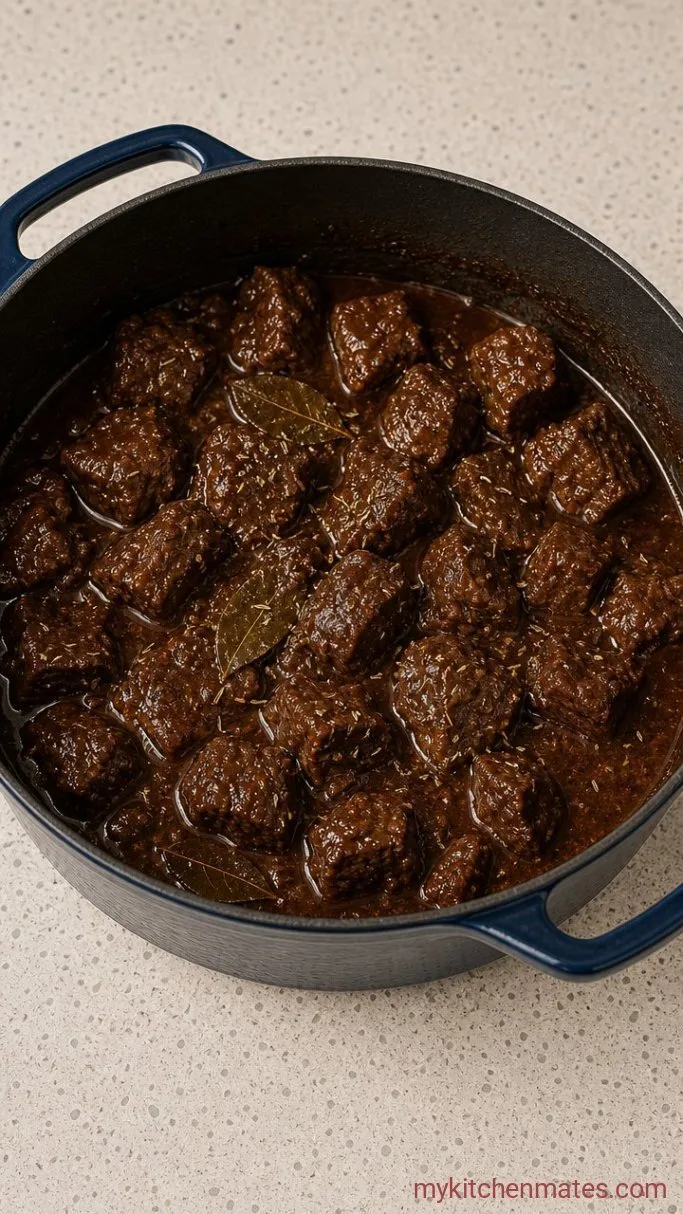
Return the browned beef and any juices on the plate to the pot. Bring the liquid to a gentle simmer, then cover with a lid. At this point you can either transfer the pot to a 325°F oven or keep it on the stovetop over low heat. Cook for 1 hour and 30 minutes, until the beef is tender but not completely falling apart.
The kitchen will fill with that deep, meaty aroma, and when you lift the lid you’ll see the broth has darkened even more.
Oven heat surrounds the pot more evenly and reduces the chance of a hot spot scorching the bottom, but the stovetop works as long as you maintain a very low bubble. Check the liquid level after an hour; if it’s dropped too much, add a splash of broth.
Step 5: Add the Root Vegetables
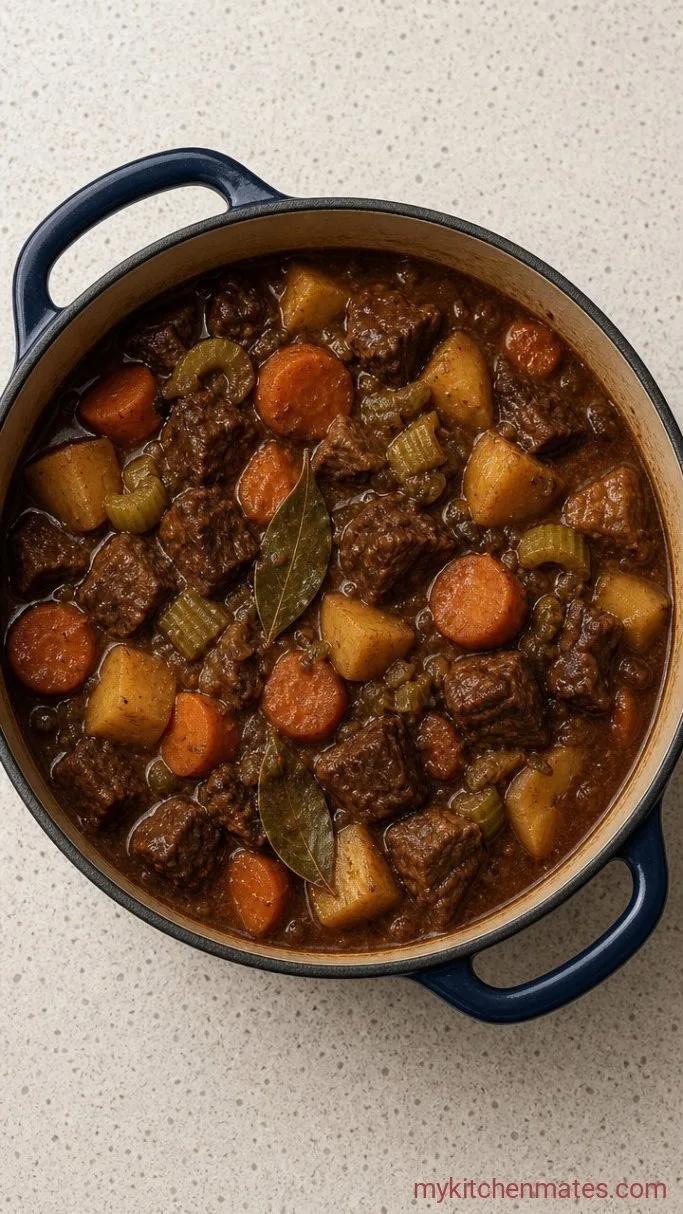
Stir in the 3 carrot chunks, 3 potato chunks, and 2 celery stalks. Cover the pot again and continue cooking for another 45 minutes to 1 hour, until you can slide a knife through the vegetables easily and the beef is fork-tender. Taste the broth and add salt and pepper as needed.
The potatoes will have softened into creamy bites that soak up the gravy, while the carrots stay slightly sweet and barely hold their shape.
Adding the vegetables partway through prevents them from turning to mush. At this point you can also fish out the bay leaves if you spot them, though they can stay until serving.
Step 6: Ladle and Serve
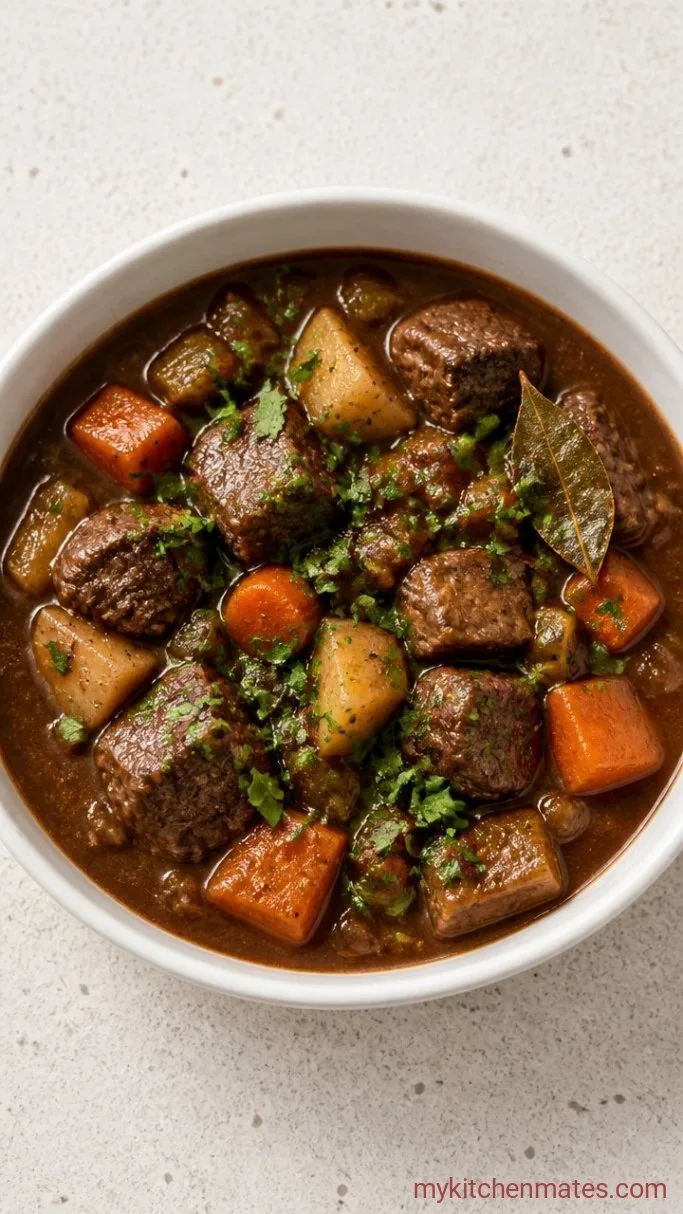
Remove the bay leaves and discard them. Ladle the stew into deep bowls while it’s piping hot. Scatter a little fresh parsley over each bowl if you like the color. Serve it right away.
The beef will be so tender it breaks apart with a spoon, and the thick gravy coats every piece.
This is one of those meals that tastes even better after a few hours or the next day. If you can, make it ahead, then cool and reheat gently when you’re ready.
Tips for the Best Beef Stew
- Cut vegetables the same size: keeping carrot, potato, and celery chunks uniform means they all finish cooking at the same time.
- Use a juice you’d drink: pick a dry red that tastes good on its own. A cheap bottle with harsh tannins can turn the stew bitter.
- Add a savory kick at the end: a splash of Worcestershire sauce stirred in just before serving adds an extra layer of meaty depth.
- Thicken without flour: if you want a heartier stew, smash a few potato chunks against the side of the pot and stir them into the broth. It creates a naturally creamy texture.
Storing Leftover Beef Stew
- Refrigerate: cool the stew completely, then transfer to an airtight container. It keeps well in the fridge for up to 4 days.
- Reheating: warm gently on the stovetop over medium-low heat, stirring occasionally. The stew will thicken as it sits; add a splash of beef broth if it’s too tight.
- Freezing: portion the cooled stew into freezer-safe containers and freeze for up to 3 months. Thaw overnight in the fridge before reheating.
What to Serve with Old Fashioned Beef Stew
A crusty loaf of sourdough or a warm baguette is perfect for sopping up the last of the gravy. For something fresh, a simple green salad with a sharp vinaigrette cuts through the richness. If you want a heartier plate, spoon the stew over buttered egg noodles or creamy mashed potatoes.
Frequently Asked Questions
Can I make this beef stew in a slow cooker?
Yes. After deglazing, transfer the beef and liquid to a slow cooker and cook on low for 7-8 hours. Add the root vegetables during the last 2 hours so they don’t overcook.
Is it okay to freeze the stew?
Absolutely. Cool it completely, then freeze in portions for up to 3 months. Thaw overnight in the fridge and reheat gently on the stove.
What if I don’t have red grape juice?
Replace the juice with an equal amount of beef broth plus 1 tablespoon balsamic vinegar. The vinegar adds the needed acidity to balance the richness.
Can I add peas?
Yes, stir in 1 cup of frozen peas during the last 5 minutes of cooking, just until they’re heated through.
Old Fashioned Beef Stew Recipe
Ingredients
Method
- Pat beef dry, season with salt and pepper. Sear in batches in hot oil until deeply browned, about 3-4 minutes per batch. Set aside.
- Cook onion with a pinch of salt until soft, about 5 minutes. Add garlic, cook 30 seconds. Stir in flour for 1 minute, then tomato paste for another minute.
- Pour in wine and scrape up the fond; reduce by half, 2-3 minutes. Add broth, bay leaves, and thyme.
- Return beef to the pot, bring to a simmer, cover, and cook on low heat or in a 325°F oven for 1 hour 30 minutes.
- Add carrots, potatoes, and celery. Cover and cook another 45-60 minutes, until vegetables and beef are tender.
- Remove bay leaves. Ladle into bowls and top with parsley. Serve hot.
Notes
