
Chewy Oatmeal Coconut Cookies

These oatmeal coconut cookies bake up with crisp edges, a soft center, and loads of toasted coconut flavour in every bite. No chilling, no fussy steps, just a warm tray of cookies you can make after work and enjoy the same night.
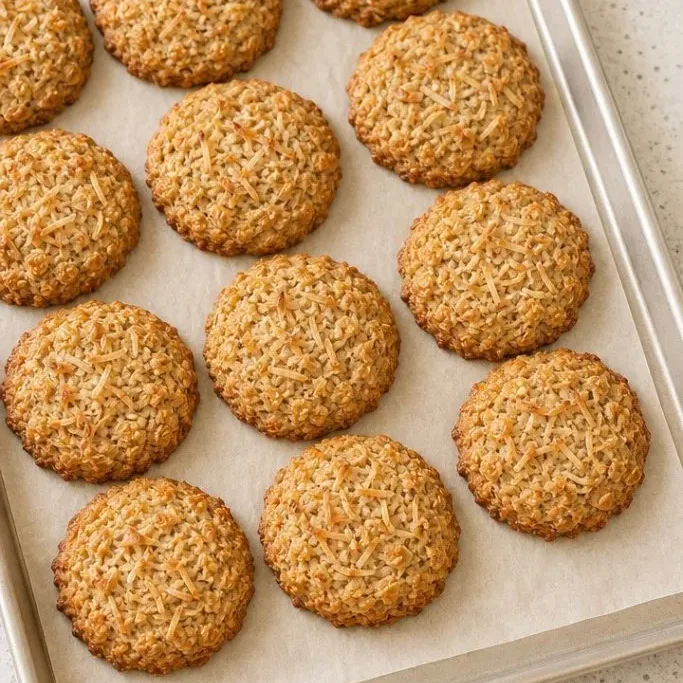
They come together in about half an hour and taste like a cross between a classic oatmeal cookie and a coconut macaroon. If you keep rolled oats and a bag of shredded coconut in the pantry, you are already most of the way there.
Why These Chewy Cookies Work
The shredded coconut gets golden and nutty in the oven, which deepens the whole flavour without any extra effort. Sweetened coconut caramelises lightly around the edges while the centre stays tender.
The dough is simple to mix by hand and holds its shape well in the oven. You get a cookie that is substantial but not dry, and the oats give it that old-fashioned chew that disappears by the handful.
I reach for this recipe when I want a cookie that feels a little more interesting than a plain oatmeal drop, but still dead simple. The coconut is the star, and it never gets lost.
Ingredients
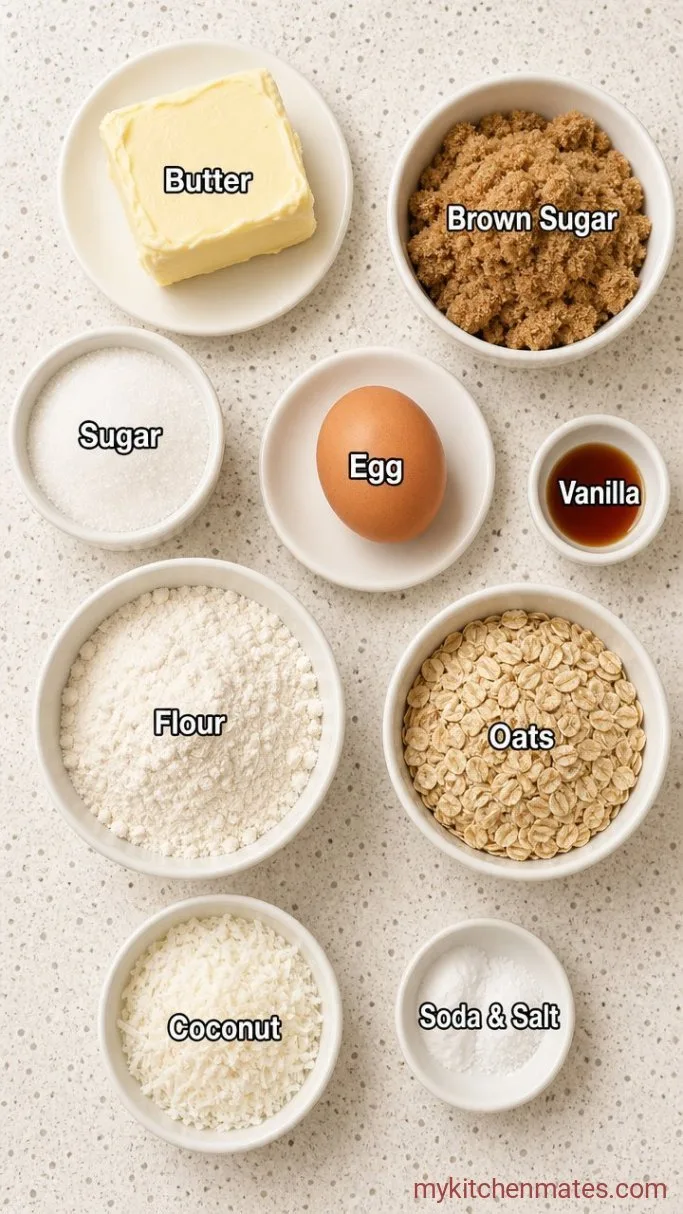
- ½ cup unsalted butter, softened: let it sit out 45 minutes so it creams easily
- ½ cup packed brown sugar: light or dark both work; dark adds a touch more depth
- ¼ cup granulated sugar
- 1 large egg: at room temperature if possible
- 1 tsp vanilla extract
- 1 cup all-purpose flour: spooned and levelled, not scooped
- ½ tsp baking soda
- ¼ tsp fine sea salt
- 1 ½ cups old-fashioned rolled oats: not quick oats, they turn mealy
- ¾ cup sweetened shredded coconut: the standard baking aisle coconut, which gives sweet, crisp edges
Variations / Substitutions
- Unsweetened coconut: swap in the same amount for a less sweet cookie with more pure coconut flavour and slightly drier edges
- Add chocolate chips: fold ½ cup semisweet or dark chips into the dough after mixing for a chocolate-coconut combo
- Gluten-free flour: use a 1:1 all-purpose gluten-free blend and the same amount of certified gluten-free oats
- Dairy-free: replace the butter with refined coconut oil (solid, not melted) and expect a slightly softer shape; you can chill the dough 20 minutes to help
Prawn Curry is the main dish we love pairing with these cookies.
How to Make Oatmeal Coconut Cookies
Step 1: Cream the Butter and Sugars

Preheat your oven to 350°F (175°C) and line two baking sheets with parchment. In a large bowl, beat the ½ cup softened butter, ½ cup brown sugar, and ¼ cup granulated sugar together until the mixture is pale and fluffy, about 2 minutes with a hand mixer or 3 minutes with a wooden spoon. Scrape down the sides, then beat in the 1 large egg and 1 tsp vanilla until smooth.
The mixture should look airy and hold soft peaks when you lift the beaters. If the butter was too cold you will see chunks, so give it another minute of beating to catch up.
Step 2: Mix the Dry Ingredients
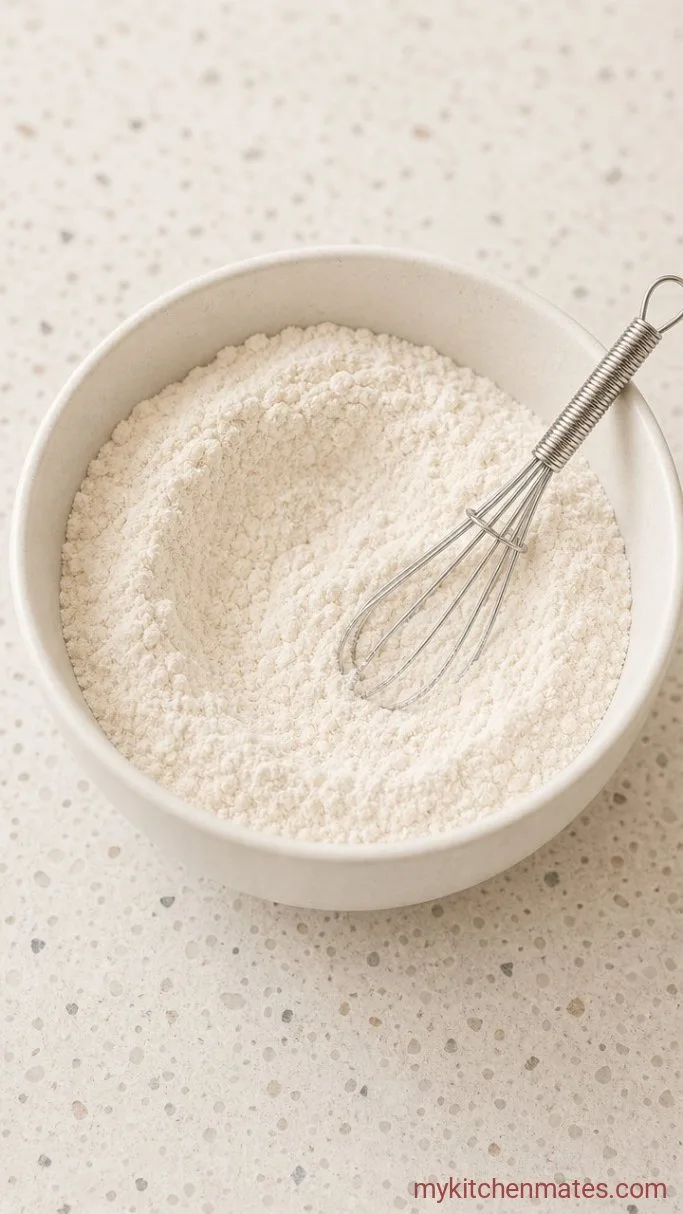
In a separate bowl, whisk the 1 cup flour, ½ tsp baking soda, and ¼ tsp salt until no streaks remain. Stir in the 1 ½ cups rolled oats and ¾ cup shredded coconut with a fork, breaking apart any clumps so everything disperses evenly.
The dry mix will look like a coarse, fluffy pile. Making sure the baking soda is evenly distributed here prevents any surprise tangy spots in the finished cookies.
Step 3: Combine Wet and Dry
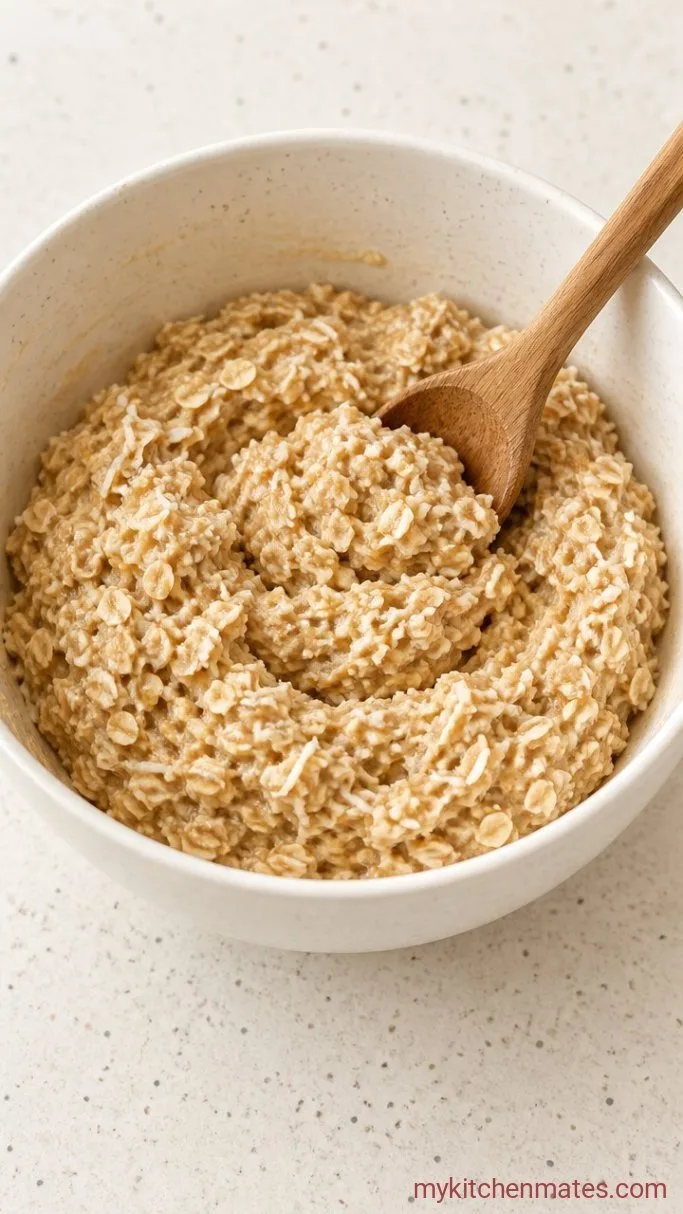
Pour the dry ingredients into the butter mixture and fold everything together with a spatula just until no flour streaks remain. The dough will be thick and slightly tacky, but it should come together cleanly off the sides of the bowl.
Resist the urge to keep mixing once it looks uniform. Overworking the dough can make the cookies tough and flat, so stop right when the last oat disappears.
Step 4: Bake the Cookies
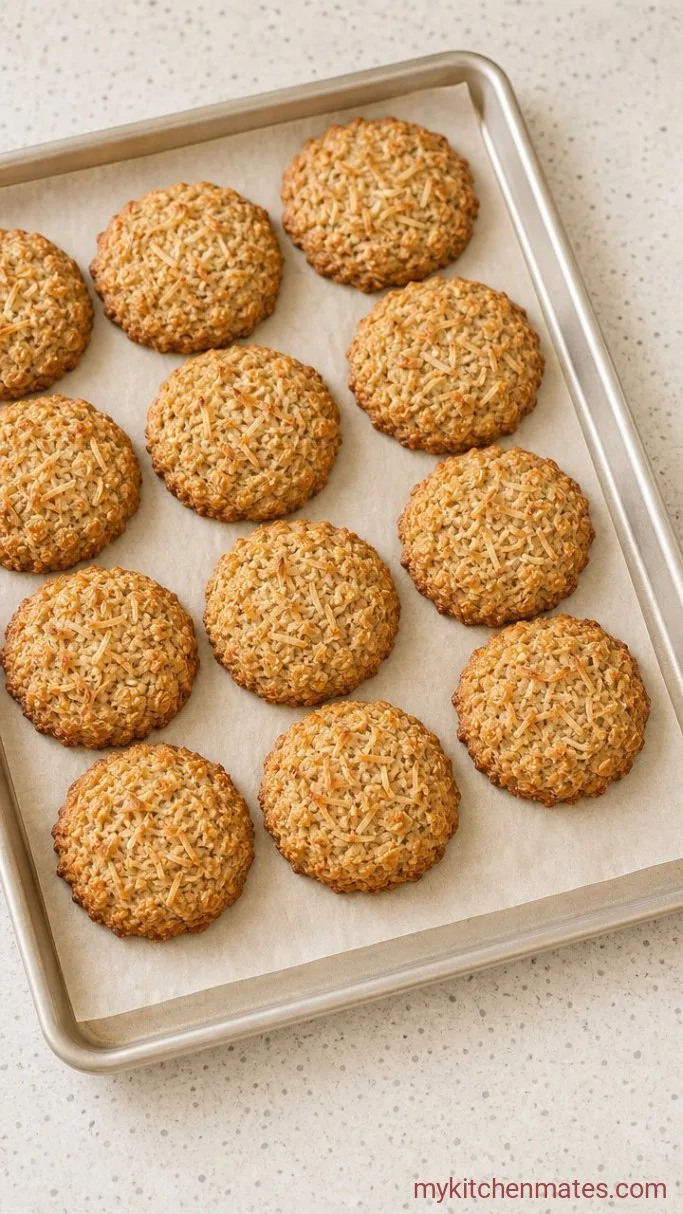
Drop rounded 1 ½ tablespoon portions of dough onto the lined sheets, leaving about 2 inches between them. Pop the trays into the oven and bake for 10 to 12 minutes, rotating halfway through. The cookies are ready when the edges are deep golden brown and the centres still look a little pale and soft.
Let the cookies rest on the hot baking sheet for 5 minutes before moving them to a wire rack. They will firm up as they cool, and the coconut edges will turn into crisp, buttery lace. Eat one while it is still slightly warm, with the centre soft and chewy.
Tips for the Best Oatmeal Coconut Cookies
- Use room temperature butter: it creams properly with the sugars, which builds the structure that holds the cookies high. Cold butter leads to greasy, flat discs.
- Old-fashioned oats matter: quick oats absorb moisture too fast and make the cookies dry and pasty. Stick with rolled oats for that classic chewy bite.
- Don’t flatten the dough balls: leaving them mounded helps the centres stay thick. If you prefer a thinner, crispier cookie, press them lightly with the back of a spoon before baking.
- Watch the bake time, not the clock: oven hot spots can vary. Pull the cookies when the edges are set and the tops look slightly underdone; they continue baking on the sheet.
- Warm cookies with cold milk: sounds simple for a reason. The coconut brings a natural sweetness that pairs well with a glass of whole milk or oat milk.
Cookie size changes the bake time. Use this guide if you prefer smaller or larger cookies.
| Cookie Size | Bake Time |
|---|---|
| Small (1 tbsp) | 8 to 10 minutes |
| Medium (1 ½ tbsp) | 10 to 12 minutes |
| Large (2 tbsp) | 12 to 14 minutes |
Storing Leftover Cookies
- Refrigerate: store baked cookies in an airtight container at room temperature for 4 days, or in the fridge for up to a week. A slice of bread in the container keeps them soft.
- Freeze dough: scoop raw dough balls onto a parchment-lined tray, freeze until solid, then transfer to a sealed bag. Bake straight from frozen, adding 2 to 3 extra minutes.
- Serve cold: these cookies taste great straight from the fridge, where the chew firms up and the coconut flavour leans nuttier.
Frequently Asked Questions
Can I use quick oats instead of rolled oats?
You can, but the texture will be softer and more cakey. Rolled oats give the chewy, hearty bite that makes these cookies stand out.
Why did my cookies spread too much?
Butter that was too warm or over-creamed can cause spreading. If your dough feels greasy, chill it for 20 minutes before scooping.
Can I make these gluten-free?
Yes. Substitute a good 1:1 gluten-free flour blend and use certified gluten-free rolled oats. The texture will be a little more tender but still holds together.
Can I swap the sweetened coconut for unsweetened?
Absolutely. The cookies will be less sweet and the edges will brown faster, so watch the bake time closely toward the end.
Oatmeal Coconut Cookies Recipe
Ingredients
Method
- Preheat oven to 350°F (175°C) and line two baking sheets with parchment. Cream the butter, brown sugar, and granulated sugar until pale and fluffy. Beat in the egg and vanilla.
- In a separate bowl, whisk the flour, baking soda, and salt. Stir in the oats and coconut.
- Fold the dry mixture into the butter mixture just until combined, with no flour streaks.
- Drop 1 ½ tablespoon mounds of dough onto the sheets, 2 inches apart. Bake for 10 to 12 minutes, rotating halfway, until edges are golden. Cool on the sheet 5 minutes, then transfer to a wire rack.
Notes
