
20-Minute Mongolian Ground Beef Noodles

Mongolian ground beef noodles hit that sweet-savory spot better than takeout, and they come together in a single skillet in about 20 minutes. The sauce is sticky and dark, with just enough chili warmth to keep it interesting.
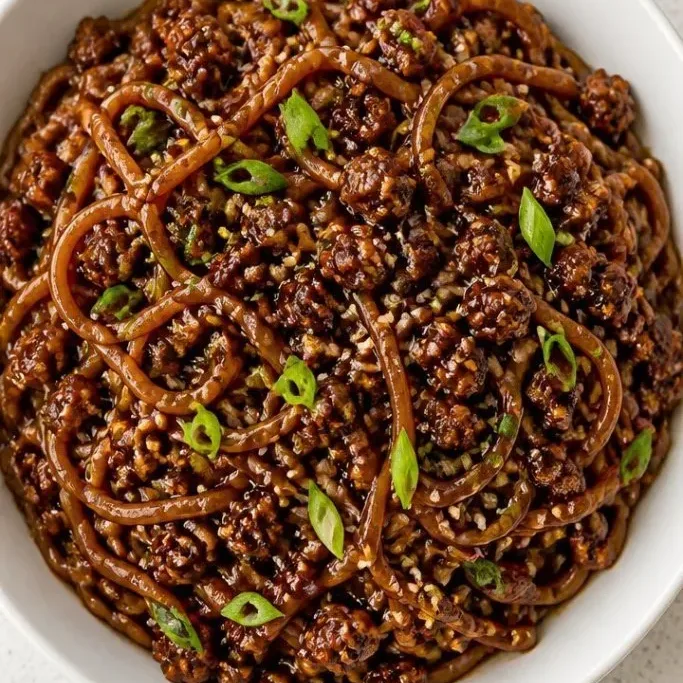
It’s a weeknight meal that feels like a treat because the beef gets crispy edges before the sauce coats every strand. If you keep soy sauce, brown sugar, and hoisin in the pantry, you are halfway there.
Why This One Stays in the Rotation
The brown sugar and soy reduce into a glossy, caramel-like glaze that clings to the noodles and the beef crumble. Those browned bits on the meat give every bite a little crunch before the sauce softens them.
I make it when the fridge looks sparse because it leans on pantry staples and a few aromatics. It’s faster than delivery and way more satisfying, and everyone at the table goes quiet for a few minutes.
Ingredients
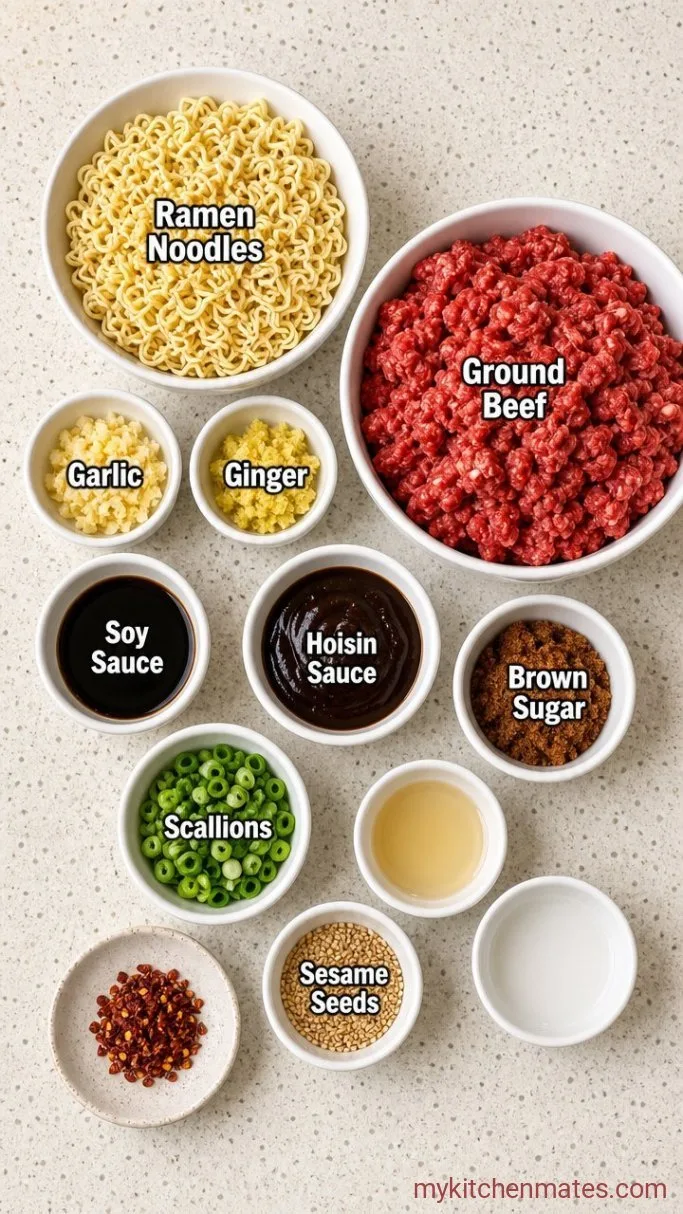
- 8 oz ramen noodles, seasoning packet discarded: cook them just shy of al dente so they finish in the sauce
- 1 lb ground beef: 80/20 gives the best flavor and browning
- 1 tbsp neutral oil: vegetable or canola
- 3 cloves garlic, minced: use a microplane if you want it to disappear into the sauce
- 1 tsp grated fresh ginger: a microplane works here too
- 1 to 2 tsp chili garlic sauce (like sambal oelek): optional; start with 1 tsp for a warm hum, not real heat
- 3 tbsp low-sodium soy sauce: regular works; just reduce the salt if you add extra
- 2 tbsp brown sugar: dark brown gives a deeper caramel note
- 1 tbsp hoisin sauce: adds a little sweet funk
- 1 tbsp rice vinegar: keeps the sauce from feeling heavy
- ¼ cup water
- 1 tbsp cornstarch mixed with 1 tbsp cold water: this is your slurry
- 2 tsp toasted sesame oil: stir in at the very end
- 3 scallions, sliced: white and green parts, plus more for serving
- Sesame seeds: for garnish
Variations / Substitutions
- Ground turkey or chicken: brown it in a little extra oil because lean poultry releases less fat; the texture stays soft, not crispy, but the sauce carries it.
- Noodles: any quick-cooking noodle works—lo mein, udon, or even rice vermicelli. If you use dry spaghetti, increase the water and boil time; the dish won’t be as fast but will still taste right.
- Brown sugar swap: honey works, though the sauce will be slightly thinner and less sticky; use 2 tbsp honey and simmer an extra minute.
- Spice: double the chili garlic sauce or add a pinch of red pepper flakes with the garlic.
- Hoisin: if you don’t have it, add an extra teaspoon of brown sugar and a tiny drip of molasses for depth.
Ground Turkey Fried Rice is another dinner you’d probably love if you enjoy these noodles.
How To Make Mongolian Ground Beef Noodles
Step 1: Brown the Beef
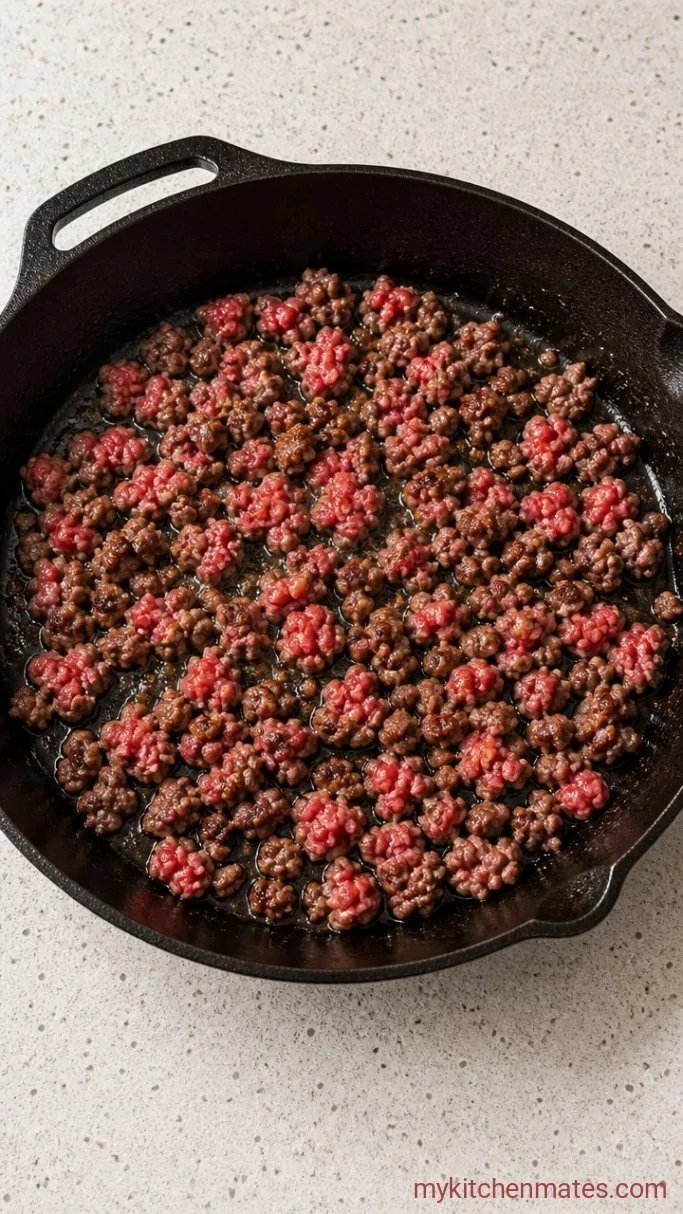
Set a large skillet over medium-high heat and add the 1 tbsp neutral oil. Crumble in the 1 lb ground beef and press it into an even layer. Let it cook without stirring for about 4 minutes, until a dark crust forms on the bottom, then break the meat apart and continue cooking until no pink remains, about 4 more minutes.
The skillet will sound loud and sizzly. You want deeply browned bits scattered through the crumble, not a pan of gray mush. That browning is what gives the whole dish its meaty backbone, so resist the urge to stir too soon.
Step 2: Stir the Sauce
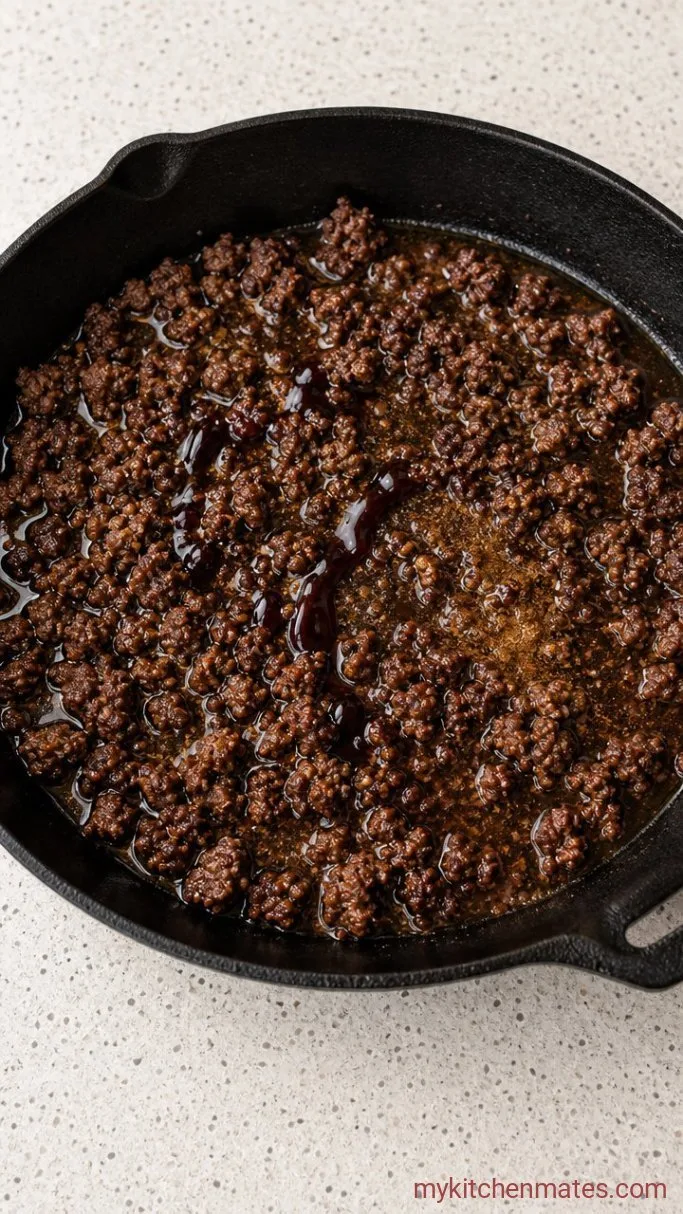
Push the beef to one side of the skillet and drop the 3 cloves minced garlic, 1 tsp grated ginger, and 1 to 2 tsp chili garlic sauce into the cleared spot. Stir just until fragrant, about 30 seconds. Pour in the 3 tbsp soy sauce, 2 tbsp brown sugar, 1 tbsp hoisin, 1 tbsp rice vinegar, and ¼ cup water, then stir everything together and bring to a simmer.
While that simmers, mix the 1 tbsp cornstarch with 1 tbsp cold water to make a smooth slurry. Pour it into the pan while stirring constantly. Cook until the sauce thickens and coats the back of a spoon, about 2 minutes. It will go from thin and watery to glossy and sticky, and the kitchen will smell like sweet soy and ginger.
Step 3: Cook the Noodles
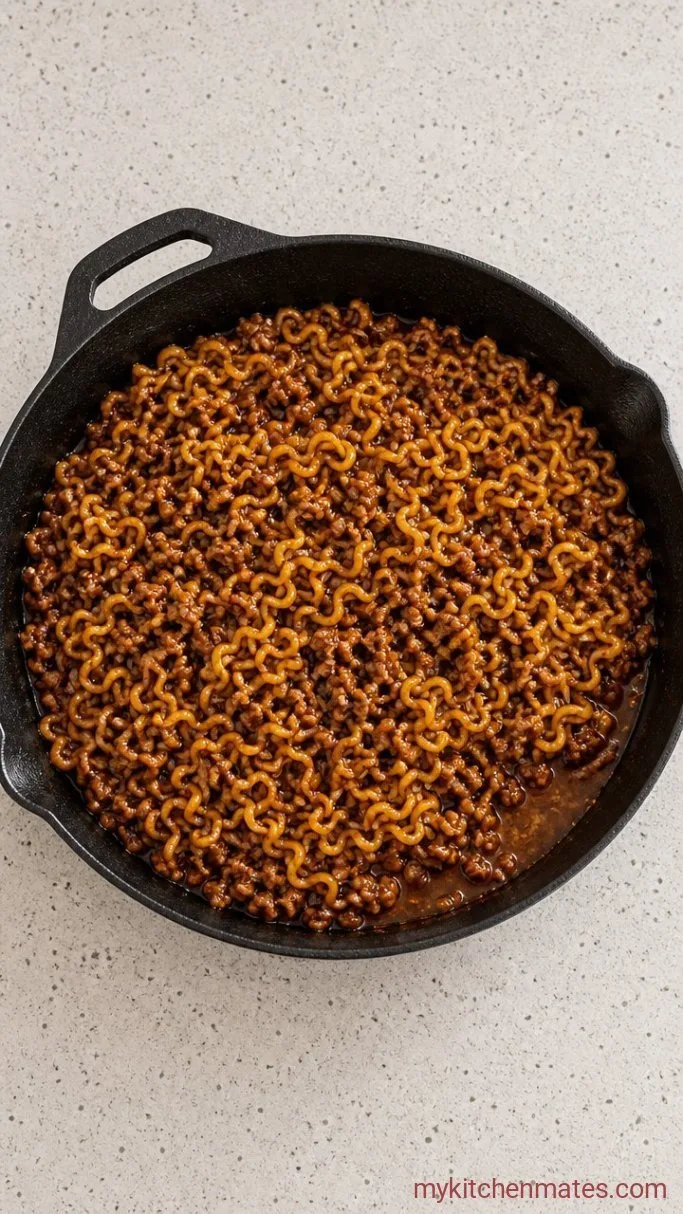
While the beef browned and the sauce simmered, you should have put a pot of water on to boil. Drop the 8 oz ramen noodles into the boiling water and cook according to the package, usually 3 to 4 minutes. Drain them but leave a little pasta water clinging to the strands.
The noodles should be slightly underdone now because they’ll soak up more sauce in the skillet. Cooking them all the way through risks a mushy texture once you toss everything together, so pull them a minute early.
Step 4: Toss and Serve
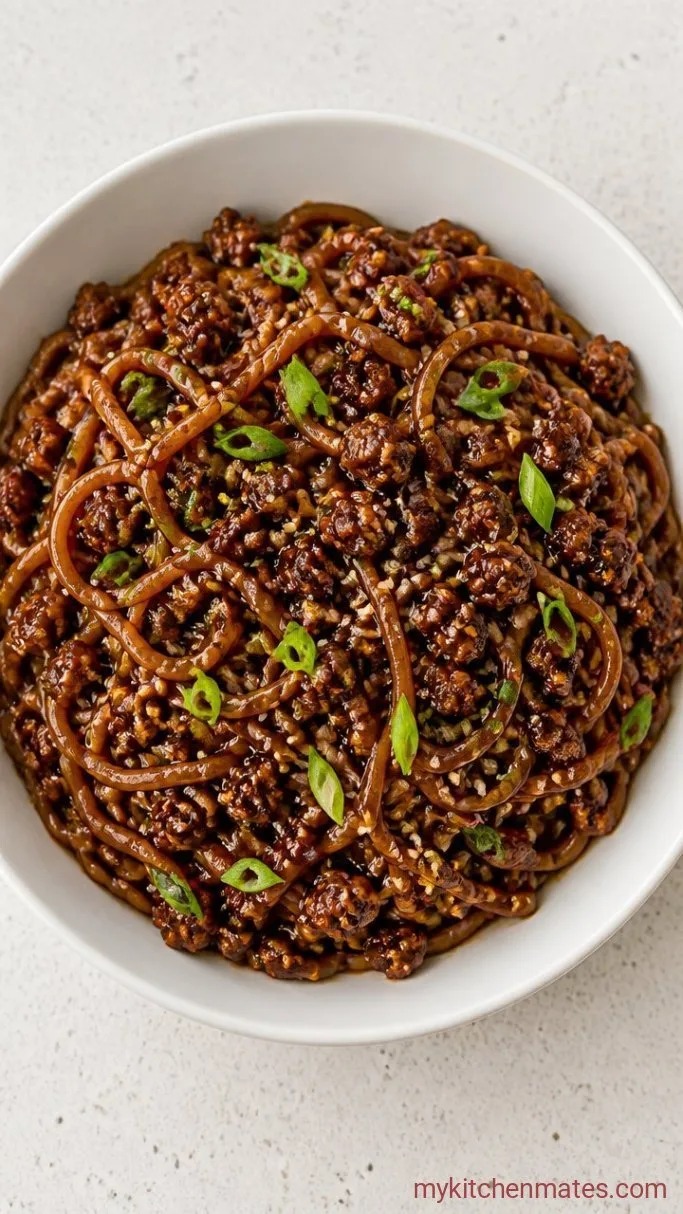
Add the drained noodles and 2 tsp sesame oil directly into the skillet with the beef and sauce. Use tongs to toss until every noodle is coated and the sauce appears deep brown and even. Scatter in the sliced scallions and give the pan one last toss.
Pile the noodles into wide bowls and finish with a generous shower of sesame seeds and extra scallion slices if you like. Serve right away while the noodles are hot and glossy, and let everyone dig in.
Tips for the Best Mongolian Noodles
- Use the widest skillet you own.: A crowded pan steams the beef instead of browning it; keep the meat in a single layer for those crispy edges.
- Grate the garlic and ginger fine.: A microplane makes them almost melt into the sauce, so no one bites into a raw chunk.
- If the sauce tightens too much after adding noodles, splash in a tablespoon of the pasta water.: The starch loosens it back to a silky glaze without watering down the flavor.
- Don’t skip the sesame oil at the end.: It’s not a cooking oil; its toasty note is what makes the dish taste finished.
Scale it for a crowd:
| Servings | Ground Beef | Ramen Noodles | Soy Sauce | Brown Sugar |
|---|---|---|---|---|
| 4 (as written) | 1 lb | 8 oz | 3 tbsp | 2 tbsp |
| 6 | 1.5 lb | 12 oz | 4.5 tbsp | 3 tbsp |
| 8 | 2 lb | 16 oz | 6 tbsp | 4 tbsp |
All other liquid ingredients scale by the same factor, and you’ll need a larger skillet for 8 servings to keep the beef browning properly.
Storing Leftovers
- Refrigerate: store in an airtight container up to 3 days. The noodles will absorb more sauce overnight, so it tastes even richer the next day.
- Reheating: warm the mixture in a skillet with a splash of water over medium-low heat, tossing until loosened. A microwave works, but cover with a damp paper towel so the beef doesn’t dry out.
What To Serve With Mongolian Ground Beef Noodles
A cold, crunchy side balances the sticky noodles. Quick cucumber ribbons dressed with rice vinegar, or steamed broccoli with a drizzle of sesame oil, both work. A fried egg on top adds richness if you want to turn it into a bigger meal.
Frequently Asked Questions
Can I use a different noodle?
Yes. Lo mein, udon, or even wide rice noodles cook quickly and hold the sauce well. If you only have dry spaghetti, you’ll need to extend the total time by about 8 minutes but the flavor stays the same.
How do I make it spicier?
Double the chili garlic sauce in the stir step, or add a pinch of red pepper flakes. You can also serve it with a side of sriracha so everyone controls their own heat.
My sauce didn’t thicken. What went wrong?
The cornstarch slurry likely sat too long before you poured it in; mix it again right before adding. If the sauce still seems thin, let it bubble for another minute until it visibly thickens.
Can I freeze this?
Freezing isn’t ideal because the noodles turn mushy when thawed. The beef and sauce freeze fine on their own for up to a month; cook fresh noodles the day you reheat.
Mongolian Ground Beef Noodles Recipe
Ingredients
Method
- Heat oil in a large skillet over medium-high. Add beef in an even layer and cook undisturbed 4 minutes, then break apart and brown fully, about 4 more minutes.
- Move beef to one side, add garlic, ginger, and chili garlic sauce; cook 30 seconds. Stir in soy sauce, brown sugar, hoisin, vinegar, and water; bring to a simmer. Add cornstarch slurry, stirring until sauce thickens, about 2 minutes.
- Meanwhile, boil noodles according to package until just underdone. Drain, reserving a little water.
- Add noodles and sesame oil to the skillet; toss to coat. Stir in scallions, then serve with sesame seeds and more scallions.
Notes
