
Sticky Miso Salmon Bowl

These sticky miso salmon bowls are a weeknight staple that tastes like something you’d get at a restaurant, but comes together in under 30 minutes. The fish gets a quick sear in a sweet and salty glaze that caramelizes into a crust, while the rice and crunchy vegetables keep the whole bowl bright and satisfying.
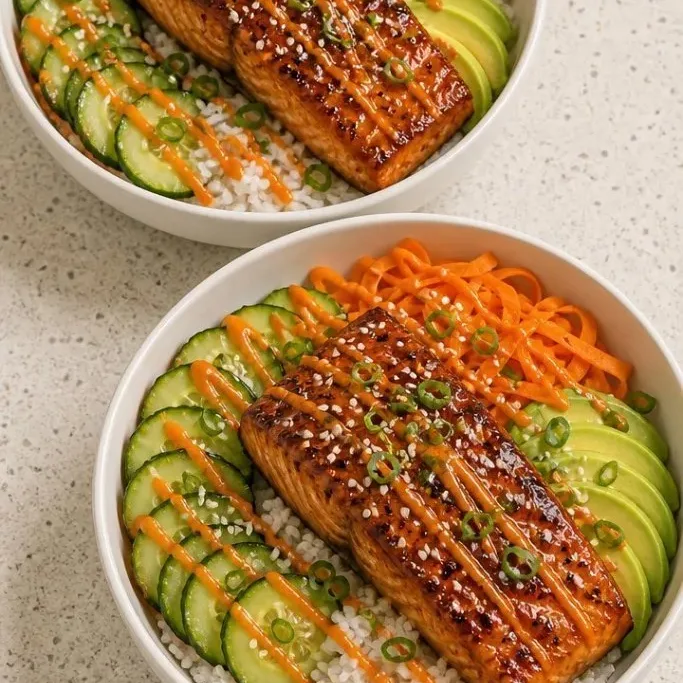
You can use any cooked grain you have on hand, and the toppings are totally flexible. It’s the kind of meal that feels a little special without asking much from you.
What Makes This Bowl So Good
The miso glaze is the real MVP. It’s savory, faintly sweet, and when it hits the hot pan, it thickens into a glossy coating that clings to every piece of salmon. I use white miso because it’s mellow and lets the fish shine, but a darker miso would give you a deeper, more intense flavor if that’s what you’re after.
I also love how customisable the bowl is. You can pile on thin slices of cucumber for crunch, creamy avocado to balance the salt, and a scatter of sesame seeds for a little nuttiness. It never gets boring.
Ingredients
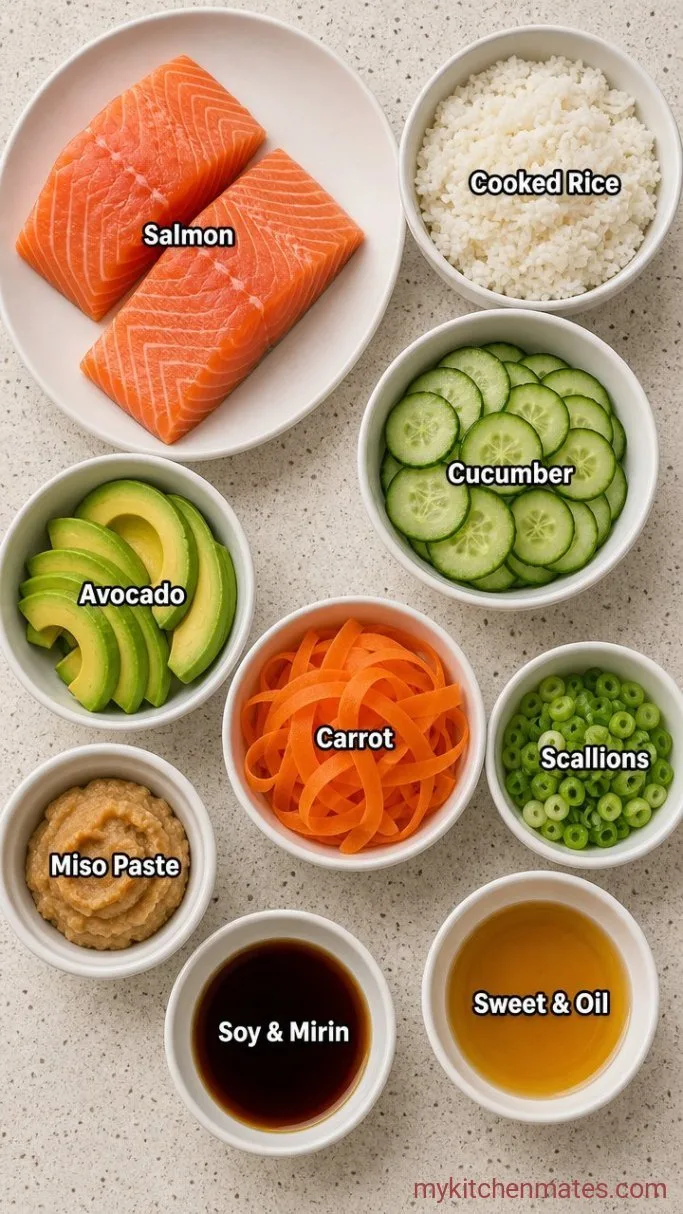
- 2 skinless salmon fillets (about 5 oz / 140 g each): look for even thickness so they cook at the same speed
- 2 tbsp white miso paste: use any miso you have, but red miso will be saltier
- 1 ½ tbsp mirin: this sweet sherry helps the glaze caramelize
- 1 ½ tbsp soy sauce or tamari: for that deep umami hit
- 1 tsp honey or maple syrup: adds just enough sweetness to balance the salt
- 1 tsp sesame oil: for a toasty note
- 1 tsp rice vinegar: brightens up the glaze a touch
- 2 cups cooked white or brown rice: warm or at room temperature
- 1 small cucumber: thinly sliced
- 1 ripe avocado: sliced
- 1 medium carrot: peeled into ribbons or shredded
- 2 scallions: thinly sliced
- Sesame seeds and a drizzle of sriracha mayo for finishing (optional)
Variations / Substitutions
- Swap the protein: skinless chicken thighs or extra-firm tofu work wonderfully; just adjust the cook time.
- No mirin?: use 1 tbsp rice vinegar plus 1 tsp sugar; the glaze won’t be quite as shiny but the flavor is close.
- Add some heat: stir ½ tsp sriracha or gochujang into the glaze.
- Go gluten-free: pick tamari instead of soy sauce; the miso paste itself is often gluten-free but check the label.
- Dairy-free note: the bowl is naturally dairy-free unless you add butter, so it’s already set.
Bright and Herby Chimichurri Sauce is the sauce we like to serve with this bowl.
How to Make Sticky Miso Salmon Bowl
Step 1: Mix the Glaze
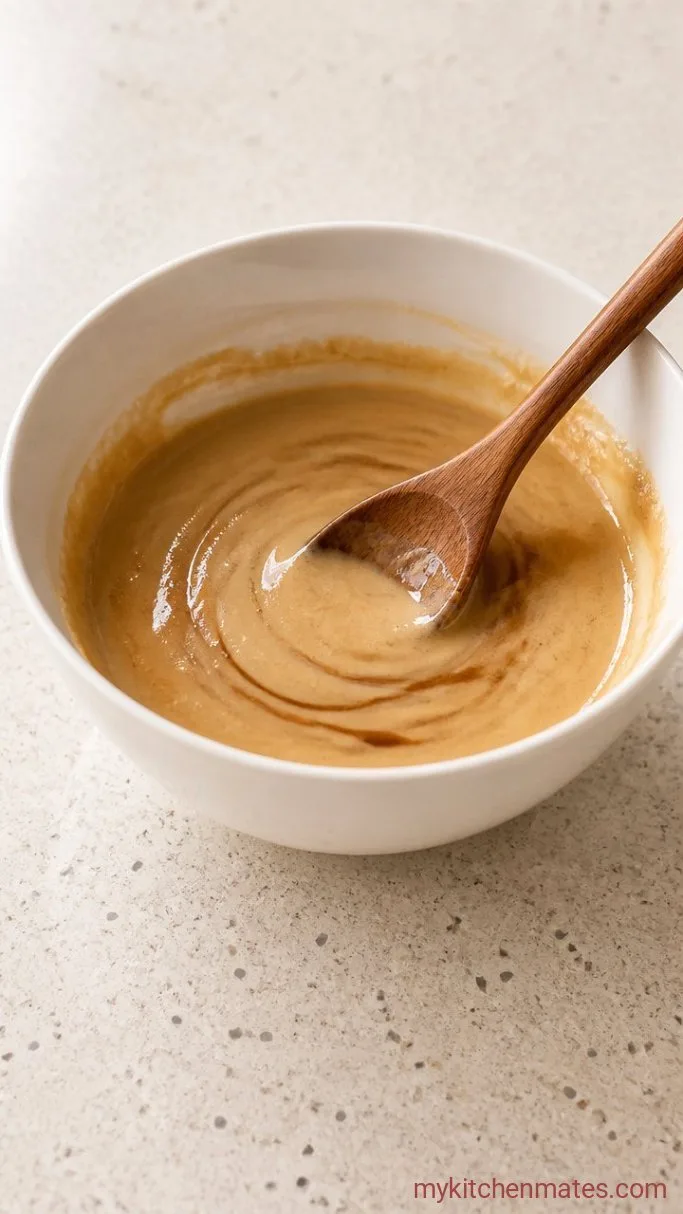
In a small bowl, whisk together the 2 tbsp white miso paste, 1 ½ tbsp mirin, 1 ½ tbsp soy sauce, 1 tsp honey, 1 tsp sesame oil, and 1 tsp rice vinegar until completely smooth. It will be a thick but pourable paste. Taste and adjust: if you like it sweeter, add a tiny bit more honey.
You can make this glaze up to 2 days ahead and keep it covered in the fridge. Just give it a quick stir before using because the miso can settle.
Step 2: Sear the Salmon
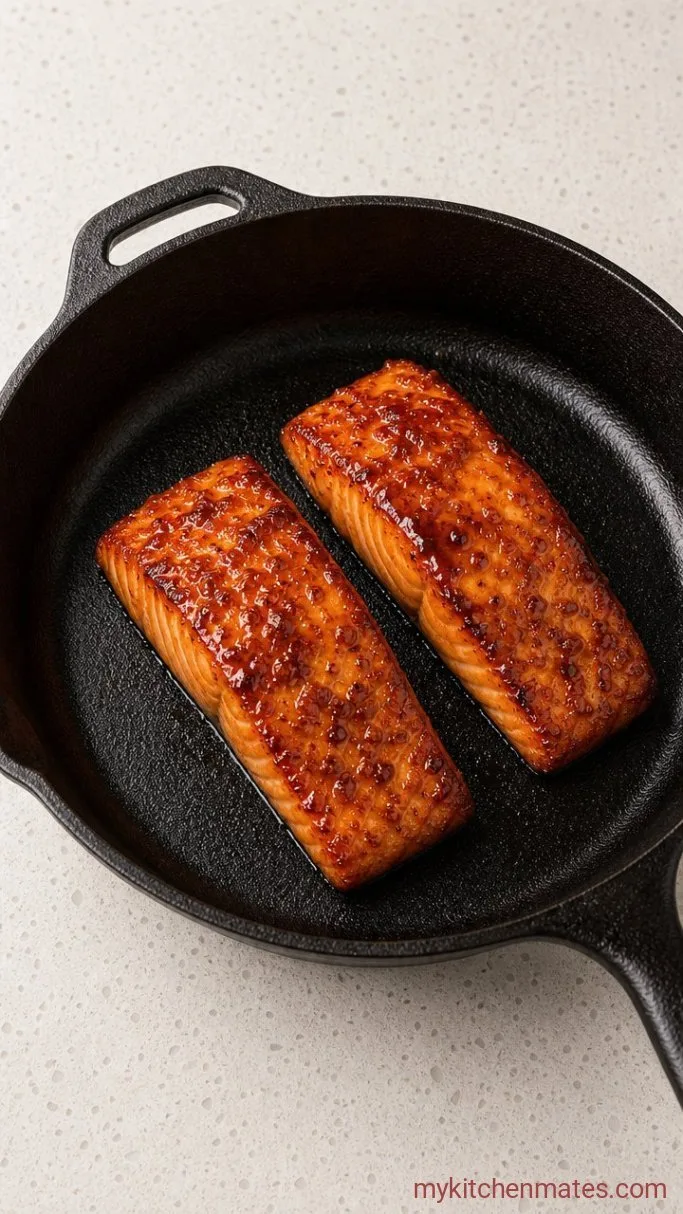
Pat the salmon fillets dry with paper towels and season both sides very lightly with salt, remembering the glaze is salty too. Place a nonstick or well-seasoned cast-iron skillet over medium-high heat and let it get hot for about 1 minute. Add a small drizzle of neutral oil, then lay the salmon in presentation-side down. Cook undisturbed for 3 minutes.
Flip the fillets and spoon half the miso glaze over the cooked side. Cook for another 2 to 3 minutes, spooning the remaining glaze over the top, until the salmon reaches about 125°F (52°C) for medium or flakes easily with a fork. The glaze will bubble and darken quickly, so keep an eye on it; if it starts to scorch, lower the heat a touch.
Step 3: Assemble the Bowls
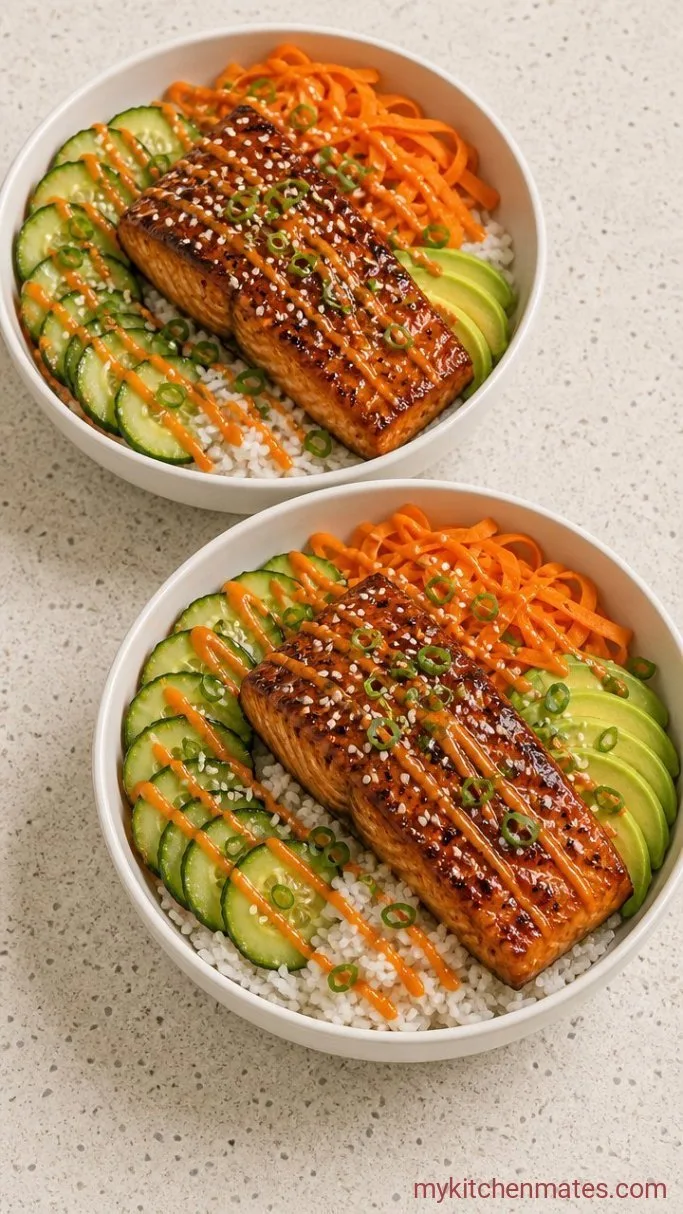
Spoon the warm rice into two bowls. Slice the salmon fillets on a slight angle and arrange them over the rice. Pile the sliced cucumber, avocado, and carrot ribbons on the side, then scatter the scallions and sesame seeds over everything.
If you like, finish with a zigzag of sriracha mayo or a few sheets of torn nori. Serve right away while the salmon is still hot and the avocado is creamy.
A Few Tips for the Best Bowl
- Get your rice started first. If you’re cooking from scratch, put it on before you do anything else so it’s ready when the salmon finishes.
- Pat the salmon very dry. Surface moisture stops a good sear and can make the glaze slide right off the fish.
- The glaze burns fast, so watch the pan closely during that last minute. If it starts to smoke, pull the salmon off the heat immediately.
- Slice your toppings while the salmon cooks. It keeps the whole dinner moving and means you’ll eat faster.
Cook times by salmon thickness:
| Salmon Thickness | First Side Time | Second Side Time | Total Time |
|---|---|---|---|
| ½ inch (1.3 cm) | 2 mins | 1 min | 3 mins |
| 1 inch (2.5 cm) | 3 mins | 2-3 mins | 5-6 mins |
| 1 ½ inch (3.8 cm) | 4 mins | 3-4 mins | 7-8 mins |
These times are a guide; always check for flaking as the final test.
Storing Leftover Bowls
Store any leftover salmon and rice in separate airtight containers in the fridge for up to 3 days. The vegetables are best fresh, so slice extra right before serving. To reheat, warm the salmon gently in a covered skillet over low heat with a tiny splash of water, or in the microwave at half power. The glaze may loosen a bit but it will still taste great.
Frequently Asked Questions
Can I use frozen salmon?
Yes, just thaw it completely in the fridge and pat it very dry before you cook. Water from frozen salmon tends to thin the glaze, so take extra care to dry it well.
How do I stop the miso glaze from burning?
Lower the heat to medium after you flip the salmon, and keep a close eye on the pan. If you see the glaze darkening too quickly, add a tablespoon of water to the pan to cool it down.
Can I bake the salmon instead?
Absolutely. Arrange the fillets on a lined baking sheet, spoon the glaze over them, and bake at 400°F (200°C) for 12 to 15 minutes, until the fish flakes easily. The glaze won’t caramelize quite as much without the direct pan contact, but it’s still delicious.
Is this bowl gluten-free?
It can be. Use tamari instead of soy sauce and check that your miso paste is gluten-free (many are). The other ingredients are naturally gluten-free.
Sticky Miso Salmon Bowl Recipe
Ingredients
Method
- Whisk the miso paste, mirin, soy sauce, honey, sesame oil, and rice vinegar until smooth.
- Pat the salmon dry and season lightly with salt. Sear in a hot, oiled skillet over medium-high heat for 3 minutes. Flip, spoon half the glaze over the cooked side, and cook 2-3 minutes more, adding the rest of the glaze, until the salmon flakes easily.
- Divide the rice between bowls. Slice the salmon and arrange on top with cucumber, avocado, carrot, scallions, and sesame seeds. Add sriracha mayo if using and serve right away.
Notes
