
Overnight French Toast Casserole

This make-ahead French toast casserole turns a lazy weekend breakfast into something you pull from the fridge and pop in the oven. It’s all the custardy, cinnamon warmth of classic French toast, but built to soak overnight so the morning is effortless.
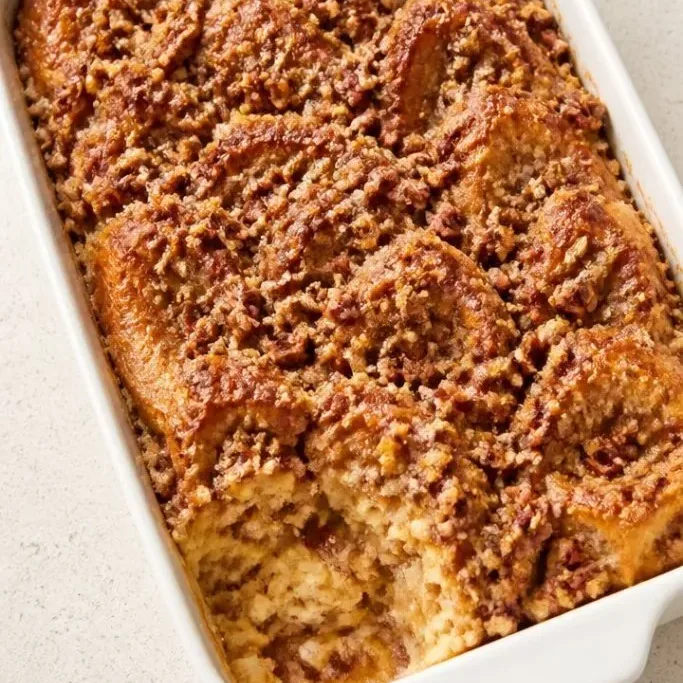
A buttery pecan crumble bakes right on top, and the middle stays soft while the edges go crisp. It feels special, but it’s just bread, milk, eggs, and a few pantry staples you already have.
Why I Keep Coming Back to This One
I love a breakfast that does the work while I sleep. The bread drinks up the custard overnight and puffs into tender, almost pudding-like layers, while the top sets into a crackly brown sugar crust.
There’s no standing at the stove flipping slices. You slide it into the oven, and 45 minutes later you have a golden, fragrant dish that feeds a crowd. The pecans toast as it bakes, and the whole kitchen smells like cinnamon and browned butter.
Ingredients
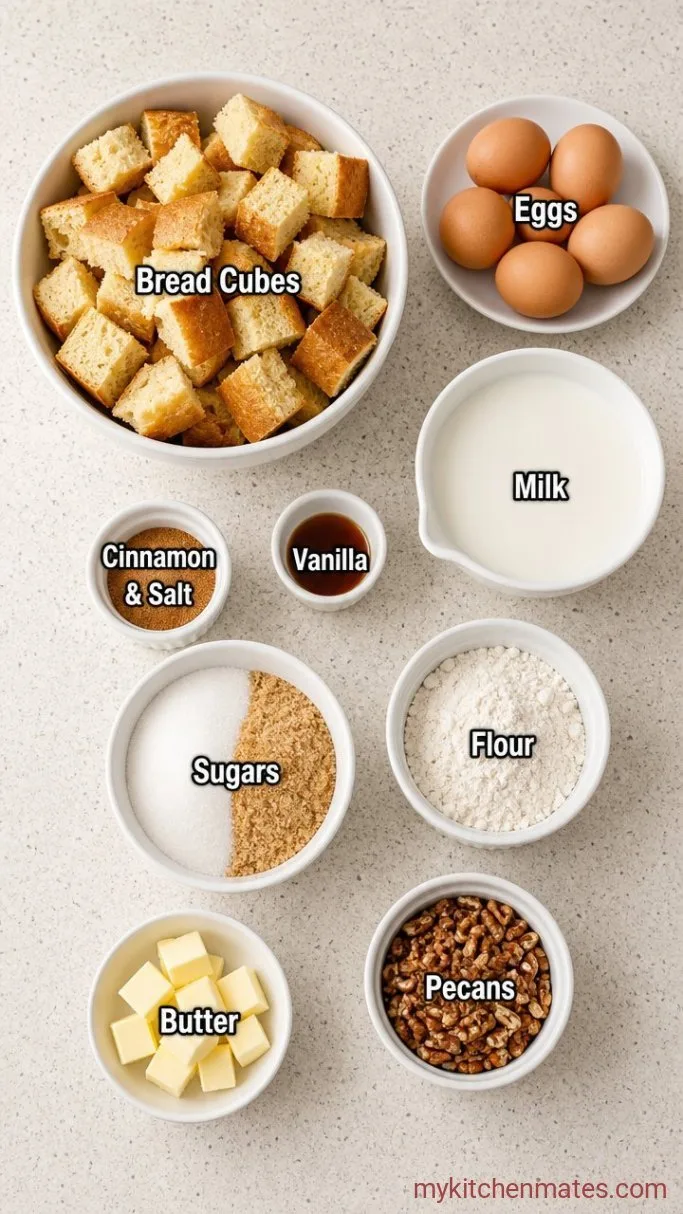
- 1 ½ lbs brioche or challah, cut into 1-inch cubes: day-old bread soaks up the custard without turning to mush
- 6 large eggs: they give the custard structure and richness
- 2 ½ cups whole milk: whole milk makes the custard creamy; 2% works but the texture will be lighter
- ½ cup granulated sugar: just enough to sweeten without making it dessert
- 2 tsp vanilla extract: use real vanilla if you have it
- 1 tsp ground cinnamon: the warmth that ties it all together
- ¼ tsp salt: a small pinch balances the sweetness
- ¾ cup packed light brown sugar: for the crumble topping
- ½ cup all-purpose flour: helps the topping clump into buttery bits
- 6 tbsp cold unsalted butter, cut into small cubes: cold butter makes the crumble crisp
- ½ cup chopped pecans: they toast as the casserole bakes and add crunch
Variations / Substitutions
- Bread swap: croissants or a sturdy sourdough both work. Croissants will be richer and softer, sourdough a little chewier.
- Dairy-free: use oat milk and a plant-based butter stick in the crumble. The custard won’t be quite as creamy, but it still sets well.
- Nut-free: skip the pecans and add ⅓ cup old-fashioned oats to the crumble for a similar crunch.
- Add-ins: fold in 1 cup fresh blueberries or chocolate chips with the bread cubes before pouring the custard.
Sausage Pancake Muffins go perfectly with this french toast casserole for a cozy morning or afternoon.
How to Make Overnight French Toast Casserole
Step 1: Soak the Bread in Custard
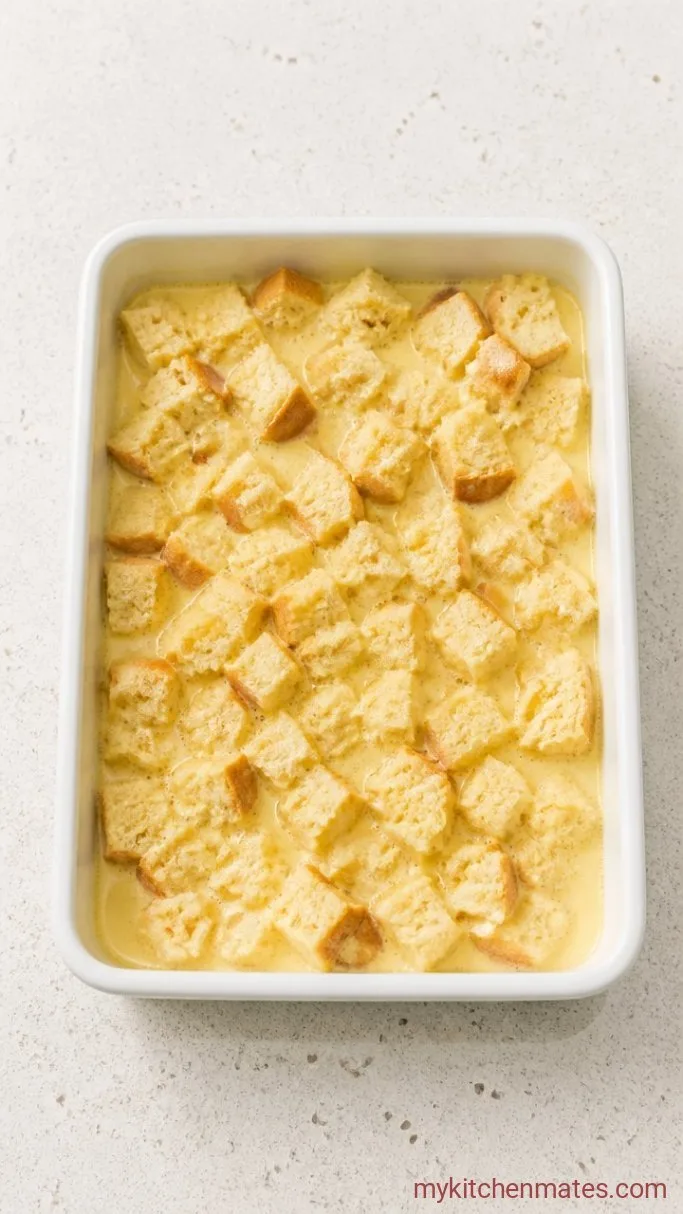
Whisk together the 6 eggs, 2 ½ cups whole milk, ½ cup granulated sugar, 2 tsp vanilla, 1 tsp cinnamon, and ¼ tsp salt in a large bowl until smooth. Put the bread cubes into a greased 9×13-inch baking dish, then pour the custard evenly over the top. Use your hands or a spatula to press the bread down gently so every piece gets soaked, about 30 seconds of pressing until no dry spots peek through. Cover the dish tightly with plastic wrap and refrigerate for at least 8 hours or up to overnight.
The custard will look like loose eggnog at first, but after an hour in the fridge the bread starts to absorb it. By morning the cubes will be plump and the liquid will be almost gone. If you see a few puddles in the corners, that’s fine.
Step 2: Make the Pecan Crumble
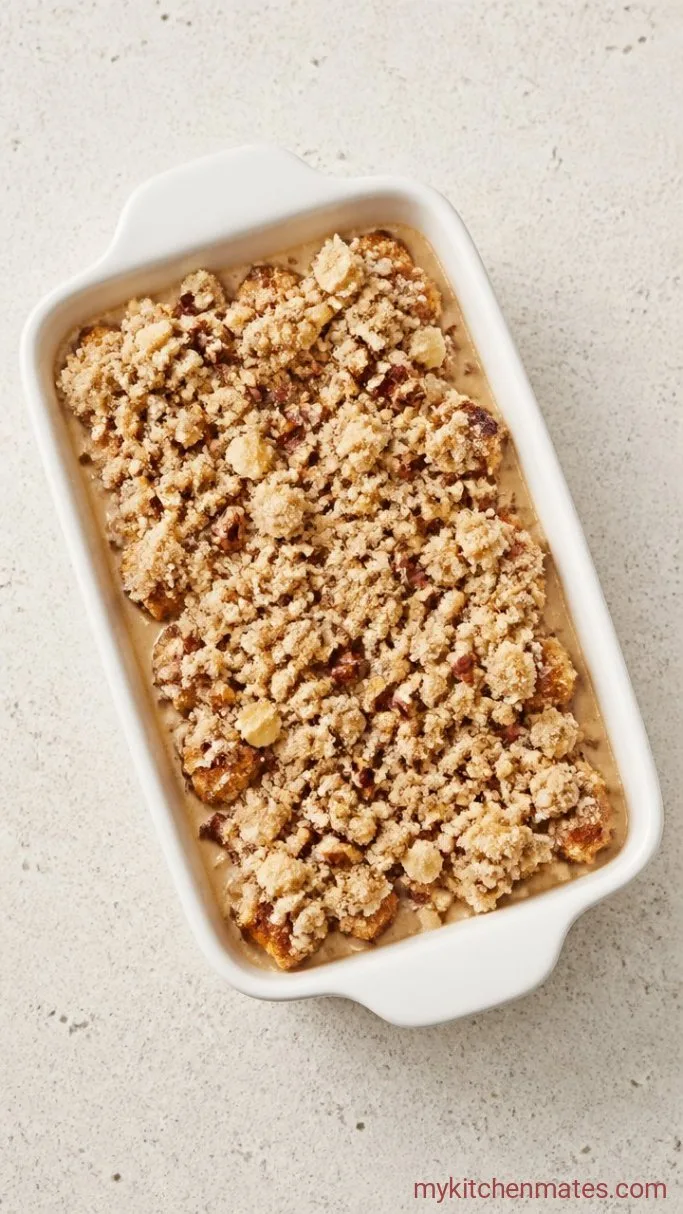
The next morning, remove the casserole from the fridge and let it sit on the counter while the oven preheats to 350°F (175°C). In a medium bowl, stir together the ¾ cup brown sugar, ½ cup flour, and a pinch of salt. Drop in the 6 tbsp cold butter cubes and work them in with your fingers or a pastry cutter until the mixture looks like damp sand with some pea-sized bits. Toss in the ½ cup pecans and crumble the mixture evenly over the soaked bread.
You’re looking for small clumps that will melt and crisp into a crunchy top, not a fine powder. If the butter softens too much, pop the bowl in the fridge for 5 minutes before sprinkling.
Step 3: Bake Until Golden and Puffed
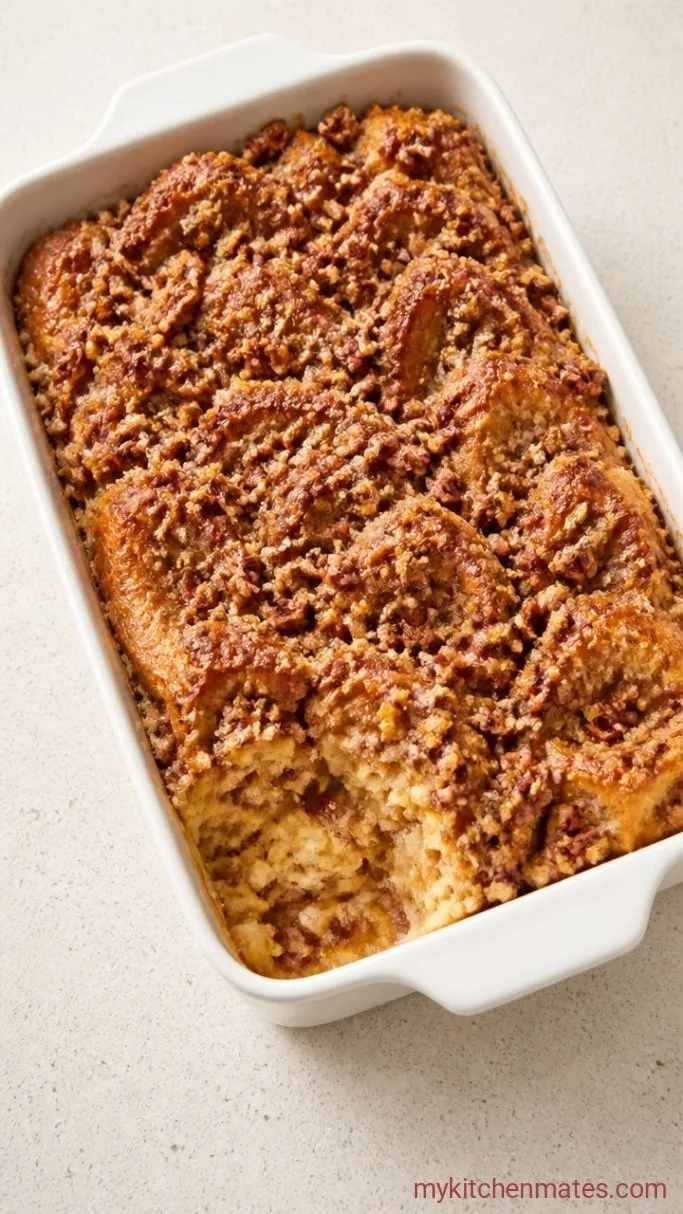
Slide the dish into the preheated oven and bake for 40 to 45 minutes. The casserole is done when the top is deeply golden brown, the edges are bubbling just a little, and a knife inserted near the center comes out clean (no runny custard clinging to it). Let it rest for 5 minutes, then scoop generous portions and serve warm with a drizzle of maple syrup.
The kitchen will smell like a bakery at this point, and the crumble will shatter under a spoon. That rest time helps the custard set up so each slice holds its shape but stays soft inside.
Tips for a Reliable Casserole
- Use day-old bread. Fresh, soft bread can turn gummy after soaking overnight. If all you have is fresh, spread the cubes on a baking sheet and toast them at 300°F (150°C) for 10 minutes to dry them out a little before assembling.
- Press the bread firmly after pouring the custard. That motion helps the liquid reach every cube, and it’s the difference between a soggy middle and a uniform texture.
- Let the dish sit at room temperature while the oven heats. Taking the chill off the glass or ceramic dish helps it bake more evenly, especially if you’re using glass, which heats more slowly than metal.
- A glass baking dish will give you a slightly softer center and crispier edges. A metal pan bakes more evenly throughout. Both work, just watch the time.
Bake times by pan:
| Pan Type | Size | Bake Time |
|---|---|---|
| Glass | 9×13 inch | 40–45 minutes |
| Metal | 9×13 inch | 40–45 minutes |
| Ceramic | 9×13 inch | 45–50 minutes |
| Glass/Metal | 8×8 inch (deeper) | 45–50 minutes |
Storing Leftovers
- Refrigerate: cover any leftover casserole and keep it in the fridge for up to 3 days. The topping loses some crunch, but the custard stays tender.
- Reheating: warm individual portions in the microwave for 1 minute, or heat the whole dish in a 300°F (150°C) oven for 10 minutes to help the top crisp back up a little.
What to Serve with French Toast Casserole
Fresh berries cut through the richness, especially when they’re a little tart. A handful of blueberries or sliced strawberries tossed with a teaspoon of sugar and left to macerate for 5 minutes works beautifully. Crispy bacon or breakfast sausage adds a salty contrast, and a dusting of powdered sugar plus warm maple syrup is never a bad idea. A dollop of Greek yogurt offsets the sweet topping nicely if you want something less sugary.
Frequently Asked Questions
Can I make this without eggs?
No, eggs are what sets the custard. Without them you’d get a soggy, unbaked bread pudding. For an egg-free version, you’d need a specialty egg replacer and likely a shorter soak, and the texture won’t be the same.
Why did my casserole turn out too wet?
Too much liquid or the bread didn’t soak long enough. Make sure you measure the milk carefully and press the bread down firmly so it absorbs evenly. If you use a very soft bread that’s not day-old, it can collapse instead of holding the custard.
Can I assemble this and freeze it before baking?
Yes. Prepare through the soaking step (Step 1), cover tightly, and freeze for up to 1 month. Thaw overnight in the fridge, then top with the crumble and bake as directed. The texture will be slightly denser but still very good.
What if I don’t have pecans?
Replace them with walnuts, sliced almonds, or just leave them out. The crumble still bakes into a crunchy brown sugar crust without nuts.
Overnight French Toast Casserole Recipe
Ingredients
Method
- Grease a 9×13-inch baking dish. Whisk the eggs, milk, granulated sugar, vanilla, cinnamon, and salt together. Place the bread cubes in the dish, pour the custard over, and press down firmly so all the bread is soaked. Cover and refrigerate at least 8 hours or overnight.
- The next morning, remove the casserole from the fridge. Preheat the oven to 350°F (175°C). Mix the brown sugar, flour, and a pinch of salt. Work the cold butter in with your fingers until crumbly, then stir in the pecans.
- Sprinkle the crumble evenly over the soaked bread. Bake for 40–45 minutes, until golden and a knife inserted near the center comes out clean. Let rest 5 minutes, then serve warm.
Notes
