
Lemon Poppyseed Sourdough Bread (No Yeast)

This lemon poppyseed sourdough bread is a sunshiny twist on classic sandwich bread, with bright citrus zest and a delicate crunch from poppy seeds. It gets all its rise from an active sourdough starter—no commercial yeast needed—so you get that subtle tang and a tender crumb that stays soft for days.

The dough comes together in one bowl, and the hands-off fermentation does most of the work while you go about your day. Finish it with a quick lemon glaze and you’ve got a loaf that’s equally at home on the breakfast table or sliced for afternoon toast.
Why This Lemon Poppyseed Loaf Works
The yogurt and butter give it a soft, almost brioche-like texture without the effort. Lemon zest brightens every slice, and the poppy seeds add that tiny pop of texture that keeps you coming back.
It’s a naturally leavened bread that still feels special enough for company, but it’s sturdy enough for weekday lunches. And because there’s no commercial yeast, the flavor has a quiet depth you don’t get from a quick bread.
Ingredients
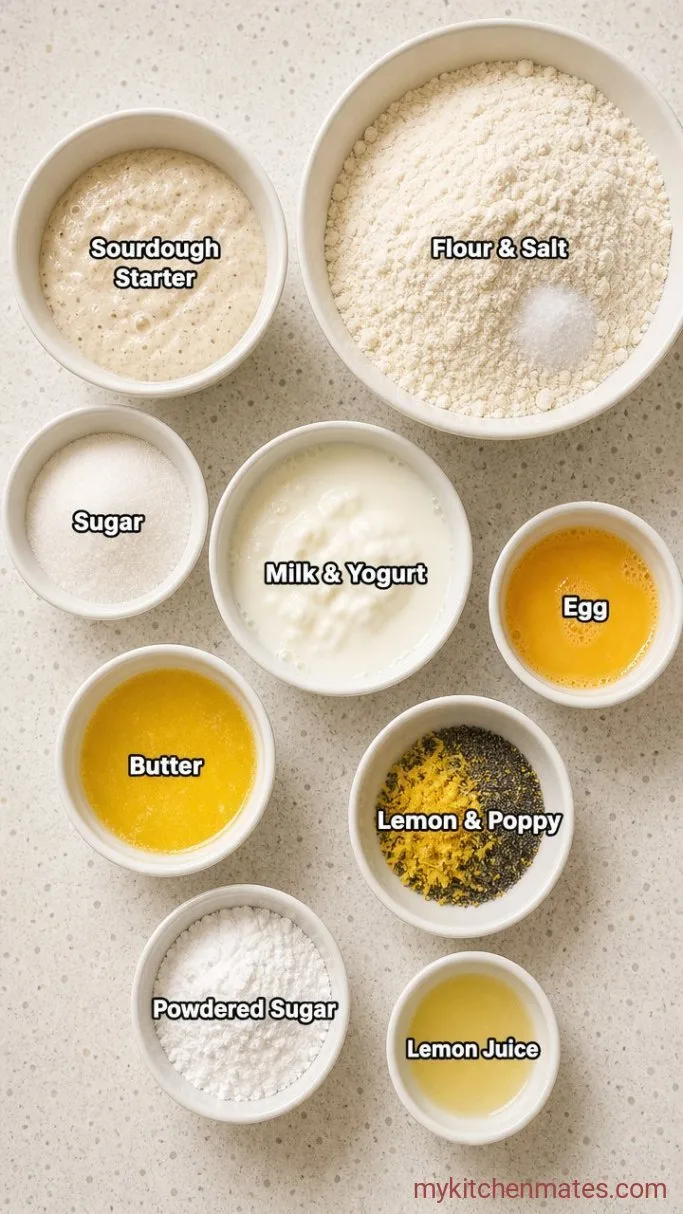
- 1/2 cup (100 g) active sourdough starter: fed and bubbly, at its peak
- 3 1/4 cups (390 g) bread flour: plus more for dusting
- 1/4 cup (50 g) granulated sugar
- 1 1/2 tsp fine sea salt
- 1/4 cup (60 ml) whole milk, lukewarm
- 1/4 cup (60 g) plain whole-milk yogurt, room temperature
- 1 large egg, room temperature, lightly beaten
- 3 tbsp unsalted butter, melted and cooled slightly
- 2 tbsp lemon zest: from about 2 large lemons
- 1 tbsp poppy seeds
For the glaze:
- 1/2 cup (60 g) powdered sugar, sifted
- 1 to 2 tbsp fresh lemon juice
Variations / Substitutions
- Orange zest: swap the lemon zest for orange and use orange juice in the glaze for a softer citrus note.
- Buttermilk: replace the milk and yogurt with 1/2 cup total buttermilk.
- Chia seeds: if you’re out of poppy seeds, chia seeds add a similar crunch and a little extra nutrition.
Creamy Lemon Lentil Soup is a cozy soup to serve with this bread.
How To Make Lemon Poppyseed Sourdough Bread
Step 1: Mix the Dough
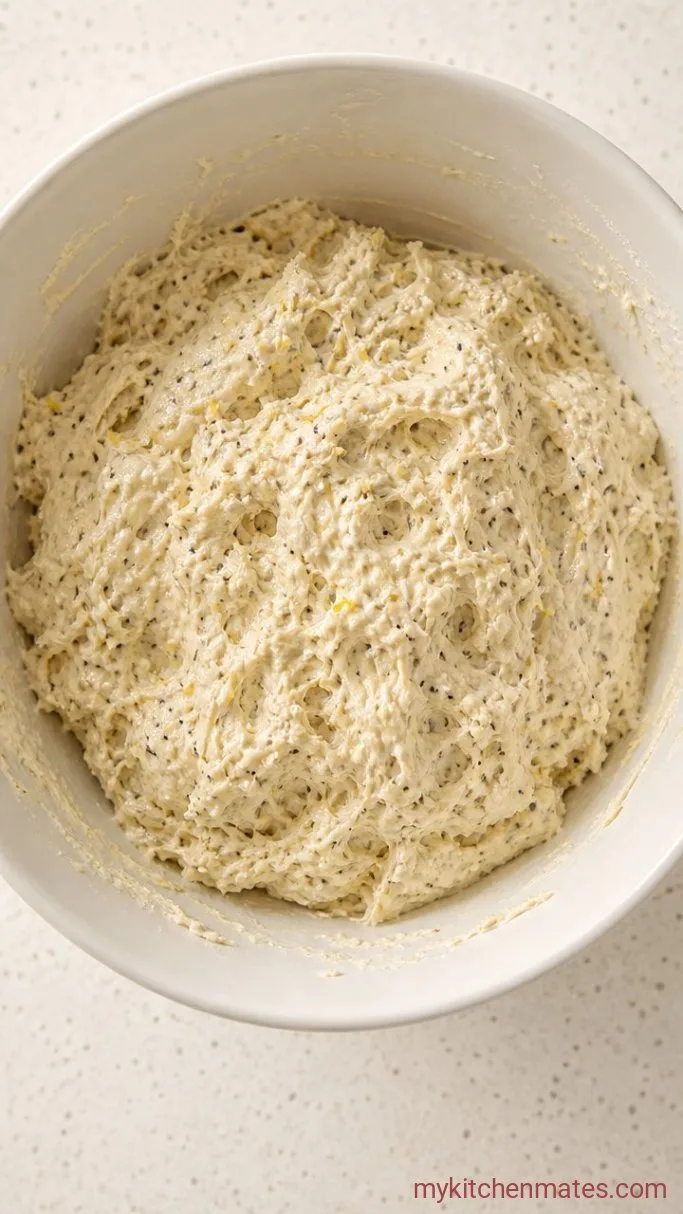
In a large bowl, whisk together the 1/2 cup starter, 1/4 cup milk, 1/4 cup yogurt, the beaten egg, melted 3 tbsp butter, and 1/4 cup sugar until smooth. Stir in the 2 tbsp lemon zest and 1 tbsp poppy seeds. Add the 3 1/4 cups bread flour and 1 1/2 tsp salt, then mix with a spatula or your hands just until no dry flour remains, about 2 minutes. Cover the bowl and let it rest for 30 minutes.
The dough will look shaggy and a bit sticky — that’s exactly what you want.
This brief rest, called an autolyse, lets the flour hydrate and kick-starts gluten development without any extra work.
Step 2: Stretch and Fold the Dough
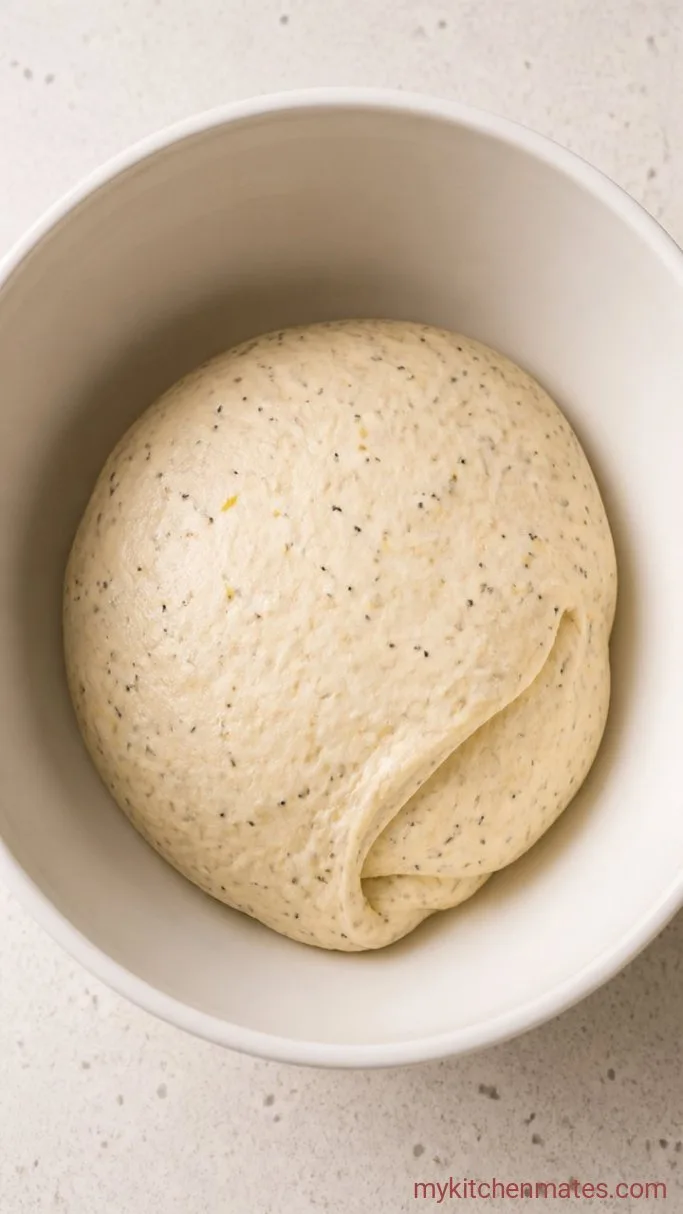
With wet hands, grab one side of the dough, stretch it upward, and fold it over the center. Rotate the bowl a quarter turn and repeat on all four sides. Cover and let the dough rest for 30 minutes. Repeat this stretching and folding 3 more times at 30-minute intervals — 4 sets in total.
After the final fold, leave the dough covered at room temperature (aim for around 72°F/22°C) to continue its bulk fermentation. Let it rise until nearly doubled in size and the surface looks puffy, about 2 to 3 more hours.
You’ll know it’s ready when the dough jiggles slightly when you shake the bowl and you can see a few bubbles on top. If it still feels dense and sluggish, give it another 30 minutes.
Step 3: Shape the Loaf
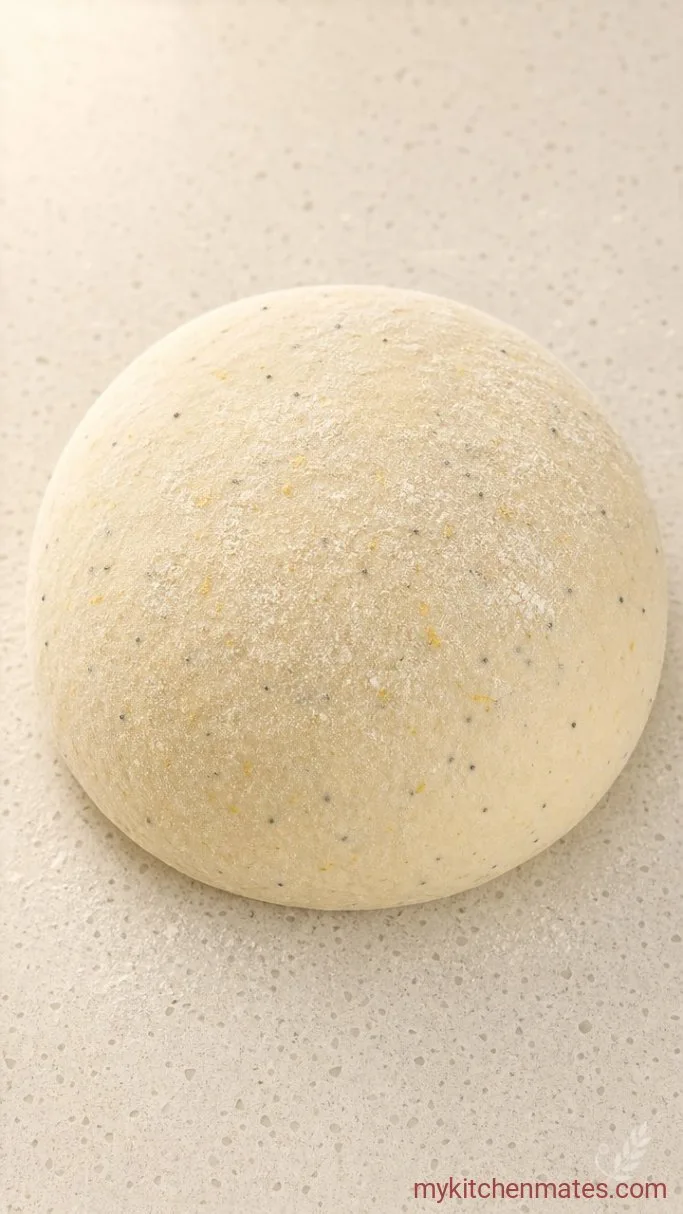
Lightly flour a work surface and turn the dough out. Pat it gently into a rectangle about the length of your loaf pan, then roll it up tightly starting from a short side, pinching the seam closed as you go. Tuck the ends under and place the dough seam-side down in a greased 9×5-inch loaf pan.
The top should feel smooth and taut with no loose flaps. If the dough resists and springs back, let it relax for 5 minutes, then finish shaping.
A snug shape helps the loaf rise upward rather than spreading sideways, giving you that tall, bakery-style crown.
Step 4: Proof the Loaf
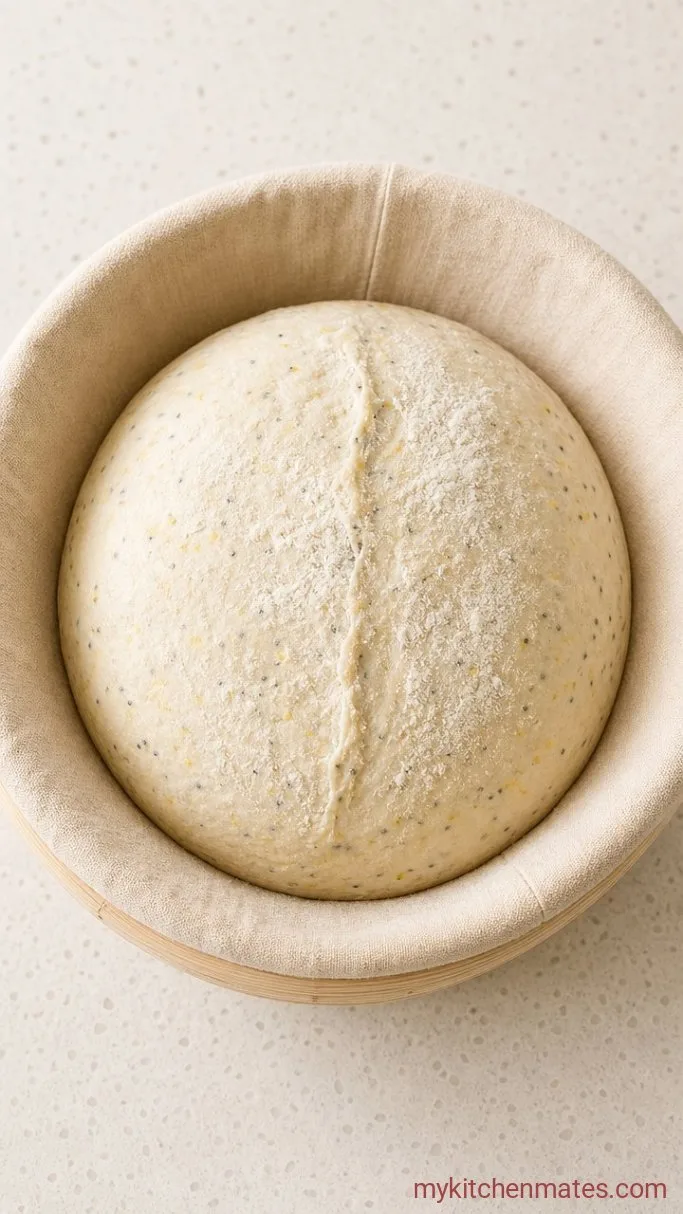
Cover the pan loosely and let the dough proof in a warm, draft-free spot. It’s ready when the dough crests about 1 inch above the rim of the pan, which usually takes 1.5 to 2 hours at a warm room temperature.
To test, poke the dough gently with a floured finger. If the indentation springs back slowly but remains slightly visible, your dough is right where it should be. If it springs back instantly, it needs more time. If the dough deflates, it’s overproofed — it will still bake but will be denser.
The top of the dough will look nicely rounded and slightly jiggly, a sign its structure is strong and ready for the oven.
Step 5: Bake the Loaf

About 30 minutes before you think the dough will be ready, place an oven rack in the center position and preheat the oven to 375°F (190°C). Once the loaf is proofed, uncover it and use a sharp lame or a very sharp knife to make a shallow slash straight down the center. Bake for 45 to 50 minutes, until the crust is a deep golden brown and an instant-read thermometer inserted into the center reads 190-195°F (88-91°C).
If you notice the top browning too quickly (which can happen with metal pans), tent the loaf loosely with foil after the first 30 minutes. Your kitchen will fill with the scent of warm lemon and butter.
Let the bread cool in the pan for 10 minutes, then carefully turn it out onto a wire rack. It’s important to let it cool completely before glazing, or the glaze will melt and run off.
Step 6: Glaze and Slice

In a small bowl, whisk together the 1/2 cup powdered sugar and 1 tbsp lemon juice until smooth. If the glaze seems too thick, add more lemon juice a few drops at a time until it’s pourable but still opaque. Drizzle the glaze back and forth over the cooled loaf, letting some drip down the sides.
The glaze will set into a shiny, crackly crust after about 10 minutes. Once set, use a serrated knife to slice the bread into thick slices.
Serve as is, or with softened butter. The contrast between the sweet-tart glaze and the tender, lemon-flecked crumb is what makes this loaf disappear fast.
A Few Tips for Sourdough Success
- Active starter is everything.: Feed your starter 4 to 6 hours before mixing; it should double in size and pass the float test (a dollop floats in water).
- Room-temperature ingredients matter.: Cold milk or egg can slow fermentation. Pull them from the fridge an hour ahead.
- Weigh your flour.: A kitchen scale gives you the correct hydration every time, and it’s faster than measuring cups.
- Embrace the stickiness.: This dough is supposed to be tacky. Resist adding extra flour during folds; wet hands keep it from clinging and a higher hydration dough yields that soft crumb.
- Cool completely before slicing.: Cutting into a warm loaf will smash the crumb and make it gummy. Let it cool for at least an hour.
Bake times by pan size and material:
| Pan Size | Material | Bake Time |
|---|---|---|
| 9×5-inch | Metal | 45-50 mins |
| 8.5×4.5-inch | Metal | 50-55 mins |
| 9×5-inch | Glass | 50-55 mins |
Storing and Freezing
Store the cooled bread in a paper bag or wrapped in a clean kitchen towel at room temperature for up to 3 days. For longer storage, slice and freeze in a zip-top bag for up to 3 months. Reheat slices in the toaster oven straight from the freezer — they come out crisp on the outside and soft inside.
What To Serve With Lemon Poppyseed Sourdough Bread
Spread thick slices with tangy lemon curd to double down on citrus, or toast and top with creamy scrambled eggs for a savory-sweet breakfast. A schmear of honey butter and a hot cup of Earl Grey tea make an effortless afternoon treat.
Frequently Asked Questions
Can I use all-purpose flour instead of bread flour?
Yes, but the crumb will be slightly less chewy. The bread will still turn out beautifully.
Why did my loaf not rise much during proofing?
Your starter may not have been active enough, or the room was too cool. Next time, feed the starter a few hours before and proof in a slightly warmer spot, like an oven with the light on.
The top got too dark before the center was done. What went wrong?
Loaf pans can run hot. Tent the bread with foil after 30 minutes if it’s browning too quickly, and check that your oven temperature is accurate.
Can I skip the glaze?
Absolutely. The bread is delicious on its own, lightly sweet and lemon-scented. You can dust it with a little powdered sugar instead.
Lemon Poppyseed Sourdough Bread Recipe
Ingredients
Method
- In a large bowl, whisk together starter, milk, yogurt, egg, melted butter, and sugar until smooth. Stir in lemon zest and poppy seeds. Add flour and salt; mix with a spatula or your hands until no dry flour remains. Cover and let rest for 30 minutes.
- With wet hands, perform a set of stretch and folds: grab one side of dough, stretch up and fold over center, rotate and repeat all four sides. Cover and rest 30 minutes. Repeat folding process 3 more times at 30-minute intervals (4 total sets). After final fold, let dough ferment until nearly doubled, 2 to 3 hours more.
- Turn dough onto floured surface, pat into a rectangle, roll tightly into a log, pinch seam. Place seam-side down in greased 9×5-inch loaf pan. Cover and rest 15 minutes.
- Cover and proof until dough crests about 1 inch above pan rim, 1.5 to 2 hours. Dough should look puffy and a gentle poke springs back slowly.
- About 30 minutes before baking, preheat oven to 375°F (190°C). Slash loaf down center, bake 45-50 minutes until deep golden and internal temp 190-195°F (88-91°C). Cool in pan 10 minutes, then turn out onto rack to cool completely.
- In a small bowl, whisk together 1/2 cup powdered sugar and 1 tbsp lemon juice until smooth, adding more juice if needed for a pourable consistency. Drizzle over cooled loaf and let set 10 minutes. Slice with serrated knife and serve.
Notes
