
Fresh Lemon Layer Cake with Tangy Cream Cheese Frosting

Tall, tender cake layers scented with real lemon zest and juice, sandwiched with glossy lemon curd and finished with a tangy cream cheese frosting. This is the cake to make when you want something bright, impressive, and completely doable on a weekend afternoon.
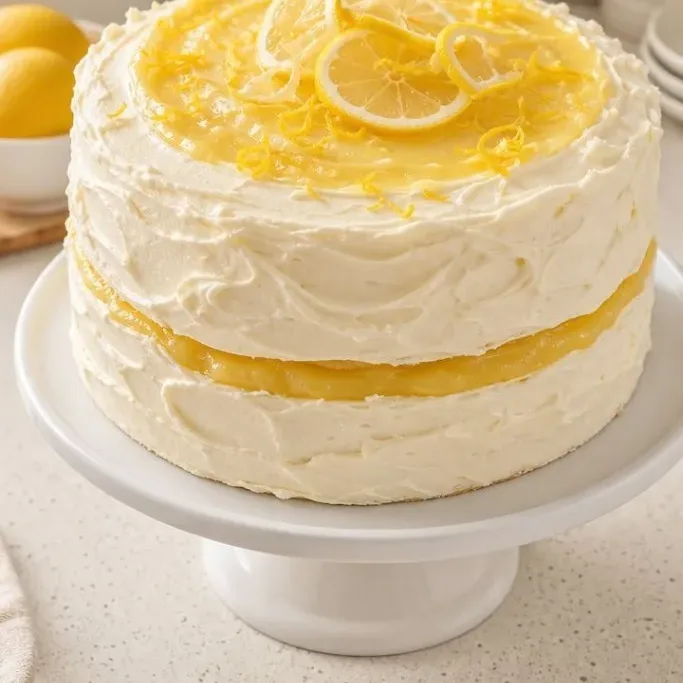
It has the kind of crumb that stays moist for days, a filling that tastes like lemon drops, and a frosting that balances the sweetness without weighing it down.
Why This Lemon Cake Works
The cake itself leans on buttermilk and a generous amount of fresh lemon in every step. The crumb is soft but sturdy enough to hold the layers, and the lemon flavor comes from the zest oils, the juice, and a spoonful of lemon curd beaten right into the batter.
The filling is a simple stovetop curd that sets up glossy and tart. It cuts through the sweetness and keeps each bite from feeling heavy, while the cream cheese frosting pulls it all together with a creamy, slightly salty finish.
I keep coming back to this version because it layers cleanly without sliding, slices neatly, and the flavor actually gets better the next day once the lemony notes settle into the cake.
Ingredients

For the cake
- 2 ¼ cups (280 g) all-purpose flour: spooned and leveled, not packed
- 2 teaspoons baking powder: check the expiration date
- ½ teaspoon baking soda: helps with browning and tenderness
- ½ teaspoon salt: fine sea salt or table salt
- ¾ cup (170 g) unsalted butter, softened: leave out at room temperature for 1 hour
- 1 ½ cups (300 g) granulated sugar: superfine works too; do not reduce or the cake will be dry
- 3 large eggs, at room temperature: cold eggs can make the batter curdle
- 1 tablespoon finely grated lemon zest: from 2 medium lemons
- 2 teaspoons vanilla extract: pure, not imitation
- 1 cup (240 ml) buttermilk, room temperature: shake well before measuring
- ¼ cup (60 ml) fresh lemon juice: strained to remove pulp and seeds
For the lemon curd
- ½ cup (120 ml) fresh lemon juice: about 3 lemons
- ½ cup (100 g) granulated sugar
- 2 large eggs
- 2 large egg yolks: save the whites for another use
- Pinch of salt
- 4 tablespoons (55 g) unsalted butter, cut into small cubes: cold butter is easier to cube
For the cream cheese frosting
- 8 oz (225 g) full-fat cream cheese, cold: straight from the fridge, not softened
- ½ cup (115 g) unsalted butter, softened: leave out for about 30 minutes
- 3 cups (360 g) powdered sugar, sifted: lumps will show in the frosting
- 1 teaspoon vanilla extract
- Pinch of salt
Variations and Substitutions
- No buttermilk?: Stir 1 tablespoon lemon juice into 1 cup whole milk and let it sit 10 minutes. The cake will be slightly less tender but still good.
- Buy the curd: A good quality store-bought lemon curd saves about 20 minutes of active time; warm it slightly and stir until smooth before spreading.
- Swap the frosting: A Swiss meringue buttercream works here if you want something less sweet, and it pipes beautifully.
- Make it gluten-free: Use a 1:1 gluten-free flour blend that contains xanthan gum, and the texture stays very close to the original.
- Boost the floral notes: Add ½ teaspoon of rose water to the frosting for a soft, perfumed layer that plays off the lemon.
Deeply Chocolate Layer Cake is another dessert you’d probably love if you enjoy this cake.
How to Make Lemon Layer Cake
Step 1: Cream the Butter and Sugar

Preheat your oven to 350°F (175°C) and grease two 8-inch round cake pans, then line the bottoms with parchment circles. In a medium bowl, whisk together the 2 ¼ cups flour, 2 teaspoons baking powder, ½ teaspoon baking soda, and ½ teaspoon salt so the leaveners are evenly distributed.
In a large bowl, beat the ¾ cup softened butter and 1 ½ cups sugar on medium speed for about 3 minutes. Stop to scrape the bowl once, then keep going until the mixture is pale, fluffy, and noticeably lighter in color. This step traps air and gives the cake its lift, so don’t rush it.
If you press a finger lightly into the butter mixture, it should feel silky and not gritty. If your butter was cold, the sugar won’t dissolve as well and the cake can end up dense. Let the butter soften properly before you start.
Step 2: Mix the Batter

Add the 3 eggs one at a time, beating well after each and scraping the bowl as needed. The mix will look a little curdled at first, but it comes back together quickly. Once all the eggs are in, beat in the 1 tablespoon lemon zest, 2 teaspoons vanilla, and the ¼ cup lemon juice.
The mixture will look glossy and pale yellow with tiny flecks of zest. That’s when you know the lemon is fully incorporated and you’ve built a solid emulsion. It won’t look perfectly smooth, but it should be cohesive, not separated.
Working by hand with a spatula or on the lowest mixer speed, add the flour mixture in three parts, alternating with the 1 cup buttermilk in two parts, starting and ending with flour. Mix just until the last streak of flour disappears. A few small lumps are fine; overmixing makes a tough cake.
Step 3: Bake the Layers
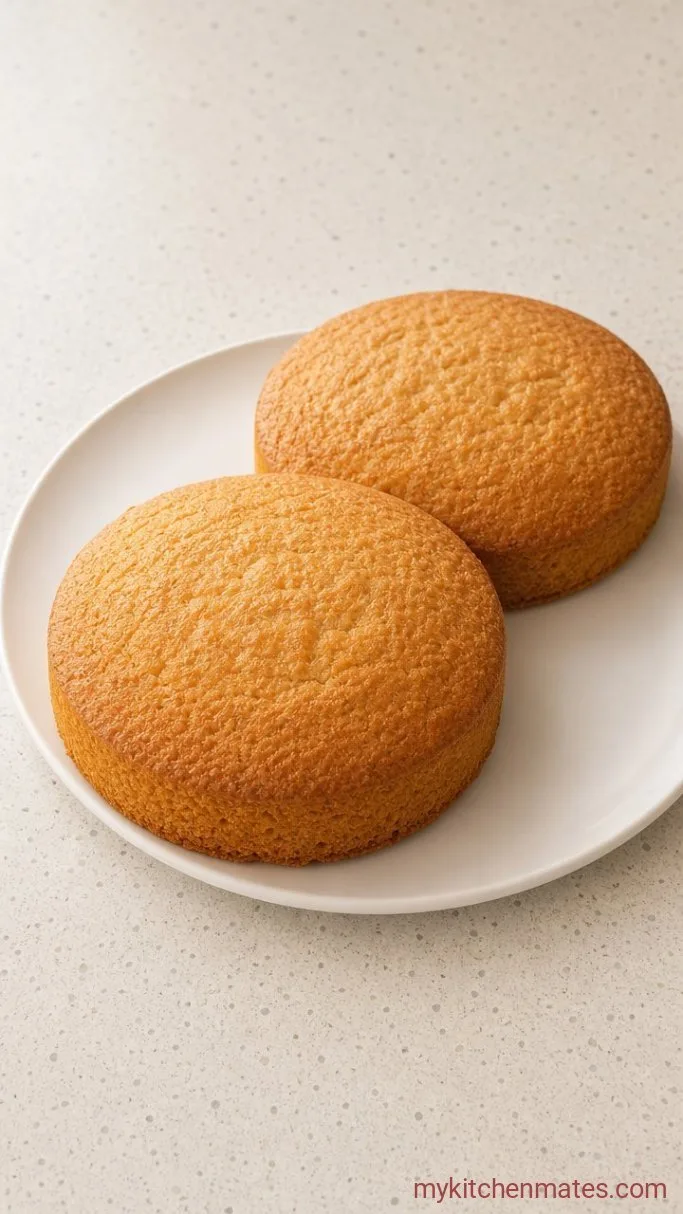
Divide the batter evenly between the two prepared pans, about 2 ½ cups each. Smooth the tops lightly with a spatula and tap the pans gently on the counter once to release any large air bubbles.
Bake on the middle rack for 23 to 26 minutes. The tops will turn light golden, and a toothpick inserted in the center should come out with just a few moist crumbs, not wet batter. If the tops spring back when you press lightly with a fingertip, they are ready.
Cool the pans on a wire rack for 10 minutes before turning the cakes out. Let them cool completely, about an hour, before you even think about frosting. Warm layers will melt the curd and frosting into a puddle.
Step 4: Make the Lemon Curd

While the cakes cool, set a medium saucepan over medium heat. Add the ½ cup lemon juice, ½ cup sugar, 2 whole eggs, 2 egg yolks, and a pinch of salt. Whisk constantly for 4 to 6 minutes, or until the mixture thickens enough to coat the back of a spoon and holds a clear trail when you run a finger through it.
The curd will go from thin and foamy to thick and glossy in the last minute or two. It will look slightly translucent and turn a deeper yellow. Once it reaches that point, pull the pan off the heat immediately so it doesn’t scramble.
Off the heat, whisk in the 4 tablespoons cold butter one cube at a time. Each cube should melt fully before you add the next. Strain the curd through a fine-mesh sieve into a clean bowl to catch any bits of cooked egg, then press plastic wrap directly onto the surface and refrigerate until fully cold, at least 1 hour.
Step 5: Beat the Frosting

In a clean bowl, beat the 8 ounces cold cream cheese and ½ cup softened butter together on medium speed until smooth and combined, about 2 minutes. Stop and scrape the bowl once so no lumps of cream cheese hide near the bottom.
Add the sifted 3 cups powdered sugar, 1 teaspoon vanilla, and pinch of salt. Start the mixer on low so the sugar doesn’t fly everywhere, then increase to medium and beat until the frosting is light and spreadable, about 3 minutes more. It should look white, fluffy, and hold its shape.
Taste and decide if you want more tang or salt right now. This frosting is already less sweet than traditional buttercream, so a small extra pinch of salt can brighten the lemon even more.
Step 6: Layer and Frost the Cake

Place one completely cooled cake layer on a serving plate or cake stand. Spread about three-quarters of the chilled lemon curd over the top, leaving a ½-inch border around the edge so it doesn’t ooze out when you add the second layer.
Set the second layer on top, pressing down gently. Spoon a generous cup of frosting onto the top and spread it to the edges with an offset spatula. Use the remaining frosting to cover the sides in a thin crumb coat if you like, or pile it on thick for a more rustic look. Swirl the top any way you want.
Spoon small dollops of the remaining lemon curd onto the frosting and drag the back of a spoon through them for a marbled effect. A few thin lemon slices or a scatter of zest right before serving go a long way, but they are optional. Slice and serve the cake at room temperature for the softest texture.
Tips for the Best Lemon Layer Cake
- Zest first, then juice: Always zest the lemons before juicing. Cold lemons are easier to zest, and room temperature lemons give more juice. Zest them straight from the fridge, then let them warm up on the counter.
- Even layers without a tool: If you don’t own a cake leveler, use a long serrated bread knife. Place your hand flat on top of the cake to stabilise it, then saw gently with the knife while turning the cake slowly.
- Frosting fix: If the frosting ever looks too soft to spread, chill the bowl in the fridge for 10 minutes then beat it again. Cream cheese buttercream softens fast on warm days, so keep the kitchen cool.
- No piping bag needed: For a clean look without piping, run a hot offset spatula over the frosting in long smooth strokes. Wipe the spatula between passes with a damp paper towel.
If your oven tends to run hot, check the cakes 2 minutes early. Bake times by pan size:
| Pan size | Material | Bake time |
|---|---|---|
| Two 8-inch rounds | Light metal or aluminium | 23 – 26 minutes |
| Two 9-inch rounds | Light metal | 20 – 23 minutes |
| One 9×13 sheet pan | Light metal | 25 – 28 minutes |
Storing Leftover Lemon Cake
- Refrigerate: Cover the cake loosely and refrigerate for up to 5 days. The crumb actually stays moist, though the frosting firms up a little. Let individual slices sit at room temperature for about 20 minutes before eating so the texture softens.
- Room temperature: If your kitchen is cool (under 70°F), the frosted cake can stay out under a cake dome for one day without issue. After that, the cream cheese frosting needs refrigeration.
- Freezing unfrosted layers: Wrap each completely cooled cake layer tightly in plastic wrap and freeze for up to 2 months. Thaw them in the fridge overnight, still wrapped, before frosting.
Frequently Asked Questions
Can I use oil instead of butter in the cake?
You can, but the texture will shift. Oil makes a moister, denser crumb with less lift and a plainer flavor. For the airiest result, stick with butter.
Can I make this as a sheet cake?
Yes. Pour the batter into a greased 9×13-inch pan and bake 25 to 28 minutes. Skip the layer assembly and spread the curd and frosting right on top.
Why did my cake sink in the middle?
It usually happens when the oven temperature is too low or the door was opened too early. Check your oven with a thermometer next time, and do not peek until at least the 20-minute mark.
Can I use a different frosting?
Absolutely. A lemon Swiss meringue buttercream is elegant and not too sweet. Whip it in place of the cream cheese version, but add it after the cake has chilled so it doesn’t slip.
Does the lemon curd need to be stored separately?
Not when it’s inside the cake. The curd layers stay put once the cake is assembled and refrigerated. For leftover curd kept in a jar, use within a week.
Lemon Layer Cake Recipe
Ingredients
Method
- Preheat oven to 350°F (175°C). Grease two 8-inch round cake pans and line bottoms with parchment. Whisk flour, baking powder, baking soda, and salt together.
- Beat the softened butter and sugar on medium until pale and fluffy, about 3 minutes. Add eggs one at a time, then beat in lemon zest, vanilla, and lemon juice.
- Alternately add flour mixture and buttermilk in three additions, starting and ending with flour, mixing just until combined. Divide batter evenly between pans.
- Bake 23 to 26 minutes until golden and a toothpick comes out with moist crumbs. Cool in pans 10 minutes, then turn out onto a rack to cool completely.
- In a saucepan over medium heat, whisk lemon juice, sugar, eggs, yolks, and salt constantly until thickened, 4 to 6 minutes. Remove from heat, whisk in butter one cube at a time, then strain into a bowl and chill with plastic wrap on the surface.
- Beat cold cream cheese and softened butter until smooth, about 2 minutes. Gradually add powdered sugar, vanilla, and salt; beat until light and fluffy, about 3 minutes.
- Place one cake layer on a plate, spread most of the chilled curd on top, then add second layer. Frost top and sides with cream cheese frosting, swirl remaining curd on top, and serve at room temperature.
Notes
